Loading...

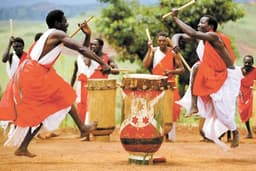
Cultura africana
Quiz by Kiomarys
Customize this quiz to suit your class
Instantly translate to 100+ languages
Tag the questions with any skills you have. Your dashboard will track each student's mastery of each skill.



Give this quiz to my class
 Figlio di un decurione, Patricio, ancora pagano, e della cristiana Monnica, fu iscritto tra i catecumeni; compì gli studi in patria, a Madaura, poi a Cartagine: periodo da lui descritto come di abbandono alle passioni amorose. Da una concubina ebbe nel 372 un figlio, Adeodato. La lettura dell'Hortensius ciceroniano lo attrasse, diciannovenne, alla filosofia, e aderì presto al manicheismo, presentatogli come spiegazione scientifica dell'universo. Se ne fece anzi propagandista a Tagaste, dopo la morte del padre, e a Cartagine ove ottenne qualche successo come retore, e scrisse il suo primo libro, De pulchro et apto (perduto), in cui pare si sforzasse a dare veste filosofica al manicheismo, nel quale era però rimasto semplice uditore. Passò poi, abbandonando la madre, a Roma; quindi, su raccomandazione di Simmaco, come professore ufficiale di retorica (autunno 384), a Milano, ove maturò la crisi spirituale, in seguito alla quale, dimessa la concubina e rinunciando al matrimonio vantaggioso per cui insisteva Monnica, si decise ad abbracciare il cristianesimo, che gli si palesava, allora, come in pieno e perfetto accordo con la filosofia neoplatonica e la predicazione di s. Ambrogio. A Cassiciacum (probabilmente Cassago, in Brianza), dimessosi dalla cattedra, scrisse le prime opere pervenuteci (i dialoghi Contra academicos, De vita beata, De ordine e Soliloquia) e cominciò a comporre una serie di manuali delle arti liberali; fu battezzato da s. Ambrogio la notte del sabato santo (24-25 aprile) del 387. Trascorse a Roma l'inverno (Monnica morì ad Ostia nel novembre) e tornò a Tagaste, continuando, nella vita monastica, la sua attività di scrittore. Nel 391 fu ordinato sacerdote a Ippona, ove, tra la fine del 395 e il 396, fu consacrato come successore dal vescovo Valerio già prossimo a morte; lo stesso fece poi (426) A. col prete Eraclio. Le reliquie, portate in Sardegna da s. Fulgenzio e altri vescovi esuli nel 486, furono dopo l'invasione saracena trasportate, per opera del re Liutprando, a Pavia ove gli fu eretto il monumento: ma che fossero di lui quelle ritrovate nel 1695 fu contrastato dal Muratori e da altri. Nei 34 anni di episcopato lo tennero occupato, oltre le cure costanti dedicate alla sua chiesa, la copiosa corrispondenza (ci sono giunte 218 lettere di A., oltre i trattatelli in forma epistolare, e 53 dirette a lui), la predicazione (i sermoni conservati e noti finora sono più di 500), i concilî e le eresie e scismi, la lotta contro i quali assorbì grandissima parte dell'attività letteraria, che ha reso A. proverbiale come uno non solo dei più dotti e profondi, ma dei più fecondi scrittori mai esistiti. Appunto le polemiche, insieme con la conversione, l'ordinazione e la consacrazione, contrassegnano, all'ingrosso, anche periodi dello svolgimento del pensiero di lui. Con la conversione comincia la polemica contro i manichei, già accennata nei "Dialoghi di Cassiciaco" e continuata in una serie di scritti per lo più filosofico-religiosi (per es. De quantitate animae, De libero arbitrio, il libro VI De musica, De magistro, De vera religione, De utilitate credendi), in cui vediamo A. passare gradatamente dall'affermazione della superiorità essenziale della ragione sulla fede, a quella dell'utilità e ragionevolezza dell'affidarsi all'auctoritas fondata sulla rivelazione e universalmente riconosciuta, della Chiesa; ed elaborare insieme la sua caratteristica dottrina della conoscenza. La felicità, cui gli uomini aspirano, non si consegue senza il possesso della verità. Contro gli scettici, egli usa l'argomento principe: se dubito, so di dubitare, dunque di essere; se sbaglio, sono (motivo che da taluni storici della filosofia viene indicato tra gli antecedenti del dubbio cartesiano: non sfugge comunque il diverso contesto). Ma la verità va cercata in me stesso: è la dottrina neoplatonica del ritorno su sé stessa dell'anima, che, riconosciuta la mutevolezza del mondo esteriore, percepito dai sensi, e la sua propria, si avvia a ricercare la verità immutabile, per cui è vero ogni ragionamento vero, e che è Dio medesimo. I sensi, dunque, e anche le parole del maestro, non fanno se non ridestare idee, che sono già nell'anima: non però nel senso della dottrina platonica della reminiscenza, ma in quanto in interiore homine habitat veritas, parla cioè, in fondo all'anima, il Maestro interiore, il Verbo divino; nell'uomo (in interiore homine) brilla la luce del vero che dona a ciascuno le rationes aeternae, principio e fondamento di ogni giudizio. È questa la teoria detta dell'illuminazione, che, non del tutto chiarita da A., si presta a varie interpretazioni (secondo che le rationes aeternae si intendano come "idee innate", o come "categorie" del giudizio); essa si collega alla dottrina del "maestro interiore", il Verbo, il solo vero maestro: sicché l'insegnare degli uomini è solo un preparare ad ascoltare la voce del Verbo divino. Queste dottrine furono da A. mantenute anche in opere posteriori ma il primitivo entusiasmo per Platone, Plotino e i "platonici" (che, se fossero vissuti ora, - dice - si sarebbero fatti cristiani) e per i neoplatonici si affievolì col tempo. La polemica antimanichea venne continuata in altri scritti (per es. Contra Adimantum, Contra epistolam Manichaei quam vocant fundamenti) fino al voluminoso Contra Faustum e ad altri opuscoli fino al 405 circa, poi sporadicamente in un paio di opuscoli e, in parte, nel trattatello contro tutte le eresie (De haeresibus, 428-29). L'ordinazione sacerdotale obbliga A. a spiegare al popolo i libri sacri; egli partecipa più intimamente della vita della Chiesa e viene a conoscere lo scisma che tormenta la Chiesa africana. Comincia così la polemica contro il donatismo, con l'interessante Psalmus abecedarius contra partem Donati, primo esempio degli scritti popolareggianti di A. (versi di 16 sillabe, abbandono della prosodia e metrica classica, assonanza in e), poi con una serie di opere (Contra epistolam Parmeniani, De baptismo, Contra litteras Petiliani, Contra Cresconium) fino alla grande "conferenza" di Cartagine (411; Breviculus collationis cum donatistis) quindi, con minor frequenza di scritti, sino al Contra Gaudentium (420 circa). In questa polemica, che lo portò a occuparsi dell'ecclesiologia, A. segue s. Cipriano e s. Ottato mantenendo fermissimo il principio della validità ed efficacia obiettiva (ex opere operato) dei Sacramenti, la cattolicità e l'unità della Chiesa, fuori della quale non v'è salvezza e che è corpus permixtum: ne fanno parte cioè grano e zizzania, buoni e malvagi, che soltanto Gesù Cristo ha diritto di separare nel giorno del Giudizio. Ma mentre all'inizio, e ancora nel 411, A. non voleva ricorrere ad altro mezzo che la persuasione attraverso la discussione, tuttavia, con le leggi di Onorio contro gli scismatici e di fronte alla loro ostinazione, cambiò parere: e come dalla netta distinzione tra scisma ed eresia passò a definire questa quale "scisma inveterato", così ammise la legittimità e necessità della coercizione e del ricorso all'autorità civile, fissando altresì il dovere per il sovrano cristiano di attenersi al magistero della chiesa.Ma con l'ordinazione A. si dedica anche con maggiore intensità allo studio della Bibbia: specialmente del Genesi, passando dall'interpretazione strettamente allegorica (De Genesi adversus Manichaeos, 388-90) a quella letterale, e insieme di valore filosofico (De Genesi ad litteram liber imperfectus), e di s. Paolo (Expositio quarundam propositionum ex Epistola ad Romanos, Epistolae ad Romanos expositio inchoata, Expositio Epistolae ad Galatas, parecchie delle questioni trattate nel De diversis quaestionibus octogintatribus). Cogliamo qui un momento importantissimo nello svolgimento del pensiero teologico di A., e oggetto di molte discussioni. Egli si è sforzato di mantenere in primo luogo la giustizia di Dio, che premia i buoni, cioè coloro che credendo si acquistano un merito, e che punisce i malvagi. Ma, dopo un lungo sforzo, A. viene a riconoscere che il momento iniziale dell'atto di fede, l'initium fidei, che è initium salutis, non è opera dell'uomo ma viene da Dio: al quale non si può tuttavia rimproverare alcuna ingiustizia, se, gratuitamente, fa grazia ad alcuni; mentre gli uomini tutti, in cui sopravvive il peccato originale, non meritano se non la condanna. Questi concetti appaiono per la prima volta con tutta chiarezza, nel primo scritto posteriore all'episcopato di A., il De diversis quaestionibus ad Simplicianum. Frutto di questa conquista del suo pensiero, che lo induce a rimeditare sulla sua vita, si possono considerare le Confessioni (398 circa), nelle quali, altresì, sono ripresi altri due temi che lo appassionano: quello della cultura cristiana e quello dei principî che presiedono all'interpretazione della Scrittura. La prima questione è da lui affrontata sotto l'aspetto teorico nel De doctrina christiana (interrotto, ma ripreso e terminato nel 426): come anche nelle Confessioni A. è sensibile ai pericoli della cultura tradizionale, pagana, ma vuole salvarne il buono, che va assunto e fatto proprio dal cristianesimo. Così, conchiudendo una lunga controversia, A. assicura col peso della sua autorità la trasmissione della cultura antica. Ma nelle Confessioni il problema della memoria (in essa è la misura del tempo) trascina seco quello della creazione. A. la ritiene avvenuta nel tempo, anzi col tempo, dal nulla, e per tutte le cose simultaneamente, ma non allo stesso modo: ché alcune furono create da Dio non in atto e nella loro forma perfetta, ma solo in potenza, o in germe (rationes seminales, energie latenti destinate a svilupparsi nel tempo e a produrre, al momento opportuno per ciascuno, i diversi esseri). A queste conclusioni A. è portato da un nuovo studio dei primi 3 capitoli del Genesi (De Genesi ad litteram libri XII, tra il 401 circa e il 415 circa). Accanto al quale, tra le opere esegetiche, vanno ricordati il De consensu evangelistarum (400 circa), le Enarrationes in Psalmos, e i Tractatus in evangelium Iohannis, raccolte di sermoni su questi libri. Ma nelle Confessioni A. ha inserito anche un'istruzione catechetica (proprio con il commento al Genesi), affine a quella da lui data in un'altra operetta, il De catechizandis rudibus (400 circa). E il motivo della memoria, che appare nelle Confessioni, diventa importantissimo in un altro trattato su cui A. si affaticò lungo (400 circa -416 circa): il De Trinitate. L'anima è un pensiero (mens) da cui nasce una conoscenza (notitia), e nel suo rapportarsi a questa conoscenza nasce l'amore che essa si porta (amor). Nell'anima o, meglio, nella memoria, nell'intelletto e nella volontà, nella parte cioè più alta e nobile di essa, che ricorda, comprende e ama sé stessa, ma soprattutto ricorda, conosce e ama Dio, A. scorge le "vestigia" della Trinità divina. Di essa, criticando talvolta le formule di s. Ilario di Poitiers, egli mette in rilievo l'unità di sostanza, insistendo sull'uguaglianza delle tre Persone: le operazioni ad extra sono l'opera indistinta di tutte, ciò che si dice di ciascuna quanto alla sostanza, e anche alla sapienza e altri attributi, è comune, uguale, identico e numericamente uno in tutte; mentre esse si distinguono e si oppongono secondo le loro relazioni reciproche. Teoria che, chiarendo la processione dello Spirito Santo principaliter, sì, dal Padre, ma anche dal Figlio, divenne importantissima per lo svolgimento della teologia occidentale, cui A. ha legato il carattere "cristocentrico", conforme alla tendenza fondamentale del suo pensiero, aggirantesi intorno alla persona e all'opera del Cristo ed alla redenzione dell'uomo dal peccato, mercé la grazia. Intorno a questi temi scoppiò la polemica con Pelagio, già scandalizzatosi in Roma per l'invocazione delle Confessioni a Dio: da quod iubes et iube quod vis e ora rifugiatosi in Africa con il suo compagno Celestio (che, denunciato da Paolino di Milano, venne condannato nel 411 da un concilio locale, a Cartagine). Si possono distinguere in essa varie fasi: quella iniziale, in cui A. combatte ancora soltanto le dottrine, non gli uomini, che sa molto stimati (De peccatorum meritis et remissione, a Marcellino, il l. III composto dopo che A. ebbe conosciuto il commento di Pelagio a s. Paolo; De spiritu et littera ad Marcellinum e, a complemento, per asserire la necessità delle opere buone accanto alla fede, De fide et operibus; nonché il De bono viduitatis, dedicato a Giuliana, madre di Demetriade, in occasione della monacazione di questa); quella della polemica diretta, provocata dalle vicende di Pelagio in Oriente fino alla condanna da parte del papa Innocenzo I (con la celebre affermazione che, dopo tanti concilî, anche Roma locuta est; causa finita est; utinam aliquando finiatur error) e, dopo il grande concilio di Cartagine (418) da papa Zosimo (De natura et gratia contra Pelagium, De perfectione iustitiae hominis, contro Celestio, De gestis Pelagii, De gratia Christi et peccato originali); quella della lotta contro i pertinaci difensori di Pelagio (De nuptiis et concupiscentia ad Valerium comitem, Contra duas epistolas Pelagianorum, Contra Iulianum, e Contra secundam Iuliani responsionem, il cosiddetto Opus imperfectum, contro lo stesso Giuliano di Eclano, interrotto per la morte di A.), intesa al tempo stesso a chiarire la sua dottrina ai monaci di Adrumeto (De gratia et libero arbitrio, e De correptione et gratia, dedicati all'abate Valentino) e a combattere i "semipelagiani" della Gallia meridionale, insorti contro questi scritti (De praedestinatione sanctorum e De dono perseverantiae). Questa dottrina agostiniana del peccato originale, della grazia e della predestinazione, precisatasi ma anche irrigiditasi e spinta alle estreme conseguenze nell'ardore della polemica, si è prestata a varie e contrastanti interpretazioni. A. prende le mosse dalla condizione di Adamo, creato esente dalla morte (posse non mori, diverso da non posse mori proprio degli esseri spirituali) e dalla concupiscenza, capace quindi di non peccare (il posse non peccare, diverso dal non posse peccare degli eletti), e nella piena libertà di optare per il bene conformandosi a una ragione che aveva il perfetto predominio sui sensi, capace altresì di perseverare nel bene, grazie all'aiuto (adiutorium sine quo non) concessogli da Dio. Avendo Adamo peccato, la sua colpa si trasmise all'intero genere umano, divenuto così massa damnata; peccato di origine, che A. dimostra, fra l'altro, in base all'uso della Chiesa di amministrare agli infanti il battesimo che annulla la concupiscenza in quanto reato, ma la lascia sopravvivere actu, così che l'uomo, pur conservando il libero arbitrio, è privato di quella libertas ... quae in Paradiso fuit (Enchir. 26-27). Per poter resistere cioè alla concupiscenza, occorre ora un aiuto divino maggiore di quello dato ad Adamo: la grazia è dunque necessaria per avere la fede, e questa perché vi sia quell'amore di Dio, in quanto sommo bene, senza di che non esiste né beatitudine né vera moralità (e non vi sono pertanto vere virtù fra i pagani). Ma questo soccorso (adiutorium quo) non è concesso a tutti: Dio, senza alcuna ingiustizia, ma per un suo gratuito atto di misericordia, prepara per alcuni i mezzi, pienamente efficaci, per condurli alla salvezza cui li ha predestinati ab aeterno. Accusato dai pelagiani di manicheismo, A. tuttavia, come si vede, non considera come malvagia la stessa natura umana, e non condanna la procreazione: nel matrimonio, il male è la concupiscentia carnis; e anche questo può essere rivolto a un fine buono, la generazione dei figli congiunta alla volontà della loro rigenerazione attraverso il battesimo. Ma i bambini morti senza di questo, secondo A., non si sottraggono alla pena eterna. Poiché la trasmissione del peccato originale si spiegava più facilmente mediante la teoria secondo cui l'anima è generata, spiritualmente, da quella dei genitori (traducianismo), mentre, più conforme alla sua dottrina dell'illuminazione, era l'altra teoria, della creazione di ogni anima da Dio (creazionismo), A. rimase incerto fino all'ultimo (De anima et eius origine, 419-20). E poiché è ignoto chi siano gli eletti, la concezione agostiniana della predestinazione coincide con quella della Chiesa come corpus permixtum (v. sopra). La scossa profonda data a tutto il mondo romano dall'incursione di Alarico, le querimonie dei pagani additanti nel cristianesimo la causa di tutti i mali del mondo, indussero A. a meditare sulla storia, e a scrivere l'altra delle sue opere maggiori e più celebri dopo le Confessioni: il De civitate Dei. Nel corso della storia procedono unite le due città (Civitas Dei e Civitas terrena), nate l'una dall'amor Dei usque ad contemptum sui, l'altra dall'amor sui usque ad contemptum Dei e predestinate, la prima a regnare in eterno con Dio, l'altra a subire l'eterno supplizio. Neppure quest'opera è, in fondo, davvero sistematica; cosciente dello sviluppo del proprio pensiero, A. sembra invitare i lettori a imitarlo nello sforzo di progredire: del resto volle egli stesso correggere i suoi errori (ma anche dimostrare, specie contro i manichei, la sua fondamentale coerenza) in quella originalissima rassegna dei suoi scritti che sono le Retractationes (426-27). Va menzionato ancora, breve e bellissimo compendio della dottrina cristiana, l'Enchiridium ad Laurentium (De fide, spe, charitate, 421); e va almeno accennato il valore letterario dei suoi scritti, specie delle Confessioni. Festa, 28 agosto. L'interesse educativo di A. non è limitato ai problemi pedagogici più dibattuti dalla Patristica, e cioè all'utilizzazione della cultura pagana nella formazione dei ragazzi, ed ai modi e metodi dell'educazione religiosa. Esso si connette piuttosto ad un tema filosofico fondamentale nella sua speculazione, quello della "verità interiore" e quindi con la dottrina dell'illuminazione. Il processo educativo consiste nel trarre alla luce la verità, nel ritrovare Dio-maestro nel profondo dell'anima (Christus intus docet). Il maestro vero è quindi solo Cristo, i maestri terreni non possono far altro che stimolare la riscoperta della verità stessa che è in noi come segno della presenza di Dio. Dal punto di vista didattico A. accoglie la necessaria propedeutica delle "arti liberali", ma la cultura per sé non è indispensabile, poiché le virtù cristiane si realizzano anche al di fuori di esse. Necessaria è invece la cultura religiosa da impartire anche alle menti più rozze: nel De catechizandis rudibus Agostino parla di tale opera educativa, ponendo in rilievo la funzione fondamentale che ha in essa l'amore con cui il maestro discende al livello dell'educando (così come Cristo ha fatto per l'uomo facendosi uomo) e vivifica anche gli aspetti più elementari e consueti del fatto educativo.Black and African American CultureNative American & African American Cultural ContributionsJuneteenth is an important holiday in American history. It honors the day in 1865 when enslaved people in Texas found out they were free. This day marked a major milestone on the path to ending slavery throughout the U.S. On June 19, 1865, Major General Gordon Granger of the Union army arrived in Galveston, Texas. He informed the enslaved people of Texas about the Emancipation Proclamation. The Emancipation Proclamation was a speech made by President Abraham Lincoln two years earlier, on January 1, 1863. It stated that enslaved people in many of the southern states were now free. President Lincoln gave this speech during the height of the Civil War. But by the time the Union soldiers made it to Texas, the Civil War had ended. It took over two years for this message to reach the people still enslaved in Texas! More than 250,000 people celebrated their newfound freedom on June 19. Soon after, many of these freed people decided to migrate to northern states to start a new life. But they continued to celebrate Juneteenth year after year and to share this holiday with their community. In 1872, a group of formerly enslaved people raised money to buy 10 acres of land near Houston, Texas. They named this land ‘Emancipation Park’. To this day, many Americans celebrate Juneteenth in this park to remember their history. Texas also holds a special parade to celebrate this day. Thousands of people participate and enjoy learning and celebrating African American culture and history. They fly the Juneteenth flag. The Juneteenth flag has a white star that symbolizes freedom and new hope for African Americans. Juneteenth is a day to remember the triumphs and struggles of African Americans. Even though enslaved people in Texas learned of their freedom on Juneteenth, they still faced violence, discrimination and inequality. That is why Juneteenth celebrations are so important to many Americans. Juneteenth recognizes the hardships of gaining freedom and the importance of remembering Black history in the United States.Lesson 3 African Society and CultureDescribe the features that characterize African American Studies Describe the developments that led to the incorporation of African American Studies into the U.S. Colleges and universities in the 1960’s and 1970’s. Explain how African American Studies enriches the study of early Africa and its relationship to communities of the African Diaspora? Describe the geographic features of the African Continent. Explain how Africa’s varied landscape affected patterns of settlement and trade between diverse Cultural Regions Describe the causes of the Bantu Expansion across the continent. Explain how the Bantu expansion affected the linguistic diversity of West and Central Africa and the genetic heritage of African Americans. Explain how Mali’s wealth and power created opportunities for the empire to explain its reach to other societies within Africa and across the Mediterranean. Explain the connection between the Sudanic-Empires and early generations of African Americans? Describe the institutional and community based models of education present in early West African Societies.The Columbian Exchange was the widespread exchange of animals, plants, culture, disease, people, and ideas that began between European countries and their colonies in North and South America. The Spanish came to the Americas in search of gold and other riches. The Europeans wanted to convert the Native Americans to Christianity/Roman Catholicism. Spain had the greatest impact on the culture of Latin America. Sugarcane was a crop that was grown in the Caribbean that required a lot of land and labor. Native populations died out largely due to diseases that they had no natural immunity to before the arrival of Europeans. When the Native populations died out, African slaves were brought over to work. Two cultural elements in Latin America that resulted from the Columbian Exchange were language - Spanish, and religion - Roman Catholicism/Christianity. Environmental Issues Deforestation is the clearing of forests for human demands such as farmland, timber, and mining. The Amazon Rainforest in Brazil is one area experiencing major deforestation. Hurricanes can damage the economies in the Caribbean and Central America by keeping tourists away. Economy The three economic indicators used to determine the Human Development Index (HDI) are: life expectancy, literacy rate, and GDP per capita. Higher literacy rates, GDP per capita, and life expectancy are associated with more developed countries, while lower literacy rates, GDP per capita, and life expectancy are associated with less developed countries. The three sectors of the economy are primary/agriculture (e.g. rancher), secondary/manufacturing (e.g. table factory), and tertiary/services (e.g. teacher). A single product economy is when a country depends on just one product for almost all of its jobs, like the Caribbean Islands depend on tourism. Three disadvantages of a single product economy are: having to import other goods/resources, facing competition from other countries for the same product, and if the product fails, the economy is ruined which could restrict access to goods/resources. A free enterprise/market economy is when individual people and businesses make all economic decisions. A command/communist economy is when the government makes all basic economic decisions. Cuba has a communist economy where the government controls all aspects of the economy.To the Lakota, and other indigenous people on North America's Great Plains, the bison was an essential part of their culture ( expressed in the quote on the previous page). The bison provided meat for nutrition, a hide for clothing and shelter, bones for tools, and fat for soap. The bison was also central to their religious beliefs. So, when European settlers hunted the bison nearly to extinction, Lakota culture suffered. Culture is central to a society and the identity of its people, as well as its continued existence. Therefore, geographers study culture as a way to understand similarities and differences among societies across the world, and in some cases, to help preserve these societies. Analyzing Culture All of a group's learned behaviors, actions, beliefs, and objects are a part of culture. It is a visible force seen in a group's actions, possessions, and influence on the landscape. For example, in a large city you can see people working in offices, factories, and stores, and living in high-rise apartments or suburban homes. You might observe them attending movies, concerts, or sporting events. Culture is also an invisible force guiding people through shared belief systems, customs, and traditions. Culture is learned, in that it develops through experiences, and not merely transmitted through genetics. For example, many people in the United States have developed a strong sense of competitiveness in school and business, and believe that hard work is a key to success. These types of elements, visible and invisible, are cultural traits. A series of interrelated traits make up a cultural complex, such as the process of steps and acceptable behaviors related to greeting a person in different cultures. A single cultural artifact, such as an automobile, may represent many different values, beliefs, behaviors and traditions and be representative of a cultural complex. Since culture is learned there are many ways that one generation passes its culture to the next. Children and adults learn traits three ways: • imitation, as when learning a language by repeating sounds or behaviors from a person or television • informal instruction, as when a parent reminds a child to say "please" • formal instruction, as when students learn history in school 132 HUMAN GEOGRAPHY: AP" EDITION CULTURAL COMPLEX OF THE AUTOMOBILE The automobile provides much more than just transportation, as it reflects many values that are central to American culture. Origins of Culture The area in which a unique culture or a specific trait develops is a culture hearth. Classical Greece was a culture hearth for democracy more than 2,000 years ago. New York City was a culture hearth for rap music in the 1970s. Geographers study how cultures develop in hearths and diffuse-or spread-to other places. Geographers also study taboos, behaviors heavily discouraged by a culture. For example, many cultures have taboos against eating certain foods, such as pork or insects. What is considered taboo changes over time. In the United States, marriages between Protestants and Catholics were once taboo, but they are not widely opposed now. Traditional, Folk, and Indigenous Cultures With the beginning of the Industrial Revolution in the late 18th century, modern transportation and communication connected people as never before and led to extensive cultural mixing, especially as cities have grown. The world prior to this time was very different; however, remnants of the past are still evident in our modern cultures. Traditional, folk, and indigenous cultures share some important characteristics and are often grouped together, but they do have some subtle differences. Traditional Culture Recently, the meanings of traditional, folk, and indigenous culture have begun to merge, causing geographers to debate when each should be used. Increasingly, the term traditional culture is used to encompass all three cultural designations. All three types share the function of passing down long-held beliefs, values, and practices and are generally resistant to rapid changes in their culture. Folk Culture The beliefs and practices of small, homogenous groups of people, often living in rural areas that are relatively isolated and slow to change, are known as folk cultures. Like all cultures, they demonstrate the diverse ways that people have adapted to a physical environment. For example, people around the world learned to make shelters out of available resources, whether 3.1: INTRODUCTION TO CULTURE 133 it was snow or mud bricks or wood. However, people used similar resources such as wood differently. In Scandinavia, people used trees to build cabins. In the American Midwest, people processed trees into boards, built a frame, and attached the boards to it. Many traits of folk culture continue today. Corn was first grown in Mexico around 10,000 years ago, and it is still grown there today. While many elements of folk culture exist side by side with modern culture, there are people whose societies have changed little, if at all, from long ago. These people practice traditional cultures, those which have not been affected by modern technology or influences. They often live in remote regions, such as some small tribes in the Amazon rainforest, and have scant knowledge of the outside world. As the lines continue blurring between cultural designations, the Amish of Pennsylvania are often referenced as both folk and traditional culture. Indigenous Culture When members of an ethnic group reside in their ancestral lands, and typically possess unique cultural traits, such as speaking their own exclusive language, they are considered an indigenous culture. Some indigenous peoples have been displaced from their native lands, but still practice their indigenous culture. Native Americans in the United States, such as the Navajo, have kept indigenous cultural practices. First Nations of Canada, such as the Inuit, have also retained their indigenous culture. Globalization and Popular Culture As a result of the Industrial Revolution, improvements in transportation and communication have shortened the time required for movement, trade, or other forms of interaction between two places. This development, known as space-time compression (see Topics 1.4 and 3.6), has accelerated culture change around the world. In 1817, a freight shipment from Cincinnati needed 52 days to reach New York City. By 1850, because of canals and railroads, it took half that long. And by 1852, it took only 7 days. Today, an airplane flight takes only a few hours, and digital information takes seconds or less. Similar change has occurred on the global scale. People travel freely across the world in a matter of hours, and communication has advanced to a point where people share information instantaneously across the globe. The increased global interaction has had a profound impact on cultures, from spreading English across the world to instant sharing of news, events and music. Globalization specifically refers to the increased integration of the world economy since the 1970s. The process of intensified interaction among peoples, governments, and companies of different countries around the globe has had profound impacts on culture. The culture of the United States is intertwined with globalization. Through the influence of its corporations, Hollywood movies, and government, the United States exerts widespread influence in other countries. But other countries also shape American culture. For example, in 2019, the National Basketball Association included players from 38 countries or territories. When cultural traits- such as clothing, music, movies, and types of 134 HUMAN GEOGRAPHY: AP. EDITION businesses-spread quickly over a large area and are adopted by various groups, they become part of popular culture. Elements of popular culture often begin in urban areas and diffuse quickly through globalization processes such as the media and Internet. These elements can quickly be adopted worldwide, making them part of global culture. People around the world follow European soccer, Indian Bollywood movies, and Japanese animation known as anime. With people in many nations wearing similar clothes, listening to similar music, and eating similar food, popular cultural traits often promote uniformity in beliefs, values, and the cultural landscape across many places The cultural landscape, also known as the built environment (see Topic 3.2), is the modification of the environment by a group and is a visible reflection of that group's cultural beliefs and values. Traditional Culture to Popular Culture Popular culture emphasizes trying what is new rather than preserving what is traditional. Many people, especially older generations or those who follow a folk culture, openly resist the adoption of popular cultural traits. They do this by preserving traditional languages, religions, values, and foods. While older generations often resist the adoption of popular culture, they seldom are successful in keeping their traditional cultures from changing, especially among the young people of their society. One clash between popular and traditional culture is occurring in Brazil. As the population expands to the interior of the rain forest, many indigenous cultures, like the Yanamamo tribe, have more contact with outside groups. Remaining isolated by the forest is becoming increasingly difficult as many young people from the indigenous cultures become exposed to popular culture and begin to integrate into the larger Brazilian society. As the young people leave their communities, they are more likely to accept popular culture at the expense of their indigenous cultural heritage, which threatens the very existence of their folk culture. Traditional culture typically exhibits horizontal diversity, meaning each traditional culture has its own customs and language that makes it distinct from other culture groups. Yet, people people within each group are usually homogeneous, or very similar to each other. By contrast, popular culture typically exhibits vertical diversity, meaning that modern urban societies are usually heterogeneous, or exhibiting differences, within the society and usually contain numerous multiethnic neighborhoods. However, on a global scale popular cultures are relatively similar with the same type of malls, shops, fast food, and clothing. Urban global culture centers are not identical, yet, global cities often do not have as much horizontal diversity across space as folk cultures. 3.1: INTRODUCTION TO CULTURE 135 COMPARING TRADITIONAL AND POPULAR CULTURE Trait Traditional Culture Popular or Global Culture Society • Rural and isolated location • Urban and connected location • Homogeneous and • Diverse and multiethnic indigenous population population • Most people speak an • Many people speak a global indigenous or ethnic local language such as English or language Arabic • Horizontal diversity • Vertical diversity Social • Emphasis on community and • Emphasis on individualism and Structure conformity making choices • Families live close to each • Dispersed families other • Weakly defined gender roles • Well-defined gender roles Diffusion • Relatively slow and limited • Relatively rapid and extensive • Primarily through relocation • Often hierarchical • Oral traditions and stories • Social media and mass media Buildings and • Materials produced locally, • Materials produced in distant Housing such as stone or grass factories, such as steel or glass • Built by community or owner • Built by a business • Similar style for community • Variety of architectural styles • Different between cultures • Similar between cities • Traditional architecture • Postmodern / contemporary architecture Food • Locally produced • Often imported • Choices limited by tradition • Wide range of choice • Prepared by the family or • Purchased in restaurants community Spatial Focus • Local and regional • National and global Artifacts, Mentifacts, and Sociofacts Whether a cultural attribute is considered traditional, folk, indigenous, or popular in nature, it is valuable to differentiate between elements of culture that can be seen and those that can not. There are artifacts that comprise the material culture, which consists of tangible things, or those that can be experienced by the senses. Art, clothing, food, music, sports, and housing types are all tangible elements of culture. Another element of the study of artifacts is understanding the techniques to use or build a specific artifact. Artifacts can be unique to a particular culture, or can be shared. For example, people of all cultures need to communicate through language, yet there are many groups that possess languages unique to their culture. The ability to read, write and understand the English language is an artifact of importance for much of popular global culture. 136 HUMAN GEOGRAPHY: AP" EDITION Mentifacts comprise a group's nonmaterial culture and consist ofintangible concepts, or those not having a physical presence. Beliefs, values, practices, and aesthetics (pleasing in appearance) determine what a cultural group views as acceptable and desirable. Mentifacts can also be unique or shared. People of many cultures possess an belief in one or many deities, and often the deities are unique to that culture. The belief in a god is a mentifact-the religious building or symbols are artifacts. Cultural groups also possess sociofacts, which are the ways people organize their society and relate to one another. Taken altogether, people tend to see the whole of their culture as greater than the sum of its individual parts. Sociofacts are embodied through families, governments, sports teams, religious organizations, education systems, and other social constructs. As with artifacts and mentifacts, sociofacts may also be unique or similar to other societies. Families are the foundations of most societies, yet what constitutes the structure of a family may vary widely between cultural groups. For example, Western cultures tend to view the nuclear family, consisting of the parents and their children as the basic family unit. By contrast, in many Western African cultures the norm is the extended family, consisting of several generations and other family members such as cousins living under one roof.