Loading...


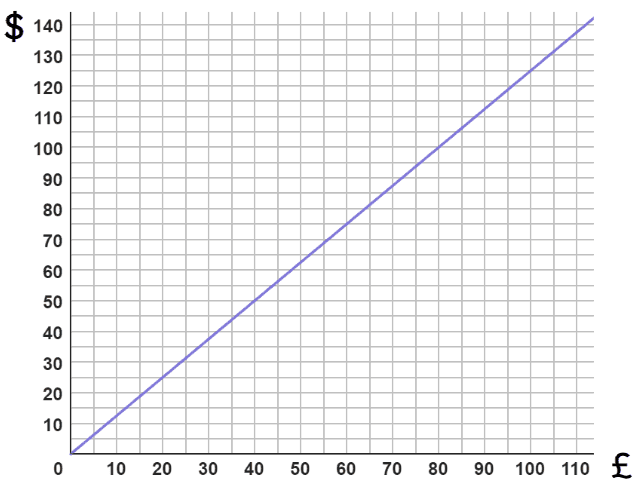
Describing more conversions with ratio
Customize this quiz to suit your class
Instantly translate to 100+ languages
Tag the questions with any skills you have. Your dashboard will track each student's mastery of each skill.
Give this quiz to my class
Covalent Molecules and Compounds Just as an atom is the simplest unit that has the fundamental chemical properties of an element, a molecule is the simplest unit that has the fundamental chemical properties of a covalent compound. Some pure elements exist as covalent molecules. Hydrogen, nitrogen, oxygen, and the halogens occur naturally as the diatomic (“two atoms”) molecules H2, N2, O2, F2, Cl2, Br2, and I2 (part (a) in Figure 3.1.1). Similarly, a few pure elements exist as polyatomic (“many atoms”) molecules, such as elemental phosphorus and sulfur, which occur as P4 and S8 (part (b) in Figure 3.1.1). Each covalent compound is represented by a molecular formula, which gives the atomic symbol for each component element, in a prescribed order, accompanied by a subscript indicating the number of atoms of that element in the molecule. The subscript is written only if the number of atoms is greater than 1. For example, water, with two hydrogen atoms and one oxygen atom per molecule, is written as H2O. Similarly, carbon dioxide, which contains one carbon atom and two oxygen atoms in each molecule, is written as CO2. Covalent compounds that predominantly contain carbon and hydrogen are called organic compounds. The convention for representing the formulas of organic compounds is to write carbon first, followed by hydrogen and then any other elements in alphabetical order (e.g., CH4O is methyl alcohol, a fuel). Compounds that consist primarily of elements other than carbon and hydrogen are called inorganic compounds; they include both covalent and ionic compounds. In inorganic compounds, the component elements are listed beginning with the one farthest to the left in the periodic table, as in CO2 or SF6. Those in the same group are listed beginning with the lower element and working up, as in ClF. By convention, however, when an inorganic compound contains both hydrogen and an element from groups 13–15, hydrogen is usually listed last in the formula. Examples are ammonia (NH3) and silane (SiH4). Compounds such as water, whose compositions were established long before this convention was adopted, are always written with hydrogen first: Water is always written as H2O, not OH2. The conventions for inorganic acids, such as hydrochloric acid (HCl) and sulfuric acid (H2SO4), are described elswhere. Note! For organic compounds: write C first, then H, and then the other elements in alphabetical order. For molecular inorganic compounds: start with the element at far left in the periodic table; list elements in same group beginning with the lower element and working up. Write the molecular formula of each compound. a. The phosphorus-sulfur compound that is responsible for the ignition of so-called strike anywhere matches has 4 phosphorus atoms and 3 sulfur atoms per molecule. b. Ethyl alcohol, the alcohol of alcoholic beverages, has 1 oxygen atom, 2 carbon atoms, and 6 hydrogen atoms per molecule. c. Freon-11, once widely used in automobile air conditioners and implicated in damage to the ozone layer, has 1 carbon atom, 3 chlorine atoms, and 1 fluorine atom per molecule. Solution: a. • A The molecule has 4 phosphorus atoms and 3 sulfur atoms. Because the compound does not contain mostly carbon and hydrogen, it is inorganic. • B Phosphorus is in group 15, and sulfur is in group 16. Because phosphorus is to the left of sulfur, it is written first. • C Writing the number of each kind of atom as a right-hand subscript gives P4S3 as the molecular formula. b. • A Ethyl alcohol contains predominantly carbon and hydrogen, so it is an organic compound. • B The formula for an organic compound is written with the number of carbon atoms first, the number of hydrogen atoms next, and the other atoms in alphabetical order: CHO. • C Adding subscripts gives the molecular formula C2H6O. c. • A Freon-11 contains carbon, chlorine, and fluorine. It can be viewed as either an inorganic compound or an organic compound (in which fluorine has replaced hydrogen). The formula for Freon-11 can therefore be written using either of the two conventions. • B According to the convention for inorganic compounds, carbon is written first because it is farther left in the periodic table. Fluorine and chlorine are in the same group, so they are listed beginning with the lower element and working up: CClF. Adding subscripts gives the molecular formula CCl3F. • C We obtain the same formula for Freon-11 using the convention for organic compounds. The number of carbon atoms is written first, followed by the number of hydrogen atoms (zero) and then the other elements in alphabetical order, also giving CCl3F. Write the molecular formula for each compound. a. Nitrous oxide, also called “laughing gas,” has 2 nitrogen atoms and 1 oxygen atom per molecule. Nitrous oxide is used as a mild anesthetic for minor surgery and as the propellant in cans of whipped cream. b. Sucrose, also known as cane sugar, has 12 carbon atoms, 11 oxygen atoms, and 22 hydrogen atoms. c. Sulfur hexafluoride, a gas used to pressurize “unpressurized” tennis balls and as a coolant in nuclear reactors, has 6 fluorine atoms and 1 sulfur atom per molecule. Answer: a. N2O b. C12H22O11 c. SF6. Ionic Compounds The substances described in the preceding discussion are composed of molecules that are electrically neutral; that is, the number of positively-charged protons in the nucleus is equal to the number of negatively-charged electrons. In contrast, ions are atoms or assemblies of atoms that have a net electrical charge. Ions that contain fewer electrons than protons have a net positive charge and are called cations. Conversely, ions that contain more electrons than protons have a net negative charge and are called anions. Ionic compounds contain both cations and anions in a ratio that results in no net electrical charge. Note! Ionic compounds contain both cations and anions in a ratio that results in zero electrical charge.An ionic compound that contains only two elements, one present as a cation and one as an anion, is called a binary ionic compound. One example is MgCl2, a coagulant used in the preparation of tofu from soybeans. For binary ionic compounds, the subscripts in the empirical formula can also be obtained by crossing charges: use the absolute value of the charge on one ion as the subscript for the other ion. This method is shown schematically as follows: Crossing charges. One method for obtaining subscripts in the empirical formula is by crossing charges. When crossing charges, it is sometimes necessary to reduce the subscripts to their simplest ratio to write the empirical formula. Consider, for example, the compound formed by Mg2+ and O2−. Using the absolute values of the charges on the ions as subscripts gives the formula Mg2O2:Polyatomic Ions Polyatomic ions are groups of atoms that bear net electrical charges, although the atoms in a polyatomic ion are held together by the same covalent bonds that hold atoms together in molecules. Just as there are many more kinds of molecules than simple elements, there are many more kinds of polyatomic ions than monatomic ions. Two examples of polyatomic cations are the ammonium (NH4+) and the methylammonium (CH3NH3+) ions. P. The method used to predict the empirical formulas for ionic compounds that contain monatomic ions can also be used for compounds that contain polyatomic ions. The overall charge on the cations must balance the overall charge on the anions in the formula unit. Thus, K+ and NO3− ions combine in a 1:1 ratio to form KNO3 (potassium nitrate or saltpeter), a major ingredient in black gunpowder. Similarly, Ca2+ and SO42− form CaSO4 (calcium sulfate), which combines with varying amounts of water to form gypsum and plaster of Paris. The polyatomic ions NH4+ and NO3− form NH4NO3 (ammonium nitrate), a widely used fertilizer and, in the wrong hands, an explosive. One example of a compound in which the ions have charges of different magnitudes is calcium phosphate, which is composed of Ca2+ and PO43− ions; it is a major component of bones. The compound is electrically neutral because the ions combine in a ratio of three Ca2+ ions [3(+2) = +6] for every two ions [2(−3) = −6], giving an empirical formula of Ca3(PO4)2; the parentheses around PO4 in the empirical formula indicate that it is a polyatomic ion. Writing the formula for calcium phosphate as Ca3P2O8 gives the correct number of each atom in the formula unit, but it obscures the fact that the compound contains readily identifiable PO43− ions.Summary • There are two fundamentally different kinds of chemical bonds (covalent and ionic) that cause substances to have very different properties. • The composition of a compound is represented by an empirical or molecular formula, each consisting of at least one formula unit.Contributors The atoms in chemical compounds are held together by attractive electrostatic interactions known as chemical bonds. Ionic compounds contain positively and negatively charged ions in a ratio that results in an overall charge of zero. The ions are held together in a regular spatial arrangement by electrostatic forces. Most covalent compounds consist of molecules, groups of atoms in which one or more pairs of electrons are shared by at least two atoms to form a covalent bond. The atoms in molecules are held together by the electrostatic attraction between the positively charged nuclei of the bonded atoms and the negatively charged electrons shared by the nuclei. The molecular formula of a covalent compound gives the types and numbers of atoms present. Compounds that contain predominantly carbon and hydrogen are called organic compounds, whereas compounds that consist primarily of elements other than carbon and hydrogen are inorganic compounds. Diatomic molecules contain two atoms, and polyatomic molecules contain more than two. A structural formula indicates the composition and approximate structure and shape of a molecule. Single bonds, double bonds, and triple bonds are covalent bonds in which one, two, and three pairs of electrons, respectively, are shared between two bonded atoms. Atoms or groups of atoms that possess a net electrical charge are called ions; they can have either a positive charge (cations) or a negative charge (anions). Ions can consist of one atom (monatomic ions) or several (polyatomic ions). The charges on monatomic ions of most main group elements can be predicted from the location of the element in the periodic table. Ionic compounds usually form hard crystalline solids with high melting points. Covalent molecular compounds, in contrast, consist of discrete molecules held together by weak intermolecular forces and can be gases, liquids, or solids at room temperature and pressure. An empirical formula gives the relative numbers of atoms of the elements in a compound, reduced to the lowest whole numbers. The formula unit is the absolute grouping represented by the empirical formula of a compound, either ionic or covalent. Empirical formulas are particularly useful for describing the composition of ionic compounds, which do not contain readily identifiable molecules. Some ionic compounds occur as hydrates, which contain specific ratios of loosely bound water molecules called waters of hydration.Earlier in 2019 there was a lot of femicide uh girls being killed by their boyfriends because they did one or two things there are also cultures of if there is violence in terms of a marital relationship that that is fine if there's a marital rape that that is fine so you find such situations being normalized and it being also a taboo to speak about those issues the 2030 agenda for sustainable development is grounded in respect for human rights and the power of people to change the world every individual on the planet has the right to health and well-being in all aspects of their sexuality their body and their reproductive choices ensuring these rights is integral to addressing poverty education violence against women and gender equality sexual and reproductive health rights are agreed in international law they were fought for by courageous women's rights activists and advocates across a broad range of professional fields and frontline experiences by movements of all ages levels and backgrounds they are still being fought for while progress has been made globally many barriers remain especially for those most marginalized excluded or discriminated against human rights are central to delivering the 17 sustainable development goals in the sustainable development agenda indeed each sdg target is simultaneously a metric and a claim for human rights the interplay between these political commitments and human rights obligations is particularly important when it comes to achieving sexual and reproductive health rights for decades human rights-based tactics have been used to drive progress in this episode of right to a better world experts share challenges they have faced and tactics they have used to address them the challenges they describe occur in settings all around the world the strategies used are ones that they have found to be successful in their own settings viewers are encouraged to learn from these experiences and consider how tactics could be adapted to their own context when sexual and reproductive health begins with equality the discussions decisions programs and policies which follow can build towards a future where every individual is not only born free but lives free and equal in dignity and rights without violence or discrimination the time to take action is now violence against women is any act that results in or is likely to result in physical sexual or psychological harm or suffering to women this includes threats of such acts coercion or arbitrary deprivation of liberty in public or private life it happens everywhere in every country in the home in communities at work and at school crises including health and humanitarian crises frequently contribute to higher rates of violence against women violence against women is directed at women because of their status as women the consequences are dire jeopardizing women's health including sexual and reproductive health and mental health hampering their ability to participate fully in society causing tremendous physical and psychological suffering for both women and their children the majority of women survivors of violence do not disclose or seek any type of services efforts to address violence against women must recognize the many different contexts in which it occurs and the many different forms it can take the majority of violence against women is committed by an intimate partner her current or previous boyfriend or husband globally around 30 of women have experienced physical and or sexual violence by an intimate partner in their lifetime this increases the risk of acquiring an sti or in some regions hiv by 1.5 fold when a woman is experiencing violence especially from her partner she's really unable to keep safe from hiv men have power to decide how when and where sex should be done and the woman is at risk of being infected because she cannot say no schools are another setting where violence against girls can take place assault and harassment during their commute bullying sexual harassment and mental or physical abuse on school property are all challenges across various country contexts this has a direct impact on girls access to inclusive quality education a target of sdg4 and an indirect impact on many of their other human rights young girls are taking advantage of at a very young age and they do not understand the choices and the avenues whereby they can exercise their rights when it comes to sexual productive health and rights and so you find a lot of dropouts and a lot of girls also going through a lot of traumatic experiences that would be avoided if they had guidance promoting a safe and secure working environment for all is a cornerstone of sdg 8. this includes a workplace free from sexual harassment and violence but for many women especially women migrant workers and others in precarious employment this is far from reality so we went to naivasha which is a flower farm and we've met the informal workers the casual liberals working for the flower farms when for example the sexual violence cases are reported companies don't take them very seriously a wide range of tactics have been used to prevent and address violence against women and girls and to recognize it as a fundamental violation of human rights prevention of intimate partner violence is possible when interventions are informed by evidence of what works we started out by describing the problem we've now moved to research on what works what are the kinds of interventions that are successful both for preventing the problem from happening in the first place and also from interventions to respond the respect women framework on preventing violence against women developed by the who un women ohchr and other international agencies promotes seven strategies which focus on relationship skills strengthening empowerment of women services for health justice police and social sector poverty reduction environments made safer including schools workplaces and public spaces child and adolescence abuse prevented and transformation of gender attitudes beliefs and norms this action-oriented framework can enable policy makers and health implementers to design plan implement monitor and evaluate interventions and programs to prevent violence against women we have come a long way for sure we still have some ways to go and we need to do more to stop this violence from happening in the first place this involves addressing the social norms that still prevail in many settings that make this form of violence acceptable women are not exposed to gender-based violence by accident all because of an inbuilt vulnerability violence against women is rooted in discriminatory social norms and power dynamics dismantling these underlying causes of violence against women and girls is at the heart of achieving gender equality and empowering all women and girls as set out in the targets and indicators of sdg 5 ensuring healthy lives in sdg3 and reducing inequalities in sdg 10. women and men are valued differently society has heap privileges on the men while the women are looked at as subordinate power is not only the problem but also the solution to preventing violence against women we are making it personal everyone connects with power every day people living with power or grappling with power they find themselves within this whole conversation if you're working to create gnome change there has to be change at all levels strategies to raise awareness in communities about violence against women and girls are critical as there is still a lot of stigma and shame which inhibits many women and girls from talking about it intervention is like a big complicated word sometimes it's just about talking about dialogue i mean the fact that we went into schools and just began a conversation with parents um bringing them together in the school along with the school personnel and then having the conversation start from there and we also sort of train providers within schools to appropriately refer children to health facilities for care what we found was that this dialogue began to spark other conversations in the community and i guess they just felt that oh it's actually okay to talk about this openly rather than pretend that nothing is going on sassa is a community mobilization approach to prevent violence against women and hiv and aids it is activist led it's not workshop heavy based it comes away from the traditional programming of organizations going to do things themselves instead they support activists who do the activities with their friends and neighbors health systems play a critical role in responding to violence wherever it occurs supporting health workers to respond appropriately to violence as well as ensuring their work environment enables them to provide safe effective and quality survivor centred care are important strategies for better addressing violence against women and girls um we came to learn not to ask direct questions not to give our opinion or our judgment on them and let her speak and once with that flow starts once that connection is established that doctor-patient relationship emotionally is established she will actually tell you the whole history legal frameworks to promote enforce and monitor equality and non-discrimination on the basis of sex are an important sdg 5 indicator but putting laws in place does not automatically make them effective there are existing protections for women in the workplace or for individuals in the workplace in relation to harassment but we know from our call for evidence that they are not actually addressing the problem the recommendations that we developed included government implementing a mandatory duty for employers to take preventative steps to address harassment in the workplace so what we would like to see is government implement a much stronger legislative duty it has taken decades of struggle by the women's rights movement to persuade the international community to view violence against women as a human rights concern and a sustainable development priority not a private matter governments have obligations to respect protect and fulfill the right to a life free of violence and to provide for sanctions when they fail when seeking accountability the priority consideration must always be the safety and well-being of survivors respecting their wishes and autonomy and supporting them to make informed choices about the type of justice they want context is vitally important there are many strategies to hold perpetrators accountable including strategic litigation and public campaigns when the teachers impregnate the girls that means the system has failed and okay what they do is they blacklist the teachers and they are always removed from the payroll but we think that is not enough the case that was quite interesting is where one of the judges she did find a ruling against the teacher service commission the commission that is responsible for hiring teachers asking them that they must take responsibility and they were ordered to pay compensation to the girls who had gotten pregnant while in school the justice police issue came about a few years back when a young girl was raped and the punishment for her being ripped was that harappa she was gang-ripped and therapists were told to slash grass feminist organizations and young women organizations came back to the police and the police commissioner to ask and request that the people who are found to be perpetrators should be punished according to our constitution and according to the laws of the land and those are very big campaigns to get better justice so consequently they were jailed but also it was a sign that the system the police system had to be checked in terms of when someone reports a case any case of violence what happens and how is it followed through the maria pedra is another example of litigation that became a political mobilizer so this was a case from the inter-american commission that really galvanized a change in public policy a huge change because it was a case that addressed gender-based violence intimate partner violence it called on responsibility of brazil also for not having prevented this kind of violence the reality of a case that says you have the right to not be bruised you have the right to be free of physical psychological violence it's powerful it can change women's lives investing in autonomous women's movements has been one of the most important drivers of changes in laws and policies to address violence against women over the past 40 years according to data from over 70 countries women organizing to advance women's status define the very concept of violence against women raised awareness of the issue and put it on national and global policy agendas often we thought that it takes generations or centuries to change working intensely with the communities we can actually see change coming violence against women and girls is a violation of fundamental human rights to life and to physical and psychological integrity not to be tortured or treated in an inhuman and degrading way to respect for private and family life and the right not to be discriminated against this understanding is more than theoretical human rights-based tactics can offer a practical route to addressing systemic challenges across all the circumstances where violence against women and girls occurs including but not limited to at the hands of their partners at school and in the workplace by using evidence-informed prevention strategies addressing power relations and social norms community mobilizing and dialogue supporting health systems and professionals putting in place strong legal frameworks accessing justice and ending impunity feminist organizing and mobilizing every individual can help to deliver the 2030 agenda for sustainable development building a world in which women and girls are free from all forms of violence and discrimination [Music] youAdjectives Describing People (Russian-English) more difficultAcquittal (n): a person is not guilty of the crime with which the person has been charged Analogy (n): a comparison between two things Antiquity (n): the ancient past Assert (v): state a fact or belief confidently and forcefully Condescend (v): show feelings of superiority; be patronizing Electorate (n): all the people in a country or area who are entitled to vote in an election Ethical (adj): relating to moral principles Elite (n): a select group that is superior in terms of ability or qualities Evolve (v): develop gradually, especially from a simple to a more complex form Excerpt (n): a short extract from a film, broadcast, music, or writing Heresy (n): belief or opinion contrary to orthodox religious Fortitude (n): courage in pain or adversity Inarticulate (adj): unable to speak distinctly or express oneself clearly Paternal (adj): of or appropriate to a father Pauper (n): a very poor person Mentor (n/v): a trusted adviser, to advise or train Posthumous (adj): occurring, awarded, or appearing after the death of the originator Notoriety (n): the state of being famous or well-known for some bad quality or deed Prophetic (adj): accurately describing or predicting what will happen in the futureSteps in Thematic Analysis.Step 4: Reviewing themes Now we have to make sure that our themes are useful and accurate representations of the data. Here, we return to the data set and compare our themes against it. Are we missing anything? Are these themes really present in the data? What can we change to make our themes work better? If we encounter problems with our themes, we might split them up, combine them, discard them or create new ones: whatever makes them more useful and accurate. For example, we might decide upon looking through the data that “changing terminology” fits better under the “uncertainty” theme than under “distrust of experts,” since the data labelled with this code involves confusion, not necessarily distrust. Step 5: Defining and naming themes Now that you have a final list of themes, it’s time to name and define each of them. Defining themes involves formulating exactly what we mean by each theme and figuring out how it helps us understand the data. Naming themes involves coming up with a succinct and easily understandable name for each theme. For example, we might look at “distrust of experts” and determine exactly who we mean by “experts” in this theme. We might decide that a better name for the theme is “distrust of authority” or “conspiracy thinking”. Step 6: Writing up Finally, we’ll write up our analysis of the data. Like all academic texts, writing up a thematic analysis requires an introduction to establish our research question, aims and approach. We should also include a methodology section, describing how we collected the data (e.g. through semi-structured interviews or open-ended survey questions) and explaining how we conducted the thematic analysis itself. The results or findings section usually addresses each theme in turn. We describe how often the themes come up and what they mean, including examples from the data as evidence. Finally, our conclusion explains the main takeaways and shows how the analysis has answered our research question. In our example, we might argue that conspiracy thinking about climate change is widespread among older conservative voters, point out the uncertainty with which many voters view the issue, and discuss the role of misinformation in respondents’ perceptions.SPANISH STUDENTS 10/22/25 In the sentence 'The author chose to juxtapose the wealthy neighborhood with the impoverished area to highlight social inequality,' what does 'juxtapose' most likely mean based on context clues? * 1 point to separate completely to describe in detail to criticize harshly to place side by side for comparison When reading 'This paradox confused everyone: the more he tried to save time, the less time he seemed to have,' what can you infer about a paradox? * 1 point a mathematical equation a simple solution a type of poem a contradictory statement that reveals truth The passage states: 'The author's use of symbolism was evident when the broken mirror represented the character's shattered dreams.' Based on this context, symbolism involves: * 1 point using objects to represent deeper meanings creating rhyming patterns writing in chronological order using literal descriptions only In the text 'Please elaborate on your answer by providing specific examples and detailed explanations,' the word 'elaborate' suggests the need to: * 1 point use simpler words change the topic add more detail make it shorter The critic wrote: 'The actor's performance captured every nuance of emotion, from subtle sadness to barely contained rage.' What does 'nuance' refer to in this context? * 1 point subtle variations in meaning simple emotions loud expressions obvious differences When the text says 'The implication of her silence was clear to everyone in the room, though she never spoke a word,' what does 'implication' mean? * 1 point a command given a direct statement a question asked a conclusion drawn indirectly The scientist stated: 'Based on our limited observations, our hypothesis suggests that plants grow faster with classical music.' What is a hypothesis? * 1 point a type of experiment a proven fact a final conclusion a possible explanation needing more evidence In 'Three witnesses were able to corroborate the defendant's alibi, strengthening his case significantly,' the word 'corroborate' most likely means: * 1 point to question or doubt to confirm or support to change the story to ignore completely The passage reads: 'The student needed to justify her controversial thesis with solid evidence and logical reasoning.' What does 'justify' mean here? * 1 point to make it longer to make excuses for to avoid explaining to prove something is reasonable When the text states 'The researcher was able to synthesize information from five different studies to create a comprehensive theory,' what does 'synthesize' involve? * 1 point copying one source exactly combining multiple sources to create something new rejecting all previous research focusing on only one idea When a reader encounters 'The symbolism in the novel was complex, with the recurring image of doors representing new opportunities throughout the story,' they should: * 1 point memorize all symbols skip symbolic passages look for deeper representational meanings focus only on the literal meaning If a teacher says 'Your essay needs more elaboration - expand on your main points with examples and analysis,' what critical thinking skill is being requested? * 1 point developing ideas with supporting details summarizing briefly using fewer examples changing the topic entirely In the passage 'The dark clouds gathering on the horizon seemed to foreshadow the troubles that would soon befall the village,' what literary technique is being demonstrated? * 1 point The author is using environmental details to hint at future plot developments The author is focusing on realistic weather descriptions The author is using weather to predict actual meteorological events The author is describing a coincidental weather pattern When analyzing 'Sarah knew the antagonist in her favorite novel wasn't just evil—he represented the fear of change that many people experience,' what deeper understanding about antagonists is revealed? * 1 point Antagonists are always completely evil characters Antagonists can represent abstract concepts or human struggles Antagonists must be human characters Antagonists only exist to create action scenes In the sentence 'The protagonist's journey wasn't just about reaching the destination—it was about discovering who she truly was,' what does this suggest about effective protagonists? * 1 point Protagonists must always succeed in their missions Protagonists should remain unchanged throughout the story Protagonists undergo both external and internal development Protagonists should focus only on external goals When the text states 'The word 'home' carried different connotations for each character—warmth and safety for some, confinement and obligation for others,' what critical reading skill is being highlighted? * 1 point Memorizing dictionary definitions Understanding that words have only one correct meaning Identifying grammatical structures Recognizing that word meanings can vary based on personal experience In 'While the denotation of 'snake' is simply a reptile, the author's use of it to describe the character suggests something far more sinister,' what analytical skill is required? * 1 point Understanding reptile biology Memorizing animal classifications Distinguishing between literal and figurative meanings Identifying sentence structure When examining 'The author's tone shifted from hopeful in the opening chapters to increasingly cynical as the story progressed,' what does this reveal about sophisticated writing? * 1 point Tone is unimportant in storytelling Tone changes reflect the author's developing attitude toward the subject Only the ending tone matters Authors should maintain the same tone throughout In analyzing 'The theme of the novel wasn't stated directly but emerged through the characters' repeated struggles with moral choices,' what does this demonstrate about themes? * 1 point Themes develop through patterns in the narrative Themes are only found in the conclusion Themes should always be explicitly stated Themes must be simple moral lessons When the passage reads 'From the character's nervous glances and hesitant speech, readers can infer that she's hiding something important,' what critical thinking process is being described? * 1 point Following explicit plot statements Memorizing character descriptions Making random guesses about character motivations Using textual evidence to draw logical conclusions In 'The ending was deliberately ambiguous, allowing readers to decide whether the character's actions were heroic or selfish,' what does this suggest about sophisticated literature? * 1 point Good stories always have clear, definitive endings Unclear endings indicate poor writing Ambiguity can enhance reader engagement and interpretation Authors should avoid confusing readers When analyzing 'The controversial decision to ban the book sparked debates about censorship versus protecting young readers,' what critical thinking skill is most important? * 1 point Choosing one side immediately Examining multiple perspectives before forming an opinion Avoiding difficult topics entirely Following popular opinion In 'Each character's perspective on the same event revealed how personal experiences shape our understanding of truth,' what deeper concept is being explored? * 1 point All perspectives are equally valid Perspective is unimportant in understanding events There is only one correct way to view any situation Personal background influences how we interpret events When the text states 'The community proved resilient, rebuilding not just their homes but their hope after the disaster,' what does this reveal about the concept of resilience? * 1 point Resilience encompasses both practical and emotional recovery Resilience is an innate trait that cannot be developed Resilience means avoiding all difficulties Resilience only involves physical recovery In analyzing 'The author's portrayal of the character's empathy—her ability to understand her enemy's pain even while fighting him—added complexity to the conflict,' what does this suggest about empathy? * 1 point Empathy means agreeing with everyone Empathy makes people weak in conflicts Empathy should be avoided in difficult situations Empathy can coexist with opposition and create moral complexity When examining 'The character's integrity was tested when telling the truth would hurt people she loved,' what does this reveal about integrity? * 1 point Integrity means always following rules regardless of consequences Integrity means never causing any harm to others Integrity is only important in public situations Integrity involves making difficult moral choices even when costly In 'The student learned to advocate for her ideas by presenting evidence rather than just stating opinions,' what critical skill is being developed? * 1 point Supporting positions with logical reasoning and evidence Avoiding controversial topics entirely Learning to argue loudly and persistently Always agreeing with authority figures If you rewrote a scene from 'The Birchbark House' from Omakayas's grandmother's first-person perspective instead of Omakayas's, how would this most likely change the reader's understanding? * 1 point Nothing would change since they're both female characters The language would become more formal and difficult The story would become less interesting because adults are boring Readers would gain wisdom from experience but lose the innocence of childhood discovery In a plot diagram, the rising action serves which critical purpose beyond simply building toward the climax? * 1 point To provide background information about the setting To confuse readers so the ending is surprising To develop character relationships and establish stakes that make the climax meaningful To make the story longer and more detailed When analyzing the falling action in 'The Birchbark House,' which element would be most important to consider when writing an alternate version? * 1 point Whether the consequences of the climax align with the new direction you want the story to take Making sure it's shorter than the rising action Including a moral lesson for readers How quickly the conflicts get resolved In the exposition of a story, conflict serves which essential function that many readers don't realize? * 1 point To immediately grab attention with action scenes To provide comic relief before serious events To show off the author's writing skills To establish what the characters characterization/personality, which determines what they' must learn to overcome as they face more problemsStatistics Branch of science that deals with the collection, organization, analysis, interpretation, and presentation of data. Purpose of statistics is to make an inference about a population by examining a sample. Collection of Data Refers to the process of gathering information. Primary source: questionnaires, interviews. Secondary source: journals, books. Presentation of Data Organization and arrangement of data in tabular form (tables), graphical representation (graphs). Analysis of Data Application and interpretation using statistical tools to derive meaning. Inspection of Data Descriptive Statistics: Involves describing the basic features of the data in a study. Provides simple summaries about the sample and measures. Inferential Statistics: Makes judgments and reaches conclusions about populations based on samples. Population vs Sample Population: entirety Sample: only part of population Fundamental or Descriptive Statistics: Measures Of Central Tendency: Mean (average) Median (middle value) Mode (most frequent) Measures Of Dispersion/Variability: Range (difference between highest & lowest) Variance & standard deviation Measures Of Position: Quartiles & percentiles Measures Of Relationship Between Variables: Correlation coefficient Types Of Data: Primary Data – original source. Secondary Data – derived from primary. Major Characteristics Of Data Sources: Primary Source – direct from respondent; more accurate; costly; time-consuming. Secondary Source – characteristic nothysical features of Southeast Asia The physiography of Southeast Asia has been formed to a large extent by the convergence of three of the Earth’s major crustal units: the Eurasian, Indian-Australian, and Pacific plates. The land has been subjected to a considerable amount of faulting, folding, uplifting, and volcanic activity over geologic time, and much of the region is mountainous. There are marked structural differences between the mainland and insular portions of the region. Mainland Southeast Asia The mainland is characterized by a series of generally north–south-trending mountain ranges separated by a number of major river valleys and their associated deltas. In many ways these ranges resemble ribs in a fan, where the interstices are deep trenches carved by the rivers. Although the mainland as a whole is similar in a structural sense, its various geologic components and the time periods of their orogenic (mountain-building) episodes differ. Much of the region has been affected by the gradual, continuing collision of the Indian subcontinent with the Eurasian Plate over roughly the past 50 million years, an event that—with diminishing intensity from west to east—has been responsible for deforming the land. Nonetheless, mainland Southeast Asia is relatively stable geologically, with no active or recently active volcanoes and, except in the northwest and north, little seismic activity. The ranges fan out southward from the southeastern corner of the Plateau of Tibet, where they are tightly spaced. A major rib of this system extends through the entire western margin of Myanmar (Burma); describing an elongated letter S, it consists of (from north to south) the Pātkai Range, Nāga Hills, Chin Hills, and Arakan Mountains. Farther to the south the same rib emerges from beneath the sea to become the Andaman and Nicobar Islands of India. Another major system extends along a straight north-south axis from eastern Myanmar east of the Salween River through northwestern Thailand to south of the Isthmus of Kra on the Malay Peninsula. It consists of a series of elongated blocks rather than one continuous ridge. The core of these blocks is granite, which has intruded into previously folded and faulted limestone and sandstone. The altitudes of the ranges diminish from above 8,000 feet (2,440 meters) on the Chinese border in the north to below 4,000 feet on the Isthmus of Kra, and the ranges are spread farther apart toward the south. The easternmost major mountain feature on the mainland is the Annamese Cordillera (Chaîne Annamitique) in Laos and Vietnam. In the portion between Laos and Vietnam, the chain forms a nearly straight spine of ranges from northwest to southeast, with a steep face rising from the South China Sea to the east and a more gradual slope to the west. The mountains thin out considerably south of Laos and become asymmetrical in form. The upland zone is characterized by a number of plateau remnants. The rather neat fanlike pattern of the mountain ranges is interrupted occasionally by several old blocks of strata that have been folded, faulted, and deeply dissected. These ancient massifs now form either low platforms or high plateaus. The westernmost of these, the Shan Plateau of eastern Myanmar, measures some 250 miles (400 km) from north to south and 75 miles from east to west and has an average elevation of about 3,000 feet. The largest of these features is the Korat Plateau in eastern Thailand and west-central Laos. This area actually is more of a low platform, which on average is only a few hundred feet above the floodplains of the surrounding rivers. It consists of a string of hills that direct surface drainage eastward to the Mekong River. The hills range in elevation from 500 to 2,000 feet, with the highest altitudes occurring near the southwestern rim. The broad river valleys between the uplands and the even wider deltas at the southernmost points contain most of the mainland’s lowland areas. These regions generally are covered with alluvial sediments that support much of the mainland’s cultivation and, in turn, most of its population centers. The most extensive coastal lowland is the lower Mekong basin, which encompasses most of Cambodia and southern Vietnam. The Cambodian portion is a broad, bowl-shaped area lying just above sea level, with numerous hill outcrops jutting above the landscape; at its center is a large freshwater lake, the Tonle Sap. To the south the river’s vast, flat delta occupies the entire southern tip of Vietnam. Outside the river deltas, the coastal lowlands are little more than narrow strips between the mountains and the sea, except around the southern half of the Malay Peninsula. The Malay Peninsula stretches south for some 900 miles from the head of the Gulf of Thailand (Siam) to Singapore and thus extends the mainland into insular Southeast Asia. The narrowest point, the Isthmus of Kra (about 40 miles wide), also roughly divides the peninsula into two parts: the long linear mountain ranges of the northern part described above give way just south of the isthmus to blocks of short, parallel ranges aligned north-south, so that the southern portion trends to the southeast and becomes much wider. In areas such as the west coast between southern Thailand and northwestern Malaysia, distinctive karst-limestone landscapes have developed. Peaks on the peninsula range from 5,000 to 7,000 feet in elevation.