Loading...


Diffusion through a permeable material: practical
Customize this quiz to suit your class
Instantly translate to 100+ languages
Tag the questions with any skills you have. Your dashboard will track each student's mastery of each skill.
Give this quiz to my class
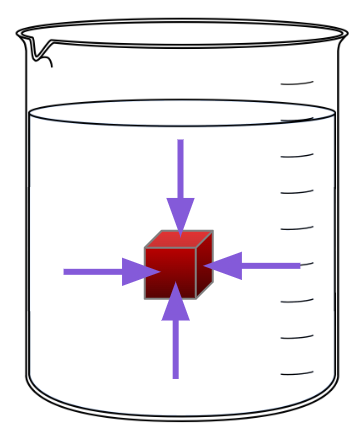
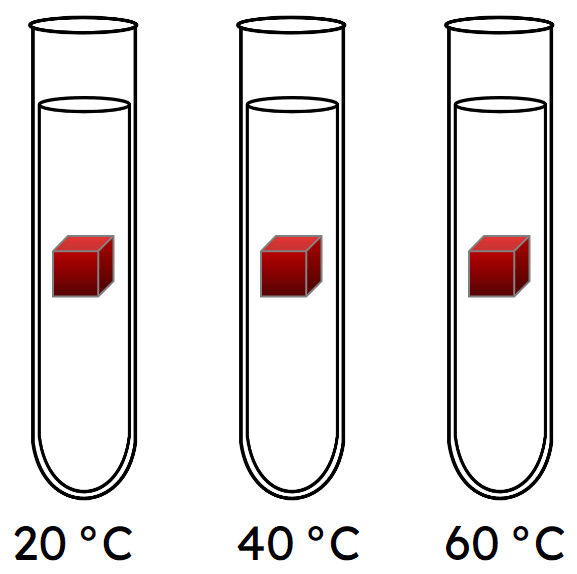
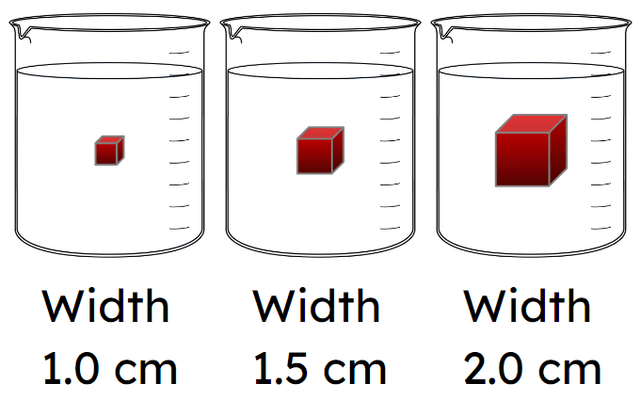 Diffusion through a selectively-permeable membrane: practicalPASSIVE TRANSPORT Cell membranes help organisms maintain homeostasis by controlling what substances may enter or leave cells. Some substances can cross the cell membrane without any input of energy by the cell in a process known as passive transport. DIFFUSION The simplest type of passive transport is diffusion. Diffusion is the movement of molecules from an area of higher concentration to an area of lower concentration. This difference in the concentration of molecules across a distance is called a concentration gradient. Consider what happens when you add a sugar cube to a beaker of water. As shown in Figure 5-1, the sugar cube sinks to the bottom of the beaker. This sinking makes the concentration of sugar mole- cules greater at the bottom of the beaker than at the top. As the cube dissolves, the sugar molecules begin to diffuse slowly through the water, moving towards the lower concentration at the top. Diffusion is driven entirely by the molecules’ kinetic energy. Molecules are in constant motion because they have kinetic energy. Molecules move randomly, traveling in a straight line until they hit an object, such as another molecule. When they hit some- thing, they bounce off and move in a new direction, traveling in another straight line. If no object blocks their movement, they con- tinue on their path. Thus, molecules tend to move from areas where they are more concentrated to areas where they are less concentrated, or “down” their concentration gradient. In the absence of other influences, diffusion will eventually cause the molecules to be in equilibrium—the concentration of molecules will be the same throughout the space the molecules occupy. Returning to the example in Figure 5-1, if the beaker of water is left undisturbed, at some point the concentration of sugar molecules will be the same throughout the beaker. The sugar concentration will then be at equilibrium. SECTION 1 OBJECTIVES ● Explain how an equilibrium is established as a result of diffusion. ● Distinguish between diffusion and osmosis. ● Explain how substances cross the cell membrane through facilitated diffusion. ● Explain how ion channels assist the diffusion of ions across the cell membrane. VOCABULARY passive transport diffusion concentration gradient equilibrium osmosis hypotonic hypertonic isotonic contractile vacuole turgor pressure plasmolysis cytolysis facilitated diffusion carrier protein ion channel Sugar Water 1 2 3 FIGURE 5-1 Sugar molecules, initially in a high concentration at the bottom of a beaker, , will move about randomly through diffusion, , and eventually reach equilibrium, . At equilibrium the sugar concentration will be the same throughout the beaker. Diffusion occurs naturally because of the kinetic energy the molecules possess. 3 2 1 Copyright © by Holt, Rinehart and Winston. All rights reserved. 98 CHAPTER 5 It is important to understand that even at equilibrium the ran- dom movement of molecules continues. But because there is an equal concentration of molecules everywhere, molecules are just as likely to move in one direction as in any other. The random movements of many molecules in many directions balance one another, and equilibrium is maintained. Diffusion Across Membranes Cell membranes allow some molecules to pass through, but not others. If a molecule can pass through a cell membrane, it will diffuse from an area of higher concentration on one side of the membrane to an area of lower concentration on the other side. Diffusion across a membrane is also called simple diffusion, and only allows certain molecules to pass through the membrane. The simple diffusion of a molecule across a cell membrane depends on the size and type of molecule and on the chemical nature of the membrane. A membrane can be made, in part, of a phospho- lipid bilayer, and certain proteins can form pores in the membrane. Molecules that can dissolve in lipids may pass directly through the membrane by diffusion. For example, because of their nonpolar nature, both carbon dioxide and oxygen dissolve in lipids. Molecules that are very small but not soluble in lipids may diffuse across the membrane by moving through the pores in the membrane.Some substances, such as macromolecules and nutrients, are too large to pass through the cell membrane by the transport processes you have studied so far. Cells employ two other transport mecha- nisms—endocytosis and exocytosis—to move such substances into or out of cells. Endocytosis and exocytosis are also used to transport large quantities of small molecules into or out of cells at a single time. Both endocytosis and exocytosis require cells to expend energy. Therefore, they are types of active transport. Endocytosis Endocytosis (EN-doh-sie-TOH-sis) is the process by which cells ingest external fluid, macromolecules, and large particles, including other cells. As you can see in Figure 5-7, these external materials are enclosed by a portion of the cell’s membrane, which folds into itself and forms a pouch. The pouch then pinches off from the cell membrane and becomes a membrane-bound organelle called a vesicle. Some of the vesicles fuse with lysosomes, and their con- tents are digested by lysosomal enzymes. Other vesicles that form during endocytosis fuse with other membrane-bound organelles. Two main types of endocytosis are based on the kind of material that is taken into the cell: pinocytosis (PIEN-oh-sie-TOH-sis) involves the transport of solutes or fluids, and phagocytosis (FAG-oh-sie-TOH-sis) is the movement of large particles or whole cells. Many unicellular organisms feed by phagocytosis. In addition, certain cells in animals use phagocytosis to ingest bacteria and viruses that invade the body. These cells, known as phagocytes, allow lysosomes to fuse with the vesicles that contain the ingested bacteria and viruses. Lysosomal enzymes then destroy the bacteria and viruses before they can harm the animal. CYTOSOL EXTERNAL ENVIRONMENT During endocytosis, the cell membrane folds around food or liquid and forms a small pouch. The pouch then pinches off from the cell membrane to become a vesicle. FIGURE 5-7 vesicle from the Latin vesicula, meaning “bladder” or “sac” Word Roots and Origins www.scilinks.org Topic: Endocytosis Keyword: HM60505 mb06se_homs02.qxd 5/18/07 11:03 AM Page 105 106 CHAPTER 5 1. Explain the difference between passive trans- port and active transport. 2. What functions do carrier proteins perform in active transport? 3. What provides the energy that drives the sodium-potassium pump? 4. Explain the difference between pinocytosis and phagocytosis. 5. Describe the steps involved in exocytosis. 6. How do endocytosis and exocytosis differ? How can that difference be seen? CRITICAL THINKING 7. Analyzing Information During intense exercise, potassium tends to accumulate in the fluid surrounding muscle cells. What membrane protein helps muscle cells counteract this tendency? Explain your answer. 8. Evaluating Differences How does the sodium- potassium pump differ from facilitated diffusion? 9. Relating Concepts The vesicles formed during pinocytosis are much smaller than those formed during phagocytosis. Explain. SECTION 2 REVIEW Vesicle Cell membrane EXTERNAL ENVIRONMENT CYTOSOL During exocytosis, a vesicle moves to the cell membrane, fuses with it, and then releases its contents to the outside of the cell. FIGURE 5-8 INSIDE OF CELL Vesicle OUTSIDE OF CELL Exocytosis Exocytosis (EK-soh-sie-TOH-sis) is the process by which a substance is released from the cell through a vesicle that transports the sub- stance to the cell surface and then fuses with the membrane to let the substance out of the cell. This process, illustrated in Figure 5-8, is basically the reverse of endocytosis. During exocytosis, vesi- cles release their contents into the cell’s external environment. Figure 5-8 also shows a photo of a vesicle during exocytosis. Cells may use exocytosis to release large molecules such as pro- teins, waste products, or toxins that would damage the cell if they were released within the cytosol. Recall that proteins are made on ribosomes and packaged into vesicles by the Golgi apparatus. The vesicles then move to the cell membrane and fuse with it, deliver- ing the proteins outside the cell. Cells in the nervous and endocrine systems also use exocytosis to release small molecules that control the activities of other cells.A solution is composed of a solute dissolved in a solvent. In the sugar water described in Figure 5-1, the solute was sugar and the solvent was water, and the solute molecules diffused through the solvent. It is also possible for solvent molecules to diffuse. In the case of cells, the solutes are organic and inorganic compounds, and the solvent is water. The process by which water molecules diffuse across a cell membrane from an area of higher concentration to an area of lower concentration is called osmosis (ahs-MOH-sis). Because water is moving from a higher to lower concentration, osmosis does not require cells to expend energy. Therefore, osmosis is the passive transport of water. Direction of Osmosis The net direction of osmosis depends on the relative concentra- tion of solutes on the two sides of the membrane. Examine Table 5-1. When the concentration of solute molecules outside the cell is lower than the concentration in the cytosol, the solution outside is hypotonic to the cytosol. In this situation, water diffuses into the cell until equilibrium is established. When the concentration of solute molecules outside the cell is higher than the concentration in the cytosol, the solution outside is hypertonic to the cytosol. In this situation, water diffuses out of the cell until equilibrium is established. Observing Diffusion Materials 600 mL beaker, 25 cm dialysis tubing, funnel, 15 mL starch solution (10 percent), 20 drops Lugol’s solution, 300 mL water, 100 mL graduated cylinder, 20 cm piece of string (2) Procedure 1. Put on your disposable gloves, lab apron, and safety goggles. 2. Pour 300 mL of water in the 600 mL beaker. 3. Add 20 drops of Lugol’s solution to the water. CAUTION: Lugol’s solution is a poison and eye and skin irritant. 4. Open the dialysis tubing, and tie one end tightly with a piece of string. 5. Using the funnel, pour 15 mL of 10 percent starch solution into the dialysis tubing. 6. Tie the other end of the dialysis tubing tightly with the second piece of string, forming a sealed bag around the starch solution. 7. Place the bag into the solution in the beaker, and observe the setup for a color change. Analysis What happened to the color in the bag? What happened to the color of the water around the bag? Explain your observations. Quick Lab www.scilinks.org Topic: Osmosis Keyword: HM61090 mb06se_homs01.qxd 11/27/07 8:52 AM Page 98 HOMEOSTASIS AND CELL TRANSPORT 99 When the concentrations of solutes outside and inside the cell are equal, the outside solution is said to be isotonic to the cytosol. Under these conditions, water diffuses into and out of the cell at equal rates, so there is no net movement of water. Notice that the prefixes hypo-, hyper-, and iso- refer to the relative solute concentrations of two solutions. Thus, if the solution outside the cell is hypotonic to the cytosol, then the cytosol must be hyper- tonic to that solution. Conversely, if the solution outside is hypertonic to the cytosol, then the cytosol must be hypotonic to the solution. Water tends to diffuse from hypo- tonic solutions to hypertonic solutions. How Cells Deal with Osmosis Cells that are exposed to an isotonic external environment usually have no difficulty keeping the movement of water across the cell membrane in balance. This is the case with the cells of ver- tebrate animals on land and of most other organ- isms living in the sea. In contrast, many cells function in a hypotonic environment. Such is the case for unicellular freshwater organisms. Water constantly diffuses into these organisms. Because they require a relatively lower concentration of water in the cytosol to function normally, unicel- lular organisms must rid themselves of the excess water that enters by osmosis. Some of them, such as the paramecia shown in Figure 5-2, do this with contractile vacuoles (kon-TRAK-til VAK-y ̄ ̄o ̄ ̄o-OL), which are organelles that remove water. Contractile vacuoles collect the excess water and then contract, pumping the water out of the cell. Unlike diffusion and osmosis, this pumping action is not a form of passive trans- port because it requires the cell to expend energy. Copyright © by Holt, Rinehart and Winston. All rights reserved. (a) (b) Vacuole filling with water Vacuole contracting TABLE 5-1 Direction of Osmosis Condition External solution is hypotonic to cytosol External solution is hypertonic to cytosol External solution is isotonic to cytosol Net movement of water into the cell out of the cell none H2O H2O H2O H2O H2O H2O The paramecia shown below live in fresh water, which is hypotonic to their cytosol. (a) Contractile vacuoles collect excess water that moves by osmosis into the cytosol. (b) The vacuoles then contract, returning the water to the outside of the cell. (LM 315) FIGURE 5-2 100 CHAPTER 5 (a) HYPOTONIC Cell walls (b) HYPERTONIC (a) ISOTONIC (b) HYPOTONIC (c) HYPERTONIC Other cells, including many of those in multicellular organisms, respond to hypotonic environments by pumping solutes out of the cytosol. This lowers the solute concentration in the cytosol, bring- ing it closer to the solute concentration in the environment. As a result, water molecules are less likely to diffuse into the cell. Most plant cells, like animal cells, live in a hypotonic environ- ment. In fact, the cells that make up plant roots may be surrounded by water. This water moves into plant cells by osmosis. These cells swell as they fill with water until the cell membrane is pressed against the inside of the cell wall, as Figure 5-3a shows. The cell wall is strong enough to resist the pressure exerted by the water inside the expanding cell. The pressure that water molecules exert against the cell wall is called turgor pressure (TER-GOR PRESH-er). In a hypertonic environment, water leaves the cells through osmosis. As shown in Figure 5-3b, the cells shrink away from the cell walls, and turgor pressure is lost. This condition is called plasmolysis (plaz-MAHL-uh-sis), and is the reason that plants wilt if they don’t receive enough water. Some cells cannot compensate for changes in the solute con-In many cases, cells must move materials from an area of lower concentration to an area of higher concentration, or “up” their concentration gradient. Such movement of materials is known as active transport. Unlike passive transport, active transport requires a cell to expend energy. CELL MEMBRANE PUMPS Ion channels and carrier proteins not only assist in passive trans- port but also help with some types of active transport. The car- rier proteins that serve in active transport are often called cell membrane “pumps” because they move substances from lower to higher concentrations. Carrier proteins involved in facilitated diffusion and those involved in active transport are very similar. In both, the molecule first binds to a specific kind of carrier protein on one side of the cell membrane. Once it is bound to the molecule, the protein changes shape, shielding the molecule from the hydrophobic interior of the phospholipid bilayer. The protein then transports the molecule through the membrane and releases it on the other side. However, cell membrane pumps require energy. Most often the energy needed for active transport is supplied directly or indirectly by ATP. Sodium-Potassium Pump One example of active transport in animal cells involves a carrier protein known as the sodium-potassium pump. As its name sug- gests, this protein transports Na ions and K ions up their con- centration gradients. To function normally, some animal cells must have a higher concentration of Na ions outside the cell and a higher concentration of K ions inside the cell. The sodium- potassium pump maintains these concentration differences. Follow the steps in Figure 5-6 on the next page to see how the sodium-potassium pump operates. First, three Na ions bind to the carrier protein on the cytosol side of the membrane, as shown in step . At the same time, the carrier protein removes a phosphate group from a molecule of ATP. As you can see in step , the phos- phate group from the ATP molecule binds to the carrier protein. Step shows how the removal of the phosphate group from ATP supplies the energy needed to change the shape of the carrier pro- tein. With its new shape, the protein carries the three Na ions through the membrane and then forces the Na ions outside the cell where the Na concentration must remain high. 3 2 1 SECTION 2 OBJECTIVES ● Distinguish between passive transport and active transport. ● Explain how the sodium-potassium pump operates. ● Compare endocytosis and exocytosis. VOCABULARY active transport sodium-potassium pump endocytosis vesicle pinocytosis phagocytosis phagocyte exocytosis www.scilinks.org Topic: Active Transport Keyword: HM60018 mb06se_homs02.qxd 5/18/07 11:02 AM Page 103 104 CHAPTER 5 K+ K+ K+ K+ K+ K+ INSIDE OF CELL OUTSIDE OF CELL Carrier protein Cell membrane P P P P Na+ Na+ Na+ ATP ADP Na+ Na+ Na+ Na+ Na+ Na+ 1 2 3 4 5 6 At this point, the carrier protein has the shape it needs to bind two K ions outside the cell, as step shows. When the K ions bind, the phosphate group is released, as indicated in step , and the carrier protein restores its original shape. As shown in step this time, the change in shape causes the carrier protein to release the two K ions inside the cell. At this point the carrier protein is ready to begin the process again. Thus, a complete cycle of the sodium-potassium pump transports three Na ions out of the cell and two K ions into the cell. At top speed, the sodium-potassium pump can transport about 450 Na ions and 300 K ions per second. The exchange of three Na ions for two K ions creates an electrical gradient across the cell membrane. That is, the outside of the membrane becomes positively charged relative to the inside of the membrane, which becomes relatively negative. In this way, the two sides of the cell membrane are like the positive and nega- tive terminals of a battery. This difference in charge is important for the conduction of electrical impulses along nerve cells. The sodium-potassium pump is only one example of a cell membrane pump. Other pumps work in similar ways to transport important metabolic materials across cell membranes.Religions Buddhism, Islam, and Christianity are all practiced within Southeast Asia. Buddhism, particularly the more orthodox Theravada form, dominates the religious pattern of most of the mainland; only in northern Vietnam is the more liberal Mahayana Buddhism more common. Islam is predominant in the southern half of the Malay Peninsula, the Malay Archipelago, and the southern Philippines. As a result of the large Muslim population in Indonesia, Islam is the religion of some two-fifths of Southeast Asians. The diffusion of the religion began in the early 14th century through contact with Muslim traders in northern Sumatra. Perhaps more than any of the other religions, Islam has been a strong force in binding together its adherents. It has profoundly affected cultural, social, political, and economic matters in areas where it is practiced. The spread of Christianity came with European contact. Roman Catholicism was introduced to insular Southeast Asia by the Spanish and the Portuguese in the 16th century and somewhat later to the Indochinese Peninsula by the French. Catholicism is most important in the Philippines and southern Vietnam. Protestantism also is locally important. The Batak and Minangkabau peoples in Sumatra and a growing number of Chinese in Singapore and elsewhere adhere to various Protestant denominations. Hinduism, once much more widespread, now is practiced by many people in the region’s Indian communities. In addition, this religion, modified by animism and other influences, is the primary faith on the island of Bali in Indonesia. Various forms of animism also are practiced in the region’s more remote areas, particularly in central Borneo, northern Laos, and northern Myanmar.To the Lakota, and other indigenous people on North America's Great Plains, the bison was an essential part of their culture ( expressed in the quote on the previous page). The bison provided meat for nutrition, a hide for clothing and shelter, bones for tools, and fat for soap. The bison was also central to their religious beliefs. So, when European settlers hunted the bison nearly to extinction, Lakota culture suffered. Culture is central to a society and the identity of its people, as well as its continued existence. Therefore, geographers study culture as a way to understand similarities and differences among societies across the world, and in some cases, to help preserve these societies. Analyzing Culture All of a group's learned behaviors, actions, beliefs, and objects are a part of culture. It is a visible force seen in a group's actions, possessions, and influence on the landscape. For example, in a large city you can see people working in offices, factories, and stores, and living in high-rise apartments or suburban homes. You might observe them attending movies, concerts, or sporting events. Culture is also an invisible force guiding people through shared belief systems, customs, and traditions. Culture is learned, in that it develops through experiences, and not merely transmitted through genetics. For example, many people in the United States have developed a strong sense of competitiveness in school and business, and believe that hard work is a key to success. These types of elements, visible and invisible, are cultural traits. A series of interrelated traits make up a cultural complex, such as the process of steps and acceptable behaviors related to greeting a person in different cultures. A single cultural artifact, such as an automobile, may represent many different values, beliefs, behaviors and traditions and be representative of a cultural complex. Since culture is learned there are many ways that one generation passes its culture to the next. Children and adults learn traits three ways: • imitation, as when learning a language by repeating sounds or behaviors from a person or television • informal instruction, as when a parent reminds a child to say "please" • formal instruction, as when students learn history in school 132 HUMAN GEOGRAPHY: AP" EDITION CULTURAL COMPLEX OF THE AUTOMOBILE The automobile provides much more than just transportation, as it reflects many values that are central to American culture. Origins of Culture The area in which a unique culture or a specific trait develops is a culture hearth. Classical Greece was a culture hearth for democracy more than 2,000 years ago. New York City was a culture hearth for rap music in the 1970s. Geographers study how cultures develop in hearths and diffuse-or spread-to other places. Geographers also study taboos, behaviors heavily discouraged by a culture. For example, many cultures have taboos against eating certain foods, such as pork or insects. What is considered taboo changes over time. In the United States, marriages between Protestants and Catholics were once taboo, but they are not widely opposed now. Traditional, Folk, and Indigenous Cultures With the beginning of the Industrial Revolution in the late 18th century, modern transportation and communication connected people as never before and led to extensive cultural mixing, especially as cities have grown. The world prior to this time was very different; however, remnants of the past are still evident in our modern cultures. Traditional, folk, and indigenous cultures share some important characteristics and are often grouped together, but they do have some subtle differences. Traditional Culture Recently, the meanings of traditional, folk, and indigenous culture have begun to merge, causing geographers to debate when each should be used. Increasingly, the term traditional culture is used to encompass all three cultural designations. All three types share the function of passing down long-held beliefs, values, and practices and are generally resistant to rapid changes in their culture. Folk Culture The beliefs and practices of small, homogenous groups of people, often living in rural areas that are relatively isolated and slow to change, are known as folk cultures. Like all cultures, they demonstrate the diverse ways that people have adapted to a physical environment. For example, people around the world learned to make shelters out of available resources, whether 3.1: INTRODUCTION TO CULTURE 133 it was snow or mud bricks or wood. However, people used similar resources such as wood differently. In Scandinavia, people used trees to build cabins. In the American Midwest, people processed trees into boards, built a frame, and attached the boards to it. Many traits of folk culture continue today. Corn was first grown in Mexico around 10,000 years ago, and it is still grown there today. While many elements of folk culture exist side by side with modern culture, there are people whose societies have changed little, if at all, from long ago. These people practice traditional cultures, those which have not been affected by modern technology or influences. They often live in remote regions, such as some small tribes in the Amazon rainforest, and have scant knowledge of the outside world. As the lines continue blurring between cultural designations, the Amish of Pennsylvania are often referenced as both folk and traditional culture. Indigenous Culture When members of an ethnic group reside in their ancestral lands, and typically possess unique cultural traits, such as speaking their own exclusive language, they are considered an indigenous culture. Some indigenous peoples have been displaced from their native lands, but still practice their indigenous culture. Native Americans in the United States, such as the Navajo, have kept indigenous cultural practices. First Nations of Canada, such as the Inuit, have also retained their indigenous culture. Globalization and Popular Culture As a result of the Industrial Revolution, improvements in transportation and communication have shortened the time required for movement, trade, or other forms of interaction between two places. This development, known as space-time compression (see Topics 1.4 and 3.6), has accelerated culture change around the world. In 1817, a freight shipment from Cincinnati needed 52 days to reach New York City. By 1850, because of canals and railroads, it took half that long. And by 1852, it took only 7 days. Today, an airplane flight takes only a few hours, and digital information takes seconds or less. Similar change has occurred on the global scale. People travel freely across the world in a matter of hours, and communication has advanced to a point where people share information instantaneously across the globe. The increased global interaction has had a profound impact on cultures, from spreading English across the world to instant sharing of news, events and music. Globalization specifically refers to the increased integration of the world economy since the 1970s. The process of intensified interaction among peoples, governments, and companies of different countries around the globe has had profound impacts on culture. The culture of the United States is intertwined with globalization. Through the influence of its corporations, Hollywood movies, and government, the United States exerts widespread influence in other countries. But other countries also shape American culture. For example, in 2019, the National Basketball Association included players from 38 countries or territories. When cultural traits- such as clothing, music, movies, and types of 134 HUMAN GEOGRAPHY: AP. EDITION businesses-spread quickly over a large area and are adopted by various groups, they become part of popular culture. Elements of popular culture often begin in urban areas and diffuse quickly through globalization processes such as the media and Internet. These elements can quickly be adopted worldwide, making them part of global culture. People around the world follow European soccer, Indian Bollywood movies, and Japanese animation known as anime. With people in many nations wearing similar clothes, listening to similar music, and eating similar food, popular cultural traits often promote uniformity in beliefs, values, and the cultural landscape across many places The cultural landscape, also known as the built environment (see Topic 3.2), is the modification of the environment by a group and is a visible reflection of that group's cultural beliefs and values. Traditional Culture to Popular Culture Popular culture emphasizes trying what is new rather than preserving what is traditional. Many people, especially older generations or those who follow a folk culture, openly resist the adoption of popular cultural traits. They do this by preserving traditional languages, religions, values, and foods. While older generations often resist the adoption of popular culture, they seldom are successful in keeping their traditional cultures from changing, especially among the young people of their society. One clash between popular and traditional culture is occurring in Brazil. As the population expands to the interior of the rain forest, many indigenous cultures, like the Yanamamo tribe, have more contact with outside groups. Remaining isolated by the forest is becoming increasingly difficult as many young people from the indigenous cultures become exposed to popular culture and begin to integrate into the larger Brazilian society. As the young people leave their communities, they are more likely to accept popular culture at the expense of their indigenous cultural heritage, which threatens the very existence of their folk culture. Traditional culture typically exhibits horizontal diversity, meaning each traditional culture has its own customs and language that makes it distinct from other culture groups. Yet, people people within each group are usually homogeneous, or very similar to each other. By contrast, popular culture typically exhibits vertical diversity, meaning that modern urban societies are usually heterogeneous, or exhibiting differences, within the society and usually contain numerous multiethnic neighborhoods. However, on a global scale popular cultures are relatively similar with the same type of malls, shops, fast food, and clothing. Urban global culture centers are not identical, yet, global cities often do not have as much horizontal diversity across space as folk cultures. 3.1: INTRODUCTION TO CULTURE 135 COMPARING TRADITIONAL AND POPULAR CULTURE Trait Traditional Culture Popular or Global Culture Society • Rural and isolated location • Urban and connected location • Homogeneous and • Diverse and multiethnic indigenous population population • Most people speak an • Many people speak a global indigenous or ethnic local language such as English or language Arabic • Horizontal diversity • Vertical diversity Social • Emphasis on community and • Emphasis on individualism and Structure conformity making choices • Families live close to each • Dispersed families other • Weakly defined gender roles • Well-defined gender roles Diffusion • Relatively slow and limited • Relatively rapid and extensive • Primarily through relocation • Often hierarchical • Oral traditions and stories • Social media and mass media Buildings and • Materials produced locally, • Materials produced in distant Housing such as stone or grass factories, such as steel or glass • Built by community or owner • Built by a business • Similar style for community • Variety of architectural styles • Different between cultures • Similar between cities • Traditional architecture • Postmodern / contemporary architecture Food • Locally produced • Often imported • Choices limited by tradition • Wide range of choice • Prepared by the family or • Purchased in restaurants community Spatial Focus • Local and regional • National and global Artifacts, Mentifacts, and Sociofacts Whether a cultural attribute is considered traditional, folk, indigenous, or popular in nature, it is valuable to differentiate between elements of culture that can be seen and those that can not. There are artifacts that comprise the material culture, which consists of tangible things, or those that can be experienced by the senses. Art, clothing, food, music, sports, and housing types are all tangible elements of culture. Another element of the study of artifacts is understanding the techniques to use or build a specific artifact. Artifacts can be unique to a particular culture, or can be shared. For example, people of all cultures need to communicate through language, yet there are many groups that possess languages unique to their culture. The ability to read, write and understand the English language is an artifact of importance for much of popular global culture. 136 HUMAN GEOGRAPHY: AP" EDITION Mentifacts comprise a group's nonmaterial culture and consist ofintangible concepts, or those not having a physical presence. Beliefs, values, practices, and aesthetics (pleasing in appearance) determine what a cultural group views as acceptable and desirable. Mentifacts can also be unique or shared. People of many cultures possess an belief in one or many deities, and often the deities are unique to that culture. The belief in a god is a mentifact-the religious building or symbols are artifacts. Cultural groups also possess sociofacts, which are the ways people organize their society and relate to one another. Taken altogether, people tend to see the whole of their culture as greater than the sum of its individual parts. Sociofacts are embodied through families, governments, sports teams, religious organizations, education systems, and other social constructs. As with artifacts and mentifacts, sociofacts may also be unique or similar to other societies. Families are the foundations of most societies, yet what constitutes the structure of a family may vary widely between cultural groups. For example, Western cultures tend to view the nuclear family, consisting of the parents and their children as the basic family unit. By contrast, in many Western African cultures the norm is the extended family, consisting of several generations and other family members such as cousins living under one roof.Economy of Southeast Asia Even prior to the penetration of European interests, Southeast Asia was a critical part of the world trading system. A wide range of commodities originated in the region, but especially important were such spices as pepper, ginger, cloves, and nutmeg. The spice trade initially was developed by Indian and Arab merchants, but it also brought Europeans to the region. First the Portuguese, then the Dutch, and finally the British and French became involved in this enterprise in various countries. The penetration of European commercial interests gradually evolved into annexation of territories, as traders lobbied for an extension of control to protect and expand their activities. As a result, the Dutch moved into Indonesia, the British into Malaya, and the French into Indochina. Europe’s interest and activity in the region was further enhanced by the opening of the Suez Canal, the development of telegraphic communications, the adoption of steam shipping, and the prospects for trade with China. In the case of Malaya, the gradual diffusion of British administration provided systems of law and order and of taxation and allowed for the gradual development of infrastructure, principally reliable transport systems. This environment attracted Chinese immigrants, and the growth of the tin mining industry soon followed. Later rubber plantations were established, which brought about still further immigration. Similar developments took place in Burma (Myanmar), Vietnam, and Indonesia. In Siam (Thailand) during the second half of the 19th century, a rapid expansion of Western enterprise occurred, though not by colonization. Both British and American firms began trading in the region. The impact of the Western activity was essentially to remove trade from what had been a Chinese monopoly and to emphasize the export of a single commodity, rice. Established indigenous textile and sugar-processing industries were replaced by imports, and the economy slowly became dependent on rice exports. The Philippines gradually developed a plantation farming system under Spanish and later American influence, although rice, sugar, and tobacco continued to be produced by small-scale growers and processed by Chinese enterprises until the mid-19th century. The incorporation of Southeast Asia into the world economy had a major impact on the distribution of the region’s economic development, and it created more uneven patterns of population growth and economic activity. It also brought about a stronger sense of class distinction and resulted in a larger discrepancy between the wealthy and poor. The worldwide economic depression of the 1930s severely affected the commercialized areas most dependent on the world economy. Unemployment rose, and the period produced the seeds of political change and activism that culminated in the independence of most of the region’s countries after World War II. Since the 1950s the economic development strategies of virtually all the capitalist Southeast Asian states have emphasized urban industrialization, while agricultural development generally has been viewed as subsidiary to industrial growth. These strategies have met with mixed success. Indeed, the trading pattern of the region by and large has continued to be one of producing and exporting raw materials and importing manufactured goods. Only Singapore has reached an advanced level of industrialization, in the process becoming one of the world’s great centers of industry and commerce. There is great disparity in development rates within the region, especially between the member and nonmember countries of the Association of Southeast Asian Nations (ASEAN). Those belonging to this grouping—Brunei, Indonesia, Malaysia, the Philippines, Singapore, and Thailand—generally have experienced significant economic development since the mid-1960s; the exception has been the Philippines, the economy of which has grown at a much slower rate. Development has been extremely slow or nonexistent in the non-ASEAN countries of Cambodia, Laos, Myanmar, and Vietnam, and these are among the poorest nations in the world.