Loading...


Disease Detectives Final Mock Assessment
Quiz by Jason Wang
Tag the questions with any skills you have. Your dashboard will track each student's mastery of each skill.
Case #1: Endophthalmitis, or inflammation of the inner eye cavity, is a rare infection that can result in loss of vision if not treated promptly. In November of 2020, a surge of endophthalmitis cases occurred in South Korea. Epidemiologic triads can be used to generate hypotheses and assist in collecting important data about an outbreak. Which of the following are valid epidemiological triads? a. Person place time b. Agent host environment c. Person agent environment d. Vector host environment e. Place time agent
After some investigation, epidemiologists find that all cases occurred in people who had recently gotten cataract surgery. They hypothesize that infection somehow occurred during the operational process. This infection would be considered ___________. a. Nosocomial b. Systemic c. Latent d. Iatrogenic e. Endogenous f. Exogenous
Shown below is a map of the number of cases per region:. What type of transmission occurred in this case?

Since the infection happened during surgery, investigators suspect Ophthalmic Viscosurgical Devices (OVDs), injected into the eye during surgery. 159 case patients’ records were examined to see what brand of OVDs were used during surgery. What measure of disease association is used for this type of study?
Case #2: Salmonella enterica is a gram-negative bacteria that often infects livestock, primarily cattle and poultry. S. enterica can cause illness in humans and is the primary bacterial cause of food borne illness in the United States, causing an estimated 1 million cases and 400 deaths every year. Salmonella patients typically exhibit symptoms consistent with acute gastroenteritis such as diarrhea, fever, and stomach cramps. Symptoms may begin as soon as six hours after exposure and usually last for four to seven days.
The Centers for Disease Control and Prevention (CDC) coordinates PulseNet, a national surveillance network for DNA fingerprints of bacterial agents. DNA fingerprinting allows for the formation of clusters of disease caused by similar strains of a bacteria. Typically, salmonellosis outbreaks within the United States are identified through PulseNet.
What type of fingerprinting is most commonly performed for PulseNet analysis?
Microbiologists and epidemiologists can then monitor subtypes of submitted samples to identify clusters of disease. Which of the following is the best definition of a cluster?
What is this type of graph called?
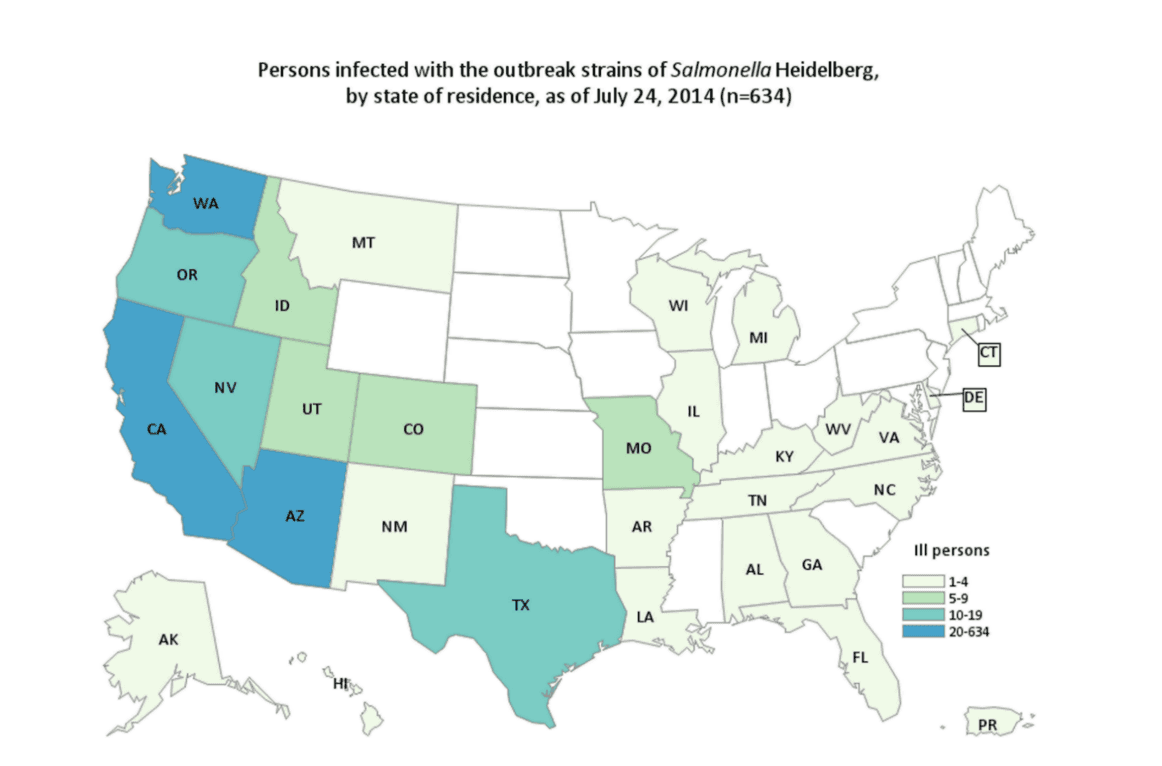
Among the 634 identified cases for this outbreak, information was only available for 528 case-patients. Of these 528 individuals, 200 were hospitalized and none died. Only 273 case-patients completed a focused questionnaire. Among those, 201 reported eating chicken prepared at home. According to the nationally conducted FoodNet Population Survey, 65% of healthy individuals reported preparing chicken at home. What type of study is this?
What is the hospitalization rate for this outbreak?
Case #3: The association between mental and physical health is becoming a research topic of increasing interest. Through the National Health and Nutrition Examination Survey, researchers investigated the relationship between depression and risk for cardiovascular disease (10 year risk and lifetime risk). Chronic illness is often considered in the domain of clinical epidemiology more than classical epidemiology. Which of the following would be more relevant to clinical epidemiology?
To diagnose cardiovascular disease faster, researchers develop a new test. Which of the following biases will lead to a false assumption that the diagnostic test improves disease outcome?
Researchers at MIT develop a new drug to treat cardiovascular disease! Now they need to design a trial to see if it works. The study finds that the experimental group of 120 patients has an average survival time of 10 years, with an STD of 2.4 years. The control group of 200 patients has an average survival time of 9.45 years, with an STD of 3 years. What sort of a test would we conduct?
Below are general questions. An epicurve provides
In an arbitrary scenario, 5 of the 13 exposed are sick, and 2 of the 23 people exposed are sick. Choose the correct measures of association below.
Which of the following is not part of the “Prepare for field work” step in Outbreak Investigation?
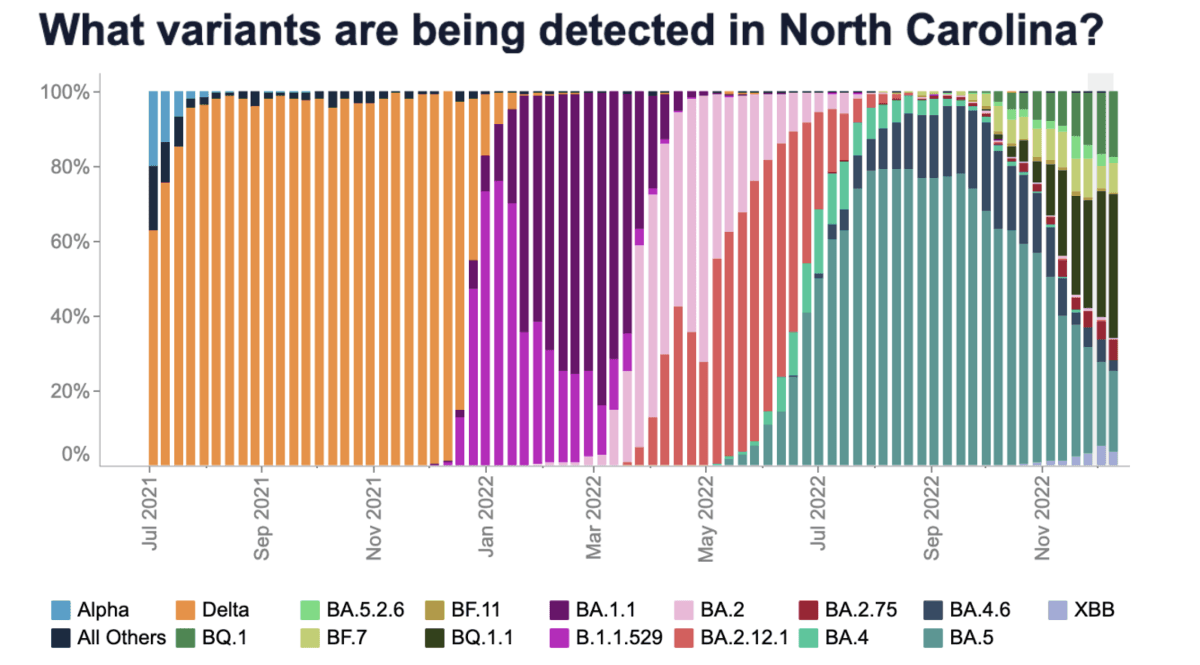
The North Carolina COVID-19 Dashboard monitors trends and patterns in the pandemic. Which of the following interpretations of the data in the last reported week (end date 12/10/22) is correct?
Ignaz Semmelweis was a Hungarian physician and early proponent of antiseptic and hand disinfection procedures. He is credited for discovering that these practices reduced the incidence of puerperal fever (also known as childbed fever). Which of the following control strategies did these practices align with?
In 1980, the World Health Organization declared smallpox to be the only infectious disease to achieve what distinction?
True or False: Spot maps are useful to determine the risk of a public health event occuring in a particular place.
This segment of the chain of transmission includes the following examples: people, water, and food.
There was an outbreak of a viral respiratory illness on the bone marrow transplantation unit. Sixteen patients were affected, with varying degrees of upper and lower respiratory tract involvement. Transmission in the outpatient unit was implicated with close contact and surface contamination important as routes of transmission rather than droplet spread. No healthcare workers were affected. One of the patients was a 59-year-old man who had received a matched unrelated donor allogeneic hematopoietic stem cell transplantation with non-myeloablative conditioning. 60 days after his BMT, he developed coryzal symptoms. He deteriorated over 24 hours and developed symptoms of a lower respiratory tract infection, with cough, tachypnoea, fever and hypoxia. He was admitted to a side room on the hematology ward. A chest radiograph was obtained which showed new pulmonary infiltrates. A nasopharyngeal aspirate was sent for respiratory virus PCR panel, microscopy and culture for bacteria, fungi and mycobacteria. A urine Legionella antigen was negative. A high-resolution CT scan of the chest showed small peribronchial nodules. These were noncavitating, diameter <5 mm. What is the most likely pathogen?
A mosquito bites a person who subsequently develops a fever and abdominal rash. What type of transmission would this be?
What is Disease Detectives?