Loading...


DNA Structure and Function
Quiz by Tina Jeandron
Customize this quiz to suit your class
Instantly translate to 100+ languages
Tag the questions with any skills you have. Your dashboard will track each student's mastery of each skill.
Give this quiz to my class
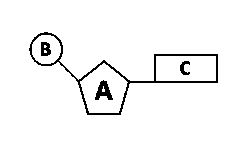 Cells organelle structure and function, DNA structure and protein synthesisSB2. Obtain, evaluate, and communicate information to analyze how genetic information is expressed in cells. a. Construct an explanation of how the structures of DNA and RNA lead to the expression of information within the cell via the processes of replication, transcription, and translation. Learning Targets _______Identify the structural components of DNA and RNA Success Criteria _______Can accurately identify the key structural components of DNA (deoxyribose sugar, phosphate group, nitrogenous bases: adenine, thymine, cytosine, guanine). _______Can identify the key structural components of RNA (ribose sugar, phosphate group, nitrogenous bases: adenine, uracil, cytosine, guanine). _______Can describe the differences in the sugar backbone of DNA and RNA (deoxyribose vs. ribose). _______Can identify the double-stranded structure of DNA and the single-stranded structure of RNA. _______Identify the parts of protein synthesis and the location of each process Success Criteria _______Can identify and describe the two main processes of protein synthesis: transcription and translation. _______Can correctly explain that transcription occurs in the nucleus where DNA is transcribed into mRNA. _______Can explain that translation occurs in the cytoplasm at ribosomes where mRNA is translated into amino acid sequences to form proteins. _______Compare and Contrast DNA to RNA Success Criteria _______Can clearly identify similarities between DNA and RNA, such as both being nucleic acids and containing nucleotide structures. _______Can explain differences in DNA and RNA, including sugar types (deoxyribose vs. ribose), strand number (double-stranded DNA vs. single-stranded RNA), and nitrogenous base usage (thymine in DNA vs. uracil in RNA). _______Can describe the function of DNA as genetic storage and the function of RNA in protein synthesis (mRNA, tRNA, rRNA). _______Analyze the reasoning for enzymes usage in both DNA replication and protein synthesis. Success Criteria _______Can identify key enzymes involved in DNA replication (e.g., helicase, DNA polymerase, ligase) and explain their functions (e.g., helicase-unwinding DNA, DNA polymerase-synthesizing new DNA strands, ligase-sealing nicks in the DNA backbone). _______Can identify enzymes involved in protein synthesis (e.g., RNA polymerase) and explain their role in transcribing DNA into mRNA. _______Can analyze why enzymes are essential for speeding up chemical reactions…(ensuring accuracy, and catalyzing steps in replication and protein synthesis) _______Can provide specific examples of how enzyme malfunction can impact genetic replication or protein synthesis. _______Perform the steps of DNA replication and protein synthesis in order to demonstrate their understanding of how the structure of DNA supports the genetic expression in successive generations. Success Criteria _______Can demonstrate a step-by-step understanding of DNA replication, including unwinding, complementary base pairing, and proofreading. _______Can demonstrate the steps of transcription (formation of mRNA from DNA) and translation (conversion of mRNA into a polypeptide). _______Can show how DNA's structure (double helix, base pairing) ensures accurate replication for passing genetic information to offspring. _______Can illustrate how changes in DNA sequence can lead to changes in protein structure and function, thus affecting traits in successive generations.Cell Size Cells differ not only in their shape but also in their size. A few types of cells are large enough to be seen by the unaided human eye. For example, the nerve cells that extend from a giraffe’s spinal cord to its foot can be 2 m (about 6 1/2 ft) long. A human egg cell is about the size of the period at the end of this sentence. Most cells, how- ever, are only 10 to 50 μm in diameter, or about 1/500 the size of the period at the end of this sentence. The size of a cell is limited by the relationship of the cell’s outer surface area to its volume, or its surface area–to-volume ratio. As a cell grows, its volume increases much faster than its surface area does, as shown in Figure 4-5. This trend is important because the materials needed by a cell (such as nutrients and oxygen) and the wastes produced by a cell (such as carbon dioxide) must pass into and out of the cell through its surface. If a cell were to become very large, the volume would increase much more than the surface area. Therefore, the surface area would not allow materials to enter or leave the cell quickly enough to meet the cell’s needs. As a result, most cells are microscopic in size. Comparing Surface Cells Materials microscope, prepared slides of plant (dicot) stem and ani- mal (human) skin, pencil, paper Procedure Examine slides by using medium magnification (100). Observe and draw the sur- face cells of the plant stem and the animal skin. Analysis How do the surface cells of each organism differ from the cells beneath the surface cells? What is the function of the surface cells? Explain how surface cells are suited to their function based on their shape. Quick Lab Small cells can exchange substances more readily than large cells because small objects have a higher surface area–to-volume ratio. FIGURE 4-5 mb06se_csfs02.qxd 5/18/07 10:54 AM Page 73 74 CHAPTER 4 BASIC PARTS OF A CELL Despite the diversity among cells, three basic features are common to all cell types. All cells have an outer boundary, an interior sub- stance, and a control region. Plasma Membrane The cell’s outer boundary, called the plasma membrane (or the cell membrane), covers a cell’s surface and acts as a barrier between the inside and the outside of a cell. All materials enter or exit through the plasma membrane. The surface of a plasma mem- brane is shown in Figure 4-6a. Cytoplasm The region of the cell that is within the plasma membrane and that includes the fluid, the cytoskeleton, and all of the organelles except the nucleus is called the cytoplasm. The part of the cytoplasm that includes molecules and small particles, such as ribosomes, but not membrane-bound organelles is the cytosol. About 20 percent of the cytosol is made up of protein. Control Center Cells carry coded information in the form of DNA for regulating their functions and reproducing themselves. The DNA in some types of cells floats freely inside the cell. Other cells have a mem- brane-bound organelle that contains a cell’s DNA. This membrane- bound structure is called the nucleus. Most of the functions of a eukaryotic cell are controlled by the cell’s nucleus. The nucleus is often the most prominent structure within a eukaryotic cell. It maintains its shape with the help of a protein skeleton called the nuclear matrix. The nucleus of a typical animal cell is shown in Figure 4-6b. Most animal cells have a cell membrane, a nucleus, and a variety of other organelles embedded in a watery substance. The surface of the cell membrane can be seen in (a). The organelles inside the cell are labeled in the diagram (b). FIGURE 4-6 (a) (b) Mitochondrion Microfilaments Lysosome Golgi apparatus Smooth ER Ribosomes Cell membrane Microtubules Rough ER Nuclear pore Nuclear envelope Nucleolus Nucleus Copyright © by Holt, Rinehart and Winston. All rights reserved. Cell wall Ribosome Cell membrane Peptidoglycan Pili Flagellum DNA CELL STRUCTURE AND FUNCTION 75 A prokaryotic cell lacks a membrane- bound nucleus and membrane-bound organelles. Most prokaryotic cells are much smaller than eukaryotic cells are. FIGURE 4-7 A white blood cell (eukaryotic) changes shape as it attacks purple- stained bacterial cells that are much smaller (prokaryotic). FIGURE 4-8 TWO BASIC TYPES OF CELLS Fossil evidence suggests that the earliest cells on Earth were simple cells similar to some present-day bacteria. As cells evolved, they differentiated into two major types: prokaryotes and eukaryotes. Prokaryotes Prokaryotes (proh-KAR-ee-OHTS) are organisms that lack a membrane- bound nucleus and membrane-bound organelles. Although prokaryotic cells lack a nucleus, their genetic information—in the form of DNA—is often concentrated in a part of the cell called the nucleoid. Figure 4-7 shows a typical prokaryotic cell. Prokaryotes are divided into two domains: Bacteria and Archaea (ahr-KEE-uh). The domain Bacteria includes organisms that are similar to the first cellular life-forms. The domain Archaea includes organisms that are thought to be more closely related to eukaryotic cells found in all other kingdoms of life. Eukaryotes Organisms made up of one or more cells that have a nucleus and membrane-bound organelles are called eukaryotes (yoo-KAR-ee-OHTS). Eukaryotic cells also have a variety of subcellular structures called organelles, well-defined, intracellular bodies that perform specific functions for the cell. Many organelles are surrounded by a mem- brane. The organelles carry out cellular processes just as a person’s pancreas, heart, and other organs carry out a person’s life processes. Eukaryotic cells are generally much larger than prokary- otic cells, as seen in Figure 4-8, which shows a white blood cell (eukaryote) destroying tiny bacterial cells (prokaryotes).Structure and function of DNA in cellsStructure and Function of DNA - Starter QuizStructure and function of DNAMost of the functions of a eukaryotic cell are controlled by the nucleus, shown in Figure 4-12. The nucleus is filled with a jellylike liquid called the nucleoplasm, which holds the contents of the nucleus and is similar in function to a cell’s cytoplasm. The nucleus houses and protects the cell’s genetic information. The hereditary information that contains the instructions for the structure and function of the organism is coded in the organism’s DNA, which is contained in the nucleus. When a cell is not dividing, the DNA is in the form of a threadlike material called chromatin. When a cell is about to divide, the chromatin condenses to form chromosomes. Chromosomes are structures in the nucleus made of DNA and protein. The nucleus is the site where DNA is transcribed into ribonucleic acid (RNA). RNA moves through nuclear pores to the cytoplasm, where, depending on the type of RNA, it carries out its function. Nuclear Envelope The nucleus is surrounded by a double membrane called the nuclear envelope. The nuclear envelope is made up of two phos- pholipid bilayers. Covering the surface of the nuclear envelope are tiny, protein-lined holes, which are called nuclear pores. The nuclear pores provide passageways for RNA and other materials to enter and leave the nucleus. Nucleolus Most nuclei contain at least one denser area, called the nucleolus (noo-KLEE-uh-luhs). The nucleolus (plural, nucleoli) is the site where DNA is concentrated when it is in the process of making ribosomal RNA. Ribosomes (RIE-buh-SOHMZ) are organelles made of protein and RNA that direct protein synthesis in the cytoplasm. The nucleus of a cell is surrounded by a double membrane called the nuclear envelope. The nucleus stores the cell’s DNA. FIGURE 4-12 Nuclear envelope Nucleolus Nuclear pores DNA (chromatin) Copyright © by Holt, Rinehart and Winston. All rights reserved. 80 CHAPTER 4 MITOCHONDRIA Mitochondria (MIET-oh-KAHN-dree-uh) (singular, mitochondrion) are tiny organelles that transfer energy from organic molecules to adenosine triphosphate (ATP). ATP ultimately powers most of the cell’s chemical reactions. Highly active cells, such as muscle cells, can have hundreds of mitochondria. Cells that are not very active, such as fat-storage cells, have few mitochondria. Like a nucleus, a mitochondrion has an inner and an outer phos- pholipid membrane, as shown in Figure 4-13. The outer membrane separates the mitochondrion from the cytosol. The inner membrane has many folds, called cristae (KRIS-tee). Cristae contain proteins that carry out energy-harvesting chemical reactions. Mitochondrial DNA Mitochondria have their own DNA and can reproduce only by the division of preexisting mitochondria. Scientists think that mito- chondria originated from prokaryotic cells that were incorporated into ancient eukaryotic cells. This symbiotic relationship provided the prokaryotic invaders with a protected place to live and pro- vided the eukaryotic cell with an increased supply of ATP. RIBOSOMES Ribosomes are small, roughly spherical organelles that are respon- sible for building protein. Ribosomes do not have a membrane. They are made of protein and RNA molecules. Ribosome assembly begins in the nucleolus and is completed in the cytoplasm. One large and one small subunit come together to make a functioning ribosome, shown in Figure 4-14. Some ribosomes are free within the cytosol. Others are attached to the rough endoplasmic reticulum.Cells of different organisms and even cells within the same organism are very diverse in terms of shape, size, and internal organization. One theme that occurs again and again throughout biology is that form follows function. In other words, a cell’s function influences its physical features. Cell Shape The diversity in cell shapes reflects the different functions of cells. Compare the cell shapes shown in Figure 4-4. The long extensions that reach out in various directions from the nerve cell shown in Figure 4-4a allow the cell to send and receive nerve impulses. The flat, platelike shape of skin cells in Figure 4-4b suits their function of covering and protecting the surface of the body. As shown below, a cell’s shape can be simple or complex depending on the function of the cell. Each cell has a shape that has evolved to allow the cell to perform its function effectively. SECTION 2 OBJECTIVES ● Explain the relationship between cell shape and cell function. ● Identify the factor that limits cell size. ● Describe the three basic parts of a cell. ● Compare prokaryotic cells and eukaryotic cells. ● Analyze the relationship among cells, tissues, organs, organ systems, and organisms. VOCABULARY plasma membrane cytoplasm cytosol nucleus prokaryote eukaryote organelle tissue organ organ system Cells have various shapes. (a) Nerve cells have long extensions. (b) Skin cells are flat and platelike. (c) Egg cells are spherical. (d) Some bacteria are rod shaped. (e) Some plant cells are rectangular. FIGURE 4-4 (a) Nerve cell (b) Skin cells (c) Egg cell (d) Bacterial cells (e) Plant cells Copyright © by Holt, Rinehart and Winston. All rights reserved. 1. All cubes have volume and surface area. The total surface area is equal to the sum of the areas of each of the six sides (area = length X width). 2. If you split the first cube into eight smaller cubes, you get 48 sides. The volume remains constant, but the total surface area doubles. 3. If you split each of the eight cubes into eight smaller cubes, you have 64 cubes that together contain the same volume as the first cube. The total surface area, however, has doubled again. CELL STRUCTURE AND FUNCTION 73 Cell Size Cells differ not only in their shape but also in their size. A few types of cells are large enough to be seen by the unaided human eye. For example, the nerve cells that extend from a giraffe’s spinal cord to its foot can be 2 m (about 6 1/2 ft) long. A human egg cell is about the size of the period at the end of this sentence. Most cells, how- ever, are only 10 to 50 μm in diameter, or about 1/500 the size of the period at the end of this sentence. The size of a cell is limited by the relationship of the cell’s outer surface area to its volume, or its surface area–to-volume ratio. As a cell grows, its volume increases much faster than its surface area does, as shown in Figure 4-5. This trend is important because the materials needed by a cell (such as nutrients and oxygen) and the wastes produced by a cell (such as carbon dioxide) must pass into and out of the cell through its surface. If a cell were to become very large, the volume would increase much more than the surface area. Therefore, the surface area would not allow materials to enter or leave the cell quickly enough to meet the cell’s needs. As a result, most cells are microscopic in size. Comparing Surface Cells Materials microscope, prepared slides of plant (dicot) stem and ani- mal (human) skin, pencil, paper Procedure Examine slides by using medium magnification (100). Observe and draw the sur- face cells of the plant stem and the animal skin. Analysis How do the surface cells of each organism differ from the cells beneath the surface cells? What is the function of the surface cells? Explain how surface cells are suited to their function based on their shape. Quick Lab Small cells can exchange substances more readily than large cells because small objects have a higher surface area–to-volume ratio. FIGURE 4-5 mb06se_csfs02.qxd 5/18/07 10:54 AM Page 73 74 CHAPTER 4 BASIC PARTS OF A CELL Despite the diversity among cells, three basic features are common to all cell types. All cells have an outer boundary, an interior sub- stance, and a control region. Plasma Membrane The cell’s outer boundary, called the plasma membrane (or the cell membrane), covers a cell’s surface and acts as a barrier between the inside and the outside of a cell. All materials enter or exit through the plasma membrane. The surface of a plasma mem- brane is shown in Figure 4-6a. Cytoplasm The region of the cell that is within the plasma membrane and that includes the fluid, the cytoskeleton, and all of the organelles except the nucleus is called the cytoplasm. The part of the cytoplasm that includes molecules and small particles, such as ribosomes, but not membrane-bound organelles is the cytosol. About 20 percent of the cytosol is made up of protein. Control Center Cells carry coded information in the form of DNA for regulating their functions and reproducing themselves. The DNA in some types of cells floats freely inside the cell. Other cells have a mem- brane-bound organelle that contains a cell’s DNA. This membrane- bound structure is called the nucleus. Most of the functions of a eukaryotic cell are controlled by the cell’s nucleus. The nucleus is often the most prominent structure within a eukaryotic cell. It maintains its shape with the help of a protein skeleton called the nuclear matrix. The nucleus of a typical animal cell is shown in