Loading...


Early People
Quiz by Victoria Tomaszewski
Customize this quiz to suit your class
Instantly translate to 100+ languages
Tag the questions with any skills you have. Your dashboard will track each student's mastery of each skill.
Give this quiz to my class


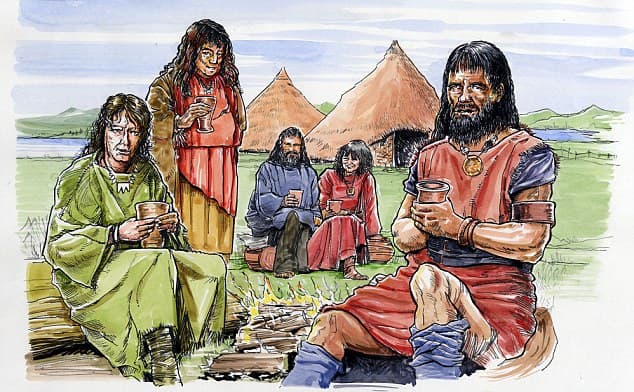
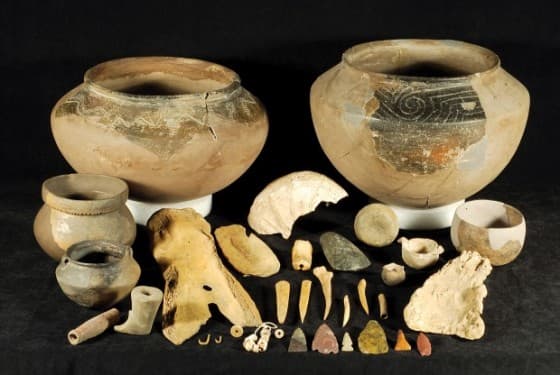 Early People Section 2 and 3 QuizSafeguarding children and young people in education and early yearsEarly society and accomplishments Origins Knowledge of the early prehistory of Southeast Asia has undergone exceptionally rapid change as a result of archaeological discoveries made since the 1960s, although the interpretation of these findings has remained the subject of extensive debate. Nevertheless, it seems clear that the region has been inhabited from the earliest times. Hominid fossil remains date from approximately 1,500,000 years ago and those of Homo sapiens from approximately 40,000 years ago. Furthermore, until about 7000 bce the seas were some 150 feet (50 metres) lower than they are now, and the area west of Makassar Strait consisted of a web of watered plains that sometimes is called Sundaland. These land connections perhaps account for the coherence of early human development observed in the Hoabinhian culture, which lasted from about 13,000 to 5000 or 4000 bce. The stone tools used by hunting and gathering societies across Southeast Asia during this period show a remarkable degree of similarity in design and development. When the sea level rose to approximately its present level about 6000 bce, conditions were created for a more variegated environment and, therefore, for more extensive differentiation in human development. While migration from outside the region may have taken place, it did not do so in a massive or clearly punctuated fashion; local evolutionary processes and the circulation of peoples were far more powerful forces in shaping the region’s cultural landscape. Technological developments and population expansion Perhaps because of a particular combination of geophysical and climatic factors, early Southeast Asia did not develop uniformly in the direction of increasingly complex societies. Not only have significant hunting and gathering populations continued to exist into the 21st century, but the familiar cultural sequences triggered by such events as the discovery of agriculture or metallurgy do not seem to apply. This is not to say that the technological capabilities of early Southeast Asian peoples were negligible, for sophisticated metalworking (bronze) and agriculture (rice) were being practiced by the end of the 3rd millennium bce in northeastern Thailand and northern Vietnam, and sailing vessels of advanced design and sophisticated navigational skills were spread over a wider area by the same time or earlier. Significantly, these technologies do not appear to have been borrowed from elsewhere but were indigenous and distinctive in character. Austronesian languages Austronesian languagesMajor divisions of the Austronesian languages. These technological changes may partially account for two crucial developments in Southeast Asia’s later prehistory. The first is the extraordinary seaborne expansion of speakers of Proto-Austronesian languages and their descendants, speakers of Austronesian (or Malayo-Polynesian) languages, which occurred over a period of 5,000 years or more and came to encompass a vast area and to stretch nearly half the circumference of Earth at the Equator. This outward movement of people and culture was evolutionary rather than revolutionary, the result of societal preference for small groups and a tendency of groups to hive off once a certain population size had been reached. It began as early as 4000 bce, when Taiwan was populated from the Asian mainland, and subsequently it continued southward through the northern Philippines (3rd millennium bce), central Indonesia (2nd millennium bce), and western and eastern Indonesia (2nd and 1st millennia bce). From approximately 1000 bce on the expansion continued both eastward into the Pacific, where that immense region was populated in a process continuing to about 1000 ce as voyagers reached the Hawaiian Islands and New Zealand, and westward, where Malay peoples reached and settled the island of Madagascar sometime between 500 and 700 ce, bringing with them (among other things) bananas, which are native to Southeast Asia. Thus, for a considerable period of time, the Southeast Asian region contributed to world cultural history, rather than merely accepting outside influences, as frequently has been suggested. The second development, which began possibly as early as 1000 bce, centred on the production of fine bronze and the fashioning of bronze-and-iron objects, particularly as they have been found at the site in northern Vietnam known as Dong Son. The earliest objects consisted of socketed plowshares and axes, shaft-hole sickles, spearheads, and such small items as fishhooks and personal ornaments. By about 500 bce the Dong Son culture had begun producing the bronze drums for which it is known. The drums are large objects (some weigh more than 150 pounds [70 kg]), and they were produced by the difficult lost-wax casting process and decorated with fine geometric shapes and depictions of animals and humans. This metal industry was not derived from similar industries in China or India. Rather, the Dong Son period offers one of the most powerful—though not necessarily the only or earliest—examples of Southeast Asian societies transforming themselves into more densely populated, hierarchical, and centralized communities. Since typical drums, either originals or local renditions, have been found throughout Southeast Asia and since they are associated with a rich trade in exotics and other goods, the Dong Son culture also suggests that the region as a whole consisted not of isolated, primitive niches of human settlement but of a variety of societies and cultures tied together by broad and long-extant trading patterns. Although none of these societies possessed writing, some displayed considerable sophistication and technological skill, and, although none appears to have constituted a territorial centralized state, new and more complex polities were forming.Create a reading comprehension quiz based on the following text: Not many people 'have heard/ heard of Nikola Tesla, who 2played/was playing a key role in creating the alternating current (AC) supply of electricity we are having/ have in our homes today. Early in his career, Tesla has worked / worked with Thomas Edison. He had emigrated/ has emigrated to the USA from Europe in 1884. While Tesla was working/ had worked for Edison, they had an argument over payment for an invention, so Tesla was deciding/ decided to work independently. It was then that he developed a motor that could produce an alternating current. Throughout his life, Tesla continued to conduct experiments and helped / was helping develop X-ray radiography and wireless communication. There is no doubt that he has had / had had a large impact on modern technology. Many of the gadgets that we 10 are enjoying/enjoy today would not have been possible without Nikola Tesla.Write question 2. Early British Actions in the Colonies In 1760, near the end of the Seven Years’ War, a new British king, George III, began his reign. During his 59-year rule, he resisted revolutionary and Napoleonic France. However, George appointed advisors to manage his more distant foreign affairs in North America. These advisors knew very little about the day-to-day lives of colonists and were soon taking actions that enraged many of them. The Proclamation of 1763 The British government faced many problems after the Seven Years’ War. One was how to protect colonists and their land claims as they pushed westward into areas settled by Indigenous groups. In his Proclamation of 1763, George III said to simply draw a line down the crest of the Appalachian Mountains and order colonists not to settle past the boundary. To colonists whose fortunes were founded on Indigenous land, the king’s order suggested tyranny, or the unjust use of government power. They argued that White colonists had already claimed most of the land east of the Appalachians and that farmers had to move west to find land. Besides, colonists and land investors had already crossed the mountains into Indigenous territory. The British government ignored colonists’ arguments. To control the frontier, it sent an additional 7,500 soldiers to the colonies. The Proclamation of 1763 would later be cited as a grievance in the Declaration of Independence. The Stamp Act The British government had other problems besides stopping colonists from encroaching on Indigenous land. Another dilemma was how to pay off the large debt from the Seven Years’ War. The solution seemed obvious to Prime Minister George Grenville, the leader of the British government. People in Great Britain were already paying taxes on everything from windows to salt. In contrast, American colonists were among the most lightly taxed people in the British Empire. It was time, said Grenville, for them to pay their fair share of the cost of Britain protecting colonists and their interests. In 1765, Grenville proposed a new act, or law, called the Stamp Act, which required colonists to buy a stamp for every piece of paper they used. Newspapers, wills, licenses, and even playing cards had to be printed on stamped paper. Again, the colonists sensed tyranny. One newspaper, The Pennsylvania Journal, said that as soon as “this shocking Act was known, it filled all British America from one End to the other, with Astonishment and Grief.” It was not just the idea of higher taxes that upset the colonists. They were willing to pay taxes passed by their own assemblies, in which their representatives could vote on them. However, because the colonists had no representatives in Parliament, they saw the Stamp Act as a violation of their rights as British subjects. For this reason, they argued Parliament had no right to tax them. “No taxation without representation!” they declared. Loyalists simply refused to buy stamps, while other colonists protested the Stamp Act by sending messages to Parliament. Patriots took more aggressive action. Protesters calling themselves the Sons of Liberty organized in 1765 and began attacking tax collectors’ homes. In Connecticut, they even started to bury one tax collector alive. Only when he heard dirt being shoveled onto his coffin did the terrified tax collector agree to resign from his post. After months of protest, Parliament repealed, or canceled, the Stamp Act. Colonists greeted the news with great celebration. Church bells rang, bands played, and everyone hoped the troubles with Great Britain were over. The Quartering Act As anger over the Stamp Act began to fade, Parliament passed another controversial law in 1765. The Quartering Act ordered colonial assemblies to provide British troops with quarters, or housing. The colonists were also told to furnish the soldiers with “candles, firing, bedding, cooking utensils, salt, vinegar, and . . . beer or cider.” Providing these things for British soldiers cost money. New Jersey protested that the new law was “as much an Act for laying taxes” on the colonists as the Stamp Act. New Yorkers asked why they should pay to keep troops in their colony during peacetime. In 1767, the New York assembly decided not to approve any funds for supplies for the British troops, forcing them to remain on their ships. In retaliation, the British government suspended New York’s assembly until it agreed to obey the Quartering Act. Once again, tempers began to rise on both sides of the Atlantic. Cricket A Fun Sport. People around the world play an exciting sport called cricket. In cricket, a batter hits a ball with a large flat bat. The ball is about the same size as a baseball. The Basics. Two teams play a game of cricket. Each team has eleven players. They play on an oval field with an area in the middle called a pitch. The teams take turns batting and bowling, or throwing a ball. Two batters on the batting team stand on each end of the pitch. The team that isn't batting plays in the field. One player on each team is the bowler. The bowler throws a ball to a batter on the other team. The bowler tries to hit three small posts in the ground near the batter. These posts are called stumps. At the top of the stumps are two small pieces of wood called bails. Together, the stumps and bails are called wicket. If the bowler's ball knocks the bails off the wicket stumps, the batter is out. The batter protects the wicket by hitting the ball with his or her bat. If the batter hits the ball, he or she runs down the pitch. If the batter swaps places with the other batter, he or she scores one point. The point is called a run. Nine players on the bowling team play in the field. Their job is to get the balls that the batter hits. They can get the batter out by catching the ball. They can also throw the ball and hit the wicket to get an out. After ten outs, the bowling team gets their turn at bat. At the end of the game, the team with more runs wins. The History of Cricket. In the 1500s, children in England played cricket. By the early 1700s, adults started playing as professionals. In 1788, people created the cricket rules still in use today. Soon, cricket teams formed outside England as well. Then, people created longer cricket matches called Tests for world championships. Cricket teams played once at the Olympic Games in 1900. Some fans hope cricket teams will one day play in every Summer Olympic Games. Cricket Around the World. Today, people play cricket around the world. Ten countries have teams that play in Test matches. That's Cricket! Since its start as a children's game, cricket has been popular. Today, it is followed by billions of fans around the world. You can enjoy cricket, too!The story of The Resurrection of Jesus is very amazing. Resurrection: meaning Jesus rising from the dead. Jesus is alive again. Jesus proved to the people that He is the “Son of God”. Would you like to know the amazing story? Let’s read on! Jesus is Alive! After Jesus died a man named Joseph from Arimathea put Jesus in His tomb. Before Joseph left, he and some men rolled a large heavy stone in front of the tomb. Mary and Mary Magdalene made spices and oils as a sign of respect to Jesus, and went very early to the tomb on the third day to go see Jesus' body. As they were just about at the tomb the earth suddenly shook and an angel came down from heaven. He easily rolled away the stone at the entrance of the tomb and sat on top of it. The women looked at each other and rubbed their eyes, they couldn't believe what they had seen. The angel was so bright, almost as bright as lightning. His clothes were as white as snow. There had been guards watching the tomb so no one would steal Jesus' body. When they saw the angel they fell over and they couldn't move or speak because they were so afraid. Christian Living Education 2 SEIBO COLLEGE 5 Then the angel said to the women, "Do not be afraid. I know you are looking for Jesus who has died. But He isn't here; He has risen just as He said He would! Come and see for yourself, the tomb is empty." The women were confused. How could this happen? They were sure Jesus had died, and now He was alive? They looked in the tomb and the cloths Jesus was wrapped in were lying on the ground, and the tomb was empty. Then the angel spoke again, "If you want to find Jesus He's on his way to Galilee." So the women hurried away. They had been so sad that Jesus was dead and now they were so excited He was alive! They just knew they had to find Jesus, and they had to tell the disciples the good news. As they were running down the path they turned a corner, and there was Jesus. "Greetings," He said. The ladies fell at His feet and worshiped him. Then Jesus said to them, "Do not be afraid. Go and tell my disciples to come to Galilee, which is where they will see me." The disciples came to Galilee, and had heard by this time that Jesus was alive. They were sitting around talking about it, when Jesus walked into the room and said to them, "Peace be with you." The disciples immediately stopped talking. Even though they had heard Christian Living Education 2 SEIBO COLLEGE 6 He was alive, they were shocked to see Him standing there with them. Jesus said to them, "Why do you look at me like you've just seen a ghost? Why don't you believe what you're seeing? Look at the scars in my hands and feet. It is really me! Touch me and see, I am not a ghost but a real person." The disciples’ mouths were open in amazement because they still didn't know what to think. They were so full of joy, and yet it was so impossible. Jesus understood what they were thinking, so He said, "This is what I told you would happen, that everything must happen that has already been written in the Bible." Then Jesus told them, "You have seen these things that have happened, so stay in the city and soon I am going to give you what God has promised you, the Holy Spirit. Jesus had one more person to see. His name was Thomas, and he was one of the disciples that weren’t there when Jesus met with them. Thomas had also heard that Jesus was alive, but would not believe until he saw Jesus with his own eyes. A week later when Thomas finally saw Jesus, Jesus said to him, "Put your finger here; see my hands. Stop doubting and believe." But Jesus continued, "Because you have seen me, you have believed; but it is more amazing for those who don't see me, and believe anyway." Christian Living Education 2 SEIBO COLLEGE 7 Jesus is actually talking to us when He said this. If you believe in Him, without seeing Him He thinks you're very special! That is exactly what faith is, believing in God even though you can't see Him. When we become Christians Jesus automatically gives us the Holy Spirit to live inside of us. The Holy Spirit makes us know when we have done something wrong. We might feel sick to our stomach, or just get a bad feeling, that is the Holy Spirit reminding us that we are doing something wrong, or that we need to stop and say sorry and ask for forgiveness for what we've done. Do you know what we celebrate during Easter Sunday? We celebrate the rising of Jesus from the dead. We celebrate because Jesus shared His new life with us. Through His rising from the dead, we are saved. We also have new life. What do you think we should do with our new life? How can we thank Jesus for sharing His new life with us? Of course, we should do good deeds. When we say good deeds, it is anything that we do that is good. It doesn’t matter how big or small as long as it is good. It would make Jesus very happy if we stop our bad ways and change for the betterA President’s Day A Big Job. A president’s day is very busy. The job is different every day. Starting the day. A president’s day starts early in the morning. An assistant tells the president the plan for the day. A president’s day is very important. The president is given information about events around the world. Meet the president. A president’s day is full of meetings. The president may meet with news reporters. The president may meet with famous people. A president’s day is very difficult. The president meets with U.S. leaders. They share their ideas about fixing problems. World Traveler. A president’s day may be full of travel around the country. The president might travel to places where there are big problems. A president’s day may be full of travel around the world. The president might meet with world leaders. Ending the day. A president’s day is very long. The president reads at night and signs important papers. The president spends time with family. A president’s day ends late at night. The next day will be just as busy!