Loading...

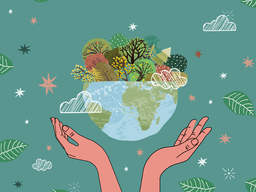
Earth Day by Jane Yolen
Quiz by Haiqal Datiffi
Customize this quiz to suit your class
Instantly translate to 100+ languages
Tag the questions with any skills you have. Your dashboard will track each student's mastery of each skill.
Give this quiz to my class
In stanza 1 of the poem Earth Day, which parts of the body are mentioned ?
arms and legs.
blood, muscle, skin, bone.
blood.
head, shoulders, knees, toes.
Which important day does the poem talk about ?
Deepavali.
Valentine's Day.
Earth Day.
New Year's Day.
In stanza 1 of the poem Earth Day, which parts of the body are mentioned ?
Which important day does the poem talk about ?
What metaphor does the author use to describe the Earth ?
In stanza 2 of the poem, what does the Earth need ?
How many stanzas are there in the poem, Earth Day ?
 Summative Assessment of Literature-Earth Day by Jane Yolen and Forgotten Language by Shel SilversteinWhat is a Hurricane, Typhoon, or Tropical Cyclone? The terms "hurricane" and "typhoon" are regionally specific names for a strong "tropical cyclone". A tropical cyclone is the generic term for a non-frontal synoptic scale low-pressure system over tropical or sub-tropical waters with organized convection (i.e. thunderstorm activity) and definite cyclonic surface wind circulation (Holland 1993). Tropical cyclones with maximum sustained surface winds of less than 17 m/s (34 kt, 39 mph) are usually called "tropical depressions" (This is not to be confused with the condition mid-latitude people get during a long, cold and grey winter wishing they could be closer to the equator). Once the tropical cyclone reaches winds of at least 17 m/s (34 kt, 39 mph) they are typically called a "tropical storm" or in Australia a Category 1 cyclone and are assigned a name. If winds reach 33 m/s (64 kt, 74 mph), then they are called: "hurricane" (the North Atlantic Ocean, the Northeast Pacific Ocean east of the dateline, or the South Pacific Ocean east of 160E) "typhoon" (the Northwest Pacific Ocean west of the dateline) "severe tropical cyclone" or "Category 3 cyclone" and above (the Southwest Pacific Ocean west of 160°E or Southeast Indian Ocean east of 90°E) "very severe cyclonic storm" (the North Indian Ocean) "tropical cyclone" (the Southwest Indian Ocean) Coriolis Effect The Coriolis Effect—the deflection of an object moving on or near the surface caused by the planet’s spin—is important to fields, such as meteorology and oceanography. Storm Approaching Southeast Asia Because of the Coriolis Effect, hurricanes spin counterclockwise in the Northern Hemisphere, while these types of storms spin clockwise in the Southern Hemisphere. This Northern Hemisphere storm, approaching Southeast Asia, is spinning counterclockwise. Earth is a spinning planet, and its rotation affects climate, weather, and the ocean through the Coriolis Effect. Named after the French mathematician Gaspard Gustave de Coriolis (born in 1792), the Coriolis Effect refers to the curved path that objects moving on Earth’s surface appear to follow because of the spinning of the planet. As Earth turns, points near the equator—countries like Ecuador and Kenya—are moving much faster than places near the planet’s poles. This is because Earth is shaped like a marble: Its circumference is larger near its middle (the equator) than near its top and bottom. All places on Earth experience a day that is about 24 hours long, but points near the equator have to travel longer distances in the same period of time, which means that those places move faster. Scientists say these points have more “angular momentum.” This is why rockets are usually launched from places near the equator, like Cape Canaveral, Florida, United States. Such locations give rockets a large initial speed, which helps them get into orbit using the least possible amount of fuel. The Coriolis Effect influences wind patterns, which in turn dictate how ocean currents move. Imagine wind near the equator flowing to the north. That wind starts with a certain speed due to Earth’s rotation (near the equator, Earth rotates at a speed of roughly 1,600 kilometers per hour (1,000 miles per hour) from west to east). As the wind travels north toward the North Pole, it moves over parts of Earth that are rotating progressively more slowly. Since the wind retains its angular momentum, it keeps moving from west to east, overtaking the part of Earth turning more slowly below it. As a result, the wind appears to bend to the east (that is, to the right). This is the Coriolis Effect in action. Wind flowing south from the equator would likewise bend to the east. This effect is responsible for many meteorological and oceanographic phenomena. For instance, due to the Coriolis Effect, hurricanes in the Northern Hemisphere spin in a counterclockwise direction, while hurricanes in the Southern Hemisphere (known as cyclones) spin in a clockwise direction. Ocean-circling currents known as “gyres” also spin in spiral patterns thanks to the Coriolis Effect. There is an urban legend that water in toilets spins in opposite directions in the Northern and Southern Hemispheres because of the Coriolis Effect. But that isn't true—a toilet bowl is too small for the effect to be observed. Instead, other factors like the shape of the toilet bowl and the direction that the water enters are largely responsible for how the flushing water moves.Earth's Water Water Everywhere. Water fills oceans, lakes, and ponds. It flows in rivers, streams, and underground. It is even in the air. Some parts of Earth have snow and ice, which are frozen water. Water covers most of Earth's surface. Salt water in the oceans makes up much of Earth's water. Earth has much less fresh water. Many plants and animals need this fresh water to survive. Some of this fresh water is aboveground, while other fresh water is underneath Earth's surface. What are some ways you use Earth's water? Different Forms of Water. Liquid water is the most common state of Earth's water. It takes the shape of the container it is in. Liquid water is always moving even if you can't see it move. It flows in rivers and streams, and it crashes as ocean waves. Not all water is liquid. When liquid water gets very cold, it freezes to form ice. Ice is another state of water-solid water. Ice can float on liquid water. People form ice into different shapes. Artists even carve ice to make sculptures. Much of Earth's frozen water is at the North and South Poles, Earth's coldest areas. Some of Earth's water is in an invisible state as a gas called water vapor. While it's always invisible, water vapor is all around us. Changing Water. Earth's water is always changing from one state to another. When frozen water is heated, it melts and becomes liquid water. When liquid water is cooled, it freezes and becomes ice. Liquid water can become a gas, too. Have you ever seen a puddle of water dry up on a hot day? Energy from the Sun changed the liquid to a gas in a process called evaporation. Water evaporates from oceans, rivers, lakes, and puddles all over the world. When water vapor in the air cools down, it changes from a gas to a liquid. This process is called condensation. Clouds are made up of tiny drops of water formed by condensation. The tiny drops stick together, creating larger, heavier drops. Once they're large enough, they fall to the ground as rain or another type of precipitation. Water Is Important. Rain keeps plants alive and allows them to keep growing. People and other animals need water to survive. We also use it for other purposes, such as fighting fires. It is important to take care of Earth's water. Keeping waste and trash away from water keeps it from becoming dirty and unusable. Polluted water makes people, plants, and animals sick. Would you want to drink and play in polluted water?Make a multiple choice quiz for my year 8 science students based on the science in this transcript from a video: 3°C 0:04 It can be the difference between snow and sleet 0:08 Wearing a jacket or not 0:11 In your day-to-day life, it may not seem significant 0:15 But 3°C of global warming would be catastrophic 0:20 Heatwaves, droughts, extreme precipitation, even fire 0:25 3°C of warming is really disastrous 0:28 The scary thing is, the world is well on its way there 0:32 Since the industrial revolution, the Earth has warmed between 1.1°C and 1.3°C 0:40 This is a problem that babies you pass in the street will have to live with 0:46 Children born today... 0:47 ...are up to seven times more likely to face extreme weather than their grandparents 0:52 If global temperatures do rise by 3°C... 0:55 ...what would their world look like? Climate change is already having devastating effects 1:03 Rising sea levels 1:05 Desertification 1:07 Hollywood has always enjoyed imagining the end of the world 1:11 While blockbusters like this are clearly fiction... 1:14 ...this film will show the scenario we all face... 1:17 ...unless more drastic measures are taken to stop burning fossil fuels 1:30 In some parts of the world the effects of inaction are already clear 1:35 The slums of Bangladesh’s capital are filling up with climate migrants 1:41 Minara comes from Bhola District, an area in southern Bangladesh 1:46 There, like many other parts of the country... 1:49 ...rivers swollen by heavier rain and melting Himalayan glaciers... 1:53 ...are washing away people’s homes 1:56 Many, like her, have lost everything 2:00 Our home in Bhola had endless amounts of land 2:03 There was lots of space for farming, we had a spacious house 2:08 There were different types of fruits, vegetation and trees growing at home 2:12 We used to eat the fruit from our own trees 2:18 I can’t eat them now because they don't exist anymore 2:21 Since the river flooded for the third time, I had to flee to Dhaka 2:26 Life was much better back home 2:29 It was unbearable to live through, truly intolerable 2:33 We didn’t have the time to save anything at all 2:38 1.1°C to 1.3°C of global warming has already transformed Minara’s life 2:45 It’s one of the reasons why so many migrants like her... 2:47 ...are moving to the city each year... 2:50 ...nearly 400,000 according to the last estimate 2:53 And climate models show there could be much worse to come How climate modelling works 3:02 Climate scientist Joeri Rogelj... 3:04 ...has spent the last ten years modelling future climate scenarios... 3:08 ...for the United Nations 3:10 The models we use to carry out this exercise... 3:13 ...really represent the state of the art... 3:15 ...of our current knowledge of climate change and where we are heading 3:19 Joeri’s projections use data collected by hundreds of scientists around the world 3:26 Here this is the 3°C level... 3:28 ...and so there is at least a one-in-four chance that under current policies... 3:32 ...we would hit 3°C by the end of the century 3:36 This is just one of the scenarios Joeri looks at 3:40 Another one imagines that all policy promises are kept 3:44 The most optimistic assumes that all promises have been kept... 3:47 ...and net-zero targets are met 3:50 Where our best estimate ends up around 2°C at the end of the century... 3:54 ...there is still a one-in-20 chance that we end up with 3°C instead 3:59 One would not be entering a plane if there is a one-in-20 chance... 4:03 ...that the plane will crash Nowhere is safe from global warming 4:07 A rise of 3°C would affect everyone 4:10 Even wealthy cities in rich countries wouldn’t be immune to the consequences 4:15 European capitals like Paris and Berlin... 4:18 ...would bake under more extreme heatwaves 4:22 Frequent storm-surges in New York could turn parts of the city desolate 4:27 In many ways, cities magnify, intensify climate events 4:33 Cities are hotter than the places around them... 4:36 ...they tend to be more vulnerable to flooding 4:39 And you can get a really bad event in a city in a way that you can’t in the countryside 4:46 And because of their denser populations... 4:49 ...disasters in a city affect far more people 4:52 Some cities might be badly prepared for the changes coming 4:56 But they have the means to adapt 4:59 Cities tend to be wealthier than surrounding places 5:03 They have a lot of amenities 5:05 A city that has taken seriously the risks of a 3°C world... 5:08 …wouldn’t necessarily be a worse place to be in a 3°C world 5:12 But a city that hasn’t prepared for these sort of eventualities... 5:16 ...that might be a really nasty place The impact of prolonged droughts 5:20 So far, many developed cities have got off lightly... 5:24 ...but some rural parts of the world are suffering disproportionately 5:29 Smallholders—small-scale farmers—are particularly vulnerable to climate change 5:35 And there are over 600 million around the world 5:38 Smallholders with farms under two hectares... 5:40 ...produce around a third of the global food supply 5:46 Central America’s “Dry Corridor”... 5:48 ...supports a mix of smallholdings and medium-sized farms 5:53 Sandwiched between the Pacific Ocean and the Caribbean Sea... 5:56 ...the area is prone to droughts 6:08 Israel Ramírez Rivera is a smallholder in Guatemala 6:12 Here, climate change is making the dry seasons longer, and more severe 6:18 This is the biggest ear of maize that this plot could deliver 6:23 He depends on his crops of corn and beans 6:26 But they’re getting harder to grow 6:30 The surrounding mountains... 6:32 ...used to provide us with native food... 6:38 ...and now that isn’t an option anymore... 6:41 ...due to climate change and its effects 6:46 Nearly two-thirds of the smallholders in the Dry Corridor now live in poverty 6:52 The impact of all of this for us... 6:59 ...malnutrition among children 7:03 We’ve lost a few 7:07 For my crops especially, the midsummer heat is harder than before 7:16 The plant dries up and can’t provide us... 7:19 ...with the necessary food provision 7:24 Severe droughts in Central America... 7:26 ...are now four times more likely than they were last century 7:30 Many families from here have gone to the States 7:37 The economic despair and debts... 7:44 ...have pushed many people from this community to do this journey 7:53 Migration from Guatemala to the United States has quadrupled since 1990 7:59 Not all of this has been due to climate change 8:02 But longer droughts would force even more to move 8:05 In a 3°C world, annual rainfall in this region... 8:09 ...could drop by up to 14% 8:12 At 3°C, over a quarter of the world’s population... 8:16 ...could endure extreme droughts for at least a month of the year 8:19 Northern Africa could see droughts that last for years at a time Rising sea levels, storm surges and flooding 8:24 But for some, too much water will be the problem 8:29 10% of the world’s population lives on a coastline... 8:32 ...that’s less than 10 metres above sea level 8:35 For these coastal inhabitants, a 3°C world would spell disaster 8:40 By 2100, global sea levels could have climbed by half a metre from 2005 levels 8:46 Low-lying cities like Lagos would be especially vulnerable... 8:49 ...with up to up to a third of the population displaced 8:54 And in Fiji, rising waters are already upending lives 9:04 You can see the graveyard there, it’s all under water now... 9:08 ...due to this rising sea level and climate change 9:15 The village of Togoru in Fiji is being swallowed by the sea 9:19 Barney Dunn, the village headman, has seen over half the village disappear 9:24 Relatives’ houses have been abandoned, and family graves are now under water 9:29 We have been asked by the government to relocate... 9:32 ...but no one wants to relocate... 9:34 ...because we have our great-great-grandparents down there in the sea 9:39 This is the place we’ve been brought up in 9:41 ...it’s not easy to leave 9:44 Past attempts to build a seawall haven’t worked 9:48 But Barney sees building a new one as the village’s only hope 9:52 If they do that, maybe we can save whatever is left 9:56 But if we don’t have the seawall, then it will be keep eroding and time will come... 10:01 ...maybe in ten,15 years, Togoru will be all eroded 10:05 Rising seas also mean storms cause more floods 10:11 And many more countries could suffer 10:14 The Philippines and Myanmar are just two countries... 10:17 ...that will also see an increase in storm surges in a 3°C world 10:21 To escape, many will move… 10:24 …often, to urban areas Extreme heat and wet-bulb temperatures 10:27 Half the world’s population already lives in cities... 10:31 ...almost a third in slums 10:36 For them, a 3°C world could be deadly 10:40 Minara has moved to Dhaka to escape the impact of climate change 10:44 But life could get even worse for her 10:47 I’m struggling a lot nowadays 10:49 The heat during the day is unbearable 10:52 Even late at night it doesn’t cool down 10:57 The heat is getting more intense every day 10:59 I mean, it’s going to get much worse 11:03 I can barely survive it now, how will I live through it in the future? 11:08 Dhaka is getting hotter 11:11 In the last 20 years the average daytime temperature... 11:13 ...has crept up by nearly half a degree 11:17 Days that approach 40°C are now being reported 11:20 And high so-called wet-bulb temperatures are on the rise 11:26 A wet-bulb temperature is a measure of heat and humidity 11:30 Humans cool themselves by sweating… 11:32 But in these conditions, when relative humidity is near 100%... 11:36 ...sweat doesn’t evaporate well 11:38 So people can’t cool down… 11:41 ...even if given unlimited shade and water 11:45 At a high wet-bulb temperature, the body can’t lose heat... 11:49 ...and so it gets hotter and hotter... 11:51 ...and the body is designed to work at a given temperature 11:53 And if it gets too hot inside, you will die 11:58 The human limit for wet-bulb temperatures is 35°C... 12:02 ...around skin temperature 12:04 Dhaka will have a much higher chance... 12:05 ...of reaching dangerous wet-bulb temperatures... 12:07 ...if global warming reaches 3°C 12:12 You can’t really adapt to that 12:14 You have to get out. If the temperature is so high that you can’t work... 12:20 ...can’t do hard manual labour outside for significant parts of the year... 12:25 ...then many places will become functionally no longer part of the economy 12:33 Jacobabad in Pakistan, and Ras al Khaimah, in the United Arab Emirates... 12:37 ...have already recorded deadly wet-bulb temperatures 12:40 More of the tropics and the Persian Gulf... 12:43 ...as well as parts of Mexico and the south-eastern United States... 12:47 ...could all get to this threshold by the end of the century 12:50 Climate modelling might show us the weather Increased migration and conflict 12:52 But it doesn’t show us its other effects on society 12:56 Established migration patterns could change 12:59 Climate disasters may exacerbate reasons people cross borders 13:03 Within countries, more people will move to cities 13:07 In a 3°C world, tens of millions of people a year... 13:10 ...could be displaced by disasters made worse by climate change 13:15 When people are displaced by climate... 13:18 …they may well go to cities... 13:19 ...because cities are the places that attract people from the countryside already 13:25 A lot of people who can get to the developed world... 13:28 ...not least because the developed world tends to be less hot, will give that a go 13:35 As migration around the world increases... 13:38 ...there could be more competition for fewer resources 13:42 Water—already a highly contested resource—will be a focal point 13:47 Turkey’s new Ilisu dam has reduced the flow of water into Iraq 13:53 China lays claim to rivers vital to India and Pakistan 13:57 The prospect of a water-conflict makes people very uneasy 14:03 How national tensions would exacerbate those sorts of reactions... 14:08 ...in a 3°C world... 14:09 ...is the sort of thing that no one should really want to find out 14:14 I think you’d have to be incredibly sanguine... 14:16 ...not to think that the sort of climate extremes that we talk about... 14:19 ...in a 3°C world wouldn’t lead some places... 14:22 ...to the brink of societal collapse 14:25 Those lucky enough to escape unrest... Adaptation and mitigation are crucial 14:28 ...would still have to adapt to a radically different world 14:32 People can adapt to climate change in all sorts of ways, one of the most obvious ones... 14:37 ...is air conditioning 14:39 But other ways to adapt at a local or regional level... 14:42 ...I mean, one of the most obvious is diversifying agriculture 14:47 There are physical things you can do, like seawalls 14:52 The fact that people can adapt and that adaptation will reduce suffering... 14:57 ...doesn’t mean that it will eliminate suffering 15:00 Suffering is built into this whole process of heating up the planet 15:06 Adaptation will only get the world so far 15:09 The best way to deal with a 3°C world... 15:12 ...is not to go to a 3°C world 15:14 And that’s why increasing efforts on mitigation are important 15:17 It’s why working towards negative emissions... 15:20 ...that could bring down the temperature after it peaks are important 15:25 Once you get to a 3°C world, you are in real bad global trouble 15:33 The scale of change needed... 15:35 ...and the slow progress of governments so far... 15:38 ...means 3°C of warming is uncomfortably likely unless more is done 15:44 Despite existing pledges, greenhouse-gas emissions... 15:48 ...are still set to rise by 16% from 2010 levels by 2030 15:54 The need to act has never been clearer 15:57 There’s still time to reduce emissions, so that a 3°C world remains fiction... 16:02 ...rather than becoming factContact with the Americas In 1001, Viking sailors led by Leif Erikson reached the eastern tip of North America. Archaeologists have found evidence of the Viking settlement of Vinland in present-day Newfoundland, Canada. The Vikings did not stay in Vinland long and no one is sure why they left. However, Viking stories describe fierce battles with Skraelings, the Viking name for the Inuit. Evidence suggests that Asians continued to cross the Bering Sea into North America after the last ice age ended. Some scholars believe that ancient seafarers from Polynesia may have traveled to the Americas using their knowledge of the stars and winds. Modern Polynesians have sailed canoes thousands of miles in this way. Still others think that fishing boats from China and Japan blew off course and landed on the western coast of North or South America. Perhaps such voyages occurred. If so, they were long forgotten. Before 1492, the peoples of Asia and Europe had no knowledge of the Americas and their remarkable civilizations. The Voyages of Columbus Portuguese sailors had pioneered new routes around Africa toward Asia in the late 1400s. Spain, too, wanted a share of the riches. King Ferdinand and Queen Isabella hoped to keep their rival, Portugal, from controlling trade with India, China, and Japan. They agreed to finance a voyage of exploration by Christopher Columbus. Columbus, an Italian sea captain, planned to reach the East Indies by sailing west across the Atlantic. Finding a sea route straight to Asia would give the Spanish direct access to the silks, spices, and precious metals of Asia. The spice trade was a major cause for European exploration and a reason the Spanish rulers supported Columbus’s voyage. They also wanted wealth from any source. “Get gold,” King Ferdinand said to Columbus. “Humanely if possible, but at all hazards—get gold.” Crossing the Atlantic In August 1492, Columbus set out with three ships and about 90 sailors. As captain, he commanded the largest vessel, the Santa María. The other ships were the Niña and the Pinta. After a brief stop at the Canary Islands, the little fleet continued west into unknown seas. Fair winds sped them along, but a month passed without the sight of land. Some sailors began to grumble. They had never been away from land for so long and feared being lost at sea. Still, Columbus sailed on. On October 7, sailors saw flocks of birds flying southwest. Columbus changed course to follow the birds. A few days later, crew members spotted tree branches and flowers floating in the water. At 2 a.m. on October 12, the lookout on the Pinta spotted white cliffs shining in the moonlight. “Tierra! Tierra!” he shouted. “Land! Land!” At dawn, Columbus rowed ashore and planted the banner of Spain. He was convinced that he had reached the East Indies in Asia. He called the people he found there “Indians.” In fact, he had reached islands off the coasts of North America and South America in the Caribbean Sea. These islands later became known as the West Indies. For three months, Columbus explored the West Indies. To his delight, he found signs of gold on the islands. Eager to report his success, he returned to Spain. Columbus Claims Lands for Spain In Spain, Columbus presented Queen Isabella and King Ferdinand with gifts of pink pearls and brilliantly colored parrots. Columbus brought with him many things that Europeans had never seen before: tobacco, pineapples, and hammocks used for sleeping. Columbus also described the “Indians” he had met, the Taino (ty noh). The Taino, he promised, could easily be converted to Christianity and could also be used as slaves. The Spanish monarchs were impressed. They gave Columbus the title Admiral of the Ocean Sea. They also agreed to finance future voyages. The promise of great wealth, and the chance to spread Christianity, gave them a reason to explore further. Columbus made three more voyages across the Atlantic. In 1493, he founded the first Spanish colony in the Americas, Santo Domingo, on an island he called Hispaniola (present-day Haiti and the Dominican Republic). A colony is an area settled and ruled by the government of a distant land. Columbus also explored present-day Cuba and Jamaica. He sailed along the coasts of Central America and northern South America. He claimed all of these lands for Queen Isabella of Spain. Columbus proved to be a better explorer than governor. During his third expedition, settlers on Hispaniola complained of his harsh rule. Queen Isabella appointed an investigator, who sent Columbus back to Spain in chains. In the end, the queen pardoned Columbus, but he never regained the honors he had won earlier. He died in 1506, still convinced that he had reached Asia. The Impact of Columbus’s Voyages Columbus has long been honored as the bold sea captain who “discovered America.” Today, we recognize that American Indians had discovered and settled these lands long before 1492. We also recognize that Columbus and the Europeans who followed him treated the ancient inhabitants of the Americas brutally. Still, Columbus’s voyages did change history. They marked the beginning of lasting contact among the peoples of Europe, Africa, and the Americas. For a great many American Indians, contact had tragic results. Columbus and those who followed were convinced that European culture was superior to that of the Indians. The Spanish claimed Taino lands and forced the Taino to work in gold mines, on ranches, or in Spanish households. Many Taino died from harsh conditions or European diseases. The Taino population was wiped out. Still, the voyages of Columbus signaled a turning point for the Americas. A turning point is a moment in history that marks a decisive change. Curious Europeans saw the new lands as a place where they could settle, trade, and grow rich. Spanish Exploration Continues After the voyages of Columbus, the Spanish explored and settled other Caribbean islands that Columbus had found. They sought gold, land for crops, people to enslave, and converts to Christianity for the Spanish crown. By 1511, they had conquered Puerto Rico, Jamaica, and Cuba. They also explored the eastern coasts of North America and South America in search of a western route to Asia. In 1513, Vasco Núñez de Balboa (bal boh uh) crossed the Isthmus of Panama. American Indians had told him that a large body of water lay to the west. With a party of Spanish soldiers and Indians, Balboa reached the Pacific Ocean and claimed the ocean for Spain. The Spanish had no idea how wide the Pacific was until a sea captain named Ferdinand Magellan (muh jel un) sailed across it. The expedition—made up of five ships and about 250 crew members—left Spain in 1519. Fifteen months later, it cut through the stormy southern tip of South America by way of what is now known as the Strait of Magellan and entered the Pacific Ocean. Crossing the vast Pacific, the sailors ran out of food: Primary Source “We remained 3 months and 20 days without taking in provisions or other refreshments and ate only old biscuit reduced to powder, full of grubs and stinking from the dirt which rats had made on it. We drank water that was yellow and stinking.” —Antonio Pigafetta, The Diary of Antonio Pigafetta Magellan himself was killed in a battle with the local people of the Philippine Islands off the coast of Asia. In 1522, only one ship and 18 sailors returned to Spain. They were the first people to circumnavigate, or sail completely around, the world. In doing so, they had found an all-water western route to Asia. Europeans became aware of the true size of the Earth. How Did the Columbian Exchange Affect the Rest of the World? The encounter between the peoples of the Eastern and Western Hemispheres sparked a global exchange of goods and ideas. Because it started with the voyages of Columbus, this transfer is known as the Columbian Exchange. The Columbian Exchange refers to a biological and cultural exchange of animals, plants, human populations, diseases, food, government, technology, the arts, and languages. The exchange went in both directions. Europeans learned much from American Indians. At the same time, Europeans contributed in many ways to the culture of the Americas. This exchange also brought about many modifications, or changes, to the physical environment of the Americas, with both positive and negative results. Changing Environments Europeans introduced domestic animals such as chickens from Europe and Africa. European pigs, cattle, and horses often escaped into the wild and multiplied rapidly. Forests and grasslands were converted to pastures. As horses spread through what would become the United States, Indians learned to ride them and used them to carry heavy loads. Plants from Europe and Africa changed the way American Indians lived. The first bananas came from the Canary Islands. By 1520, one Spaniard reported that banana trees had spread “so greatly that it is marvelous to see the great abundance of them.” Oranges, lemons, and figs were also new to the Americas. In North America, explorers also brought such plants as bluegrass, the daisy, and the dandelion. These plants spread quickly in American soil and modified American grasslands. Tragically, Europeans also brought new diseases, such as smallpox and influenza. American Indians had no resistance to these diseases. Historians estimate that within 75 years, diseases from Europe had killed almost 90 percent of the people in the Caribbean Islands and in Mexico. American Indian Influences on Europe, Africa and Asia American Indians introduced Europeans to valuable food crops such as corn, potatoes, sweet potatoes, beans, tomatoes, manioc, squash, peanuts, pineapples, and blueberries. Today, almost half the world’s food crops come from plants that were first grown in the Americas. Europeans carried the new foods with them as they sailed around the world. Everywhere, people’s diets changed and populations increased. In South Asia, people used American hot peppers and chilies to spice stews. Chinese peasants began growing corn and sweet potatoes. Italians made sauces from tomatoes. People in West Africa grew manioc and corn. European settlers often adopted American Indian skills. In the North, Indians showed Europeans how to use snowshoes and trap beavers and other fur-bearing animals. European explorers learned how to paddle Indian canoes. Some leaders studied American Indian political structures. In the 1700s, Benjamin Franklin admired the Iroquois League and urged American colonists to unite in a similar way. Positive and Negative Consequences Through the Columbian Exchange, Europeans and American Indians modified their environments and gained new resources and skills. At the same time, warfare and disease killed many on both sides. Europeans viewed expansion positively. They gained great wealth, explored trade routes, and spread Christianity. Yet their farming, mining, and diseases took a toll on the physical environment and left many American Indians dead. Despite these negatives, the Columbian Exchange shaped the modern world, including what would become the United States.What do an ancient Greek philosopher and a 19th century Quaker have in common with Nobel Prize-winning scientists? Although they are separated over 2,400 years of history, each of them contributed to answering the eternal question: what is stuff made of? It was around 440 BCE that Democritus first proposed that everything in the world was made up of tiny particles surrounded by empty space. And he even speculated that they vary in size and shape depending on the substance they compose. He called these particles "atomos," Greek for indivisible. His ideas were opposed by the more popular philosophers of his day. Aristotle, for instance, disagreed completely, stating instead that matter was made of four elements: earth, wind, water and fire, and most later scientists followed suit. Atoms would remain all but forgotten until 1808, when a Quaker teacher named John Dalton sought to challenge Aristotelian theory. Whereas Democritus's atomism had been purely theoretical, Dalton showed that common substances always broke down into the same elements in the same proportions. He concluded that the various compounds were combinations of atoms of different elements, each of a particular size and mass that could neither be created nor destroyed. Though he received many honors for his work, as a Quaker, Dalton lived modestly until the end of his days. Atomic theory was now accepted by the scientific community, but the next major advancement would not come until nearly a century later with the physicist J.J. Thompson's 1897 discovery of the electron. In what we might call the chocolate chip cookie model of the atom, he showed atoms as uniformly packed spheres of positive matter filled with negatively charged electrons. Thompson won a Nobel Prize in 1906 for his electron discovery, but his model of the atom didn't stick around long. This was because he happened to have some pretty smart students, including a certain Ernest Rutherford, who would become known as the father of the nuclear age. While studying the effects of X-rays on gases, Rutherford decided to investigate atoms more closely by shooting small, positively charged alpha particles at a sheet of gold foil. Under Thompson's model, the atom's thinly dispersed positive charge would not be enough to deflect the particles in any one place. The effect would have been like a bunch of tennis balls punching through a thin paper screen. But while most of the particles did pass through, some bounced right back, suggesting that the foil was more like a thick net with a very large mesh. Rutherford concluded that atoms consisted largely of empty space with just a few electrons, while most of the mass was concentrated in the center, which he termed the nucleus. The alpha particles passed through the gaps but bounced back from the dense, positively charged nucleus. But the atomic theory wasn't complete just yet. In 1913, another of Thompson's students by the name of Niels Bohr expanded on Rutherford's nuclear model. Drawing on earlier work by Max Planck and Albert Einstein he stipulated that electrons orbit the nucleus at fixed energies and distances, able to jump from one level to another, but not to exist in the space between. Bohr's planetary model took center stage, but soon, it too encountered some complications. Experiments had shown that rather than simply being discrete particles, electrons simultaneously behaved like waves, not being confined to a particular point in space. And in formulating his famous uncertainty principle, Werner Heisenberg showed it was impossible to determine both the exact position and speed of electrons as they moved around an atom. The idea that electrons cannot be pinpointed but exist within a range of possible locations gave rise to the current quantum model of the atom, a fascinating theory with a whole new set of complexities whose implications have yet to be fully grasped. Even though our understanding of atoms keeps changing, the basic fact of atoms remains, so let's celebrate the triumph of atomic theory with some fireworks. As electrons circling an atom shift between energy levels, they absorb or release energy in the form of specific wavelengths of light, resulting in all the marvelous colors we see. And we can imagine Democritus watching from somewhere, satisfied that over two millennia later, he turned out to have been right all along.You are an elementary school teacher. Create a 20 item multiple choice quiz using the story below. Include the key answers below the questions. "Many years after God made everything, the people of the earth became plenty in number. These people forgot about God and they became very bad. God became very sad. So God said, “I will wipe out all the people on the earth. | will destroy all the animals, birds and fish, and all the trees and plants. | am so hurt by what they do that | feel sorry that | made them.’ Yet, there was a man named Noah. He was a very good man among the people of that time. He obeyed God with all his heart and did not sin against God. Noah found favor in the eyes of the Lord. Noah had a wife and three sons named Ham, Shem, and Japheth. Unlike the people around them, Noah's family lived doing what was right in God's eyes, They loved each other as one family and they never forgot to pray to God. One day, the Lord God called Noah and told him about His plan to punish all His creation and put an end to all the people of the earth. God said, “Noah, make a giant ark with many, many rooms. Put a door on the side of the ark. Make a roof on it and a small window on one side. | am going to bring floodwaters on earth to destroy all living things. Gather all kinds of animals—two of every kind: one male and one female. When the floodwaters would come, you have to bring into the ark all kinds of animals. You are to take every kind of food that is to be eaten for you and for the animals.’ The bad people made fun of Noah’s family who were making a giant ark when in fact the weather was very good. There were no dark clouds and not even a drop of rain was falling down. They continued to do bad things while Noah did everything just as God commanded him. ™ Soon after the ark was finished, the floodgates of heaven were gPened and heavy rain fell on the earth. On that day, Noah and his family entered the ark together with all the different kinds of animals, both big and small. While Noah's family and all the animals were inside the ark, the heavy rain fell non-stop for forty days and forty nights. All the living things outside the ark were destroyed. When the rain stopped, there was a great flood all over the earth. The whole land was covered with water. The waters flooded the earth for 150 days. After 150 days, dry land started to appear so God told Noah to open the door and come out of the ark for the land was already dry. Then Noah sent out all the animals from the ark, too. Then God said to Noah, “I will make a promise to you. Never again will | bring great flood on the earth to destroy all creation. | will set a rainbow in the clouds as a sign of My promise to you and to all the people of the earth.’ So, every time the rainbow appears on the sky, just remember God's promise that He will never again destroy the earth by a flood."Weathering describes the breaking down or dissolving of rocks and minerals on the surface of the Earth. Water, ice, acids, salts, plants, animals, and changes in temperature are all agents of weathering. Once a rock has been broken down, a process called erosion transports the bits of rock and mineral away. No rock on Earth is hard enough to resist the forces of weathering and erosion. Together, these processes carved landmarks such as the Grand Canyon, in the U.S. state of Arizona. This massive canyon is 446 kilometers (277 miles) long, as much as 29 kilometers (18 miles) wide, and 1,600 meters (1 mile) deep. Weathering and erosion constantly change the rocky landscape of Earth. Weathering wears away exposed surfaces over time. The length of exposure often contributes to how vulnerable a rock is to weathering. Rocks, such as lavas, that are quickly buried beneath other rocks are less vulnerable to weathering and erosion than rocks that are exposed to agents such as wind and water, As it smoothes rough, sharp rock surfaces, weathering is often the first step in the production of soils. Tiny bits of weathered minerals mix with plants, animal remains, fungi, bacteria, and other organisms. A single type of weathered rock often produces infertile soil, while weathered materials from a collection of rocks is richer in mineral diversity and contributes to more fertile soil. Soils types associated with a mixture of weathered rock include glacial till, loess, and alluvial sediments. Weathering is often divided into the processes of mechanical weathering and chemical weathering. Biological weathering, in whichliving or once-living organisms contribute to weathering, can be a part of both processes. Mechanical Weathering Mechanical weathering, also called physical weathering and disaggregation, causes rocks to crumble. Water, in either liquid or solid form, is often a key agent of mechanical weathering. For instance, liquid water can seep into cracks and crevices in rock. If temperatures drop low enough, the water will freeze. When water freezes, it expands. The ice then works as a wedge. It slowly widens the cracks and splits the rock. When ice melts, liquid water performs the act of erosion by carrying away the tiny rock fragments lost in the split. This specific process (the freeze-thaw cycle) is called frost weathering or cryofracturing. Figure 4.3 Frost Wedging Temperature changes can also contribute to mechanical weathering in a process called thermal stress. Changes in temperature cause rock to expand (with heat) and contract (with cold). As this happens over and over again. the structure of the rock weakens. Over time, it crumbles. Rocky desert landscapes are particularly vulnerable to thermal stress. The outer layer of desert rocks undergo repeated stress as the temperature changes from day Eventually, Lo outer night. layersflake off in thin sheets, a process called exfoliation. Exfoliation contributes to the formation of bornhardts, one of the most dramatic features in landscapes formed by weathering and erosion. Bornhardts are tall, domed, isolated rocks often found areas. in tropical Sugarloaf Mountain, an iconic landmark in Rio de Janeiro, Brazil, is bornhardt. a Salt also works to weather rock in a process called haloclasty. Saltwater sometimes gets into the cracks and pores of rock. If the saltwater evaporates, salt crystals are left behind. As the crystals grow, they put pressure on the rock, slowly breaking it apart. Plants and animals can be agents of mechanical weathering. The seed of a tree may sprout in soil that has collected in a cracked rock. As the roots grow, they widen the cracks, eventually breaking the rock into pieces. Over time, trees can break apart even large rocks. Even small plants, such as mosses, can enlarge tiny cracks as they grow. Animals that tunnel underground, such as moles and prairie dogs, also work to break apart rock and soil. Other animals dig and trample rock aboveground, causing rock to slowly crumble. Chemical Weathering Chemical weathering changes the molecular structure of rocks and soil.For instance, carbon dioxide from the air or soil sometimes combines with water in a process called carbonation. This produces a weak acid, called carbonic acid, that can dissolve rock. Carbonic acid is especially effective at dissolving limestone. When carbonic acid seeps through limestone underground, it can open up huge cracks or hollow out vast networks of caves. Carlsbad Caverns National Park, in the U.S. state of New Mexico, includes more than 119 limestone caves created by weathering and erosion. The largest is called the Big Room.. With an area of about 33,210 square meters (357,469 square feet), the Big Room is the size of six football fields. Another type of chemical weathering works on rocks that contain iron. These rocks turn to rust in a process called oxidation. Rust is a compound created by the interaction of oxygen and iron in the presence of water. As rust expands, it weakens rock and helps break it apart. Another familiar form of chemical weathering is hydrolysis. In the process of hydrolysis, a new solution (a mixture of two or more substances) is formed as chemicals in rock interact with water. In many rocks, for example, sodium minerals interact with water to form a saltwater solution. Hydration and hydrolysis contribute to flared slopes, another dramatic example of a landscape formed by weathering and erosion. Flared slopes are sometimes nicknamed "wave rocks." Their c-shape is largely concave rock formations a result of subsurface weathering, in which hydration and hydrolysis wear away rocks beneath the landscape's surfaceWeathering and People Weathering is a natural process, but human activities can speed it up. For example, certain kinds of air pollution increase the rate of weathering Burning coal, natural and petroleum releases chemicals such as nitrogen oxide and gas, sulfur dioxide into the atmosphere. When these chemicals combine with sunlight and moisture, they change into acids. They then fall back to Earth as acid rain. Acid rain rapidly weathers limestone, marble, and other kinds of stone. The effects of acid rain can often be seen on gravestones, making names and other inscriptions impossible to read. Acid rain has also damaged many historic buildings and monuments. For example, at 71 meters (233 feet) tall, the Leshan Giant Buddha at Mount Emei, China is the world's largest statue of the Buddha. It was carved 1,300 years ago and sat unharmed for centuries. An innovative drainage system mitigates the natural process of erosion But in recent years, acid rain has turned the statue's nose black and made some of its hair crumble and fall.