Loading...

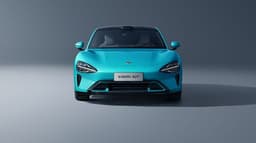
ELECTRIC CAR
Quiz by Nurina Hanani
Customize this quiz to suit your class
Instantly translate to 100+ languages
Tag the questions with any skills you have. Your dashboard will track each student's mastery of each skill.
Give this quiz to my class
The Guardian - The electric car - int
The Invention of the Automobile An automobile, or car, is a wheeled vehicle that carries its own motor and transports passengers. The automobile as we know it was not invented in a single day by a single inventor. In 1769, the French engineer Nicolas-Joseph Cagnon devised the first self-propelled road vehicle, a military tractor powered by a steam engine. One year later, Cagnon built a steam-driven tricycle that could carry four passengers, but steam engines were very heavy and they proved a poor design for road vehicles. Around 1830, the Scotsman Robert Anderson built the first electric carriage. Both steam and electric road vehicles were soon abandoned in favour of petrol-powered vehicles. In 1876, Nicolaus August Otto built the first practical four-stroke internal combustion engine. In an internal combustion engine, the fuel is burnt inside the engine, while in a steam engine, the fuel is burnt outside. The most common internal combustion engine type is petrol-powered. The first petrol-powered vehicles were developed by Gottlieb Daimler and Karl Benz. In 1885, Karl Benz designed the first three-wheeler powered by an internal combustion engine. In 1891, Benz built the first four-wheeler. The first automobile to be mass-produced in the USA was the 1901 curved-dashed Oldsmobile built by Ransom L.E. Odds. Odds devised the basic concept of the assembly line and started the Detroit-area automobile industry. Henry Ford installed the first conveyor belt-based assembly line in his car factory in Michigan in 1913. The assembly line reduced production costs for cars by reducing assembling time. Ford's famous Model T was assembled in 93 minutes. The Ford Motor Company was launched in 1903, and by 1927, 15 million Model Ts have been manufactured. The modern era of automobiles had begun. The assembly line During the period known as the Industrial Revolution (1760-1850) machines changed people’s lives as well as their methods of manufacturing. Most products people in the industrialized nations use today are manufactured by the process of mass production, that is by people and robots that use power-driven machines. Through the use of mass pro-duction methods and the assembly line, a larger amount of goods can be produced in a given period of time, usually at a lower cost.The assembly line developed at the Ford Motor Com-pany in 1913 had immense influence on the automo-tive industry and on other industrial branches. Henry Ford, founder of the company, had built his first car in 1896 and was unique among automobile inventors. In Ford’s early assembly line, cars were pulled by rope from one worker to the next. This new technique allowed individual workers to stay in one place and perform the same task repeatedly on vehi-cles as they passed by. This reduced production timeby about one-half. Ford later employed the use of conveyor belts to move the parts down the line.
LESSON 2 Early Theories on the Origin of Life • Identify the different theories on the origin of life. • Describe each theory and determine their differences What are the characteristics of living things? Before learning about the history of Earth based on geological evidence, early scientists explored the possibilities of how the first life-form existed. There are several theories about the origin of life. Theory of Catastrophism The theory of catastrophism supported by French scientists Georges Cuvier (1769-1832) and Alcide Dessalines d'Orbigny (1802-1857), is said to be a modification of the creation story of the Bible. It states that there have been several living creations from God, each encountered a catastrophe that completely destroyed them. Each new creation consisted of new life-forms, which happen to be different from the previous ones. Theory of Abiogenesis The theory of abiogenesis, or the spontaneous generation theory, states that living things were naturally created from nonliving things such as simple organic compounds. The theory supposes that abiogenesis occurred between 3.8 and 4 Gya. The experiment performed by Stanley Miller in 1953 gave way to many speculations and studies on how life on Earth really began. His research involved a simulation of the possible environment on Earth in the past. He demonstrated how an electric spark (which is a simulation for lightning) when passed through simple organic gases (similar to the early Earth atmosphere), resulted in the formation of amino acids, which are now known as the building blocks of proteins and the components of living tissues. Theory of Biogenesis The theory of biogenesis presented a strong argument against abiogenesis. This theory states that living things come from living things. Experiments of Francesco Redi and Louis Pasteur disproved the thought of spontaneous generation during their time (figure 5-1). Louis Pasteur argued that life comes from preexisting life and not from nonliving material. However, it should be noted that the "abiogenesis" or "spontaneous generation" that he opposed referred to any modern, existing, fully-formed organisms, not the original generation of life. Louis Pasteur's law of biogenesis contradicted the common belief during his time that cattle dung gives rise to flies, or old clothes with rotten food gives rise to mice. The idea of spontaneous generation was popular until near the seventeenth century. Even famous scientists of that period, such as Descartes, Galileo, and Jan Baptista van Helmont, believed in this theory. CIENCE PIONEER Francesco Redi (1626-1697). Francesco Redi is a physician, a naturalist, and a poet. His works challenged the popular theory of spontaneous generation. He disproved the idea that living things may arise from nonliving things. He also worked on toxicology using viper's venom. He discovered and worked on some parasites that caused disease in humans. SCIENCE CAREER Evolutionary Biologist An evolutionary biologist studies the descent of species and the origin of new species of living things. Working as evolutionary biologist means studying and researching species diversity, their interaction with the environment, their adaptation to change, their ancestors, and their possible origins. This career is important in the field of science because it seeks an answer to the questions about how life began on Earth.
It is necessary for us to take adequate care of our clothing for the following reasons: Reasons for maintenance of clothes. (a) To make clothes long last. (b) To save costs on new ones. The following are the guidelines to care and maintain our clothes: 1. Sorting: Clothes are sort out in terms of colour and size to enhance thorough cleaning and avoid stains. 2. Soaking: Soak them for easy washing. 3. Washing: We wash clothes in- between our palms or by kneading them in a bowl of soapy water to squeeze out the dirt. 4. Rinsing: This is done in clean water as many times as possible until the clothes are clean. 5. Drying: This is done on the clothes line of clothes hanger and not on the grasses or flower beds to avoid infections. 6. Ironing: This is done either by the electric iron or charcoal box iron. Do not over heat the iron to avoid burning of clothes. 7. Hang the hangable. Examples are coat and gowns. 8. Fold the Foldables. Examples are Wrapper and blouses. Keep them away in the boxes, bags or wardrobes. Before washing your ready made or imported wears, take note of the care label. It has care instruction notifying one on how such clothes could be properly handled. Laundry symbols give laundry instructions
What is Electric Force? Electric force is just one of many types of forces in the world of physics. Forces are how and why things move, and can be explained by Newton's Laws of Motion. On the smallest scale, electric force is the resulting interaction between two charged particles. These charges can be either positive or negative. Larger objects can be charged by having an abundance of either of these particles, and therefore can create an electric force on a larger scale. Electric force is the reason why hair will sometimes stand up on its own and is also why we have electricity, allowing us to live in the modern world with lights and technology. Even out in nature electric force is present, as electric force causes lightning to strike. Electric force is fundamental to our everyday way of living. Reviewing Newton's Laws of Motion Newton's Laws of motion are the basic principles or ground rules that are applied all across physics. They describe how objects move and can be used to describe the interaction of charges. They are the following: An object in motion will stay in motion unless an external force is applied The force exerted on an object is equal to the mass times the acceleration of the object. ( ) Every force has an equal and opposite force Newton's laws explain how and why charged particles move. Since there is a force involved (e.g. electric force), particles will move around, which is explained by the first law. The second law describes how acceleration of charges can be calculated once the electric force is known. The third law explains how attractive and repulsive forces between charged objects are equal and opposite. Electric Force Examples and Types of Charge As previously mentioned, there are only two types of charges; positive and negative. Two like charges will repel (or move away from) each other, and two opposite charges will attract (or move towards) each other. In other words, two positive or two negative charges will repel, while a positive and a negative charge will attract. Opposite charges will attract while like charges will repel. Attraction versus Repelling Forces Notice how the forces acting upon each other are equal and opposite, as Newton's third law states. Both charges are exerting forces onto each other. Charges in Atoms An atom is made up of three types of particles; protons, neutrons, and electrons. Protons have a positive charge, neutrons have no charge, and electrons have a negative charge. There are no positive or negative charges smaller than protons and electrons. Objects on a larger scale result in an overall positive or negative charged due to an uneven distribution of protons to electrons. An atom consisting of more protons than electrons would be considered positive, and an atom with more electrons than protons would be considered negative. Protons are held close to the nucleus and are tightly bound to an atom, so it's difficult for protons to escape an atom. Electrons, on the other hand, are much further away from the nucleus of an atom. This makes it much easier for them to be removed from an atom. Electrons can leave or join atoms, making them positive or negative depending on the amount of protons. Similarly, for the bigger picture, overall materials and objects with more electrons than protons would be considered negative, and vice versa. Electric Force Examples Hair standing up: When hair is brushed, the hairbrush can strip electrons from hair strands, resulting in the hair being positively charged. This addition of electrons to the hairbrush in turn makes the hairbrush negatively charged. Since the hair is now positively charged, and like forces repel, hair strands will move away from each other, resulting in the hair standing up. Current electricity: All of our everyday technology is powered through current electricity, which is the consistent flow of electrons through conductive materials. This flow is caused by the electric force, as the electrons flow from a negative source to a positive source. Lightning: During a storm, it is common for an abundance of electrons to build up on the bottom of a cloud, making that part of the cloud negatively charged. Positive charges in the ground start to gather on the surface or even on tall objects such as trees as they are attracted towards the negatively charged undersides of clouds. Lightning strikes as a result of these charges becoming extremely built up. Lightning is caused by electric force Lightning Electric Force Equation: Coulomb's Law The magnitude of the electric force, or the amount of force in which objects repel or attract, depends on the distance between the two charged objects and the amount of charge each object carries. The electric force is stronger the closer together the two charges are, and weaker as the two charges move apart. Electric force is also stronger with more charge, and weaker with less charge. This effect on electric force is predictable, and is known as Coulomb's Law. It can be calculated using a mathematical equation, and the resulting magnitude of electric force is measured in Newtons. Coulomb's Law Electric force can be calculated using the following equation known as Coulomb's Law: In this equation, F is the electric force measured in newtons, K is a constant known as the electrostatic constant, and are charges one and two measured in coulombs, and is the radial distance in meters between the two charges. Since the distance is squared and on the denominator, the electric force drops off exponentially as charges move away from each other. This means that the Electric force is inversely proportional to distance. As charges move away from each other, the electric force between them gets smaller and smaller, until the force is negligible. The amount of charges are in the numerator of this equation, making the magnitude of the force larger with more charge. This means that the force is directly proportional to the amount of charge. When the charges are smaller, the amount of force will be smaller. When there is a lot of charge, the force will be much greater. When calculating the electric force using Coulomb's law, the resulting answer only gives the magnitude of the force and not the direction. In order to know the direction, you must know the types of charges. Once again, like forces repel, and unlike forces attract. It helps to draw a visual representation, or a free-body diagram, of the charges and forces acting upon them in order to understand the resulting force direction. Electric Field versus Electric Force An electric field is a direct result of an electric force. Its pure definition is electric force per unit charge, and can be thought of as a mapping of the force vectors. An electric field is present anytime there is an electric force. Therefore, when there are two or more charged particles, there is a surrounding electric field. The direction of the electric field is the direction a positive charge would flow if it were placed within the field. The electric field moves out from a positive charge and goes into a negative charge. Particles with unlike charges move towards each other, and their corresponding electric field lines move out from the positive charge and into the negative charge. The strength of the force at any given point can be seen through the spacing of the electric field lines. The electric force is strongest where the electric field lines are closest together, and weaker as these lines move apart. Like Coulomb's law expresses, electric field lines show how the electric force is strongest with a minimum distance between the two charges. Unlike charges will result in a repelling force, and the resulting electric field is a visual representation of this effect. Electric fields of two positive charges have the electric field moving out away from both of them. As with two negative charges, the field lines move in towards each negative. Lesson Summary An electric force is created when there are two or more charged particles or objects. These charges can be either positive or negative. Like charges will attract (move towards each other) while unlike charges will repel (move away from each other). As Newton's third law suggests, the forces acting upon each other are both equal and opposite. Electrons and protons within an atom are the two smallest types of charges there are. Electrons carry a negative charge while protons carry a positive charge. Electrons can be easily removed or added to atoms, making the overall charge positive or negative. Objects with more electrons than protons are negatively charged. Electric force is strengthened with increased charge and a shorter distance between the charges. This effect is known as Coulomb's law and can be calculated with the Coulomb's law equation. The magnitude of the force is measured in Newtons, and the direction can be determined by knowing whether the charges are attracting or repelling each other. An electric field is present wherever there is an electric force. The direction of this electric field is the direction a positive charge would flow if it where to be dropped in the field, which is from the positive to the negative.
CONTENT A disaster is a sad event that happens suddenly. A disaster can come from nature or by accident. Natural disaster is disaster caused by nature. They are not caused by man’s carelessness. The following are examples of natural disaster: i) Earthquakes ii) Floods iii) Tornadoes iv) Windstorms v) Volcanoes vi) Erosion vii) Tsunami viii) Thunderstorm. BAD EFFECTS OF NATURAL DISASTER ARE AS FOLLOWS: i) Loss of human lives. ii) Loss of animal lives. iii) Damages to building iv)Damages to roads and bridges v) Pollution of land, air and water. vi)Destruction of electric poles and cables. WAYS OF CONTROLLING NATURAL DISASTER ARE: i) Building houses far away from rivers. ii) Thunder- catchers should be used in areas where thunder and lightning are common. iii) Planting of trees around our houses. iv) By not throwing refuse into gutters because this causes flooding.
Layer-ul fizic produce reprezentarea și gruparea biților sub formă de tensiune, frecvențe radio sau pulsuri de lumină. Diferite organizații de standardizare au contribuit pentru a defini proprietățile fizice, electrice și mecanice ale mediului disponibil pentru comunicații de date diferite. Aceste specificații garantează faptul că cablurile și conectorii vor funcționa anticipat cu implementări ale layer-ului data link. Ca un exemplu, standardele pentru mediul de cupru sunt definite pentru: • Tipul cablării de cupru utilizată • Lățimea de bandă a comunicației • Tipul conectorilor utilizați • Pinout-ul și codurile de culoare ale conexiunilor la mediu • Distanța medie a mediului Figura arată diferite tipuri de interfețe și porturi disponibile pe un router 1941. Caracteristici ale Mediului din Cupru Rețelele folosesc mediul din cupru deoarece este mai ieftin, ușor de instalat și are rezistență scăzută la curentul electric. În orice caz, mediul de cupru este limitat de distanță și de interferența semnalului. Datele sunt transmise prin cabluri de cupru sub formă de pulsuri electrice. Un detector din interfața de rețea a unui echipament de destinație trebuie să primească un semnal care poate fi decodat cu succes pentru a se potrivi cu semnalul trimis. În orice caz, cu cât semnalul călătorește pe distanțe mai mari, cu atât mai mult se deteriorează într-un fenomen denumit atenuarea semnalului. Din acest motiv, mediul din cupru trebuie să urmeze limitările stricte cu privire la distanță așa cum se specifică de standardele de ghidare. Valorile tensiunii și sincronizarea pulsurilor electrice sunt și ele predispuse la interferența din două surse: • Interferența electromagnetică (EMI) sau Interferența Frecvențelor Radio (RFI) - Semnalele EMI și RFI pot distorsiona și corupe semnalele de date care sunt transmise prin mediu de cupru. Sursele potențiale de EMI și RFI includ unde radio și echipamente electromagnetice precum motoare și lumini fluorescente, așa cum se arată în figură. • Crosstalk - Crosstalk-ul este o disturbanță cauză de câmpurile electromagnetice și electrice ale unui semnal de pe un fir la semnalul dintr-un fir adiacent. În circuitele de telefonie, crosstalk-ul poate rezulta în auzul unei părți dintr-o altă conversație prin voce de la un circuit adiacent. Atunci când curentul electric trece printr-un fir, se realizează un câmp magnetic mic, circular în jurul firului care poate fi luat de un fir adiacent. Pentru a contracara efectele negative ale EMI și RFI, unele tipuri de cabluri din cupru sunt împachetate într-o folie metalică și necesită conexiune corespunzătoare de împământare. Pentru a contracara efectivele negative ale crosstalk-ului, unele tipuri de cabluri din cupru au perechi de fire din circuite opuse torsadate care anulează efectiv crosstalk-ul. Susceptibilitatea cablurilor de cupru la zgomotul electric poate fi limitat de: • Selectarea celui mai potrivit tip de cablu sau categorie pentru un anumit mediu de rețea. • Proiectarea unei infrastructuri de cablu pentru a evita sursele potențiale și cunoscute ale interferenței din structura clădirii. • Folosirea tehnicilor de cablare care includ gestiunea și terminarea corectă a cablurilor.
Multiple choice quiz on this reading: By 1900, the United States had claimed its place as a world power through the Spanish-American War. As the new century began, the country governed subject territories in Puerto Rico, Hawaii, Guam, the Wake Islands, and the Philippines. U.S. troops also occupied Cuba. U.S. businesses reached beyond the country's borders. During the first decade of the new century, the Coca-Cola Company, Quaker Oats, AT&T, the Standard Oil Company, Du Pont, General Electric, and Ford Motor Company seized the opportunity for international sales. After finding international markets, they built factories abroad, taking advantage of lower labor costs in foreign countries. Then they asked for U.S. protection of their investments and interests. Foreign countries invested heavily in Central America. U.S. investors focused on banana plantations and mining, as well as railroads, with little money in government bonds. By 1913, U.S. investments in Central America totaled about $93 million. British investment in Central America peaked at about $115 million in 1913. About $75 million of that total represented railroad holdings, mostly in Costa Rica and Guatemala. The other $40 million was in government bonds, which were worth little or nothing. The Roosevelt Corollary to the Monroe Doctrine From its earliest days, the United States claimed a special interest in the Western Hemisphere. The Monroe Doctrine, issued in 1823, warned European powers to keep their hands off Latin America. In 1902, Britain, Germany, and Italy mounted a naval blockade of Venezuela. They wanted to force the government to repay its debts. All the countries involved eventually agreed to settle the matter by arbitration. The United States stood back and did nothing, but U.S. citizens were clearly uneasy with the appearance of European military forces in "their" hemisphere. In 1904, President Theodore Roosevelt issued a corollary to the Monroe Doctrine, saying that the United States would act as a police officer to keep order in the region. He intended both to keep European military forces out of the hemisphere and to protect U.S. and European investors, exerting whatever pressure or control on Latin American governments that might be necessary to these ends. In 1905, the Dominican Republic owed $40 million in debts to European lenders. In order to prevent the European nations from using military force to collect their debts, Roosevelt used U.S. power. The United States basically took over collection of Dominican customs taxes, declared that $20 million of the debt was unjustified, and began repayment of the rest. Building a Canal The United States needed a canal through Central America, in order to save shipping time and costs. Colombia had the best location for a canal, and the United States negotiated a deal. It would pay Colombia $10 million for a three-mile-wide strip of land and would make annual rental payments of $250,000 yearly, beginning in 1912. Colombia's Senate turned down the deal, and Roosevelt exploded in rage, calling its members "foolish and homicidal corruptionists." Roosevelt considered seizing the land for the canal by military force but soon found an easier way. The province of Panama seceded from Colombia. A U.S. gunship stood off shore, protecting the Panamanian rebels. They formed a new republic under the protection of the United States. The new country of Panama and the United States agreed on a canal treaty within days. The new treaty had similar terms except that the Canal Zone would be five miles wide, instead of three, and the United States would guarantee and maintain the independence of Panama. Revolutions While Roosevelt welcomed the revolution that separated Panama from Colombia, he opposed most other revolutionary activity. So did his successors in office, William Howard Taft and Woodrow Wilson. The U.S. presidents sent troops to put down revolutions in Nicaragua and Haiti, using U.S. military forces to set up new governments in those countries and maintaining military occupations for years. U.S. military interventions were frequent throughout the hemisphere. Dollar Diplomacy President Taft preferred using "dollar diplomacy" to control Latin American countries. In Honduras, for example, U.S.-based banana companies virtually ran the government. Taft supported expanded U.S. investment in South and Central American countries, the Caribbean, and the Far East. He ordered Secretary of State Philander Chase Knox to protect U.S. investments, sending in military troops if necessary. On the World Stage As a world power, the United States did not limit its involvement to the Western Hemisphere. In 1905, President Roosevelt brought Russia and Japan to the negotiating table to end their war over control of Korea and Manchuria. Roosevelt agreed to Japanese annexation of Korea in return for Japan giving up any claim to China, Hawaii, and the Philippines. Roosevelt won the Nobel Peace Prize for settling this dispute. In 1906, Roosevelt's negotiating powers were tested again. This time, he mediated a dispute between the Alliance powers—Germany, Austria-Hungary, and Italy—with the Entente—France, Russia, and Britain—over control of Morocco. The United States backed France and ended the dispute. No longer an upstart, the United States had taken its place as a world power alongside its former colonial ruler.