Loading...


Electronic devices Inter 9B
Quiz by Beni Penin
Customize this quiz to suit your class
Instantly translate to 100+ languages
Tag the questions with any skills you have. Your dashboard will track each student's mastery of each skill.
Give this quiz to my class
Electronic device
Electronic device
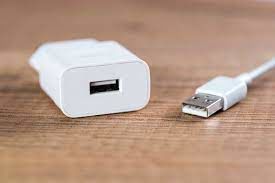
Electronic device
Electronic device
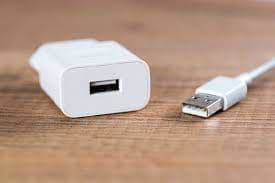
Electronic device

Electronic device
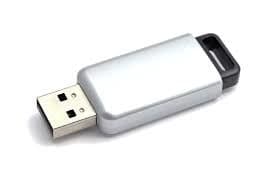
Electronic device
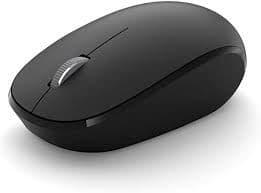
Electronic device
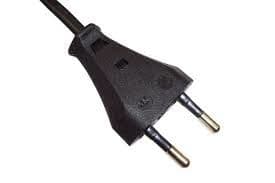
Electronic device

Electronic device

Electronic device

Electronic device

Electronic device

Electronic device

Electronic device
 WHAT IS SCIENCE? - is a way in which answers related to NATURAL events are proposed. - a way in which people can learn and UNDERSTAND events in the NATURAL WORLD - based on OBSERVABLE EVENTS - a study of the NATURAL WORLD - a method of DISCOVERY and UNDERSTANDING by using a PROBLEM-SOLVING process called the?? - A systematic body of knowledge based on observation and experimentation. FOUR COMMON CHARACTERISTICS OF SCIENCE: 1. It focuses on the NATURAL WORLD. 2. Goes through experiment. 3. Relies on evidence. 4. Passes through the scientific community. WHAT IS TECHNOLOGY? Brian Arthur (2009) defined technology as: 1. a means to fulfill a human purpose 2. assemblage of practices and components 3. a collection of devices and engineering practices available to a culture. SOCIETY ST (Science Technology) would not exist without society. WHAT IS STS? Science and Technology and Society (STS) is the study of how society, politics and culture affect scientific research and technological innovation and how these, in turn affects society, politics and culture. EVENTS IN THE HISTORY OF SCIENCE AND TECHNOLOGY THAT TRANSFORMED THE SOCIETY (IN THE WORLD) ANCIENT PERIOD 3500 BC. - 500 AD EUROPE - use of fire by Homo Erectus CA 750,000 - Stone Headed Spears CA 45,000 - Wooden bow and arrow CA 20,000 - The Minoans build palaces in Crete CA 2,000 THE AMERICAS - The Folsom people living on eastern side of the Rocky Mountain developed sophisticated tools CA 8,000. - Pottery is made in South America CA 6,000 - Olmec sculpture carves figurines and giant human heads. CA 1200 ASIA AND OCEANA - Earliest known clay pots are made in Japan CA 11,000. - Bronze is first made in Thailand CA 4000 - A lunar calendar is developed in China CA 2950 - Chinese doctors begin using acupuncture CA 2500 - The Hindu calendar of 360 days was introduced in India CA 1000 AFRICA AND MIDDLE EAST - Homo erectus uses stone tools CA 1000000 - CA 15000 in Africa, bone harpoons are used for fishing. - Clay tokens are used for record keeping in Mesopotamia CA 7500 - Mesopotamian mathematicians discover the Pythagorean Theorem MEDIEVAL PERIOD CA 500 -1500 - Dark ages because few written records and evidences remained - Scholastic tradition was established by Charlemagne - Vertical windmills, spectacles, mechanical clock, water mills, gothic style were invented - Johannes Gutenberg invented the printing press RENAISSANCE PERIOD 14TH – 17TH CENTURY - Rebirth of revival - Printing with movable type allowed Bible, secular books made in large amount - Nicolas Copernicus presented a heliocentric theory - Galileo Galilei invented telescope INDUSTRIAL REVOLUTION 18TH CENTURY - Skilled workers were set aside because of the machines - Iron production, steam engine and textile flourished - Scottish James Watt improved steam engine Robert Fulton (steam boat) - The following were invented: Light bulb, telephone, first steam powered locomotive 19TH CENTURY - Age of machine and tools - Herman Helmholtz (law of conservation of energy) - James Clark Maxwell (light as electro-magnetic wave) - Henry Becquerel (radioactivity) - Marie and Pierre Curie (radium) - Hans Christian Oersted (electric current near the magnet) - Michael Faraday (magnet produces electricity) - Atomic Theory proposed by John Dalton - Electron discovered by JJ. Thomson - Telegraph developed by Samuel Morse 20TH CENTURY - Communication, transportation, military research were developed - Personal computer was created - Intel developed microprocessor - Apple was introduced by Steve Jobs and Steve Wozniak - Internet was created (ARPANET) - Henry Ford's mass production of cars - Artificial Intelligence was invented SCIENCE, TECHNOLOGY AND SOCIETY (PHILIPPINE HISTORY) Stone Age - Archeological findings show that modern man from Asian mainland first came over land on across narrow channels to live in Batangas and Palawan about 48,000 B.C. - Subsequently they formed settlement in Sulu, Davao, Zamboanga, Samar, Negros, Batangas, Laguna, Rizal, Bulacan and Cagayan. Inventions - They made simple tools and weapons of stone flakes and later developed method of sawing and polishing stones around 40,000 B.C. - By around 3,000 B.C. they were producing adzes ornaments of seashells and pottery. Pottery flourished for the next 2,000 years until they imported Chinese porcelain. Soon they learned to produce copper, bronze, iron, and gold metal tools and ornaments. Iron Age - The Iron Age lasted from the third century B.C. to 11th century A.D. During this period Filipinos were engaged in extraction smelting and refining of iron from ores, until the importation of cast iron from Sarawak and later from China. INVENTIONS AND DISCOVERIES - They learn to weave cotton, make glass ornaments, and cultivate lowland rice and dike fields of terraced fields utilizing spring water in mountain regions. - They also learned to build boats for trading purposes. - Spanish chronicles noted refined plank built warships called caracoa suited for interisland trade raids 10TH CENTURY A.D. - Filipinos from the Butuan were trading with Champa (Vietnam) and those from Ma-I (Mindoro) with China as noted in Chinese records containing several references to the Philippines. These archaeological findings indicated that regular trade relations between the Philippines, China and Vietnam had been well established from the 10th century to the 15th century A.D. TRADING - The People of Ma-I and San-Hsu (Palawan) traded bee wax, cotton, pearls, coconut heart mats, tortoise shell and medicinal betel nuts, panie cloth for porcelain, leads fishnets sinker, colored glass beads, iron pots, iron needles and tin. SOME PRESPANISH FILIPINO SCIENCE AND TECHNOLOGY - Curative values of plants extract use as medicine - Alphabet (Alibata) - Counting Methods - Weights - Measuring system (isang gatang) - Calendar based on the periods of moon - Banaue Rice Terraces SPANISH REGIME Religion the Catholic Church - The latter part of the 16th Century Development of schools: - Colegio de San Ildefonso-Cebu-1595 - Colegio de San Ignacio-Manila-1595 - Colegio De Nuestra Senora del Rosario-Manila 1597 - Colegio De San Jose-Manila-1601 Colegio De San Ildefonso De Cebu - In 1863 the colonial authorities issued a royal degree to reform the existing educational system. In 1871 the school of medicine and pharmacy were opened to UST, after 15 years it had granted the degree Of Licenciado En Medicina to 62 graduates. Medicine - Development of hospitals San Juan Lazaro hospital the oldest in the far east was founded in 1578. Roads and Bridges Among other Spanish contributions: - Arithmetic - Algebra - Geometry - Trigonometry - Physics - Hydrography - Meteorology - Navigation - Pilotage American Period and Post Commonwealth Era - BUREAU OF GOVERNMENT LABORATORIES (1901) - BUREAU OF SCIENCE (1905) - INSTITUTE OF SCIENCE (1946) RA 2067 OTHERWISE KNOWN AS THE “SCIENCE ACT OF 1958”. - This was enacted to integrate, coordinate, and intensify scientific and technological research and development and to foster invention including allocation of funds and other purposes. NATIONAL RESEARCH COUNCIL WAS ESTABLISHED ON DECEMBER 8, 1933. - Its Mandate (Nrcp) Promotes And Supports Fundamental Or Basic Research For The Continuing Total Improvement Of The Research Capability Of Individual Scientists Or Group Of Scientists; Provides Advice On Problems And Issues Of National Interest; Promotes Scientific And Technological Culture To All Sectors Of Society; And Fosters Linkages With Local And International Scientific Organizations For Enhanced Cooperation In The Development And Sharing Of Information NATIONAL RESEARCH COUNCIL WAS ESTABLISHED IN DECEMBER 8, 1933. - Its Mandate (NRCP) promotes and supports fundamental or basic research for the continuing total improvement of the research capability of individual scientists or group of scientists; provides advice on problems and issues of national interest; promotes scientific and technological culture to all sectors of society; and fosters linkages with local and international scientific organizations for enhanced cooperation in the development and sharing of information. It was during the American Period when Science was inclined towards: - Agriculture - Food Processing - Forestry - Medicine - Pharmacy - NursingElectronic devicesElectronic Devices (multiple - choice) Electronic Devices (Class 8)Grace Hopper (1906-1992): An American computer scientist and U.S. Navy rear admiral. She was a pioneer in computer programming and developed the first compiler for a computer programming language, laying the groundwork for cobol. Garrett Augustus Morgan Sr. (1877-1963): An African American inventor who patented the traffic signal and the safety hood, a precursor to the modern gas mask. Hedy Lamarr (1914-2000): An Austrian-American actress and inventor who co-invented an early technique for spread spectrum communications, a key to modern wifi and bluetooth technology. Otis Boykin (1920-1982): An African American inventor who patented over 25 electronic devices, including a control unit for the pacemaker that is widely used today. Stephanie Kwolek (1923-2014): An American chemist who invented the synthetic fiber Kevlar, which is used in bulletproof vests and other protective equipment. Gladys West (b. 1930): An African American mathematician who played a crucial role in the development of the GPS technology we use today. Shirley Ann Jackson (b. 1946): An African American physicist who was the first African American woman to receive a doctorate at MIT and her work laid the foundations for the touch-tone telephone, caller ID, and call waiting. Tu Youyou (b. 1930): A Chinese pharmaceutical chemist who discovered artemisinin, a drug therapy that has significantly reduced the mortality rates for malaria, for which she was awarded the Nobel Prize in Physiology or Medicine in 2015. Chien-Shiung Wu (1912-1997): A Chinese-American physicist who made significant contributions to the Manhattan Project and disproved the hypothetical law of conservation of parity, for which her male colleagues received the Nobel Prize (she did not). Mária Telkes (1900-1995): A Hungarian-American biophysicist and architect dubbed the "Sun Queen" for her pioneering work in solar energy, including the development of the first solar-powered house. Percy Lavon Julian (1899-1975): An African American chemist and pioneer in the chemical synthesis of medicinal drugs from plants. Charles Ginsburg (1925-1992): An American engineer who led the team that developed the first commercial videotape recorder. Philo Farnsworth (1906-1971): An American inventor who developed an electronic television system and made major contributions to early television technology. María Montoya Martínez (1887-1980): A Native American (Tewa) potter from San Ildefonso Pueblo, New Mexico, who helped revive the traditional black-on-black pottery style and is considered one of the most influential Pueblo potters of the 20th century. Satya Nadella (b. 1967): An Indian-American business executive who has been the chief executive officer of Microsoft since 2014, overseeing the company's transformation into a cloud computing powerhouse. Junko Tabei (1939-2016): A Japanese mountaineer who in 1975 became the first woman to reach the summit of Mount Everest, and the first woman to ascend the Seven Summits, climbing the highest peaks on each continent. Mildred Dresselhaus (1930-2017): An American physicist and engineer, known as the "Queen of Carbon Science," who made groundbreaking contributions to the study of carbon materials like graphite and carbon nanotubes. Ellen Ochoa (b. 1958): An American engineer and former astronaut. In 1993, she became the first Hispanic woman to go to space when she flew on the Space Shuttle Discovery. Françoise Barré-Sinoussi (b. 1947): A French virologist who co-discovered HIV as the cause of AIDS, for which she was awarded the Nobel Prize in Physiology or Medicine in 2008. Esther Lederberg (1922-2006): An American microbiologist who made significant contributions to genetics and microbiology, including the discovery of the bacterial virus lambda, but whose work was often overshadowed by her husband's Nobel Prize-winning accomplishments.How to Stop Avalanchesnow with explosives, or by erecting snow fences. Explosives Explosives are primarily used to prevent avalanches, especially at ski resorts where other methods are often impractical. Maintenance staff from the ski resort travel to potential avalanche areas and areas with steep slopes. First, they measure the depth of the snow and its quality. They want to check for hard, loose, wet or icy snow layers. If an area is considered dangerous, small explosives are fired into the side of the steep terrain. The explosion loosens the top layer of snow, which tumbles harmlessly down the mountainside. But using explosives is costly and dangerous. Some researchers are currently experimenting with the cheaper and safer method of using ultrasonic sound waves that shock the snow into falling, averting an avalanche and saving lives. Snow Fences It is very common to put up snow nets or snow fences. These nylon nets or wooden and steel fences are placed at the top of slopes. They prevent the buildup of snow on the downwind side, thereby lessening the chance of a slab avalanche. Beacons and Radio Devices Fortunately, there are companies that specialize in making rescue beacons. These are small electronic devices that send out a radio signal to search and rescue crews. Most people who venture into the backcountry carry some sort of beacon or GPS device. They can help locate a buried victim up to 80 meters away. However, these beacons and GPS devices only send out a signal if the victim turns it on. Often, the victim is too injured to think clearly and press the 'on button.' If search and rescue crews do not quickly reach the victims, the skiers will not be discovered in time. Surviving an Avalanche If you are ever caught in an avalanche, the chances are slim that you will survive. If you are not killed instantly, you only have a short time (15~35 minutes) before your oxygen runs out. Take off your ski, boots and poles. Use a swimming motion to claw your way to the surface. Often people do not know which way is up or down. The effect of this is disorientation. It is not uncommon for avalanche victims to dig in the wrong direction. With proper precautions, both skiers and ski resorts can avoid the tragedy of an avalanche.Match the word to its synonym level B1 CEFR. Use the vocabulary exactly adverb precisely except that aside from exist verb to be real existing adjective real, current Example: Flying cars are not practical with existing technology. existence noun reality Example: The existence of black holes has been confirmed by indirect observation. extraordinary adjective unusual feature noun important part of something Example: The Ramon Crater is a unique feature of the Negev Desert. feedback noun reaction figure noun shape Example: I can’t tell if that figure in the shadows is a man or a woman. figure out verb understand Example: I just can’t figure out how the magician did that amazing trick. financial adjective related to money Example: Her family is having financial problems so they can’t travel overseas this year. finance verb pay for Example: If I can’t get a loan from the bank, I won’t be able to finance a new apartment. finance noun money Example: An expert in finance predicts a global recession. finding/findings noun discoveries; results of a study Example: According to the findings of the police investigation, this is the gun which fired the fatal bullet. flexibility noun willingness to change flexible adjective adjusts easily Example: I’d prefer to meet on Monday morning but I can be flexible depending upon your schedule. flood noun a lot of water flood verb to cover with too much water flu noun type of sickness focus on/upon verb pay attention to Example: You should focus on your schoolwork if you want to improve your grades. focus noun attention People with attention deficit disorder lose focus easily. frequency noun how often frequent adjective very often Example: Hanah is a frequent customer and everyone at the store knows her. fresh adjective new Example: We need some fresh ideas if we’re going to solve this problem. frighten verb scare from preposition position, starting point gain verb make an increase, profit, earn Example: I have nothing to gain by choosing sides so I shall remain neutral. gain noun profit, amount earned generate verb create, make Example: Chat GPT can generate text written in any style you choose. guidance noun help, advice hopeful adjective optimistic, having a positive outlook Example: The farmers are hopeful that we will have rain this winter. hopefully adjective with luck ideal adjective best, most preferable Example: Nuclear power may not be an ideal solution to global warming, but it’s certainly worth considering. illness noun sickness, disease illustrate verb draw pictures illustration noun picture, image Example: Children’s storybooks have colorful illustrations. image noun picture, especially on film or television Example: The mother of the pop singer cried when she first saw her daughter’s image on television. in preposition within, inside, into in terms of regarding Example: That company makes a great product but they’re lacking in terms of customer service. in actual fact in truth Example: The mayor says the city is a safe place to live, but in actual fact the violent crime rate is very high. in connection with about Example: Police arrested four men in connection with the robbery. in that case if that is true Example: Billy Bob: “Traffic could be heavy tomorrow.” Peggy Sue: “In that case, we better leave early.” in the meantime while, during Example: The new computers won’t arrive until next week, but we can keep using the old ones in the meantime. initial adjective first Example: Her initial reaction to that song was negative, but over time she’s come to like it. initially adverb at first instruction noun teaching, order Example: Most new electronic devices come with a set of instructions. intelligence noun smartness Example: Since you have a degree from a good university, I assume you have sufficient intelligence to understand this problem. intelligent adjective smart Example: Joe isn’t very intelligent, but he is a kind person with a warm heart. interest noun attraction Example: Yossi has little interest in politics, whereas his wife goes to all the protests and demonstrations. interest verb to attract Example: Sports don’t really interest me, but my brother is a big basketball fan. introduce verb to show something new Example: Today in class I will introduce the basic concepts of literary analysis. invest verb to put money into something in order to earn money Example: Joe invested in cryptocurrency and lost a lot of money. investor noun one who puts money into something in order to earn money Example: Venture capitalists are investors who put money into risky start-up businesses. investment noun putting money into something in order to earn money Example: Buying real estate in Israel is a very safe investment because the value never goes down. investigate verb research, study Example: The police collected evidence to investigate the murder. investigation noun study Example: The police don’t have a suspect for the murder as the investigation isn’t finished yet. investigator noun detective Example: Detective Schmendrick is the lead investigator for the murder case. just about almost Example: I’m just about done here so I’ll be there shortly. keep on doing verb continue Example: You’re crazy if you keep on doing the same thing and expect different results. kind of type of Example: What kind of dog is that, a poodle? knowledge noun awareness Example: John failed the test due to lack of knowledge of the material. lack verb not having, missing Example: John failed the test due to lack of knowledge of the material. landscape noun the view of the land likely adjective, adverb probably Example: When we learn from our mistakes, we’re not likely to forget. limited adjective restricted Example: We should go to the store today because the sale is for a limited time only. limitation noun restriction little adjective small, not a lot Example: She always tells the truth. I have little reason to doubt her. look at verb see Example: People used to read newspapers on the train. Nowadays they just look at their phones. low adverb to a small amount or level Example: I have to charge my phone because the battery is running low. material noun documents, information Example: We have a lot of material to cover before the end of the semester. meaning noun significance mean verb to have significance or purpose means noun form of, by the use of Example: They communicate by means of radio. measure noun step Example: The teacher took measures to prevent cheating during the test mention verb to say, point out Example: The coach said the team played very well today but didn’t mention any player specifically. miss verb (1) fail to catch (2) wishing to see somebody Examples: (1) The football player kicked the ball but missed the goal. (2) Wow, it’s good to see you! I’ve missed you so much! misunderstand verb understand incorrectly Example: I’m afraid I misunderstood the instructions. Could you repeat them please? more or less approximately, somewhat, to a varying degree Example: This is more or less a religious neighborhood, though there are a few secular families. must modal verb have to naturally adverb as expected, normally nature noun (1) open air (2) character Examples: (1) We like to go hiking in nature reserves. (2) Pit bulls are aggressive by nature.How to Stop Avalanches ToB A major concern of ski resorts is avalanche control. Most avalanches occur outside the boundaries of the regular groomed ski runs. But each year, skiers and trekkers on snowshoes go into these remote areas where most avalanches occur. There are two primary ways to prevent avalanches-by blasting the snow with explosives, or by erecting snow fences. Explosives Explosives are primarily used to prevent avalanches, especially at ski resorts where other methods are often impractical. Maintenance staff from the ski resort travel to potential avalanche areas and areas with steep slopes. First, they measure the depth of the snow and its quality. They want to check for hard, loose, wet or icy snow layers. If an area is considered dangerous, small explosives are fired into the side of the steep terrain. The explosion loosens the top layer of snow, which tumbles harmlessly down the mountainside. But using explosives is costly and dangerous. Some researchers are currently experimenting with the cheaper and safer method of using ultrasonic sound waves that shock the snow into falling, averting an avalanche and saving lives. Snow Fences It is very common to put up snow nets or snow fences. These nylon nets or wooden and steel fences are placed at the top of slopes. They prevent the buildup of snow on the downwind side, thereby lessening the chance of a slab avalanche. Beacons and Radio Devices Fortunately, there are companies that specialize in making rescue beacons. These are small electronic devices that send out a radio signal to search and rescue crews. Most people who venture into the backcountry carry some sort of beacon or GPS device. They can help locate a buried victim up to 80 meters away. However, these beacons and GPS devices only send out a signal if the victim turns it on. Often, the victim is too injured to think clearly and press the 'on button.' If search and rescue crews do not quickly reach the victims, the skiers will not be discovered in time. Surviving an Avalanche If you are ever caught in an avalanche, the chances are slim that you will survive. If you are not killed instantly, you only have a short time (15~35 minutes) before your oxygen runs out. Take off your ski, boots and poles. Use a swimming motion to claw your way to the surface. Often people do not know which way is up or down. The effect of this is disorientation. It is not uncommon for avalanche victims to dig in the wrong direction. With proper precautions, both skiers and ski resorts can avoid the tragedy of an avalanche.