Loading...

Elemen Informatika-XI A
Quiz by Nuur Dzikrika
Customize this quiz to suit your class
Instantly translate to 100+ languages
Tag the questions with any skills you have. Your dashboard will track each student's mastery of each skill.
Give this quiz to my class
Tiga elemen utama dalam komputer, yaitu ....
programmer, software, brainware
hardware, software, programmer
hardware, software, brainware
developer, hardware, software
hardware, developer, brainware
Landasan utama dari computational thingking, kecuali .....
implementasi
dekomposisi
pola
abstraksi
algoritma
Tiga elemen utama dalam komputer, yaitu ....
Landasan utama dari computational thingking, kecuali .....
Dalam TIK, terdapat salah satu perangkat lunak yang dapat digunakan untuk mempermudah pengguna dalam mengolah dan menghitung data yang bersifat numerik (angka), yang dikelan dengan ....
Jaringan komputer yang sangat besar dan dapat mencakup seluruh dunia disebut ....
Sesuatu yang diperoleh dari hasil pencatatan, pengamatan atau pengukuran dari suatu kejadian disebut dengan ...
Rangakaian langkah-langkah logis yang dilakukan untuk menyelesaikan pekerjaan atau tugas komputasi disebut ...
Hak eksklusif pencipta yang timbul secara otomatis berdasarkan prinsip deklaratif setelah suatu ciptaan diwujudkan dalam bentuk nyata tanpa mengurangi pembatasan sesuai dengan ketentuan peraturan perundang-undangan disebut juga dengan ...
Internet dapat memudahkan calon wisutawan untuk membeli tiket-tiket perjalanan dan paket-paket liburan, merupakan salah satu manfaat teknologi informatika dalam bidang ...
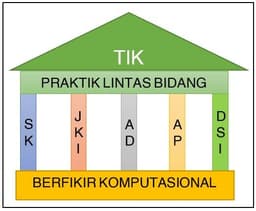
Praktik yang mengintegrasikan konsep dan keterampilan dari berbagai disiplin ilmu untuk memecahkan masalah yang kompleks merupakan elemen informatika yang dikenal dengan ...
Informatika merupakan bidang ilmu yang mengemas STEAM, berikut bagian dari STEAM kecuali ...
 Describe the element of the Information risk management Create questions for students based on this information: experiences that make a person who they are. It is the unique combination of factors that define an individual and distinguish them from others. Identity can be shaped by various factors such as family, culture, society, gender, race, ethnicity, religion, and personal experiences. A person's identity can be complex and multifaceted and can change over time as they grow and develop. Voice, on the other hand, refers to the unique way in which a person expresses themselves through their writing or speaking. It includes the tone, style, and language that a person uses to convey their message. A person's voice can be influenced by their identity and personal experiences, as well as their audience and the purpose of their communication. Developing a strong and authentic voice is important for writers and speakers because it helps them connect with their audience and effectively convey their message. It is a key element of personal expression and communication.Earth's History. All the processes that have been discussed require long periods of time to create a noticeable change on Earth's surface. You can just imagine how long it would take to create an oceanS as vast as the Pacific Ocean if the ocean floor moves only at about 10 cm/year. It is then important to know the history of Earth to learn the complexities of its past and be able to use it to understand the present. Just like learning the history of a country that requires one to read a lot of books, learning the history of Earth involves studying a lot of rocks. Rocks, especially sedimentary rocks, contain a lot of information about Earth's past. It holds the key to most of the geologic processes that happened on Earth and the key to uncovering how life on Earth evolved. But these discoveries are worthless if there is no time perspective. Thus, one of the most important contributions of geologists to mankind is the geologic time scale, which holds a history that is exceedingly long.The geologic time scale divides the history of Earth into different blocks of time by using relative dating. Since geologists use rocks to understand Earth's history, dating does not give accurate numerical dates, it only tells that an event preceded the relative dating places these rocks in their proper sequence of formation. But relative other. This method is still widely used today, alongside a more accurate method called absolute dating, which uses radioactive elements. With relative and absolute dating. geologists can trace the history of Earth. Relative Dating. Relative dating requires one to know the basic principles such as law of super-position, principle of original horizontality, principle of cross-cutting relationships, and unconformities.Law of Superposition The law of superposition is the most basic principle in relative dating. It states that in an undeformed sequence of sedimentary rock, the layers found at the top are the youngest rocks and the layers at the bottom are the oldest. It may seem too obvious, but this principle has only been clearly stated in 1669 by the Danish anatomist, geologist, and priest, Nicolaus Steno. Principle of Original Horizontality Along with the law of superposition, Steno stated that an undeformed sequence is the one where the layers are still in a horizontal position. This follows the principle of original horizontality, which states that sediments are deposited horizontally. Principle of Cross-Cutting Relationships The principle of cross-cutting relationships determines which events occurred first depending on which rocks are affected. The geologic layer that cuts another is younger than the layer it cuts across.Unconformities Rock layers that have not been interrupted are considered conformable. These sites represent spans of geologic time. But there is no place on Earth that has a complete conformable stratum since external and internal processes have always interrupted the deposition of the sediments. These breaks in the record of the rock strata are called unconformities. Using unconformities, geologic events are determined. There are three basic types of unconformities angular unconformity, disconformity, and nonconformity. Angular unconformity is characterized by having tilted or folded sedimentary rocks below younger, horizontal layers of rock. Disconformity is determined where there are missing parallel rock layers. Erosion takes place and removes the younger top layers and then deposition would once again happen. Nonconformity is characterized by an igneous or metamorphic rock found below a sedimentary rock. Figure 3-13. Three basic types of unconformities Using these principles for relative dating, one can determine the order of events However, relative dating does not give a time element as to when they happened. Absolute Dating For a much more accurate method of determining the history of Earth, geologists make use of absolute dating. This method uses unstable elements to determine the exact age of rocks. Isotopes are elements that have the same number of protons but different number of neutrons. Most isotopes are stable but some may be unstable. This is because the forces that bind the protons and neutrons in the nucleus of the isotope are not strong enough to hold them together, resulting in a radioactive decay, The unstable isotopes are called radioactive isotopes or parent isotopes. When these parent isotopes undergo radioactive decay, new isotopes, known as daughter products, are formed. The time it takes for one-half of the nuclei in the sample to decay is called half-life. This amount of time is fixed for each kind of radioactive isotope no matter what physical conditions it is subjected to. The ratio of parent daughter isotope determines how many half-lives have passed. If it is 1:1, then one half-life has passed; if it is 1:3, then two half-lives have passed; and if 1:7, then three half-lives have passed, and so on. Therefore, using the concept of half-life and parent-daughter ratio, geologists can determine the exact age of the sample. This method is called radiometric dating. It uses five radioactive isotopes to determine the age of rocks. For dating rocks that are about a million years old, rubidium-87, thorium-232, and the two isotopes of uranium (U-238 and U-235) are used. The fifth radioactive isotope is potassium-40, which has a half-life of 1.3 billion years. With these radioactive elements, determining the accurate age of rocks becomes easier. For dating events that are more recent, radiocarbon dating is used. This method uses carbon-14. Carbon-14 has a half-life of 5730 years and can be used to date back events up to 75000 years. All organisms contain a small amount of carbon-14, which is proportional with the amount of carbon-12. When an organism dies, the carbon-14 decays and is no longer replaced. The amount of carbon-14 left in the sample is then compared to the amounts of carbon-12 present, and radiocarbon dates can then be determined. This method has been particularly useful for anthropologists, archeologists, historians, and geologists for events that are much more recent.Fossils Aside from rocks, geologists also use the remains of living organisms in understanding Earth's history. Some fossils are formed from parts of an organism (body fossil), while some provide signs or clues as to which life-forms were present at that time (Frace fossils). Fossils contain a lot of information about the past the kind of organisms that have lived, the environment where organisms lived, and the evolution organisms underwent as their environment changed. However, not all organisms turned into fossils, therefore, scientists cannot learn everything about the past using fossils alone. There are also fossils that are used to determine the age of a rock. These are index fossils and these are only found in rocks of a particular age. The organisms that turned into index fossils have a relatively short life-spanning from a few million years to a few hundred million years. Index fossils are also found in most of the common rocks around the world, which makes them easier to identify.The methods used for dating the age of rocks are also used for fossils. Absolute dating is more commonly used since it can give exact numerical dates for the age, but relative dating can also be used to determine which fossils are older.Ions Ions are charged substances that have formed through the gain or loss of electrons. Cations form from the loss of electrons and have a positive charge while anions form through the gain of electrons and have a negative charge. Cation Formation Cations are the positive ions formed by the loss of one or more electrons. The most commonly formed cations of the representative elements are those that involve the loss of all of the valence electrons. Consider the alkali metal sodium (Na) . It has one valence electron in the n=3 energy level. Upon losing that electron, the sodiu ion now has an octet of electrons from the second energy level and a charge of 1+ . The electron arrangement of the sodium ion is now the same as that of the noble gas neon. Consider a similar process with magnesium and aluminum. In this case, the magnesium atom loses its two valence electrons in order to achieve the same arrangement as the noble gas neon and a charge of 2+ . The aluminum atom loses its three valence electrons to have the same electron arrangement as neon and a charge of 3+ . For representative elements under typical conditions, three electrons is usually the maximum number that will be los. Representative elements will not lose electrons beyond their valence because they would have to "break" the octet of the previous energy level which provides stability to the ion. Anions Anions are the negative ions formed from the gain of one or more electrons. When nonmetal atoms gain elections, they often do so until their outermost principal energy level achieves an octet. For fluorine, which has an electron arrangement of (2, 7), it only needs to gain one electron to have the same electron arrangement as neon. Forming an octet (eight electrons in the outer shell) provides stability to the atom. Fluorine will gain one electron and have a charge of 1− . The electron arrangement of the fluoride ion (2, 8) will also change to reflect the gain of an electron. Oxygen has an electron arrangement of (2, 6) and needs to gain two electrons to fill the n=2 energy level and achieve an octet of electrons in the outermost shell. The oxide ion will have a charge of 2− as a result of gaining two electrons. Under typical conditions, three electrons is the maximum that will be gained in the formation of anions. Subatomic Particles in an Ion Since ions form from the gain or loss of electrons, we can also look at the number of subatomic particles (protons, neutrons, and electrons) found in an ion. Remember that the number of protons determines the identity of the element and will not change in a chemical process. Example 2.5.1 How many protons, neutrons, and electrons in a single oxide (O2−) ion? Solution Oxygen has the atomic number 8 so both the atom and the ion will have 8 protons. The average atomic mass of oxygen is 16. Therefore, there will be 8 neutrons (atomic mass−atomic number=neutrons) . A neutral oxygen atom would have 8 electrons. However, the anion has gained two electrons so O2− has 10 electrons. We can also use information about the subatomic particles to determine the identity of an ion. Example 2.5.2 An ion with a 2+ charge has 18 electrons. Determine the identity of the ion. Solution If an ion has a 2+ charge then it must have lost electrons to form the cation. If the ion has 18 electrons and the atom lost 2 to form the ion, then the neutral atom contained 20 electrons. Since it was neutral, it must also have had 20 protons. Therefore the element is calcium. Polyatomic Ions A polyatomic ion is an ion composed of two or more atoms that have a charge as a group (poly = many). The ammonium ion (see figure below) consists of one nitrogen atom and four hydrogen atoms. Together, they comprise a single ion with a 1+ charge and a formula of NH+4 . The hydroxide ion (see figure below) contains one hydrogen atom and one oxygen atom with an overall charge of 1− . The carbonate ion (see figure below) consists of one carbon atom and three oxygen atoms and carries an overall charge of 2− . The formula of the carbonate ion is CO2−3 . The atoms of a polyatomic ion are tightly bonded together and so the entire ion behaves as a single unit. The figures below show several examples. Soult Screenshot 2-2-1.png Figure 2.5.1 : The ammonium ion (NH+4) is a nitrogen atom (blue) bonded to four hydrogen atoms (white). Soult Screenshot 2-2-2.png Figure 2.5.2 : The hydroxide ion (OH−) is an oxygen atom (red) bonded to a hydrogen atom. Soult Screenshot 2-2-3.png Figure 2.5.3 : The carbonate ion (CO2−3) is a carbon atom (black) bonded to three oxygen atoms. The table below lists a number of polyatomic ions by name and by structure. The heading for each column indicates the charge on the polyatomic ions in that group. Note that the vast majority of the ions listed are anions - there are very few polyatomic cations. 1− 2− 3− 1+ Table 2.5.1 : Common Polyatomic Ions acetate, CH3COO− carbonate, CO2−3 arsenate, AsO3−3 ammonium, NH+4 bromate, BrO−3 chromate, CrO2−4 phosphite, PO3−3 chlorate, ClO−3 dichromate, Cr2O2−7 phosphate, PO3−4 chlorite, ClO−2 hydrogen phosphate, HPO2−4 cyanide, CN− oxalate, C2O2−4 dihydrogen phosphate, H2PO−4 peroxide, O2−2 hydrogen carbonate, HCO−3 silicate, SiO2−3 hydrogen sulfate, HSO−4 sulfate, SO2−4 hydrogen sulfide, HS− sulfite, SO2−3 hydroxide, OH− hypochlorite, ClO− nitrate, NO−3 nitrite, NO−2 perchlorate, ClO−4 permanganate, MnO−4 The vast majority of polyatomic ions are anions, many of which end in -ate or -ite. Notice that in some cases such as nitrate (NO−3) and nitrite (NO−2) , there are multiple anions that consist of the same two elements. In these cases, the difference between the ions is the number of oxygen atoms present, while the overall charge is the same. As a class, these are called oxyanions. When there are two oxyanions for a particular element, the one with the greater number of oxygen atoms gets the -ate suffix, while the one with the fewer number of oxygen atoms gets the -ite suffix. The four oxyanions of chlorine are shown below, which also includes the use of the prefixes hypo- and per-. ClO− , hypochlorite ClO−2 , chlorite ClO−3 , chlorate ClO−4 , perchlorate Not your usual ion Soult Screenshot 2-2-4.png "Drink you milk. It's good for your bones." We're told this from early childhood, and with good reason. Milk contains a good supply of calcium, part of the structure of bone. However, there are two other ionic components of hydroxyapatite, the mineral component. Phosphate ion and hydroxide ion make up the remainder of the inorganic material in bone. News You Can Use Bone is a very complex structure. It is composed of protein (mainly collagen), hydroxyapatite (a calcium-phosphate-hydroxide mixture), some other minerals, and contains 10 - 20% water. The calcium/phosphate ratios are not stoichiometric, but vary somewhat from one portion of bone to the next. Bones are very strong but will break under enough stress. Regular exercise and proper nutrition help to increase bone strength. Watch a video about bone structure at http://www.youtube.com/watch?v=d9owEvYdouk Nitrate is an anion with a complex bonding structure. Major sources for this ion in drinking water are runoff from fertilizer, septic tank leakage, sewage, and natural deposits. High concentrations of nitrates represent a significant health hazard, especially to infants. The nitrate in the body is converted to nitrite, which then binds to hemoglobin. This binding decreases the ability of hemoglobin to transport oxygen, thus depriving the cells of the O2 needed for proper functioning. Cyanide production is widespread throughout nature. Forest fires will produce significant amounts of cyanide. Many plants contain cyanide, and it is produced by a number of bacteria, algae, and fungi. Cyanide is used industrially in metal finishing, iron and steel mills, and in organic synthesis processes. This material is also an important component for the refining of precious metals. Formation of a complex between cyanide and gold allows extraction of this metal from a mixture.I. Définition L'appel d'offres est donc une procédure par laquelle un acheteur public choisit l'offre économiquement la plus avantageuse, sans négociation, sur la base de critères objectifs préalablement définis Son but est de mettre en concurrence plusieurs entreprises privées pour obtenir la meilleure offre possible. Les caractéristiques principales sont les suivantes : • Absence de négociation : L'acheteur sélectionne l'offre uniquement sur la base des propositions reçues, sans négociation avec les candidats • Critères objectifs : La sélection se fait selon des critères définis à l'avance et communiqués aux candidats • Transparence : Les appels d'offres publics sont soumis à des règles strictes de publicité et de transparence Ce principe d’appel d’offre garantie donc l’égalité de traitement des entreprises privées candidates et une certaine transparence. II. Les différentes formes d’appel d’offres Il existe deux formes principales d'appels d'offres dans les marchés publics : • Appel d'offres ouvert : Toute entreprise intéressée peut répondre à l’appel d’offre • Appel d'offres restreint : Seuls les candidats présélectionnés par l'acheteur sont autorisés à soumettre une offre. Cette procédure est particulièrement adaptée aux marchés complexes ou spécialisés, où l'acheteur souhaite présélectionner les entreprises les plus qualifiées avant d'examiner leurs offres en détail. III. Les objectifs pour une PME de prospecter des nouveaux marchés via les appels d’offres Il y a plusieurs objectifs pour une entreprise de prospecter de nouveaux marchés : – trouver de nouveaux clients ; – garantir le développement de l’activité de l’entreprise ; – compenser l’érosion du portefeuille clients existant ou remplacer les clients peu ou pas rentables Ainsi, au-delà du simple gain commercial, les appels d'offres représentent un véritable levier stratégique de développement pour les entreprises, quelle que soit leur taille. IV. La procédure de réponse aux appels d’offre 1. Les étapes principales Voici les principales étapes pour répondre efficacement à un appel d'offres : • Identifiez les appels d'offres pertinents • Activez des alertes automatiques sur les plateformes dédiées • Téléchargez le Dossier de Consultation des Entreprises (DCE) • Analysez minutieusement le cahier des charges et le règlement de consultation • Préparer la réponse soit constituez le dossier de candidature avec les documents administratifs requis • Transmettre la réponse soit déposer le dossier complet sur la plateforme de dématérialisation avant la date limite • Suivre la réponse : en cas de rejet, demandez un retour pour identifier les points d'amélioration 2. La consultation des appels d’offre Les PME doivent d’abord identifier les appels d'offres pertinents. Cela peut se faire par : • Les réseaux professionnels : Participer à des salons, des conférences et des événements réseaux aide à découvrir des opportunités. • La veille : S'abonner à des bulletins d'information et des alertes sur les marchés pertinents. • La consultation de plateformes en ligne : De nombreux sites web répertorient les appels d'offres publics, utilisateur aux PME de filtre par secteur et localisation. L’assistant(e) de gestion dispose de plusieurs sites de marché publics Voici les principaux sites français pour consulter les appels d'offres publics : Les Sites officiels : BOAMP (Bulletin Officiel des Annonces des Marchés Publics) : C'est le site officiel qui publie les appels d'offres de l'État, des collectivités territoriales et des établissements publics PLACE (Plateforme des Achats de l'État) : C'est la plateforme de dématérialisation des marchés publics de l'État. La publication y est obligatoire pour les marchés de l'État à partir de 40 000 € HT JOUE (Journal Officiel de l'Union Européenne) : Il publie les appels d'offres européens Les plateformes privées : France Marchés : Ce portail agrège les appels d'offres de plus de 300 journaux régionaux, du BOAMP, du JOUE et de plus de 1000 sites d'acheteurs publics Marchés Online : Cette plateforme donne accès à l'ensemble des appels d'offres publiés, quel que soit le secteur d'activité E-marchespublics : Ce site permet d'accéder aux appels d'offres publiés sur diverses sources comme le BOAMP, le JOUE, la presse et les profils d'acheteurs Les Autres sources : Journaux d'Annonces Légales (JAL) : Environ 540 journaux en France sont habilités à publier des annonces légales, dont les appels d'offres Sites internet des administrations publiques : La plupart des administrations publient leurs appels d'offres directement sur leur site internet Presse spécialisée : Certaines revues sont spécialisées dans les appels d'offres de leur département ou région Pour une veille efficace, il est recommandé d'utiliser des outils de veille électronique ou de s'abonner aux alertes proposées par ces différentes plateformes. Cela permet de recevoir automatiquement les appels d'offres correspondant à vos critères de recherche 3. Les candidatures d’appels d’offre Pour concourir à un marché public, il est possible de se présenter seul, de présenter une candidature groupée avec plusieurs entreprises : • La candidature seule : l'entreprise se présente pour exécuter personnellement le marché. Elle a la capacité technique et financière d’exécuter seule et dans son entier le marché. • Le groupement : le groupement conjoint (l’entreprise n'est responsable que de la part du marché qu'elle exécute) ou le groupement solidaire : (chaque membre du groupement est engagé financièrement pour la totalité du marché. Cela signifie que tous les membres sont collectivement responsables de l'exécution complète du contrat). 4. La réponse à l’appel d’offre La réponse à un appel d'offres doit contenir les éléments suivants : • une lettre de présentation : Présenter brièvement l'entreprise et son intérêt pour le projet. • une proposition technique : Détails sur la façon dont le projet sera réalisé soient les méthodes et leurs chronologies. • Une proposition financière : faire une estimation des coûts et des conditions de paiement Le dossier de réponse étant l’interface entre la PME et le donneur d’ordre, il convient de lui apporter le plus grand soin. Il faut donc préparer le dossier de réponse et remplir le document unique de marché européen appelé DUME : déclaration sur l'honneur standardisée et électronique utilisée dans les procédures de marchés publics Le certificat électronique est un élément essentiel pour répondre aux appels d'offres publics dématérialisés. Voici les principaux points à retenir : Depuis le 1er octobre 2018, la dématérialisation est obligatoire pour les marchés publics supérieurs à 40 000 € HT Dans ce cadre, une signature électronique valide est requise pour signer les documents de réponse aux appels d'offres. L'utilisation d'un certificat électronique pour les appels d'offres présente plusieurs avantages : Gain de temps dans les échanges avec les acheteurs publics Économies sur les frais d'impression et d'envoi Sécurisation accrue des documents transmis Possibilité de signer à distance Les certificats électroniques pour répondre aux appels d'offres sont délivrés par des prestataires de services de confiance qualifiés, conformes au règlement européen eIDAS et au Référentiel Général de Sécurité (RGS) français. Les principaux émetteurs de ces certificats sont : CertEurope ChamberSign France Certigna (filiale de Docaposte) Dhimyotis Universign La date limite de réception des offres (DLRO) est un élément crucial dans le processus des appels d'offres pour les marchés publics. La DLRO, également appelée date limite de remise des offres ou des plis, correspond à la date et l'heure limites auxquelles les candidatures ou offres doivent être reçues par l'acheteur public1 Le délai commence le lendemain de la date d'envoi de l'avis d'appel à la concurrence par l'acheteur. Dans cette démarche, l’entreprise peut réaliser un tableau de suivi des appels d’offres dont voici un exemple : 5. La réponse à l’appel d’offre Une fois la décision prise, l'acheteur doit envoyer une notification officielle à l'entreprise retenue. Cette communication doit être faite par écrit, généralement par lettre recommandée avec accusé de réception ou par voie électronique sécurisée. Tout candidat évincé peut demander par écrit des informations complémentaires sur les motifs du rejet de son offre. L'acheteur doit alors répondre dans un délai de 15 jours en fournissant : • Les motifs détaillés du rejet de la candidature ou de l'offre • Les caractéristiques et avantages de l'offre retenue • Le nom de l'attributaire V. Le paiement des marchés en appel d’offres Le délai maximal de paiement est généralement de 30 jours. Ce délai est porté à 50 jours pour les hôpitaux et 60 jours pour les entreprises publiques. . Le paiement intervient après constatation du "service fait", c'est-à-dire une fois que la prestation a été réalisée et vérifiée conforme par l'acheteur public Des avances et acomptes peuvent être versés : L'avance est obligatoire pour les PME sur les marchés de plus de 50 000 € HT et d'une durée supérieure à 2 mois. Elle représente 20% du montant pour l'État, 10% pour les autres acheteurs publics Les acomptes sont versés tous les 3 mois maximum, ou tous les mois pour les marchés de travaux avec des PMESPANISH STUDENTS 10/22/25 In the sentence 'The author chose to juxtapose the wealthy neighborhood with the impoverished area to highlight social inequality,' what does 'juxtapose' most likely mean based on context clues? * 1 point to separate completely to describe in detail to criticize harshly to place side by side for comparison When reading 'This paradox confused everyone: the more he tried to save time, the less time he seemed to have,' what can you infer about a paradox? * 1 point a mathematical equation a simple solution a type of poem a contradictory statement that reveals truth The passage states: 'The author's use of symbolism was evident when the broken mirror represented the character's shattered dreams.' Based on this context, symbolism involves: * 1 point using objects to represent deeper meanings creating rhyming patterns writing in chronological order using literal descriptions only In the text 'Please elaborate on your answer by providing specific examples and detailed explanations,' the word 'elaborate' suggests the need to: * 1 point use simpler words change the topic add more detail make it shorter The critic wrote: 'The actor's performance captured every nuance of emotion, from subtle sadness to barely contained rage.' What does 'nuance' refer to in this context? * 1 point subtle variations in meaning simple emotions loud expressions obvious differences When the text says 'The implication of her silence was clear to everyone in the room, though she never spoke a word,' what does 'implication' mean? * 1 point a command given a direct statement a question asked a conclusion drawn indirectly The scientist stated: 'Based on our limited observations, our hypothesis suggests that plants grow faster with classical music.' What is a hypothesis? * 1 point a type of experiment a proven fact a final conclusion a possible explanation needing more evidence In 'Three witnesses were able to corroborate the defendant's alibi, strengthening his case significantly,' the word 'corroborate' most likely means: * 1 point to question or doubt to confirm or support to change the story to ignore completely The passage reads: 'The student needed to justify her controversial thesis with solid evidence and logical reasoning.' What does 'justify' mean here? * 1 point to make it longer to make excuses for to avoid explaining to prove something is reasonable When the text states 'The researcher was able to synthesize information from five different studies to create a comprehensive theory,' what does 'synthesize' involve? * 1 point copying one source exactly combining multiple sources to create something new rejecting all previous research focusing on only one idea When a reader encounters 'The symbolism in the novel was complex, with the recurring image of doors representing new opportunities throughout the story,' they should: * 1 point memorize all symbols skip symbolic passages look for deeper representational meanings focus only on the literal meaning If a teacher says 'Your essay needs more elaboration - expand on your main points with examples and analysis,' what critical thinking skill is being requested? * 1 point developing ideas with supporting details summarizing briefly using fewer examples changing the topic entirely In the passage 'The dark clouds gathering on the horizon seemed to foreshadow the troubles that would soon befall the village,' what literary technique is being demonstrated? * 1 point The author is using environmental details to hint at future plot developments The author is focusing on realistic weather descriptions The author is using weather to predict actual meteorological events The author is describing a coincidental weather pattern When analyzing 'Sarah knew the antagonist in her favorite novel wasn't just evil—he represented the fear of change that many people experience,' what deeper understanding about antagonists is revealed? * 1 point Antagonists are always completely evil characters Antagonists can represent abstract concepts or human struggles Antagonists must be human characters Antagonists only exist to create action scenes In the sentence 'The protagonist's journey wasn't just about reaching the destination—it was about discovering who she truly was,' what does this suggest about effective protagonists? * 1 point Protagonists must always succeed in their missions Protagonists should remain unchanged throughout the story Protagonists undergo both external and internal development Protagonists should focus only on external goals When the text states 'The word 'home' carried different connotations for each character—warmth and safety for some, confinement and obligation for others,' what critical reading skill is being highlighted? * 1 point Memorizing dictionary definitions Understanding that words have only one correct meaning Identifying grammatical structures Recognizing that word meanings can vary based on personal experience In 'While the denotation of 'snake' is simply a reptile, the author's use of it to describe the character suggests something far more sinister,' what analytical skill is required? * 1 point Understanding reptile biology Memorizing animal classifications Distinguishing between literal and figurative meanings Identifying sentence structure When examining 'The author's tone shifted from hopeful in the opening chapters to increasingly cynical as the story progressed,' what does this reveal about sophisticated writing? * 1 point Tone is unimportant in storytelling Tone changes reflect the author's developing attitude toward the subject Only the ending tone matters Authors should maintain the same tone throughout In analyzing 'The theme of the novel wasn't stated directly but emerged through the characters' repeated struggles with moral choices,' what does this demonstrate about themes? * 1 point Themes develop through patterns in the narrative Themes are only found in the conclusion Themes should always be explicitly stated Themes must be simple moral lessons When the passage reads 'From the character's nervous glances and hesitant speech, readers can infer that she's hiding something important,' what critical thinking process is being described? * 1 point Following explicit plot statements Memorizing character descriptions Making random guesses about character motivations Using textual evidence to draw logical conclusions In 'The ending was deliberately ambiguous, allowing readers to decide whether the character's actions were heroic or selfish,' what does this suggest about sophisticated literature? * 1 point Good stories always have clear, definitive endings Unclear endings indicate poor writing Ambiguity can enhance reader engagement and interpretation Authors should avoid confusing readers When analyzing 'The controversial decision to ban the book sparked debates about censorship versus protecting young readers,' what critical thinking skill is most important? * 1 point Choosing one side immediately Examining multiple perspectives before forming an opinion Avoiding difficult topics entirely Following popular opinion In 'Each character's perspective on the same event revealed how personal experiences shape our understanding of truth,' what deeper concept is being explored? * 1 point All perspectives are equally valid Perspective is unimportant in understanding events There is only one correct way to view any situation Personal background influences how we interpret events When the text states 'The community proved resilient, rebuilding not just their homes but their hope after the disaster,' what does this reveal about the concept of resilience? * 1 point Resilience encompasses both practical and emotional recovery Resilience is an innate trait that cannot be developed Resilience means avoiding all difficulties Resilience only involves physical recovery In analyzing 'The author's portrayal of the character's empathy—her ability to understand her enemy's pain even while fighting him—added complexity to the conflict,' what does this suggest about empathy? * 1 point Empathy means agreeing with everyone Empathy makes people weak in conflicts Empathy should be avoided in difficult situations Empathy can coexist with opposition and create moral complexity When examining 'The character's integrity was tested when telling the truth would hurt people she loved,' what does this reveal about integrity? * 1 point Integrity means always following rules regardless of consequences Integrity means never causing any harm to others Integrity is only important in public situations Integrity involves making difficult moral choices even when costly In 'The student learned to advocate for her ideas by presenting evidence rather than just stating opinions,' what critical skill is being developed? * 1 point Supporting positions with logical reasoning and evidence Avoiding controversial topics entirely Learning to argue loudly and persistently Always agreeing with authority figures If you rewrote a scene from 'The Birchbark House' from Omakayas's grandmother's first-person perspective instead of Omakayas's, how would this most likely change the reader's understanding? * 1 point Nothing would change since they're both female characters The language would become more formal and difficult The story would become less interesting because adults are boring Readers would gain wisdom from experience but lose the innocence of childhood discovery In a plot diagram, the rising action serves which critical purpose beyond simply building toward the climax? * 1 point To provide background information about the setting To confuse readers so the ending is surprising To develop character relationships and establish stakes that make the climax meaningful To make the story longer and more detailed When analyzing the falling action in 'The Birchbark House,' which element would be most important to consider when writing an alternate version? * 1 point Whether the consequences of the climax align with the new direction you want the story to take Making sure it's shorter than the rising action Including a moral lesson for readers How quickly the conflicts get resolved In the exposition of a story, conflict serves which essential function that many readers don't realize? * 1 point To immediately grab attention with action scenes To provide comic relief before serious events To show off the author's writing skills To establish what the characters characterization/personality, which determines what they' must learn to overcome as they face more problemsCHARACTERISTICS OF LIFE The world is filled with familiar objects, such as tables, rocks, plants, pets, and automobiles. Which of these objects are living or were once living? What are the criteria for assigning something to the living world or the nonliving world? Biologists have established that living things share seven characteristics of life. These characteristics are organization and the presence of one or more cells, response to a stimulus (plural, stimuli), homeostasis, metabolism, growth and development, reproduction, and change through time. Organization and Cells Organization is the high degree of order within an organism’s internal and external parts and in its interactions with the living world. For example, compare an owl to a rock. The rock has a spe- cific shape, but that shape is usually irregular. Furthermore, differ- ent rocks, even rocks of the same type, are likely to have different shapes and sizes. In contrast, the owl is an amazingly organized individual, as shown in Figure 1-2. Owls of the same species have the same body parts arranged in nearly the same way and interact with the environment in the same way. Copyright © by Holt, Rinehart and Winston. All rights reserved. ORGANISM (Barn Owl) ORGAN (Owl’s Ear) TISSUE (Nervous Tissue Within the Ear) CELL (Nerve Cell) Every living organism has a level of organization. The different levels of organization for a complex multicellular organism, such as an owl, are shown in the figure below. FIGURE 1-2 THE SCIENCE OF LIFE 7 All living organisms, whether made up of one cell or many cells, have some degree of organization. A cell is the smallest unit that can perform all life’s processes. Some organisms, such as bacteria, are made up of one cell and are called unicellular (YOON-uh-SEL-yoo-luhr) organisms. Other organisms, such as humans or trees, are made up of multiple cells and are called multicellular (MUHL-ti-SEL-yoo-luhr) organisms. Complex multicellular organisms have the level of orga- nization shown in Figure 1-2. In the highest level, the organism is made up of organ systems, or groups of specialized parts that carry out a certain function in the organism. For example, an owl’s ner- vous system is made up of a brain, sense organs, nerve cells, and other parts that sense and respond to the owl’s surroundings. Organ systems are made up of organs. Organs are structures that carry out specialized jobs within an organ system. An owl’s ear is an organ that allows the owl to hear. All organs are made up of tissues. Tissues are groups of cells that have similar abilities and that allow the organ to function. For example, nervous tissue in the ear allows the ear to detect sound. Tissues are made up of cells. A cell must be covered by a membrane, contain all genetic information necessary for replication, and be able to carry out all cell functions. Within each cell are organelles. Organelles are tiny structures that carry out functions necessary for the cell to stay alive. Organelles contain biological molecules, the chemical compounds that provide physical structure and that bring about movement, energy use, and other cellular functions. All biological molecules are made up of atoms. Atoms are the simplest particle of an ele- ment that retains all the properties of a certain element. Response to Stimuli Another characteristic of life is that an organism can respond to a stimulus—a physical or chemical change in the internal or external environment. For example, an owl dilates its pupils to keep the level of light entering the eye constant. Organisms must be able to respond and react to changes in their environment to stay alive. ORGANELLE (Mitochondrion) BIOLOGICAL MOLECULE (Phospholipid) ATOM (Oxygen) cell from the Latin, cella meaning “small room,” or “hut” Word Roots and Origins www.scilinks.org Topic: Characteristics of Life Keyword: HM60257 mb06se_bios01.qxd 5/18/07 10:37 AM Page 7 8 CHAPTER 1 Homeostasis All living things, from single cells to entire organisms, have mecha- nisms that allow them to maintain stable internal conditions. Without these mechanisms, organisms can die. For example, a cell’s water content is closely controlled by the taking in or releas- ing of water. A cell that takes in too much water will rupture and die. A cell that doesn’t get enough water will also shrivel and die. Homeostasis (HOH-mee-OH-STAY-sis) is the maintenance of a stable level of internal conditions even though environmental conditions are constantly changing. Organisms have regulatory systems that maintain internal conditions, such as temperature, water content, and uptake of nutrients by the cell. In fact, multi- cellular organisms usually have more than one way of maintain- ing important aspects of their internal environment. For example, an owl’s temperature is maintained at about 40°C (104°F). To keep a constant temperature, an owl’s cells burn fuel to produce body heat. In addition, an owl’s feathers can fluff up in cold weather. In this way, they trap an insulating layer of air next to the bird’s body to maintain its body temperature. Metabolism Living organisms use energy to power all the life processes, such as repair, movement, and growth. This energy use depends on metabolism (muh-TAB-uh-LIZ-uhm). Metabolism is the sum of all the chemical reactions that take in and transform energy and materials from the environment. For example, plants, algae, and some bacteria use the sun’s energy to generate sugar molecules during a process called photosynthesis. Some organisms depend on obtaining food energy from other organisms. For instance, an owl’s metabolism allows the owl to extract and modify the chemi- cals trapped in its nightly prey and use them as energy to fuel activities and growth. Growth and Development All living things grow and increase in size. Some nonliving things, such as crystals or icicles, grow by accumulating more of the same material of which they are made. In contrast, the growth of living things results from the division and enlargement of cells. Cell division is the formation of two new cells from an existing cell, as shown in Figure 1-3. In unicellular organisms, the primary change that occurs following cell division is cell enlargement. In multi- cellular life, however, organisms mature through cell division, cell enlargement, and development. Development is the process by which an organism becomes a mature adult. Development involves cell division and cell differen- tiation, or specialization. As a result of development, an adult organism is composed of many cells specialized for different func- tions, such as carrying oxygen in the blood or hearing. In fact, the human body is composed of trillions of specialized cells, all of which originated from a single cell, the fertilized egg. This unicellular organism, Escherichia coli, inhabits the human intestines. E. coli reproduces by means of cell division, during which the original cell splits into two identical offspring cells. FIGURE 1-3 Observing Homeostasis Materials 500 mL beakers (3), wax pen, tap water, thermometer, ice, hot water, goldfish, small dip net, watch or clock with a second hand Procedure 1. Use a wax pen to label three 500 mL beakers as follows: 27°C (80°F), 20°C (68°F), 10°C (50°F). Put 250 mL of tap water in each beaker. Use hot water or ice to adjust the tem- perature of the water in each beaker to match the temperature on the label. 2. Put the goldfish in the beaker of 27°C water. Record the number of times the gills move in 1 minute. 3. Move the goldfish to the beaker of 20°C water. Repeat observations. Move the goldfish to the beaker of 10°C. Repeat observations. Analysis What happens to the rate at which gills move when the temp- erature changes? Why? How do gills help fish maintain homeostasis? Quick Lab mb06se_bios01.qxd 5/18/07 10:37 AM Page 8 THE SCIENCE OF LIFE 9 Reproduction All organisms produce new organisms like themselves in a process called reproduction. Reproduction, unlike other characteristics, is not essential to the survival of an individual organism. However, because no organism lives forever, reproduction is essential for the continuation of a species. Glass frogs, as shown in Figure 1-4, lay many eggs in their lifetime. However, only a few of the frogs’ off- spring reach adulthood and successfully reproduce. During reproduction, organisms transmit hereditary informa- tion to their offspring. Hereditary information is encoded in a large molecule called deoxyribonucleic acid, or DNA. A short segment of DNA that contains the instructions for a single trait of an organism is called a gene. DNA is like a large library. It contains all the books—genes—that the cell will ever need for making all the struc- tures and chemicals necessary for life. Hereditary information is transferred to offspring during two kinds of reproduction. In sexual reproduction, hereditary information recombines from two organisms of the same species. The resulting offspring are similar but not identical to their parents. For example, a male frog’s sperm can fertilize a female’s egg and form a single fer- tilized egg cell. The fertilized egg then develops into a new frog. In asexual reproduction, hereditary information from different organisms is not combined; thus the original organism and the new organism are genetically the same. A bacterium, for example, reproduces asexually when it splits into two identical cells. Change Through Time Although individual organisms experience many changes during their lifetime, their basic genetic characteristics do not change. However, populations of living organisms evolve or change through time. The ability of populations of organisms to change over time is important for survival in a changing world. This factor is also impor- tant in explaining the diversity of life-forms we see on Earth today.To the Lakota, and other indigenous people on North America's Great Plains, the bison was an essential part of their culture ( expressed in the quote on the previous page). The bison provided meat for nutrition, a hide for clothing and shelter, bones for tools, and fat for soap. The bison was also central to their religious beliefs. So, when European settlers hunted the bison nearly to extinction, Lakota culture suffered. Culture is central to a society and the identity of its people, as well as its continued existence. Therefore, geographers study culture as a way to understand similarities and differences among societies across the world, and in some cases, to help preserve these societies. Analyzing Culture All of a group's learned behaviors, actions, beliefs, and objects are a part of culture. It is a visible force seen in a group's actions, possessions, and influence on the landscape. For example, in a large city you can see people working in offices, factories, and stores, and living in high-rise apartments or suburban homes. You might observe them attending movies, concerts, or sporting events. Culture is also an invisible force guiding people through shared belief systems, customs, and traditions. Culture is learned, in that it develops through experiences, and not merely transmitted through genetics. For example, many people in the United States have developed a strong sense of competitiveness in school and business, and believe that hard work is a key to success. These types of elements, visible and invisible, are cultural traits. A series of interrelated traits make up a cultural complex, such as the process of steps and acceptable behaviors related to greeting a person in different cultures. A single cultural artifact, such as an automobile, may represent many different values, beliefs, behaviors and traditions and be representative of a cultural complex. Since culture is learned there are many ways that one generation passes its culture to the next. Children and adults learn traits three ways: • imitation, as when learning a language by repeating sounds or behaviors from a person or television • informal instruction, as when a parent reminds a child to say "please" • formal instruction, as when students learn history in school 132 HUMAN GEOGRAPHY: AP" EDITION CULTURAL COMPLEX OF THE AUTOMOBILE The automobile provides much more than just transportation, as it reflects many values that are central to American culture. Origins of Culture The area in which a unique culture or a specific trait develops is a culture hearth. Classical Greece was a culture hearth for democracy more than 2,000 years ago. New York City was a culture hearth for rap music in the 1970s. Geographers study how cultures develop in hearths and diffuse-or spread-to other places. Geographers also study taboos, behaviors heavily discouraged by a culture. For example, many cultures have taboos against eating certain foods, such as pork or insects. What is considered taboo changes over time. In the United States, marriages between Protestants and Catholics were once taboo, but they are not widely opposed now. Traditional, Folk, and Indigenous Cultures With the beginning of the Industrial Revolution in the late 18th century, modern transportation and communication connected people as never before and led to extensive cultural mixing, especially as cities have grown. The world prior to this time was very different; however, remnants of the past are still evident in our modern cultures. Traditional, folk, and indigenous cultures share some important characteristics and are often grouped together, but they do have some subtle differences. Traditional Culture Recently, the meanings of traditional, folk, and indigenous culture have begun to merge, causing geographers to debate when each should be used. Increasingly, the term traditional culture is used to encompass all three cultural designations. All three types share the function of passing down long-held beliefs, values, and practices and are generally resistant to rapid changes in their culture. Folk Culture The beliefs and practices of small, homogenous groups of people, often living in rural areas that are relatively isolated and slow to change, are known as folk cultures. Like all cultures, they demonstrate the diverse ways that people have adapted to a physical environment. For example, people around the world learned to make shelters out of available resources, whether 3.1: INTRODUCTION TO CULTURE 133 it was snow or mud bricks or wood. However, people used similar resources such as wood differently. In Scandinavia, people used trees to build cabins. In the American Midwest, people processed trees into boards, built a frame, and attached the boards to it. Many traits of folk culture continue today. Corn was first grown in Mexico around 10,000 years ago, and it is still grown there today. While many elements of folk culture exist side by side with modern culture, there are people whose societies have changed little, if at all, from long ago. These people practice traditional cultures, those which have not been affected by modern technology or influences. They often live in remote regions, such as some small tribes in the Amazon rainforest, and have scant knowledge of the outside world. As the lines continue blurring between cultural designations, the Amish of Pennsylvania are often referenced as both folk and traditional culture. Indigenous Culture When members of an ethnic group reside in their ancestral lands, and typically possess unique cultural traits, such as speaking their own exclusive language, they are considered an indigenous culture. Some indigenous peoples have been displaced from their native lands, but still practice their indigenous culture. Native Americans in the United States, such as the Navajo, have kept indigenous cultural practices. First Nations of Canada, such as the Inuit, have also retained their indigenous culture. Globalization and Popular Culture As a result of the Industrial Revolution, improvements in transportation and communication have shortened the time required for movement, trade, or other forms of interaction between two places. This development, known as space-time compression (see Topics 1.4 and 3.6), has accelerated culture change around the world. In 1817, a freight shipment from Cincinnati needed 52 days to reach New York City. By 1850, because of canals and railroads, it took half that long. And by 1852, it took only 7 days. Today, an airplane flight takes only a few hours, and digital information takes seconds or less. Similar change has occurred on the global scale. People travel freely across the world in a matter of hours, and communication has advanced to a point where people share information instantaneously across the globe. The increased global interaction has had a profound impact on cultures, from spreading English across the world to instant sharing of news, events and music. Globalization specifically refers to the increased integration of the world economy since the 1970s. The process of intensified interaction among peoples, governments, and companies of different countries around the globe has had profound impacts on culture. The culture of the United States is intertwined with globalization. Through the influence of its corporations, Hollywood movies, and government, the United States exerts widespread influence in other countries. But other countries also shape American culture. For example, in 2019, the National Basketball Association included players from 38 countries or territories. When cultural traits- such as clothing, music, movies, and types of 134 HUMAN GEOGRAPHY: AP. EDITION businesses-spread quickly over a large area and are adopted by various groups, they become part of popular culture. Elements of popular culture often begin in urban areas and diffuse quickly through globalization processes such as the media and Internet. These elements can quickly be adopted worldwide, making them part of global culture. People around the world follow European soccer, Indian Bollywood movies, and Japanese animation known as anime. With people in many nations wearing similar clothes, listening to similar music, and eating similar food, popular cultural traits often promote uniformity in beliefs, values, and the cultural landscape across many places The cultural landscape, also known as the built environment (see Topic 3.2), is the modification of the environment by a group and is a visible reflection of that group's cultural beliefs and values. Traditional Culture to Popular Culture Popular culture emphasizes trying what is new rather than preserving what is traditional. Many people, especially older generations or those who follow a folk culture, openly resist the adoption of popular cultural traits. They do this by preserving traditional languages, religions, values, and foods. While older generations often resist the adoption of popular culture, they seldom are successful in keeping their traditional cultures from changing, especially among the young people of their society. One clash between popular and traditional culture is occurring in Brazil. As the population expands to the interior of the rain forest, many indigenous cultures, like the Yanamamo tribe, have more contact with outside groups. Remaining isolated by the forest is becoming increasingly difficult as many young people from the indigenous cultures become exposed to popular culture and begin to integrate into the larger Brazilian society. As the young people leave their communities, they are more likely to accept popular culture at the expense of their indigenous cultural heritage, which threatens the very existence of their folk culture. Traditional culture typically exhibits horizontal diversity, meaning each traditional culture has its own customs and language that makes it distinct from other culture groups. Yet, people people within each group are usually homogeneous, or very similar to each other. By contrast, popular culture typically exhibits vertical diversity, meaning that modern urban societies are usually heterogeneous, or exhibiting differences, within the society and usually contain numerous multiethnic neighborhoods. However, on a global scale popular cultures are relatively similar with the same type of malls, shops, fast food, and clothing. Urban global culture centers are not identical, yet, global cities often do not have as much horizontal diversity across space as folk cultures. 3.1: INTRODUCTION TO CULTURE 135 COMPARING TRADITIONAL AND POPULAR CULTURE Trait Traditional Culture Popular or Global Culture Society • Rural and isolated location • Urban and connected location • Homogeneous and • Diverse and multiethnic indigenous population population • Most people speak an • Many people speak a global indigenous or ethnic local language such as English or language Arabic • Horizontal diversity • Vertical diversity Social • Emphasis on community and • Emphasis on individualism and Structure conformity making choices • Families live close to each • Dispersed families other • Weakly defined gender roles • Well-defined gender roles Diffusion • Relatively slow and limited • Relatively rapid and extensive • Primarily through relocation • Often hierarchical • Oral traditions and stories • Social media and mass media Buildings and • Materials produced locally, • Materials produced in distant Housing such as stone or grass factories, such as steel or glass • Built by community or owner • Built by a business • Similar style for community • Variety of architectural styles • Different between cultures • Similar between cities • Traditional architecture • Postmodern / contemporary architecture Food • Locally produced • Often imported • Choices limited by tradition • Wide range of choice • Prepared by the family or • Purchased in restaurants community Spatial Focus • Local and regional • National and global Artifacts, Mentifacts, and Sociofacts Whether a cultural attribute is considered traditional, folk, indigenous, or popular in nature, it is valuable to differentiate between elements of culture that can be seen and those that can not. There are artifacts that comprise the material culture, which consists of tangible things, or those that can be experienced by the senses. Art, clothing, food, music, sports, and housing types are all tangible elements of culture. Another element of the study of artifacts is understanding the techniques to use or build a specific artifact. Artifacts can be unique to a particular culture, or can be shared. For example, people of all cultures need to communicate through language, yet there are many groups that possess languages unique to their culture. The ability to read, write and understand the English language is an artifact of importance for much of popular global culture. 136 HUMAN GEOGRAPHY: AP" EDITION Mentifacts comprise a group's nonmaterial culture and consist ofintangible concepts, or those not having a physical presence. Beliefs, values, practices, and aesthetics (pleasing in appearance) determine what a cultural group views as acceptable and desirable. Mentifacts can also be unique or shared. People of many cultures possess an belief in one or many deities, and often the deities are unique to that culture. The belief in a god is a mentifact-the religious building or symbols are artifacts. Cultural groups also possess sociofacts, which are the ways people organize their society and relate to one another. Taken altogether, people tend to see the whole of their culture as greater than the sum of its individual parts. Sociofacts are embodied through families, governments, sports teams, religious organizations, education systems, and other social constructs. As with artifacts and mentifacts, sociofacts may also be unique or similar to other societies. Families are the foundations of most societies, yet what constitutes the structure of a family may vary widely between cultural groups. For example, Western cultures tend to view the nuclear family, consisting of the parents and their children as the basic family unit. By contrast, in many Western African cultures the norm is the extended family, consisting of several generations and other family members such as cousins living under one roof.