placeholder image to represent content

EMT Abdominal and GU Injuries

Quiz by Jack Guilliams

Our brand new solo games combine with your quiz, on the same screen

Correct quiz answers unlock more play!

New Quizalize solo game modes
22 questions
Show answers
  • Q1
    Your patient is a 18-year-old male struck by a car, you find an abdominal evisceration with several loops of his large intestine exposed. Which of the following is the BEST approach toward managing the exposed intestines?
    Moisten a sterile dressing with saline solution and cover the abdominal contents.
    Cover the abdomen with an occlusive dressing of aluminum foil.
    Gently replace the intestines after moistening with sterile saline solution.
    Leave the abdominal contents in the place in which they were found and transport immediately.
    30s
  • Q2
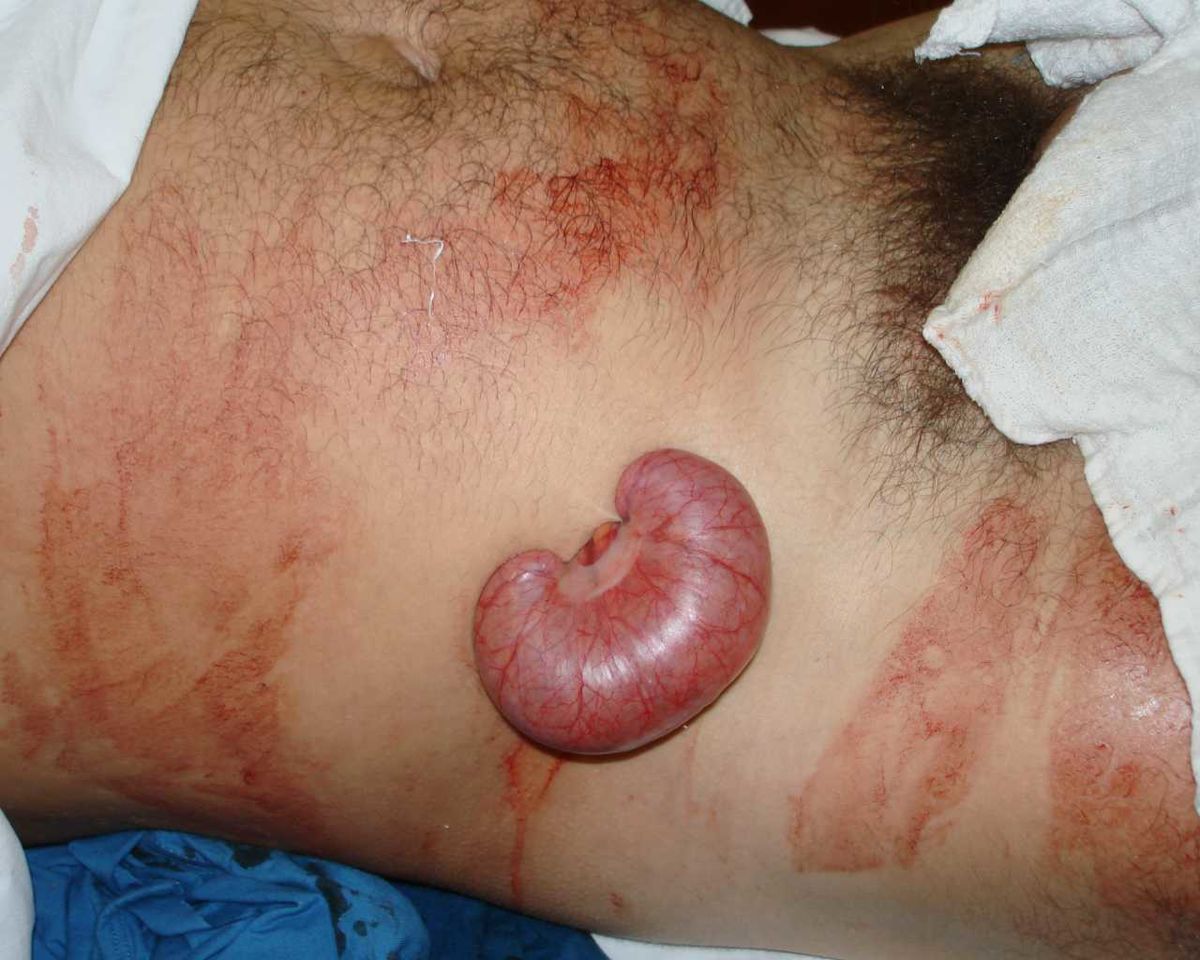
    Your patient has an open abdominal wound with intestines protruding. You should:
    Question Image
    cover the entire abdomen with a blanket.
    cover the organs with moist sterile dressings.
    leave them alone and transport rapidly.
    attempt to place the organs back into the abdomen.
    30s
  • Q3
    You are palpating the abdomen of a motor vehicle collision patient when you feel a pulsing mass. You should:
    defer further abdominal palpation.
    apply cold packs to the abdomen.
    bind the abdomen with an elastic bandage.
    ask your partner to verify your findings.
    30s
  • Q4
    This vascular organ abdominal organ can produce blood loss quickly enough to result in life-threatening hemorrhage following high mechanism of injury blunt trauma?
    Stomach
    Liver
    Spleen
    Pancreas
    30s
  • Q5
    You are transporting a male patient with a deep stab wound to the groin, with damage to the genitalia following an assault by his girlfriend. The patient is AAOx4, albeit restless. Vital signs on scene are P, 128 beats/min; R, 20 breaths/min; BP, 108/64 mmHg; and SpO2, 92%. Oxygen is being administered via nasal cannula. On reassessment, which sign would be most concerning to the EMT?
    SpO2 stabilizing at 96% despite O2 therapy
    Respiration of 24 breaths/min
    Pulse rate of 132 beats/min
    Blood pressure of 100/88 mmHg
    45s
  • Q6
    A patient has been stabbed in the right upper quadrant of the abdomen. Which solid organ should the EMT be most concerned with being injured?
    Spleen
    Liver
    Spleen
    Stomach
    30s
  • Q7
    When palpating the anterior portion of a patient's abdomen, you note tenderness to the left upper quadrant. As a knowledgeable EMT, you would recognize that which organ is most likely to be involved?
    Liver
    Pancreas
    Spleen
    Small Intestine
    30s
  • Q8
    You have been called for a male patient who was shot with a rifle. Assessment reveals an entrance wound to the left lower quadrant of the abdomen. A hemorrhaging exit wound to the left lower back is also located. What should you do immediately?
    Cover the abdominal wounds with dry sterile gauze dressings
    Auscultate the patient's breath sounds
    Place a cervical collar on the patient
    Cover the entrance wound with a gloved hand
    30s
  • Q9
    You have arrived on the scene for a patient assaulted with a baseball bat. As you approach, which position would seemingly indicate that he has suffered an injury to the abdomen?
    Prone with hands on the back
    On his side with knees drawn to the chest
    Standing with restless movement and pacing
    Supine with legs extended and toes pointed
    30s
  • Q10
    You have arrived on the scene of a stabbing. As you approach the patient, you note that his shirt is off and a single stab wound to the right lower quadrant of the abdomen is evident. The patient appears unresponsive as you approach. At the patient's side, your first action should be:
    Provide oxygen via nonrebreather face mask.
    Cover the wound with a sterile moist dressing.
    Assess for additional stab wounds.
    Open and assess the patient's airway
    30s
  • Q11
    You arrive on scene of a serious motor vehicle collision. An unresponsive female has been extricated from the driver's seat. The patient was unrestrained and struck the steering wheel with her chest and abdomen. The primary assessment reveals a patient with snoring respirations and shallow breathing at a rate of 24 breaths per minute. What should you do next?
    Perform a jaw-thrust maneuver
    Start positive pressure ventilation
    Obtain vital signs
    Secure the patient to backboard with a cervical collar placed
    30s
  • Q12
    A 17-year-old female fell off a trampoline striking a picnic table with the left side of her lower rib cage. She is very anxious and confused. Her airway is open and her breathing adequate. Her radial pulse is rapid and weak, and her skin is cool and diaphoretic. Vital signs are P, 132 beats/min; R, 20 breaths/min; BP, 102/78 mmHg; and SpO2, 97% on ambient air. The patient has ecchymosis to the left lower rib area as well as tenderness and instability to the rib cage. Given these findings, you would suspect and treat her for which condition?
    Closed head injury
    Spinal injury
    An abdominal injury
    Hypovolemic shock
    45s
  • Q13
    You are transporting an alert and oriented male with severe abdominal trauma. The primary survey reveals a patent airway with respirations of 24 breaths per minute. Breath sounds are present bilaterally. The patient has a rapid and weak radial pulse of 144 beats per minute, and his skin is pale and cool. The blood pressure is 92/64 mmHg and SpO2 is 92%. Best management of the respiratory and oxygenation parameters would include:
    Application of a nasal cannula at 4 lpm O2
    High-concentration oxygen through a nonrebreather mask at 15 L/min
    Encouraging the patient to slow his respirations
    Positive pressure ventilation with supplemental oxygen
    30s
  • Q14
    You are transporting a female patient who was sexually assaulted by having a foreign body inserted deep into her vagina. You are attempting to control hemorrhage by the appropriate means. As you reassess the patient, which finding is of most concern?
    The patient informs you she has a sexually transmitted disease
    Heart rate increases from 116 to 140 beats/min
    Pain increases from 7/10 to 10/10
    Large blood clots form at the vaginal entrance
    30s
  • Q15
    A female patient suffered a straddle injury (genitalia trauma) while trying to balance on top of a chain-link fence, after she fell with a leg on each side of the fence. At this time, you would?
    Gently put sterile gauze dressings into the opening of the vaginal canal to stop the bleeding
    Apply an ice pack wrapped in a towel to the genital area
    Clean the area with sterile saline and apply direct pressure with a gloved hand while monitoring for ongoing bleeding
    Place a moist compress, such as a moist sanitary pad, over the injury to control the bleeding
    30s

Teachers give this quiz to your class