Loading...


Energy Test 1
Quiz by Tracy Buckley [Johnson JHS]
Customize this quiz to suit your class
Instantly translate to 100+ languages
Tag the questions with any skills you have. Your dashboard will track each student's mastery of each skill.
Give this quiz to my class
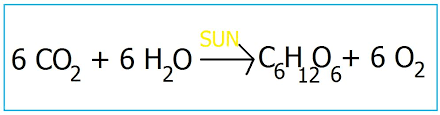
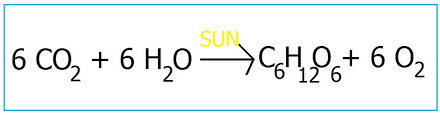
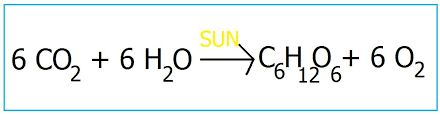
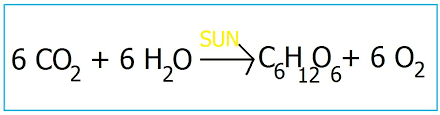
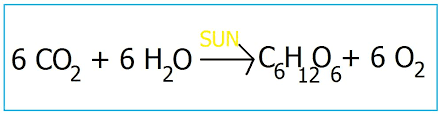




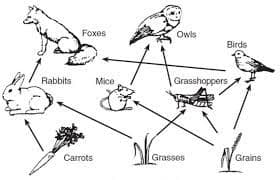
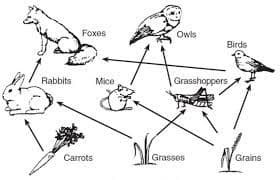
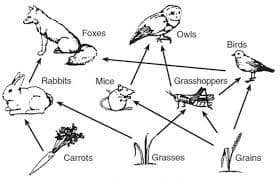
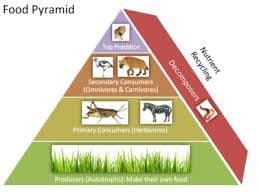
 test 1/261.energy resources-280.revolution p.33-34Create a multiple choice test (10 questions with answers) from the following text: The Environment The environment is the combination of forces and conditions that surround and influence living and non-living things. Human beings’ environment includes such factors as temperature, food supply and other people that surround them. A plant’s environment may be made up of soil, sunlight, and animals that will eat the plant. A rock’s environment may be made up of seaweed, water and fish. Non-living environmental factors, such as temperature and sunlight, make up the abiotic (non-living) environment. Living organisms such as seaweed and food, make up the biotic environment. Both the abiotic and biotic environments interact to make up the total environment of living and non-living things. Ecology Ecology studies the relationships between living things and their environment. No living thing, plant or animal, lives alone. Every living thing depends in some way upon certain other living and non-living things to survive. The study of ecology increases our understanding of the world and all its creatures. This is crucial because humanity’s survival and well-being depend on relationships that exist on a world-wide basis: changes in distant parts of the world affect us and our environment. One concern of ecologists is the rate at which we are using up natural resources such as coal, gas, and oil. Along with scientists, they are searching for ways to use sunlight and atomic energy for fuel and power as alternative energy sources. Ecology also studies how many living organisms there are on Earth and how they are distributed. It also considers non-living physical factors of the environment, for example the presence of water, as these can influence where organisms decide to live. It is also important to know which organisms share the same environment, as they may need each other to survive. This kind of information helps ecologists to conserve our natural world, protecting the habitat of animals that are in danger of extinction, or trying to reduce pollution and global warming. Ecosystems Ecosystems are biological communities of all living things like plants, animals and organisms in a specific area that interact with each other and with the non-living forms present in their environment. They are the foundations of the biosphere and determine the health of the entire planet’s system. A biosphere is a global ecosystem, containing many different kinds of ecosystems.Energy Lesson 1-2 TestLESSON 4. Cellular Respiration • Define cellular respiration • Identify the stages of clan respiration You have just learned how the energy from the sun is captured, processed, and stored in the form of glucose. Cellular respiration, another important life process, is the means by which cells release the stored energy in glucose to make adenosine triphosphate (ATP). The primary goal of this life process is to convert stored energy into usable form, such as ATP, for the cells to carry out their functions. Cellular respiration involves several chemical reactions. The reactions can be summed up in the following equation: C6 H12 O6 + 602 ----- 6 CO₂ +6H₂O + ATP Glucose oxygen carbon dioxide water energy Aerobic respiration reactions, or cellular respiration that takes place in the presence of oxygen, can be grouped into three stages glycolysis, Krebs cycle, and electron transport chain (ETC). Stage 1: Glycolysis Glycolysis is the process that breaks down one molecule of 6-C glucose into 3-C pyruvates or pyruvic acids. It also releases four molecules of ATP. This process occurs in the cytoplasm of the cell. The following is the step-by-step process of glycolysis. Take note that several enzymes are involved in this process. 1. The first step of glycolysis requires energy. It can only proceed when the two ATP molecules donate energy to the glucose by transferring a phosphate group with the help of an enzyme, producing glucose 6-phosphate 2. Then, a specific enzyme promotes the rearrangement of the atoms, producing the fructose 6-phosphate. 3. The action of the enzyme in step 2 promotes the transfer of a phosphate group from another ATP molecule, forming fructose 1,6-bisphosphate. 4. The resulting fructose 1,6-bisphosphate molecules, with the help of another enzyme, splits into two molecules, each with three carbon backbones. These two sugars are dihydroxyacetone phosphate and glyceraldehyde 3-phosphate. 5. Another important enzyme then rapidly interconverts the molecules of dihydro-xyacetone phosphate and glyceraldehyde 3-phosphate. This produces two molecules of glyceraldehyde 3-phosphate or 3-phosphoglyceraldehyde (PGAL) 6. The succeeding step involves another enzyme-mediated action. The hydrogen (H) from PGAL is transferred to the oxidizing agent, nicotinamide adenine dinucleotide (NAD), which forms NADH. A phosphate (P) is also added from the cytosol of the cell to oxidize the two molecules of PGAL, forming two 1.3-bisphosphoglycerate. 7. A phosphate (P) from 1,3-biphosphoglycerate is transferred to ADP to form ATP. This happens for each of the two 1,3-bisphosphoglycerate. resulting to a yield of two ATP and two 3-phosphoglycerate molecules. 8. A phosphate is transferred from 3-phosphoglycerate molecules from the third carbon to the second carbon, forming 2-phosphoglycerate molecules A hydrogen atom and a hydroxyl ((OH) group is released, which then combines to form water (H2O). The removal of H2O from 2-phosphoglycerate results in the formation of 2- phosphoglycerate molecules. 9. A hydrogen atom and a hydroxyl ((OH) group is released, which then combines to form water (H2O). The removal of H2O from 2-phosphoglycerate results in the formation of two phosphoenolpyruvic acid (PEP) 10. Phosphate (P) from PEP is transferred to ADP (and forms ATP) and the final product, pyruvic acid. This reaction yields two molecules of pyruvic acid and two ATP molecules In summary, a single glucose molecule that undergoes the process of glycolysis produces two molecules of pyruvic acid, four molecules of ATP, two molecules of NADEL and two molecules of H.O. However, only two molecules of ATP are counted as net products since two molecules of ATP are spent throughout the process. Stage II: Krebs Cycle The Krebs cycle, named after its proponent Sir Hans Adolf Krebs, is a cyclical series of enzyme-controlled reactions. This stage of cellular respiration occurs in the matrix of the mitochondria. It is sometimes. called the citric acid cycle (CAC) since it produces citric acid. Citric acid contains three carboxyl (COOH) groups; hence, it is also called the tricarboxylic acid cycle (TCA). This requires the pyruvic acids produced during glycolysis. The main function of this cycle is to produce high-energy-yielding molecules, namely, NADH and flavin adenine dinucleotide (FADH) that will later on be used in the electron transport chain reaction. Figure 6-7. Summary of glycolysis and corresponding products in each reaction presented (See Appendix F on page 285 for an enlarged and complete version of the image.) An initial process is needed for the Krebs cycle to begin. As a pyruvate molecule from glycolysis enters the mitochondrion, it undergoes an important preliminary ate to form acetyl-CoA reaction. Coenzyme-A (COA) combines with pyruvate help of an enzymatic complex. This conversion also produces CO, and NADH. The Krebs cycle is summarized as follows. Take note that several enzymes are involved in this process. 1. The Krebs cycle technically begins when the acetyl-CoA combines with oxaloacetic acid (OAA), a 4-C molecule, to produce citric acid, a 6-C molecule. 2. With the aid of an enzyme, the citric acid now goes through a series of reactions that releases energy. Water molecule is removed from the citric acid and is returned in a different location. The-OH group is repositioned, forming the molecule isocitrate. 3. Isocitrate is then oxidized, forming the a-ketoglutarate, a 5-C molecule. The byproducts of this reaction are NADH and CO, 4 The a-ketoglutarate loses its CO, and a coenzyme-A is added in its place. The decarboxylation occurs with the help of NAD, which then becomes NADH. The resulting molecule is called succinyl-CoA. 5. Succinyl-CoA is converted into succinate. Also in this reaction, a molecule of guanosine triphosphate (GTP) is synthesized. The GTP molecule has similar structure and energy properties to that of ATP and is used by cells the same way. The free phosphate group attacks the succinyl-CoA molecule, which detaches the COA. Then, phosphate is attached to GDP to come up with GTP, similar to the process that occur in ATP synthesis (from ADP to ATP). 6. Two hydrogens are removed from succinate, A molecule of flavin adenine dinucleotide (FAD), a coenzyme similar to NAD, is reduced to FADH, as it takes the hydrogens from the succinate. This reaction produces the fumarate. 7. Fumarate is then converted into malate as the addition of a water molecule is catalyzed. The final reaction is the regeneration of oxaloacetate. The resulting byproduct of this regeneration is NADH Recall that two pyruvate molecules were produced during glycolysis, causing the Krebs cycle to turn twice. Each tuts produces three molecules of NADH, single ATH one FADIH, and the by-product CO, which is exhaled. Stage III: Electron Transport Chain The electron transport chain (ETC) is a series of photon pumps on the inner membrane of the mitochondrion. Electron transport is the last stage of the cellular respiration. In this stage, the energy from NADH and FADH, from the Krebs cycle is transferred to ADP to produce ATP. This process is generally known as oxidative phosphorylation. This energy coupling mechanism in the cell was revealed by the work of Peter stored energy in the form of proton (1) gradient to phosphorylate (add phosphate) ADP and produce ATP. The pumping of hydrogen sons across the inner membrane creates higher concentration ions in the inner membrane than on the outside of the membrane. This chemiosmotic gradient causes the ions to flow back across the membrane where the concentration of ions is lower. ATP synthase lined in the matrix serve as a channel protein, helping the ions to move across the membrane. The chemiosmotic gradient powers the phosphorylation of ADP to ATP, which also occurs in the ATP synthase. After passing through the ETC, the oxygen, being the final hydrogen acceptor, combines with two electrons and two protons, forming a water molecule. Water is a by-product of cellular respiration and is excreted. MINI TEST 6-3 1. Which energy-releasing pathway yields the most ATF in each glucose molecule? 2. Briefly describe the two stages of aerobic respiration that follow glycolysis: (a) Krebs cycle (b) Electron transport chain Anaerobic Respiration Most cells carry out arrobic respiration when oxygen is present. Aerobic respiration is an efficient process that yields a lot of ATP. However, many organisms thrive in mud, marshes, animal gut, canned goods, sewage treatment pond, and deep oceans where oxygen is scarce. Organisms that can live without oxygen are called anaerobes. Cellular respiration that proceeds without the presence of oxygen is called anaerobic respiration. In the event that the oxygen supply becomes low, aerobic cells also perform fermentation and lactic acid fermentation anaerobic pathways. There are two common anaerobic pathways in these cells, alcoholic fermentation and lactic acid fermentation. In alcoholic fermentation, ethyl alcohol and carbon dioxide are produced by some cells using the pyruvate from glycolysis. Each pyruvate molecule is rearranged into acetaldehyde and carbon dioxide, which is eventually released. NADII gives up electrons to acetaldehyde to form ethanol Fermentation is widely used in the industry. Yeast, a fungus used in making bread. can undergo anaerobic respiration. Bakers aux sugar, flour, water, and yeast to form the bread dough. The dough rises due to the carbon dioxide and alcohol released by the yeast cells trapped in air bubbles. Beer and wine manufacturers, we yeast to ferment the sugars in wheat and grape juice, forming alcoholic beverages such as beer and wine. In some cells, glycolysis produces two pyruvates, two NADH molecules, and two ATP molecules. Pyruvate itself becomes the final acceptor of the electrons from the NADH that produces the final product: lactate. Oftentimes, this product is called lactic acid. Human skeletal muscles can carry out fermentation when the blood cannot supply the cells with adequate oxygen during strenuous activities. When lactic acid builds up in the muscles, fatigue, burning sensation, and cramps result. Lactic acid will continue to build up until there is adequate supply of oxygen. Lactic acid is then converted back into pyruvate in the liver. Muscles also restore normal functions. Have you ever wondered why milk or cream turns sour after some time? Bacterial cells that undergo fermentation are responsible in producing lactate that turns the milk sour. These bacteria are used in manufacturing yogurt and sour milk products. Fermentation pathways do not breakdown and utilize the glucose completely. ATP is no longer produced beyond the process of glycolysis. Thus, energy produced is just enough for some single-celled organisms, or the energy can only be used by multicellular organisms for a short period.03/06/2019 Lesson 1: Energy from the sun Post-Test03/13/2019 Unique Learning ELA Lesson 5 Review and Post-Test: Chapter 2: Energy From Wind And Water1. [Force] Part A: A student wants to test how friction affects a toy car. She rolls the car across a sheet of sandpaper and then across a sheet of wax paper. Which is the independent (changing) variable? A. The speed of the car B. The type of surface C. The distance traveled D. The size of the car Part B: On which surface will the car likely stop the SOONEST? A. The wax paper B. The sandpaper C. Both will be the same D. Neither surface has friction 2. [Magnets] Which of these is a measurable question for a magnet experiment? A. Are magnets more fun than springs? B. What is the prettiest color for a magnet? C. How many steel paperclips can a bar magnet lift? D. Why were magnets invented? 3. [Earth's Changes] A student observes a statue in a park that has lost its nose and has smooth edges after many years of rain and wind. What process caused this? A. Erosion B. Deposition C. Weathering D. Evaporation 4. [Earth's Changes] When a river reaches the ocean, it slows down and creates a landform called a delta by dropping sand and silt. This "dropping off" is called: A. Weathering B. Deposition C. Condensation D. Friction 5. [Resources] Why is coal considered a nonrenewable resource? A. It can be burned to make electricity. B. It is found deep underground. C. It takes millions of years to form and cannot be replaced quickly. D. It is made from ancient plants. 6. [Conservation] A school replaces all its old lightbulbs with energy-efficient LED bulbs. This is an example of: A. Weathering a resource B. Conserving a resource C. Deposition of energy D. Creating a renewable resource 7. [Aquifers] An aquifer is like a giant underground sponge. What characteristic of the rocks allows them to hold water? A. The rocks are solid and water-proof. B. The rocks are porous, with tiny spaces for water to sit. C. The rocks are magnetic and pull water toward them. D. The rocks are melted into a liquid state. 8. [Water Cycle] On a humid morning, you see dew on the grass even though it didn't rain overnight. Which part of the water cycle formed the dew? A. Evaporation B. Precipitation C. Condensation D. Transpiration 9. [Climate] Which of the following is a description of CLIMATE? A. "It is currently 85 degrees in McAllen." B. "There is a 40% chance of rain this afternoon." C. "South Texas typically has mild winters and very hot summers." D. "The wind is blowing from the North at 10 mph today." 10. [Weather/Climate] A scientist is looking at a chart that shows the total annual rainfall in a city from 1990 to 2020. What is the scientist most likely studying? A. The daily weather forecast B. The climate of the region C. The water cycle of a single pond D. The rate of erosion on a local hillMake a test, with answers best on the following: Conduct an investigation to provide evidence that living things are made of cells; either one cell or many different numbers and types of cells. Supporting Content LS1.A: Structure and Function • All living things are made up of cells, which is the smallest unit that can be said to be alive. An organism may consist of one single cell (unicellular) or many different numbers and types of cells (multicellular). (MS-LS-1.1) Further Explanation: Emphasis is on developing evidence that living things are made of cells, distinguishing between living and non-living things, and understanding that living things may be made of one cell or many and varied cells. In multicellular organisms, the body is a system of multiple interacting subsystems. These subsystems are groups of cells that work together to form tissues and organs that are specialized for particular body functions. (MS-LS-1.3) Further Explanation: Emphasis is on the conceptual understanding that cells form tissues and tissues form organs specialized for particular body functions. Examples could include the interaction of subsystems within a system and the normal functioning of those systems. Organisms reproduce, either sexually or asexually, and transfer their genetic information to their offspring. (MS-LS-1.4) • Living things share certain characteristics. (These include response to environment, reproduction, energy use, growth and development, life cycles, made of cells, etc.) (MS-LS1.4) Further Explanation: Examples should include both biotic and abiotic items, and should be defended using accepted characteristics of life. Plants, algae (including phytoplankton), and many microorganisms use the energy from light to make sugars (food) from carbon dioxide from the atmosphere and water through the process of photosynthesis, which also releases oxygen. These sugars can be used immediately or stored for growth or later use. (MS-LS-1.5) Further Explanation: Emphasis is on tracing movement of matter and flow of energy. Supporting Content LS1.C: Organization for Matter and Energy Flow in Organisms • Within individual organisms, food moves through a series of chemical reactions (cellular respiration) in which it is broken down and rearranged to form new molecules, to support growth, or to release energy. (MS-LS-1.6) Further Explanation: Emphasis is on describing that molecules are broken apart and put back together and that in this process, energy is released and on understanding that the elements in the products are the same as the elements in the reactants. Organisms, and populations of organisms, are dependent on their environmental interactions both with other living things and with nonliving factors. (MS-LS-2.1) • In any ecosystem, organisms and populations with similar requirements for food, water, oxygen, or other resources may compete with each other for limited resources, access to which consequently constrains their growth and reproduction. (MS-LS-2.1) • Growth of organisms and population increases are limited by access to resources. (MS-LS-2.1) Further Explanation: Emphasis is on cause and effect relationships between resources and growth of individual organisms and the numbers of organisms in ecosystems during periods of abundant and scarce resources. Similarly, predatory interactions may reduce the number of organisms or eliminate whole populations of organisms. Mutually beneficial interactions, in contrast, may become so interdependent that each organism requires the other for survival. Although the species involved in these competitive, predatory, and mutually beneficial interactions vary across ecosystems, the patterns of interactions of organisms with their environments, both living and nonliving, are shared. (MS-LS-2.2) Further Explanation: Emphasis is on predicting consistent patterns of interactions in different ecosystems in terms of the relationships among and between organisms and abiotic components of ecosystems. Examples of types of interactions could include competitive, predatory, and mutually beneficial. Food webs are models that demonstrate how matter and energy is transferred between producers, consumers, and decomposers as the three groups interact within an ecosystem. Transfers of matter into and out of the physical environment occur at every level. Decomposers recycle nutrients from dead plant or animal matter back to the soil in terrestrial environments or to the water in aquatic environments. The atoms that make up the organisms in an ecosystem are cycled repeatedly between the living and nonliving parts of the ecosystem. (MS-LS-2.3) Further Explanation: Emphasis is on describing the conservation of matter and flow of energy into and out of various ecosystems, and on defining the boundaries of the system. Ecosystems are dynamic in nature; their characteristics can vary over time. Disruptions to any physical or biological component of an ecosystem can lead to shifts in all its populations. (MSLS-2.5) Further Explanation: Emphasis is on recognizing patterns in data and making warranted inferences about changes in populations, and on evaluating empirical evidence supporting arguments about changes to ecosystems. Biodiversity describes the variety of species found in Earth’s terrestrial and oceanic ecosystems. The completeness or integrity of an ecosystem’s biodiversity is often used as a measure of its health. (MS-LS-2.6) Supporting Content LS4.D: Biodiversity • Changes in biodiversity can influence humans’ resources, such as food, energy, and medicines, as well as ecosystem services that humans rely on—for example, water purification and recycling. (MS-LS-2.6) Supporting Content ETS1.B: Developing Possible Solutions • There are systematic processes for evaluating solutions with respect to how well they meet the criteria and constraints of a problem. (MS-LS-2.6) Further Explanation: Examples of ecosystem services could include water purification, nutrient recycling, and prevention of soil erosion. Examples of design solution constraints could include scientific, economic, and social considerations. Genes are located in the chromosomes of cells, with each chromosome pair containing two variants of each of many distinct genes. Each distinct gene chiefly controls the production of specific proteins, which in turn affects the traits of the individual. Structural changes to genes (mutations) can result in changes to proteins, which can affect the structures and functions of the organism and thereby change traits. (MS-LS-3.1) Supporting Content LS3.B: Variation of Traits • In addition to variations that arise from sexual reproduction, genetic information can be altered because of mutations. Though rare, mutations may result in significant changes to the structure and function of proteins. Changes can be beneficial, harmful, or neutral to the organism. (MS-LS-3.1) Further Explanation: Emphasis is on conceptual understanding that changes in genetic material may result in making different proteins. Organisms reproduce, either sexually or asexually, and transfer their genetic information to their offspring. (MS-LS-3.2) Supporting Content LS3.A: Inheritance of Traits • Variations of inherited traits between parent and offspring arise from genetic differences that result from the subset of chromosomes (and therefore genes) inherited. (MS-LS-3.2) Supporting Content LS3.B: Variation of Traits • In sexually reproducing organisms, each parent contributes half of the genes acquired (at random) by the offspring. Individuals have two of each chromosome and hence two alleles of each gene, one acquired from each parent. These versions may be identical or may differ from each other. (MS-LS-3.2) Further Explanation: Emphasis is on using models such as simple Punnett squares and pedigrees, diagrams, and simulations to describe the cause and effect relationship of gene transmission from parent(s) to offspring and resulting genetic variation. The collection of fossils and their placement in chronological order is known as the fossil record and documents the change of many life forms throughout the history of the Earth. Anatomical similarities and differences between various organisms living today and between living and once living organisms in the fossil record enable the classification of living things. (MS-LS-4.1, MS-LS-4.2) Further Explanation: Emphasis is on finding patterns of changes in the level of complexity of anatomical structures in organisms and the chronological order of fossil appearance in the rock layers. The collection of fossils and their placement in chronological order is known as the fossil record and documents the change of many life forms throughout the history of the Earth. Anatomical similarities and differences between various organisms living today and between living and once living organisms in the fossil record enable the classification of living things. (MS-LS-4.1, MS-LS-4.2) Further Explanation: Emphasis is on explanations of the relationships among organisms in terms of similarity or differences of the gross appearance of anatomical structures. Scientific genus and species level names indicate a degree of relationship. (MS-LS-4.3) Further Explanation: Emphasis is on inferring general patterns of relatedness among structures of different organisms by comparing diagrams, pictures, specimens, or fossils. Natural selection leads to the predominance of certain traits in a population, and the suppression of others. (MS-LS-4.4) Further Explanation: Emphasis is on using concepts of natural selection, including overproduction of offspring, passage of time, variation in a population, selection of favorable traits, and heritability of traits. In artificial selection, humans have the capacity to influence certain characteristics of organisms by selective breeding. One can choose desired parental traits determined by genes, which are then passed to offspring. (MS-LS-4.5) Further Explanation: Emphasis is on identifying and communicating information from reliable sources about the influence of humans on genetic outcomes in artificial selection (such as genetic modification, animal husbandry, gene therapy), and on the influence these technologies have on society as well as the technologies leading to these scientific discoveries. Adaptation by natural selection acting over generations is one important process by which species change over time in response to changes in environmental conditions. Traits that support successful survival and reproduction in the new environment become more common; those that do not become less common. Thus, the distribution of traits in a population changes. (MS-LS-4.6) Further Explanation: Emphasis is on using mathematical models, probability statements, and proportional reasoning to support explanations of trends in changes to populations over time. Examples could include Peppered Moth population changes before and after the industrial revolution.