Loading...


ENGINEERING UTILITIES GRRR (UPPERCASE TAYO GAR!)
Quiz by camille nonescan
Tag the questions with any skills you have. Your dashboard will track each student's mastery of each skill.
a form of energy generated by friction, induction or chemical change, having magnetic, Chemical and radiant effect.
an atom or molecule that is electricity charged
When Electrons in motion it is??!!!
the term applied to an atom or molecule which is not electrically balanced.
the electrical pressure that causes the electrons to move through a conductor (wire)
ELECTROMOTIVE FORCE
the standard unit used in measuring the strength of an electric current
the amount of current flow sent by one volt through the resistance of one Ohm
the rate or measure of power used or consumed
represents the equivalent heat volts and ampere consumed by lights, appliances or motors

A term commonly labeled on light bulbs or appliances, giving us an idea of what kind of circuit would be installed.
The term is named after James Watt a scottish inventor.
refers to the wire installations that supply current to light and convenient outlets
the friction or opposition to the flow of current by the wires and transformers, analogous to plumbing installation, where the flow of water is subjected to resistance caused by friction between the water and the inside wall of the pipe, and the various form of turns and fittings
Is used for friction and Impedance for alternating current (AC electricity)
Factors that Influences Conductor Resistance
This refers to a conductor having free electrons that has low resistance.
The Longer the wire the Higher is the resistance.
The bigger the ________________, the lower its resistance.
Metal offers high resistance to heat
the flow or rate of flow of electric force in a conductor
REQUIRED COMPONENTS IN ELECTRUIC CURRENT
Electric Current is Classified as:
flows in one direction
constantly reverses its direction of flow
It is generated by machine called generator.
The normal source of a DC electricity
This type of current is universally accepted because of its unlimited number of applications.
ADVANTAGES OF ALTERNATING CURRENT
The resistance is proportional with the voltage
The current is proportional with the voltage
THE CURRENT IS INVERSELY PROPORTIONAL WITH RESISTANCE
The Higher the resistance, the larger the current.
The Higher the resistance, the lower the current.
The Lower the voltage the larger the current
The Higher the voltage the lower the current
The Higher the voltage the larger the current
Under the principles of DC electricity. Power is the product of voltage and Current.
Watts = Volts x Joule
Under the principles of AC electricity. Power is the product of voltage and Current.
Watts = Volts x Amperes
Under the principles of DC electricity. Power is the product of voltage and Current.
Watts = Volts x Amperes
Under the. principle of DC electricity, the product of volts and amperes is equal to the quantity called volt~ampere (v.a.) which is not the same as 'watts. Thus;
VoltAmperes = Volts x Amperes
Under the. principle of AC electricity, the product of volts and amperes is equal to the quantity called volt~ampere (v.a.) which is the same as 'watts. Thus;
VoltAmperes = Volts x Amperes
Under the. principle of AC electricity, the product of volts and amperes is equal to the quantity called volt~ampere (v.a.) which is not the same as 'watts. Thus;
VoltAmperes = Volts x Amperes
Power factor (PF) is the ratio of working factor, measured in kilowatts (kW), to apparent power, measured in kilovolt amperes (kVA).
The ratio of working power, measured in kilowatts (kW), to apparent power, measured in kilovolt amperes (kVA).
THE POWER FACTOR FORMULA IS
PF = (True power)/(Apparent power) OR PF = W/VA
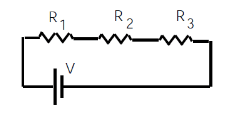
Calculate the power supplied by a 12–volt power supply in the circuit if the resistors have the following values: R1 = 250 OHMS, R2 = 750 OHMS, and R3 = 1000 OHMS. Calculate the power used by each resistor.
A 12 amperes electric· fan and blower with a power factor of 0.85 was connected to a 240 volts convenient outlet (co). Calculate the current and power in the circuit.
A German scientist, discovered the relationship between the Current, Voltage and Resistance
Suppose the resistance is 47 K Ω and the current is 680 mA. What is the power dissipated by the potentiometer? IN kW
the rate at which energy is used or alternatively, the rate at which work is done.
an object or type of material that allows the flow of charge (electrical current) in one or more directions.
materials that have just the opposite effect on the flow of electrons.
a unit of length equal to 0.001 of an inch (0.0254 mm), used in measuring the diameter of wires
consists of a group of wires twisted to form a metallic string
the term given to an insulated stranded Wire.
a two core conductor i.e. it has two conductors; an insulated conductor for phase line and a bare conductor for neutral line.
an overhead electrical line from the pole to the service cap or weatherhead of a house.
It has two insulated conductors for phase line and a bare conductor for neutral line.
It has 4 conductors; three of them are insulated conductors for phase lines and a bare conductor for neutral line.
supply the power from the service weatherhead to the building.
supply power to the main distribution junction box. It is usually black insulted THHN cables with rating of 25% more than maximum load current
It is used for in-house wiring. It may consist of 2 or more than 2 insulated conductors with an insulated or bare ground conductor. There is another layer of plastic XLPE sheathing for more protection.
the most popular choice for electrical layout inside a home. It is available in multiple gauges, color (for phase, neutral and ground identification) and solid or stranded conductors.
TYPES OF COMMUNICATION CABLE
TYPES OF TWISTED PAIR CABLE
TYPES OF Fiber Optic Cables
used for communication or signal transmission purposes
They are used in Ethernet network and telephone communication.
type of communication cable made of flexible, transparent glass fibers known as optical fibers that transmit data in the form of light.
It is a type of cable used for communication and power transmission. It is specifically designed to be buried directly underground without the need of extra insulation, sheathing or piping.
It has multiple layers of protection such as plastic insulation layer, waterproof layer as well as shock absorbing gel etc. to protect it from heat, moisture and other underground factors.
known by its trademark name “romex” cable is a type of electrical cable whose outer sheath is made of plastic that protect the inside conductors. It is commonly used for residential electrical wiring.
The non-metallic or NM sheathed cable is a type of NM cable especially used for indoor building wiring. They are used for wiring inside wall and floors but not to be used in wet places such as external wiring.
The NM-B (B for building) is a type of NM cable especially used for indoor building wiring. They are used for wiring inside wall and floors but not to be used in wet places such as external wiring.
Metallic sheathed cable, as the name suggest is a type of armored electrical cable with a metallic protection over the insulated conductors.
Armored Cable (AC) Such type of metallic sheathed cables has a protective twisted or braided metallic layer usually made of steel over its conductor.
The difference between AC and MC cables is that MC Cable’s metallic sheath cannot be used as grounding wire.
The metallic sheathed cables are expensive and hard to route and needs special tools for cutting or ripping as compared to NM cable which is the best choice for residential wiring.
Multi-core or multi-conductor cable has multiple conductors with insulated sheaths that are rolled into one jacketed cable
Double cables are type of electrical cable made from a pair of two insulated conductor covered by an insulation sheath.
Paired cables are type of electrical cable made from a pair of two insulated conductor covered by an insulation sheath.
Paired cable mostly used for DC application and also in low frequency AC applications.
It is a flexible electrical cable with connectors on both ends to provide a temporary AC power supply. it is usually used as extension of power source for powering portable equipment, machines and devices.
a type of electrical cable whose conductors are protected by an extra metallic layer known as shield.
most commonly known as just wire, is made of a single insulated conductor. It is the most popular choice for residential wiring. It is available in multiple colors for phase and earth identification.
TWO TYPES OF SINGLE CONDUCTOR WIRE
this type of electrical cable is designed to be used in wet locations or submersed in a liquid.
two conductor flat cable used as a balanced line to carry radio frequency RF signal. The conductors are held apart and uniformly space by a plastic layer between them.
The twin lead is available in 600, 400, 350, and 75 ohm characteristics impedance.
The twin lead is available in 600, 450, 300, and 75 ohm characteristics impedance.
Flexible cables a type of non-metallic sheathed cable designed for use in wet location such as supplying power to lamp post or street light.
Underground Feeder (UF) Cable Power Line: Overhead power lines are c
Flexible cables are a type of electrical cables that can withstand continues bending in moving applications. The flexibility is achieved by using stranded conductors.
Underground Feeder (UF) Cable:It is a type of non-metallic sheathed cable designed for use in wet location such as supplying power to lamp post or street light.
Overhead power lines are conductors suspended from electrical towers or poles to transmit power over long distance.
CABLES USED FOR POWER TRANSMISSION
composed of smaller strands of solid copper wire twisted together to form a single, larger conductor
due to a conductor’s resistance manifests itself in the form of heat, and excessive heat can be damaging to a wire (not to mention objects near the wire), especially considering the fact that most wires are insulated with a plastic or rubber coating, which can melt and burn.
A conductor’s current-carrying limit is known as
tubes or pipes made of metal, plastic (PVC) and can be flexible or rigid as follows:
• Galvanized steel rigid/ flexible conduit: used in industrial and commercial applications to protect the wires which is expressed to mechanical stress and it’s very reliable in highly corrosive environment with chemicals.
• Rigid/ Flexible non-metallic conduit (PVC): this type of conduits are commonly used in residential (in walls) and also buried underground, it’s non-conductive, light, cheap, and flexible and the tight joints make it water resistant.
• Flexible metal conduit (FMC): in case that the cables route is facing many curves and the area itself has vibrations and movements then the flexible conduit is the best as it will keep the cables safe from mechanical disturbance but it’s not recommended to be placed in corrosive environment.
allow electrical equipment to connect to the electrical grid.
critical components of your electrical system.
an outlet intended for direct connection to a lamp holder, lighting fixture, or a pendant cord, terminating in a lamp holder
a device that open or closed the circuitry in an electric circuit.
Find AWG #15 conductor area in mm^2 (millimeter squared) when circular mils is 3257.
Convert 6.63 mm^2 to CM (circular mils).
When the length of the wire increases, what happens to the power capacity of the conductor?
When the length of the wire increases, what happens to the Area of the conductor?
It is the ratio of the kW and KVA.
The resistance of a certain aluminum power line is 150 Ω at 20 deg Celsius. Find the line resistance when the sun heats up the line to 42 deg. Celsius.
It is the reciprocal of conductivity.
The length and area of wire are given as 0.2 m and 0.5 m^2 respectively. The resistance of that wire is 3 Ω, calculate the resistivity?
When the length of the wire was cut in half, the Resistance will become halved
A 23 amperes electric· fan and blower with a power factor of 0.88 was connected to a 240 volts convenient outlet (co). Calculate the current and power in the circuit.
When the current increases, what happens to the area of the conductor?
A CONNECTION OR A CONDUCTOR TERMINAL IN A MAIN PANEL
CUT-OFF'S THE LINE OF THE CIRCUIT WHEN IT EXPERIENCE ABNORMALITY
????!!!!!
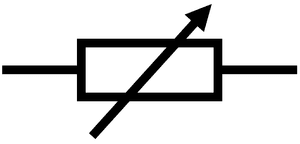
?

?
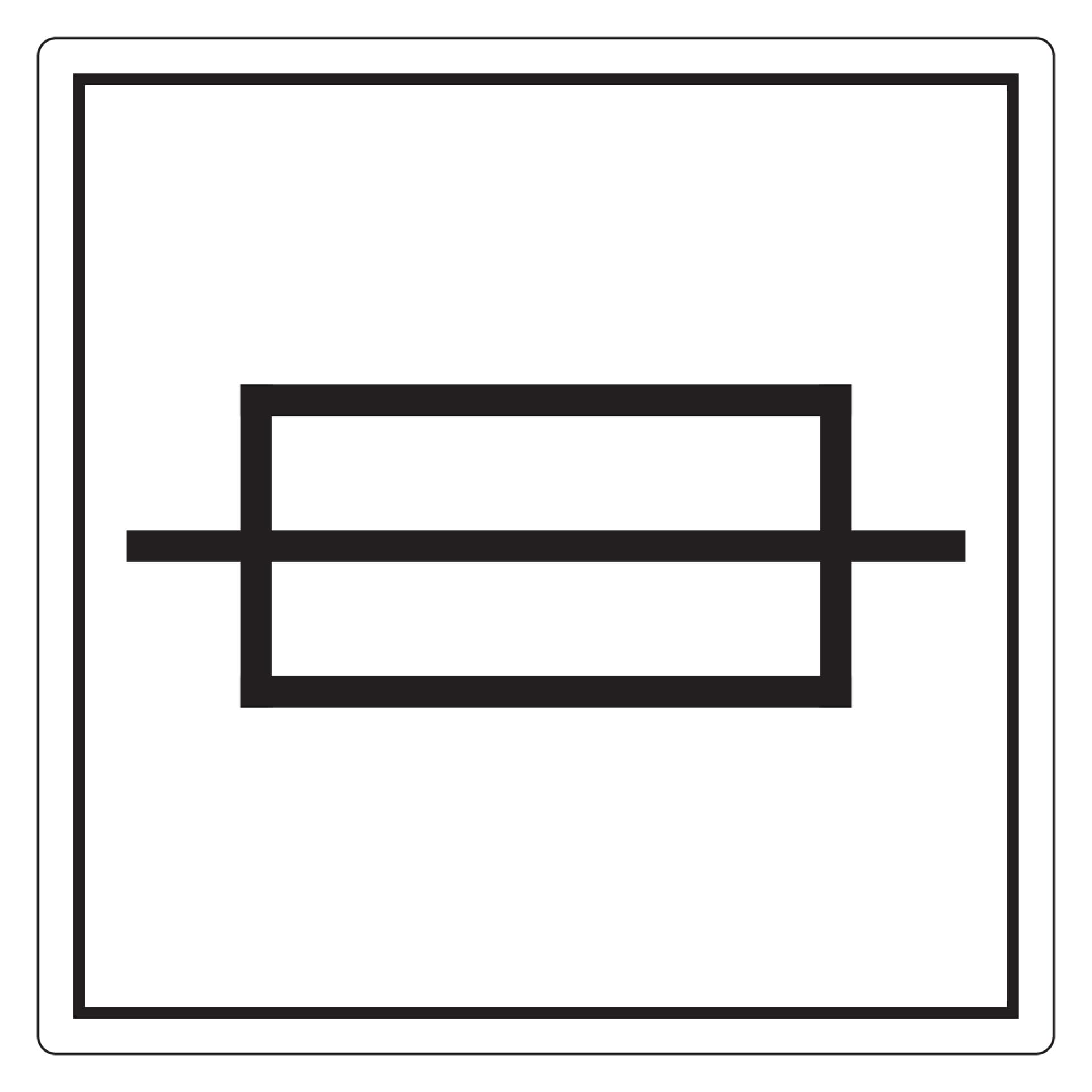
?
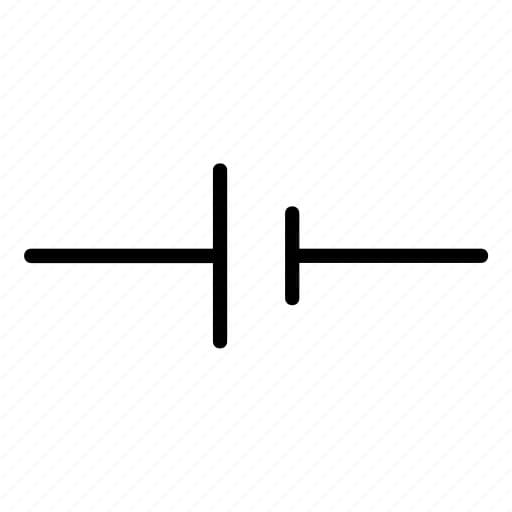
?
The level of energy in a circuit is measured in ___.
Electrical charges are created by a flow of ___.
kind of circuit do we find in one cheap strand of holiday lights
UNIT OF RESISTIVITY
UNIT OF ENERGY
VOLTMETERS AREDESIGNED TO HAVE
What happens to the voltage of a parallel circuit as you add resistors? WILL IT STAY THE SAME
IS Ammeters are designed to have HIGH RESISTANCE?
