Loading...

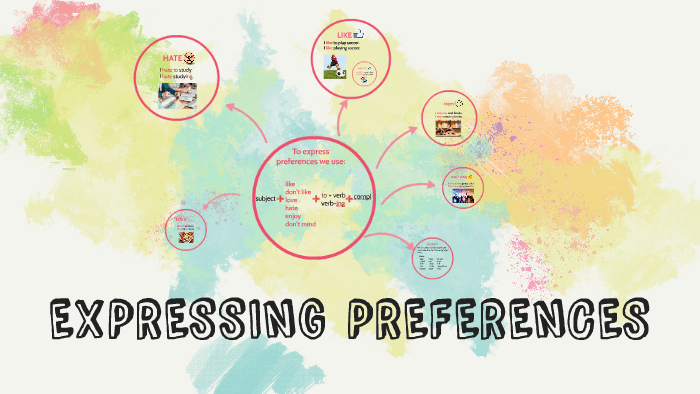
Expressing Preferences
Quiz by Mohammed Abo Hassan
Customize this quiz to suit your class
Instantly translate to 100+ languages
Tag the questions with any skills you have. Your dashboard will track each student's mastery of each skill.
Give this quiz to my class
Place the letters in the correct order to spell the word!
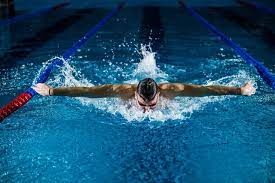
I prefer swimming ................................... walking.
than
for
to
in
Place the letters in the correct order to spell the word!
I prefer swimming ................................... walking.
Do you .................................... eating out?

I’d rather order takeaway ........................................ eat out.

We use "would rather" and "would prefer" when we speak about a specific preference.
Place the words in the correct order!
Link the preferences to their categories.
Match the preferences types to their rules.
 Expressing Preferences and Giving ReasonsExpressing Preferences for Leisure Activities - Starter Quiz The advantage of direct method is that the teacher can control the class and fit in a lot of activity into a short class period. This leaves plenty of opportunities for the students to hone their skills, especially new ones. On the other hand, because the class is centered around the teacher, some students may not receive proper feedback, and creativity is limited. Also, the lesser talented athletes often tend to get lost in the shuffle while the great athletes shine. However, there are now a multitude of various teaching strategies that can be employed in addition to that method. Ex: Announcements, Module/Unit introductions, Descriptions/modeling of assignments and learning activities, Written or video lectures, Demonstration videos, Presentations, Discussions moderated by instructors, Interactive tutorials. Indirect Method The Indirect Teaching Style allows students to be involved in their own learning through experience and other peer’s knowledge. Students can use critical thinking to expand their learning capabilities by seeing what others may be doing correct and adjusting this to their own knowledge. The Indirect approach is the opposite of what the direct style suggests, but they are both strictly related, meaning you can’t have one without the other. Direct teaching: The instructor stands in front of the class or group and lectures or advises. Indirect teaching: The instructor assumes a more passive role and guides the student interactions. Movement exploration: Incorporates the use of equipment that involves movement. Movement Exploration The movement exploration class is founded on developing a strong, positive association to physical activity. Classes are aimed at developing movement skills and foundational strength through fun and engaging activities. The activities are age appropriate and include games, challenges, and exploration that positively challenge children’s competency while improving their physical capabilities. Skills such as the ability to climb, hold animal shapes, gymnastic style activities, and the introduction to athletic motor skill competencies are the foundations to youth training. This class provides the introduction to strength training to give children the opportunity to learn the skills required to safely and confidently engage in resistance training. Cooperative Skills Cooperative activities teach students to work together for their group's common good. By participating in these activities, students can learn the skills of listening, discussing, thinking as a group, group decision making, and sacrificing individual wants for the common good. There are two primary objectives guiding the teaching of cooperative activities. First, cooperative activities allow students to apply a variety of fundamental motor skills in a unique setting. Students are typically asked to perform motor skills in a specific way, such as “skip in general space” or “balance on one foot and one elbow.” Cooperative activities ask students to perform different activities such as skip with their hands on the shoulders of someone in front of them, walk with big steps while placing their feet on small spots, or walk across an area blindfolded while someone directs their moves. Due to the uniqueness of such experiences, students often find cooperative activities exciting and motivating. Second, cooperative activities are a wonderful medium for teaching social and emotional learning (SEL). SEL offers students an opportunity to understand and manage their emotions. In addition, such activities offer an opportunity to show empathy for others and develop positive relationships. Cooperative activities demand that all students play a role in completing the task or solving the movement problem. Every student, regardless of ability level, is important and contributes to group goals. 9 traits a PE teacher often needs Here are nine essential traits of an effective PE teacher: 1. Athletic ability Athletic ability is an essential trait for a PE teacher because they're often showing kids how to perform exercises. To demonstrate proper form and encourage the kids to continue their fitness education, it's important they can perform the exercises themselves. Having experience with fitness training can enhance a PE teacher's lesson planning because they're familiar with how each exercise affects a person's body. Athletic ability can also refer to an aptitude for sports and games. PE teachers can instruct students on how to play these games or lead after-school activities involving them, like soccer or basketball. An aptitude for sports and games can help a PE teacher encourage students to participate in the activities during class. If the PE teacher enjoys physical activity, they may make the lessons more enjoyable for the student. 2. Teaching ability A PE teacher is a member of a school faculty, so it's essential they have the teaching ability that allows them to communicate lessons to students. There are various skills involved in teaching, including the technical capabilities associated with each professional's particular field. Learning these skills can help PE teacher plan their lessons effectively and connect with their students, meaning they can encourage students to practice fitness skills in optimal ways for their health. Here are some important teaching skills for PE teachers: Having an engaging classroom presence Real-world learning Project building Lesson planning Technology 3. Interpersonal skills PE coaches are part of faculty teams, so working alongside other teachers is an essential part of their job. They often collaborate with a student's general education teacher to address any behavioral issues that arise. They can also team up with other classes to plan activities for students, like field days and special field trips. Communicating with peers can ensure these interactions remain productive and create opportunities for more fulfilling lessons. Teachers can also model emotional skills for their students by displaying positive social interactions. Interpersonal skills can also help PE teachers interact with students and their families. If a student can make a student feel comfortable expressing their needs and preferences, they can often perform physical exercises or play games to the best of their individual capacities. Understanding how to soothe nerves and support students' emotional needs are important examples of interpersonal skills. When interacting with family members, you may use some of these same techniques to communicate effectively and best uplift students. 4. Written and verbal communication Both verbal and written communication is important for PE teachers because they often communicate with students, families and various personnel on a day-to-day basis. For example, a PE teacher uses their communication skills in a lesson plan to describe any student assignments or expectations accurately. They may also write instructions in a document, then explain them in a classroom lecture. They also use communication skills to share their lesson plans with other PE teachers during conferences or classroom development exercises. Many teachers continue to learn their trade even after working as a teacher for many years. They may share tips with each other or special lessons they've developed if they feel another teacher may benefit from it. Creating a community can help PE teachers continue to expand their teaching methodology and receive feedback on their lessons. 5. Patience and adaptability Working with children can require patience and adaptability because they're encountering many new concepts at the same time and learning how to regulate their emotions. As a result, it's important to treat them with patience and care while they're in your class so they can feel comfortable and feel motivated to complete assignments. As children become teenagers, they may require patience and adaptability to account for their changing bodies and attention spans. Like any job where you perform tasks in real-time, certain circumstances may occur that require you to adapt lesson plans. For example, if the weather turns from sunshine to rain on a day you planned for students to run a mile outside, you may need to adapt the lesson plan so they can practice endurance sports inside a gymnasium instead. 6. Organization PE teachers can use organization skills to improve their lesson planning sessions. For example, they can keep their plans in one place, and determine which parts of a semester or quarter to introduce new concepts. Throughout the year, these objectives may change because of unforeseen setbacks, but organizational skills can help PE teachers control the trajectory of their class curriculum. PE teachers can also use organizational skills to maintain their classroom space. Physical education frequently requires balls, equipment and tools to play games that may be on a lesson plan. They also organize equipment and decide where to store it within their classroom or storage space. 7. Creativity Creativity can help a PE teacher develop fun ways to introduce new material to their students or reinforce previous lessons. They can teach new games or devise interesting ideas to change the rules of a game to help keep students engaged. To find inspiration for their lesson plans, they can turn to personal hobbies or media aspects they enjoy, like movie scenes, songs or dances. A varied lesson plan can foster more engagement among students who prefer action- based learning activities, rather than lectures. 8. Focus Focus is an essential trait of a PE teacher because students often require their full attention during class, especially if they're learning a complicated physical task. You can focus your lesson plans around specific elements of physical education you believe are essential for students of a certain age group or skill level. If students require mentorship, you can also focus on each student's needs to supply them with a steady support system. Focusing on your students can help guide your career purpose. It can give you a core value system that informs your lesson plans and mentorship activities. This passion for your student's well-being can also help you become an advocate for each student in your class. You can also help organize funding for different field trips or establish after-school activities to support their interests. 9. Enthusiasm for teaching sports and fitness Enthusiasm is essential for a PE teacher. Many physical education activities require high energy and may suit someone who enjoys teaching them to others. Being an effective PE teacher also requires an enthusiasm for working with kids and making a positive impact on their lives.Expressing preference 2d- Work and Play - expressing preference2d- Work & play - Expressing preferenceCreate a vocabulary quiz for the following ten words: Reservation (n): a qualification to an expression of agreement or approval; a doubt. Confine: (v) keep or restrict someone or something within certain limits of (space, scope, quantity, or time). Trumped: beat (someone or something) by saying or doing something better. Dignity: (n) the state or quality of being worthy of honor or respect. Resist: (v) withstand the action or effect of, Allusions (n): are generally regarded as brief but purposeful references, within a literary text, to a person, place, event, or to another work of literature. Congruence (n) agreement or harmony; compatibility. Dubious (adj): hesitating or doubting. Emulate: (verb): match or surpass (a person or achievement), typically by imitation. Vulgar: (adj): lacking sophistication or good taste; unrefined.Caractéristiques générales de la synthèse de documents La synthèse est un exercice assez simple, car très technique. Pour réussir, il faut néanmoins faire preuve de rigueur car elle est très codifiée. Les pièges de la synthèse La plupart des étudiants ignorent la technique de synthèse telle qu’elle est attendue en BTS. Aussi plusieurs pièges sont à éviter. La synthèse n’est pas une dissertation personnelle Premier écueil : si l’on se souvint de la consigne vue plus avant, le travail demandé doit être objectif. Aucun point de vue personnel ou même appréciation subjectif sur les documents ne doit apparaître dans la rédaction. On recommande d’ailleurs aux étudiants de ne pas utiliser le pronom « je » dans leur travail de façon à éviter tout malentendu. Le candidat doit donc rapporter les idées des auteurs de façon neutre, sans jugement de valeur. La synthèse n’est pas un résumé des documents La plus grande erreur commise en première année de BTS consiste à résumer les documents, les uns après les autres. Un petit détour par l’étymologie nous permettra de mieux comprendre le travail attendu. Le terme « synthèse » vient du grec sunthesis qui signifie « mise en commun ». Il s’agit donc de rassembler les informations collectées dans les différents documents en un ensemble organisé, donc cohérent. Les idées doivent être confrontées en établissant des liens entre les documents. La synthèse n’est pas un montage de citations Le Bac de français est derrière vous. Oubliez (en partie) cette épreuve. Ici, pas de citations, de numéros de lignes pour appuyer votre rédaction. Votre travail consiste à reformuler de façon synthétique le contenu et les enjeux des documents. La nature du travail demandé Une consigne codifiée pour rédiger votre synthèse Trois adjectifs dans cette consigne. Tout d’abord, la synthèse doit être concise, c’est-à-dire courte et dense. Quatre pages maximum sont généralement attendues à l’épreuve. Nous l’avons déjà évoqué plus haut, la synthèse est un exercice absolument objectif. Aucune idée extérieure aux documents ni commentaire personnel ne doivent figurer dans la rédaction. Enfin, la synthèse est un travail ordonné. Un plan soutient donc la rédaction, on attend ainsi : • une introduction; • un développement; • une conclusion. La démarche à adopter pour votre synthèse La préparation de la synthèse se décompose en deux temps : • Un premier temps consacré à la lecture active de chaque document. Les idées importantes sont relevées, les arguments sont listés, le raisonnement de l’auteur est analysé. • Un second temps consacré à la mise en relation des différents documents de façon à établir des liens entre eux : il s’agit en fait de recomposer un débat entre les auteurs. Sont-ils d’accord ? S’opposent-ils ? Si oui sur quels point ? … La synthèse : un acte de communication On veut donc vérifier que vous savez « lire » : c’est-à-dire que vous êtes capable de comprendre ce qui est écrit dans les documents et de reformuler selon des contraintes de longueur de texte. L’étymologie du verbe « lire » nous le confirme : legere, en latin, signifique « choisir » La méthodologie de synthèse en 10 points Voici un récapitulatif des 10 maladresses principales à éviter et des 10 règles à adopter Les interdits de la synthèse 1. Faire des citations des auteurs des documents pour soutenir les idées avancées. 2. Donner son avis, émettre des remarques subjectives : ex : l’auteur oublie malheureusement que… 3. Faire des références à des documents hors corpus, faire allusion à une autre œuvre de l’auteur. 4. Rédiger un « catalogue » des idées sans lien logique entre elles. Rédiger au fil de son inspiration. 5. Rédiger une synthèse longue et détaillée. 6. Laisser de côté un document, parce que l’on ne l’a pas compris ou qu’il nous semble inintéressant… 7. Utiliser le pronom « je ». 8. Faire un plan apparent (A, B…) avec des titres. 9. Juxtaposer des résumés des documents. 10. Faire référence aux documents par le numéro attribué dans le dossier. Ce qu’il faut faire 1. Reformuler les idées. 2. Rester neutre, objectif. 3. Ne traiter que les documents proposés. 4. Traiter les idées selon un plan précis. 5. Quatre pages maximum 6. Traiter tous les documents, même de façon inégale, certains documents sont plus « riches » en idées que d’autres. 7. Préférer le « on » ou le « nous ». 8. Rédiger sans titres avec des phrases de transition. 9. Confronter les idées communes aux documents. 10. Faire référence aux documents par le nom de l’auteur et l’initiale du prénom. Si ces 10 règles sont respectées, une importante partie de la méthode est acquise ! L'évaluation du travail de synthèse On se rappelle que cette épreuve est notée sur 40 points. En règle générale, les correcteurs adoptent le barème suivant qui vise à valider 4 grandes compétences, chacune notée sur 40 points. Comprendre les documents Ces 10 premiers points valident vos compétences de lecture : Les idées essentielles ont-elles été bien relevées ? Tous les documents ont-ils été bien compris ? L’unité thématique des documents doit apparaître ans le traitement des informations collectées. Confronter Le correcteur vérifiera notamment que tous les documents ont bien été exploités, qu’aucune « impasse » n’a été faite. Il sanctionnera, le cas échéant, l’ajout d’idées extérieures. Certains étudiants pensent que l’introduction d’idées extérieures vient enrichir leur travail et montre leur connaissance du sujet. Il faudra attendre l’épreuve d’écriture personnelle pour le faire. Ici, rappelons-le, seuls les documents proposés à l’étude figurent dans la synthèse. La confrontation des idées sera également évaluée : Le candidat a-t-il établi des liens entre les idées des auteurs ? Chaque partie de la rédaction repose-t-elle sur plusieurs documents ? Structurer Quelle que soit la logique suivie, la synthèse suit un plan. Introduction et conclusion doivent apparaître clairement. La rédaction suit une ligne directrice et un parcours. Les documents sont référencés, l’ensemble est organisé. Utilisez des connecteurs logiques pour lier les parties entre elles. Ils faciliteront grandement la lecture et la progression de vos idées sera plus claire. Rédiger & reformuler Une expression écrire claire est attendue. Elle respecte les normes et usages de la langue écrite courante. La richesse du vocabulaire sera valorisée. Le tout est rédigé : pas de tirets, de titres ou de tissage de citations. Les propos des auteurs sont reformulés, on sanctionnera ici toute formulation d’appréciations personnelles.