Loading...

F2 1.3 Multiplying and Dividing Monomials II
Quiz by math enhancement
Customize this quiz to suit your class
Instantly translate to 100+ languages
Tag the questions with any skills you have. Your dashboard will track each student's mastery of each skill.
Give this quiz to my class


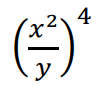

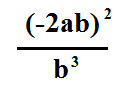
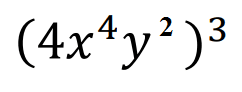
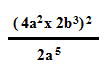
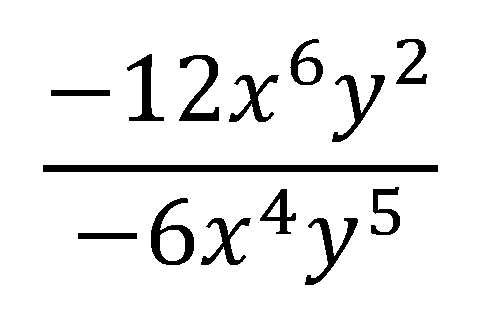
 Covalent Molecules and Compounds Just as an atom is the simplest unit that has the fundamental chemical properties of an element, a molecule is the simplest unit that has the fundamental chemical properties of a covalent compound. Some pure elements exist as covalent molecules. Hydrogen, nitrogen, oxygen, and the halogens occur naturally as the diatomic (“two atoms”) molecules H2, N2, O2, F2, Cl2, Br2, and I2 (part (a) in Figure 3.1.1). Similarly, a few pure elements exist as polyatomic (“many atoms”) molecules, such as elemental phosphorus and sulfur, which occur as P4 and S8 (part (b) in Figure 3.1.1). Each covalent compound is represented by a molecular formula, which gives the atomic symbol for each component element, in a prescribed order, accompanied by a subscript indicating the number of atoms of that element in the molecule. The subscript is written only if the number of atoms is greater than 1. For example, water, with two hydrogen atoms and one oxygen atom per molecule, is written as H2O. Similarly, carbon dioxide, which contains one carbon atom and two oxygen atoms in each molecule, is written as CO2. Covalent compounds that predominantly contain carbon and hydrogen are called organic compounds. The convention for representing the formulas of organic compounds is to write carbon first, followed by hydrogen and then any other elements in alphabetical order (e.g., CH4O is methyl alcohol, a fuel). Compounds that consist primarily of elements other than carbon and hydrogen are called inorganic compounds; they include both covalent and ionic compounds. In inorganic compounds, the component elements are listed beginning with the one farthest to the left in the periodic table, as in CO2 or SF6. Those in the same group are listed beginning with the lower element and working up, as in ClF. By convention, however, when an inorganic compound contains both hydrogen and an element from groups 13–15, hydrogen is usually listed last in the formula. Examples are ammonia (NH3) and silane (SiH4). Compounds such as water, whose compositions were established long before this convention was adopted, are always written with hydrogen first: Water is always written as H2O, not OH2. The conventions for inorganic acids, such as hydrochloric acid (HCl) and sulfuric acid (H2SO4), are described elswhere. Note! For organic compounds: write C first, then H, and then the other elements in alphabetical order. For molecular inorganic compounds: start with the element at far left in the periodic table; list elements in same group beginning with the lower element and working up. Write the molecular formula of each compound. a. The phosphorus-sulfur compound that is responsible for the ignition of so-called strike anywhere matches has 4 phosphorus atoms and 3 sulfur atoms per molecule. b. Ethyl alcohol, the alcohol of alcoholic beverages, has 1 oxygen atom, 2 carbon atoms, and 6 hydrogen atoms per molecule. c. Freon-11, once widely used in automobile air conditioners and implicated in damage to the ozone layer, has 1 carbon atom, 3 chlorine atoms, and 1 fluorine atom per molecule. Solution: a. • A The molecule has 4 phosphorus atoms and 3 sulfur atoms. Because the compound does not contain mostly carbon and hydrogen, it is inorganic. • B Phosphorus is in group 15, and sulfur is in group 16. Because phosphorus is to the left of sulfur, it is written first. • C Writing the number of each kind of atom as a right-hand subscript gives P4S3 as the molecular formula. b. • A Ethyl alcohol contains predominantly carbon and hydrogen, so it is an organic compound. • B The formula for an organic compound is written with the number of carbon atoms first, the number of hydrogen atoms next, and the other atoms in alphabetical order: CHO. • C Adding subscripts gives the molecular formula C2H6O. c. • A Freon-11 contains carbon, chlorine, and fluorine. It can be viewed as either an inorganic compound or an organic compound (in which fluorine has replaced hydrogen). The formula for Freon-11 can therefore be written using either of the two conventions. • B According to the convention for inorganic compounds, carbon is written first because it is farther left in the periodic table. Fluorine and chlorine are in the same group, so they are listed beginning with the lower element and working up: CClF. Adding subscripts gives the molecular formula CCl3F. • C We obtain the same formula for Freon-11 using the convention for organic compounds. The number of carbon atoms is written first, followed by the number of hydrogen atoms (zero) and then the other elements in alphabetical order, also giving CCl3F. Write the molecular formula for each compound. a. Nitrous oxide, also called “laughing gas,” has 2 nitrogen atoms and 1 oxygen atom per molecule. Nitrous oxide is used as a mild anesthetic for minor surgery and as the propellant in cans of whipped cream. b. Sucrose, also known as cane sugar, has 12 carbon atoms, 11 oxygen atoms, and 22 hydrogen atoms. c. Sulfur hexafluoride, a gas used to pressurize “unpressurized” tennis balls and as a coolant in nuclear reactors, has 6 fluorine atoms and 1 sulfur atom per molecule. Answer: a. N2O b. C12H22O11 c. SF6. Ionic Compounds The substances described in the preceding discussion are composed of molecules that are electrically neutral; that is, the number of positively-charged protons in the nucleus is equal to the number of negatively-charged electrons. In contrast, ions are atoms or assemblies of atoms that have a net electrical charge. Ions that contain fewer electrons than protons have a net positive charge and are called cations. Conversely, ions that contain more electrons than protons have a net negative charge and are called anions. Ionic compounds contain both cations and anions in a ratio that results in no net electrical charge. Note! Ionic compounds contain both cations and anions in a ratio that results in zero electrical charge.An ionic compound that contains only two elements, one present as a cation and one as an anion, is called a binary ionic compound. One example is MgCl2, a coagulant used in the preparation of tofu from soybeans. For binary ionic compounds, the subscripts in the empirical formula can also be obtained by crossing charges: use the absolute value of the charge on one ion as the subscript for the other ion. This method is shown schematically as follows: Crossing charges. One method for obtaining subscripts in the empirical formula is by crossing charges. When crossing charges, it is sometimes necessary to reduce the subscripts to their simplest ratio to write the empirical formula. Consider, for example, the compound formed by Mg2+ and O2−. Using the absolute values of the charges on the ions as subscripts gives the formula Mg2O2:Polyatomic Ions Polyatomic ions are groups of atoms that bear net electrical charges, although the atoms in a polyatomic ion are held together by the same covalent bonds that hold atoms together in molecules. Just as there are many more kinds of molecules than simple elements, there are many more kinds of polyatomic ions than monatomic ions. Two examples of polyatomic cations are the ammonium (NH4+) and the methylammonium (CH3NH3+) ions. P. The method used to predict the empirical formulas for ionic compounds that contain monatomic ions can also be used for compounds that contain polyatomic ions. The overall charge on the cations must balance the overall charge on the anions in the formula unit. Thus, K+ and NO3− ions combine in a 1:1 ratio to form KNO3 (potassium nitrate or saltpeter), a major ingredient in black gunpowder. Similarly, Ca2+ and SO42− form CaSO4 (calcium sulfate), which combines with varying amounts of water to form gypsum and plaster of Paris. The polyatomic ions NH4+ and NO3− form NH4NO3 (ammonium nitrate), a widely used fertilizer and, in the wrong hands, an explosive. One example of a compound in which the ions have charges of different magnitudes is calcium phosphate, which is composed of Ca2+ and PO43− ions; it is a major component of bones. The compound is electrically neutral because the ions combine in a ratio of three Ca2+ ions [3(+2) = +6] for every two ions [2(−3) = −6], giving an empirical formula of Ca3(PO4)2; the parentheses around PO4 in the empirical formula indicate that it is a polyatomic ion. Writing the formula for calcium phosphate as Ca3P2O8 gives the correct number of each atom in the formula unit, but it obscures the fact that the compound contains readily identifiable PO43− ions.Summary • There are two fundamentally different kinds of chemical bonds (covalent and ionic) that cause substances to have very different properties. • The composition of a compound is represented by an empirical or molecular formula, each consisting of at least one formula unit.Contributors The atoms in chemical compounds are held together by attractive electrostatic interactions known as chemical bonds. Ionic compounds contain positively and negatively charged ions in a ratio that results in an overall charge of zero. The ions are held together in a regular spatial arrangement by electrostatic forces. Most covalent compounds consist of molecules, groups of atoms in which one or more pairs of electrons are shared by at least two atoms to form a covalent bond. The atoms in molecules are held together by the electrostatic attraction between the positively charged nuclei of the bonded atoms and the negatively charged electrons shared by the nuclei. The molecular formula of a covalent compound gives the types and numbers of atoms present. Compounds that contain predominantly carbon and hydrogen are called organic compounds, whereas compounds that consist primarily of elements other than carbon and hydrogen are inorganic compounds. Diatomic molecules contain two atoms, and polyatomic molecules contain more than two. A structural formula indicates the composition and approximate structure and shape of a molecule. Single bonds, double bonds, and triple bonds are covalent bonds in which one, two, and three pairs of electrons, respectively, are shared between two bonded atoms. Atoms or groups of atoms that possess a net electrical charge are called ions; they can have either a positive charge (cations) or a negative charge (anions). Ions can consist of one atom (monatomic ions) or several (polyatomic ions). The charges on monatomic ions of most main group elements can be predicted from the location of the element in the periodic table. Ionic compounds usually form hard crystalline solids with high melting points. Covalent molecular compounds, in contrast, consist of discrete molecules held together by weak intermolecular forces and can be gases, liquids, or solids at room temperature and pressure. An empirical formula gives the relative numbers of atoms of the elements in a compound, reduced to the lowest whole numbers. The formula unit is the absolute grouping represented by the empirical formula of a compound, either ionic or covalent. Empirical formulas are particularly useful for describing the composition of ionic compounds, which do not contain readily identifiable molecules. Some ionic compounds occur as hydrates, which contain specific ratios of loosely bound water molecules called waters of hydration.Please create English vocabulary fill-in-the-blank quiz questions for the following English words. . accept
各acceptance
acceptable
2. achieve lativ」完成;達到
【91學測】
名 achievement達成;成就
形 achievable可完成的;做得成的
3. adopt la'dapt」收養;採納【88、97學測】
相似 adapt 動(使)適應;改編
4. agree la'gril同意 (with / to)
{F施5-10)
名 agreement一致;協議
IF M5-10;
形 agreeable同意的
(F NE5-10;
片語 agree with +人/to +事情同意〜
5.allow [alau] 九許;給予(F2-2,F地1-5,L1-93
名 allowance津貼;零用錢
6. announce lanaunsl 宣布
F5-1?192學測〕
名 announcement宣告;通告
F5-1
7. appear [a prr] 出現;呈現;似乎
各 appearance顯露;出現;外表
8. apply laplar] 申請;應用【94學測】
冬 application申請(書);用途;敷用
多 appliance 工具;用具;器具【97學測】
冬 applicant 申請人
片語 apply A to B 應用A於B
apply for 申請~
9. assume lasiuml 假定
留 assumption 假設;假裝;擔任
片語 assuming = if (that) +S+V...
10. assure [arur] 確保;保證(of)
(F #2-11,L4-4}【104學測,99指考】
名 assurance IU」自信; 保險[C]保證
11. attend la'tend」 出席:照料
2-5,S1-9}
客 attendance到場;出席人數
片語 attend to + 0 注意〜
12. bear [ber」 承受;忍耐:具有
{饰3-12}
相似 stand 動 忍受
13. cause [koz] 引起;起因(n.);原則目
標(n.) = lead to = bring about
14. choose [tuz」 挑選;選擇
F1-2}
(chose • chosen)
15. claim [kleml 要求;奪走;聲稱 (n.)
{L4-10,S1-11;【99學測】
16. collapse [kalleps」 倒塌;崩潰
【88、89、102學測】
形 collapsed 崩潰的
17. complete [kam plit」完成
{F5-1,F5-2}
各 completion LU完成;結束
SI 98B9 .08
形 complete完全的:澈底的
18. concern [kan'ssn]涉及;關心;憂慮;
關心的事 (n.);擔心(n.)
【87學測】
concerning = regarding 關於
{L5-6}
片語 be concered about 擔心~
19. consider [kan'srdal考慮;認為
各 considerationIUI體貼;考慮
形 considerable相當多的;非常【90學測】
形 considerate體貼的;考慮周全的
【100學測,91指考】
1S5-1) 20. contain 「kan'tenl包含;容納:控制
{F4-4,F能1-7,L1-12,S2-6}【99學測!
各 container容
【100學測】
(L4-1,53-91 21. create [krret』創造;創作
{F1-9,F3-5,F4-9,F街1-12,S2-9}
名 creation 創造:產物;天地萬物
形 creative 有創造力的;獨創的
各 creativity 創造力PSSA Grade 5 Math - M05.A-F.2.1.3 F.2 3.1 Organisation of Data1 La cottura La cottura consiste nella trasmissione di calore da una sorgente a un alimento. In particolare, si parla di cottura quando si espone un alimento a una temperatura superiore a 40 °C. Molti alimenti devono essere cotti per: • diventare commestibili, oppure più digeribili e gradevoli; • prolungare la conservabilità; • diventare più sicuri dal punto di vista igienico e microbiologico. Con la cottura: • si applica una temperatura > 40 °C; • l’alimento si scalda; • le caratteristiche fisiche e chimiche dell’alimento si modificano definitivamente a seguito del rialzo termico. Ad esempio, l’acqua si trasforma in vapore a 100 °C alla pressione di 1 atm (mentre solidifica a 0 °C). Il burro fonde (ma non cuoce) al di sotto di 40 °C. Da che cosa dipendono la temperatura e il tempo di cottura? Con la cottura, l’alimento, scaldandosi, assorbe calore. La temperatura di cottura, cioè la quantità di calore da applicare nei processi di cottura, dipende: • dal peso dell’alimento (la temperatura di cottura aumenta proporzionalmente al peso dell’alimento); • dalla composizione dell’alimento, in particolare dal suo contenuto in acqua (per scaldare un alimento umido serve più calore). Il tempo di cottura (cioè la durata dell’esposizione al calore) varia in base: • alla tecnica di cottura applicata; • al recipiente di cottura (materiale, sagoma); • alla forma dell’alimento. A parità di condizioni, l’olio si riscalda più velocemente dell’acqua perché il calore specifico dei grassi è pari a circa la metà di quello dell’acqua. Calore È una forma di energia legata al moto disordinato delle molecole che si trasmette da un corpo più caldo a uno più freddo, 昀椀no al raggiungimento dell’equilibrio termico. L’unità di misura del calore è il joule (J). In cucina si usa la chilocaloria (kcal), un multiplo della caloria equivalente al calore necessario per aumentare di 1 °C la temperatura di un chilogrammo, ovvero un litro, di acqua (1 kcal = 4,184 kJ; 1 kJ = 0,239 kcal). Calore speci昀椀co È la quantità di calore che serve per aumentare di 1 °C la temperatura di un chilogrammo di un materiale.TEORIA / UDA 4 Le tecniche e le preparazioni di base 153 Come si trasmette il calore? Il calore si trasmette dal corpo più caldo a quello più freddo. Ciò può avvenire in diversi modi: per conduzione, per convezione e per irraggiamento. In tutte le tecniche di cottura una delle tre modalità risulta dominante, ma agisce combinandosi con le altre. Nelle cotture per conduzione e per convezione è sempre presente un mezzo di conduzione, che può essere l’acqua, il vapore acqueo, una sostanza grassa, l’aria o il recipiente di cottura. Conduzione • I due corpi (generalmente solidi) sono a contatto diretto e hanno temperature diverse (l’uno è caldo e l’altro è più freddo) • Non c’è spostamento di materia (il calore si trasmette attraverso la materia) • La quantità di calore trasferito dipende dalla composizione dei due corpi ed è proporzionale alla differenza di temperatura e alla superficie di contatto Esempio: cottura alla piastra o in padella Irraggiamento • I due corpi non sono a contatto diretto: il passaggio del calore avviene nel vuoto o nell’aria • Il corpo caldo emette onde elettromagnetiche (raggi infrarossi) che sono assorbite dal corpo freddo Esempio: cottura in forno, cottura in forno a microonde, cottura allo spiedo, cottura alla griglia Convezione • È presente un fluido, cioè un liquido (olio, acqua) o un gas (aria, vapore) • Si produce uno spostamento di materia: il fluido si riscalda, si espande verso l’alto e produce correnti convettive che, muovendosi, favoriscono lo scambio di calore Esempio: bollitura (in acqua), frittura (in olio) ESERCIZIO 1 Nella trasmissione per conduzione i due corpi sono a contatto diretto V F 2 Nella trasmissione per convezione si formano correnti convettive che favoriscono lo scambio di calore V F 3 Nella trasmissione per irraggiamento i due corpi non sono a contatto diretto V F 4 Nella trasmissione per irraggiamento è sempre presente un mezzo 昀氀uido V FF2 Class Quiz 13: Revision of Ch.1 and Ch.6F2 Class Quiz 13 (week 19)GROUP A1 F2-1
Covalent Molecules and Compounds Just as an atom is the simplest unit that has the fundamental chemical properties of an element, a molecule is the simplest unit that has the fundamental chemical properties of a covalent compound. Some pure elements exist as covalent molecules. Hydrogen, nitrogen, oxygen, and the halogens occur naturally as the diatomic (“two atoms”) molecules H2, N2, O2, F2, Cl2, Br2, and I2 (part (a) in Figure 3.1.1). Similarly, a few pure elements exist as polyatomic (“many atoms”) molecules, such as elemental phosphorus and sulfur, which occur as P4 and S8 (part (b) in Figure 3.1.1). Each covalent compound is represented by a molecular formula, which gives the atomic symbol for each component element, in a prescribed order, accompanied by a subscript indicating the number of atoms of that element in the molecule. The subscript is written only if the number of atoms is greater than 1. For example, water, with two hydrogen atoms and one oxygen atom per molecule, is written as H2O. Similarly, carbon dioxide, which contains one carbon atom and two oxygen atoms in each molecule, is written as CO2. Covalent compounds that predominantly contain carbon and hydrogen are called organic compounds. The convention for representing the formulas of organic compounds is to write carbon first, followed by hydrogen and then any other elements in alphabetical order (e.g., CH4O is methyl alcohol, a fuel). Compounds that consist primarily of elements other than carbon and hydrogen are called inorganic compounds; they include both covalent and ionic compounds. In inorganic compounds, the component elements are listed beginning with the one farthest to the left in the periodic table, as in CO2 or SF6. Those in the same group are listed beginning with the lower element and working up, as in ClF. By convention, however, when an inorganic compound contains both hydrogen and an element from groups 13–15, hydrogen is usually listed last in the formula. Examples are ammonia (NH3) and silane (SiH4). Compounds such as water, whose compositions were established long before this convention was adopted, are always written with hydrogen first: Water is always written as H2O, not OH2. The conventions for inorganic acids, such as hydrochloric acid (HCl) and sulfuric acid (H2SO4), are described elswhere. Note! For organic compounds: write C first, then H, and then the other elements in alphabetical order. For molecular inorganic compounds: start with the element at far left in the periodic table; list elements in same group beginning with the lower element and working up. Write the molecular formula of each compound. a. The phosphorus-sulfur compound that is responsible for the ignition of so-called strike anywhere matches has 4 phosphorus atoms and 3 sulfur atoms per molecule. b. Ethyl alcohol, the alcohol of alcoholic beverages, has 1 oxygen atom, 2 carbon atoms, and 6 hydrogen atoms per molecule. c. Freon-11, once widely used in automobile air conditioners and implicated in damage to the ozone layer, has 1 carbon atom, 3 chlorine atoms, and 1 fluorine atom per molecule. Solution: a. • A The molecule has 4 phosphorus atoms and 3 sulfur atoms. Because the compound does not contain mostly carbon and hydrogen, it is inorganic. • B Phosphorus is in group 15, and sulfur is in group 16. Because phosphorus is to the left of sulfur, it is written first. • C Writing the number of each kind of atom as a right-hand subscript gives P4S3 as the molecular formula. b. • A Ethyl alcohol contains predominantly carbon and hydrogen, so it is an organic compound. • B The formula for an organic compound is written with the number of carbon atoms first, the number of hydrogen atoms next, and the other atoms in alphabetical order: CHO. • C Adding subscripts gives the molecular formula C2H6O. c. • A Freon-11 contains carbon, chlorine, and fluorine. It can be viewed as either an inorganic compound or an organic compound (in which fluorine has replaced hydrogen). The formula for Freon-11 can therefore be written using either of the two conventions. • B According to the convention for inorganic compounds, carbon is written first because it is farther left in the periodic table. Fluorine and chlorine are in the same group, so they are listed beginning with the lower element and working up: CClF. Adding subscripts gives the molecular formula CCl3F. • C We obtain the same formula for Freon-11 using the convention for organic compounds. The number of carbon atoms is written first, followed by the number of hydrogen atoms (zero) and then the other elements in alphabetical order, also giving CCl3F. Write the molecular formula for each compound. a. Nitrous oxide, also called “laughing gas,” has 2 nitrogen atoms and 1 oxygen atom per molecule. Nitrous oxide is used as a mild anesthetic for minor surgery and as the propellant in cans of whipped cream. b. Sucrose, also known as cane sugar, has 12 carbon atoms, 11 oxygen atoms, and 22 hydrogen atoms. c. Sulfur hexafluoride, a gas used to pressurize “unpressurized” tennis balls and as a coolant in nuclear reactors, has 6 fluorine atoms and 1 sulfur atom per molecule. Answer: a. N2O b. C12H22O11 c. SF6. Ionic Compounds The substances described in the preceding discussion are composed of molecules that are electrically neutral; that is, the number of positively-charged protons in the nucleus is equal to the number of negatively-charged electrons. In contrast, ions are atoms or assemblies of atoms that have a net electrical charge. Ions that contain fewer electrons than protons have a net positive charge and are called cations. Conversely, ions that contain more electrons than protons have a net negative charge and are called anions. Ionic compounds contain both cations and anions in a ratio that results in no net electrical charge. Note! Ionic compounds contain both cations and anions in a ratio that results in zero electrical charge.An ionic compound that contains only two elements, one present as a cation and one as an anion, is called a binary ionic compound. One example is MgCl2, a coagulant used in the preparation of tofu from soybeans. For binary ionic compounds, the subscripts in the empirical formula can also be obtained by crossing charges: use the absolute value of the charge on one ion as the subscript for the other ion. This method is shown schematically as follows: Crossing charges. One method for obtaining subscripts in the empirical formula is by crossing charges. When crossing charges, it is sometimes necessary to reduce the subscripts to their simplest ratio to write the empirical formula. Consider, for example, the compound formed by Mg2+ and O2−. Using the absolute values of the charges on the ions as subscripts gives the formula Mg2O2:Polyatomic Ions Polyatomic ions are groups of atoms that bear net electrical charges, although the atoms in a polyatomic ion are held together by the same covalent bonds that hold atoms together in molecules. Just as there are many more kinds of molecules than simple elements, there are many more kinds of polyatomic ions than monatomic ions. Two examples of polyatomic cations are the ammonium (NH4+) and the methylammonium (CH3NH3+) ions. P. The method used to predict the empirical formulas for ionic compounds that contain monatomic ions can also be used for compounds that contain polyatomic ions. The overall charge on the cations must balance the overall charge on the anions in the formula unit. Thus, K+ and NO3− ions combine in a 1:1 ratio to form KNO3 (potassium nitrate or saltpeter), a major ingredient in black gunpowder. Similarly, Ca2+ and SO42− form CaSO4 (calcium sulfate), which combines with varying amounts of water to form gypsum and plaster of Paris. The polyatomic ions NH4+ and NO3− form NH4NO3 (ammonium nitrate), a widely used fertilizer and, in the wrong hands, an explosive. One example of a compound in which the ions have charges of different magnitudes is calcium phosphate, which is composed of Ca2+ and PO43− ions; it is a major component of bones. The compound is electrically neutral because the ions combine in a ratio of three Ca2+ ions [3(+2) = +6] for every two ions [2(−3) = −6], giving an empirical formula of Ca3(PO4)2; the parentheses around PO4 in the empirical formula indicate that it is a polyatomic ion. Writing the formula for calcium phosphate as Ca3P2O8 gives the correct number of each atom in the formula unit, but it obscures the fact that the compound contains readily identifiable PO43− ions.Summary • There are two fundamentally different kinds of chemical bonds (covalent and ionic) that cause substances to have very different properties. • The composition of a compound is represented by an empirical or molecular formula, each consisting of at least one formula unit.Contributors The atoms in chemical compounds are held together by attractive electrostatic interactions known as chemical bonds. Ionic compounds contain positively and negatively charged ions in a ratio that results in an overall charge of zero. The ions are held together in a regular spatial arrangement by electrostatic forces. Most covalent compounds consist of molecules, groups of atoms in which one or more pairs of electrons are shared by at least two atoms to form a covalent bond. The atoms in molecules are held together by the electrostatic attraction between the positively charged nuclei of the bonded atoms and the negatively charged electrons shared by the nuclei. The molecular formula of a covalent compound gives the types and numbers of atoms present. Compounds that contain predominantly carbon and hydrogen are called organic compounds, whereas compounds that consist primarily of elements other than carbon and hydrogen are inorganic compounds. Diatomic molecules contain two atoms, and polyatomic molecules contain more than two. A structural formula indicates the composition and approximate structure and shape of a molecule. Single bonds, double bonds, and triple bonds are covalent bonds in which one, two, and three pairs of electrons, respectively, are shared between two bonded atoms. Atoms or groups of atoms that possess a net electrical charge are called ions; they can have either a positive charge (cations) or a negative charge (anions). Ions can consist of one atom (monatomic ions) or several (polyatomic ions). The charges on monatomic ions of most main group elements can be predicted from the location of the element in the periodic table. Ionic compounds usually form hard crystalline solids with high melting points. Covalent molecular compounds, in contrast, consist of discrete molecules held together by weak intermolecular forces and can be gases, liquids, or solids at room temperature and pressure. An empirical formula gives the relative numbers of atoms of the elements in a compound, reduced to the lowest whole numbers. The formula unit is the absolute grouping represented by the empirical formula of a compound, either ionic or covalent. Empirical formulas are particularly useful for describing the composition of ionic compounds, which do not contain readily identifiable molecules. Some ionic compounds occur as hydrates, which contain specific ratios of loosely bound water molecules called waters of hydration.Please create English vocabulary fill-in-the-blank quiz questions for the following English words. . accept
各acceptance
acceptable
2. achieve lativ」完成;達到
【91學測】
名 achievement達成;成就
形 achievable可完成的;做得成的
3. adopt la'dapt」收養;採納【88、97學測】
相似 adapt 動(使)適應;改編
4. agree la'gril同意 (with / to)
{F施5-10)
名 agreement一致;協議
IF M5-10;
形 agreeable同意的
(F NE5-10;
片語 agree with +人/to +事情同意〜
5.allow [alau] 九許;給予(F2-2,F地1-5,L1-93
名 allowance津貼;零用錢
6. announce lanaunsl 宣布
F5-1?192學測〕
名 announcement宣告;通告
F5-1
7. appear [a prr] 出現;呈現;似乎
各 appearance顯露;出現;外表
8. apply laplar] 申請;應用【94學測】
冬 application申請(書);用途;敷用
多 appliance 工具;用具;器具【97學測】
冬 applicant 申請人
片語 apply A to B 應用A於B
apply for 申請~
9. assume lasiuml 假定
留 assumption 假設;假裝;擔任
片語 assuming = if (that) +S+V...
10. assure [arur] 確保;保證(of)
(F #2-11,L4-4}【104學測,99指考】
名 assurance IU」自信; 保險[C]保證
11. attend la'tend」 出席:照料
2-5,S1-9}
客 attendance到場;出席人數
片語 attend to + 0 注意〜
12. bear [ber」 承受;忍耐:具有
{饰3-12}
相似 stand 動 忍受
13. cause [koz] 引起;起因(n.);原則目
標(n.) = lead to = bring about
14. choose [tuz」 挑選;選擇
F1-2}
(chose • chosen)
15. claim [kleml 要求;奪走;聲稱 (n.)
{L4-10,S1-11;【99學測】
16. collapse [kalleps」 倒塌;崩潰
【88、89、102學測】
形 collapsed 崩潰的
17. complete [kam plit」完成
{F5-1,F5-2}
各 completion LU完成;結束
SI 98B9 .08
形 complete完全的:澈底的
18. concern [kan'ssn]涉及;關心;憂慮;
關心的事 (n.);擔心(n.)
【87學測】
concerning = regarding 關於
{L5-6}
片語 be concered about 擔心~
19. consider [kan'srdal考慮;認為
各 considerationIUI體貼;考慮
形 considerable相當多的;非常【90學測】
形 considerate體貼的;考慮周全的
【100學測,91指考】
1S5-1) 20. contain 「kan'tenl包含;容納:控制
{F4-4,F能1-7,L1-12,S2-6}【99學測!
各 container容
【100學測】
(L4-1,53-91 21. create [krret』創造;創作
{F1-9,F3-5,F4-9,F街1-12,S2-9}
名 creation 創造:產物;天地萬物
形 creative 有創造力的;獨創的
各 creativity 創造力PSSA Grade 5 Math - M05.A-F.2.1.3 F.2 3.1 Organisation of Data1 La cottura La cottura consiste nella trasmissione di calore da una sorgente a un alimento. In particolare, si parla di cottura quando si espone un alimento a una temperatura superiore a 40 °C. Molti alimenti devono essere cotti per: • diventare commestibili, oppure più digeribili e gradevoli; • prolungare la conservabilità; • diventare più sicuri dal punto di vista igienico e microbiologico. Con la cottura: • si applica una temperatura > 40 °C; • l’alimento si scalda; • le caratteristiche fisiche e chimiche dell’alimento si modificano definitivamente a seguito del rialzo termico. Ad esempio, l’acqua si trasforma in vapore a 100 °C alla pressione di 1 atm (mentre solidifica a 0 °C). Il burro fonde (ma non cuoce) al di sotto di 40 °C. Da che cosa dipendono la temperatura e il tempo di cottura? Con la cottura, l’alimento, scaldandosi, assorbe calore. La temperatura di cottura, cioè la quantità di calore da applicare nei processi di cottura, dipende: • dal peso dell’alimento (la temperatura di cottura aumenta proporzionalmente al peso dell’alimento); • dalla composizione dell’alimento, in particolare dal suo contenuto in acqua (per scaldare un alimento umido serve più calore). Il tempo di cottura (cioè la durata dell’esposizione al calore) varia in base: • alla tecnica di cottura applicata; • al recipiente di cottura (materiale, sagoma); • alla forma dell’alimento. A parità di condizioni, l’olio si riscalda più velocemente dell’acqua perché il calore specifico dei grassi è pari a circa la metà di quello dell’acqua. Calore È una forma di energia legata al moto disordinato delle molecole che si trasmette da un corpo più caldo a uno più freddo, 昀椀no al raggiungimento dell’equilibrio termico. L’unità di misura del calore è il joule (J). In cucina si usa la chilocaloria (kcal), un multiplo della caloria equivalente al calore necessario per aumentare di 1 °C la temperatura di un chilogrammo, ovvero un litro, di acqua (1 kcal = 4,184 kJ; 1 kJ = 0,239 kcal). Calore speci昀椀co È la quantità di calore che serve per aumentare di 1 °C la temperatura di un chilogrammo di un materiale.TEORIA / UDA 4 Le tecniche e le preparazioni di base 153 Come si trasmette il calore? Il calore si trasmette dal corpo più caldo a quello più freddo. Ciò può avvenire in diversi modi: per conduzione, per convezione e per irraggiamento. In tutte le tecniche di cottura una delle tre modalità risulta dominante, ma agisce combinandosi con le altre. Nelle cotture per conduzione e per convezione è sempre presente un mezzo di conduzione, che può essere l’acqua, il vapore acqueo, una sostanza grassa, l’aria o il recipiente di cottura. Conduzione • I due corpi (generalmente solidi) sono a contatto diretto e hanno temperature diverse (l’uno è caldo e l’altro è più freddo) • Non c’è spostamento di materia (il calore si trasmette attraverso la materia) • La quantità di calore trasferito dipende dalla composizione dei due corpi ed è proporzionale alla differenza di temperatura e alla superficie di contatto Esempio: cottura alla piastra o in padella Irraggiamento • I due corpi non sono a contatto diretto: il passaggio del calore avviene nel vuoto o nell’aria • Il corpo caldo emette onde elettromagnetiche (raggi infrarossi) che sono assorbite dal corpo freddo Esempio: cottura in forno, cottura in forno a microonde, cottura allo spiedo, cottura alla griglia Convezione • È presente un fluido, cioè un liquido (olio, acqua) o un gas (aria, vapore) • Si produce uno spostamento di materia: il fluido si riscalda, si espande verso l’alto e produce correnti convettive che, muovendosi, favoriscono lo scambio di calore Esempio: bollitura (in acqua), frittura (in olio) ESERCIZIO 1 Nella trasmissione per conduzione i due corpi sono a contatto diretto V F 2 Nella trasmissione per convezione si formano correnti convettive che favoriscono lo scambio di calore V F 3 Nella trasmissione per irraggiamento i due corpi non sono a contatto diretto V F 4 Nella trasmissione per irraggiamento è sempre presente un mezzo 昀氀uido V FF2 Class Quiz 13: Revision of Ch.1 and Ch.6F2 Class Quiz 13 (week 19)GROUP A1 F2-1