Loading...


Famous buildings and landmarks
Quiz by Wiktor Kobylanski
Customize this quiz to suit your class
Instantly translate to 100+ languages
Tag the questions with any skills you have. Your dashboard will track each student's mastery of each skill.
Give this quiz to my class
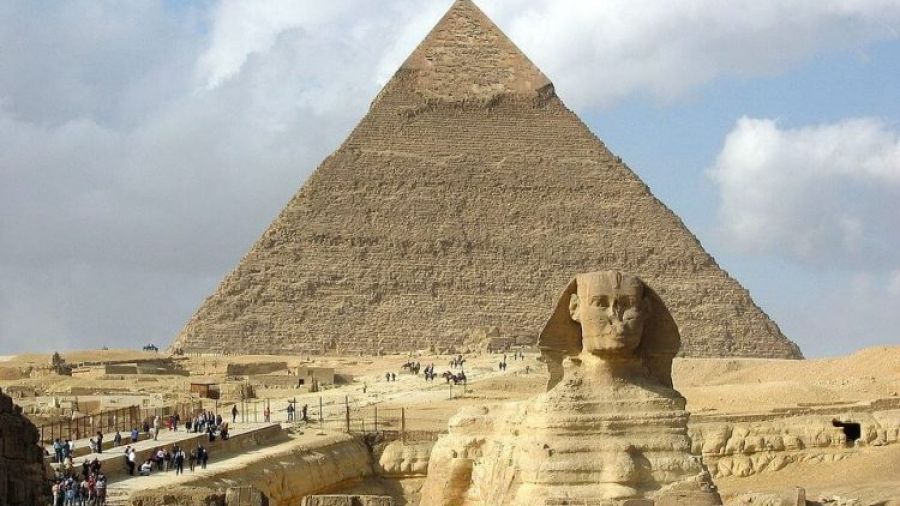
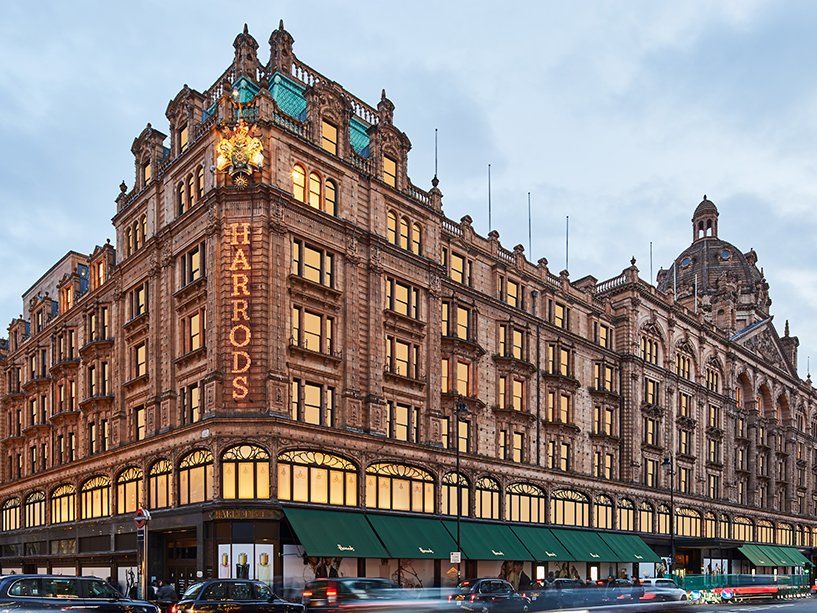


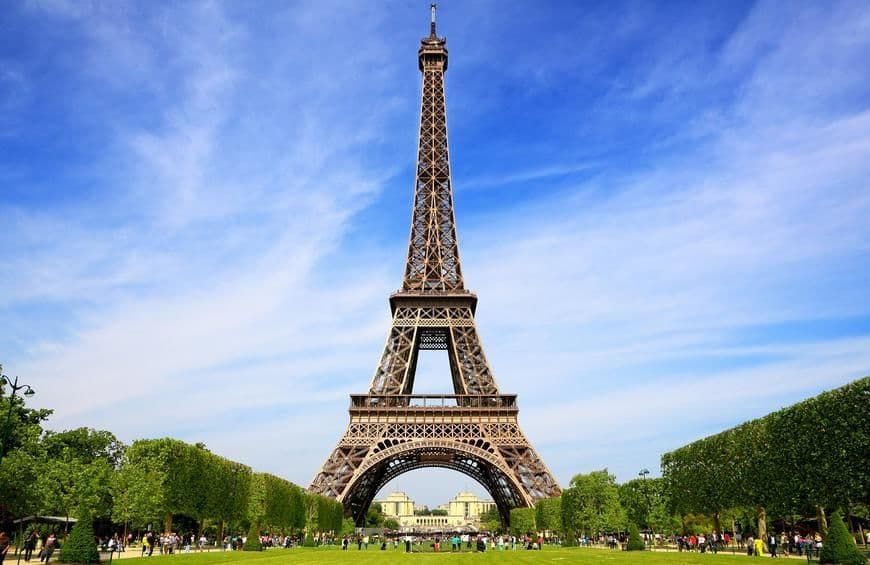


 Famous people and buildings from Great Britain and the USA Going on holiday Top 4 tourist cities till 2019 London is famous for its London Eye, London Bridge, the Big Ben and so on. The Eiffel Tower is in Paris. It is famous. It is 324 metres high and has 1,665 steps in it. Dubai has the tallest building in the world. It is 828 metres high. Barcelona has many famous classical buildings.Where Is It? Russia is a very big country. It is the largest country in the world almost twice as big as the United States. Russia is part of both Europe and Asia. Moscow is the capital of Russia. It is a big city in the European part of the country. More than twelve million people live there. The Russian president lives in a famous group of buildings in Moscow. People. Most people in Russia live and work in cities. The main language is Russian. In the country, jobs have to do with the land and the sea. For example, many people fish, mine oil and coal, and cut trees for wood. Sports such as soccer and ice hockey are popular in Russia. Russia is famous for music and a kind of dance show called ballet. Swan Lake is a famous Russian ballet. Land. The land in Russia is mainly low flatlands, high flatlands, and mountains. The deepest lake in the world, Lake Baikal, is in Russia. Russia has frozen flatlands in the north and wide grassy lands in the south. In between are huge forests. Russia is a cold country, and it is home to the coldest village in the world. But many places in Russia also have beautiful summers. History. In the past, czars, or emperors, ruled Russia. During that time, the peasants in Russia were unhappy. They didn't like the way the czars ruled the people. They fought in 1917 to change their country's ways. After the fight, Russia took control of a group of other nearby countries. Together they formed the Union of Soviet Socialist Republics (USSR). The USSR had many problems, so it broke up in 1991. Today, Russia has a president. Celebrations. Many people celebrate Christmas and Easter in Russia. On Easter, they eat cakes and paint hard-boiled eggs. Russian Easter egg Russians also have a holiday to celebrate the end of winter. For this holiday, people eat pancakes with butter. They also have fun with sleigh rides and snowball fights. Food. A popular soup in Russia is famous around the world. People make the soup from beets and other vegetables. Beets are red, so the soup also has a red color. Many Russians like a homemade drink. The drink has a sour flavor. Conclusion Russia is home to both crowded cities and wild forests. Russia has a long, rich history and many interesting things to do. The Russian people value the traditions of their beautiful homeland. Sam: You didn't come to school yesterday. Where were you? Timmy: My dad and I went to New York City. It was very fun. Sam: What is the difference between our town and New York City? Timmy: New York City is big and has many people. Our town does not. Sam: What did you see in New York City? Timmy: I saw many tall buildings, yellow taxis, and hotels. Sam: Wow, I think that New York City is great! Timmy: Yes, it is! It is one of the most famous cities in the world.La Isla de Pascua This 64-square mile island off Chile’s west coast goes by many names. Its English name is Easter Island, marking the day in 1722 when it was discovered by a European. In Spanish, it is called Isla de Pascua. The Rapa Nui, its first inhabitants, called it “The Navel of the World.” Experts do not agree on the history of Easter Island. It is unclear where the first people came from or when they arrived. Many people believe they came from neighboring Polynesia around AD 300. This culture built 900 enormous stone statues for which the island is famous. The statues are known as moai. Most of the moai are made of volcanic tuff. Tuff is a soft rock made from the ash that is forced out during a volcanic eruption. It is easier to carve than hard stones like marble, but it is not ideal for carving small details. The moai are considered megaliths (large stones that form prehistoric monuments). They stand up to 33 feet high when on their ceremonial platform (the average height is about 13 feet), and they weigh up to 82 tons. They usually have a trunk (body), inset arms, and an exaggerated head with angular edges. The head of each moai takes up about one-third of the total figure. It all shows that the people who created them could engineer monumental structures. Many moai stand with their backs to the sea. They watch the island like protective markers. Some low-relief carvings of religious deities were added to the backs of the moai at a later date. Experts are still trying to understand how they were carved and moved, and what they might mean. Chile took control of the island in 1888. At that time, its population was less than 200. The government used it for grazing livestock. Today, the mystery of Easter Island makes it a popular tourist spot. Valparaíso Valparaíso is a colorful blend of old and new traditions in Chile. This port city is an interesting example of daily life in Chile. Before the Panama Canal was opened in 1914, all ships traveling east to west had to pass all the way around South America. Valparaíso was ideally positioned as a stopping point in the Southern Pacific. Valparaíso has a long history of playing host to a large array of cultures and ideas. The city was known around the world as a place that embraced learning and new ideas. Pablo Neruda had a home in Valparaíso in the 1920s. After the Panama Canal was completed, shipping traffic declined significantly. Valparaíso was forgotten and fell upon hard times. In the 1990s, the government of Chile made an effort to revitalize the colorful port. Today it is a UNESCO (United Nations Educational, Scientific and Cultural Organization) World Heritage site. True to its history of embracing learning, it is also home to four universities. Tourists can visit the first stock exchange in Latin America. Valparaíso also has Chile’s first public library. Visitors stroll through cobblestone streets in the historic district. Here they can also view the city’s iconic colorful buildings. At night, music and street performers liven the experience. Try It Yourself Two Spanish words comprise the name of this city. Val means valley. Paraiso means paradise. The name Valparaíso means Paradise Valley. Can you recognize descriptive Spanish words in other Spanish place names? Start with names of places around you. Las Comidas Tradicionales To Chileans, nothing says home like pastel de choclo, a type of casserole made of beef and corn. The body of the casserole is flavorful. It contains beef, onions, raisins, and roasted chicken. It is topped off with a layer of creamed corn and then baked. Baking it brings out the sweetness in the corn, adding a contrast to the savory meat. The preferred type of corn is called choclo. This variety is grown in rugged conditions in the Andes. The kernels are large and hearty compared to other varieties. Another favorite dish in Chile is a type of meat stew called cazuela. Originally a native dish, it is now known as comfort food in Chile. Pork, beef, lamb, or chicken still on the bone is boiled in a traditional clay pot. To that, corn, potatoes, and other local vegetables are added. It is seasoned with onion and garlic. Pablo Rogat/Shutterstock When Chileans think about dessert, manjar is the first ingredient on their minds. It is a caramel sauce made from cooking milk, sugar, and vanilla. It is found in many desserts. It is used as filling in cakes, pies, and cookies. It is refrigerated to make puddings and custards. People even use it to sweeten their coffee.Name: Marco Ramirez - “I Am Not Batman” TW: language It’s the middle of the night. And the sky is glowing like mad radioactive red. And if you squint, you could maybe see the moon through a thick layer of cigarette smoke and airplane exhaust that covers the entire city like mosquito net that won’t let the angels in. And if you look up high enough you could see me-standing on the edge of a eighty seven story building. And up there-a place for gargoyles and broken clock towers that have stayed still and dead for maybe like a hundred years-up there is me. And I’m freakin Batman. And I gots Bat-mobiles and Bat-a-rangs and freakin Bat-caves like for real, and all it takes is a broom closet or a back room or a fire escape and Danny’s hand-me-down jeans are gone. And my navy blue polo shirt? – The one that looks kinda good on me but has a hole on it near the butt from when it got snagged on the chain linked fence behind Arturo’s but it isn’t even a big deal cause I tuck that part in and its like all good? –that blue polo shirt? – It’s gone too. And I get like, like transformational. And nobody pulls out a belt and whips Batman for talking back –-Or for not talking back –And nobody calls Batman simple –- Or stupid –- Or skinny –- And nobody fires Batman’s brother from the Eastern Taxi Company ‘cause they was making cutbacks, neither, ‘cause they got nothing but respect, and not like afraid-respect. Just like respect-respect. ‘Cause nobody’s afraid of you. Cause Batman doesn’t mean nobody harm. Ever. Cause all Batman really wants to do is save people and maybe pay Abuela’s bills one day and die happy and maybe get like mad famous. For real.…And kill the Joker. Tonight, like most nights, I’m all alone. And I’m watching…And I’m waiting… Like a eagle. Or like a –no, yea, like a eagle. And my cape is flappin’ in the wind (‘cause it’s freakin’ long), and my pointy ears are on, and that mask that covers like half my face is on too, and I got like bulletproof stuff all in my chest so no one could hurt me and nobody – nobody – is gonna come between Batman, And Justice. From where I am I could hear everything. Somewhere in the city there’s a old lady picking Styrofoam leftovers up outta a trash can and she’s putting a piece of sesame chicken someone spit out into her own mouth. And somewhere there’s a doctor with a whack haircut in a black lab coat trying to find a cure for the diseases that are gonna make us all extinct for real one day. And somewhere there’s a man, a man in a janitor’s uniform, stumbling home drunk and dizzy after spending half his paycheck on forty-ounce bottles of twist-off beer and the other half on a four hour visit to some lady’s house on a street where the lights have all been shot out by people who’d rather do what they do, in this city, in the dark. And half a block away from JanitorMan there’s a group of good-for-nothings who don’t know no better waiting to beat JanitorMan with rusted bicycle chains and imitation Lousiville Sluggers, and if they don’t find a cent on him – which they won’t – they’ll just pound at him till the muscles in their arms start burning, till there’s no more teeth to crack out. But they don’t count on me. They don’t count on no dark night (with a stomach full of grocery store brand macaroni-and-cheese and cut up Vienna sausages), Cause they’d rather believe I don’t exist, And from eighty-seven stories up I could hear one of the good-for-nothings say “Gimmethecash” real fast (like that) just “Gimmethefuckingcash” and I see JAnitorMan mumble something in drunk language and turn pale and from eighty-seven stories up I could hear his stomach trying to hurl its way out of his Dickies. So I swoop down like and fast and I’m like darkness. I’m like SWOOSH –- And I throw a Bat-a-rang at the one naked lightbulb –- And they’re all like “whoa-motherfucker-who-just-turned-out-the-lights?” –“What’s that over there?” –-“What?” –- “Gimme whatchou got old man” –- “Did anybody hear that?!” –- “No, really” –- “There ain’t. No. Bat.” – But then –- One out of three good-for-nothings gets it to the head! And number Two swings blindly into the dark cape before him but before his fist hits anything I grab a trash can lid and –-- Right into the gut, and number One comes back with a jump-kick but I know judo-karate too so I’m like –-- Twice –-- but before I can do any more damage suddenly we all hear a CLIC – CLIC –And suddenly everything gets quiet And the one good-for-nothing left standing grips a handgun and aims straight up, like he’s holding Jesus hostage, like he’s threatening maybe to blow a hole in the moon. And the good-for-nothing who got it to the head who tried to jump-kick me and the other good-for-nothing who got it in the gut is both scrambling back away from the dark figure before him. And the drunk man the JanitorMan is huddled in a corner, praying to Saint Anthony ‘cause that’s the only one he could remember. And there’s me, Eyes glowing white, cape blowing softly in the wind. Bulletporoof chest heaving. My heart beating right through it in a Morse code for “fuck with me, just once, come on, just try.” And the one good-for-nothing left standing, the one with the handgun, he laughs he lowers his arm, and he points it at me and gives the moon a break, and he aims it right between my pointy ears, like goalposts and he’s special teams. And JanitorMan is still calling Saint Anthony but he ain’t pickin’ up, And for a second it seems like…maybe I’m gonna lose. Naw. SHOO – SHOO! FUACATA! --“Don’t kill me man!” –“SNAP! – Wrist CRACK – Neck – SLASH! – Skin – meets – acid – “AHH!!” –And he’s on the floor. And I’m standing over him. And I got the gun in MY hands now. And I hate guns, I hate holding ‘em cause I’m Batman, and –Batman don’t like guns ‘cause his parents got iced by guns a long time ago – but for just a second, my eyes glow white, and I hold this thing, for I could speak to the good-for-nothing in a language he maybe understands…CLIC – CLIC…And the good-for-nothings become good-for-disappearing into whatever toxic-waste-chemical-sludge-shit-hole they crawled out of. And it’s just me and JanitorMan. And I pick him up. And I wipe sweat and cheap perfume off his forehead. And he begs me not to hurt him and I grab him tight by his JanitorMan shirt collar and I pull him to my face, and he’s taller than me, but the cape helps so he listens when I look him straight in the eyes and I say two words to him: “Go home.” And he does, checking behind his shoulder every ten feet. And I SWOOSH from building to building on his way there, ‘cause I know where he lives. And I watch his hands where he lives. And I watch his hands tremble as he pulls out his keychain and opens the door to his building. And I’m back in bed before he even walks in through the front door. And I hear him turn on the faucet and pour himself a glass of warm tap water And he puts the glass back in the sink. And I hear his footsteps, And they get slower as they get to my room. And he creaks my door open like mad slow. And he takes a step in, which he never does. And he’s staring off into nowhere, his face the color of sidewalks in summer, and I act like I’m just waking up, and I say, “What’s up, Pop?” And JanitorMan says nothing to me. But I see, in the dark, I see his arms go limp and his head turns back, like towards me, and he lifts it for I could see his face, For I could see his eyes, And his cheeks is dripping but not with sweat. And he just stands there, breathing, like he remembers my eyes glowing white. Like he remembers my bulletproof chest. Like he remembers he’s my pop. And for a long time I don’t say nothing. And he turns around, hand on the doorknob, and he ain’t looking up my way but I hear him mumble two words to me. “I’m sorry.” And I lean over and open my window just a crack.… If you look up high enough you could see me. And from where I am? I could hear everything.Ostinato Music Definition Ostinato (plural – ostinati or ostinatos) is an Italian word meaning obstinate or persistent and is used in music to describe a musical phrase or rhythm that is repeated persistently. The repeated pattern could be a melody, a figure in the bass – called a basso ostinato or simply a repeated rhythmic idea. An ostinato may be played for an entire piece of music or just during one section. The key aspect to remember in the definition of an ostinato is that it is a pattern that is repeated persistently in a piece of music. Rhythmic Ostinato A rhythmic ostinato is a rhythmic pattern that is persistently repeated. It will often be played on an untuned percussion instrument (e.g. snare drum, triangle, etc..). However, rhythmic ostinati can also be found in parts played on pitched instruments where the note pitch stays the same or where the pitches change as the phrase is repeated. The key characteristic is that it is the rhythm that is persistently repeated.In Maurice Ravel’s “Bolero” the use of a rhythmic ostinato brings a magical and almost hypnotic feel to the piece as the percussive pattern contrasts with the sweeping and almost improvisatory nature of the flute melody. Have a look at the pattern below and listen to its use in the audio extract: Rhythmic Ostinato Example from Ravel Bolero.A rhythmic ostinato is an excellent technique that composers use for creating drama and tension. One of the most famous examples of this is from “Mars” by Gustav Holst. Have a look/listen to the rhythmic pattern: Rhythmic Ostinato Example from Gustav Holst Mars. This rhythmic pattern is played relentlessly throughout the piece and forms the basis for the intense drama associated with the subject – Mars, the god of war! Have a listen to this extract of the piece performed by the United States Air Force Band:You can hear how the relentless sound of a rhythmic ostinato is extremely effective at building tension as the music around it changes and develops. This effect is heightened in the extract from Mars as the bass note remains on a G throughout the extract and acts as a pedal point. Not surprisingly, rhythmic ostinati are used widely in dramatic film music. Hans Zimmer is a film composer who makes considerable use of this technique across the many film scores he has written. Have a listen to the opening from his theme for the film “Pirates of the Caribbean” performed by the Auckland Symphony Orchestra:You can hear that there are a number of different ostinati in many of the different parts that are layered to produce the overall sound. Here is the rhythmic ostinato that forms the basis of the melody line: Rhythmic Ostinato Example Hans ZimmerMelodic ostinato A melodic ostinato is a repeated pattern where both the rhythm and the melody form the basis for the repeated pattern. These often occur in the bass part where they are called a basso ostinato. Basso Ostinato A basso ostinato is a repeated pattern in the bass part of a piece. This technique became particularly popular in the 17th century where a number of Baroque dances were based upon ostinati in the bass part. In dances such as the passacaglia the bass remained constant throughout the piece whilst the other parts developed. This technique is called “ground bass” and you can have a look at my lesson on ground bass for some examples of this. The most famous example of a basso ostinato is Pachelbel’s Canon in D. Ostinati Examples in Contemporary Music Rhythmic and melodic ostinatos have had a massive influence on contemporary popular music across a wide range of genres. This can be seen in 2 main ways: Riffs (short melodic phrases) – these are effectively contemporary expressions of ostinato. Loops – rhythmic and melodic phrases are repeated to create the characteristic sound of contemporary productions. As a result, you will probably be able to find examples of the use of repeated patterns/ostinati in most contemporary songs. However, there are some songs where the use of an ostinato provides the clear foundation for the song and these are useful examples to listen to. Examples of Ostinati Riffs Seven Nation Army by White Stripes The guitar riff from Seven Nation Army is one of the most famous modern guitar riffs and is used as an ostinato that plays throughout the song. It is an excellent example of a melodic ostinato:Back in Black by AC/DC The opening guitar riff in this song is another great example:Examples of Loops Loops are repeated patterns that are clearly built on the concept of ostinati. They are used widely in contemporary music. Hip hop songs often use loops as the foundation for the track. Still D.R.E by Dr. Dre ft. Snoop Dogg In this song a piano loop plays throughout the whole track and forms the foundation of the song:LESSON 2 Early Theories on the Origin of Life • Identify the different theories on the origin of life. • Describe each theory and determine their differences What are the characteristics of living things? Before learning about the history of Earth based on geological evidence, early scientists explored the possibilities of how the first life-form existed. There are several theories about the origin of life. Theory of Catastrophism The theory of catastrophism supported by French scientists Georges Cuvier (1769-1832) and Alcide Dessalines d'Orbigny (1802-1857), is said to be a modification of the creation story of the Bible. It states that there have been several living creations from God, each encountered a catastrophe that completely destroyed them. Each new creation consisted of new life-forms, which happen to be different from the previous ones. Theory of Abiogenesis The theory of abiogenesis, or the spontaneous generation theory, states that living things were naturally created from nonliving things such as simple organic compounds. The theory supposes that abiogenesis occurred between 3.8 and 4 Gya. The experiment performed by Stanley Miller in 1953 gave way to many speculations and studies on how life on Earth really began. His research involved a simulation of the possible environment on Earth in the past. He demonstrated how an electric spark (which is a simulation for lightning) when passed through simple organic gases (similar to the early Earth atmosphere), resulted in the formation of amino acids, which are now known as the building blocks of proteins and the components of living tissues. Theory of Biogenesis The theory of biogenesis presented a strong argument against abiogenesis. This theory states that living things come from living things. Experiments of Francesco Redi and Louis Pasteur disproved the thought of spontaneous generation during their time (figure 5-1). Louis Pasteur argued that life comes from preexisting life and not from nonliving material. However, it should be noted that the "abiogenesis" or "spontaneous generation" that he opposed referred to any modern, existing, fully-formed organisms, not the original generation of life. Louis Pasteur's law of biogenesis contradicted the common belief during his time that cattle dung gives rise to flies, or old clothes with rotten food gives rise to mice. The idea of spontaneous generation was popular until near the seventeenth century. Even famous scientists of that period, such as Descartes, Galileo, and Jan Baptista van Helmont, believed in this theory. CIENCE PIONEER Francesco Redi (1626-1697). Francesco Redi is a physician, a naturalist, and a poet. His works challenged the popular theory of spontaneous generation. He disproved the idea that living things may arise from nonliving things. He also worked on toxicology using viper's venom. He discovered and worked on some parasites that caused disease in humans. SCIENCE CAREER Evolutionary Biologist An evolutionary biologist studies the descent of species and the origin of new species of living things. Working as evolutionary biologist means studying and researching species diversity, their interaction with the environment, their adaptation to change, their ancestors, and their possible origins. This career is important in the field of science because it seeks an answer to the questions about how life began on Earth.