Loading...

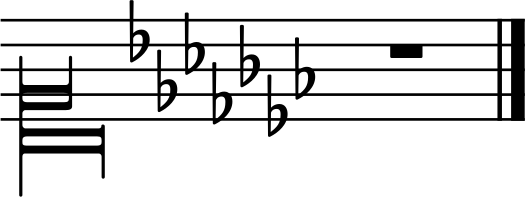
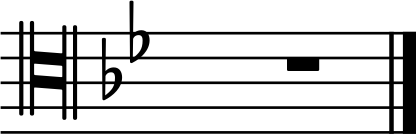
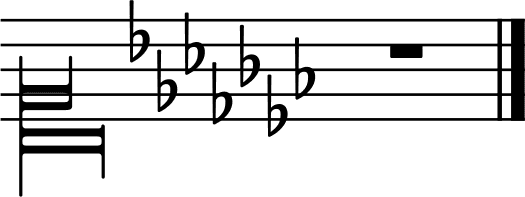
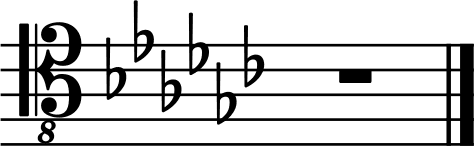
Flat Key Signatures
Quiz by Bates, Cody
Customize this quiz to suit your class
Instantly translate to 100+ languages
Tag the questions with any skills you have. Your dashboard will track each student's mastery of each skill.
Give this quiz to my class


 Geography: the study of Earth’s physical and cultural features Landforms: the natural features of the land’s surface Climate: the average weather conditions in a certain area over a long period of time Environment: All the living and nonliving things that affect life in an area Region: An area with one or more features that make it different from other surrounding areas Map Key / Map Legend: box that explains the meaning of different symbols used on the map Map Scale: tool that measures the relationship between the distance of locations on the map and the distance of locations in real life Compass Rose: a circle that shows the key directions on a map Hemispheres: halves of the Earth Continent: one of seven large landmasses on Earth Oceans: large bodies of water that cover 71% of the Earth’s surface Latitude: imaginary horizontal lines that measure distance north and south of the Equator Equator: central line of latitude that is measured at 0° Longitude: imaginary vertical lines that measure distance east and west of the Prime Meridian Prime Meridian: the central line of longitude, which is measured at 0° and runs through Greenwich, United Kingdom Map: illustration of a specific area on Earth that is often portrayed on a flat surface Physical Map: a type of map that shows the natural landforms and terrain of a location Political Map: a type of map that identifies cities, states, and countries Globe: a spherical model that is the most accurate representation of EarthManagement and Globalization Global Management Why companies go global How companies for global Global Business environments Global Business Types of global business Pros and cons of global businesses Ethnic Challenges for global business Culture and Global Diversity Cultural intelligence Silent language of culture Tight and loose cultures Values and national cultures Global Management Learning Are management theories universal? Intercultural competencies Global learning goals Key concepts of the challenges of globalisation: Global economy Resources, markets and competition are worldwide in scope Internationalisation The process of increasing involvement in international operations Globalization/Deglobalization Glob- the growing interdependence among elements in the global economy The worldwide interdependence of resource flows, product markets and business competition World 3.0 Different views: World flat vs. round Distance is a metaphor that represents the degree of dissimilarities between countries Balancing cooperation in the global Global Management Global management - managing things in different countries Managing business and organizations with interests in more than one country What do we expect from global Managers Knowing how to adapt Knowing the language Global Manager Is culturally aware and informed on international affairs International Business Conducting for-profit transactions of goods and services across national boundaries International Motive Why do firms internatioalize their activities Cheaper labour Labour tax Natural resources Enrolments to do business Clientele Exclusive materials Personal benefits: Taxes Reasons why businesses go global Customers Suppluers Capital During (1993) - 4 motive 1. Market seeking 2. Efficiency Seeking 3. Resource seeking 4. Strategic Asset Seeking Cuervo Cazurra, Narula and un (2015) - 4 motive s Internationalization Motives A company may also explore the opportunities in different markets in order to take advantage and in some cases extend the product life cycle What is a Market Entry Strategy Involves the sale of goods or services to foreign markets but do not require expensive investments Franchising Exporting and importing Involve the sale of goods or services to foreign markets but do Types of market entry strategies Global sourcing Exporting Importing Licensing agreement Franchising Types of Foreign Direct Investment (FDI) strategies: Joint venture Strategic alliance Owned Subsidiary (sometimes called WOS) How to go abroad What conditions will affect the decisions of firms on how to internationalize their activities? During (1978)- Eclectic paradigm OLI model OLI- Ownership, Location and Internalization Advantages Ownership advantages Resources owned by the organization that can be transferred across locations include trademarks, production techniques and processes, managerial skills and other resources not available to the competitors Location Advantages Represent the implications of choosing to produce or to perform activities in a specific location (country or region) Internalization Advantages: The ability to internalize or to incorporate activities that add value to its business Evolution of Concepts- New Elements Although economic factors are certainly important to explain the formation, growth and expansion of firms within and across national borders, they are not sufficient to explain the additional complexity when a firm decides to expand its activities across national borders Economic factors Investigate the economic elements that affect the internationalization of firms Behavioural Elements Explaining the additional challenges (and perhaps opportunities) a firm faces in foreign host countries when compared to indigenous (local) firms Behavioural theories Johanson and Wiedersheim-Paul (1975) and Johanson and Vahlne (1977) Included the psychic Distance concept (beckerman,1956) to explain the internationalization behaviour of firms The Uppsala internationalization model Psychic distance is: the sum of factors preventing the flow of infomatio from and to the market Psychic Distance is a broad concept that includes several elements such as: language, culture, political systems, level of education, level of industrial development Firms behave in a “Risk Averse” manner It means that when the perceived risk goes down, the firm increase its commitment to the foreign market \ The Haier Group Data Strategy Big DATA and Small DATA The use of small data to satisfy individual customers’ needs, however, the book mentions a huge cultural shock at the plant in Camden, south caroline Ex: top down, hard hat colors and hierarchy Culutral Differnces can have a huge impact on the internationalization of firms Kogut and Singh (1988)- Cultural Distance Index First statsical study on the implication of ciltiral distance to the selection of entry mode When investigating in culturally distant countries, foreign firms can choose to partner with foreign firms in order to gain local knowledge and share the risk associated to the investment (higher commitment = higher risk) How Companies Go Global Global sourcing The process of purchasing materials or services around teh world for local use Exporting Selling locally made products in foreign markets Importing Buying foreign made products and selling them domestically Exports correspond to what percentage of Candain GDP What countries are the major trending partners of Canada Management and Globalization How Companies Go Global Licensing Agreement One firm pays a fee for rights to make or sell another company’s products What are the potential risks associated to licesning The case of new balance in China Franchising A fee is paid for the rights to use another firms name, branding and methods Insourcing Insourcing: refers to local job creation that results from foreign direct investment Types of insourcing Joint ventures: operate in a foreign country through co-ownership by foreign and local partners Strategic alliances: A partnership in which foreign and domestic firms share resources and knowledge for mutual gains Foreign subsidiaries: local operation completely owned by a foreign firm Criteria for choosing a joint venture partner: Familiarity with your firm’s major business String local workforce Values its customers Future expansion possibilities Strong local market for partner’s own products Good Profit potential Sound financial standing Global business environments Legal and poliical systems Trade agreements and trade barriers Regional economic alliances Legal and political systems Differing laws and practices regards Business ownership Negotiation and implementation of contracts Foreign currency exchange Protection of intellectual property rights Counterfeit merchandise Political risk Potential loss in value of foreign investment due to instability and political changes in the host country Political risk analysis (expertise/experience) Forecast political disruptions that threaten the value of a foreign investment Changes in the rules of the game Brexit US Trade Wars-mexico-China Other examples Bolivia, Venezuela, China De-globalization The process of weakening interdependence among nations Trade Agreements and trade Barriers World trade organization Most favourd nation status Tariffs Nontariss barriers (quotes, restrictions, etc.) Protectionism Regional Economic Alliances USMCA (replacment for the NAFTA-North American Free trade Agreement) EU- European Union APEC- Aisa Pacific Economic Copperation ASEAN - Association of Southeast Asian Nationas SADC - Southern Africa Development Community MERCOSUR- Chapter 5- Global Management and Cultural Diversity (part 2) Review Types of global business Global corporation MNE (multinational enterprise) or MNC (multinational corporation) with extensive business operations in more than one foreign country Transnational corporation A global corporation that operates worldwide on borderless basis Some host country complaints about MNCs Host Country companits about MNCs: Excessive profits Interference with local government Domination of local economy Interference with local government Hiring the best local talent Limited technology transfer Disrespect for local customers Examples - War in Ukraine Disruption in global -value chains and increased pressure and interference of MNCs with local government Fertilizer imports in Brazil (one of the major producers of agricultural commodities) We must consider the triple bottom line and the impact in society, the environment and the economy $2.5 billion invest in potash mine in Brazill What about Globalization gap Large multinationals adn industrilizednaitons gaining disporoportinonally form globalization Globalization gap: Large multinational and industrialized nations gaining disproportionally from Globalization Some MNC complaints about host countries MNC Complaints about host countries: Profiit limitations Laws and regulations Overpirce resources Exploitative rules Foreign exchange restriction Failure to uphold contracts Mutual benefits for host countries and multinational companies Mutual benefits for host country and global corporation of MNC: Shared growth opportunities Shared income opportunities Shared learning opportunities Share development opportunities Develop projects together What are some of the ethical challenges for global business Ethincal challenges for global business Child labour Employmnet of children for worl otherwise done by adults Sweatshops Employment of workers at very low wages for long hours in poor working conditions Ex: Nike bad labour prices Unsafe working conditions Corruption Illegal practices that further one’s business interests Corrupiotn of froeign public officials Act makes it illegal for Candain firms and their representatives to engage in corrupt practices overseas Bribes to foreign officials Excessive commissions Non-monetary gifts Sweatshops Conflict materials What is culture Culture : The shared set of beliefs, values, and patterns of behvaiourr common to a group of people Food preferences Values and traditions Language and beliefs Religion Art music Life style Hofstede defines culture as: “The collectiv programing of teh mind distinguishing the members of one group or category of people from others” What is culture shock Culture Shock: Confusion and discoumfert a person experiences in an unfaamiliar culture Stages to adjusting to a new culture Confusion Small vitorires The honeymoon Irritation and anger Reality Cultural Intelligence The ability to adapt and adjust to new cultures What is Ethnocentrism Tendency to consider one’s own culture as superior others Slinet languages of culture Contect Low context High context Space Proxemics Ex: personal space Time Monochronic Polychronic High and low contexts cultures Edward T.Hall (1959) Def: Part of a discourse that surround a word or passage and can throw on its meaning Low context cultures Emphizes communication via spoken or written words Countries like United States, Canada and Germany High context cultures Rely on nonverbal and situational cues as well as on spoken or written works Thailand Malaysia Time Monochronic cultures People tend to do one thing at a time Canda Polychronic cultures Time is used to accomplish many different things at once Egypt Space Proxemics Study of how people use space to communicate In North American people value “personal space’ Many Latin and Asian cultures expect much less personal space Tight and Loose Cultures Cultural tightness-looseness Tight = Strength of norms that govern social behvaviour Japan, Korea, Malaysia Loose = tolerance for any deviation from norms Australia, Brazil, Hungary Values and national cultures (Hofstede) Power distance Uncertainty avoidance Individalism-collectivism Masculinity-femininty Time Orientation Indulgence vs. Restraint Comparative management How management pratices systematically differ among countries and /or cultures Intercultural competencies Skills and personal characteristics that help us be successful in cross cultural situations Global Managers (know how to adapt) Need to successfully apply management functions across interantional boundaries Global Learning goals Not universal Engage critical thinking Look everywhere for new management ideas Always consider culture All About Kites Introduction. A kite is one of the oldest toys. And it's very simple to make. Kites come in many sizes, shapes, and colors. Did you know that kites can be both toys and tools? History of Kites. Kites were named after the kite bird. The kite bird has wide wings and easily floats high in the sky. No one knows who made the first kite. But one famous Chinese story about a kite was written over 2,000 years ago. The story is about a man who used a kite to attack a fort. He couldn't find a way to get inside the fort. So he tied himself to a huge kite. He flew over the wall of the fort and scared the soldiers! The inventor Ben Franklin had the idea that lightning was made of electricity. He wanted to prove his idea. One day when it was stormy, he tied a metal key to a kite string. Then he flew the kite up into the storm clouds. Lightning from the storm hit his kite. The electricity ran down the wet string to the metal key. When he reached for the key, he got a surprise. The electricity jumped from the key and gave him a shock! Do not try this yourself. It's not safe to do. When Ben Franklin tried to do it again, he was hurt badly. Many Uses for Kites. Some people have used kites for fishing. They put a fishhook and bait on the long kite tail. The kite tail dragged in the water. When a fish saw it, it bit the bait and was caught on the hook. Then the kite was pulled in. Weather kites carried scientific gauges into the sky. The gauges measured how fast the wind was blowing and how cool the air was. Years ago, some armies used kites with cameras to spy on enemy troops. Kites were also used as flying targets. The kites trained soldiers to aim better. Soldiers shot at the kites. The moving kites were hard to hit with bullets. Different shapes of kites fly in different ways. Flat, diamond-shaped kites fly easily. Box-shaped kites can hang still in the air for a long time. Stunt kites twist and twirl on many strings. Large parafoil kites act almost like parachutes. Giant dragon kites flutter. Fighting kites can be used to cut other kites' strings. On a breezy day, take your kite to a flat, open area. Be sure that there are no power lines or big trees. Look at the ground around you. Is there anything you could trip over? Hold your kite up by the bridle and run into the wind. Let go of the kite and slowly let out some string. Then let out a little more until your kite is high in the sky. Happy flying!Filmic Techniques Based on the work of Brad Smilanich Mis-en-Scene: originally a French theatrical term arrangements of all the visual elements of the stage area in film – “the contents of the frame and the way those contents are organized” include: lighting, costume, décor, props, camera movement or distance . . . all photographic decisions etc. Proxemics: Spatial relationship among characters within the mis-en-scene Rule of Thirds: a compositional rule of thumb in painting, design, photography etc. suggests image divided into 9 equal parts with two vertical and two horizontal lines important elements of the mis-en-scene should be placed along these lines and their intersections some suggest aligning with intersections makes for more interesting pictures than just centreing the subject Proxemics Camera Distance: Quite literally, how far the camera is from the subject being filmed The Hand Camera Camera Distance: Quite literally, how far the camera is from the subject being filmed Extreme Close Up: Singles out one small portion of the body or object Used to intensify emotion, or show reaction Camera Distance: Close up Shot: Shows head of character or small significant object Used to show emotions Camera Distance: Medium Shot: shows figures from the waist up allows character to be seen within background Camera Distance: Long Shot: shows figures from feet up similar to the “stage” in live theatre orients audience to figures within a location or surrounding Camera Distance: Extreme Long Shot: Sometimes called an ‘establishing shot’ Panoramic view of an exterior location orients audience to a location Camera Distance: Camera Angle: Camera’s angle of view relative to the subject being photographed High Angle Shot: looks down on the subject often used to make the subject look small and insignificant (in combination with camera distance) puts the camera (audience) in ‘power’ position Camera Angle: Low Angle Shot: looks up at the subject often used to make the subject look large and powerful puts the camera (audience) in a ‘submissive’ position Camera Angle: Flat Angle Shot: camera on same plane as the subject feels most ‘normal’ to an audience Camera Angle: Canted Shot: frame is unbalanced in relation to the subject may indicate a symbolic unbalance in the character Camera Angle: Camera Movement literally the camera moving with or around or to follow the subjects in the mis-en-scene or frame Camera Movement: Tilting Movement camera moves up or down on a horizontal axis similar to head nodding movement may be used to show subjects relation to surroundings Camera Movement: Panning Movement camera moves side to side on a vertical axis similar to head shaking movement may be used to establish setting Camera Movement: Dolly Movement camera mounted on a vehicle that moves along with the subject (camera moves, not pivots) follows the subject to signify something important Camera Movement: Crane Shot camera mounted on a crane or boom permits camera to move in & out, up & down, backward & forward often used for high aerial establishing shots Misc. Shots: Hand Held: camera carried to seem jerky, giving ‘realistic feel’ Push In: camera moves up to a character’s face to indicate an epiphany (realization) Spiral: camera circles subject for effect End for ELA 20-2 and 10-1 Shot Transitions/Editing: artificial editing done to string together multiple shots to create a narrative scene or sequence a cut is the change from one shot to another usually separated in to ‘soft’ and ‘hard’ cuts Jump Cut: an instantaneous change from one shot to another this can be very natural or may disorient the audience, depending on how it is used Transitions/Editing Swish Pan: A pan where the speed of the camera is so fast that images are blurry used often to connect events in different settings that are connected by time Transitions/Editing Dissolve: transition where one shot gradually dissapears while another shot gradually appears often used to suggest change of setting or long time passage i.e. flashbacks Transitions/Editing Fade In/Out: transition where the shot gradually overexposes to white or underexposes to black often used to suggest a lengthy passage of time or change in location Transitions/Editing Wipe: transition where one shot is gradually eliminated as another shot moves onto the screen can be vertically or horizontally often suggests movement of the camera to another location Transitions/Editing Iris In/Out: transition where one shot gradually appears as an expanding circle in the middle of an old image suggests . . .??? Transitions/Editing Shot-Reverse Shot: one character is shown looking (often off-screen) at another character, and then the other character is shown looking "back" at the first character. Since the characters are shown facing in opposite directions, the viewer unconciously assumes that they are looking at each other. Transitions/Editing Two-Shot: Face-up shot of two people. Often used in interviews, or when two presenters are hosting a show. A "One-Shot" could be a mid-shot of either of these subjects. A "Three-Shot", unsurprisingly, contains three people. Transitions/Editing Shot Transitions/Editing: Sound: used to reflect or enhance what is shown visually on the screen can include dialogue, music, sound effects, voiceover etc. Diegetic Sound: sound that has a source in the world of the story dialogue spoken by characters, sound made by objects, or music coming from a source grounded in the story of the film Non-diegetic Sound: sound that has a source outside the world of the story usually part of the score or the soundtrack Parallel Sound: sound that complements the image shown i.e. romantic music during a love scene Counterpoint Sound: sound that contradicts the ‘feeling’ of the image a happy song played while images of graphic violence are portrayed Voiceover: voice of a non-visible narrator laid over the scene often provides some comment about the narrative of the film Sound Bridge: used to ‘soften’ the transition between one scene and another takes sound from the next shot and overlays it on the current shot 2-3 seconds earlier than we see the image Examples of Diegetic/Non-Diegetic: In the first clip, the non-diegetic music changes to diegetic music when the main character moves inside of the convenience store. In the second clip, the “duhn duhn duuuuh” which often is non-diegetic becomes diegetic because it is the band in the passing bus playing that music! End for ELA 20-1 Lighting: Can be used by a director to: Control the mood of a scene guide a viewer’s eye to a specific place in mis-en-scene Emphasize and de-emphasize elements in frame Add texture and color Make people look beautiful, ugly, sinister, or angelic Standard 3-Point Lighting: uses three lights called the key light, fill light and back light forms the basis of most lighting. once you understand three point lighting you are well on the way to understanding all lighting. Key Light: main light usually the strongest and has the most influence on the look of the scene. it is placed to one side of the camera/subject so that side is well lit and other side has shadow. Fill Light: secondary light is placed on the opposite side of the key light used to fill the shadows created by key softer and less bright than key Back Light: placed behind the subject ; lights it from the rear. provides definition and subtle highlights around the subject's outlines. Separates subject from background provides a three-dimensional look. Standard 3-Point Lighting: http://www.zvork.fr/vls/ Try using this simulator to play with lighting with those 3 points.Flat Stanleyflat, rectangular objects in the room. - Starter QuizFlat, Sharp, Natural, Treble, Bass SymbolsMES Flat II