Loading...

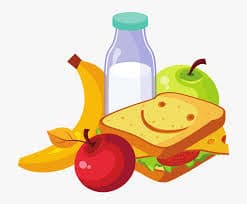
Food vocabulary for 4th grade
Quiz by Ronit Katz
Customize this quiz to suit your class
Instantly translate to 100+ languages
Tag the questions with any skills you have. Your dashboard will track each student's mastery of each skill.
Give this quiz to my class

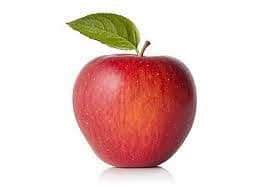

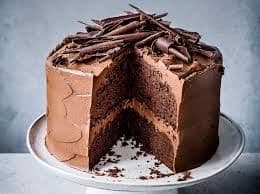

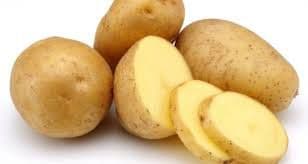
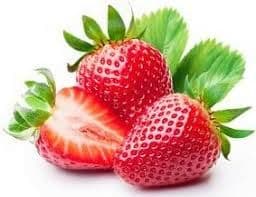
 Vocabulary fill in the gap quizz for 4th grade, efl learners with food and drinks words and days of the week. for example: banana and melon are kinds of______. a. vegetables b. fruit c. carrot6 kl. Prime Time 1. Mod 4f. Food vocabulary (for a video)Vocabulary for food preparation themeVocabulary for food and drinkFood Chain and Food Web Vocabulary Quiz: Thursday, October 31st Vocabulary Word Definition Producer An organism that makes its own food. Consumer An animal that eats plants or other animals. Decomposer An organism that breaks down dead plant and animal material. Photosynthesis The process by which plants make their own food using sunlight Food Chain A series of organisms that depend on one another for food. Food Web Several food chains that are connected. Community All the living things in one place that interact. Ecosystem The living and nonliving things that share an environment and interact. Population All the members of a single type of organism in an ecosystem. Omnivore An animal that eats both plants and animals. Herbivore An animal that feeds on just plants. Carnivore An animal that feeds on meat or flesh of an animal.Owls, such as the young snowy owls on the previous page, have for centuries been symbols of both wisdom and mystery. To many cultures their piercing eyes have conveyed a look of intelligence. Their silent flight through darkened landscapes in search of prey has projected an air of power or wonder. For this chapter and this book, owls are an engaging example of a living organism from the world of biology—the study of life. BIOLOGY AND YOU Living in a small town, in the country, or at the edge of the suburbs, one may be lucky enough to hear an owl's hooting. This experience can lead to questions about where the bird lives, what it hunts, and how it finds its prey on dark, moonless nights. Biology, or the study of life, offers an organized and scientific framework for posing and answering such questions about the natural world. Biologists study questions about how living things work, how they interact with the environment, and how they change over time. Biologists study many different kinds of living things ranging from tiny organisms, such as bacteria, to very large organisms, such as elephants. Each day, biologists investigate subjects that affect you and the way you live. For example, biologists determine which foods are healthy. As shown in Figure 1-1, everyone is affected by this impor- tant topic. Biologists also study how much a person should exer- cise and how one can avoid getting sick. Biologists also study what your air, land, and food supply will be like in the near future. SECTION 1 OBJECTIVES ● Relate the relevance of biology to a person’s daily life. ● Describe the importance of biology in human society. ● List the characteristics of living things. ● Summarize the hierarchy of organization within complex multicellular organisms. ● Distinguish between homeostasis and metabolism and between growth, development, and reproduction. VOCABULARY biology organization cell unicellular multicellular organ tissue organelle biological molecule homeostasis metabolism cell division development reproduction gene Copyright © by Holt, Rinehart and Winston. All rights reserved. Biology, the study of life, directly applies to your health, life, and future in ways as simple as daily food choices. FIGURE 1-1 6 CHAPTER 1 Biology and Society By studying biology you can make informed decisions on issues that impact you and our society. Every day newspapers, television, and the Internet contain issues that relate to biology. For example, you may read that your local water or air supply is polluted. How will that pollution affect your health and the health of other living things? You may hear about new technologies or tools that biolo- gists have invented. How will we control how those technologies and tools are used? Biologists actively work to solve these and other real-world issues and problems, including improving our food supply, curing diseases and preserving our environment.Figure 18-11 represents the amount of energy stored as organic material in each trophic level in an ecosystem. The pyramid shape of the diagram indicates the low percentage of energy transfer from one level to the next. On average, 10 percent of the total energy consumed in one trophic level is incor- porated into the organisms in the next. Why is the percentage of energy transfer so low? One reason is that some of the organisms in a trophic level escape being eaten. They eventually die and become food for decomposers, but the energy contained in their bodies does not pass to a higher trophic level. Even when an organism is eaten, some of the molecules in its body will be in a form that the consumer cannot break down and use. For example, a cougar cannot extract energy from the antlers, hooves, and hair of a deer. Also, the energy used by prey for cellu- lar respiration cannot be used by predators to synthesize new bio- mass. Finally, no transformation or transfer of energy is 100 percent efficient. Every time energy is transformed, such as during the reactions of metabolism, some energy is lost as heat. Limitations of Trophic Levels The low rate of energy transfer between trophic levels explains why ecosystems rarely contain more than a few trophic levels. Because only about 10 percent of the energy available at one trophic level is transferred to the next trophic level, there is not enough energy in the top trophic level to support more levels. Organisms at the lowest trophic level are usually much more abundant than organisms at the highest level. In Africa, for exam- ple, you will see about 1,000 zebras, gazelles, and other herbivores for every lion or leopard you see, and there are far more grasses and shrubs than there are herbivores. Higher trophic levels con- tain less energy, so, they can support fewer individuals.A population is a group of organisms that belong to the same species and live in a particular place at the same time. All of the bass living in a pond during a certain period of time make up a pop- ulation because they are isolated in the pond and do not interact with bass living in other ponds. The boundaries of a population may be imposed by a feature of the environment, such as a lake shore, or they can be arbitrarily chosen to simplify a study of the population. The humans shown in Figure 19-1 are part of the pop- ulation of a city. The properties of populations differ from those of individuals. An individual may be born, it may reproduce, or it may die. A population study focuses on a population as a whole—how many individuals are born, how many die, and so on. Population Size A population’s size is the number of individuals that the population contains. Size is a fundamental and important population property but can be difficult to measure directly. If a population is small and composed of immobile organisms, such as plants, its size can be determined simply by counting individuals. Often, though, individ- uals are too abundant, too widespread, or too mobile to be counted easily, and scientists must estimate the number of individuals in the population. Suppose that a scientist wants to know how many oak trees live in a 10 km2 patch of forest. Instead of searching the entire patch of forest and counting all the oak trees, the scientist could count the trees in a smaller section of the forest, such as a 1 km2 area. The scientist could then use this value to estimate the population of the larger area. SECTION 1 OBJECTIVES ● Describe the main properties that scientists measure when they study populations. ● Compare the three general patterns of population dispersion. ● Identify the measurements used to describe changing populations. ● Compare the three general types of survivorship curves. VOCABULARY population population density dispersion birth rate death rate life expectancy age structure survivorship curve FIGURE 19-1 A population can be widely distributed, as Earth’s human population is, or confined to a small area, as species of fish in a lake are. Copyright © by Holt, Rinehart and Winston. All rights reserved. 382 CHAPTER 19 If the small patch contains 25 oaks, an area 10 times larger would likely contain 10 times as many oak trees. A similar kind of sampling technique might be used to estimate the size of the pop- ulation shown in Figure 19-2. To use this kind of estimate, the sci- entist must assume that the distribution of individuals in the entire population is the same as that in the sampled group. Estimates of population size are based on many such assumptions, so all esti- mates have the potential for error. Population Density Population density measures how crowded a population is. This measurement is always expressed as the number of individuals per unit of area or volume. For example, the population density of humans in the United States is about 30 people per square kilome- ter. Table 19-1 shows the population sizes and densities of humans in several countries in 2003. These estimates are calculated for the total land area. Some areas of a country may be sparsely popu- lated, while other areas are very densely populated. Dispersion A third population property is dispersion (di-SPUHR-zhuhn). Dispersion is the spatial distribution of individuals within the popu- lation. In a clumped distribution, individuals are clustered together. In a uniform distribution, individuals are separated by a fairly con- sistent distance. In a random distribution, each individual’s location is independent of the locations of other individuals in the popula- tion. Figure 19-3 illustrates the three possible patterns of dispersion. Clumped distributions often occur when resources such as food or living space are clumped. Clumped distributions may also occur because of a species’ social behavior, such as when animals gather into herds or flocks. Uniform distributions may result from social behavior in which individuals within the same habitat stay as far away from each other as possible. For example, a bird may locate its nest so as to maximize the distance from the nests of other birds. These migrating wildebeests in East Africa are too numerous and mobile to be counted. Scientists must use sampling methods at several locations to monitor changes in the population size of the animals. FIGURE 19-2 TABLE 19-1 Population Size and Density of Some Countries Population size Population density Country (in millions) (in individuals/km2) China 1,289 135 India 1,069 325 United States 292 30 Russia 146 8 Japan 128 337 Mexico 105 54 Kenya 32 54 Australia 20 3 dispersion from the Latin dis-, meaning “out,” and spargere, meaning “to scatter” Word Roots and Origins Copyright © by Holt, Rinehart and Winston. All rights reserved. POPULATIONS 383 The social interactions of birds called gannets, which are shown in Figure 19-3b, result in a uniform distribution. Each gannet chooses a small nesting area on the coast and defends it from other gannets. In this way, each gannet tries to maximize its distance from all of its neighbors, which causes a uniform distribution of individuals. Few populations are truly randomly dispersed. Rather, they show degrees of clumping or uniformity. The dispersion pattern of a population sometimes depends on the scale at which the popu- lation is observed. The gannets shown in Figure 19-3b are uni- formly distributed on a scale of a few meters. However, if the entire island on which the gannets live is observed, the distribution appears clumped because the birds live only near the shore. POPULATION DYNAMICS All populations are dynamic—they change in size and composition over time. To understand these changes, scientists must know more than the population’s size, density, and dispersion. One important measure is the birth rate, the number of births occur- ring in a period of time. In the United States, for example, there are about 4 million births per year. A second important measure is the death rate, or mortality rate, which is the number of deaths in aCARBOHYDRATES Carbohydrates are organic compounds composed of carbon, hydrogen, and oxygen in a ratio of about one carbon atom to two hydrogen atoms to one oxygen atom. The number of carbon atoms in a carbohydrate varies. Some carbohydrates serve as a source of energy. Other carbohydrates are used as structural materials. Carbohydrates can exist as monosaccharides, disaccharides, or polysaccharides. Monosaccharides A monomer of a carbohydrate is called a monosaccharide (MAHN-oh-SAK-uh-RIED). A monosaccharide—or simple sugar— contains carbon, hydrogen, and oxygen in a ratio of 1:2:1. The gen- eral formula for a monosaccharide is written as (CH2O)n, where n is any whole number from 3 to 8. For example, a six-carbon mono- saccharide, (CH2O)6, would have the formula C6H12O6. The most common monosaccharides are glucose, fructose, and galactose, as shown in Figure 3-6. Glucose is a main source of energy for cells. Fructose is found in fruits and is the sweetest of the monosaccharides. Galactose is found in milk. Notice in Figure 3-6 that glucose, fructose, and galactose have the same molecular formula, C6H12O6, but differing structures. The different structures determine the slightly different properties of the three compounds. Compounds like these sugars, with a single chemical formula but different structural forms, are called isomers (IE-soh-muhrz). SECTION 2 OBJECTIVES ● Distinguish between monosaccharides, disaccharides, and polysaccharides. ● Explain the relationship between amino acids and protein structure. ● Describe the induced fit model of enzyme action. ● Compare the structure and function of each of the different types of lipids. ● Compare the nucleic acids DNA and RNA. VOCABULARY carbohydrate monosaccharide disaccharide polysaccharide protein amino acid peptide bond polypeptide enzyme substrate active site lipid fatty acid phospholipid wax steroid nucleic acid deoxyribonucleic acid (DNA) ribonucleic acid (RNA) nucleotide C HO H C H OH C OH H C CH2OH H C H OH O Glucose C OH C O H OH C OH H CH2OH C H CH2OH Fructose C H HO C OH H C OH H C CH2OH H C H OH O Galactose Glucose, fructose, and galactose have the same chemical formula, but their structural differences result in different properties among the three compounds. FIGURE 3-6 Copyright © by Holt, Rinehart and Winston. All rights reserved. 56 CHAPTER 3 Disaccharides and Polysaccharides In living things, two monosaccharides can combine in a condensa- tion reaction to form a double sugar, or disaccharide (die-SAK-e-RIED). For example in Figure 3-4, the monosaccharides fructose and glu- cose can combine to form the disaccharide sucrose. A polysaccharide is a complex molecule composed of three or more monosaccharides. Animals store glucose in the form of the polysaccharide glycogen. Glycogen consists of hundreds of glucose molecules strung together in a highly branched chain. Much of the glucose that comes from food is ultimately stored in your liver and muscles as glycogen and is ready to be used for quick energy. Plants store glucose molecules in the form of the polysaccha- ride starch. Starch molecules have two basic forms—highly branched chains that are similar to glycogen and long, coiled, unbranched chains. Plants also make a large polysaccharide called cellulose. Cellulose, which gives strength and rigidity to plant cells, makes up about 50 percent of wood. In a single cellu- lose molecule, thousands of glucose monomers are linked in long, straight chains. These chains tend to form hydrogen bonds with each other. The resulting structure is strong and can be broken down by hydrolysis only under certain conditions. PROTEINS Proteins are organic compounds composed mainly of carbon, hydrogen, oxygen, and nitrogen. Like most of the other biological macromolecules, proteins are formed from the linkage of monomers called amino acids. Hair and horns, as shown in Figure 3-7a, are made mostly of proteins, as are skin, muscles and many biological catalysts (enzymes). Amino Acids There are 20 different amino acids, and all share a basic structure. As Figure 3-7b shows, each amino acid contains a central carbon atom covalently bonded to four other atoms or functional groups. A single hydrogen atom, highlighted in blue in the illustration, bonds at one site. A carboxyl group, —COOH, highlighted in green, bonds at a second site. An amino group, —NH2, highlighted in yel- low, bonds at a third site. A side chain called the R group, high- lighted in red, bonds at the fourth site. The main difference among the different amino acids is in their R groups. The R group can be complex or it can be simple, such as the CH3 group shown in the amino acid alanine in Figure 3-7b. The differences among the amino acid R groups gives different proteins very different shapes. The different shapes allow pro- teins to carry out many different activities in living things. Amino acids are commonly shown in a simplified way such as balls, as shown in Figure 3-7c. (a) Many structures, such as hair and horns are made of proteins. (b) Proteins are made up of amino acids. Amino acids differ only in the type of R group (shown in red) they carry. Polar R groups can dissolve in water, but nonpolar R groups cannot. (c) Amino acids have complex structures, so, in this and other textbooks, they are often simplified into balls. FIGURE 3-7 (b) Alanine (an amino acid) (c) Simplified version of amino acid CH3 H N OH C C H O H (a) Copyright © by Holt, Rinehart and Winston. All rights reserved. BIOCHEMISTRY 57 H H N C C OH H O H CH3 H2O Glycine Alanine H N OH C C H O H H H N C C H O H CH3 N OH C C H O H (a) (b) (a) The peptide bond (shaded blue) that binds amino acids together to form a polypeptide results from a condensation reaction that produces water. (b) Poly- peptides are commonly shown as a string of balls in this textbook and elsewhere. Each ball represents an amino acid. FIGURE 3-8 Substrate Products Enzyme 1 2 3 In the induced fit model of enzyme action, the enzyme can attach only to a substrate (reactant) with a specific shape. The enzyme then changes and reduces the activation energy of the reaction so reactants can become products. The enzyme is unchanged and is available to be used again. 3 2 1 FIGURE 3-9 Dipeptides and Polypeptides Figure 3-8a shows how two amino acids bond to form a dipeptide (die-PEP-TIED). In this condensation reaction, the two amino acids form a covalent bond, called a peptide bond (shaded in blue in Figure 3-8a) and release a water molecule. Amino acids often form very long chains called polypeptides (PAHL-i-PEP-TIEDZ). Proteins are composed of one or more polypep- tides. Some proteins are very large molecules, containing hun- dreds of amino acids. Often, these long proteins are bent and folded upon themselves as a result of interactions—such as hydrogen bonding—between individual amino acids. Protein shape can also be influenced by conditions such as temperature and the type of solvent in which a protein is dissolved. For exam- ple, cooking an egg changes the shape of proteins in the egg white. The firm, opaque result is very different from the initial clear, runny material. Enzymes Enzymes—RNA or protein molecules that act as biological catalysts—are essential for the functioning of any cell. Many enzymes are proteins. Figure 3-9 shows an induced fit model of enzyme action. Enzyme reactions depend on a physical fit between the enzyme molecule and its specific substrate, the reactant being catalyzed. Notice that the enzyme has folds, or an active site, with a shape that allows the substrate to fit into the active site. An enzyme acts only on a specific substrate because only that substrate fits into its active site. The linkage of the enzyme and substrate causes a slight change in the enzyme’s shape. The change in the enzyme’s shape weakens some chemical bonds in the substrate, which is one way that enzymes reduce activation energy, the energy needed to start the reaction. After the reaction, the enzyme releases the products. Like any catalyst, the enzyme itself is unchanged, so it can be used many times. An enzyme may not work if its environment is changed. For example, change in temperature or pH can cause a change in the shape of the enzyme or the substrate. If such a change happens, the reaction that the enzyme would have catalyzed cannot occur.