Loading...


Ford General Knowledge and Apprenticeship Quiz
Quiz by rhianna morris
Customize this quiz to suit your class
Instantly translate to 100+ languages
Tag the questions with any skills you have. Your dashboard will track each student's mastery of each skill.
Give this quiz to my class
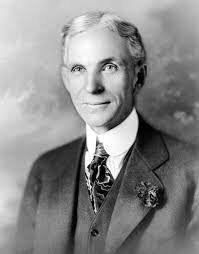
Who founded Ford Motor Company?
John Ford
Henry Ford
David Ford
William Ford
Who is the current CEO of Ford?
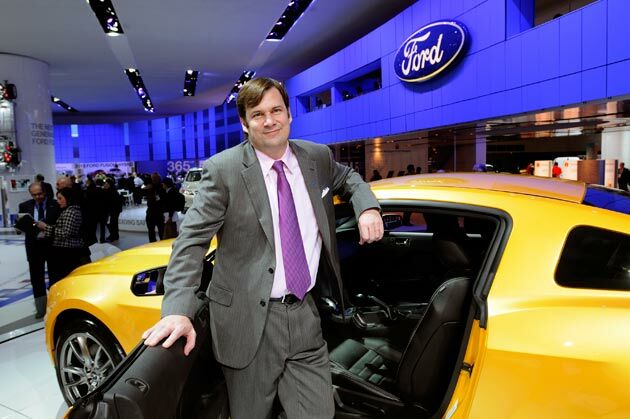
Jim Farley
James Hackett
William Clay Ford Jr.
Mark Fields
Who founded Ford Motor Company?

Who is the current CEO of Ford?

Which of these has NOT previously been a Ford logo?

What was the first Ford car ever produced?

How many Horsepower did the Quadricycle have?

What is Fords all-time best selling car?

How many Fiestas have been sold worldwide?

In the 1920's, a woman used a Ford to become the first woman to drive around the world - what was her name?

What car did Aloha use?

What is the name of the new, all electric vehicle that Ford announced on 21st March this year?

As part of the Explorer launch, Ford are teaming up with the youngest woman in the world to visit every country - what is her name?

Which of these has NOT been a name used for a car in production?
Over the years, Ford have owned or had stakes in other Motor companies - which of these has NOT been a Ford marque?

Set to replace current engine supplier Honda, which F1 team has Ford announced their partnership with?

When will we be seeing the Next Gen Hybrid Power Unit on the tracks?

When was the last time Ford was in Formula One?

How many countries do Ford currently operate in?

How many UK sites do we currently have?

How many Dealerships do we have in the UK?

How many employees does Ford currently have in the UK?

How many IT employees are women?

What percentage of Engineers are women?

How many Apprenticeships does Ford currently offer?

What levels do our Apprenticeships cover?

Which Best Selling Ford car is being discontinued this year?

 Understanding Quantum Theory of Electrons in Atoms The goal of this section is to understand the electron orbitals (location of electrons in atoms), their different energies, and other properties. The use of quantum theory provides the best understanding to these topics. This knowledge is a precursor to chemical bonding. As was described previously, electrons in atoms can exist only on discrete energy levels but not between them. It is said that the energy of an electron in an atom is quantized, that is, it can be equal only to certain specific values and can jump from one energy level to another but not transition smoothly or stay between these levels. The energy levels are labeled with an n value, where n = 1, 2, 3, …. Generally speaking, the energy of an electron in an atom is greater for greater values of n. This number, n, is referred to as the principal quantum number. The principal quantum number defines the location of the energy level. It is essentially the same concept as the n in the Bohr atom description. Another name for the principal quantum number is the shell number. The shells of an atom can be thought of concentric circles radiating out from the nucleus. The electrons that belong to a specific shell are most likely to be found within the corresponding circular area. The further we proceed from the nucleus, the higher the shell number, and so the higher the energy level (Figure 9.4.1). The positively charged protons in the nucleus stabilize the electronic orbitals by electrostatic attraction between the positive charges of the protons and the negative charges of the electrons. So the further away the electron is from the nucleus, the greater the energy it has. This quantum mechanical model for where electrons reside in an atom can be used to look at electronic transitions, the events when an electron moves from one energy level to another. If the transition is to a higher energy level, energy is absorbed, and the energy change has a positive value. To obtain the amount of energy necessary for the transition to a higher energy level, a photon is absorbed by the atom. A transition to a lower energy level involves a release of energy, and the energy change is negative. This process is accompanied by emission of a photon by the atom. The following equation summarizes these relationships and is based on the hydrogen atom: The values nf and ni are the final and initial energy states of the electron. The principal quantum number is one of three quantum numbers used to characterize an orbital. An atomic orbital, which is distinct from an orbit, is a general region in an atom within which an electron is most probable to reside. The quantum mechanical model specifies the probability of finding an electron in the three-dimensional space around the nucleus and is based on solutions of the Schrödinger equation. In addition, the principal quantum number defines the energy of an electron in a hydrogen or hydrogen-like atom or an ion (an atom or an ion with only one electron) and the general region in which discrete energy levels of electrons in a multi-electron atoms and ions are located. Another quantum number is l, the angular momentum quantum number. It is an integer that defines the shape of the orbital, and takes on the values, l = 0, 1, 2, …, n – 1. This means that an orbital with n = 1 can have only one value of l, l = 0, whereas n = 2 permits l = 0 and l = 1, and so on. The principal quantum number defines the general size and energy of the orbital. The l value specifies the shape of the orbital. Orbitals with the same value of l form a subshell. In addition, the greater the angular momentum quantum number, the greater is the angular momentum of an electron at this orbital. Orbitals with l = 0 are called s orbitals (or the s subshells). The value l = 1 corresponds to the p orbitals. For a given n, p orbitals constitute a p subshell (e.g., 3p if n = 3). The orbitals with l = 2 are called the d orbitals, followed by the f-, g-, and h-orbitals for l = 3, 4, 5, and there are higher values we will not consider. There are certain distances from the nucleus at which the probability density of finding an electron located at a particular orbital is zero. In other words, the value of the wavefunction ψ is zero at this distance for this orbital. Such a value of radius r is called a radial node. The number of radial nodes in an orbital is n – l – 1. Consider the examples in Figure 9.4.2. The orbitals depicted are of the s type, thus l = 0 for all of them. It can be seen from the graphs of the probability densities that there are 1 – 0 – 1 = 0 places where the density is zero (nodes) for 1s (n = 1), 2 – 0 – 1 = 1 node for 2s, and 3 – 0 – 1 = 2 nodes for the 3s orbitals. The s subshell electron density distribution is spherical and the p subshell has a dumbbell shape. The d and f orbitals are more complex. These shapes represent the three-dimensional regions within which the electron is likely to be found. Principal quantum number (n) & Orbital angular momentum (l): The Orbital Subshell: https://youtu.be/ms7WR149fAY If an electron has an angular momentum (l ≠ 0), then this vector can point in different directions. In addition, the z component of the angular momentum can have more than one value. This means that if a magnetic field is applied in the z direction, orbitals with different values of the z component of the angular momentum will have different energies resulting from interacting with the field. The magnetic quantum number, called ml, specifies the z component of the angular momentum for a particular orbital. For example, for an s orbital, l = 0, and the only value of ml is zero. For p orbitals, l = 1, and ml can be equal to –1, 0, or +1. Generally speaking, ml can be equal to –l, –(l – 1), …, –1, 0, +1, …, (l – 1), l. The total number of possible orbitals with the same value of l (a subshell) is 2l + 1. Thus, there is one s-orbital for ml = 0, there are three p-orbitals for ml = 1, five d-orbitals for ml = 2, seven f-orbitals for ml = 3, and so forth. The principal quantum number defines the general value of the electronic energy. The angular momentum quantum number determines the shape of the orbital. And the magnetic quantum number specifies orientation of the orbital in space, as can be seen in Figure 9.4.3. Figure 9.4.4 illustrates the energy levels for various orbitals. The number before the orbital name (such as 2s, 3p, and so forth) stands for the principal quantum number, n. The letter in the orbital name defines the subshell with a specific angular momentum quantum number l = 0 for s orbitals, 1 for p orbitals, 2 for d orbitals. Finally, there are more than one possible orbitals for l ≥ 1, each corresponding to a specific value of ml. In the case of a hydrogen atom or a one-electron ion (such as He+, Li2+, and so on), energies of all the orbitals with the same n are the same. This is called a degeneracy, and the energy levels for the same principal quantum number, n, are called degenerate energy levels. However, in atoms with more than one electron, this degeneracy is eliminated by the electron–electron interactions, and orbitals that belong to different subshells have different energies. Orbitals within the same subshell (for example ns, np, nd, nf, such as 2p, 3s) are still degenerate and have the same energy. While the three quantum numbers discussed in the previous paragraphs work well for describing electron orbitals, some experiments showed that they were not sufficient to explain all observed results. It was demonstrated in the 1920s that when hydrogen-line spectra are examined at extremely high resolution, some lines are actually not single peaks but, rather, pairs of closely spaced lines. This is the so-called fine structure of the spectrum, and it implies that there are additional small differences in energies of electrons even when they are located in the same orbital. These observations led Samuel Goudsmit and George Uhlenbeck to propose that electrons have a fourth quantum number. They called this the spin quantum number, or ms. The other three quantum numbers, n, l, and ml, are properties of specific atomic orbitals that also define in what part of the space an electron is most likely to be located. Orbitals are a result of solving the Schrödinger equation for electrons in atoms. The electron spin is a different kind of property. It is a completely quantum phenomenon with no analogues in the classical realm. In addition, it cannot be derived from solving the Schrödinger equation and is not related to the normal spatial coordinates (such as the Cartesian x, y, and z). Electron spin describes an intrinsic electron “rotation” or “spinning.” Each electron acts as a tiny magnet or a tiny rotating object with an angular momentum, even though this rotation cannot be observed in terms of the spatial coordinates. The magnitude of the overall electron spin can only have one value, and an electron can only “spin” in one of two quantized states. One is termed the α state, with the z component of the spin being in the positive direction of the z axis. This corresponds to the spin quantum number ms=12. The other is called the β state, with the z component of the spin being negative and ms=−12. Any electron, regardless of the atomic orbital it is located in, can only have one of those two values of the spin quantum number. The energies of electrons having ms=−12 and ms=12 are different if an external magnetic field is applied. Figure 9.4.5 illustrates this phenomenon. An electron acts like a tiny magnet. Its moment is directed up (in the positive direction of the z axis) for the 12 spin quantum number and down (in the negative z direction) for the spin quantum number of −12. A magnet has a lower energy if its magnetic moment is aligned with the external magnetic field (the left electron) and a higher energy for the magnetic moment being opposite to the applied field. This is why an electron with ms=12 has a slightly lower energy in an external field in the positive z direction, and an electron with ms=−12 has a slightly higher energy in the same field. This is true even for an electron occupying the same orbital in an atom. A spectral line corresponding to a transition for electrons from the same orbital but with different spin quantum numbers has two possible values of energy; thus, the line in the spectrum will show a fine structure splitting. The Pauli Exclusion Principle An electron in an atom is completely described by four quantum numbers: n, l, ml, and ms. The first three quantum numbers define the orbital and the fourth quantum number describes the intrinsic electron property called spin. An Austrian physicist Wolfgang Pauli formulated a general principle that gives the last piece of information that we need to understand the general behavior of electrons in atoms. The Pauli exclusion principle can be formulated as follows: No two electrons in the same atom can have exactly the same set of all the four quantum numbers. What this means is that electrons can share the same orbital (the same set of the quantum numbers n, l, and ml), but only if their spin quantum numbers ms have different values. Since the spin quantum number can only have two values (±12), no more than two electrons can occupy the same orbital (and if two electrons are located in the same orbital, they must have opposite spins). Therefore, any atomic orbital can be populated by only zero, one, or two electrons. The properties and meaning of the quantum numbers of electrons in atoms are brieflyMultiple choice quiz on this reading: By 1900, the United States had claimed its place as a world power through the Spanish-American War. As the new century began, the country governed subject territories in Puerto Rico, Hawaii, Guam, the Wake Islands, and the Philippines. U.S. troops also occupied Cuba. U.S. businesses reached beyond the country's borders. During the first decade of the new century, the Coca-Cola Company, Quaker Oats, AT&T, the Standard Oil Company, Du Pont, General Electric, and Ford Motor Company seized the opportunity for international sales. After finding international markets, they built factories abroad, taking advantage of lower labor costs in foreign countries. Then they asked for U.S. protection of their investments and interests. Foreign countries invested heavily in Central America. U.S. investors focused on banana plantations and mining, as well as railroads, with little money in government bonds. By 1913, U.S. investments in Central America totaled about $93 million. British investment in Central America peaked at about $115 million in 1913. About $75 million of that total represented railroad holdings, mostly in Costa Rica and Guatemala. The other $40 million was in government bonds, which were worth little or nothing. The Roosevelt Corollary to the Monroe Doctrine From its earliest days, the United States claimed a special interest in the Western Hemisphere. The Monroe Doctrine, issued in 1823, warned European powers to keep their hands off Latin America. In 1902, Britain, Germany, and Italy mounted a naval blockade of Venezuela. They wanted to force the government to repay its debts. All the countries involved eventually agreed to settle the matter by arbitration. The United States stood back and did nothing, but U.S. citizens were clearly uneasy with the appearance of European military forces in "their" hemisphere. In 1904, President Theodore Roosevelt issued a corollary to the Monroe Doctrine, saying that the United States would act as a police officer to keep order in the region. He intended both to keep European military forces out of the hemisphere and to protect U.S. and European investors, exerting whatever pressure or control on Latin American governments that might be necessary to these ends. In 1905, the Dominican Republic owed $40 million in debts to European lenders. In order to prevent the European nations from using military force to collect their debts, Roosevelt used U.S. power. The United States basically took over collection of Dominican customs taxes, declared that $20 million of the debt was unjustified, and began repayment of the rest. Building a Canal The United States needed a canal through Central America, in order to save shipping time and costs. Colombia had the best location for a canal, and the United States negotiated a deal. It would pay Colombia $10 million for a three-mile-wide strip of land and would make annual rental payments of $250,000 yearly, beginning in 1912. Colombia's Senate turned down the deal, and Roosevelt exploded in rage, calling its members "foolish and homicidal corruptionists." Roosevelt considered seizing the land for the canal by military force but soon found an easier way. The province of Panama seceded from Colombia. A U.S. gunship stood off shore, protecting the Panamanian rebels. They formed a new republic under the protection of the United States. The new country of Panama and the United States agreed on a canal treaty within days. The new treaty had similar terms except that the Canal Zone would be five miles wide, instead of three, and the United States would guarantee and maintain the independence of Panama. Revolutions While Roosevelt welcomed the revolution that separated Panama from Colombia, he opposed most other revolutionary activity. So did his successors in office, William Howard Taft and Woodrow Wilson. The U.S. presidents sent troops to put down revolutions in Nicaragua and Haiti, using U.S. military forces to set up new governments in those countries and maintaining military occupations for years. U.S. military interventions were frequent throughout the hemisphere. Dollar Diplomacy President Taft preferred using "dollar diplomacy" to control Latin American countries. In Honduras, for example, U.S.-based banana companies virtually ran the government. Taft supported expanded U.S. investment in South and Central American countries, the Caribbean, and the Far East. He ordered Secretary of State Philander Chase Knox to protect U.S. investments, sending in military troops if necessary. On the World Stage As a world power, the United States did not limit its involvement to the Western Hemisphere. In 1905, President Roosevelt brought Russia and Japan to the negotiating table to end their war over control of Korea and Manchuria. Roosevelt agreed to Japanese annexation of Korea in return for Japan giving up any claim to China, Hawaii, and the Philippines. Roosevelt won the Nobel Peace Prize for settling this dispute. In 1906, Roosevelt's negotiating powers were tested again. This time, he mediated a dispute between the Alliance powers—Germany, Austria-Hungary, and Italy—with the Entente—France, Russia, and Britain—over control of Morocco. The United States backed France and ended the dispute. No longer an upstart, the United States had taken its place as a world power alongside its former colonial ruler.Lesson 2 general ReviewFord's QuizFord’s Village Visit Ford the frog lived on a farm. He fed five fish. “Visit the valley village”, said Fitz the fish. Ford drove his van to the valley village. It was filled with violets and funny foxes. Ford Carter YearsFord mustangNixon Ford Carter