Loading...

Forest of Reading - Book Trivia!
Quiz by Kayleigh Rideout
Customize this quiz to suit your class
Instantly translate to 100+ languages
Tag the questions with any skills you have. Your dashboard will track each student's mastery of each skill.
Give this quiz to my class
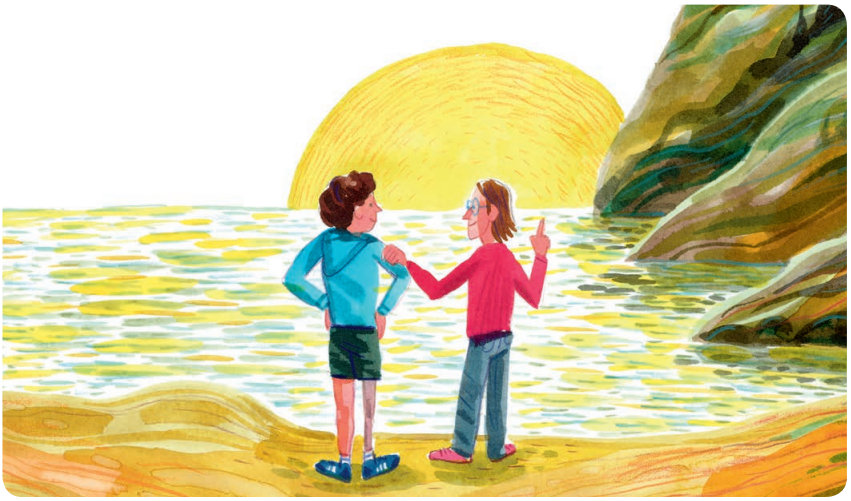






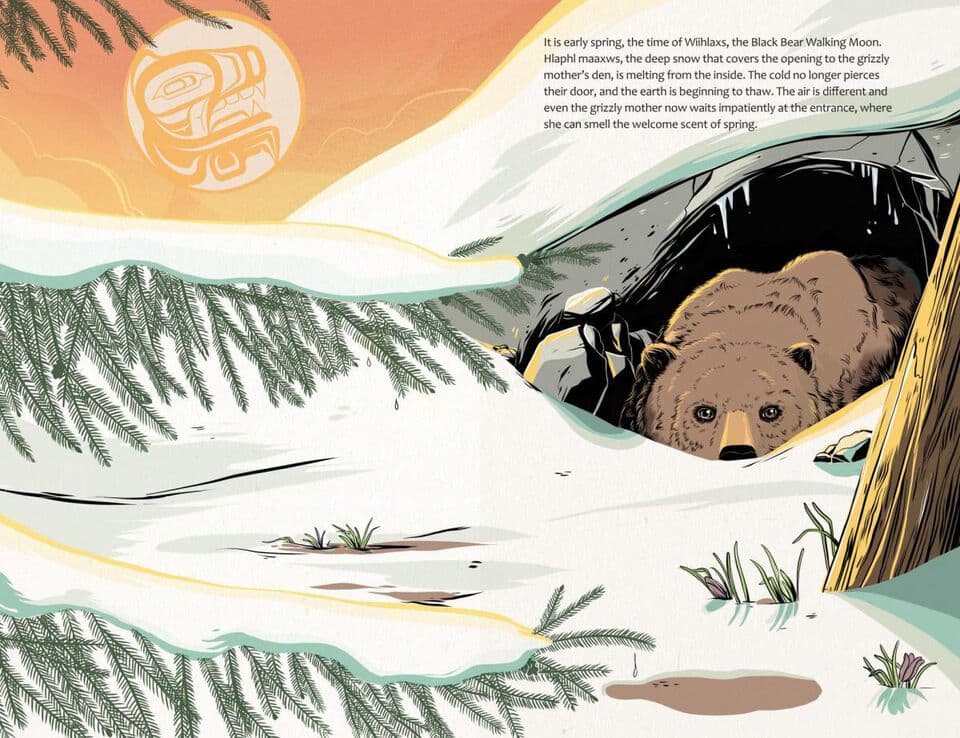




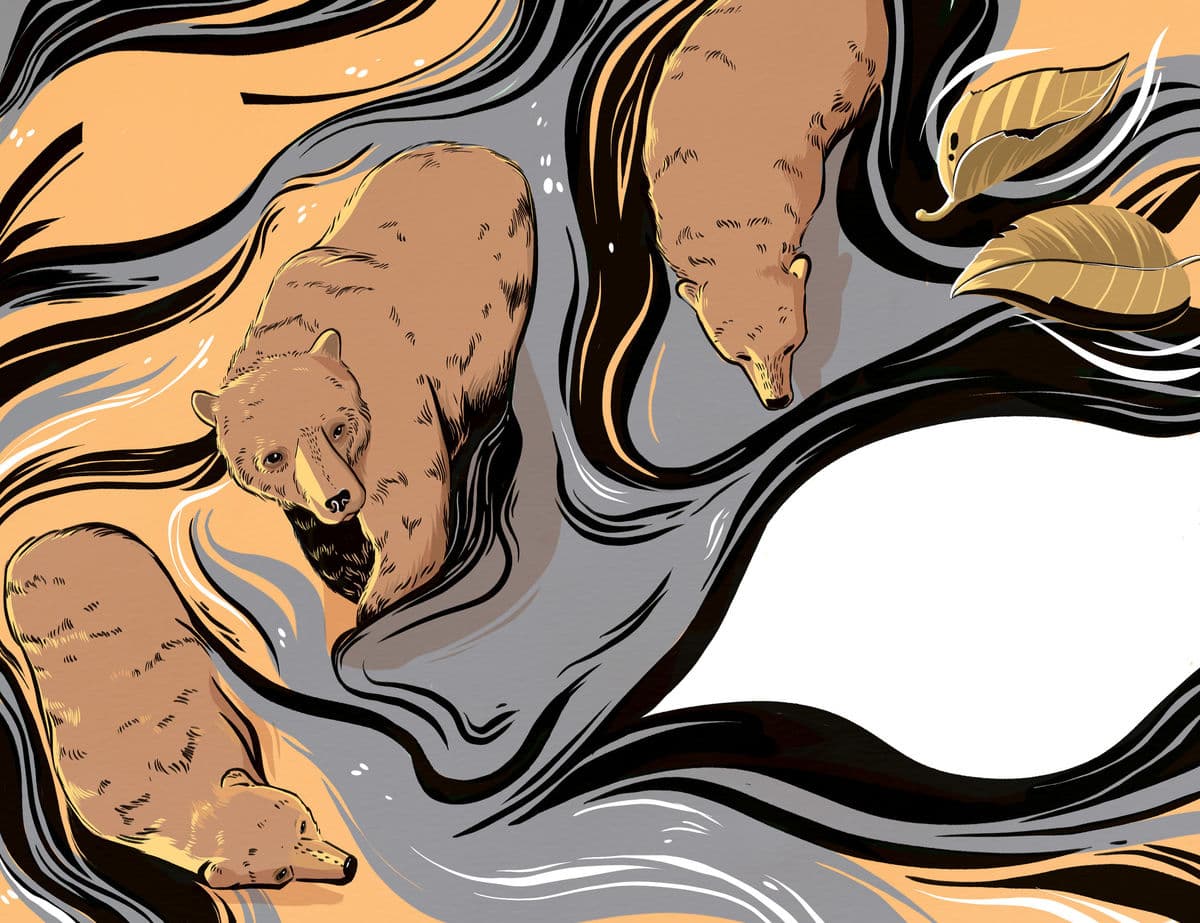
 Check reading comprehension of the following text:Last weekend was one of the most exciting weekends of my life. My friends and I decided to go on a hiking trip to the nearby forest. We started early in the morning, and as we walked, we chatted and laughed, enjoying the fresh air and the beautiful scenery. The sun was shining, and the birds were singing, and we felt free and adventurous. We were wearing comfortable shoes and carried backpacks with snacks and water. As we walked deeper into the forest, we suddenly heard a rustling sound in the bushes. We stopped and listened, and soon enough, a small black bear emerged from the trees. We froze, not knowing what to do, but our guide quickly instructed us to stay still and not to make any sudden movements. The bear seemed to be curious and sniffed around us, but eventually wandered off back into the forest. After the encounter with the bear, we were a bit shaken but also excited. We continued our hike, keeping a closer eye on our surroundings and being extra cautious. We talked about the bear encounter for the rest of the trip, and it became a story to tell to our friends and family back home. Even though it was a scary moment, it made the adventure even more memorable.This assessment is designed for Grade 6–7 students. It includes a listening activity about note-taking strategies and a reading comprehension activity based on a short story. Students will listen, read, and answer different types of questions to demonstrate their understanding and comprehension skills. Listening Section 🎧 The Secret Codes of Note-Taking Listen carefully and answer the questions. Multiple Choice 1. What should you do first? a) Write everything b) Relax and listen c) Ask a friend 2. Which words are important in note-taking? a) Heavy words b) Small words c) All words 3. Which word can you ignore? a) Dragon b) Cave c) The 4. What does “&” mean? a) Because b) And c) With 5. What does “w/” mean? a) With b) Without c) Very important Short Answer 6. Write one secret code from the lesson. ⸻ 7. Why do we use secret codes? ⸻ ⸻ Reading Section 📖 The Mystery at the Beach Read the story carefully and answer the questions. Multiple Choice 1. Who arrived at the beach early? a) Mia and Leo b) Mia, Leo, and Sara c) Sara and her family 2. Where did the friends walk? a) Between two large rocks b) Through the forest c) Into the sea 3. What did Mia and Sara collect? a) Stones b) Crabs c) Shells 4. Where did the children find shiny stones? a) In a cave b) Near the café c) Under the rocks 5. What did the friends find at the end of their search? a) Treasure b) Nothing c) A boat Short Answer 6. What did the children discover inside the cave? ⸻ 7. Why were the children happy at the end of the story? ⸻DATE: Monday 6th May, 2024 CLASS: Year 5 SUBJECT: History TOPIC: Traditional Occupations of the People in the State(II) Description of Various Occupations 1. Fishing: This occupation is commonly engaged in Nigeria by the people who lived along the coast, lagoon, Delta and big rivers. These people include the Awori in Lagos, the Ijaw and Itsekiri in Delta and Bayelsa States, the Ilaje in Ondo State, the Tiv and the Idoma in Benue State, The Nupe in Niger State. Tools used by the fishermen for catching fishes are traps of different types, net, paddle and dug outs. 2. Crop Farming: This is the main occupation of the Nigeria people who live in the forest region, such as the Yoruba, the Benin, the Urhobo, and the Igbira. These people engaged in the production of both food crops (maize, cassava, vegetables, yam and okra) and tree crops (rubber, palm oil and coconuts). The methods of their farm operation are land clearing, bush burning, harvesting. 3. Animal Husbandry: This involves rearing of animals. The are two types of animal husbandry, namely domestication of animals and cattle rearing. The Fulani engaged in cattle rearing, the Yoruba, the Efik and the Tiv engage in livestock keeping. The main livestock include goats, sheep, hens, rabbit and pigeon. 4. Leather Works: This is making of leather into sandals, bags, shoes, belt etc. This occupation is mostly engaged by the Hausa people. This occupation is made possible due to the presence of abundant cattle in the area. 5. Pottery: This traditional occupation is mostly engaged by women. It exists in the area where there is abundant of clay and it is also mostly practised by the Yoruba. The materials the potter used in the production of objects are clay, water and firewood.The Benin Kingdom is located in the southern forest of West Africa (Modern Nigeria) and formed by the Edo people, flourished from the 13th to 19th century CE. The capital also is called Benin, it was the hub of a trade network exclusively controlled by the king or Oba and which included relations with Portuguese traders who sought gold and slaves. Benin went into decline during the 18th century. The Benin territory is a mixture of rainforest, dry forest, and mangrove swamp. The heartland was a circle around the capital, also called Benin, extending some 60 kilometers in all directions and was ruled directly by the king. THE OBA OF BENIN This is the traditional ruler and the custodian of the culture of the Edo people and all Edoid people. THE FOLLOWING ARE THE PAST OBAS OF BENIN KINGDOM AND YEAR OF REIGNING. 1. Pre – Imperial Benin (1200- 1440) Eweka 1 (1200 -1235), Uwakhuahen (1235 – 1243), Ehenmihen (1243 – 1255). 2. Imperial Benin ((1440 – 1897) Ewuare the Great (1440 – 1473), Olua (1473 -1480), Ozolua(1483 – 1504). 3. Post- Imperial Benin (1914- Present) Eweka II(1914 – 1933) Akenzua II (1933 – 1978) Erediauwa (1976 – 2016)Ideas for more sustainable cities In 2020. over 56% of the world s population lived in urbon arcos. Cities are becoming more and more popular. But why isn't rural life as attractive as city life? The main reasons include work. lifestyle education and Sea th in cities there ore more fun things to see and do, like art galleries, concert hails and sports stadiums, There are a so better hospitals, transport na anueners However, as cities become more overcrowded, they get more polluted. For this reason, urban residents want to make their cities more sustainable. But how? Here are five ways: 1 New York's Central Pork is an island of green in a forest of skyscrapers. City parks like these provide people with a peaceful ploce to connect with nature. and o quiet area for exercise. 2 The moming and evering tush hours lare the busest times in the city. When people commute* to and from work or school, they need frequent, fast public transport, like trams and underground troins. Transport should also be as cheap as possible - and accessible to those with less mobility, like older people or wheelchair users. 3 Cities need pleasant places for people to meet and so shopping. So they should have more pedestr on zones, like in Copenhagen, Denmark, Copenhagen has the world's longest pedestrion street. It's almost 3.2 km long! Pedeston aones encourage ' people to go shopping on foot, instead of driving to shopping malls. 4 1 kes are often the quickest and most susta nable. way to get around, but mony city streets are frenetic and dangerous. Sa susto nable cities have cycle paths, as well as public bikes ond e scooters. They alto have hybrid buses and lots of car charging points. 55 Cities need to encourage residents to care about the environment, with fun ecological exhibitions" and events. The Supertree Gardens in Singapore are amazing, ver fal botanic gardens. They are 50 metres high and the /se solor energy. Eco-festivols - lIke Terroformo in Milan, Italy, and the Secret Solstice in Reykjavik, Iceland - use solar and geothermol energy. They're some of the most sustoinable festiois in the wortdImportance of ForestWho is the king of forest lion, tiger, elephant Figure 18-11 represents the amount of energy stored as organic material in each trophic level in an ecosystem. The pyramid shape of the diagram indicates the low percentage of energy transfer from one level to the next. On average, 10 percent of the total energy consumed in one trophic level is incor- porated into the organisms in the next. Why is the percentage of energy transfer so low? One reason is that some of the organisms in a trophic level escape being eaten. They eventually die and become food for decomposers, but the energy contained in their bodies does not pass to a higher trophic level. Even when an organism is eaten, some of the molecules in its body will be in a form that the consumer cannot break down and use. For example, a cougar cannot extract energy from the antlers, hooves, and hair of a deer. Also, the energy used by prey for cellu- lar respiration cannot be used by predators to synthesize new bio- mass. Finally, no transformation or transfer of energy is 100 percent efficient. Every time energy is transformed, such as during the reactions of metabolism, some energy is lost as heat. Limitations of Trophic Levels The low rate of energy transfer between trophic levels explains why ecosystems rarely contain more than a few trophic levels. Because only about 10 percent of the energy available at one trophic level is transferred to the next trophic level, there is not enough energy in the top trophic level to support more levels. Organisms at the lowest trophic level are usually much more abundant than organisms at the highest level. In Africa, for exam- ple, you will see about 1,000 zebras, gazelles, and other herbivores for every lion or leopard you see, and there are far more grasses and shrubs than there are herbivores. Higher trophic levels con- tain less energy, so, they can support fewer individuals.A population is a group of organisms that belong to the same species and live in a particular place at the same time. All of the bass living in a pond during a certain period of time make up a pop- ulation because they are isolated in the pond and do not interact with bass living in other ponds. The boundaries of a population may be imposed by a feature of the environment, such as a lake shore, or they can be arbitrarily chosen to simplify a study of the population. The humans shown in Figure 19-1 are part of the pop- ulation of a city. The properties of populations differ from those of individuals. An individual may be born, it may reproduce, or it may die. A population study focuses on a population as a whole—how many individuals are born, how many die, and so on. Population Size A population’s size is the number of individuals that the population contains. Size is a fundamental and important population property but can be difficult to measure directly. If a population is small and composed of immobile organisms, such as plants, its size can be determined simply by counting individuals. Often, though, individ- uals are too abundant, too widespread, or too mobile to be counted easily, and scientists must estimate the number of individuals in the population. Suppose that a scientist wants to know how many oak trees live in a 10 km2 patch of forest. Instead of searching the entire patch of forest and counting all the oak trees, the scientist could count the trees in a smaller section of the forest, such as a 1 km2 area. The scientist could then use this value to estimate the population of the larger area. SECTION 1 OBJECTIVES ● Describe the main properties that scientists measure when they study populations. ● Compare the three general patterns of population dispersion. ● Identify the measurements used to describe changing populations. ● Compare the three general types of survivorship curves. VOCABULARY population population density dispersion birth rate death rate life expectancy age structure survivorship curve FIGURE 19-1 A population can be widely distributed, as Earth’s human population is, or confined to a small area, as species of fish in a lake are. Copyright © by Holt, Rinehart and Winston. All rights reserved. 382 CHAPTER 19 If the small patch contains 25 oaks, an area 10 times larger would likely contain 10 times as many oak trees. A similar kind of sampling technique might be used to estimate the size of the pop- ulation shown in Figure 19-2. To use this kind of estimate, the sci- entist must assume that the distribution of individuals in the entire population is the same as that in the sampled group. Estimates of population size are based on many such assumptions, so all esti- mates have the potential for error. Population Density Population density measures how crowded a population is. This measurement is always expressed as the number of individuals per unit of area or volume. For example, the population density of humans in the United States is about 30 people per square kilome- ter. Table 19-1 shows the population sizes and densities of humans in several countries in 2003. These estimates are calculated for the total land area. Some areas of a country may be sparsely popu- lated, while other areas are very densely populated. Dispersion A third population property is dispersion (di-SPUHR-zhuhn). Dispersion is the spatial distribution of individuals within the popu- lation. In a clumped distribution, individuals are clustered together. In a uniform distribution, individuals are separated by a fairly con- sistent distance. In a random distribution, each individual’s location is independent of the locations of other individuals in the popula- tion. Figure 19-3 illustrates the three possible patterns of dispersion. Clumped distributions often occur when resources such as food or living space are clumped. Clumped distributions may also occur because of a species’ social behavior, such as when animals gather into herds or flocks. Uniform distributions may result from social behavior in which individuals within the same habitat stay as far away from each other as possible. For example, a bird may locate its nest so as to maximize the distance from the nests of other birds. These migrating wildebeests in East Africa are too numerous and mobile to be counted. Scientists must use sampling methods at several locations to monitor changes in the population size of the animals. FIGURE 19-2 TABLE 19-1 Population Size and Density of Some Countries Population size Population density Country (in millions) (in individuals/km2) China 1,289 135 India 1,069 325 United States 292 30 Russia 146 8 Japan 128 337 Mexico 105 54 Kenya 32 54 Australia 20 3 dispersion from the Latin dis-, meaning “out,” and spargere, meaning “to scatter” Word Roots and Origins Copyright © by Holt, Rinehart and Winston. All rights reserved. POPULATIONS 383 The social interactions of birds called gannets, which are shown in Figure 19-3b, result in a uniform distribution. Each gannet chooses a small nesting area on the coast and defends it from other gannets. In this way, each gannet tries to maximize its distance from all of its neighbors, which causes a uniform distribution of individuals. Few populations are truly randomly dispersed. Rather, they show degrees of clumping or uniformity. The dispersion pattern of a population sometimes depends on the scale at which the popu- lation is observed. The gannets shown in Figure 19-3b are uni- formly distributed on a scale of a few meters. However, if the entire island on which the gannets live is observed, the distribution appears clumped because the birds live only near the shore. POPULATION DYNAMICS All populations are dynamic—they change in size and composition over time. To understand these changes, scientists must know more than the population’s size, density, and dispersion. One important measure is the birth rate, the number of births occur- ring in a period of time. In the United States, for example, there are about 4 million births per year. A second important measure is the death rate, or mortality rate, which is the number of deaths in a