Loading...


Form three exam
Quiz by Mwayi Chakhala
Customize this quiz to suit your class
Instantly translate to 100+ languages
Tag the questions with any skills you have. Your dashboard will track each student's mastery of each skill.
Give this quiz to my class
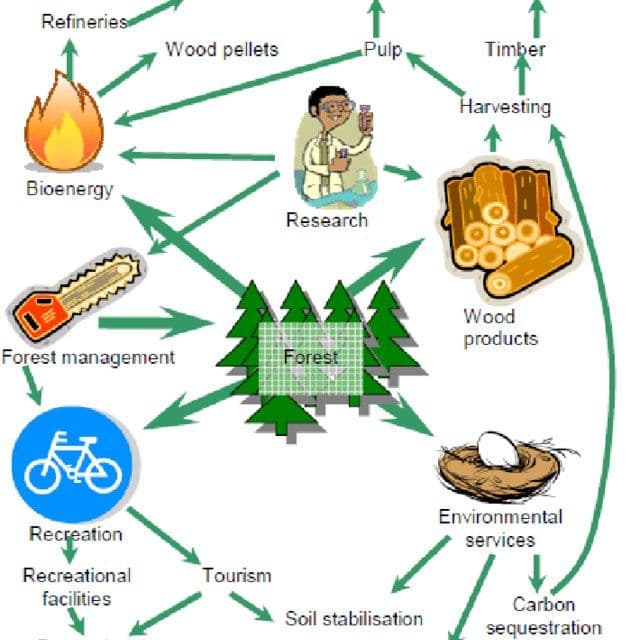



 A symbiosis (SIM-bie-OH-sis) is a close, long-term relationship between two organisms. Three examples of symbiotic relation- ships include: parasitism, mutualism, and commensalism. Parasitism (PAR-uh-SIET-IZ-UHM) is a relationship in which one indi- vidual is harmed while the other individual benefits. Mutualism (MYOO-choo-uhl-IZ-uhm) is a relationship in which both organisms derive some benefit. In commensalism (kuh-MEN-suhl-IZ-uhm), one organism benefits, but the other organism is neither helped nor harmed. Parasitism Parasitism is similar to predation in that one organism, called the host, is harmed and the other organism, called the parasite, benefits. However, unlike many forms of predation, parasitism usually does not result in the immediate death of the host. Generally, the parasite feeds on the host for a long time rather than kills it. Parasites such as aphids, lice, leeches, fleas, ticks, and mosquitoes that remain on the outside of their host are called ectoparasites. Parasites that live inside the host’s body are called endoparasites. Familiar endoparasites are heart- worms, disease-causing protists, and tapeworms, such as the one shown in Figure 20-5. Natural selection favors adaptations that allow a parasite to exploit its host efficiently. Parasites are usually specialized anatomically and physiologically for a par- asitic lifestyle. Parasites can have a strong negative impact on the health and reproduction of the host. Consequently, hosts have evolved a variety of defenses against parasites. Skin is an important defense that prevents most parasites from entering the body. Tears, saliva, and mucus defend openings through which parasites could pass, such as the eyes, mouth, and nose. Finally, the cells of the immune system may attack para- sites that get past these defenses. parasite from the Latin word parasitus, meaning “one who eats at the table of another” Word Roots and Origins Tapeworms are endoparasites that can grow to 20 m or greater in length. Tapeworms are so specialized for a parasitic lifestyle that they do not have a digestive system. They live in the host’s small intestine and absorb nutrients directly through their skin. Tapeworms reproduce by producing egg-filled chambers, which are released in their host’s feces to be unknowingly picked up by a future host. FIGURE 20-5 Copyright © by Holt, Rinehart and Winston. All rights reserved. 404 CHAPTER 20 Mutualism Mutualism is a relationship in which two species derive some benefit from each other. Some mutualistic relation- ships are so close that neither species can survive without the other. An example of mutualism, shown in Figure 20-6, involves ants and some species of Acacia plants. The ants nest inside the acacia’s large thorns and receive food from the acacia. In turn, the ants protect the acacia from herbi- vores and cut back competing vegetation. Pollination is one of the most important mutualistic rela- tionships on Earth. Animals such as bees, butterflies, flies, beetles, bats, and birds that carry pollen between flowering plants are called pollinators. A flower is a lure for pollina- tors, which are attracted by the flower’s color, pattern, shape, or scent. The plant usually provides food—in the form of nectar or pollen—for its pollinators. As a pollinator feeds in a flower, it picks up a load of pollen, which it may then carry to other flowers of the same species. Commensalism Commensalism is an interaction in which one species benefits and the other species is not affected. Species that scavenge for leftover food items are often considered commensal species. However, a relationship that appears to be commensalism may simply be mutu- alism in which the mutual benefits are not apparent. An example of a commensal relationship is the relationship between cattle egrets and Cape buffaloes in Tanzania. The birds feed on small animals such as insects and lizards that are forced out of their hiding places by the movement of the buffaloes through the grass. Occasionally, the cattle egrets also feed on ectoparasites from the hide of the buffaloes, but the buffaloes gen- erally do not benefit from the presence of the egrets.Google Form 2 (After the Class) Title: Post-Class Learning Check – Introduction to International Curriculum Description: This quiz is designed to assess your understanding of Session 1. Q1. An international curriculum is designed primarily to: ○ Increase homework ○ Replace national education systems ✅ Prepare learners for global citizenship and international education ○ Reduce classroom teaching Q2. Which of the following is NOT an international curriculum? ○ Cambridge International ○ IB ○ Pearson Edexcel ✅ CBSE Q3. Why did the International Baccalaureate originally develop? ○ To replace national curricula ○ To introduce online learning ✅ To provide a common qualification for internationally mobile students ○ To reduce examinations Q4. Which IB programme was introduced first? ○ PYP ○ MYP ✅ DP ○ CP Q5. The IB currently offers _____ programmes. ○ Two ○ Three ✅ Four ○ Five Q6. What is the major difference between a national curriculum and the IB curriculum? ○ IB teaches fewer subjects. ○ IB is easier. ✅ IB focuses on inquiry, conceptual understanding, and international-mindedness. ○ IB has no assessments. Q7. Why are there more than 8,900 IB programmes but only 6,200 IB World Schools? ○ Every programme is counted twice. ○ Students are counted as programmes. ✅ Many schools offer more than one IB programme. ○ Different countries count programmes differently. Q8. Which statement best explains the purpose of the IB? ○ To prepare students only for university entrance. ○ To prepare students only for employment. ✅ To develop internationally minded, lifelong learners. ○ To prepare students only for examinations. Q9. Match the programme with the age group. Programme Age Group PYP 3–12 MYP 11–16 DP 16–19 CP 16–19 (Use Google Forms "Multiple Choice Grid" or "Matching" add-on if available.) Q10. Which statement best describes your learning after today's session? ○ I still have many doubts. ○ I understood some concepts. ○ I have a good understanding of international curriculum and the IB. ○ I am confident in explaining the differences between national and international curricula. Bonus Reflection Question (Optional – Short Answer) In one or two sentences, describe one feature of the IB curriculum that you would like to adopt in your own teaching practice and explain why.Science Exam Parts of the Atom: The atom consists of a nucleus at its center, containing protons (positively charged) and neutrons (neutral), while electrons (negatively charged) orbit in electron shells around the nucleus. Atomic Number: The atomic number of an element is the number of protons in its nucleus. It defines the element and determines its place on the periodic table. Properties of Metals: Metals have properties like conductivity, malleability (can be flattened into sheets), and ductility (can be drawn into wires). Elements, Compounds, and Mixtures: Elements consist of only one type of atom. Compounds are made of two or more different elements chemically bonded. Mixtures are combinations of substances that are physically mixed but not chemically bonded. Homogeneous and Heterogeneous Mixtures: Homogeneous mixtures have a uniform composition (e.g., saltwater), while heterogeneous mixtures have different phases (e.g., oil and water). Changes of State: Changes like melting, evaporation, and condensation are examples of physical changes of state. Chemical and Physical Properties: Chemical properties describe how a substance can change to form a new substance, while physical properties are characteristics like color, texture, and state (solid, liquid, gas). Physical and Chemical Change: A physical change involves the appearance or state of matter, but the substance remains the same. A chemical change involves the formation of new substances. Chemical Equations: Chemical reactions can be represented with chemical equations that show reactants (what you start with) and products (what is formed). Chemical Formulas: Chemical formulas represent the composition of compounds. For example, NaHCO3 is sodium bicarbonate, consisting of one sodium (Na), one hydrogen (H), one carbon (C), and three oxygen (O) atoms. Energy: Types of Energy: Energy can be kinetic (related to motion), potential (stored energy), thermal (heat energy), electrical, chemical, and more. Units of Energy: Common units of energy include joules (J) and calories (cal). Law of Conservation of Energy: Energy cannot be created or destroyed, only transferred or transformed from one form to another. Energy Transfer and Transformation: Energy moves from one object to another, changing forms along the way. Useful and Waste Energy: Useful energy is what can be harnessed and used for a specific purpose. Waste energy is energy that is not used and is often lost. Energy Flow Diagrams: These diagrams show how energy is transferred or transformed within a system. Energy Efficiency: Efficiency is a measure of how much useful energy is obtained from a system. It can be calculated using the equation: Efficiency = (Useful Energy Output / Total Energy Input) x 100%. Fossil Fuels and Renewable Energy: Fossil fuels, like coal, oil, and natural gas, are non-renewable sources of energy. Renewable energy sources include solar, wind, and hydroelectric power. Variables: Independent Variable: The variable that is manipulated or changed in an experiment. Dependent Variable: The variable that is measured or observed and is affected by changes in the independent variable. Controlled Variables: Factors that are kept constant to ensure a fair and accurate experiment.Key Word Definition
Aid Assistance in the form of grants or loans at below market rates. For example, the UK provided aid to Nepal after the 2015 earthquake to help with reconstruction efforts.
Barriers to Trade Government constraints on the flow of international goods and services, such as tariffs and quotas. For example, the European Union imposes tariffs on certain agricultural products to protect its farmers.
BRICS An acronym for an association of five major emerging nations: Brazil, Russia, India, China, and South Africa. For example, BRICS nations often meet to discuss economic cooperation and development strategies.
Demographic Aging The rise in the median age of a population. For example, Japan is experiencing demographic aging, with a significant increase in the elderly population.
Economic Core Region The most highly developed region(s) in a country. For example, London is considered an economic core region in the UK due to its high level of development and economic activity.
GNP (Gross National Product) GDP plus overseas earnings, also known as GNI (Gross National Income). For example, the GNP of the United States includes the value of goods and services produced domestically and the income earned by its citizens abroad.
HIC (Higher Income Country) A country with a high level of income and development. For example, Germany is classified as a higher income country due to its high GDP per capita and advanced infrastructure.
NEE (Newly Emerging Economy) A country that is experiencing rapid economic growth and industrialisation. For example, China is an example of a newly emerging economy, having rapidly industrialised and grown economically over the past few decades.
LIC (Lower Income Country) A country with a low level of income and development. For example, Malawi is considered a lower income country, with a low GDP per capita and limited access to healthcare and education.
GDHI (Gross Disposable Household Income) The amount of money that households have available for spending and saving after taxes and social contributions. For example, in the UK, the GDHI varies significantly between regions, with London having one of the highest levels.
Gini Coefficient A measure of income inequality within a population, ranging from 0 (perfect equality) to 100 (perfect inequality). For example, South Africa has a high Gini coefficient, indicating significant income inequality within the country.
Trade Unions Organisations that promote trade between member countries, such as the East African Community (EAC). For example, the East African Community (EAC) works to promote economic integration and trade among its member states.
Fair Trade A movement aimed at helping producers in developing countries achieve better trading conditions and promote sustainability. For example, Fairtrade coffee ensures that farmers receive a fair price for their product and work under safe conditions.
FDI (Foreign Direct Investment) Investment made by a company or individual in one country in business interests in another country. For example, Toyota's investment in manufacturing plants in the UK is an example of foreign direct investment.
Debt Relief The partial or total remission of debts, especially those owed by developing countries to external creditors. For example, the Heavily Indebted Poor Countries (HIPC) initiative provides debt relief to eligible countries to help them achieve sustainable development.
International Aid Voluntary transfer of resources from one country to another, often in the form of financial assistance, goods, or services. For example, the UK provides international aid to various countries through its Department for International Development (DFID).
Top-Down Development Large-scale development projects led by national governments or international organisations. For example, the construction of the Three Gorges Dam in China is an example of a top-down development project.
Bottom-Up Development Small-scale development projects led by local communities or NGOs, focusing on the needs of the poorest and most vulnerable. For example, WaterAid's installation of hand pumps in rural villages in Africa is an example of a bottom-up development project.
Urbanisation The increase in the proportion of people living in urban areas compared to rural areas. For example, rapid urbanisation in India has led to the growth of megacities like Mumbai and Delhi.
Geopolitics The study of the effects of geography (human and physical) on international politics and relations. For example, the geopolitics of the Arctic region involves disputes over territorial claims and access to natural resources.
Quality of Life The general well-being of individuals and societies, outlining negative and positive features of life. For example, Scandinavian countries are often ranked high in quality of life due to their strong social welfare systems and high levels of happiness.
Poverty Cycle A set of factors or events by which poverty, once started, is likely to continue unless there is outside intervention. For example, lack of education and healthcare can trap families in a poverty cycle, making it difficult for future generations to improve their living standards.
Sustainable Development Economic development that is conducted without depletion of natural resources. For example, the use of renewable energy sources like wind and solar power is a key aspect of sustainable development.
Humanitarian Aid Material or logistical assistance provided for humanitarian purposes, typically in response to crises including natural disasters and man-made disaster. For example, humanitarian aid was provided to Haiti after the devastating earthquake in 2010 to help with immediate relief efforts.
Economic Growth An increase in the production of goods and services in an economy over a period of time. For example, China's economic growth over the past few decades has lifted millions of people out of poverty.
Social Indicators Measures that describe the well-being of individuals or communities, such as health, education, and income. For example, life expectancy and literacy rates are common social indicators used to assess development.
Environmental Sustainability Responsible interaction with the environment to avoid depletion or degradation of natural resources and allow for long-term environmental quality. For example, practices like recycling and conservation of natural habitats contribute to environmental sustainability.
Infrastructure The basic physical and organisational structures and facilities needed for the operation of a society or enterprise. For example, good infrastructure, such as roads, bridges, and schools, is essential for economic development.
Globalisation The process by which businesses or other organisations develop international influence or start operating on an international scale. For example, the globalisation of technology companies like Apple and Google has led to their products being available worldwide.
Microfinance Financial services provided to low-income individuals or groups who are typically excluded from traditional banking. For example, microfinance institutions like Grameen Bank provide small loans to entrepreneurs in developing countries to help them start or expand their businesses.
Plant cells have three kinds of structures that are not found in animal cells and that are extremely important to plant survival: plastids, central vacuoles, and cell walls. PLANT CELLS Most of the organelles and other parts of the cell just described are common to all eukaryotic cells. However, plant cells have three additional kinds of structures that are extremely important to plant function: cell walls, large central vacuoles, and plastids. To understand why plant cells have structures not found in ani- mal cells, consider how a plant’s lifestyle differs from an animal’s. Plants make their own carbon-containing molecules directly from carbon taken in from the environment. Plant cells take carbon diox- ide gas from the air, and in a process called photosynthesis, they convert carbon dioxide and water into sugars. The organelles and structures in plant cells are shown in Figure 4-21. SECTION 4 OBJECTIVES ● List three structures that are present in plant cells but not in animal cells. ● Compare the plasma membrane, the primary cell wall, and the secondary cell wall. ● Explain the role of the central vacuole. ● Describe the roles of plastids in the life of a plant. ● Identify features that distinguish prokaryotes, eukaryotes, plant cells, and animal cells. VOCABULARY cell wall central vacuole plastid chloroplast thylakoid chlorophyll Chloroplast Golgi apparatus Mitochondrion Cell membrane Nucleolus Nucleus Cytoskeleton Rough endoplasmic reticulum Pore Smooth endoplasmic reticulum Central vacuole Ribosome Cell wall In addition to containing almost all of the types of organelles that animal cells contain, plant cells contain three unique features. Those features are the cell wall, the central vacuole, and plastids, such as chloroplasts. FIGURE 4-21 Copyright © by Holt, Rinehart and Winston. All rights reserved. 88 CHAPTER 4 CELL WALL The cell wall is a rigid layer that lies outside the cell’s plasma membrane. Plant cell walls contain a carbohydrate called cellulose. Cellulose is embedded in a matrix of proteins and other carbohy- drates that form a stiff box around each cell. Pores in the cell wall allow water, ions, and some molecules to enter and exit the cell. Primary and Secondary Cell Walls The main component of the cell wall, cellulose, is made directly on the surface of the plasma membrane by enzymes that travel along the membrane. These enzymes are guided by microtubules inside the plasma membrane. Growth of the primary cell wall occurs in one direction, based on the orientation of the microtubules. Other components of the cell wall are made in the ER. These materials move in vesicles to the Golgi and then to the cell surface. Some plants also produce a secondary cell wall. When the cell stops growing, it secretes the secondary cell wall between the plasma membrane and the primary cell wall. The secondary cell wall is very strong but can no longer expand. The wood in desks and tabletops is made of billions of secondary cell walls. The cells inside the walls have died and disintegrated. CENTRAL VACUOLE Plant cells may contain a reservoir that stores large amounts of water. The central vacuole is a large, fluid-filled organelle that stores not only water but also enzymes, metabolic wastes, and other materials. The central vacuole, shown in Figure 4-22, forms as other smaller vacuoles fuse together. Central vacuoles can make up 90 percent of the plant cell’s volume and can push all of the other organelles into a thin layer against the plasma membrane. When water is plentiful, it fills a plant’s vacuoles. The cells expand and the plant stands upright. In a dry period, the vacuoles lose water, the cells shrink, and the plant wilts. Other Vacuoles Some vacuoles store toxic materials. The vacuoles of acacia trees, for example, store poisons that provide a defense against plant-eating ani- mals. Tobacco plant cells store the toxin nicotine in a storage vacuole. Other vacuoles store plant pigments, such as the colorful pigments found in rose petals. The central vacuole occupies up to 90 percent of the volume of some plant cells. The central vacuole stores water and helps keep plant tissue firm. FIGURE 4-22 Central vacuole Nucleus Chloroplast Copyright © by Holt, Rinehart and Winston. All rights reserved. CELL STRUCTURE AND FUNCTION 89 PLASTIDS Plastids are another unique feature of plant cells. Plastids are organelles that, like mitochondria, are surrounded by a double mem- brane and contain their own DNA. There are several types of plastids, including chloroplasts, chromoplasts, and leucoplasts. Chloroplasts Chloroplasts use light energy to make carbohydrates from carbon dioxide and water. As Figure 4-23 shows, each chloroplast contains a system of flattened, membranous sacs called thylakoids. Thylakoids contain the green pigment chlorophyll, the main mole- cule that absorbs light and captures light energy for the cell. Chloroplasts can be found not only in plant cells but also in a wide variety of eukaryotic algae, such as seaweed. Chloroplast DNA is very similar to the DNA of certain photosyn- thetic bacteria. Plant cell chloroplasts can arise only by the divi- sion of preexisting chloroplasts. These facts may suggest that chloroplasts are descendants of ancient prokaryotic cells. Like mitochondria, chloroplasts are also thought to be the descendants of ancient prokaryotic cells that were incorporated into plant cells through a process called endosymbiosis. Chromoplasts Chromoplasts are plastids that contain colorful pigments and that may or may not take part in photosynthesis. Carrot root cells, for example, contain chromoplasts filled with the orange pigment carotene. Chromoplasts in flower petal cells contain red, purple, yellow, or white pigments. Other Plastids Several other types of plastids share the general features of chloro- plasts but differ in content. For example, amyloplasts store starch. Chloroplasts, chromoplasts, and amyloplasts arise from a common precursor, called a proplastid. Thylakoid Inner membrane Outer membrane chloroplast from the Greek chloros, meaning “pale green,” and plastos, meaning “formed” Word Roots and Origins A chloroplast captures energy from sunlight and uses that energy to convert carbon dioxide and water into sugar and other carbohydrates. FIGURE 4-23 Copyright © by Holt, Rinehart and Winston. All rights reserved. 90 CHAPTER 4 COMPARING CELLS All cells share common features, such as a cell membrane, cyto- plasm, ribosomes, and genetic material. But there is a high level of diversity among cells, as shown in Figure 4-24. There are signifi- cant differences between prokaryotes and eukaryotes. In addition, plant cells have features that are not found in animal cells. Prokaryotes Versus Eukaryotes Prokaryotes differ from eukaryotes in that prokaryotes lack a nucleus and membrane-bound organelles. Prokaryotes have a region, called a nucleoid, in which their genetic material is concen- trated. However, prokaryotes lack an internal membrane system. Plant Cells Versus Animal Cells Three unique features distinguish plant cells from animal cells. One is the production of a cell wall by plant cells. Plant cells contain a large central vacuole. Third, plant cells contain a variety of plastids, which are not found in animal cells. Cell walls, central vacuoles, and plastids are unique features that are important to plant function. 1. Identify three unique features of plant cells. 2. List the differences between the plasma mem- brane, the primary cell wall, and the secondary cell wall. 3. Identify three functions of plastids. 4. Name three things that may be stored in vacuoles. 5. Describe the features that distinguish prokary- otes from eukaryotes and plant cells from animal cells. CRITICAL THINKINGIons Ions are charged substances that have formed through the gain or loss of electrons. Cations form from the loss of electrons and have a positive charge while anions form through the gain of electrons and have a negative charge. Cation Formation Cations are the positive ions formed by the loss of one or more electrons. The most commonly formed cations of the representative elements are those that involve the loss of all of the valence electrons. Consider the alkali metal sodium (Na) . It has one valence electron in the n=3 energy level. Upon losing that electron, the sodiu ion now has an octet of electrons from the second energy level and a charge of 1+ . The electron arrangement of the sodium ion is now the same as that of the noble gas neon. Consider a similar process with magnesium and aluminum. In this case, the magnesium atom loses its two valence electrons in order to achieve the same arrangement as the noble gas neon and a charge of 2+ . The aluminum atom loses its three valence electrons to have the same electron arrangement as neon and a charge of 3+ . For representative elements under typical conditions, three electrons is usually the maximum number that will be los. Representative elements will not lose electrons beyond their valence because they would have to "break" the octet of the previous energy level which provides stability to the ion. Anions Anions are the negative ions formed from the gain of one or more electrons. When nonmetal atoms gain elections, they often do so until their outermost principal energy level achieves an octet. For fluorine, which has an electron arrangement of (2, 7), it only needs to gain one electron to have the same electron arrangement as neon. Forming an octet (eight electrons in the outer shell) provides stability to the atom. Fluorine will gain one electron and have a charge of 1− . The electron arrangement of the fluoride ion (2, 8) will also change to reflect the gain of an electron. Oxygen has an electron arrangement of (2, 6) and needs to gain two electrons to fill the n=2 energy level and achieve an octet of electrons in the outermost shell. The oxide ion will have a charge of 2− as a result of gaining two electrons. Under typical conditions, three electrons is the maximum that will be gained in the formation of anions. Subatomic Particles in an Ion Since ions form from the gain or loss of electrons, we can also look at the number of subatomic particles (protons, neutrons, and electrons) found in an ion. Remember that the number of protons determines the identity of the element and will not change in a chemical process. Example 2.5.1 How many protons, neutrons, and electrons in a single oxide (O2−) ion? Solution Oxygen has the atomic number 8 so both the atom and the ion will have 8 protons. The average atomic mass of oxygen is 16. Therefore, there will be 8 neutrons (atomic mass−atomic number=neutrons) . A neutral oxygen atom would have 8 electrons. However, the anion has gained two electrons so O2− has 10 electrons. We can also use information about the subatomic particles to determine the identity of an ion. Example 2.5.2 An ion with a 2+ charge has 18 electrons. Determine the identity of the ion. Solution If an ion has a 2+ charge then it must have lost electrons to form the cation. If the ion has 18 electrons and the atom lost 2 to form the ion, then the neutral atom contained 20 electrons. Since it was neutral, it must also have had 20 protons. Therefore the element is calcium. Polyatomic Ions A polyatomic ion is an ion composed of two or more atoms that have a charge as a group (poly = many). The ammonium ion (see figure below) consists of one nitrogen atom and four hydrogen atoms. Together, they comprise a single ion with a 1+ charge and a formula of NH+4 . The hydroxide ion (see figure below) contains one hydrogen atom and one oxygen atom with an overall charge of 1− . The carbonate ion (see figure below) consists of one carbon atom and three oxygen atoms and carries an overall charge of 2− . The formula of the carbonate ion is CO2−3 . The atoms of a polyatomic ion are tightly bonded together and so the entire ion behaves as a single unit. The figures below show several examples. Soult Screenshot 2-2-1.png Figure 2.5.1 : The ammonium ion (NH+4) is a nitrogen atom (blue) bonded to four hydrogen atoms (white). Soult Screenshot 2-2-2.png Figure 2.5.2 : The hydroxide ion (OH−) is an oxygen atom (red) bonded to a hydrogen atom. Soult Screenshot 2-2-3.png Figure 2.5.3 : The carbonate ion (CO2−3) is a carbon atom (black) bonded to three oxygen atoms. The table below lists a number of polyatomic ions by name and by structure. The heading for each column indicates the charge on the polyatomic ions in that group. Note that the vast majority of the ions listed are anions - there are very few polyatomic cations. 1− 2− 3− 1+ Table 2.5.1 : Common Polyatomic Ions acetate, CH3COO− carbonate, CO2−3 arsenate, AsO3−3 ammonium, NH+4 bromate, BrO−3 chromate, CrO2−4 phosphite, PO3−3 chlorate, ClO−3 dichromate, Cr2O2−7 phosphate, PO3−4 chlorite, ClO−2 hydrogen phosphate, HPO2−4 cyanide, CN− oxalate, C2O2−4 dihydrogen phosphate, H2PO−4 peroxide, O2−2 hydrogen carbonate, HCO−3 silicate, SiO2−3 hydrogen sulfate, HSO−4 sulfate, SO2−4 hydrogen sulfide, HS− sulfite, SO2−3 hydroxide, OH− hypochlorite, ClO− nitrate, NO−3 nitrite, NO−2 perchlorate, ClO−4 permanganate, MnO−4 The vast majority of polyatomic ions are anions, many of which end in -ate or -ite. Notice that in some cases such as nitrate (NO−3) and nitrite (NO−2) , there are multiple anions that consist of the same two elements. In these cases, the difference between the ions is the number of oxygen atoms present, while the overall charge is the same. As a class, these are called oxyanions. When there are two oxyanions for a particular element, the one with the greater number of oxygen atoms gets the -ate suffix, while the one with the fewer number of oxygen atoms gets the -ite suffix. The four oxyanions of chlorine are shown below, which also includes the use of the prefixes hypo- and per-. ClO− , hypochlorite ClO−2 , chlorite ClO−3 , chlorate ClO−4 , perchlorate Not your usual ion Soult Screenshot 2-2-4.png "Drink you milk. It's good for your bones." We're told this from early childhood, and with good reason. Milk contains a good supply of calcium, part of the structure of bone. However, there are two other ionic components of hydroxyapatite, the mineral component. Phosphate ion and hydroxide ion make up the remainder of the inorganic material in bone. News You Can Use Bone is a very complex structure. It is composed of protein (mainly collagen), hydroxyapatite (a calcium-phosphate-hydroxide mixture), some other minerals, and contains 10 - 20% water. The calcium/phosphate ratios are not stoichiometric, but vary somewhat from one portion of bone to the next. Bones are very strong but will break under enough stress. Regular exercise and proper nutrition help to increase bone strength. Watch a video about bone structure at http://www.youtube.com/watch?v=d9owEvYdouk Nitrate is an anion with a complex bonding structure. Major sources for this ion in drinking water are runoff from fertilizer, septic tank leakage, sewage, and natural deposits. High concentrations of nitrates represent a significant health hazard, especially to infants. The nitrate in the body is converted to nitrite, which then binds to hemoglobin. This binding decreases the ability of hemoglobin to transport oxygen, thus depriving the cells of the O2 needed for proper functioning. Cyanide production is widespread throughout nature. Forest fires will produce significant amounts of cyanide. Many plants contain cyanide, and it is produced by a number of bacteria, algae, and fungi. Cyanide is used industrially in metal finishing, iron and steel mills, and in organic synthesis processes. This material is also an important component for the refining of precious metals. Formation of a complex between cyanide and gold allows extraction of this metal from a mixture.Classification of plants • Plants can be classified as cultivated and wild plants. • Both cultivated and wild plants are very useful to people, animals and the environment. 1. Cultivated plants: • Cultivated plants are plants grown by people for selling. • They can be grown in the field, vegetable garden, home garden and orchard. Classification of plants 2. Wild plants Wild plants are plants that grow on their own outside the garden, orchard or field. They have many uses such as: • Food for people and animals • Shelter • Source of fuel in form of firewood. • Examples include, grasses, msasa, yellow wood, mahogany, mopane Plant Nutrition • The presence of plant nutrients in the soil make them grow well. • The three major plant nutrients are nitrogen, phosphorus and potassium. Sources of plant nutrients • The source for plant nutrients are grouped into organic and inorganic sources. Organic sources of plant nutrients • These are found in nature. • They are natural materials such, decayed plant and animal matter which include: • Animal manure from cattle, sheep, goats, poultry and pigs. • Green manure • Legume crops like beans, peas and groundnuts. • Humus • These material sources may also be called natural fertilizers. Inorganic sources of plant nutrients • These are sources of plant nutrients made by people in industries. They include: • Compound fertilizers like compound A, B, C and D. • These have two or more nutrients. • Straight fertilizers like ammonium nitrate, single super phosphate and urea. • A straight fertilizer supplies a single or more nutrient to the crop. A straight fertilizer A Compound fertilizer Sources of N,P,K • Ammonium nitrate and Urea- contain nitrogen Double super Phosphate, Single super phosphate-contain phosphorus • Muriate of Potash contains Potassium 2 . Compound fertilisers -have two or three of the three major plant nutrients (N.P.K). N-nitrogen P-phosphorus K-potassium Examples Compound D Wednesday 17 May 2023 Revision exercise (Plant nutrition) 1 .Name the 3 plant nutrients needed by plants. 2. What are the 2 groups of plant nutrients sources? 3. Give 3 examples of organic sources of plant nutrients. 4. What is a straight fertilizer? 5. Compound fertilizer supplies ……………or ………………. Nutrients. Vegetable crops • A vegetable is any part of a plant that is eaten by humans as food part of a meal. • Vegetables are grouped and named according to the part that is eaten. • These are leaf, root, fruit, flower, bulb, tuber and legume vegetables. Leaf vegetables Types of veg Legume etable cropsvegetables Fruit vegetables Root, bulb and tuber Flower vegetables Cabbage Peas Tomato Root: carrots Cauliflower Rape Green beans Pepper Parsnip broccoli Spinach Melons Beetroot Tsunga Cucumber Bulb: onion Lettuce Squash Garlic kale Egg plant Leek chillies Tuber: Irish potato Wednesday 31 May 2023 Vegetable crops 1. What is a vegetable? 2. Which one is not a vegetable from the list below? a. Covo B. cabbage C. wheat D. tomato 3. Choose a vegetable which is not a fruit vegetable. a. tomato B. pepper C. kale D. egg plant 4. From which pair of vegetables do we eat the flower? A. cauliflower and garlic B. broccoli and cauliflower C. broccoli and rape D. cauliflower and pepper 5. Give one example of a vegetable belonging to each of the following groups. a. root b. legume c. bulb 6. Name any 5 groups of vegetable classification according to the parts eaten. Growing leaf vegetables • Although there are many types of vegetables, the leaf, fruit and bulb vegetables are widely grown. • Leaf vegetables form the greater part of vegetable crops. • Leaf vegetables belong to a family called brassica. • Brassicas include cabbages, lettuce, spinach, covo and many others. • Each brassica family has got its own varieties called cultivar. • They usually grow under the same climatic conditions and are affected by the same pests and diseases. • The selection of a variety depends on the following : The intended use of the vegetable, for example, salad, stew or snacks. Days taken to mature. Disease resistant Season of the year Seedbed preparation • Brassica vegetables are usually raised in seedbeds. • The seedbeds are prepared by: • Marking the position of the bed 1 meter in width by any length using a tape measure, hammer and pegs. • Digging a seedbed to a depth of 25 to 30cm using a hoe. • Breaking lumps of soil using a garden rake. Soil requirements • Brassicas need: • Well drained soils. • Fertile soil for good growth • Slightly acidic soils (pH 5.5-6) Climatic requirements • Brassicas need cool to warm temperatures. • Very low temperatures cause cabbages to flower which is called bolting. • Brassicas can be grown throughout the year. Seedbed preparation • Brassica seedlings are usually raised in seedbeds. • A seedbed is prepared by: Marking the position of the bed 1 metre in width by any length using a tape measure, hammer and pegs. Digging a seedbed to depth of 25 to 30 cm using a hoe. Breaking lumps of soil using a garden rake. This is done in order to have a fine tilth and improve soil to seed contact. Making ridges that a 15cm high. Apply 3 to 5kg/m² of well decomposed manure. 60 to 100g/m² of compound fertilizer can be added into the soil. Management of vegetable crops • After transplanting the seedlings, the seedlings need to be looked after. (a)Controlling weeds: all vegetables must be kept weed free. • This is done either by hand pulling weeds or shallow cultivation using a hand fork. (b) Pest control: common pests that affect the brassicas are aphids and diamond black moth larva. • Aphids are small green insects that suck the juice from the leaves leaving them with curls. • They are controlled by spraying malathion using the instructions on the label. (c) Disease control: bacterial diseases are common in brassicas. • Common diseases are black rot and soft rot, especially in cabbages. • These are controlled by: Crop rotation Early planting Planting resistant cultivars (d) Top dressing: brassicas are top dressed using Ammonium Nitrate at a rate of 2.5g per plant. • Top dressing is usually done 3 or 4 weeks after germination. FIELD CROPS • Field crops are crops that are grown on a large piece of land. • Example of field crops: Maize Cotton Groundnuts Roundnuts Wheat Sunflower Tobacco Sugar cane Tea Coffee Soya beans sorghum Classification of field • Field crops can be classified according to use such crops cereal, fibre, sugar and oil. 1. Cereal crops: • A cereal is a grass grown for its edible seeds. • They are also known as grain crops. • The major cereal crops are maize, wheat, rice, barley, sorghum and millet. 2 . fiber crops : • these are crops which are grown for their fiber and are used in making textiles, ropes and rugs. • Important fiber crops are cotton, flax and sisal 3. Oil seed crops: • These crops are grown for the purpose of extracting oil from their seed. • The main oil seed crops are groundnuts, sunflower, soyabean and cotton seed. 4 . Sugar crops : • Sugar crops include sugarcane,One factor vs Two factor analysis of variance. If we look at the most common types of analysis of variance, we distinguish between the one factor and the two factor analysis of variance, and on the other hand, the analysis of variance without repeated measures and with repeated measures. What is the difference between single factorial and two factorial? Let's start with the question of what a factor actually is. A factor is, for example, the gender of a person with the characteristics male and female, or the form of therapy used for a disease with therapy A, B, and C. Or it could be the field of study with, for example, medicine, business administration, psychology, and math. 0:51 In the case of analysis of variance, a factor is therefore a categorical variable. You use an analysis of variance whenever you want to test whether these categories have an influence on the so-called dependent variable. For example, you could test whether gender has an influence on salary, whether the therapy has an influence on the blood pressure or whether the field of study has an influence on the duration of study. Salary, blood pressure and study duration are then the dependent variables. In all these cases, you could use a single factor analysis of variance. You're right if you say, well, in the first case, we have a variable with only two categories. So, of course, we could use the t-test for independent samples as well. 1:56 Now, of course, you may say, but I have another categorical variable that may also have an effect on the dependent variable and I want to include that variable as well. Maybe you would also like to know if in addition to gender the highest level of education has an impact on salary. Or in addition to the form of therapy maybe you would also like to include gender. Or in the third case you would also like to know whether in addition to the field of study, the university attended also has an influence on the length of study. Now, in these cases, you would not have one factor, but two factors in each case. 2:40 And since you now have two factors, you use the two-factor analysis of variance. With the help of the two-factor analysis of variance, you can now answer three things. Once, whether the first factor has an influence on the dependent variable. Once, whether the second factor has an influence on a dependent variable. And then you can also make a statement whether there is a so-called interaction effect between the two factors. Therefore, in the case of single factor analysis of variance, we have one factor from which 3:20 we create the groups. In the case of the two-factor analysis of variance, the group results from the combination of the expression of the two factors. If we have a factor or variable with three expressions and one with two expressions, we get a total of six groups that we want to compare. If we have a factor or variable with three expressions and one with two expressions, we get a total of six groups that we want to compare. I hope you enjoyed the video and see you next time.
A symbiosis (SIM-bie-OH-sis) is a close, long-term relationship between two organisms. Three examples of symbiotic relation- ships include: parasitism, mutualism, and commensalism. Parasitism (PAR-uh-SIET-IZ-UHM) is a relationship in which one indi- vidual is harmed while the other individual benefits. Mutualism (MYOO-choo-uhl-IZ-uhm) is a relationship in which both organisms derive some benefit. In commensalism (kuh-MEN-suhl-IZ-uhm), one organism benefits, but the other organism is neither helped nor harmed. Parasitism Parasitism is similar to predation in that one organism, called the host, is harmed and the other organism, called the parasite, benefits. However, unlike many forms of predation, parasitism usually does not result in the immediate death of the host. Generally, the parasite feeds on the host for a long time rather than kills it. Parasites such as aphids, lice, leeches, fleas, ticks, and mosquitoes that remain on the outside of their host are called ectoparasites. Parasites that live inside the host’s body are called endoparasites. Familiar endoparasites are heart- worms, disease-causing protists, and tapeworms, such as the one shown in Figure 20-5. Natural selection favors adaptations that allow a parasite to exploit its host efficiently. Parasites are usually specialized anatomically and physiologically for a par- asitic lifestyle. Parasites can have a strong negative impact on the health and reproduction of the host. Consequently, hosts have evolved a variety of defenses against parasites. Skin is an important defense that prevents most parasites from entering the body. Tears, saliva, and mucus defend openings through which parasites could pass, such as the eyes, mouth, and nose. Finally, the cells of the immune system may attack para- sites that get past these defenses. parasite from the Latin word parasitus, meaning “one who eats at the table of another” Word Roots and Origins Tapeworms are endoparasites that can grow to 20 m or greater in length. Tapeworms are so specialized for a parasitic lifestyle that they do not have a digestive system. They live in the host’s small intestine and absorb nutrients directly through their skin. Tapeworms reproduce by producing egg-filled chambers, which are released in their host’s feces to be unknowingly picked up by a future host. FIGURE 20-5 Copyright © by Holt, Rinehart and Winston. All rights reserved. 404 CHAPTER 20 Mutualism Mutualism is a relationship in which two species derive some benefit from each other. Some mutualistic relation- ships are so close that neither species can survive without the other. An example of mutualism, shown in Figure 20-6, involves ants and some species of Acacia plants. The ants nest inside the acacia’s large thorns and receive food from the acacia. In turn, the ants protect the acacia from herbi- vores and cut back competing vegetation. Pollination is one of the most important mutualistic rela- tionships on Earth. Animals such as bees, butterflies, flies, beetles, bats, and birds that carry pollen between flowering plants are called pollinators. A flower is a lure for pollina- tors, which are attracted by the flower’s color, pattern, shape, or scent. The plant usually provides food—in the form of nectar or pollen—for its pollinators. As a pollinator feeds in a flower, it picks up a load of pollen, which it may then carry to other flowers of the same species. Commensalism Commensalism is an interaction in which one species benefits and the other species is not affected. Species that scavenge for leftover food items are often considered commensal species. However, a relationship that appears to be commensalism may simply be mutu- alism in which the mutual benefits are not apparent. An example of a commensal relationship is the relationship between cattle egrets and Cape buffaloes in Tanzania. The birds feed on small animals such as insects and lizards that are forced out of their hiding places by the movement of the buffaloes through the grass. Occasionally, the cattle egrets also feed on ectoparasites from the hide of the buffaloes, but the buffaloes gen- erally do not benefit from the presence of the egrets.Google Form 2 (After the Class) Title: Post-Class Learning Check – Introduction to International Curriculum Description: This quiz is designed to assess your understanding of Session 1. Q1. An international curriculum is designed primarily to: ○ Increase homework ○ Replace national education systems ✅ Prepare learners for global citizenship and international education ○ Reduce classroom teaching Q2. Which of the following is NOT an international curriculum? ○ Cambridge International ○ IB ○ Pearson Edexcel ✅ CBSE Q3. Why did the International Baccalaureate originally develop? ○ To replace national curricula ○ To introduce online learning ✅ To provide a common qualification for internationally mobile students ○ To reduce examinations Q4. Which IB programme was introduced first? ○ PYP ○ MYP ✅ DP ○ CP Q5. The IB currently offers _____ programmes. ○ Two ○ Three ✅ Four ○ Five Q6. What is the major difference between a national curriculum and the IB curriculum? ○ IB teaches fewer subjects. ○ IB is easier. ✅ IB focuses on inquiry, conceptual understanding, and international-mindedness. ○ IB has no assessments. Q7. Why are there more than 8,900 IB programmes but only 6,200 IB World Schools? ○ Every programme is counted twice. ○ Students are counted as programmes. ✅ Many schools offer more than one IB programme. ○ Different countries count programmes differently. Q8. Which statement best explains the purpose of the IB? ○ To prepare students only for university entrance. ○ To prepare students only for employment. ✅ To develop internationally minded, lifelong learners. ○ To prepare students only for examinations. Q9. Match the programme with the age group. Programme Age Group PYP 3–12 MYP 11–16 DP 16–19 CP 16–19 (Use Google Forms "Multiple Choice Grid" or "Matching" add-on if available.) Q10. Which statement best describes your learning after today's session? ○ I still have many doubts. ○ I understood some concepts. ○ I have a good understanding of international curriculum and the IB. ○ I am confident in explaining the differences between national and international curricula. Bonus Reflection Question (Optional – Short Answer) In one or two sentences, describe one feature of the IB curriculum that you would like to adopt in your own teaching practice and explain why.Science Exam Parts of the Atom: The atom consists of a nucleus at its center, containing protons (positively charged) and neutrons (neutral), while electrons (negatively charged) orbit in electron shells around the nucleus. Atomic Number: The atomic number of an element is the number of protons in its nucleus. It defines the element and determines its place on the periodic table. Properties of Metals: Metals have properties like conductivity, malleability (can be flattened into sheets), and ductility (can be drawn into wires). Elements, Compounds, and Mixtures: Elements consist of only one type of atom. Compounds are made of two or more different elements chemically bonded. Mixtures are combinations of substances that are physically mixed but not chemically bonded. Homogeneous and Heterogeneous Mixtures: Homogeneous mixtures have a uniform composition (e.g., saltwater), while heterogeneous mixtures have different phases (e.g., oil and water). Changes of State: Changes like melting, evaporation, and condensation are examples of physical changes of state. Chemical and Physical Properties: Chemical properties describe how a substance can change to form a new substance, while physical properties are characteristics like color, texture, and state (solid, liquid, gas). Physical and Chemical Change: A physical change involves the appearance or state of matter, but the substance remains the same. A chemical change involves the formation of new substances. Chemical Equations: Chemical reactions can be represented with chemical equations that show reactants (what you start with) and products (what is formed). Chemical Formulas: Chemical formulas represent the composition of compounds. For example, NaHCO3 is sodium bicarbonate, consisting of one sodium (Na), one hydrogen (H), one carbon (C), and three oxygen (O) atoms. Energy: Types of Energy: Energy can be kinetic (related to motion), potential (stored energy), thermal (heat energy), electrical, chemical, and more. Units of Energy: Common units of energy include joules (J) and calories (cal). Law of Conservation of Energy: Energy cannot be created or destroyed, only transferred or transformed from one form to another. Energy Transfer and Transformation: Energy moves from one object to another, changing forms along the way. Useful and Waste Energy: Useful energy is what can be harnessed and used for a specific purpose. Waste energy is energy that is not used and is often lost. Energy Flow Diagrams: These diagrams show how energy is transferred or transformed within a system. Energy Efficiency: Efficiency is a measure of how much useful energy is obtained from a system. It can be calculated using the equation: Efficiency = (Useful Energy Output / Total Energy Input) x 100%. Fossil Fuels and Renewable Energy: Fossil fuels, like coal, oil, and natural gas, are non-renewable sources of energy. Renewable energy sources include solar, wind, and hydroelectric power. Variables: Independent Variable: The variable that is manipulated or changed in an experiment. Dependent Variable: The variable that is measured or observed and is affected by changes in the independent variable. Controlled Variables: Factors that are kept constant to ensure a fair and accurate experiment.Key Word Definition
Aid Assistance in the form of grants or loans at below market rates. For example, the UK provided aid to Nepal after the 2015 earthquake to help with reconstruction efforts.
Barriers to Trade Government constraints on the flow of international goods and services, such as tariffs and quotas. For example, the European Union imposes tariffs on certain agricultural products to protect its farmers.
BRICS An acronym for an association of five major emerging nations: Brazil, Russia, India, China, and South Africa. For example, BRICS nations often meet to discuss economic cooperation and development strategies.
Demographic Aging The rise in the median age of a population. For example, Japan is experiencing demographic aging, with a significant increase in the elderly population.
Economic Core Region The most highly developed region(s) in a country. For example, London is considered an economic core region in the UK due to its high level of development and economic activity.
GNP (Gross National Product) GDP plus overseas earnings, also known as GNI (Gross National Income). For example, the GNP of the United States includes the value of goods and services produced domestically and the income earned by its citizens abroad.
HIC (Higher Income Country) A country with a high level of income and development. For example, Germany is classified as a higher income country due to its high GDP per capita and advanced infrastructure.
NEE (Newly Emerging Economy) A country that is experiencing rapid economic growth and industrialisation. For example, China is an example of a newly emerging economy, having rapidly industrialised and grown economically over the past few decades.
LIC (Lower Income Country) A country with a low level of income and development. For example, Malawi is considered a lower income country, with a low GDP per capita and limited access to healthcare and education.
GDHI (Gross Disposable Household Income) The amount of money that households have available for spending and saving after taxes and social contributions. For example, in the UK, the GDHI varies significantly between regions, with London having one of the highest levels.
Gini Coefficient A measure of income inequality within a population, ranging from 0 (perfect equality) to 100 (perfect inequality). For example, South Africa has a high Gini coefficient, indicating significant income inequality within the country.
Trade Unions Organisations that promote trade between member countries, such as the East African Community (EAC). For example, the East African Community (EAC) works to promote economic integration and trade among its member states.
Fair Trade A movement aimed at helping producers in developing countries achieve better trading conditions and promote sustainability. For example, Fairtrade coffee ensures that farmers receive a fair price for their product and work under safe conditions.
FDI (Foreign Direct Investment) Investment made by a company or individual in one country in business interests in another country. For example, Toyota's investment in manufacturing plants in the UK is an example of foreign direct investment.
Debt Relief The partial or total remission of debts, especially those owed by developing countries to external creditors. For example, the Heavily Indebted Poor Countries (HIPC) initiative provides debt relief to eligible countries to help them achieve sustainable development.
International Aid Voluntary transfer of resources from one country to another, often in the form of financial assistance, goods, or services. For example, the UK provides international aid to various countries through its Department for International Development (DFID).
Top-Down Development Large-scale development projects led by national governments or international organisations. For example, the construction of the Three Gorges Dam in China is an example of a top-down development project.
Bottom-Up Development Small-scale development projects led by local communities or NGOs, focusing on the needs of the poorest and most vulnerable. For example, WaterAid's installation of hand pumps in rural villages in Africa is an example of a bottom-up development project.
Urbanisation The increase in the proportion of people living in urban areas compared to rural areas. For example, rapid urbanisation in India has led to the growth of megacities like Mumbai and Delhi.
Geopolitics The study of the effects of geography (human and physical) on international politics and relations. For example, the geopolitics of the Arctic region involves disputes over territorial claims and access to natural resources.
Quality of Life The general well-being of individuals and societies, outlining negative and positive features of life. For example, Scandinavian countries are often ranked high in quality of life due to their strong social welfare systems and high levels of happiness.
Poverty Cycle A set of factors or events by which poverty, once started, is likely to continue unless there is outside intervention. For example, lack of education and healthcare can trap families in a poverty cycle, making it difficult for future generations to improve their living standards.
Sustainable Development Economic development that is conducted without depletion of natural resources. For example, the use of renewable energy sources like wind and solar power is a key aspect of sustainable development.
Humanitarian Aid Material or logistical assistance provided for humanitarian purposes, typically in response to crises including natural disasters and man-made disaster. For example, humanitarian aid was provided to Haiti after the devastating earthquake in 2010 to help with immediate relief efforts.
Economic Growth An increase in the production of goods and services in an economy over a period of time. For example, China's economic growth over the past few decades has lifted millions of people out of poverty.
Social Indicators Measures that describe the well-being of individuals or communities, such as health, education, and income. For example, life expectancy and literacy rates are common social indicators used to assess development.
Environmental Sustainability Responsible interaction with the environment to avoid depletion or degradation of natural resources and allow for long-term environmental quality. For example, practices like recycling and conservation of natural habitats contribute to environmental sustainability.
Infrastructure The basic physical and organisational structures and facilities needed for the operation of a society or enterprise. For example, good infrastructure, such as roads, bridges, and schools, is essential for economic development.
Globalisation The process by which businesses or other organisations develop international influence or start operating on an international scale. For example, the globalisation of technology companies like Apple and Google has led to their products being available worldwide.
Microfinance Financial services provided to low-income individuals or groups who are typically excluded from traditional banking. For example, microfinance institutions like Grameen Bank provide small loans to entrepreneurs in developing countries to help them start or expand their businesses.
Plant cells have three kinds of structures that are not found in animal cells and that are extremely important to plant survival: plastids, central vacuoles, and cell walls. PLANT CELLS Most of the organelles and other parts of the cell just described are common to all eukaryotic cells. However, plant cells have three additional kinds of structures that are extremely important to plant function: cell walls, large central vacuoles, and plastids. To understand why plant cells have structures not found in ani- mal cells, consider how a plant’s lifestyle differs from an animal’s. Plants make their own carbon-containing molecules directly from carbon taken in from the environment. Plant cells take carbon diox- ide gas from the air, and in a process called photosynthesis, they convert carbon dioxide and water into sugars. The organelles and structures in plant cells are shown in Figure 4-21. SECTION 4 OBJECTIVES ● List three structures that are present in plant cells but not in animal cells. ● Compare the plasma membrane, the primary cell wall, and the secondary cell wall. ● Explain the role of the central vacuole. ● Describe the roles of plastids in the life of a plant. ● Identify features that distinguish prokaryotes, eukaryotes, plant cells, and animal cells. VOCABULARY cell wall central vacuole plastid chloroplast thylakoid chlorophyll Chloroplast Golgi apparatus Mitochondrion Cell membrane Nucleolus Nucleus Cytoskeleton Rough endoplasmic reticulum Pore Smooth endoplasmic reticulum Central vacuole Ribosome Cell wall In addition to containing almost all of the types of organelles that animal cells contain, plant cells contain three unique features. Those features are the cell wall, the central vacuole, and plastids, such as chloroplasts. FIGURE 4-21 Copyright © by Holt, Rinehart and Winston. All rights reserved. 88 CHAPTER 4 CELL WALL The cell wall is a rigid layer that lies outside the cell’s plasma membrane. Plant cell walls contain a carbohydrate called cellulose. Cellulose is embedded in a matrix of proteins and other carbohy- drates that form a stiff box around each cell. Pores in the cell wall allow water, ions, and some molecules to enter and exit the cell. Primary and Secondary Cell Walls The main component of the cell wall, cellulose, is made directly on the surface of the plasma membrane by enzymes that travel along the membrane. These enzymes are guided by microtubules inside the plasma membrane. Growth of the primary cell wall occurs in one direction, based on the orientation of the microtubules. Other components of the cell wall are made in the ER. These materials move in vesicles to the Golgi and then to the cell surface. Some plants also produce a secondary cell wall. When the cell stops growing, it secretes the secondary cell wall between the plasma membrane and the primary cell wall. The secondary cell wall is very strong but can no longer expand. The wood in desks and tabletops is made of billions of secondary cell walls. The cells inside the walls have died and disintegrated. CENTRAL VACUOLE Plant cells may contain a reservoir that stores large amounts of water. The central vacuole is a large, fluid-filled organelle that stores not only water but also enzymes, metabolic wastes, and other materials. The central vacuole, shown in Figure 4-22, forms as other smaller vacuoles fuse together. Central vacuoles can make up 90 percent of the plant cell’s volume and can push all of the other organelles into a thin layer against the plasma membrane. When water is plentiful, it fills a plant’s vacuoles. The cells expand and the plant stands upright. In a dry period, the vacuoles lose water, the cells shrink, and the plant wilts. Other Vacuoles Some vacuoles store toxic materials. The vacuoles of acacia trees, for example, store poisons that provide a defense against plant-eating ani- mals. Tobacco plant cells store the toxin nicotine in a storage vacuole. Other vacuoles store plant pigments, such as the colorful pigments found in rose petals. The central vacuole occupies up to 90 percent of the volume of some plant cells. The central vacuole stores water and helps keep plant tissue firm. FIGURE 4-22 Central vacuole Nucleus Chloroplast Copyright © by Holt, Rinehart and Winston. All rights reserved. CELL STRUCTURE AND FUNCTION 89 PLASTIDS Plastids are another unique feature of plant cells. Plastids are organelles that, like mitochondria, are surrounded by a double mem- brane and contain their own DNA. There are several types of plastids, including chloroplasts, chromoplasts, and leucoplasts. Chloroplasts Chloroplasts use light energy to make carbohydrates from carbon dioxide and water. As Figure 4-23 shows, each chloroplast contains a system of flattened, membranous sacs called thylakoids. Thylakoids contain the green pigment chlorophyll, the main mole- cule that absorbs light and captures light energy for the cell. Chloroplasts can be found not only in plant cells but also in a wide variety of eukaryotic algae, such as seaweed. Chloroplast DNA is very similar to the DNA of certain photosyn- thetic bacteria. Plant cell chloroplasts can arise only by the divi- sion of preexisting chloroplasts. These facts may suggest that chloroplasts are descendants of ancient prokaryotic cells. Like mitochondria, chloroplasts are also thought to be the descendants of ancient prokaryotic cells that were incorporated into plant cells through a process called endosymbiosis. Chromoplasts Chromoplasts are plastids that contain colorful pigments and that may or may not take part in photosynthesis. Carrot root cells, for example, contain chromoplasts filled with the orange pigment carotene. Chromoplasts in flower petal cells contain red, purple, yellow, or white pigments. Other Plastids Several other types of plastids share the general features of chloro- plasts but differ in content. For example, amyloplasts store starch. Chloroplasts, chromoplasts, and amyloplasts arise from a common precursor, called a proplastid. Thylakoid Inner membrane Outer membrane chloroplast from the Greek chloros, meaning “pale green,” and plastos, meaning “formed” Word Roots and Origins A chloroplast captures energy from sunlight and uses that energy to convert carbon dioxide and water into sugar and other carbohydrates. FIGURE 4-23 Copyright © by Holt, Rinehart and Winston. All rights reserved. 90 CHAPTER 4 COMPARING CELLS All cells share common features, such as a cell membrane, cyto- plasm, ribosomes, and genetic material. But there is a high level of diversity among cells, as shown in Figure 4-24. There are signifi- cant differences between prokaryotes and eukaryotes. In addition, plant cells have features that are not found in animal cells. Prokaryotes Versus Eukaryotes Prokaryotes differ from eukaryotes in that prokaryotes lack a nucleus and membrane-bound organelles. Prokaryotes have a region, called a nucleoid, in which their genetic material is concen- trated. However, prokaryotes lack an internal membrane system. Plant Cells Versus Animal Cells Three unique features distinguish plant cells from animal cells. One is the production of a cell wall by plant cells. Plant cells contain a large central vacuole. Third, plant cells contain a variety of plastids, which are not found in animal cells. Cell walls, central vacuoles, and plastids are unique features that are important to plant function. 1. Identify three unique features of plant cells. 2. List the differences between the plasma mem- brane, the primary cell wall, and the secondary cell wall. 3. Identify three functions of plastids. 4. Name three things that may be stored in vacuoles. 5. Describe the features that distinguish prokary- otes from eukaryotes and plant cells from animal cells. CRITICAL THINKINGIons Ions are charged substances that have formed through the gain or loss of electrons. Cations form from the loss of electrons and have a positive charge while anions form through the gain of electrons and have a negative charge. Cation Formation Cations are the positive ions formed by the loss of one or more electrons. The most commonly formed cations of the representative elements are those that involve the loss of all of the valence electrons. Consider the alkali metal sodium (Na) . It has one valence electron in the n=3 energy level. Upon losing that electron, the sodiu ion now has an octet of electrons from the second energy level and a charge of 1+ . The electron arrangement of the sodium ion is now the same as that of the noble gas neon. Consider a similar process with magnesium and aluminum. In this case, the magnesium atom loses its two valence electrons in order to achieve the same arrangement as the noble gas neon and a charge of 2+ . The aluminum atom loses its three valence electrons to have the same electron arrangement as neon and a charge of 3+ . For representative elements under typical conditions, three electrons is usually the maximum number that will be los. Representative elements will not lose electrons beyond their valence because they would have to "break" the octet of the previous energy level which provides stability to the ion. Anions Anions are the negative ions formed from the gain of one or more electrons. When nonmetal atoms gain elections, they often do so until their outermost principal energy level achieves an octet. For fluorine, which has an electron arrangement of (2, 7), it only needs to gain one electron to have the same electron arrangement as neon. Forming an octet (eight electrons in the outer shell) provides stability to the atom. Fluorine will gain one electron and have a charge of 1− . The electron arrangement of the fluoride ion (2, 8) will also change to reflect the gain of an electron. Oxygen has an electron arrangement of (2, 6) and needs to gain two electrons to fill the n=2 energy level and achieve an octet of electrons in the outermost shell. The oxide ion will have a charge of 2− as a result of gaining two electrons. Under typical conditions, three electrons is the maximum that will be gained in the formation of anions. Subatomic Particles in an Ion Since ions form from the gain or loss of electrons, we can also look at the number of subatomic particles (protons, neutrons, and electrons) found in an ion. Remember that the number of protons determines the identity of the element and will not change in a chemical process. Example 2.5.1 How many protons, neutrons, and electrons in a single oxide (O2−) ion? Solution Oxygen has the atomic number 8 so both the atom and the ion will have 8 protons. The average atomic mass of oxygen is 16. Therefore, there will be 8 neutrons (atomic mass−atomic number=neutrons) . A neutral oxygen atom would have 8 electrons. However, the anion has gained two electrons so O2− has 10 electrons. We can also use information about the subatomic particles to determine the identity of an ion. Example 2.5.2 An ion with a 2+ charge has 18 electrons. Determine the identity of the ion. Solution If an ion has a 2+ charge then it must have lost electrons to form the cation. If the ion has 18 electrons and the atom lost 2 to form the ion, then the neutral atom contained 20 electrons. Since it was neutral, it must also have had 20 protons. Therefore the element is calcium. Polyatomic Ions A polyatomic ion is an ion composed of two or more atoms that have a charge as a group (poly = many). The ammonium ion (see figure below) consists of one nitrogen atom and four hydrogen atoms. Together, they comprise a single ion with a 1+ charge and a formula of NH+4 . The hydroxide ion (see figure below) contains one hydrogen atom and one oxygen atom with an overall charge of 1− . The carbonate ion (see figure below) consists of one carbon atom and three oxygen atoms and carries an overall charge of 2− . The formula of the carbonate ion is CO2−3 . The atoms of a polyatomic ion are tightly bonded together and so the entire ion behaves as a single unit. The figures below show several examples. Soult Screenshot 2-2-1.png Figure 2.5.1 : The ammonium ion (NH+4) is a nitrogen atom (blue) bonded to four hydrogen atoms (white). Soult Screenshot 2-2-2.png Figure 2.5.2 : The hydroxide ion (OH−) is an oxygen atom (red) bonded to a hydrogen atom. Soult Screenshot 2-2-3.png Figure 2.5.3 : The carbonate ion (CO2−3) is a carbon atom (black) bonded to three oxygen atoms. The table below lists a number of polyatomic ions by name and by structure. The heading for each column indicates the charge on the polyatomic ions in that group. Note that the vast majority of the ions listed are anions - there are very few polyatomic cations. 1− 2− 3− 1+ Table 2.5.1 : Common Polyatomic Ions acetate, CH3COO− carbonate, CO2−3 arsenate, AsO3−3 ammonium, NH+4 bromate, BrO−3 chromate, CrO2−4 phosphite, PO3−3 chlorate, ClO−3 dichromate, Cr2O2−7 phosphate, PO3−4 chlorite, ClO−2 hydrogen phosphate, HPO2−4 cyanide, CN− oxalate, C2O2−4 dihydrogen phosphate, H2PO−4 peroxide, O2−2 hydrogen carbonate, HCO−3 silicate, SiO2−3 hydrogen sulfate, HSO−4 sulfate, SO2−4 hydrogen sulfide, HS− sulfite, SO2−3 hydroxide, OH− hypochlorite, ClO− nitrate, NO−3 nitrite, NO−2 perchlorate, ClO−4 permanganate, MnO−4 The vast majority of polyatomic ions are anions, many of which end in -ate or -ite. Notice that in some cases such as nitrate (NO−3) and nitrite (NO−2) , there are multiple anions that consist of the same two elements. In these cases, the difference between the ions is the number of oxygen atoms present, while the overall charge is the same. As a class, these are called oxyanions. When there are two oxyanions for a particular element, the one with the greater number of oxygen atoms gets the -ate suffix, while the one with the fewer number of oxygen atoms gets the -ite suffix. The four oxyanions of chlorine are shown below, which also includes the use of the prefixes hypo- and per-. ClO− , hypochlorite ClO−2 , chlorite ClO−3 , chlorate ClO−4 , perchlorate Not your usual ion Soult Screenshot 2-2-4.png "Drink you milk. It's good for your bones." We're told this from early childhood, and with good reason. Milk contains a good supply of calcium, part of the structure of bone. However, there are two other ionic components of hydroxyapatite, the mineral component. Phosphate ion and hydroxide ion make up the remainder of the inorganic material in bone. News You Can Use Bone is a very complex structure. It is composed of protein (mainly collagen), hydroxyapatite (a calcium-phosphate-hydroxide mixture), some other minerals, and contains 10 - 20% water. The calcium/phosphate ratios are not stoichiometric, but vary somewhat from one portion of bone to the next. Bones are very strong but will break under enough stress. Regular exercise and proper nutrition help to increase bone strength. Watch a video about bone structure at http://www.youtube.com/watch?v=d9owEvYdouk Nitrate is an anion with a complex bonding structure. Major sources for this ion in drinking water are runoff from fertilizer, septic tank leakage, sewage, and natural deposits. High concentrations of nitrates represent a significant health hazard, especially to infants. The nitrate in the body is converted to nitrite, which then binds to hemoglobin. This binding decreases the ability of hemoglobin to transport oxygen, thus depriving the cells of the O2 needed for proper functioning. Cyanide production is widespread throughout nature. Forest fires will produce significant amounts of cyanide. Many plants contain cyanide, and it is produced by a number of bacteria, algae, and fungi. Cyanide is used industrially in metal finishing, iron and steel mills, and in organic synthesis processes. This material is also an important component for the refining of precious metals. Formation of a complex between cyanide and gold allows extraction of this metal from a mixture.Classification of plants • Plants can be classified as cultivated and wild plants. • Both cultivated and wild plants are very useful to people, animals and the environment. 1. Cultivated plants: • Cultivated plants are plants grown by people for selling. • They can be grown in the field, vegetable garden, home garden and orchard. Classification of plants 2. Wild plants Wild plants are plants that grow on their own outside the garden, orchard or field. They have many uses such as: • Food for people and animals • Shelter • Source of fuel in form of firewood. • Examples include, grasses, msasa, yellow wood, mahogany, mopane Plant Nutrition • The presence of plant nutrients in the soil make them grow well. • The three major plant nutrients are nitrogen, phosphorus and potassium. Sources of plant nutrients • The source for plant nutrients are grouped into organic and inorganic sources. Organic sources of plant nutrients • These are found in nature. • They are natural materials such, decayed plant and animal matter which include: • Animal manure from cattle, sheep, goats, poultry and pigs. • Green manure • Legume crops like beans, peas and groundnuts. • Humus • These material sources may also be called natural fertilizers. Inorganic sources of plant nutrients • These are sources of plant nutrients made by people in industries. They include: • Compound fertilizers like compound A, B, C and D. • These have two or more nutrients. • Straight fertilizers like ammonium nitrate, single super phosphate and urea. • A straight fertilizer supplies a single or more nutrient to the crop. A straight fertilizer A Compound fertilizer Sources of N,P,K • Ammonium nitrate and Urea- contain nitrogen Double super Phosphate, Single super phosphate-contain phosphorus • Muriate of Potash contains Potassium 2 . Compound fertilisers -have two or three of the three major plant nutrients (N.P.K). N-nitrogen P-phosphorus K-potassium Examples Compound D Wednesday 17 May 2023 Revision exercise (Plant nutrition) 1 .Name the 3 plant nutrients needed by plants. 2. What are the 2 groups of plant nutrients sources? 3. Give 3 examples of organic sources of plant nutrients. 4. What is a straight fertilizer? 5. Compound fertilizer supplies ……………or ………………. Nutrients. Vegetable crops • A vegetable is any part of a plant that is eaten by humans as food part of a meal. • Vegetables are grouped and named according to the part that is eaten. • These are leaf, root, fruit, flower, bulb, tuber and legume vegetables. Leaf vegetables Types of veg Legume etable cropsvegetables Fruit vegetables Root, bulb and tuber Flower vegetables Cabbage Peas Tomato Root: carrots Cauliflower Rape Green beans Pepper Parsnip broccoli Spinach Melons Beetroot Tsunga Cucumber Bulb: onion Lettuce Squash Garlic kale Egg plant Leek chillies Tuber: Irish potato Wednesday 31 May 2023 Vegetable crops 1. What is a vegetable? 2. Which one is not a vegetable from the list below? a. Covo B. cabbage C. wheat D. tomato 3. Choose a vegetable which is not a fruit vegetable. a. tomato B. pepper C. kale D. egg plant 4. From which pair of vegetables do we eat the flower? A. cauliflower and garlic B. broccoli and cauliflower C. broccoli and rape D. cauliflower and pepper 5. Give one example of a vegetable belonging to each of the following groups. a. root b. legume c. bulb 6. Name any 5 groups of vegetable classification according to the parts eaten. Growing leaf vegetables • Although there are many types of vegetables, the leaf, fruit and bulb vegetables are widely grown. • Leaf vegetables form the greater part of vegetable crops. • Leaf vegetables belong to a family called brassica. • Brassicas include cabbages, lettuce, spinach, covo and many others. • Each brassica family has got its own varieties called cultivar. • They usually grow under the same climatic conditions and are affected by the same pests and diseases. • The selection of a variety depends on the following : The intended use of the vegetable, for example, salad, stew or snacks. Days taken to mature. Disease resistant Season of the year Seedbed preparation • Brassica vegetables are usually raised in seedbeds. • The seedbeds are prepared by: • Marking the position of the bed 1 meter in width by any length using a tape measure, hammer and pegs. • Digging a seedbed to a depth of 25 to 30cm using a hoe. • Breaking lumps of soil using a garden rake. Soil requirements • Brassicas need: • Well drained soils. • Fertile soil for good growth • Slightly acidic soils (pH 5.5-6) Climatic requirements • Brassicas need cool to warm temperatures. • Very low temperatures cause cabbages to flower which is called bolting. • Brassicas can be grown throughout the year. Seedbed preparation • Brassica seedlings are usually raised in seedbeds. • A seedbed is prepared by: Marking the position of the bed 1 metre in width by any length using a tape measure, hammer and pegs. Digging a seedbed to depth of 25 to 30 cm using a hoe. Breaking lumps of soil using a garden rake. This is done in order to have a fine tilth and improve soil to seed contact. Making ridges that a 15cm high. Apply 3 to 5kg/m² of well decomposed manure. 60 to 100g/m² of compound fertilizer can be added into the soil. Management of vegetable crops • After transplanting the seedlings, the seedlings need to be looked after. (a)Controlling weeds: all vegetables must be kept weed free. • This is done either by hand pulling weeds or shallow cultivation using a hand fork. (b) Pest control: common pests that affect the brassicas are aphids and diamond black moth larva. • Aphids are small green insects that suck the juice from the leaves leaving them with curls. • They are controlled by spraying malathion using the instructions on the label. (c) Disease control: bacterial diseases are common in brassicas. • Common diseases are black rot and soft rot, especially in cabbages. • These are controlled by: Crop rotation Early planting Planting resistant cultivars (d) Top dressing: brassicas are top dressed using Ammonium Nitrate at a rate of 2.5g per plant. • Top dressing is usually done 3 or 4 weeks after germination. FIELD CROPS • Field crops are crops that are grown on a large piece of land. • Example of field crops: Maize Cotton Groundnuts Roundnuts Wheat Sunflower Tobacco Sugar cane Tea Coffee Soya beans sorghum Classification of field • Field crops can be classified according to use such crops cereal, fibre, sugar and oil. 1. Cereal crops: • A cereal is a grass grown for its edible seeds. • They are also known as grain crops. • The major cereal crops are maize, wheat, rice, barley, sorghum and millet. 2 . fiber crops : • these are crops which are grown for their fiber and are used in making textiles, ropes and rugs. • Important fiber crops are cotton, flax and sisal 3. Oil seed crops: • These crops are grown for the purpose of extracting oil from their seed. • The main oil seed crops are groundnuts, sunflower, soyabean and cotton seed. 4 . Sugar crops : • Sugar crops include sugarcane,One factor vs Two factor analysis of variance. If we look at the most common types of analysis of variance, we distinguish between the one factor and the two factor analysis of variance, and on the other hand, the analysis of variance without repeated measures and with repeated measures. What is the difference between single factorial and two factorial? Let's start with the question of what a factor actually is. A factor is, for example, the gender of a person with the characteristics male and female, or the form of therapy used for a disease with therapy A, B, and C. Or it could be the field of study with, for example, medicine, business administration, psychology, and math. 0:51 In the case of analysis of variance, a factor is therefore a categorical variable. You use an analysis of variance whenever you want to test whether these categories have an influence on the so-called dependent variable. For example, you could test whether gender has an influence on salary, whether the therapy has an influence on the blood pressure or whether the field of study has an influence on the duration of study. Salary, blood pressure and study duration are then the dependent variables. In all these cases, you could use a single factor analysis of variance. You're right if you say, well, in the first case, we have a variable with only two categories. So, of course, we could use the t-test for independent samples as well. 1:56 Now, of course, you may say, but I have another categorical variable that may also have an effect on the dependent variable and I want to include that variable as well. Maybe you would also like to know if in addition to gender the highest level of education has an impact on salary. Or in addition to the form of therapy maybe you would also like to include gender. Or in the third case you would also like to know whether in addition to the field of study, the university attended also has an influence on the length of study. Now, in these cases, you would not have one factor, but two factors in each case. 2:40 And since you now have two factors, you use the two-factor analysis of variance. With the help of the two-factor analysis of variance, you can now answer three things. Once, whether the first factor has an influence on the dependent variable. Once, whether the second factor has an influence on a dependent variable. And then you can also make a statement whether there is a so-called interaction effect between the two factors. Therefore, in the case of single factor analysis of variance, we have one factor from which 3:20 we create the groups. In the case of the two-factor analysis of variance, the group results from the combination of the expression of the two factors. If we have a factor or variable with three expressions and one with two expressions, we get a total of six groups that we want to compare. If we have a factor or variable with three expressions and one with two expressions, we get a total of six groups that we want to compare. I hope you enjoyed the video and see you next time.