Loading...

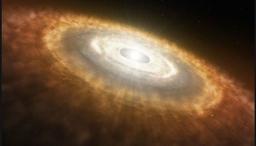
Formation of the solar System
Quiz by Rania Abdelrahman
Customize this quiz to suit your class
Instantly translate to 100+ languages
Tag the questions with any skills you have. Your dashboard will track each student's mastery of each skill.
Give this quiz to my class
1-What did stars and planets form from?
exploding stars
interstellar cloud
rocks in space
dark matter
2-What did the asteroid belt and cometsform from?
moons from collapsing planets
interstellar cloud debris
material from collapsing stars
material ejected from planets
1-What did stars and planets form from?
2-What did the asteroid belt and cometsform from?
3-Who first proposed the heliocentric modelof the solar system?
4-Which law of planetary motion does thisdiagram demonstrate?
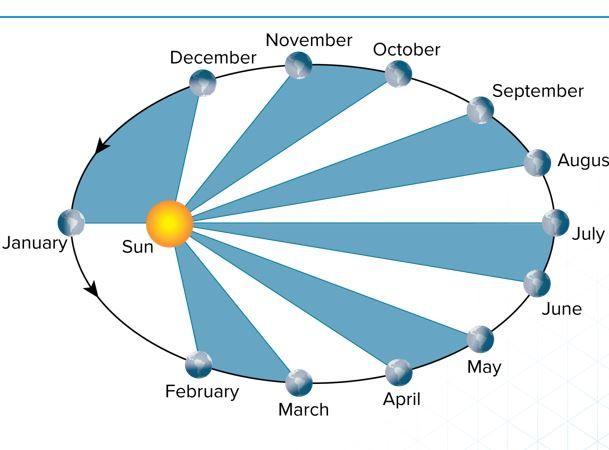
5-Which scientist determined each planetorbits a point between it and the Sun, called the center of mass?
 Formation of the solar system, and the difference between heliocentric and geocentric models of the Solar system.Gravity's Role in the Formation of the Solar SystemTHE SOAR SYSTEM A solar system is a group of planets and other celestial bodies that revolve around a star. A solar nebula- a vast cloud of gas and dust, mostly hydrogen and helium. How the Solar System Form • COLLAPSE AND SPINNING DISK FORMATION - Gravity pulls material inward. The cloud flattens into a spinning disk due to conservation of angular momentum. • PROTOSTAR FORMATION- (BIRTH OF THE SUN). Material collects at the center, and begun to heat up. When it reaches to 10 million KELVIN, nuclear fusion begins. thus, SUN is born. • PLANETESIMALS AND PROTOPLANETS. Dust and gas in the disk stick together via static and gravitational forces. These form planetesimals, which grow into protoplanets collision and accretion. • PLANET FORMATION. Inner disk: too hot for gas rocky planets form Mercury, Venus, Earth, Mars. • PLANET FORMATION. Outer disk: gas and ice giants. Jupiter, Saturn, Uranus, Neptune • LEFTOVER DEBRIS. Remaining materials forms moon, asteroids, comets and dwarf planets. DIFFERENT HYPOTHESIS IN THE FORMATION OF SOLAR SYSTEM. 1. NEBULAR HYPOTHESIS- The Solar system formed from a rotating cloud of Gas and Dust (solar nebula). As it rotates conservation of angular momentum caused the cloud to flatten into a disk. the Sun formed at the center (DISK) while planets formed from the surrounding materials through acceleration. thus, it explains the coplanar and nearly circular orbit of the planets all planets orbits around the sun on the same flat, disk shaped plane. Proposed by Immanuel Kant in 1755 and Modified by Pierre Simon Laplace in 1756. PROTOPLANET HYPOTHESIS. The Solar system formed from a rotating cloud of Gas and Dust (solar nebula). As it rotates conservation of angular momentum caused the cloud to flatten into a disk. 2. Protoplanet hypothesis. Builds on the nebular model but focuses more on the role of planetesimals which then form into full planets. PROCESS: - Small solid particles stick together through collisions. As collisions takes place, it grows into kilometer-sized planetesimals. Gravitational interactions lead to the formation of planets. Lead to formation of steroids belts and varying planet sizes 3. Encounter hypothesis. States that the sun encountered a rogue star. The encounter led to the removal of hot gas from both stars due to their gravitational interaction. The hot gas then accumulated and formed the planets. The materials from the less dense rogue star formed the other planets, while that from the sun formed the inner planets. 4. TIDAL HYPOTHESIS. (also called the Tidal Theory) is an early scientific idea about how the solar system might have formed. Proposed by James Jeans and Harold Jeffreys. A massive star passed very close to the early Sun. The hot gas then accumulated and formed the planets. The materials from the less dense rogue star formed the other planets, while that from the sun formed the inner planets. Streams of hot gas were drawn out from the Sun in elongated shape. These streams eventually condensed and cooled, forming planets, moons, and other bodies in the solar system. 5. Not accepted theory. Later studies showed the streams of hot gas would disperse too quickly into space instead of condensing into planets. The theory also couldn’t explain the specific orbital patterns and compositions we see today. Modern science favors the Nebular Hypothesis, which explains solar system formation through the collapse of a rotating gas cloud. Earth as the only habitable planet 1. Right Distance from the Sun (The Goldilocks Zone). Not too hot, not too cold — just right for liquid water to exist. 2. Atmosphere with Oxygen. Earth has a mix of gases, especially oxygen, which most living things need to survive. 3. Liquid Water. Earth has oceans, rivers, and rain — water is essential for all life. 4. Magnetic Field. Earth’s magnetic field protects us from harmful solar radiation. 5. Stable Climate. The atmosphere and natural cycles keep temperatures and weather mostly stable over time. 6. Rich Resources. Earth has soil for growing food, minerals, and energy sources that support life and technology. Solar explorations 1. AUGUST 6, 2014. First space craft to orbit a comet (ROSETTA PROBE). Captures the comet photograph. -Comets have coma and tail as it approaches to the sun. 2. JULY 14, 2015. NASA’s New Horizons spacecraft made history by becoming the first spacecraft to fly by Pluto, giving us our first close-up look at the dwarf planet. First time visiting Pluto. Before this, Pluto was just a blurry dot in telescope images. Revealed a surprising world New Horizons showed mountains of ice, smooth plains, and a heart-shaped region called Tombaugh Regio. Changed what we knew. Scientists thought Pluto would be dull and frozen — instead, it turned out to be geologically active and incredibly complex. 3. SEPTEMBER 8, 2016. NASA launched OSIRIS-REx, the first U.S. mission to collect a sample from an asteroid and return it to Earth. Changed what we knew. Scientists thought Pluto would be dull and frozen — instead, it turned out to be geologically active and incredibly complex. OSIRIS-REx stands for: Origins, Spectral Interpretation, Resource Identification, Security–Regolith Explorer It was sent to study the asteroid Bennu, a near-Earth asteroid about 500 meters wide. Mission Goals: Collect a sample of surface material from Bennu Study the asteroid’s omposition, structure, and history. Mission Goals: Help scientists understand the origins of the solar system. Learn more about asteroids that could impact Earth. 4. August 12, 2018: Launch of NASA’s Parker Solar Probe, the first spacecraft to "touch" the Sun by flying through its outer atmosphere, called the corona. Mission Goal: To study the Sun up close and help scientists understand: How the solar wind (a stream of charged particles) is formed. Why the Sun’s corona is hotter than its surface. What causes solar storms that can affect Earth’s satellites and power grids. 5. November 26, 2018: NASA’s Insight Lander Touches Down on Mars. Its mission was focused on studying the interior of the Red Planet (crust, mantle, and core of the planet). Why the Sun’s corona is hotter than its surface. What causes solar storms that can affect Earth’s satellites and power grids 6. November 26, 2018: NASA’s Insight Lander Touches Down on Mars. Its mission was focused on studying the interior of the Red Planet (crust, mantle, and core of the planet) 7. JULY 30, 2020 PERSEVERANCE PROBE. Perseverance rover as part of the Mars 2020 mission aboard an Atlas V-541 rocket This marked a major step in Mars exploration. 8. DECEMBER 25, 2021-JAMES WEBB SPACE TELESCOPE. Investigate exoplanets’ atmospheres for signs of habitability. Observe the first galaxies formed after the Big Bang. Study the formation of stars and planetary systems. Look deeper into the infrared universe than ever before. RESULTS OF EXPLORATION • Evidence of Ancient Life-friendly Environment. • Sedimentary rocks formed in water-rich environments. • Signs of clay and carbonate minerals, which can preserve biosignatures (traces of past life). • Evidence of Ancient Life-friendly Environment. • Sedimentary rocks formed in water-rich environments. • Signs of clay and carbonate minerals, which can preserve biosignatures (traces of past life). • Evidence of Ancient Life-friendly Environment. • Sedimentary rocks formed in water-rich environments. • Signs of clay and carbonate minerals, which can preserve biosignatures (traces of past life).Formation of the Universe, Solar System, and Earth QuizWhat is a Plant Cell? Plant cells are eukaryotic cells that vary in several fundamental factors from other eukaryotic organisms. Both plant and animal cells contain a nucleus along with similar organelles. One of the distinctive aspects of a plant cell is the presence of a cell wall outside the cell membrane. Plant Cell Structure Just like different organs within the body, plant cell structure includes various components known as cell organelles that perform different functions to sustain itself. These organelles include: Cell Wall It is a rigid layer which is composed of polysaccharides cellulose, pectin and hemicellulose. It is located outside the cell membrane. It also comprises glycoproteins and polymers such as lignin, cutin, or suberin. The primary function of the cell wall is to protect and provide structural support to the cell. The plant cell wall is also involved in protecting the cell against mechanical stress and providing form and structure to the cell. It also filters the molecules passing in and out of it. The formation of the cell wall is guided by microtubules. It consists of three layers, namely, primary, secondary and the middle lamella. The primary cell wall is formed by cellulose laid down by enzymes. Cell membrane It is the semi-permeable membrane that is present within the cell wall. It is composed of a thin layer of protein and fat. The cell membrane plays an important role in regulating the entry and exit of specific substances within the cell. For instance, cell membrane keeps toxins from entering inside, while nutrients and essential minerals are transported across. Nucleus The nucleus is a membrane-bound structure that is present only in eukaryotic cells. The vital function of a nucleus is to store DNA or hereditary information required for cell division, metabolism and growth. 1. Nucleolus: It manufactures cells’ protein-producing structures and ribosomes. 2. Nucleopore: Nuclear membrane is perforated with holes called nucleopore that allow proteins and nucleic acids to pass through. Plastids They are membrane-bound organelles that have their own DNA. They are necessary to store starch and to carry out the process of photosynthesis. It is also used in the synthesis of many molecules, which form the building blocks of the cell. Some of the vital types of plastids and their functions are stated below: Leucoplasts They are found in the non-photosynthetic tissue of plants. They are used for the storage of protein, lipid and starch. Chromoplasts They are heterogeneous, colored plastid which is responsible for pigment synthesis and for storage in photosynthetic eukaryotic organisms. Chromoplasts have red-, orange- and yellow-colored pigments which provide color to all ripe fruits and flowers. Central Vacuole It occupies around 30% of the cell’s volume in a mature plant cell. Tonoplast is a membrane that surrounds the central vacuole. The vital function of the central vacuole apart from storage is to sustain turgor pressure against the cell wall. The central vacuole consists of cell sap. It is a mixture of salts, enzymes and other substances. Golgi Apparatus They are found in all eukaryotic cells, which are involved in distributing synthesized macromolecules to various parts of the cell. Ribosomes They are the smallest membrane-bound organelles which comprise RNA and protein. They are the sites for protein synthesis, hence, also referred to as the protein factories of the cell. Mitochondria They are the double-membraned organelles found in the cytoplasm of all eukaryotic cells. They provide energy by breaking down carbohydrate and sugar molecules, hence they are also referred to as the “Powerhouse of the cell.” Lysosome Lysosomes are called suicidal bags as they hold digestive enzymes in an enclosed membrane. They perform the function of cellular waste disposal by digesting worn-out organelles, food particles and foreign bodies in the cell. In plants, the role of lysosomes is undertaken by the vacuoles. Chloroplasts It is an elongated organelle enclosed by phospholipid membrane. The chloroplast is shaped like a disc and the stroma is the fluid within the chloroplast that comprises a circular DNA. Each chloroplast contains a green colored pigment called chlorophyll required for the process of photosynthesis. The chlorophyll absorbs light energy from the sun and uses it to transform carbon dioxide and water into glucose. Structure of Chloroplast Chloroplasts are found in all higher plants. It is oval or biconvex, found within the mesophyll of the plant cell. The size of the chloroplast usually varies between 4-6 µm in diameter and 1-3 µm in thickness. They are double-membrane organelle with the presence of outer, inner and intermembrane space. There are two distinct regions present inside a chloroplast known as the grana and stroma. • Grana are made up of stacks of disc-shaped structures known as thylakoids or lamellae. The granum of the chloroplast consists of chlorophyll pigments and are the functional units of chloroplasts. • Stroma is the homogenous matrix which contains grana and is similar to the cytoplasm in cells in which all the organelles are embedded. Stroma also contains various enzymes, DNA, ribosomes, and other substances. Stroma lamellae function by connecting the stacks of thylakoid sacs or grana. The chloroplast structure consists of the following parts: Membrane Envelope It comprises inner and outer lipid bilayer membranes. The inner membrane separates the stroma from the intermembrane space. Intermembrane Space The space between inner and outer membranes. Thylakoid System (Lamellae) The system is suspended in the stroma. It is a collection of membranous sacs called thylakoids or lamellae. The green colored pigments called chlorophyll are found in the thylakoid membranes. It is the sight for the process of light-dependent reactions of the photosynthesis process. The thylakoids are arranged in stacks known as grana and each granum contains around 10-20 thylakoids. Stroma It is a colorless, alkaline, aqueous, protein-rich fluid present within the inner membrane of the chloroplast present surrounding the grana. Grana Stack of lamellae in plastids is known as grana. These are the sites of conversion of light energy into chemical energy. Chlorophyll It is a green photosynthetic pigment that helps in the process of photosynthesis. Functions of Chloroplast Following are the important chloroplast functions: • The most important function of the chloroplast is to synthesize food by the process of photosynthesis. • Absorbs light energy and converts it into chemical energy. • Chloroplast has a structure called chlorophyll which functions by trapping the solar energy and is used for the synthesis of food in all green plants. • Produces NADPH and molecular oxygen (O 2 ) by photolysis of water. • Produces ATP – Adenosine triphosphate by the process of photosynthesis. • The carbon dioxide (CO2) obtained from the air is used to generate carbon and sugar during the Calvin Cycle or dark reaction of photosynthesis. Mitochondria “Mitochondria are membrane-bound organelles present in the cytoplasm of all eukaryotic cells, that produce adenosine triphosphate (ATP), the main energy molecule used by the cell.” What are Mitochondria? Popularly known as the “Powerhouse of the cell,” mitochondria (singular: mitochondrion) are a double membrane-bound organelle found in most eukaryotic organisms. They are found inside the cytoplasm and essentially function as the cell’s “digestive system.” They play a major role in breaking down nutrients and generating energy-rich molecules for the cell. Many of the biochemical reactions involved in cellular respiration take place within the mitochondria. The term ‘mitochondrion’ is derived from the Greek words “mitos” and “chondrion” which means “thread” and “granules-like”, respectively. It was first described by a German pathologist named Richard Altmann in the year 1890. Structure of Mitochondria • The mitochondrion is a double-membraned, rod-shaped structure found in both plant and animal cell. • Its size ranges from 0.5 to 1.0 micrometers in diameter. • The structure comprises an outer membrane, an inner membrane, and a gel-like material called the matrix. • The outer membrane and the inner membrane are made of proteins and phospholipid layers separated by the intermembrane space. • The outer membrane covers the surface of the mitochondrion and has a large number of special proteins known as porins. Cristae The inner membrane of mitochondria is rather complex in structure. It has many folds that form a layered structure called cristae, and this helps in increasing the surface area inside the organelle. The cristae and the proteins of the inner membrane aid in the production of ATP molecules. The inner mitochondrial membrane is strictly permeable only to oxygen and ATP molecules. A number of chemical reactions take place within the inner membrane of mitochondria. Mitochondrial Matrix The mitochondrial matrix is a viscous fluid that contains a mixture of enzymes and proteins. It also comprises ribosomes, inorganic ions, mitochondrial DNA, nucleotide cofactors, and organic molecules. The enzymes present in the matrix play an important role in the synthesis of ATP molecules. Functions of Mitochondria The most important function of mitochondria is to produce energy through the process of oxidative phosphorylation. It is also involved in the following process: 1. Regulates the metabolic activity of the cell 2. Promotes the growth of new cells and cell multiplication 3. Helps in detoxifying ammonia in the liver cells 4. Plays an important role in apoptosis or programmed cell death 5. Responsible for building certain parts of the blood and various hormones like testosterone and estrogen 6. Helps in maintaining an adequate concentration of calcium ions within the compartments of the cell 7. It is also involved in various cellular activities like cellular differentiation, cell signaling, cell senescence, controlling the cell cycle and in cell growth. Disorders Associated with Mitochondria Any irregularity in the way mitochondria function can directly affect human health, but often, it is difficult to identify because symptoms differ from person to person. Disorders of the mitochondria can be quite severe; in some cases, they can even cause an organ to fail.Science Exam Parts of the Atom: The atom consists of a nucleus at its center, containing protons (positively charged) and neutrons (neutral), while electrons (negatively charged) orbit in electron shells around the nucleus. Atomic Number: The atomic number of an element is the number of protons in its nucleus. It defines the element and determines its place on the periodic table. Properties of Metals: Metals have properties like conductivity, malleability (can be flattened into sheets), and ductility (can be drawn into wires). Elements, Compounds, and Mixtures: Elements consist of only one type of atom. Compounds are made of two or more different elements chemically bonded. Mixtures are combinations of substances that are physically mixed but not chemically bonded. Homogeneous and Heterogeneous Mixtures: Homogeneous mixtures have a uniform composition (e.g., saltwater), while heterogeneous mixtures have different phases (e.g., oil and water). Changes of State: Changes like melting, evaporation, and condensation are examples of physical changes of state. Chemical and Physical Properties: Chemical properties describe how a substance can change to form a new substance, while physical properties are characteristics like color, texture, and state (solid, liquid, gas). Physical and Chemical Change: A physical change involves the appearance or state of matter, but the substance remains the same. A chemical change involves the formation of new substances. Chemical Equations: Chemical reactions can be represented with chemical equations that show reactants (what you start with) and products (what is formed). Chemical Formulas: Chemical formulas represent the composition of compounds. For example, NaHCO3 is sodium bicarbonate, consisting of one sodium (Na), one hydrogen (H), one carbon (C), and three oxygen (O) atoms. Energy: Types of Energy: Energy can be kinetic (related to motion), potential (stored energy), thermal (heat energy), electrical, chemical, and more. Units of Energy: Common units of energy include joules (J) and calories (cal). Law of Conservation of Energy: Energy cannot be created or destroyed, only transferred or transformed from one form to another. Energy Transfer and Transformation: Energy moves from one object to another, changing forms along the way. Useful and Waste Energy: Useful energy is what can be harnessed and used for a specific purpose. Waste energy is energy that is not used and is often lost. Energy Flow Diagrams: These diagrams show how energy is transferred or transformed within a system. Energy Efficiency: Efficiency is a measure of how much useful energy is obtained from a system. It can be calculated using the equation: Efficiency = (Useful Energy Output / Total Energy Input) x 100%. Fossil Fuels and Renewable Energy: Fossil fuels, like coal, oil, and natural gas, are non-renewable sources of energy. Renewable energy sources include solar, wind, and hydroelectric power. Variables: Independent Variable: The variable that is manipulated or changed in an experiment. Dependent Variable: The variable that is measured or observed and is affected by changes in the independent variable. Controlled Variables: Factors that are kept constant to ensure a fair and accurate experiment. Based on the provided sources, here is a comprehensive extraction of the information regarding the water cycle, energy transfer, and Earth's wind systems, organized into key points: The Water Cycle and Its Reservoirs • Definition: The water cycle is the continuous movement of water among various reservoirs on Earth. • Water Reservoirs: These are storage locations for water and include: ◦ Oceans, seas, and lakes. ◦ Rivers, glaciers, soil, and rocks. ◦ The atmosphere and living organisms. • Total Volume: The total amount of water on Earth does not change, even when it changes state, because it is constantly being replaced or recycled through the cycle. Main Processes and Energy Transfer The movement of water through the cycle is driven by energy (thermal energy from the Sun) and force (gravity and wind). • Energy Gain (Absorption): ◦ Melting: Water changes from a solid state (ice) to a liquid state and gains energy. ◦ Evaporation: Liquid water changes into a gas state (water vapor) by gaining thermal energy. ◦ Transpiration: A specialized type of evaporation occurring in plants where water vapor is released through tiny holes in leaves called stomata. Approximately 10% of water vapor in the air comes from transpiration. • Energy Loss (Release): ◦ Condensation: Water vapor (gas) cools down and changes back into liquid water, releasing energy. ◦ Freezing: Liquid water changes into a solid state (ice) and loses energy. • Other Key Steps: ◦ Precipitation: Water falls back to Earth as rain, snow, sleet, or hail (snow pellets). ◦ Runoff: Water flows over Earth's surface into streams, rivers, and eventually larger bodies of water like oceans. ◦ Collection: Rainwater is collected in different water bodies to start the cycle again. Forces Driving Water Movement • Gravity: The main force that pulls water downward. It is responsible for: ◦ Bringing precipitation (rain and snow) from clouds to the surface. ◦ Moving ice in glaciers from higher to lower elevations. ◦ Causing liquid water to flow downhill into rivers and seas. ◦ Leakage: Pulling liquid water down into the ground to reach groundwater reservoirs. • Wind: Another force that affects water movement and transports water to different locations on Earth. Atmospheric Processes • Cloud Formation: Water vapor attaches to particles such as dust or smoke in the air and condenses into tiny droplets. When millions of these droplets join, they become heavy and fall as rain. • Convection: The transfer of heat in liquids and gases. ◦ Warm air/liquid: Becomes less dense, lighter, and rises upward. ◦ Cold air/liquid: Is more dense, heavier, and moves downward to replace the warm fluid. ◦ This process leads to convection currents, which help determine regional climates and drive wind and ocean currents. Solar Radiation and Climate The amount of solar energy reaching Earth differs from place to place, which affects the weather: • Hottest Regions (Equator): Sun rays fall perpendicular (vertical). Heat is concentrated on a small area, making the weather hot. • Moderate Regions: Sun rays fall semi-inclined. Heat is distributed over a larger area, making the weather warm. • Coolest Regions (Poles): Sun rays fall very slanted (inclined). Heat is spread over a very large area, making the weather very cold. Earth's Wind System • Wind Formation: Wind is generated when warm air (heated by the Sun) rises and is replaced by cooler air flowing from nearby areas. • Factors Affecting Wind: The amount of solar radiation and the rotation of Earth determine global wind directions. • Global Wind Cycle: Unequal heating between the equator and the poles generates a constant wind system. Warm air rises at the equator and moves toward the poles, while cold air from the poles moves toward the equator. • Importance: If there were no wind, the equator would become extremely hot, the poles would freeze solid, and many ecosystems would disappear. Practical Examples • Turkey’s Salt Lake: High evaporation in the summer can turn this large lake into a small puddle or dry it up completely. It is a critical site for flamingos, which migrate there to breed and feed on algae in the shallow, warm water.Create a quiz with the following questions and answersConvection is… The rising motion of warm air A large volume of air A boundary between two different air masses The weight of the Earth’s atmosphere over an area What are isobars? Storms with strong winds, heavy rains, lightning, and thunder Lines on a map to show high and low pressure The study of elevation This front is associated with thunderstorms, heavy rain, snow, and cooler temperatures. Warm front Stationary front Cold front Occluded front What is a barometer? A tool used to measure temperature An instrument used to measure wind speed An instrument used to measure humidity An instrument used to measure air pressure What is a tornado? Storms with strong winds, heavy rains, lightning, and thunder Large, rotating tropical weather systems A rapidly spinning column of air that has touched the ground What is topography? The study of elevation Lines on a map to show high and low pressure The condition of the atmosphere at a given place and time What are air masses? Large, rotating tropical weather systems The study of elevation A large volume of air with the same temperature What is transpiration? The process of a liquid’s surface changing into a gas The process of a gas changing into a liquid The movement of water through the soil The process of water vapor being released by plants. What is nitrification? The process bacteria use to convert nitrogen gas into ammonium ions The process of turning ammonium ions into nitrites and nitrates. The uptake of nitrates in the soil by the roots of plants. The process of turning nitrates into nitrogen gas Fun Fact: Carbon makes up ___ of your mass. 30% 18% 50% 6% What are the reactants of photosynthesis? Carbon dioxide and water Glucose and oxygen What are the reactants of cellular respiration? Carbon dioxide and water Glucose and oxygen What is a storm surge? Flooding caused by hurricanes Region of air where the air pressure is low Any product of the condensation of water vapor High pressure is… A region of air where the air pressure is greater than that of the surrounding area A region of air where the air pressure is lower than that of the surrounding area. Low pressure is… A region of air where the air pressure is greater than that of the surrounding area A region of air where the air pressure is lower than that of the surrounding area. What causes global winds? Photosynthesis The process carbon goes through Uneven heating of the Earth What can humans do to reduce carbon emissions? We can use renewable energy (ex. solar power) We can use non-renewable energy (ex. fossil fuels) Carbon can form stable bonds with many elements and and makes up the backbone of major macromolecules: carbohydrates, proteins, lipids, and ___ Nucliec acids Glucose Oxygen Nitrogen What weather is associated with low-pressure systems? Bad weather (ex. Cloudy weather) Good weather (ex. Sunny weather) What is fossilization? The burning of fossil fuels The process where fungi and bacteria decompose dead organisms Dead organisms form fossil fuels over thousands and millions of years What is the first step in the formation of tornadoes? Rising air from the ground pushes up on the swirling air and tips it over A large thunderstorm occurs in a cumulonimbus cloud The funnel grows longer and stretches towards the ground The funnel of swirling air begins to suck up more warm air from the ground What is the difference between thunderstorms and regular storms? Thunderstorms have thunder while regular storms don’t Regular storms have thunder while thunderstorms don’t There is no difference What are hurricanes? Rapidly spinning columns of air touch the ground Large, rotating tropical weather systems Storms with strong winds, heavy rains, lightning, and thunderstorms What is not a hurricane fact? They are the most powerful storms on earth They have an average wind speed of 120-180 km/h They lose their power when they travel over cooler waters or land Storm surges cause the most damages What is the difference between weather and climate? Weather is long-term while climate is short-term Climate is long-term while weather is short-term There is no difference