Loading...

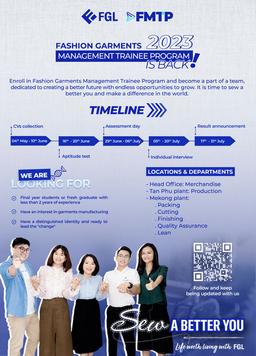
Future Management Trainee Program - FGL
Quiz by Nguyễn Sỹ Quốc Hưng (sos_st2017)
Customize this quiz to suit your class
Instantly translate to 100+ languages
Tag the questions with any skills you have. Your dashboard will track each student's mastery of each skill.
Sáng nay ăn gì chưa nè?
Chưa
Rồi nha
Vì sao bạn đến đây?
Không biết nữa
Hỏi chi?
Vui là chính
Sáng nay ăn gì chưa nè?
Vì sao bạn đến đây?
Sắp xếp thứ tự theo đúng bảng chữ cái nè
Sắp xếp thứ tự tăng dần
Một Cân Sắt Và Một Cân Bông, bên nào nặng hơn bạn ơi?
Give this quiz to my class
 New Trends in Agriculture Extension approaches Extension has been, and still is, under attack from a wide spectrum of politicians and economists over its cost and financing. As a result, Extension Systems have had to make changes, by restating the system’s mission, developing a new vision for the future, and formulating plans for the necessary transition to achieve the desired change. 1. Privatization of Agricultural Extension Service Privatization: Process of funding and delivering the extension services by private individual or organization is called Private Extension. Concept: Privatization of extension refers to services rendered in rural area & allied aspects of extension personnel working in private agencies or organization for which farmers are expected to pay a fee & it can be viewed as supplementary or alternative to public extension services (Sarvanan & Shivalinge 1980). Privatization approaches ➢ Share cropping system ➢ Village extension contract system ➢ Public extension through private delivery ➢ Service for vouchers Strengths of Private Extension System ➢ More demand - driven rather than supply – driven ➢ High quality of services in terms of satisfying information needs of clientele, trained manpower, sustained finances and resource allocation ➢ Provides for an information mix and choices available to farmers ➢ Enhanced efficiency of staff ➢ Assure continuous supply and quality agricultural products ➢ More effective because farmer can select an adviser who is the best able to help ➢ Healthy competition among service provider will lead to better quality and lower costs for service Weakness of Private Extension System ➢ Concentrate on area having favorable physical environment ➢ More face-to-face contacts (person oriented) ➢ Increased dependence of farmers and hence exploitation ➢ No education role ➢ Deprivation of small farmers ➢ Hamper the free flow of information 2. Cyber Extension or e-extension Concepts Cyber space: it is the imaginary or virtual space of computers connected with each other on Networks, across the Globe. Cyber extension: it means 'using the power of online networks, computer communications and digital interactive multimedia to facilitate dissemination of agriculture technology. Cyber Extension thus can be defined as the extension over cyber space. Important tools of cyber extension E-Mail, Telnet, File Transfer Protocol (FTP), Gopher, Archie and World Wide Web (WWW) Strengths of Cyber Extension ➢ Access to the astounding information and continuously available ➢ Information rich and instantaneously available of information ➢ Interactive communication ➢ The information is available from any point on the globe ➢ Communication is dynamic ➢ Cut steps from traditional process ➢ Save money, time and effort ➢ Multiplicity of purpose Issues and Concerns of Cyber Extension ➢ Lack of Reliable Telecom Infrastructure in Rural Areas ➢ Erratic or no Power Supply ➢ Lack of ICT Trained manpower (willing to serve) in Rural Areas ➢ Lack of content (locally relevant and in local languages) ➢ Lack of Information Services to Rural Clientele ➢ Low Purchasing power of the Rural communities ➢ Lack of Holistic Approaches ➢ Issues of Sustainability Application of cyber extension ➢ Village information shops Dr. M.S. SwaminathanResearch Foundation, Chennai ➢ Information villagers MANAGE in Ranga Reddy District in Andhra pradesh ➢ Gyandoot net initiative of District Dhar, Madhya Pradesh. ➢ Warna wired village of National Informatics Center (NIC) in Kolhapur- Sangli Districts of Maharashtra 3. Market-Led-Extension (MLE) Concepts Market: A congregation of prospective buyers & sellers with a common motive of trading a particular commodity. Extension: It is the spreading/reaching out to the mass Market-led-extension: Agriculture & economics coupled with extension is the perfect blend for reaching at the door steps of common man with the help of technology. Dimensions of market-led extension ➢ Marketing mix: A planned mix of the controllable elements of a product's marketing plan commonly termed as 4Ps: product, price, place, and promotion. These four elements are adjusted until the right combination is found that serves the needs of the product's customers, while generating optimum income. ➢ Marketing plan: A marketing plan is a comprehensive document that outlines a business and marketing efforts for the coming year. It describes business activities involved in accomplishing specific marketing objectives within a set time frame. A marketing plan also includes a description of the current marketing position of a business, a discussion of the target market and a description of the marketing mix that a business will use to achieve their marketing goals. ➢ Market Intelligence: It is the information relevant to a company’s markets, gathered and analyzed specifically for the purpose of accurate and confident decision making. Market intelligence includes the process of gathering data from the company’s external environment, whereas the business intelligence process is primarily based on internal recorded events – such as sales, shipments and purchases. ➢ Market oriented production ➢ Use of Technology Strengths of market-led extension ➢ SWOT analysis of the market ➢ Organization of Farmers’ Interest Groups (FIGs) ➢ Enhancing the interactive and communication skills of the farmers ➢ Establishing marketing and agro-processing linkages ➢ Advice on product planning ➢ Educating the farming community ➢ Direct marketing ➢ Acquiring complete market intelligence ➢ Publication of agricultural market information Production of video films of success stories ➢ Challenges to market-led extension ➢ Gigantic size of extension system ➢ Information technology Diverse conditions ➢ Market intelligence ➢ Reforms in agricultural extension system Government Initiatives ➢ Central warehousing Corporation-1965 ➢ MSP by Commission for Agricultural Cost and Price (CACP) ➢ Food Corporation of India ➢ Then some others as: Cotton Corporation of India (CCI), Jute Corporation of India (JCI), National Dairy Development Board (NDDB), Agriculture and Processed food Export Development Authority (APEDA) etc. 4. Farmer--Led-Extension (FLE) Farmer--led-extension is defined as 'the provision of training by farmers to farmers, often through the creation of a structure of farmer promoters and farmer trainers' (Scarborough et al., 1997). Philosophy and principles ➢ Farmers and local institutions (e.g. producer organizations or village leaders) should play a key role in selecting farmer-trainers and monitoring and evaluating them. This helps make the programmes more accountable to the community or groups that they serve. ➢ Farmer-trainers are ‘of the community’; they communicate in local languages and are more sensitive to local cultures, mannerisms, farming practices, and farmers’ needs. ➢ Farmer-trainers should be selected on the basis of their skills and interest in sharing information, not just on their farming expertise. ➢ Farmer-trainers need strong linkages with and support from development agents (whether government, non-government organization (NGO), or private), the people who train and backstop them. Farmer-trainers generally serve as a complement to existing extension systems, rather than being a substitute for them. ➢ Facilitating organizations and local institutions need to be proactive in ensuring that women as well as men become farmer-trainers. ➢ Simple and appropriate reference materials should be made available to the farmer trainers. Essential Elements of Farmer--led-extension ➢ The group ➢ The Field ➢ The Facilitator ➢ The curriculum ➢ Programme leader ➢ Financing Special features of Farmer--led-extension ➢ All learning is field based & it is primary venue for learning ➢ FLE group learning constantly over the experimentation period ➢ FLE promotes healthy decisions & quality decisions ➢ Farmers conduct their own field studies with comparisons or treatments ➢ Facilitates Farmer-to-Farmer communication ➢ Field staff serve as facilitators ➢ FLE is a unique way to educate farmers ➢ It is an effective platform for sharing of experiences and collectively solving agriculture related problems. 5. Expert system Expert system is an intelligent computer program that uses knowledge and inferences procedures to solve problems (Daniel Hunt, 1986). Objectives of developing expert system ➢ To enhance the performance of agricultural extension personnel and farmer ➢ To make farming more efficient and profitable ➢ To reduce the time required in solving the problems ➢ To maintain the expert system by continuously upgrading the database Advantages of expert system ➢ Solves critical problems by making logical deductions without taking much time ➢ It combines experimental and conventional knowledge with the reasoning skills of specialists ➢ To enhance the performance of average worker to the level of an expert Limitations of expert system ➢ Expensive computer program ➢ Mostly developed not in regional languages ➢ Requires AC power and internet connection all the time ➢ Complex software requires computer skilled personnel Modules of expert system in agriculture ➢ COMAX: Integrated crop management in cotton ➢ SOYEX: Soybean oil extraction expert system ➢ PLANT/ds: Diagnosis of soybean diseases ➢ MAIZE: Maize expert system for field crop management ➢ SEMAGI: Weed control decision making in sunflowers ➢ Rice Crop Doctor: Developed by National Institute of Agricultural Extension Management (MANAGE) Difference between conventional and expert system of extension Conventional Extension ➢ Universal approachability of same information is a problem ➢ Information is given whatever is available without considering needs and resources ➢ No Cost benefit analysis ➢ Information flow depends on availability of agent ➢ Require users to draw their own conclusion from facts Expert System of Extension ➢ Universal approachability of same information is possible ➢ Information is chosen based on their needs and resources ➢ Cost benefit analysis ➢ Information through Cyber Cafe at any place at any time ➢ Conclusion is drawn based on the decision given by the expertManagement and Globalization Global Management Why companies go global How companies for global Global Business environments Global Business Types of global business Pros and cons of global businesses Ethnic Challenges for global business Culture and Global Diversity Cultural intelligence Silent language of culture Tight and loose cultures Values and national cultures Global Management Learning Are management theories universal? Intercultural competencies Global learning goals Key concepts of the challenges of globalisation: Global economy Resources, markets and competition are worldwide in scope Internationalisation The process of increasing involvement in international operations Globalization/Deglobalization Glob- the growing interdependence among elements in the global economy The worldwide interdependence of resource flows, product markets and business competition World 3.0 Different views: World flat vs. round Distance is a metaphor that represents the degree of dissimilarities between countries Balancing cooperation in the global Global Management Global management - managing things in different countries Managing business and organizations with interests in more than one country What do we expect from global Managers Knowing how to adapt Knowing the language Global Manager Is culturally aware and informed on international affairs International Business Conducting for-profit transactions of goods and services across national boundaries International Motive Why do firms internatioalize their activities Cheaper labour Labour tax Natural resources Enrolments to do business Clientele Exclusive materials Personal benefits: Taxes Reasons why businesses go global Customers Suppluers Capital During (1993) - 4 motive 1. Market seeking 2. Efficiency Seeking 3. Resource seeking 4. Strategic Asset Seeking Cuervo Cazurra, Narula and un (2015) - 4 motive s Internationalization Motives A company may also explore the opportunities in different markets in order to take advantage and in some cases extend the product life cycle What is a Market Entry Strategy Involves the sale of goods or services to foreign markets but do not require expensive investments Franchising Exporting and importing Involve the sale of goods or services to foreign markets but do Types of market entry strategies Global sourcing Exporting Importing Licensing agreement Franchising Types of Foreign Direct Investment (FDI) strategies: Joint venture Strategic alliance Owned Subsidiary (sometimes called WOS) How to go abroad What conditions will affect the decisions of firms on how to internationalize their activities? During (1978)- Eclectic paradigm OLI model OLI- Ownership, Location and Internalization Advantages Ownership advantages Resources owned by the organization that can be transferred across locations include trademarks, production techniques and processes, managerial skills and other resources not available to the competitors Location Advantages Represent the implications of choosing to produce or to perform activities in a specific location (country or region) Internalization Advantages: The ability to internalize or to incorporate activities that add value to its business Evolution of Concepts- New Elements Although economic factors are certainly important to explain the formation, growth and expansion of firms within and across national borders, they are not sufficient to explain the additional complexity when a firm decides to expand its activities across national borders Economic factors Investigate the economic elements that affect the internationalization of firms Behavioural Elements Explaining the additional challenges (and perhaps opportunities) a firm faces in foreign host countries when compared to indigenous (local) firms Behavioural theories Johanson and Wiedersheim-Paul (1975) and Johanson and Vahlne (1977) Included the psychic Distance concept (beckerman,1956) to explain the internationalization behaviour of firms The Uppsala internationalization model Psychic distance is: the sum of factors preventing the flow of infomatio from and to the market Psychic Distance is a broad concept that includes several elements such as: language, culture, political systems, level of education, level of industrial development Firms behave in a “Risk Averse” manner It means that when the perceived risk goes down, the firm increase its commitment to the foreign market \ The Haier Group Data Strategy Big DATA and Small DATA The use of small data to satisfy individual customers’ needs, however, the book mentions a huge cultural shock at the plant in Camden, south caroline Ex: top down, hard hat colors and hierarchy Culutral Differnces can have a huge impact on the internationalization of firms Kogut and Singh (1988)- Cultural Distance Index First statsical study on the implication of ciltiral distance to the selection of entry mode When investigating in culturally distant countries, foreign firms can choose to partner with foreign firms in order to gain local knowledge and share the risk associated to the investment (higher commitment = higher risk) How Companies Go Global Global sourcing The process of purchasing materials or services around teh world for local use Exporting Selling locally made products in foreign markets Importing Buying foreign made products and selling them domestically Exports correspond to what percentage of Candain GDP What countries are the major trending partners of Canada Management and Globalization How Companies Go Global Licensing Agreement One firm pays a fee for rights to make or sell another company’s products What are the potential risks associated to licesning The case of new balance in China Franchising A fee is paid for the rights to use another firms name, branding and methods Insourcing Insourcing: refers to local job creation that results from foreign direct investment Types of insourcing Joint ventures: operate in a foreign country through co-ownership by foreign and local partners Strategic alliances: A partnership in which foreign and domestic firms share resources and knowledge for mutual gains Foreign subsidiaries: local operation completely owned by a foreign firm Criteria for choosing a joint venture partner: Familiarity with your firm’s major business String local workforce Values its customers Future expansion possibilities Strong local market for partner’s own products Good Profit potential Sound financial standing Global business environments Legal and poliical systems Trade agreements and trade barriers Regional economic alliances Legal and political systems Differing laws and practices regards Business ownership Negotiation and implementation of contracts Foreign currency exchange Protection of intellectual property rights Counterfeit merchandise Political risk Potential loss in value of foreign investment due to instability and political changes in the host country Political risk analysis (expertise/experience) Forecast political disruptions that threaten the value of a foreign investment Changes in the rules of the game Brexit US Trade Wars-mexico-China Other examples Bolivia, Venezuela, China De-globalization The process of weakening interdependence among nations Trade Agreements and trade Barriers World trade organization Most favourd nation status Tariffs Nontariss barriers (quotes, restrictions, etc.) Protectionism Regional Economic Alliances USMCA (replacment for the NAFTA-North American Free trade Agreement) EU- European Union APEC- Aisa Pacific Economic Copperation ASEAN - Association of Southeast Asian Nationas SADC - Southern Africa Development Community MERCOSUR- Chapter 5- Global Management and Cultural Diversity (part 2) Review Types of global business Global corporation MNE (multinational enterprise) or MNC (multinational corporation) with extensive business operations in more than one foreign country Transnational corporation A global corporation that operates worldwide on borderless basis Some host country complaints about MNCs Host Country companits about MNCs: Excessive profits Interference with local government Domination of local economy Interference with local government Hiring the best local talent Limited technology transfer Disrespect for local customers Examples - War in Ukraine Disruption in global -value chains and increased pressure and interference of MNCs with local government Fertilizer imports in Brazil (one of the major producers of agricultural commodities) We must consider the triple bottom line and the impact in society, the environment and the economy $2.5 billion invest in potash mine in Brazill What about Globalization gap Large multinationals adn industrilizednaitons gaining disporoportinonally form globalization Globalization gap: Large multinational and industrialized nations gaining disproportionally from Globalization Some MNC complaints about host countries MNC Complaints about host countries: Profiit limitations Laws and regulations Overpirce resources Exploitative rules Foreign exchange restriction Failure to uphold contracts Mutual benefits for host countries and multinational companies Mutual benefits for host country and global corporation of MNC: Shared growth opportunities Shared income opportunities Shared learning opportunities Share development opportunities Develop projects together What are some of the ethical challenges for global business Ethincal challenges for global business Child labour Employmnet of children for worl otherwise done by adults Sweatshops Employment of workers at very low wages for long hours in poor working conditions Ex: Nike bad labour prices Unsafe working conditions Corruption Illegal practices that further one’s business interests Corrupiotn of froeign public officials Act makes it illegal for Candain firms and their representatives to engage in corrupt practices overseas Bribes to foreign officials Excessive commissions Non-monetary gifts Sweatshops Conflict materials What is culture Culture : The shared set of beliefs, values, and patterns of behvaiourr common to a group of people Food preferences Values and traditions Language and beliefs Religion Art music Life style Hofstede defines culture as: “The collectiv programing of teh mind distinguishing the members of one group or category of people from others” What is culture shock Culture Shock: Confusion and discoumfert a person experiences in an unfaamiliar culture Stages to adjusting to a new culture Confusion Small vitorires The honeymoon Irritation and anger Reality Cultural Intelligence The ability to adapt and adjust to new cultures What is Ethnocentrism Tendency to consider one’s own culture as superior others Slinet languages of culture Contect Low context High context Space Proxemics Ex: personal space Time Monochronic Polychronic High and low contexts cultures Edward T.Hall (1959) Def: Part of a discourse that surround a word or passage and can throw on its meaning Low context cultures Emphizes communication via spoken or written words Countries like United States, Canada and Germany High context cultures Rely on nonverbal and situational cues as well as on spoken or written works Thailand Malaysia Time Monochronic cultures People tend to do one thing at a time Canda Polychronic cultures Time is used to accomplish many different things at once Egypt Space Proxemics Study of how people use space to communicate In North American people value “personal space’ Many Latin and Asian cultures expect much less personal space Tight and Loose Cultures Cultural tightness-looseness Tight = Strength of norms that govern social behvaviour Japan, Korea, Malaysia Loose = tolerance for any deviation from norms Australia, Brazil, Hungary Values and national cultures (Hofstede) Power distance Uncertainty avoidance Individalism-collectivism Masculinity-femininty Time Orientation Indulgence vs. Restraint Comparative management How management pratices systematically differ among countries and /or cultures Intercultural competencies Skills and personal characteristics that help us be successful in cross cultural situations Global Managers (know how to adapt) Need to successfully apply management functions across interantional boundaries Global Learning goals Not universal Engage critical thinking Look everywhere for new management ideas Always consider culture Act as a teacher and using the following create a quiz: " Management refers to the manner in which a situation is handled. In order to manage an event, the manager must plan what must be done, organise to get the resources needed for the work that needs to be done, lead his/her people and then check and control the outcome of the event. Planning -The manager looks at the future and then decides how to approach it. Different plans must always be considered and the best one chosen. The second / alternative plan is called a contingency plan, i.e. a plan B if plan A does not work. Critical question during planning ○ Why must the plan be executed? ○ What activities are required? ○ Where must the planned activities take place? ○ When will the activities commence? ○ Who will participate in these activities? ○ How is the plan to be executed? Planning is a management tool. This means the plan must help the business to achieve its goals. The plan is not the goal, but an indication of HOW the goal will be achieved. It is therefore important that management must not stop after planning, but make sure plans are implemented. Plans are aimed at achieving objectives. However, it should always be flexible because if there are changes in the business environment (e.g. changes regarding competitors, suppliers, demands of target market etc), the original plan may no longer be suitable. Plans should be accurate. It is important to consider all factors and alternatives before the plan is finalized. Planning must be realistic. This means it should be possible to achieve the outcome of the plan. KISS Principal - Keep it (the plan) short and simple. Organisation as a component of management is all about resources, which means the entrepreneur has to combine the other three factors of production (raw material, labour and capital) in such a way that the objectives of the business are met. Leading is the third step of business management. Plans will be carried out in order to achieve objectives (i.e. work will be done) through effective leadership and guidance. A good leader will never just be task orientated, but will always keep in mind that he is leading people and that people should be treated with dignity and respect. Controlling is ensuring that everything goes according to plan. The actual results are compared with the standards set during the planning stage. Control is important because it gives feedback to management on the performance in the business. Why and How Managers Plan Importance of planning The planing process Benefits of planning Planning and time management Types of PLans used by managers Long term and short term plans Strageic and tactical plans Operational plans Planning Tools and Techiqunes Forecasting Contrigency planning Scenario planning Benchmaking Use of staff planners Implementing Plans to Achive Results Goal setting Goal management Goal alignment Participation and involvement Planning Def: The process of setting objectives and determining how best to accomplish them Planning at Eaton Corporation “Making the hard decision before events force them upon you, an anticipating the future needs of the market before the demand asset itself Objectives and goals Identifity the specific results or desired outcomes that one intends to achieve Plan Def: A statement of action steps to be taken in order to accomplish the objectives (goals) Steps in the planning process: Define your objectives Determine where you stand vis-a-vis objectives Develpo premises reagrdsing future conditions Analyze alternatives and make a plan Implement the plan and evaluate results What are the benefits of planning Improves focus and flexibility Imporves action orteitation Imporves coordination and control Imporves time management Time Managment Personal time management tips Do say “no” to request that distract you form what you should be doing Dont get bogged down inn details that can be addressed later Do screen telephone calls, emails and meeting request Dont let drop in visitors, text messaging use up your time Do prioritize your important and urgent work Dont become calendar bound by letting other control your schedule Do follow priorities; do most important and urgent work first Some 77% of mangers in one survey said that digital age has increased th number of decisions they have to make 43% said there was less time available to make these decisions Types of plans used by Managers What is teh time horizon Long term vs Short term Long term Look three or more years into teh future Short term plans Typically cover one year or less However: the increasing environmental complexity and dynamism of recent years has severely tested the concept of “long-term” planning Plans are subject to frequent revisions Most executives would likely agree that these complexities adn uncertainties challenge how er actually go about planning and how far ahead we can really plan At the very least we can conclude that there is a lot less permanency to long term plans today and that tey are subject to frequent revision Managment reaeracher Eillot Jaques believes tha people vary in their capability to think with different time horizons Types of Plans used by Managers (3 of 5) Strategic plans Set broad, comprehensive and linger term action directions for teh entire organization or major division Vision Clarifies purpose of the organization and what it hopes to be on the future Typical plans Specify how the organizations resources are used to implement strategy Tactical plans in business often take the form of functional plans Functional plans Incidate how different component within the organiztion will help accompnlish the overall strategy Production plans Finacial plans Facilites Plans Logisitc plans Marketing plans Human Resource Plans Operation plans Describe short-term activities to implement strategic plans Policies: Are standing plans that communicate guidelines for decisions Ex: Policies on office romances: The media is quick to report when a top executive or public figures runs into trouble over an office affair. Are there ant policies on office romances? Employer polices on office raltioshiis vary. One survey find teh following: 24% prohibit relationships among employees in the same department 13% prohibit relationships among employees who have the smae supervisor 80% prohibit relationships between supervisors and subordinates 5% have no restrictions on office romances Procedures: Are rules that describe actions to be taken in specific situations Budgets: are single use plans that commit resources to projects or activities Zero based budgets: allocate resources as if each budget were brand new There is no guarantee that any past funding will be renwer. All propsales, old and new, must compete for available funds at teh start of each new budget cycle Forcasting Attempts to predict the future Qualitaive forecasting uses expert opinions Quantitative forecasting uses mathematical models and statiscal aanylsis of historical data dna surveys Contingency planning Identify alternative course of action to take when things go wrong Anticipate changing conditions Contain trigger points to indicate when to activate plan (or a specific course of action) Scenario planning A long term version of contingency planning Identifying alternative future scenarios Plans made for each future scenario Increases organizations flexibility and preparation for future shocks Benchmarking Use of external and internal comparisons to better evaluate current performance Adopting best practices: things people adn organization do that lead to superior performance Staff Planners Experts who assist in all steps of the planning process They help bring focus and expertise to a wide variety of planning tasks Important: Communication between staff planers landline managers is essential for teh success of teh planning process Goal Setting - Always set SMART goal The solution: Goal Aligment Between Team Leader and Team Member Jonintly plan: Set objectives, set standards, choose actions Individually acy: Perform tasks (member), provide support (leader) Jointly control: Review results, discuss implications, renew cycle x4 Collective effort and commitment Participatroy planning Includes in all planning steps that people who will be affected by the plans adn askedd to help implement them Unloacks motivational potential of goal setting Management by objective (MBO) promotes participation Participation increases understanding and acceptance of plan and commitment to success Participatory planning - Number of people involved in teh decision making process Amazon is intensely focused on what it does. It believes in creating tight single-threaded teams, also known as “2 pizza team.” Data and Decision Making What are some of the important competencies managers must have today? Delegate Marketing and technology Manager must have Technological competency Ability to understand new technologies and to use them to their best advantage Information competency Ability to locate, gather, organize and display information for decision-making and problem solving Analytical competency Ability to evaluate and analyze information to make actual decisions and solve real problems What is the difference between Data and Information Data Raw facts and observation Information Data made useful and meaningful for decision-making Important concepts Big data Exists in huge quantities and is difficult to process without sophisticated mathematical and analytical techniques Data production today Bernard Marr is an internationally best-selling author. He helps organizations improve their business performance, use data more intelligently Data mining The process of analyzing data to produce useful information for decision-makers Management Analytics The systematic evaluation and analysis of data to make informed decision Information drives management Bad Data Refers to information that can be erroneous, misleading, and without general formatting The challenge: Can er use the data that is available in the “Big Data” Needs to be valid Can not trust everything out there Being ethical Look at the trends Data is structured and unstructured Data BIg Data = Structured + Unstructured Information Drive Management decision making What are the characteristics of useful information Easy to access If its credible Accurate Characteristics of useful information: Timely High quality Complete Relevant Understandable What about bad data It's not credible Miss information If it is not structured/ organized Bias based on opinions Confusing If its updated Bad data Refers to information that can be erroneous miss What are some examples of Management information system Business intelligence -BI Information systems to extract and report data in organized ways that are useful to decision-makers Executive dashboards Visually update and display key performance metrics (or Key Performance Indicators -KPIs) and information on a real-time basis Information needs in organization External Environment Information exchanges with the external environment Gather intelligence information Provide public information Information needs within the organizations (internal Enviroement) Information exchange within the organization Facilitate decision making Facilitate problem-solving Managers as information processors Continually gather, share and receive information Now as much electronic as it is face-to-face Always on, always connected How many people telecommute at least once a week 70% of people globally work remotely at least once a week, Work at home after covid 19 our forecast Our best estimate it that 25-30% of the workforce will be working form home multiple days a week by the end of 2021 As of 2023, 12.7% of full time employees work from home, while 28.2% work a hybrid model Managers as problem solvers Problem-solving The process of identifying a discrepancy between actual and desired performance and taking action to resolve it Ishikawa Fishbone diagram To identify the cause of problems Decision A choice among possible alternative courses of action Performance threat Something is wrong or has the potential to go wrong Performance opportunity The situation offers the chance for a better future if the right steps are taken Problem-solving approaches or style - from textbook Problem avoiders Inactive in information gathering and solving problems Problem seekers Proactive in anticipation of problems and opportunities and taking appropriate action to gain an advantage Problem solvers Reactive in gathering information and solving problem Managers - can approach problems in a systematic or intuitive manner Systematic thinking approaches problem in rational, step-by-step and analytical fashion Intuitive thinking approaches problems in a flexible and spontaneous fashion Multidimensional thinking- applies both intuitive and systematic thinking Managers face structured and unstructured problems Structure problems Are ones that are familiar, straight forward, and clear with respect to information needs Program decisions apply solutions that are readily available from past experiences to solve structured problems Know how to solve them Familiar Know what we are dealing with Unstructured problems Are ones that are full of ambiguities and information deficiencies Nonprogrammed decisions apply a specific solution to meet the demands of a unique problem Commonly faced by higher-level management Crisis decision making A crisis involves an unexpected problem that can lead to disaster if not resolved quickly and appropriately Ruled for crisis management Figure out what is going on Remember that speed matters Remember that slow counts, too Respect the danger of the unfamiliar Value the skeptic Be ready to “fight fire with fire” Managers make decisions with various amounts of information Certain environment Offers complete information on possible action alternatives and their consequences Risk environment Lacks complete information but offers probabilities of the likely outcomes for possible action alternatives Uncertain environment Lacks so much information that it is difficult to assign probabilities to the likely outcomes of alternative Ex: Certain and uncertain environments: The worldwide Governance Indicators for over 200 countries, comparing distinct environments (Canada-Brazil) Step 1-Identify and define the problem Focuses on information gathering information processing and deliberation Decision objectives should be established What are some common mistakes in definding problems? Common mistakes in defining problems Defining the problem too broadly or too narrowly Focusing on symptoms instead of causes Choosing the wrong problem to deal with Step 2- Generate and Evaluate Alternative Courses of Action Potential solutions are formulated and more information is gathered, data are analyzed, the advantages and disadvantages of alternative solutions are identified Common mistakes: Abandoning the search for alternatives too quickly Step 3- Decide on a preferred course of Action Two different approaches Behavioural model leads to satisficing decisions Classical model les to optimising decisions Behavioural Model Rationality is bounded because: There are limits our thinks capacity Available information (incomplete) Time constraints Step 4-Implement the decision Involves taking action to make sure the solution decided upon becomes a reality Managers need to have the willingness and ability to implement action plans Problems: Lack of participation error should be avoided Step 5 - Evaluate Results Involves comparing actual and desired results The positive and negative consequences of the chosen course of action should be examined If actual results fall short desire results, the manager returns to earlier steps in the decision-making process At all steps, check ethical reasoning Ask these spotlight questions Utility Does teh decision satisfy all constituents or stakeholders Rights Does the description respect the rights and duties of everyone? Justice Is the decision consistent with the canons of justice Caring Is the decision consistent with my responsibilities to care? Issues in decision-making How do errors happen? Heuristics: are strategies for simplifying decision-making Availability Bias: Bases a decision on recent information or events Representativeness bias: Bases a decision on similarity to other situations Anchoring and Adjustment Bias: Bases a decision on incremental adjustment from a prior decision point Framing error: Tring to solve a problem in the context perceived, positive or negative Confirmation Error: Focusing on information that confirms a decision already made Escalating commitment: Continuing a course of action even though it is not working Creative Decision making Creativity is the generation of a novel idea or unique approach that solves a problem or crafts an opportunity Big C: Creativity occurs when extraordinary things are done by exceptional people Little C: Creativity occurs when average people come up with unique ways to deal with daily events and situations The three types of situational creativity drivers Chapter review What are objectives and goals? The specific results or desired outcomes What are the 5 characteristics of great (SMART) goals? Forecasting - Attempts Qualitative forecasting uses options Quantitative forecasting uses mathematical models and statistical analysis of historical data and surveys Scenarios-Oracle’s crystal ball combines qualitative and quantitative methodsSlide 1 Growing Up in the 21st Century: Challenges and Opportunities Slide 2 Introduction: What Does It Mean to Grow Up? • Growing up: The process of maturing physically, mentally, and emotionally • Transition from childhood to adulthood • Unique challenges and opportunities in the 21st century • Importance of mental growth alongside physical development Slide 3 The Journey of Self-Discovery • Exploring personal identity • Understanding values and beliefs • Developing a sense of purpose • Embracing individuality while finding community Slide 4 Mental Growth: A Key Aspect of Maturity • Emotional intelligence and self-awareness • Critical thinking and problem-solving skills • Adaptability and resilience • Importance of continuous learning and personal development Slide 5 Challenges of Growing Up in the Digital Age • Information overload and digital literacy • Social media pressure and online identity • Cyberbullying and online safety • Balancing screen time with real-life experiences Slide 6 21st Century Skills for Success • Technological proficiency • Communication and collaboration • Creativity and innovation • Global awareness and cultural competence Slide 7 Navigating Relationships in a Connected World • Building and maintaining friendships • Romantic relationships in the digital era • Family dynamics and independence • Professional networking and mentorship Slide 8 Education and Career Pathways • Evolving job market and emerging industries • Importance of lifelong learning • Balancing academic success with practical skills • Exploring unconventional career paths Slide 9 Financial Literacy and Independence • Understanding personal finance • Budgeting and saving strategies • Student loans and debt management • Investing for the future Slide 10 Mental Health and Well-being • Recognizing and managing stress • Importance of self-care and work-life balance • Seeking help and support when needed • Destigmatizing mental health issues Slide 11 Physical Health in a Changing World • Importance of regular exercise • Nutrition and healthy eating habits • Sleep hygiene and its impact on well-being • Avoiding harmful substances and addictive behaviors Slide 12 Environmental Awareness and Sustainability • Understanding climate change and its impacts • Developing eco-friendly habits • Participating in community environmental initiatives • Sustainable career opportunities Slide 13 Civic Engagement and Social Responsibility • Understanding political systems and processes • Importance of voting and civic participation • Volunteering and community service • Advocating for social justice and equality Slide 14 Cultural Competence in a Global Society • Appreciating diversity and inclusion • Developing intercultural communication skills • Opportunities for travel and cultural exchange • Embracing multilingualism Slide 15 Time Management and Productivity • Setting goals and priorities • Effective study and work habits • Balancing academics, extracurriculars, and personal life • Avoiding procrastination and developing discipline Slide 16 Dealing with Failure and Setbacks • Reframing failure as a learning opportunity • Building resilience and grit • Developing a growth mindset • Seeking feedback and continuous improvement Slide 17 Technology and Ethics • Understanding digital footprint and online reputation • Responsible use of social media and technology • Privacy concerns and data protection • Ethical considerations in a tech-driven worldChapter 7 - Review Data and Decision Making *Glow bus due at midnight, name and student number: answer questions using content in class People have created wonderful things for centuries, and management Management can be traced as far back as 500 bc when the ancient Sumerians used written records to improve government and business activities Why is it important to lean from the past Not to repeat our mistakes Classical management approaches Scientific management Administrative Principles Bureaucratic organisation Behavioural Management Approaches Follett’s Organizations as communities The Hawthorne studies Maslow’s theory of human needs Mcgregor’s Theory x and Theory Y Argyris Personality and organisation Modern Management foundations Organises as systems Contingency thinking Quality management Quantitative and analysis and tools Evidence-based management Contributions Frederick Taylor - Father of Scientific management He noticed that workers often did their jobs with wasted motions and without a constant approach. His resulted in inefficiency and low performance He believed the problem could be fixed if workers were taught to do their jobs in the best ways and ten were helped and guided by supervisors Four guiding principles of scientific management Rules of motion, standardized work and proper working conditions Select workers with the right abilities Train workers and give them incentives Support workers by planning and smoothing the way as they do their work Frank and Lillian Gilbreth Pioneered use of motitono studies as a management tool In one famous case, the gilbreaths cut down the number of motions used by bricklayers adn tripled their productivity Contributions from scientific management Make results-based compensation a performance incentive Carefully design jobs with efficient work methods Carefully select workers with the ability to perform the job Trian workers to execute activities to the best of their abilities Train supervisors to support workers so they can perform jobs to the best of their abilities Classical Management Adiminstative principle (Henro Fayol) 1919, after a career in French industry, Henri F published “adminisration Industrielle et Generale” (General and industrial management) in which we out like his views on the management of organiztion and workers Rules and duties in management Foresight - to complete a plan of action for the future Organization - To provide and mobilize resources to implement the plan Common- to lead, select and evaluate workers to get the best work toward the plan Coordination- to fit diverse efforts together and ensure information is shared and problems solved Control- to make sure things happen according to plan and to take necessary corrective action Classical management Bureacratic organiztion (Max Weber) Max weber (Bureaucrativ organization) - late 19th century German political economist who had a major impact in the fields of management and sociology Bureaucratic Organization An ideal, intentionally rational adn very efficient form of organization Based on the principles of logic, order and legitimate authority Characteristics of BO Clear division of labour Clear hierarchy of authority Formal rules and procedure Impersonality Careers based on merit What are some disadvantages of bureaucracy Takes a long time for problems to become solved bec there are procedures and there is a chain of people in command Having the power Rules have to follow Excessive paperwork or “red tape” Slowness in handling problems Rigidity in the face of shifting needs Resistance to change Employee apathy Behavioural Management Approaches (focus on understanding the elements that affect human behaviour in organisations) Follett’s Organizations as communites Mary park follett contributed to the transition from classical thinking inot behavioural management Groups and human cooperation Groups allow individuales too combine their talents for a greater good Organizations are cooperating “communites” of managers adn workers Managers job is to help people copperate and achive an integration of goals and intrests Forward-looking managment insight: Making every emploee an owner creates a sense of collective responsibility Prescursor of employrr ownership, profit sharing and gain sharing Buniess problems invovle a varity of inter realted factors Prescursor of systems thinking Private profits realtive to public good Precursor of managerial ethics and social respinsibility Hawthorne studies Took place at western electric chicago plan, a tran led by Harvards Elton Mayo set out to learn how econmic incentives and workplace conditions affected workers output Maing objective Intial study examined how ecomoin incentives adn physical conditions affected worker output (productivity) No consistent relationship found During experientmetn they had 2 groups The expertiant groups (impoved wokring ocnditions ) The control group ( no changes to original working conidtions) No consitant relationship found, perfomance in both groups increased even after removing incentives Social setting and human relations Concluded New “social setting” led workers to do good job Good “Human relations” = higher productivity The contect - The Great Depression (1929-1940) Employee attitudes and groups processes Osme thinsf satisifed some workers but not others People resticited output to adhere to groups norms (Avoid layoffs) Lessons from he hawthrone stufirs Social and human concerns are keys to prductivity Hawthrone effect - People who are singled out for special attention perform as expected Maslow’s Theory of human needs Human needs The work of psychologist Abraham Maslow in the area if human “needs,” also has had a major impact in the behavioual apporach to management Maslow’s hierarchy of human needs Self actualization needs Higherst level: need foe self fulfillment to grow and use abilites to fullest and most creative extent Esteem needs Needs fro esteem in eyes of others need for respect, prestige, recognition; need for self esteem, personal sense of competence, mastery Social needs Need for love, affection, sense of belongingness in ones relationship either other people Safett needs Need for security, protection and stability in teh events of day to day life Physiological needs Most basic of all human needs: need for biological maintence; food, water and phydical well being Principles Defict principle: A satidifed need is not a motivator of behaviour Progress principles: A need becomes a motivator once the preceding lower-level need is satisfied Both principles cease to operate at self actulilzation level McGregor’s Theories Thepry x assumes that workers; Dislike work Lack ambition Are irresponsible Resist change Prefer to be led Theoyry y assumes that workers are Willing to work Willing to accept responsibility Capable of self control Capable of self direction Imaginative and creative According to McGregor, Managers create: Self fulfilling prophecies Implications of Theory x and y Theory x managers: Create situations where workers become dependent, passive and reluctant Theory y managers create situations where workers respond with initiative and high performance Central to notions of empowerment and self management Argyris’s theory of adult personality Classical management principles and practices inhibit worker maturation and are inconsistent with the mature adult personality Management practices should accommodate the mature personality: Increasing task responsibility Increasing task variety Using participative decision making Modern Management Foundation Quantitative analysis and Tools Analytics: the use of large data bases and mathematics to solve problems and make informed decision using systematic analysis Organization as systems System Collection of interrelated parts that function together to achieve a common purpose Subsystem A smaller component of a larger system Open systems Organisations that interact with their environment Contingency thinking Tires to maths managerial responses with problem (situation) No “one best way” to manage The “appropriate way to to manage depends on the situations Quality management Qality anc competitive advantafe are linked Total quality managment (TQM) Comprehensive approach to contiou impovment on teh entire organization ISO certification Gloval quality management standards Refine and upgrade quality to meet ISO requirments Evidednce Based Managment Making management decision on “hard facts” about what really works HRM (Overview ▶ Definition: Managing people within an organisation to achieve business goals. ▶ Key Functions: Recruitment • Training & Development • Employee Relations • Compensation & Benefits Organisational Structure ▶ Types: Functional • Hierarchical • Matrix ▶ Key Features: Span of Control • Delegation • Authority & Responsibility • Line vs. Staff Authority ▶ Centralisation vs. Decentralisation: Efficiency • Flexibility • Decision-Making Business Communication ▶ Types: Internal vs. External • Verbal • Written • Digital • Visual ▶ Barriers: Language • Cultural Differences • Technological Issues • Noise ▶ Strategies for Improvement: Feedback Mechanisms • Clarity • Active Listening • Use of Technology Leadership ▶ Leadership Styles: Autocratic • Democratic • Laissez-Faire • Transformational ▶ Leadership vs. Management:Vision • Execution • Risk-Taking ▶ Key Skills: Communication • Emotional Intelligence • Decision-Making HRM Strategy ▶ Workforce Planning: Talent Acquisition • Skill Development • Retention ▶ Employee Motivation: Financial Incentives • Recognition • Career Growth ▶ Organisational Performance: Efficiency • Innovation • Productivity ▶ Future Trends: AI Integration • Remote Work • Diversity & Inclusion)Micromarketing is an advertising strategy that allows a corporation to target a niche group with a particular product or service. With micromarketing, a company defines an audience by a specific trait, such as gender or job title or age range, and then creates campaigns geared toward that specific group. Macro-marketing is a multidisciplinary domain that deals with the impact that marketing has on the economy and society. It specializes in marketing-society interrelationships, such as green marketing, fairness and ethics, social management, market control, consumer conduct, and others. Customer relations refers to the methods, strategies, and processes a company uses to build and maintain customer relationships. Every customer interaction has an impact, and it's more important than ever for companies to consistently meet expectations.s PRODUCT DEVELOPMENT is strategy involves the improvement of current products or services or the development of the new products with the purpose of increasing sales. MARKET DEVELOPMENT is a strategy involves the introduction of existing products or services into a new geographical area or market. STRATEGIC PLANNING a broad process that can address the entire business, or a portion of the business. PLANNING the process of predicting future events and conditions and of determining the best way to attain the goals and objectives of the organization. CUSTOMER VALUE relationship between benefits and the costs including money, stress, and time to sacrifice that is necessary to get those benefits. POLITENESS Saying ”hello”, good afternoon sir/ma’am, and thank you very much are a part of good customer services. PRODUCTION PROCESS it is the process must conform to standards in terms of product quality. RELATIONSHIP MARKETING involves creating, maintaining and enhancing strong relationships with customers and other stakeholders. KEY PERFORMANCE INDICATOR a tool used to check the marketing activities and to track performance to make sure the company is on track to meet specific objectives. REACTIVE salesperson sells the product and encourage the customer to call whenever he or she has any questions or problems. MARKET PENETRATION the objective of this strategy is to increase market share of current products or services in current markets through greater and more intensive marketing efforts. LIQUIDATION this involves selling all of a company’s assets, in parts or as a whole, for their tangible worth. PRICING TEST can be utilized by marketers to calculate a product’s or service’s optimal price, to determine price elasticity. POSITIONING the process of communicating the image of a brand into the minds of consumers. INDUSTRIES business organizations that purchase goods and services for the purpose of producing other products and services or for use in their products and operating processes.