Loading...


Geography and Early China
Quiz by Ashley Schreurs
Customize this quiz to suit your class
Instantly translate to 100+ languages
Tag the questions with any skills you have. Your dashboard will track each student's mastery of each skill.
Give this quiz to my class
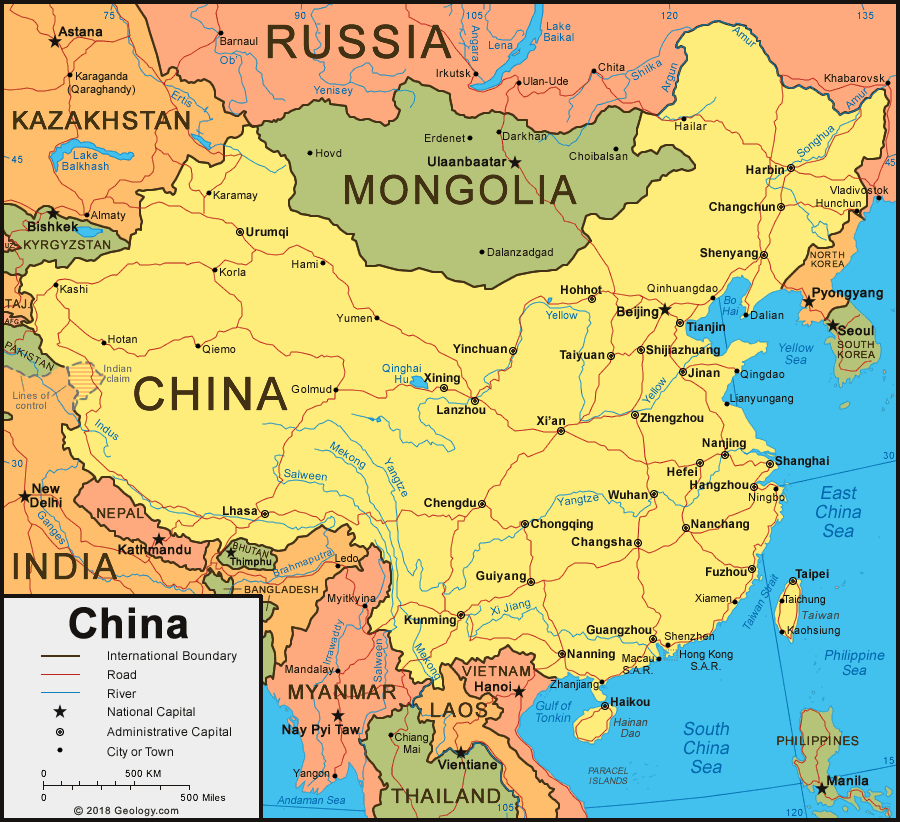
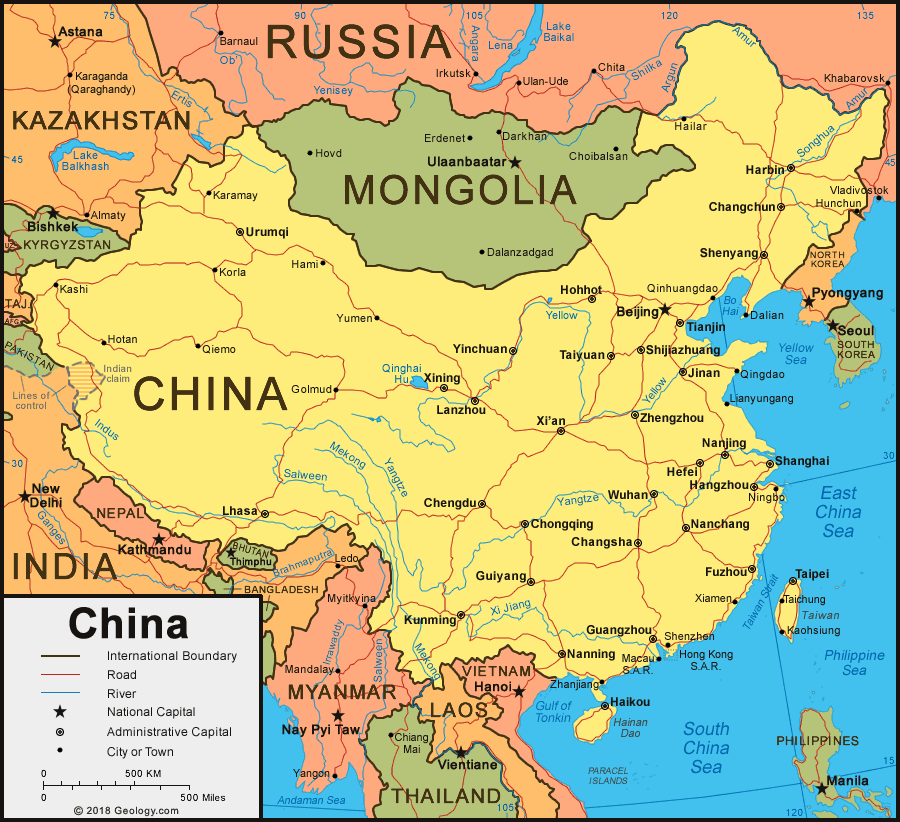
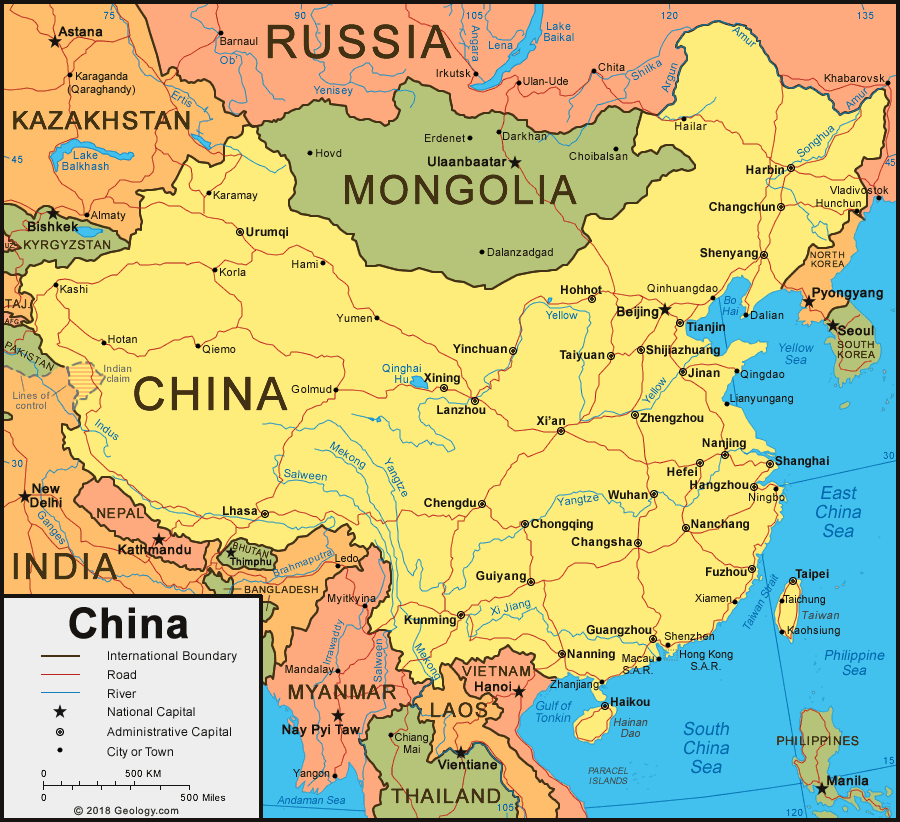
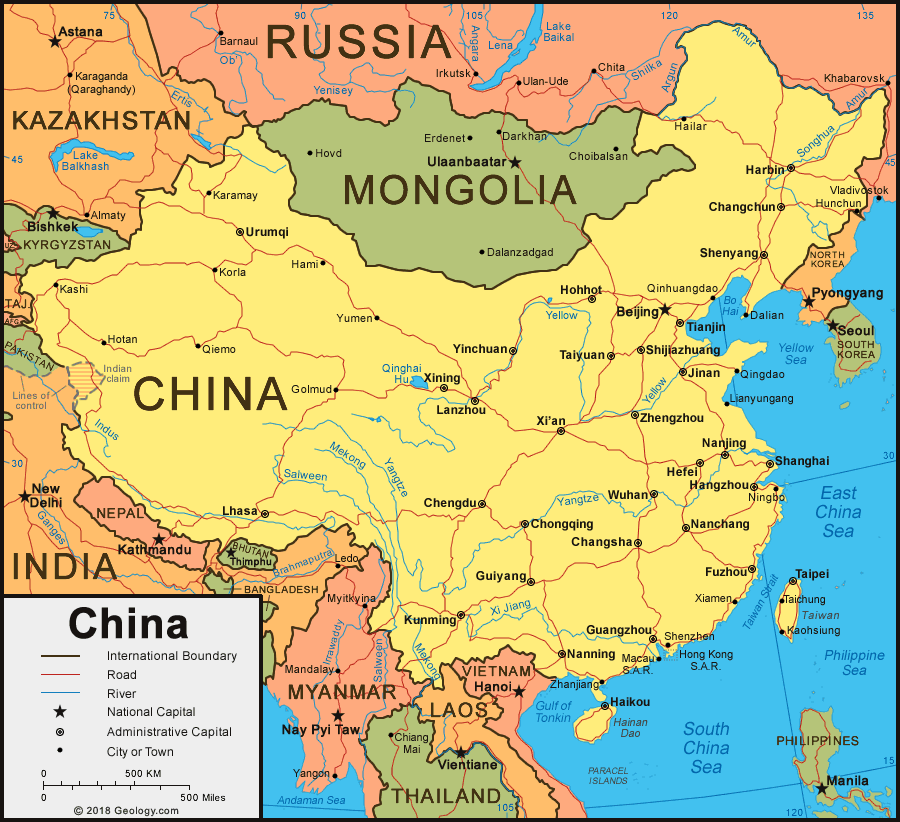
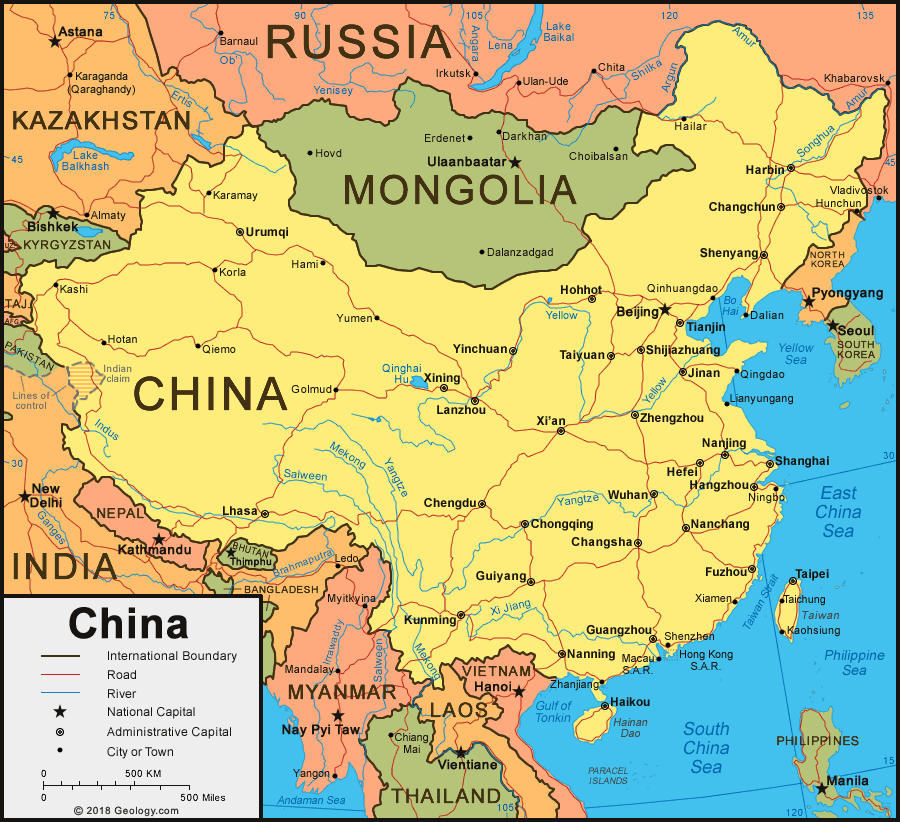
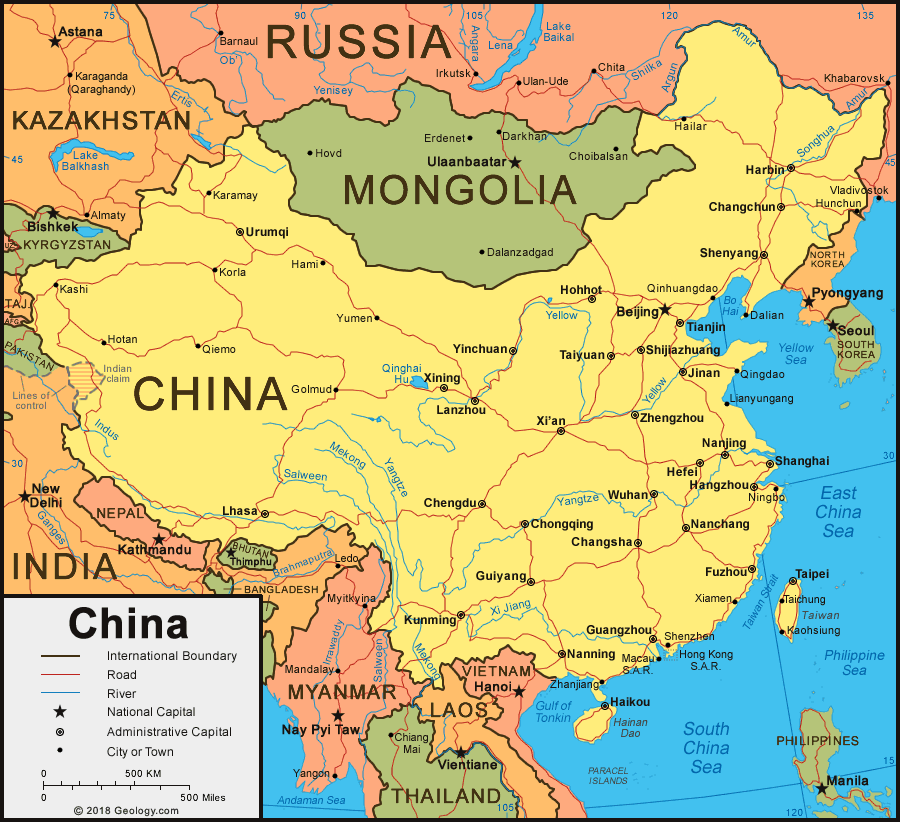

 Industry of Southeast Asia Industrialization in Southeast Asia is a relatively recent phenomenon, much of the development having occurred only since the early 1960s. As mentioned above, industrialization policies have been critical goals in the market economies of the ASEAN countries; and, in all of them except Brunei, industry’s share of the GDP has grown considerably. The most significant increases have occurred in Singapore, Thailand, and the Philippines. Manufacturing in particular has accounted for the greatest changes, with Indonesia, Malaysia, and Thailand making especially large gains during the 1980s. Small factories dominate, both in terms of the number of companies and the number of workers employed. Agricultural processing is most important in virtually all nations. The notable exception is Singapore, where the manufacture of a variety of products, headed by electrical and electronic and transport equipment, is dominant. In Thailand, Myanmar, and the Philippines, textiles and clothing are significant, as is the chemical industry in Thailand and Indonesia. Light, labour-intensive goods, such as electrical and electronic products, are increasingly important. It is in the manufacture of these products and textiles that the most employment has been gained. Tin is the most important metallic mineral in the region in terms of value, and Thailand, Malaysia, and Indonesia account for more than half of world production. In Malaysia and elsewhere, however, alluvial lodes are becoming depleted, and the remaining concentrations are less economical to mine. Fluctuating market prices have also discouraged tin production. Nickel, copper, and chromite are also mined, although the quantities produced in the region are minor in terms of world production. Southeast Asia has considerable reserves of oil and natural gas, notably in Indonesia, Malaysia, and Brunei. Trade Given Southeast Asia’s strategic location and the early development of trade there, it is not surprising that trade is especially important to all nations in the region. The value of regional trade is about one-third that of the United States. Most striking is the almost total dominance of trade by the market economies. Exports, as a percentage of the GDP, are small in Cambodia, Myanmar, Vietnam, and Laos and moderately so in Thailand, the Philippines, and Indonesia. Countries with a relatively large proportion of export trade are Singapore, Malaysia, and Brunei. Composition of exports is important. In this respect, Indonesia—the trade structure of which long has been dominated by oil—has been relatively successful in diversifying its exports toward plywood, rattan, coffee, rubber, and textiles. Conversely, Malaysia, with a trade pattern of exporting palm oil, tropical hardwoods, and tin, now derives the majority of its export income from petroleum products. This revenue has been used to build up the country’s industrial base. Thailand exhibits a much less diverse export structure, where food and manufactured goods account for nearly all of its total trade. Likewise, Brunei relies almost entirely on its petroleum exports. Singapore, however, has utilized its unique geographic position and highly educated labour force to attract multinational corporations. As a result, investment in the manufacturing and, increasingly, service sectors has greatly expanded. Intraregional trade among the ASEAN members, while important, accounts for only about one-fifth of Southeast Asia’s total trade. Philippine trade within the region is especially small, reflecting its long-term orientation toward the United States. Far more important, therefore, is the trade with countries outside the region, dominated by that with Japan, Europe, and the United States; increasingly significant, however, is the trade with Taiwan, China (especially Hong Kong), and South Korea.1. Settlements Importance of Rivers Fertile Land: The soil near rivers was great for farming, thanks to regular flooding that added nutrients. Trade and Travel: Rivers made moving things and people easy, which helped trade and communication. Protection: Rivers could act as natural barriers, making it harder for enemies to attack. Food: Rivers were full of fish and other food, adding to what people could eat. Energy: People used the river's flow to power machines, for example, grinding grain. Cleanliness: Rivers were used to wash away waste, keeping settlements cleaner. Culture: Rivers often had spiritual importance, and ceremonies and stories revolved around them. Common Geographic Features of Ancient Civilizations Mesopotamia: the Tigris and Euphrates Rivers in central Iraq Indus River Valley: the river runs in the northwestern part of India Nile River Valley: the major river of Egypt Yellow River Valley: a major river flowing through the southern part of China Rivers provided water, food, transportation, and shaped the way of life and development of these ancient civilizations. Impact of Mountains on Settlements Mountains served as barriers to early settlement due to the lack of technology to cross them. The Himalayan Mountains isolated much of India and China during their early development. Impact of Deserts on Migration Deserts posed significant challenges to people who wanted to migrate due to their harsh and unforgiving conditions. Notable deserts include the Empty Quarter in Saudi Arabia and the Sahara Desert in Africa. Changes in Migration and Cultural Blending Advancements in transportation technology post-Industrial Revolution increased cultural blending. Transportation advancements enabled global migration. Before, cultures were isolated, focusing on beliefs and local adaptations. The Industrial Revolution transformed migration and cultural blending. 2. How Humans Modify and Adapt to Their Environment Ways Humans Modify Their Environment Mining: Removing the earth's surface for precious metals. Irrigation: Diverting water for farming. Transportation: Moving goods with trains, cars, airplanes, and boats. Mining Strip mining removes large layers of the earth. Can impact the environment by removing plants and polluting water sources. Irrigation Diverting water for farming and urban development. Transportation Moving goods using trains, cars, airplanes, and boats. Human Adaptation to the Environment Adjusting to environmental conditions by changing behavior. Examples: Wearing specific clothing, using specific building materials. Human Modification of the Environment Changing the earth to meet human needs by physically altering the environment. Examples: Dams, canals, roads, bridges. Impact of Weather and Geological Events on Humans Events like earthquakes, hurricanes, and cold weather affect human settlements. Examples: Building earthquake-resistant buildings, creating levees, using ice for tourism. 3. Understanding Culture Introduction to Culture Culture refers to the way of life of a group of people who live in a particular place. It includes traditions, beliefs, values, and the way they do things. Cultural Characteristics Religious traditions Language Family values Laws Cultural characteristics make each culture unique. Cultural Representations Art Architecture Music Literature Cultural representations express a culture's creativity and show their beliefs and history to the world. Government and Culture Types of government reflect cultural beliefs and traditions. Examples: democratic republic, communist state. The way a country is governed tells a lot about its culture. Economic Systems and Cultures Economic systems reflect cultural values. Examples: bartering, modern economies (e.g., United States, China). How people earn and spend money also reflects their culture. Spread of Cultural Ideas Trade: Spreading ideas through interactions during trade. Travel: Visitors bringing new ideas. War: Conquering armies imposing beliefs. Cultural ideas spread through trade, travel, and war. Multicultural Societies Blending of multiple cultural and ethnic groups. Common in advanced societies with immigration. Multicultural societies create something new by bringing together different cultures. Cultural Adaptation Cultures can change and adapt by taking new ideas and blending them with their own traditions. Example: 'Tex-Mex' food, which blends Mexican and Texan traditions.Geography and Early HistoryGeography and Early IndiaTCI Lesson 7 The Geography and Early Settlement of Egypt and KushGeography and the early development of RomeQuestion 1 Category: Current Events Question: What was the primary demand of the Kenyan Gen Z protesters featured in the BBC documentary Unmasked: The Truth Behind the Gen Z Protests? Options: A) Free education B) Repeal of the Finance Bill 2024 C) Climate change action D) New elections Correct Answer: B) Repeal of the Finance Bill 2024 Explanation: The BBC documentary highlights that Kenyan youth protested to demand the repeal of the Finance Bill 2024, which proposed tax hikes raising $2.7 billion. Question 2 Category: Science Question: Which gas, discovered on the sun before Earth, is the second most abundant element in the universe? Options: A) Hydrogen B) Oxygen C) Helium D) Nitrogen Correct Answer: C) Helium Explanation: Helium was first detected in the sun’s spectrum in 1868 and is the second most abundant element after hydrogen in the universe. Question 3 Category: Current Events Question: Which Kenyan city was the epicenter of the Gen Z protests covered in the BBC documentary Unmasked: The Truth Behind the Gen Z Protests? Options: A) Mombasa B) Nairobi C) Kisumu D) Eldoret Correct Answer: B) Nairobi Explanation: Nairobi, Kenya’s capital, was the main hub for the #OccupyParliament protests, with significant events like the Parliament breach occurring there, as shown in the documentary. Question 4 Category: History Question: Which empire, known for its vast trade networks, was centered in modern-day Turkey and lasted until the early 20th century? Options: A) Roman Empire B) Ottoman Empire C) Mongol Empire D) Byzantine Empire Correct Answer: B) Ottoman Empire Explanation: The Ottoman Empire, spanning over 600 years until 1922, was a major trade and cultural power centered in modern-day Turkey. Question 5 Category: Current Events Question: According to the BBC documentary, what technology helped document evidence of police brutality during the Kenyan Gen Z protests? Options: A) Drones B) Smartphone videos C) Facial recognition software D) Satellite tracking Correct Answer: B) Smartphone videos Explanation: The documentary used smartphone videos from protesters and bystanders, analyzed via open-source data, to document police brutality during the 2024 protests. Question 6 Category: Geography Question: What is the smallest country in the world by land area? Options: A) Monaco B) Vatican City C) San Marino D) Liechtenstein Correct Answer: B) Vatican City Explanation: Vatican City, with an area of about 44 hectares, is the smallest sovereign state in the world by land area. Question 7 Category: Current Events Question: What hashtag became synonymous with the Kenyan Gen Z protests, as featured in the BBC documentary Unmasked: The Truth Behind the Gen Z Protests? Options: A) #KenyaRising B) #OccupyParliament C) #TaxRevolt D) #GenZFight Correct Answer: B) #OccupyParliament Explanation: The #OccupyParliament hashtag was widely used by protesters to rally against the Finance Bill 2024, as documented by the BBC. Question 8 Category: Entertainment Question: Which actor starred as the lead in the 2023 film Barbie and also played a role in La La Land? Options: A) Emma Stone B) Margot Robbie C) Zendaya D) Saoirse Ronan Correct Answer: B) Margot Robbie Explanation: Margot Robbie starred as Barbie in the 2023 film and played a supporting role in La La Land (2016). Question 9 Category: Sports Question: Which sport is played at the Wimbledon Championships? Options: A) Cricket B) Rugby C) Tennis D) Golf Correct Answer: C) Tennis Explanation: Wimbledon, held annually in London, is the oldest and one of the most prestigious tennis tournaments in the world. Question 10 Category: Technology Question: In web development, what does the acronym “CSS” stand for? Options: A) Computer Style System B) Cascading Style Sheets C) Creative Script Syntax D) Centralized Style Standard Correct Answer: B) Cascading Style Sheets Explanation: CSS (Cascading Style Sheets) is used to style and format the appearance of web pages written in HTML.Describe the features that characterize African American Studies Describe the developments that led to the incorporation of African American Studies into the U.S. Colleges and universities in the 1960’s and 1970’s. Explain how African American Studies enriches the study of early Africa and its relationship to communities of the African Diaspora? Describe the geographic features of the African Continent. Explain how Africa’s varied landscape affected patterns of settlement and trade between diverse Cultural Regions Describe the causes of the Bantu Expansion across the continent. Explain how the Bantu expansion affected the linguistic diversity of West and Central Africa and the genetic heritage of African Americans. Explain how Mali’s wealth and power created opportunities for the empire to explain its reach to other societies within Africa and across the Mediterranean. Explain the connection between the Sudanic-Empires and early generations of African Americans? Describe the institutional and community based models of education present in early West African Societies.