Loading...

Geography of the Philippines Pop Quiz
Quiz by Maddy Potter Wood
Customize this quiz to suit your class
Instantly translate to 100+ languages
Tag the questions with any skills you have. Your dashboard will track each student's mastery of each skill.
Give this quiz to my class
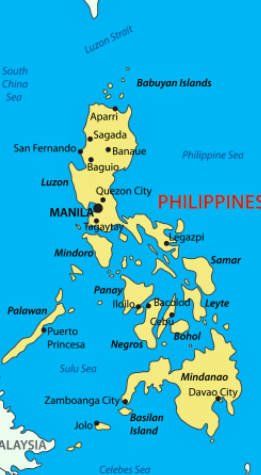
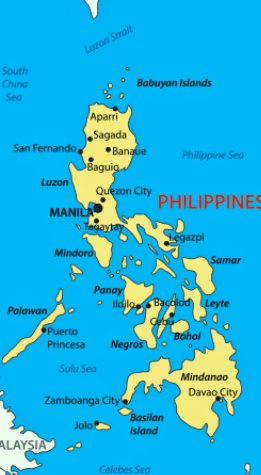
 Human geography of the PhilippinesPractice - Geography of the PhilippinesLopez Family Quiz Questions Family History Who are the original ancestors of the Lopez clan? Agapito and Cemona Lopez Antonio and Carmen Lopez Alejandro and Cecilia Lopez Alfonso and Clara Lopez How many children did Agapito and Cemona Lopez have? 6 8 10 12 Which family branch is represented by the color Yellow? Jeremias Lopez Rufina Lopez-Solivio Samuel Lopez Marina Lopez-Tenizo Which family member hosted the 28th Lopez Family Reunion? Marina Lopez-Tenizo Jeremias A. Lopez Family David Lopez Rebecca Lopez-Diaz What Bible verse was featured in the 2019 reunion theme "My Family, My Home"? Luke 12:34 John 3:16 Psalm 133:1 Proverbs 22:6 Family Traditions What traditional Filipino dish is always served at Lopez family gatherings? [Insert correct dish] [Option 2] [Option 3] [Option 4] What activity traditionally closes Lopez family reunions? Group photo Prayer circle Talent show Raffle drawing Which color represents the 3rd Generation in the family's color coding system? Yellow Blue Green Pink Gold/Brown What was the theme of the 29th Lopez Grand Family Reunion? "Worthy Legacy" "My Family, My Home" "Reconnecting Roots" "Faith and Family" What traditional game is always played at Lopez reunions? [Insert correct game] [Option 2] [Option 3] [Option 4] Family Geography In which city was the 28th Lopez Family Reunion held? Tacurong City Davao City Cotabato City Pigcawayan Where was the 29th Lopez Grand Family Reunion held? Belle's Farm & Resort, Midpapan Bonboc Garden [Option 3] [Option 4] In which Philippine region did Agapito and Cemona Lopez originally settle? [Insert correct region] [Option 2] [Option 3] [Option 4] Which family branch has members living in the most countries? [Insert correct branch] [Option 2] [Option 3] [Option 4] Family Members Who is the oldest living Lopez family member? [Insert name] [Option 2] [Option 3] [Option 4] Which family member served as the speaker at the 29th reunion? Ptr. Christie Joy L. Manzinares Rev. Ronie Balboa Laud Ptr. Alma Lopez Rev. David Lopez Who gave the welcome song at the 2020 reunion? Dorce S. Divinagracia Tenizo Family Grande Siblings Dumaan Family How many Lopez family members are named after Biblical figures? [Insert correct number] [Option 2] [Option 3] [Option 4] Recent Family Events Which new family tradition was introduced at the last reunion? [Insert correct tradition] [Option 2] [Option 3] [Option 4] How many family members attended the last reunion (in person and virtually)? [Insert correct number] [Option 2] [Option 3] [Option 4] Bible Knowledge (Filipino Family Edition) Which Bible verse is the theme for the 2025 reunion? Colossians 2:5 Psalm 133:1 Proverbs 22:6 Philippians 2:1-2 In the Bible, who said "As for me and my house, we will serve the Lord"? Joshua Moses Abraham David Which biblical character is known for his wisdom and is often quoted in Filipino family gatherings? Solomon Paul Peter John Which psalm begins with "Blessed is everyone who fears the Lord, who walks in his ways"? Psalm 128 Psalm 23 Psalm 91 Psalm 119 What does Proverbs say is "the beginning of wisdom"? Fear of the Lord Knowledge Understanding PrudenceIndustry of Southeast Asia Industrialization in Southeast Asia is a relatively recent phenomenon, much of the development having occurred only since the early 1960s. As mentioned above, industrialization policies have been critical goals in the market economies of the ASEAN countries; and, in all of them except Brunei, industry’s share of the GDP has grown considerably. The most significant increases have occurred in Singapore, Thailand, and the Philippines. Manufacturing in particular has accounted for the greatest changes, with Indonesia, Malaysia, and Thailand making especially large gains during the 1980s. Small factories dominate, both in terms of the number of companies and the number of workers employed. Agricultural processing is most important in virtually all nations. The notable exception is Singapore, where the manufacture of a variety of products, headed by electrical and electronic and transport equipment, is dominant. In Thailand, Myanmar, and the Philippines, textiles and clothing are significant, as is the chemical industry in Thailand and Indonesia. Light, labour-intensive goods, such as electrical and electronic products, are increasingly important. It is in the manufacture of these products and textiles that the most employment has been gained. Tin is the most important metallic mineral in the region in terms of value, and Thailand, Malaysia, and Indonesia account for more than half of world production. In Malaysia and elsewhere, however, alluvial lodes are becoming depleted, and the remaining concentrations are less economical to mine. Fluctuating market prices have also discouraged tin production. Nickel, copper, and chromite are also mined, although the quantities produced in the region are minor in terms of world production. Southeast Asia has considerable reserves of oil and natural gas, notably in Indonesia, Malaysia, and Brunei. Trade Given Southeast Asia’s strategic location and the early development of trade there, it is not surprising that trade is especially important to all nations in the region. The value of regional trade is about one-third that of the United States. Most striking is the almost total dominance of trade by the market economies. Exports, as a percentage of the GDP, are small in Cambodia, Myanmar, Vietnam, and Laos and moderately so in Thailand, the Philippines, and Indonesia. Countries with a relatively large proportion of export trade are Singapore, Malaysia, and Brunei. Composition of exports is important. In this respect, Indonesia—the trade structure of which long has been dominated by oil—has been relatively successful in diversifying its exports toward plywood, rattan, coffee, rubber, and textiles. Conversely, Malaysia, with a trade pattern of exporting palm oil, tropical hardwoods, and tin, now derives the majority of its export income from petroleum products. This revenue has been used to build up the country’s industrial base. Thailand exhibits a much less diverse export structure, where food and manufactured goods account for nearly all of its total trade. Likewise, Brunei relies almost entirely on its petroleum exports. Singapore, however, has utilized its unique geographic position and highly educated labour force to attract multinational corporations. As a result, investment in the manufacturing and, increasingly, service sectors has greatly expanded. Intraregional trade among the ASEAN members, while important, accounts for only about one-fifth of Southeast Asia’s total trade. Philippine trade within the region is especially small, reflecting its long-term orientation toward the United States. Far more important, therefore, is the trade with countries outside the region, dominated by that with Japan, Europe, and the United States; increasingly significant, however, is the trade with Taiwan, China (especially Hong Kong), and South Korea.Geographic, Linguistic and Ethnic Dimensions of Philippine Literary History from Pre-Colonial to the ContemporaryGeographic, linguistic, and ethnic dimensions of Philippine literary history from pre-colonial to the contemporary.Geography of the Colonies (5-1)Geography of the Middle East Review