


Gilded Age
Quiz by Kevin Speranza
Feel free to use or edit a copy
includes Teacher and Student dashboards
Measure skillsfrom any curriculum
Measure skills
from any curriculum
Tag the questions with any skills you have. Your dashboard will track each student's mastery of each skill.
With a free account, teachers can
- edit the questions
- save a copy for later
- start a class game
- automatically assign follow-up activities based on students’ scores
- assign as homework
- share a link with colleagues
- print as a bubble sheet
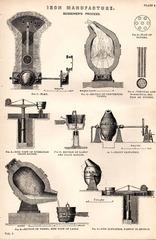
- Q 1/38Score 0produces mass quantities of steel; the blasting of oxygen through molten pig iron to produce high quality steel that's lighter and stronger than iron.29Bessemer Process


38 questions
Show answers
- Q1produces mass quantities of steel; the blasting of oxygen through molten pig iron to produce high quality steel that's lighter and stronger than iron.Bessemer Process30s
- Q2A train route across the United States that was finished in 1869. It was the project of two railroad companies: the Union Pacific built from the east, and the Central Pacific built from the west. The two rail lines met in Promontory Utah. The Central Pacific laborers were predominantly Chinese, and the Union Pacific laborers predominantly Irish. Both groups often worked under harsh conditions.transcontinental railroad30s
- Q3American inventor and educator; his interest in electrical and mechanical devices to aid people with hearing impairments led to the development and patent of the telephone.Alexander Graham Bell30s
- Q4Wealthy railroad tycoon that started building his wealth in the steamboat industry but moved to railroads and created a monopoly.Vanderbilt30s
- Q5Policy that government should interfere as little as possible in the nation's economy. "hands off"laissez-faire30s
- Q6An economic system in which individuals depend on supply and demand and the profit margin to determine what to produce, how to produce, how much to produce, and for whom to produce. The quest for improvement financially and materially motivates consumers and producers.free enterprise system30s
- Q7A business owned by stockholders who share in its profits but are not personally responsible for its debts.corporation30s
- Q8A person who organizes, manages, and takes on the risks of a business.entrepreneur30s
- Q9a late 1800's phrase, coined by Mark Twain to describe the tremendous wealth caused by the industrial age and the ostentatious lifestyles it allowed the very rich. The great industrial success of the U.S. and the fabulous lifestyles of the wealthy hid the many social, economic & political problems of the time, including a high poverty rate, a high crime rate, and corruption in the government.Gilded Age30s
- Q10A term used to describe people who do business in a good way and served the nation in a positive way such as increasing product supply by building factories, raising production, & expanding markets. They also build libraries, universities, and other public services.(philanthropy)captain of industry30s
- Q11A Scottish-born American industrialist and philanthropist who founded the Carnegie Steel Company in 1892. By 1901, his company dominated the U.S. steel industry (monopoly).Andrew Carnegie30s
- Q12Refers to the industrialists or big business owners who gained huge profits by paying their employees extremely low wages. They also drove their competitors out of business by selling their products cheaper than it cost to produce it. Then when they controlled the market, they hiked prices high above original price.robber baron30s
- Q13A party organization that recruits voter loyalty with tangible incentives and is characterized by a high degree of control over member activity. ( Boss Tweed )Political Machine30s
- Q14American inventor best known for inventing the electric light bulb, acoustic recording on wax cylinders (phonograph), and motion picture camera.Thomas Edison30s
- Q151) Goodwill to fellow human beings 2) A charitable gift, act or organizationphilanthropy30s


