Solve real-world and mathematical problems involving numerical expressions with rational numbers using the four operations.
Develop a uniform probability model by assigning equal probability to all outcomes, and use the model to determine probabilities of events.
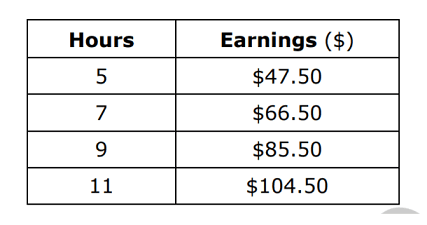
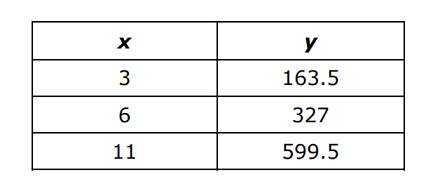
Identify the unit rate (constant of proportionality) within two quantities in a proportional relationship using tables, graphs, equations, and verbal descriptions.
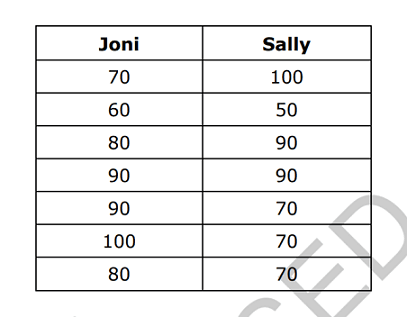
Use measures of center and measures of variability for numerical data from random samples to draw comparative inferences about two populations.
Apply properties of operations as strategies to: • Add, subtract, and expand linear expressions with rational coefficients. • Factor linear expression with an integer GCF.
Create equations and graphs to represent proportional relationships.
Use facts about supplementary, complementary, vertical, and adjacent angles in a multi-step problem to write and solve equations for an unknown angle in a figure.
Compute unit rates associated with ratios of fractions to solve real-world and mathematical problems.
Construct equations to solve problems by reasoning about the quantities. o Fluently solve multistep equations with the variable on one side, including those generated by word problems. o Compare an algebraic solution to an arithmetic solution, identifying the sequence of the operations used in each approach. o Interpret the solution in context.
Use scale factors and unit rates in proportional relationships to solve ratio and percent problems.
Solve multi-step real-world and mathematical problems posed with rational numbers in algebraic expressions. • Apply properties of operations to calculate with positive and negative numbers in any form. • Convert between different forms of a number and equivalent forms of the expression as appropriate.
Understand area and circumference of a circle. • Understand the relationships between the radius, diameter, circumference, and area. • Apply the formulas for area and circumference of a circle to solve problems.
Generate multiple random samples (or simulated samples) of the same size to gauge the variation in estimates or predictions, and use this data to draw inferences about a population with an unknown characteristic of interest.
For an event described in everyday language, identify the outcomes in the sample space which compose the event, when the sample space is represented using organized lists, tables, and tree diagrams.
Solve problems involving scale drawings of geometric figures by: • Building an understanding that angle measures remain the same and side lengths are proportional. • Using a scale factor to compute actual lengths and areas from a scale drawing. • Creating a scale drawing.
Understand that, just as with simple events, the probability of a compound event is the fraction of outcomes in the sample space for which the compound event occurs.
Construct inequalities to solve problems by reasoning about the quantities. o Fluently solve multi-step inequalities with the variable on one side, including those generated by word problems. o Compare an algebraic solution process for equations and an algebraic solution process for inequalities. o Graph the solution set of the inequality and interpret in context.
Collect data to calculate the experimental probability of a chance event, observing its long-run relative frequency. Use this experimental probability to predict the approximate relative frequency.
Understand that statistics can be used to gain information about a population by: • Recognizing that generalizations about a population from a sample are valid only if the sample is representative of that population. • Using random sampling to produce representative samples to support valid inferences.
Understand that a proportion is a relationship of equality between ratios. o Represent proportional relationships using tables and graphs. o Recognize whether ratios are in a proportional relationship using tables and graphs. o Compare two different proportional relationships using tables, graphs, equations, and verbal descriptions.
Calculate the measure of variability of a data set and understand that it describes how the values of the data set vary with a single number. o Understand the mean absolute deviation of a data set is a measure of variability that describes the average distance that points within a data set are from the mean of the data set. o Understand that the range describes the spread of the entire data set. o Understand that the interquartile range describes the spread of the middle 50% of the data.
Solve real-world and mathematical problems involving: • Area and perimeter of two-dimensional objects composed of triangles, quadrilaterals, and polygons. • Volume and surface area of pyramids, prisms, or three-dimensional objects composed of cubes, pyramids, and right prisms.
Track each student's skills and progress in your Mastery dashboards