Loading...


GRADE 7-SCIENCE
Quiz by Mercy Paglinawan
Tag the questions with any skills you have. Your dashboard will track each student's mastery of each skill.
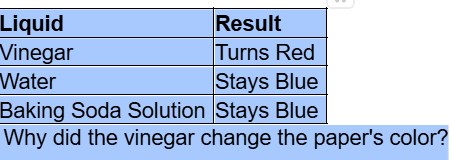
A student tests three liquids using blue litmus paper.
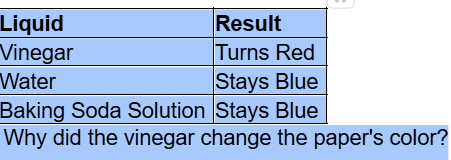
Vinegar contains acidic properties.
Acidic solutions turn blue litmus red.
Vinegar is sour and strong.
Vinegar is a colored liquid.
A student adds spoonfuls of sugar to a glass of cold water while stirring.
Spoon 1-3: Sugar disappears.
Spoon 4: Sugar grains settle at the bottom and do not disappear even with stirring.
Scientifically, why did the sugar stop dissolving?
A student tests three liquids using blue litmus paper.
Saltwater is boiled in a pot until all the water is gone. White crystals remain at the bottom.
What does this prove about saltwater?
A student views a letter "e" under a compound microscope.
Actual Object: "e"
Image Seen: "ə" (Upside down and reversed)
Why does the image appear inverted?
Compare the diagrams of two cells.
Cell A: Rectangular shape, large vacuole, thick outer layer.
Cell B: Irregular round shape, small vacuoles.

A runner breathes heavily after a race. Oxygen moves from the lungs----->blood -----> muscle cells.
Why do the muscle cells need this oxygen?
Context: A diagram shows the levels of biological organization:
Cell ------> Tissue -------> Organ ---------> Organ System -------> Organism
Why is this organization important for survival?
A car travels along a straight road.
Time 0s: Speed is 0 m/s.
Time 5s: Speed is 10 m/s.
Time 10s: Speed is 20 m/s.
Scientifically, describe the car's motion.
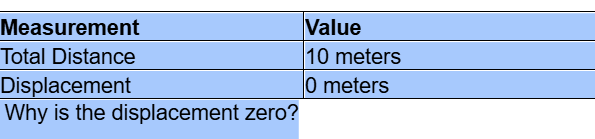
A student walks 5 meters North, stops, and walks 5 meters South (back to the start).
An alarm clock is placed inside a sealed glass jar. When the air is pumped out (creating a vacuum), the ringer is seen vibrating, but no sound is heard.
Why is the sound silent?
A metal spoon and a plastic spoon are placed in a cup of hot water. The handle of the metal spoon feels hot quickly.
Why does the metal heat up faster?
Study the map coordinates. A typhoon is located at 15°N Latitude, 121°E Longitude.
Why is it important to use both Latitude and Longitude?
The Philippines is near the equator. We receive direct rays from the sun almost all year round.
How does this affect our climate?
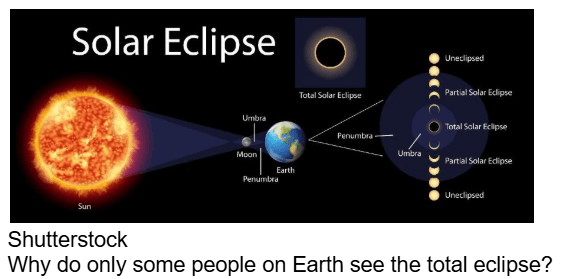
Diagram of a Solar Eclipse: Sun — Moon — Earth. The Moon blocks the view of the Sun.
A graph shows the "Greenhouse Effect." Heat enters the atmosphere, but some is trapped by gases like Carbon Dioxide (CO2).
What happens if CO2 levels increase too much?