
placeholder image to represent content

GRADE 9-SCIENCE

Quiz by Mercy Paglinawan

Our brand new solo games combine with your quiz, on the same screen

Correct quiz answers unlock more play!

New Quizalize solo game modes
15 questions
Show answers
  • Q1

    A student measures her heart rate before and after running 100 meters.

    *Resting Heart Rate: 70 beats per minute (bpm)

    *Heart Rate After Run: 130 bpm

    Scientifically, why did the heart rate increase drastically during the physical activity?

    The muscles need more blood flow to move the legs faster during the run.

    The heart pumps faster to keep the blood warm so the muscles do not cramp.

    The running motion shakes the body, causing the heart to beat faster to stabilize organs.

    Cells require more oxygen for respiration to produce the ATP energy needed for contraction.

    300s
  • Q2

    A botanist crosses a red-flowered plant (RR) with a white-flowered plant (WW). All the resulting offspring (RW) have pink flowers.

    How does this result challenge the traditional concept of Dominance?

    It proves that the environment changed the color of the flowers after they grew.

    The red color is weaker than usual, so it fades into pink.

    The red and white paints mixed together inside the seed.

    It shows Incomplete Dominance, where neither gene fully masks the other.

    300s
  • Q3

    An aquatic plant is placed in a test tube with water at varying distances from a light source. The number of bubbles produced per minute is counted.

    Table 1: Bubbles vs. Distance

     Distance from Light (cm)  Bubbles per minute 

    Question Image

    The plant prefers being close to the lamp because it mimics the sun.

    Light intensity decreases with distance, slowing down the rate of photosynthesis.

    The plant gets colder as it moves away, making it shiver and release bubbles.

    Closer distance provides more heat, boiling the water to create bubbles.

    300s
  • Q4

    A study in a local forest shows that after the extinction of a specific species of hawk (predator), the population of field mice (prey) exploded, followed by a sharp decline in the grass (producer) population.

    Question: What does this sequence of events indicate about ecosystem stability?

    Ecosystems rely on balance; removing a keystone species disrupts the entire food web.

    The grass died because of a disease, which is unrelated to the hawks.

    The mice are eating the grass just to annoy the farmers nearby.

    The hawks were unnecessary because the mice are surviving better without them.

    300s
  • Q5

    Substance A melts at 800°C and conducts electricity when dissolved in water. Substance B melts at 115°C and does not conduct electricity.

     Based on these properties, how would you classify Substance A?

    It is a covalent compound because it dissolves in water.

    It is a metal because it conducts electricity.

    It is an ionic compound due to the strong electrostatic forces and presence of ions.

    It is a very hard rock because it has a high melting point

    300s
  • Q6

    You have 1 mole of Carbon-12 and 1 mole of Magnesium-24. When placed on a balance, the Magnesium weighs twice as much as the Carbon.

     If both samples contain 6.02 x10²³atoms, why are the masses different?

    The Magnesium atoms are larger and heavier than Carbon atoms.

    The scale must be broken because 1 mole should always equal 1 mole.

    Magnesium is a metal, and metals are always heavier than non-metals.

    There are actually more atoms in the Magnesium pile than the Carbon pile.

    300s
  • Q7

    Methane (CH4) is a gas at room temperature, while Octane (C8H18 ) is a liquid.

    Scientifically, why does increasing the number of carbon atoms change the phase of the substance?

    Octane is heavier, so gravity pulls it down into a liquid state.

    Methane is a gas because it is used for cooking, while Octane is for cars.

    Larger molecules have stronger intermolecular forces, requiring more energy to separate.

    Adding more carbon atoms cools the molecule down, freezing it into a liquid.

    300s
  • Q8

    Ethene (C2H4) is used to ripen fruits artificially. It contains a carbon-carbon double bond. Ethane (C2H6) has only single bonds and does not ripen fruit.

    Question: What determines the specific chemical function of Ethene?

    Ethene is a gas, while Ethane is a solid.

    Ethane is too heavy to enter the fruit skin.

    Ethene has fewer hydrogen atoms, leaving room for the fruit smell.

    The double bond makes Ethene more reactive and chemically distinct.

    300s
  • Q9

    Two volcanoes are monitored. Volcano X erupts gently with flowing lava. Volcano Y explodes violently, sending ash high into the air. Analysis shows Magma X has low silica content, while Magma Y has high silica content.

    How does silica content determine the eruptive style?

    High silica makes magma viscous (thick), trapping gases until they burst under pressure.

    Silica burns at a higher temperature, causing more fire in the eruption.

    Silica is a type of explosive powder found inside rocks.

    Low silica makes the magma heavy, so it cannot explode upwards.

    300s
  • Q10

    Graph A shows the average global temperature rising over the last 100 years. Graph B shows the concentration of Carbon Dioxide ($CO_2$) rising over the same period.

    What scientific mechanism links these two graphs?

    CO2destroys the ozone layer, letting more sun in.

    CO2 is  a greenhouse gas that traps infrared heat radiating from the Earth's surface.

    The heat makes people breathe faster, releasing more CO2

    As the sun gets hotter, it produces more CO2 on Earth.

    300s
  • Q11

    When observing the night sky, Star A appears blue-white, while Star B appears red.
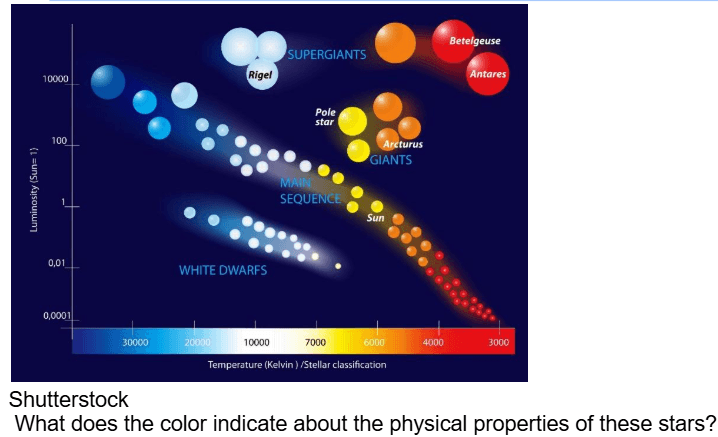
    Question Image

    Star A is made of ice reflecting the ocean, while Star B is made of lava.

    Star B is closer to Earth, so its light is shifted to red.

    Star B is burning fiercely, which is why it looks red like fire.

    Star A is hotter and has a higher surface temperature than Star B.

    300s
  • Q12

     A cannonball is fired at different angles with the same speed.

    *Angle 30°: Range = 100m

    *Angle 45°: Range = 120m

    *Angle 60°: Range = 100m

      Why does the 45-degree angle produce the maximum range?

    Angles higher than 45° make the ball go too high and get stuck in the wind.

    Gravity does not affect objects fired at exactly 45 degrees.

    It is the middle number between 0 and 90, so it is the strongest.

    It provides the optimal balance between vertical height and horizontal velocity.

    300s
  • Q13

    A small car and a massive truck are traveling at the same speed of 60 km/h. When they hit the brakes at the same time, the truck takes a much longer distance to stop. Explain this using the concept of momentum.

    The truck has more tires, so it slides further.

    The truck has greater mass, resulting in higher momentum that requires a larger impulse to stop.

    The car is lighter, so the wind stops it faster.

    The truck driver has a slower reaction time than the car driver.

    300s
  • Q14

    A pendulum is released from a height. As it swings down to the lowest point, its speed increases. As it swings back up, it slows down.

    How is energy conserved in this system (ignoring air resistance)?

    Gravity adds energy to the ball to make it move, then takes it away.

    Energy is created as it falls and destroyed as it rises.

    Potential energy transforms into kinetic energy on the way down, and back to potential on the way up.

    The string generates power to push the pendulum back and forth.

    300s
  • Q15

    In a hydropower plant, water falls from a height to spin a turbine, which is connected to a generator.

    Which sequence best describes the energy transformations occurring here?

    Potential Energy  -------->  Kinetic Energy --------> Mechanical Energy --------> Electrical Energy.

    Water Energy -------> Electrical Energy.

    Kinetic Energy --------> Heat Energy -------->  Light Energy.

    The water washes the electrons off the turbine blades to make current.

    300s

Teachers give this quiz to your class