Loading...

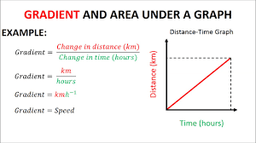
Gradient and Area under a Graph
Quiz by MR. MOHD AFANDY BIN IBRAHIM
Customize this quiz to suit your class
Instantly translate to 100+ languages
Tag the questions with any skills you have. Your dashboard will track each student's mastery of each skill.
Give this quiz to my class


 In many cases, cells must move materials from an area of lower concentration to an area of higher concentration, or “up” their concentration gradient. Such movement of materials is known as active transport. Unlike passive transport, active transport requires a cell to expend energy. CELL MEMBRANE PUMPS Ion channels and carrier proteins not only assist in passive trans- port but also help with some types of active transport. The car- rier proteins that serve in active transport are often called cell membrane “pumps” because they move substances from lower to higher concentrations. Carrier proteins involved in facilitated diffusion and those involved in active transport are very similar. In both, the molecule first binds to a specific kind of carrier protein on one side of the cell membrane. Once it is bound to the molecule, the protein changes shape, shielding the molecule from the hydrophobic interior of the phospholipid bilayer. The protein then transports the molecule through the membrane and releases it on the other side. However, cell membrane pumps require energy. Most often the energy needed for active transport is supplied directly or indirectly by ATP. Sodium-Potassium Pump One example of active transport in animal cells involves a carrier protein known as the sodium-potassium pump. As its name sug- gests, this protein transports Na ions and K ions up their con- centration gradients. To function normally, some animal cells must have a higher concentration of Na ions outside the cell and a higher concentration of K ions inside the cell. The sodium- potassium pump maintains these concentration differences. Follow the steps in Figure 5-6 on the next page to see how the sodium-potassium pump operates. First, three Na ions bind to the carrier protein on the cytosol side of the membrane, as shown in step . At the same time, the carrier protein removes a phosphate group from a molecule of ATP. As you can see in step , the phos- phate group from the ATP molecule binds to the carrier protein. Step shows how the removal of the phosphate group from ATP supplies the energy needed to change the shape of the carrier pro- tein. With its new shape, the protein carries the three Na ions through the membrane and then forces the Na ions outside the cell where the Na concentration must remain high. 3 2 1 SECTION 2 OBJECTIVES ● Distinguish between passive transport and active transport. ● Explain how the sodium-potassium pump operates. ● Compare endocytosis and exocytosis. VOCABULARY active transport sodium-potassium pump endocytosis vesicle pinocytosis phagocytosis phagocyte exocytosis www.scilinks.org Topic: Active Transport Keyword: HM60018 mb06se_homs02.qxd 5/18/07 11:02 AM Page 103 104 CHAPTER 5 K+ K+ K+ K+ K+ K+ INSIDE OF CELL OUTSIDE OF CELL Carrier protein Cell membrane P P P P Na+ Na+ Na+ ATP ADP Na+ Na+ Na+ Na+ Na+ Na+ 1 2 3 4 5 6 At this point, the carrier protein has the shape it needs to bind two K ions outside the cell, as step shows. When the K ions bind, the phosphate group is released, as indicated in step , and the carrier protein restores its original shape. As shown in step this time, the change in shape causes the carrier protein to release the two K ions inside the cell. At this point the carrier protein is ready to begin the process again. Thus, a complete cycle of the sodium-potassium pump transports three Na ions out of the cell and two K ions into the cell. At top speed, the sodium-potassium pump can transport about 450 Na ions and 300 K ions per second. The exchange of three Na ions for two K ions creates an electrical gradient across the cell membrane. That is, the outside of the membrane becomes positively charged relative to the inside of the membrane, which becomes relatively negative. In this way, the two sides of the cell membrane are like the positive and nega- tive terminals of a battery. This difference in charge is important for the conduction of electrical impulses along nerve cells. The sodium-potassium pump is only one example of a cell membrane pump. Other pumps work in similar ways to transport important metabolic materials across cell membranes.PASSIVE TRANSPORT Cell membranes help organisms maintain homeostasis by controlling what substances may enter or leave cells. Some substances can cross the cell membrane without any input of energy by the cell in a process known as passive transport. DIFFUSION The simplest type of passive transport is diffusion. Diffusion is the movement of molecules from an area of higher concentration to an area of lower concentration. This difference in the concentration of molecules across a distance is called a concentration gradient. Consider what happens when you add a sugar cube to a beaker of water. As shown in Figure 5-1, the sugar cube sinks to the bottom of the beaker. This sinking makes the concentration of sugar mole- cules greater at the bottom of the beaker than at the top. As the cube dissolves, the sugar molecules begin to diffuse slowly through the water, moving towards the lower concentration at the top. Diffusion is driven entirely by the molecules’ kinetic energy. Molecules are in constant motion because they have kinetic energy. Molecules move randomly, traveling in a straight line until they hit an object, such as another molecule. When they hit some- thing, they bounce off and move in a new direction, traveling in another straight line. If no object blocks their movement, they con- tinue on their path. Thus, molecules tend to move from areas where they are more concentrated to areas where they are less concentrated, or “down” their concentration gradient. In the absence of other influences, diffusion will eventually cause the molecules to be in equilibrium—the concentration of molecules will be the same throughout the space the molecules occupy. Returning to the example in Figure 5-1, if the beaker of water is left undisturbed, at some point the concentration of sugar molecules will be the same throughout the beaker. The sugar concentration will then be at equilibrium. SECTION 1 OBJECTIVES ● Explain how an equilibrium is established as a result of diffusion. ● Distinguish between diffusion and osmosis. ● Explain how substances cross the cell membrane through facilitated diffusion. ● Explain how ion channels assist the diffusion of ions across the cell membrane. VOCABULARY passive transport diffusion concentration gradient equilibrium osmosis hypotonic hypertonic isotonic contractile vacuole turgor pressure plasmolysis cytolysis facilitated diffusion carrier protein ion channel Sugar Water 1 2 3 FIGURE 5-1 Sugar molecules, initially in a high concentration at the bottom of a beaker, , will move about randomly through diffusion, , and eventually reach equilibrium, . At equilibrium the sugar concentration will be the same throughout the beaker. Diffusion occurs naturally because of the kinetic energy the molecules possess. 3 2 1 Copyright © by Holt, Rinehart and Winston. All rights reserved. 98 CHAPTER 5 It is important to understand that even at equilibrium the ran- dom movement of molecules continues. But because there is an equal concentration of molecules everywhere, molecules are just as likely to move in one direction as in any other. The random movements of many molecules in many directions balance one another, and equilibrium is maintained. Diffusion Across Membranes Cell membranes allow some molecules to pass through, but not others. If a molecule can pass through a cell membrane, it will diffuse from an area of higher concentration on one side of the membrane to an area of lower concentration on the other side. Diffusion across a membrane is also called simple diffusion, and only allows certain molecules to pass through the membrane. The simple diffusion of a molecule across a cell membrane depends on the size and type of molecule and on the chemical nature of the membrane. A membrane can be made, in part, of a phospho- lipid bilayer, and certain proteins can form pores in the membrane. Molecules that can dissolve in lipids may pass directly through the membrane by diffusion. For example, because of their nonpolar nature, both carbon dioxide and oxygen dissolve in lipids. Molecules that are very small but not soluble in lipids may diffuse across the membrane by moving through the pores in the membrane.Align Panel: This panel allows you to align one or more objects the the artboard or other objects. Alignment: Formatting the appearance of text with the margins of the text box. Anchor Point Tool: Allows you to add or remove handles to create a curve on an anchor point. Anchor Points: A point on a path indicates a change of direction. Appearance Panel: This panel shows you the fill, strokes, graphic styles, and effects that have been applied to an object, group or layer and are able to modify theses from this panel directly. Area Type Tool: This occurs when using the type tool and you click and drag a text box, the text will automatically wrap inside the box. Blend Tool: This tool allows you to combine shapes/colors between two or more objects to create a new object between the original, blending the colors and shapes by inserting the middle steps to get from one object to the next. Blob Brush Tool: This tool is used to create free-form objects that can have a more hand-drawn feel. Brushes: Allows you to set the appearance/style of a path, can be applied to existing paths or used to create new paths. Clipping Masks: This command allows you to mask objects to a shape so that only areas that lie within the shape are visible, the mask and objects that are masked are called a clipping set. Closed Path: A path that has the same beginning and ending point. It forms a complete shape that can be filled with color or text. Create Outlines: This command converts text to closed paths and can be found in the Type Menu. Curvature Pen Tool: Allows you to simply create paths with curved anchor points. Curves: Can be applied to an anchor point using handles to create an arched line. Direct Select Tool: Allows you to select individual points of any path. Effects: These can be added to objects to create quick dynamic characteristics. Eraser Tool: This tool allows you to remove anchor points and cut through paths. Expand Objects: This allows you to divide a single object into multiple objects that make up its appearance. Eyedropper Tool: This tool allows you to sample the color or text from an existing part of the artwork. Global Swatches: This is a color swatches that will be automatically updated throughout your artwork when you change them, indicated with a white triangle in the corner of the swatch. Graphic Styles: A set of reusable appearance attributes that allow you to quickly change the look of an object. Grouping: This command allows you to link objects together so that they can be moved, scaled, rotator, or copy. Groups can be nested inside other groups. Hierarchy: To create visual order in design, controlling what the viewer looks at in order using size, color, contrast, etc… Image Trace: This command allows you to convert a raster image into a vector artwork. Isolation Mode: This mode allows you to adjust single objects/groups inside a group without ungrouping the group. Join Tool: This tool joins paths and anchor points together quickly. Kerning: This is the adjustment of the space between two individual letters. Knife Tool: This tool allows you to split an object into 2 pieces along a freehand path you draw. Leading: This is the adjustment of the space between lines of text. Live Corners: This widget appears when using the Direct Select tool and a corner is selected, when used this will create a rounded corner. Live Paint: This command allows you to quickly apply colors to objects in a complex design. Open Path: A path that does not end, not connected back to the original anchor point. Overflow Text: This occurs when the text box is too small to house all the text and is indicated by a small red plus sign in the bottom right corner of the text box. Paintbrush Tool: This tool is used to create free-form paths that can have a more hand-drawn feel. Paragraph Spacing: The space that occurs between lines of text. Pathfinder Panel: This panel allows you to create complex shapes by selecting 2 or more objects and using the buttons in the panel to cut, combine, or divide the objects. Paths: These are created when 2 or more points are connected, these are created using the pen tool. Pen Tool: It allows you to create and edit anchor points and paths. Pencil Tool: This tool is used to create free-form shapes or lines, the accuracy of the lines can be adjusted. Perspective Tool: This tool allows you to place elements on a perspective grid to adjust objects on a different perspective, automatically snapping to the perspective grid. Placeholder Text: Text that is placed in a text box that "holds a place" in a design to allow for creating a layout or adjust the text design. Point Type Tool: This occurs when when using the type tool and you click once, the text will continue without wrapping. Readability: The characteristics of fonts and styles that make test easy to identify and read. Scale, Shear, Distort Objects: This set of commands allows you to adjust the size and perspective of objects. Scissors Tool: This tool allows you to split a path into 2 pieces. Selection Tool: Allows you to select paths, objects or groups by click or dragging over them. Shape Builder Tool: This interactive tool allows you to create complex shapes by merging and erasing simpler objects. Shapes Tools: A group of tools to create basic shapes without using the pen tool (rectangle, ellipse, polygon, star, etc…). Smooth Tool: This tool will smooth a complex path and reduce the number of anchor points. Swatches: This is a saved color that can be applied in a design via the swatches panel and can be grouped, these can include gradients and patterns. Text Wrapping: This is when the text in a text box automatically wraps to the next line when it reaches the edge of the box. Threading Text: This is the ability to create 2 or more text boxes that are linked, when text is added/adjusted in one box, it will affect the other(s). Touch Type Tool: This tool allows you to adjust individual letter in a previously created text box. Tracking: This is the adjustment of the overall spacing between letters. Transform Objects: This allows you to change the size of objects. Type on a Path Tool: This tool allows you to add text along any previously created path. Type Tool: This tool allows you to create text in a design. View Modes: Ability to view projects and adjust the display on the screen. Modes include Outlines, Presentation, & Full Screen. SYI-1.D: Describe the structure and/ or function of subcellular components and organelles. ★ SYI-1.E: Explain how subcellular components and organelles contribute to the function of the cell. ★ SYI-1.F: Describe the structural features of a cell that allow organisms to capture, store, and use energy. ★ ENE-1.B: Explain the effect of surface area-to-volume ratios on the exchange of materials between cells or organisms and the environment. ★ ENE-1.C: Explain how specialized structures and strategies are used for the efficient exchange of molecules to the environment. ★ ENE-2.A: Describe the roles of each of the components of the cell membrane in maintaining the internal environment of the cell. ★ ENE-2.B: Describe the Fluid Mosaic Model of cell membranes. ★ ENE-2.C: Explain how the structure of biological membranes influences selective permeability. ★ ENE-2.D: Describe the role of the cell wall in maintaining cell structure and function. ★ ENE-2.E: Describe the mechanisms that organisms use to maintain solute and water balance. ★ ENE-2.F: Describe the mechanisms that organisms use to transport large molecules across the plasma membrane. ★ ENE-2.G: Explain how the structure of a molecule affects its ability to pass through the plasma membrane. ★ ENE-2.H: Explain how concentration gradients affect the ★ movement of molecules across membranes. ★ ENE-2.I: Explain how osmoregulatory mechanisms contribute to the health and survival of organisms. ★ ENE-2.J: Describe the processes that allow ions and other molecules to move across membranes. ★ ENE-2.K: Describe the membrane-bound structures of the eukaryotic cell. ★ ENE-2.L: Explain how internal membranes and membrane- bound organelles contribute to compartmentalization of eukaryotic cell functions. ★ EVO-1.A: Describe similarities and/or differences in compartmentalization between prokaryotic and eukaryotic cells. ★ EVO-1.B: Describe the relationship between the functions of endosymbiotic organelles and their free-living ancestral counterpartsHigh and Low gradient streamsFundamentals of gradient, curl and divergencePHOTOSYNTHESIS LIGHT DEPENDENT REACTION 1. Photosystem II (PSII) – Light Absorption & Water Splitting • Light energy (photons) excites electrons in chlorophyll molecules. • These high-energy electrons leave PSII and are passed into the electron transport chain (ETC). • Meanwhile, water molecules are split (photolysis) into: o O₂ (released as a by-product into the atmosphere) o H⁺ ions (protons, which build up inside the thylakoid) o Electrons (e⁻), which replace the ones lost by PSII. 2. Electron Transport Chain (ETC) • Excited electrons move through protein carriers embedded in the thylakoid membrane. • As they move, their energy pumps H⁺ ions into the thylakoid space, creating a proton gradient (high H⁺ inside, low outside). 3. ATP Production (ATP Synthase) • The buildup of H⁺ ions acts like a “waterfall” of potential energy. • These protons flow back across the membrane through ATP synthase, a protein complex that acts like a turbine. • This flow drives the conversion of ADP + Pi → ATP, which provides energy for the Calvin cycle. 4. Photosystem I (PSI) • Electrons arriving from the ETC enter PSI. • Sunlight excites them again, boosting them to a higher energy level. 5. NADPH Production • The energized electrons are transferred to NADP⁺. • Along with a proton (H⁺), this forms NADPH, another energy carrier. • NADPH is then delivered to the Calvin cycle to help build glucose. End Products of Light-Dependent Reactions: • ATP (energy source for Calvin cycle) • NADPH (reducing power for glucose synthesis) • O₂ (released into the atmosphere as waste) Light-Independent Reactions (Calvin Cycle) • These reactions do not directly require sunlight. • They occur in the stroma of the chloroplast (the fluid-filled space surrounding the thylakoids). • The inputs are ATP and NADPH (from light-dependent reactions) and CO₂ (from the atmosphere). • The outputs are glucose (C₆H₁₂O₆) and other carbohydrates. Think of the Calvin cycle as a factory that uses the energy and “raw materials” made in Stage I (ATP & NADPH) to build sugars. The 3 Main Steps of the Calvin Cycle 1. Carbon Fixation • CO₂ from the atmosphere enters the chloroplast and diffuses into the stroma. • Each CO₂ molecule attaches to a 5-carbon sugar called RuBP (ribulose-1,5-bisphosphate). • This reaction is catalyzed by the enzyme RuBisCO (Ribulose-1,5-bisphosphate carboxylase/oxygenase — the most abundant enzyme on Earth!). • The result is a short-lived 6-carbon compound, which immediately splits into two 3-carbon molecules called 3-PGA (3-phosphoglycerate). Summary: CO₂ + RuBP → 2 × 3-PGA 2. Reduction Phase • The 3-PGA molecules are “energized” and converted into G3P (glyceraldehyde-3-phosphate), a more energy-rich 3-carbon sugar. • This transformation requires: o ATP (provides energy) o NADPH (provides high-energy electrons and hydrogen atoms). • Some of the G3P molecules will eventually be combined to form glucose and other sugars. Summary: 3-PGA + ATP + NADPH → G3P 3. Regeneration of RuBP • Not all G3P molecules leave the cycle. Most of them are used to regenerate RuBP so the cycle can continue. • This regeneration also requires ATP. • For every 3 turns of the cycle, 5 G3P molecules are recycled to regenerate 3 molecules of RuBP. Summary: G3P + ATP → RuBP The Full Cycle Balance • To make one G3P molecule that can exit the cycle (and later form glucose), the cycle must run 3 times, fixing 3 molecules of CO₂. • To make one glucose molecule (C₆H₁₂O₆), the cycle must run 6 times (since glucose needs 6 carbon atoms). Inputs (for 1 glucose): • 6 CO₂ • 18 ATP • 12 NADPH Outputs: • 1 glucose (C₆H₁₂O₆) • 18 ADP + 18 Pi • 12 NADP⁺ Day vs Night Clarification • The Calvin Cycle is called light-independent, but that doesn’t mean it only happens at night. • It usually happens during the day because it depends on ATP and NADPH, which are only produced in light-dependent reactions (when sunlight is available). Simplified Analogy • Carbon fixation = The factory brings in CO₂ as raw material. • Reduction = Workers use energy (ATP & NADPH) to shape the raw material into useful products (G3P). • Regeneration = Some products are recycled to keep the factory running (RuBP is re-formed). • Output = After enough cycles, the factory produces glucose, the “food” of the plant.CELLULAR RESPIRATION CELLULAR RESPIRATION What is it? Cellular respiration is the process by which cells break down glucose (a simple sugar) and other organic molecules to release energy in the form of ATP (adenosine triphosphate), which powers cell activities. Overall equation: C6H12O6 + 6O2 ⟶ 6CO2 + 6H2O + ATP (energy) Stages of Cellular Respiration 1. Glycolysis (in the cytoplasm) • Where it happens: Cytoplasm (outside mitochondria) • What happens: o One molecule of glucose (6 carbons) is split into two molecules of pyruvate (3 carbons each). o 2 ATP are used to start the process. o 4 ATP are produced (net gain = 2 ATP). o 2 NADH (electron carriers) are also produced. Summary of glycolysis products per glucose: • 2 ATP (net gain) • 2 NADH • 2 Pyruvate 2. Krebs Cycle (Citric Acid Cycle) (in the mitochondrial matrix) • Where it happens: Mitochondrial matrix • What happens: o Each pyruvate (3C) is converted to acetyl-CoA (2C) before entering the cycle. o Acetyl-CoA combines with oxaloacetate (4C) to form citric acid (6C). o Through a series of enzyme-controlled reactions, citric acid is broken down, releasing CO₂, ATP, NADH, and FADH₂. Summary of Krebs Cycle products (per 2 pyruvates): • 2 ATP • 6 NADH • 2 FADH₂ • 4 CO₂ (exhaled as waste) 3. Electron Transport Chain (ETC) & Oxidative Phosphorylation (in the inner mitochondrial membrane) • Where it happens: Inner mitochondrial membrane (cristae) • What happens: o NADH and FADH₂ donate high-energy electrons to proteins in the ETC. o As electrons move through the chain, protons (H⁺) are pumped across the membrane, creating a proton gradient. o This gradient powers ATP synthase, which makes lots of ATP (like a turbine powered by flowing water). o Oxygen acts as the final electron acceptor, combining with electrons and hydrogen to form water (H₂O). Summary of ETC products: • About 34 ATP • H₂O Total Energy Yield from One Glucose (Aerobic Respiration) • Glycolysis → 2 ATP • Krebs Cycle → 2 ATP • ETC → ~34 ATP Total: ~38 ATP (usually 36 in eukaryotes due to energy costs) Anaerobic Respiration (When Oxygen is Absent) If oxygen is not available, cells switch to fermentation: • Alcoholic Fermentation (yeast & some bacteria): pyruvate → ethanol + CO₂ • Lactic Acid Fermentation (muscles & some bacteria): pyruvate → lactic acid These processes only make 2 ATP per glucose, much less efficient than aerobic respiration. Key Takeaway: Cellular respiration is like the cell’s power plant: glycolysis breaks glucose into smaller pieces, the Krebs cycle extracts more high-energy electrons, and the ETC uses those electrons to generate the bulk of ATP. Oxygen is essential for the final step, which is why we need to breathe to stay alive.