

Feel free to use or edit a copy
includes Teacher and Student dashboards
Measure skillsfrom any curriculum
Measure skills
from any curriculum
Tag the questions with any skills you have. Your dashboard will track each student's mastery of each skill.
With a free account, teachers can
- edit the questions
- save a copy for later
- start a class game
- automatically assign follow-up activities based on students’ scores
- assign as homework
- share a link with colleagues
- print as a bubble sheet


15 questions
Show answers
- Q1Kepler's first law says that the planets move around the Sun in an ellipse with the Sun at one focus. What is at the other focus?empty spacethe planet being considereda moonEarth30s
- Q2From Kepler's third law, a hypothetical planet that is twice as far from the Sun as Earth should have a period ofmore than 2 Earth years2 Earth yearsless than 2 Earth years30s
- Q3A meteor follows an elliptical orbit around the Sun. When does the meteor sweep through the greatest area in time t?When it is closest to the SunThe meteor sweeps through equal areas in the same amount of time anywhere in the orbitIt is impossible for the meteor to maintain an elliptical orbit therefore the question is not validWhen it is furthest from the Sun30s
- Q4Which of the following statement is best in accordance with Kepler's first law of planetary motion?All planets make one orbit of the Sun in exactly the same time period.The orbits of planets form an ellipse, with the Sun at one focus.Planets orbit in perfect circles, with the Sun slightly off-center.Planets farther from the Sun orbit proportionally faster.30s
- Q5The diagram shows four points along Earth's orbit as it revolves around the Sun. The shaded area in the sector bounded by Points 1 and 2 is the same as the shaded area in the sector bounded by Points 3 and 4. Which statement accurately compares the conditions at these four points?The Sun's gravitational pull on Earth is the same at Point 1 as it is at Point 3.The magnitude of Earth's acceleration is the same at all four points.Earth's speed is the same as it goes from Point 1 to Point 2 as when it goes from Point 3 to Point 4.It takes Earth the same amount of time to go from Point 1 to Point 2 as it does to go from Point 3 to Point 4.30s
- Q6According to Kepler’s first law, orbiting planets follow an elliptical path with the Sun at one of the focal points of the ellipse. Kepler’s second law states that a line from the Sun to the planet must always pass over an equal amount of area in an equal amount of time. Based on this information, which statement best describes the relationship between the speed of a planet and its distance from the Sun?The changes in the speed of an orbiting planet are independent of its distance from the Sun.Planets move at higher speeds when they are close to the Sun and lower speeds when they are far from the Sun.The speed of a planet is constant as it orbits the Sun.Planets move at lower speeds when they are close to the Sun and higher speeds when they are far from the Sun.30s
- Q7Newton said that any two masses will...combine into a larger mass.attract each other.push each other apart.30s
- Q8According to Newton's law of gravitation, the Earth and the Moon are gravitationally attracted to each other. The more massive Earth attracts the Moon with...the same force as the Moon attracts the Earth.a weaker force than the Moon attracts the Earth.a stronger force than the Moon attracts the Earth.a force that is sometimes stronger and other times weaker than the Moon attracts the Earth.30s
- Q9What states that "every object in the universe attracts every other object"?Newton's First Law of MotionNewton's Third Law of MotionNewton's Second Law of MotionNewton's Law of Universal Gravitation30s
- Q10Which of the following is Newton's Law on Gravitation?F = Gm1m2/r2F=Gm1m2/rF = Gm1m2/2rF = m1m2/2r30s
- Q11Two factors effecting the magnitude of the force of gravity between 2 objects are...distance and weightmass and matterweight and massmass and distance30s
- Q12Which of the following statements is correct with respect to G and g?The strength of G is determined by g.G is a fundamental constant, whereas g is a physical quantity and subject to change.Both G and g can change, but g can only change if you go to a different planet.G and g are both constant, but g is determined by the mass and radius of the Earth.30s
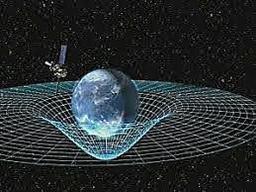
- Q13According to Newton, gravity was a force.... According to Einstein, gravity is a ________.forceconstant velocitycurvaturemystery30s
- Q14Which of these provides the best analogy for what massive objects do to spacetime?car driving in a circletennis ball in the dryerbowling ball on a rubber sheetcoat hanger in the closet30s
- Q15During what rare event was Einstein's theory of gravity confirmed?Summer SolsticeHalley's CometTotal Solar EclipseTotal Lunar Eclipse30s
