Loading...

Greek's Gods and Goddesses
Quiz by Quizalize Fun Quizzes
Customize this quiz to suit your class
Instantly translate to 100+ languages
Tag the questions with any skills you have. Your dashboard will track each student's mastery of each skill.
Give this quiz to my class
It is the home of the Gods who dwelt in fabulous palaces of marble and gold.

Atlantis
Mount Olympus
Who is the God of the sky and the chief God of the ancient Greeks?

Zeus
Cronus
It is the home of the Gods who dwelt in fabulous palaces of marble and gold.

Who is the God of the sky and the chief God of the ancient Greeks?

What is the name of the Greek Goddess of the earth?

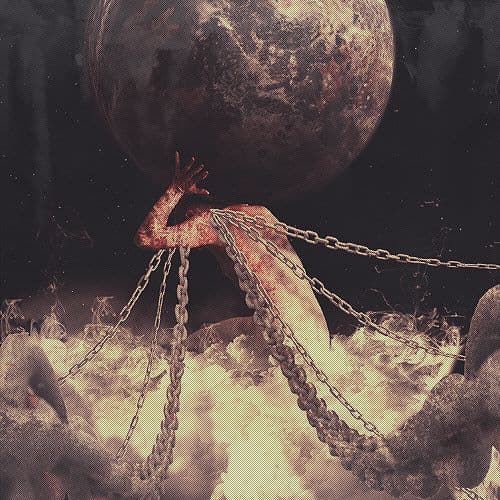
Who was the Titan condemned to carry the heavens upon his shoulders?
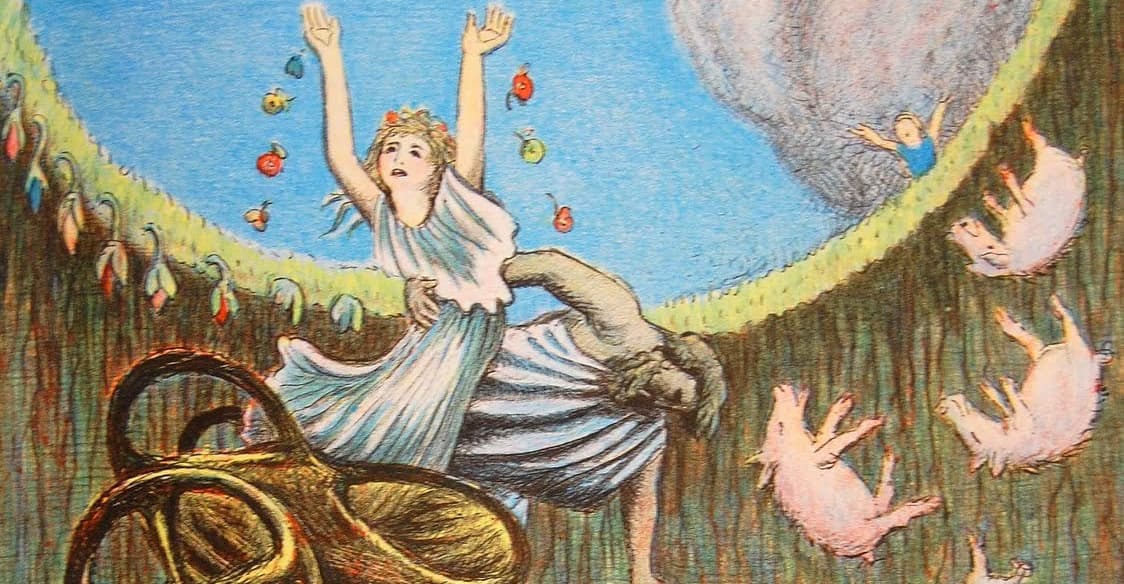
What fruit did Persephone eat to get her stuck in the Underworld?
Who was the Greek Goddess of the rainbow?

Who is Goddess of strife and discord?

"Kallisti" was the word inscribed in the golden apple thrown by Eris to the Goddesses, which led to the Trojan War, meaning?
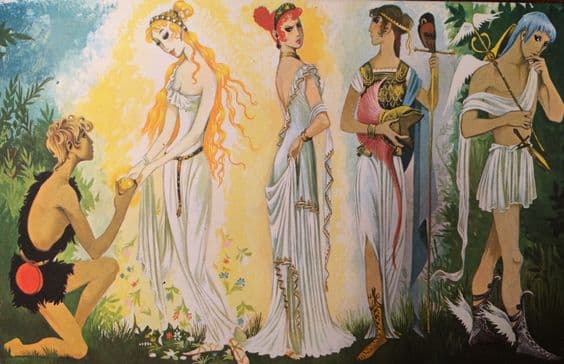
Who was “the face that launched a thousand ships”?
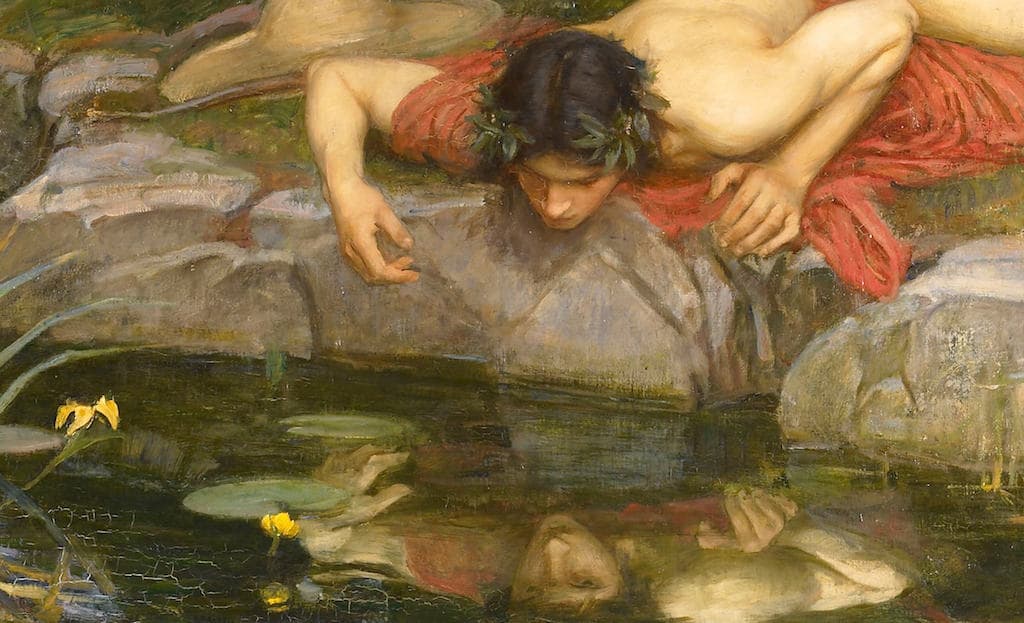
He fell in love with his own reflection in a pool of water and died staring at it for the remainder of his life.
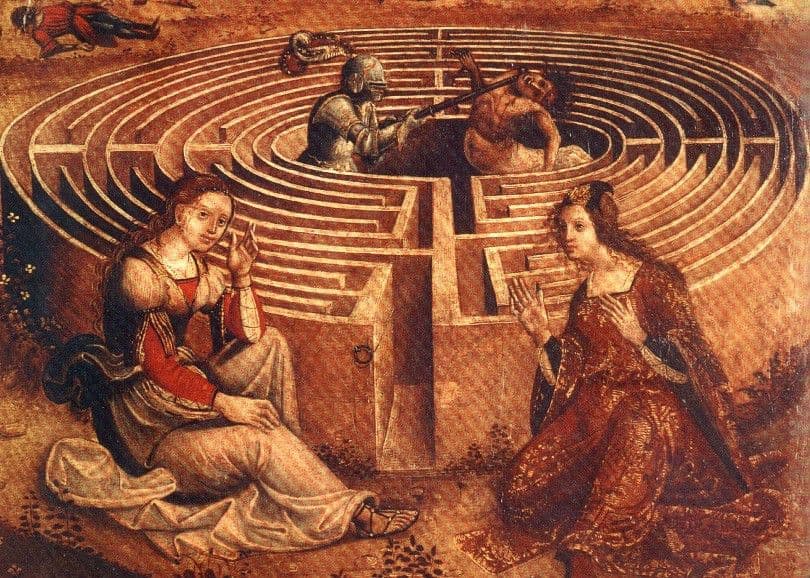
Who designed the labyrinth of King Minos?
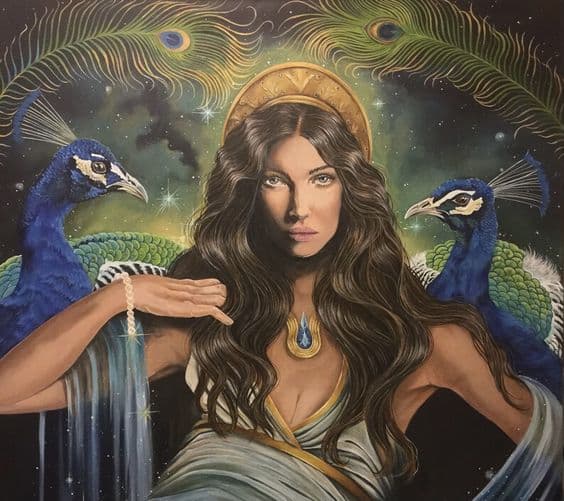
Who was the queen of the Gods?
Who was the Goddess of the Moon?

Who killed his father and married his mother?
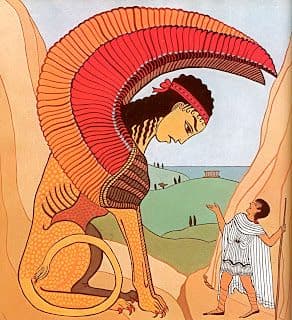
Who turned Arachne into a spider?
 REVIEW ON ANCIENT GREEK'S EVIDENCES OF SPHERICAL ERATHIt's Greek to Me [t comes from the GREEK name "Epilepsia" which means "taking hold of or seizing". - It is a disorder characterized by: recurrent seizures. SEIZURES R ectment transient attacks of: R epresent: R esult from: ASSOCIATED WITH: somatic, psychic, or, autonomic clinical featmes. clinical features of abnormally hyperexcitable cortical neurons. paroxvsmal and excessive electrical neuronal discharges. EEG changes & may be disturbance of consciousness. same causes of convulsions 1. Idiopathic epile~ • It is the commonest cause. no cause can be detected ( 65 % ) • It may be associated with positive family history in some cases. • It starts in the l st & 2nd decades in the form of: -- Grand ma! epilepsy. Petit mal epilepsy. Myoclonic epilepsy. Atonic seizures. 2. Secondary epilepsy A. Local causes in the brain: l. Congenital: 2. Traumatic: cerebral palsy. a cause can be detected cerebral contusion or laceration. 3. Inflammatory: 4. Neoplastic: 5. Degenerative: 6. Vascular: encephalitis, brain tumours. mening1t1s, presenile dementia. brain abscess. stroke (especially hemon-hagic), hypertensive encephalopathy. B. General causes with secondary effects on the brain: I. Toxic: 2. Iatrogenic: 3. Metabolic: 4. Endocrinal: 5. Organ failure: 6. Heart disease: 7. Nutritional: - Alcohol, cocaine, lead. - Lidocaine, INH. - j glucose & ! glucose. - Hypoparathyroidism. - Hepatic failme. - Adam's Stoke's attacks. - Pellagra. - Botulism, tetanus. - Ambilhar, Amphetamine, Aminophylline. - j Ca & ! Ca. - Hype1thyroid crisis. - Renal failure. - Fallot's tetralogy. - j Na & ! Na. - Vitamin B6 deficiency. 8. Physical: 9. HYSTERICAL. - High fevers. - Heat stroke. 136 137 CLINICAL PICTURE 1. GENERALISED SEIZURES " Excessive electrical discharges from cortical neurons in BOTH hemispheres simultaneously " I. II. 1. Grand Mal Epile~: 1. Pre-ictal stage "attacks of tonic-clonic convulsions " (aura) It is a warning sign of a coming attack. It may be: • Somatic: • Psychic: • Autonomic: 2. Ictal stage Myoclonus, Hallucinations. Tachycardia, (seizure) Sudden loss of consciousness: Parasthesias. Sweating. for seconds to minutes. -- Tonic phase (few seconds) o The UL & LL: o o o o The HEAD: The JAWS: CYANOSIS: are extended. is retracted to one side & the eye balls rolled up. are firmly clenched, with biting of the TONGUE. due to impaired respiration. There may be incontinence of urine. Clonic phase (few minutes) o The UL & LL: o The HEAD: 3. Post-ictal stage - It may be: • Somatic: • Psychic: • Autonomic: Drug of choice: contract & relax repeatedly & rapidly. jerks forcibly. (sequelae) Todd's paralysis(< 24 hours, due to neuronal exhaustion). Confusion. Vomiting. Carbamazepine (Tegretol) or Phenytoin (Epanutin) Petit Mal Epilepsy: "attacks of loss of consciousness " " Absence " It starts in childhood & improves at puberty & usually disappears at the age of 20. 2. It is NOT PRECEEDED by aura & NOT FOLLOWED by sequelae. 3. It is usually PRECIPITATED by: hyperventilation 4. It is characterized by: or photic stimulation. sudden loss of consciousness of short duration (few seconds). 5. It may be associated with: • High frequency ( 50 attacks / day). • Falling to the ground without warning. • Jerky movements of the head & UL Drug of choice: (myoclonic petit mal). Valproate (Depakine) or Succinimide (Zarontin) 137 138 Ill. M oclonic Seizures: "attacks of involuntary clonic movements " - It is characterized by: sudden, jerky, shock-like INVOLUNTARY muscle contraction. • The jerks are bilateral contractions, mainly of the shoulders and arms. • However, some patients repmtjerking in the lower limbs, trunk, or head. - It may be of 2 types: - Occurs singly • Simple: • As a pait of: I Drug of choice: IV. Atonic seizures: (no loss of consciousness). - Grand mal epilepsy (aura). - Petit mal epilepsy. Valproate (Depakine) or Clonazepam (Rivotril) I - Transient attacks of brief loss of postural tone, often resulting in falls and injuries. 2. PARTIAL SEIZURES "Excessive electrical discharges from cmtical neurons in a ce1tain area in ONE hemisphere" A. Simple seizures: " No disturbance in consciousness " - The CP depends on the site of the hyperexcitable neurones in the cerebral cortex, whether in: "Motor area or Senso,y areas". 1. Motor fits: • Focal fits: • Motor jacksonian fits: 2. General Sensory fits: • Focal fits: • Sensory jacksonian fits: 3. Special Senso1y fits: • Visual hallucinations: • Auditory hallucinations: • Olfactory hallucinations: B. Complex seizures: - SITE: movement of part of a limb or the whole limb. movement of one side of the body (see before). parasthesia of part of a limb or the whole limb. parasthesia of one side of the body (see before). irritation of the visual sensory area. irritation of the auditory sensory area. initation of the uncus. " disturbance in consciousness " The hyperexcitable neurons are in the Temporal lobe "Temporal lobe epilepsy". - DURATION: The seizure lasts few seconds to few minutes. - The seizure starts with A ura, followed by A bsence, Automatism, Amnesia: 1. 2. 3. 4. A ura: A bsence: Automatism: A mnesia: Olfactory hallucinations, Deja-vu phenomenon, Sensation of fear. Absent patient with staring eyes (with no response to conversation). Involuntary Purposeless acts: motor ( eg, lip smacking, chewing) or verbal. No recalling of the seizure. 138 139 3. PARTIAL SEIZURES ~ GENERALISED SEIZURES " Partial seizures may spread to involve the whole brain .- secondarily generalised seizures " . HY-sterical epilepsY • Usually: • The cause: • Incidence: young neurotic Sj2 . psychological & there is no organic lesion. usually occurs in the presence of people. • It is associated with: • EEG: • It is not associated with: normal. • Missed ttt. • Menses. • Alkalosis. anxiety, palpitaion & hyperventilation. tongue biting or incontinence of urine. • Alcohol use & Drug abuse ( e.g. cocaine ). • S timulation by photons & Hyperventilation. • S leep deprivation & Stress & sudden withdrawal of antiepileptic drngs. INVESTIGATIONS 1. EEG: • It is the most specific test for epilepsy because it records the electrical activity of the brain. • It shows specific pattern: 2. LOCAL INVESTIGATIONS: "Epilepsy waves". "CT & MRI of the brain" • To identify or exclude a LOCAL CAUSE of seizures in the brain. 3. GENERAL INVESTIGATIONS: "Laboratory investigations" • To search for a GENERAL CAUSE of seizures, e.g. blood glucose. 139 140 TREATMENT A. General Measures: 1. 2. Moderation of the patient's physical activity. A void the precipitating factors ( Alcohol, hyperventilation, photic stimulation ...... ). 3. A ketogenic diet is encouraged because it will induce acidosis: - Acidosis is beneficial as it raises the threshold of stimulation of the brain cells. B. Specific Treatment: 2. 1. Treatment of the cause in secondary epilepsy. Anti-epileptic drugs: a) Always sta1t with one drug, then add another drug if there is no response. b) Always stop the drugs ONLY if: • The patient stays free of symptoms for at least 2 years. • The patient has a normal EEG. 3. Side effects of Anti-epileptic drugs: I . Skin rash. 2. 3. Bone marrow depression. Ataxia. Drug 1. Barbiturates (Pbenonobarbitone) 2. Hydantoin (Epanutin) 3. Carbamazepine 4. Clonazepam 5. Valproate 6. Succinamide ANTI-EPILEPTIC DRUGS NEW ANTI-EPILEPTIC DRUGS - These drugs are new dtugs that may be used in resistant seizures. 1. Lamotrigine: 200 - 400 mg/ day. 2. Felbamate: 3. Gabapentin: 400- 800 mg/ day. 600 - 1200 mg/ day. \ " General rules for use ": Dose 100-600 mg I day 100-600 mg / day 200-600 mg I day 2-6 mg I day 500-1500 mg I day 500-1000 mg / day Best indicated - Broad spectrum. - Not for petit mal. - Grand mal. - Motor Jacksonian fits. - Grand mal. - Motor Jacksonian fits. - Complex seizures. - Not for petit ma!. - Myoclonic. - Grand mat. - Broad spectrum. - Petit mat. 140 141 STATUS EPILEPTICUS DEFINITION - A medical emergency: 1. Repeated attacks of generalized convulsions, with lack of recove,y of consciousness, 2. Persistent attack of seizure lasting for at least 30 minutes. OR, - If the convulsions are not stopped rapidly, coma deepens & death may occur due to: heart failure or respiratory failure or brain damage or hyperpyrexia. - The most common causes are: sudden withdrawal of anti-epileptic drugs & stroke. TREATMENT A. General Measures: l. Take care of: " ABC " • Place the patient on the ground, to guard against falling from bed. • Mouth gag & 02 inhalation ( endo-tracheal intubation may be needed). • Record the vital signs regularly. 2. Take a sample of: - Venous blood: for the level of: - A.tierial blood: for the level of: 3. a nti-epileptic drugs, a lcohol. pH, p0 2, pC02, HC0 3. Give cerebral dehydrating measures: e.g. Frusemide, cone. Mannitol, Dexamethazone. B. Specific Treatment: - Phenytoin with diazepam (or clonazepam) immediately: 1. Phenytoin: 2. Diazepam: Clonazepam: seizures recur: 15 mg I Kg slow infusion. 5 mg slowly IV, to be repeated after 5 minutes if seizures recur: maximum dose: 20 mg. OR: 2 mg slowly IV, to be repeated after 5 minutes if maximum dose: 6 mg. - If seizures persist after 20 min. of Phenytoin & diazepam: 3. PHENOBARBITONE: - In resistant cases: 200 mg infusion. 4. GENERAL ANAESTHESIA: may be used.What do an ancient Greek philosopher and a 19th century Quaker have in common with Nobel Prize-winning scientists? Although they are separated over 2,400 years of history, each of them contributed to answering the eternal question: what is stuff made of? It was around 440 BCE that Democritus first proposed that everything in the world was made up of tiny particles surrounded by empty space. And he even speculated that they vary in size and shape depending on the substance they compose. He called these particles "atomos," Greek for indivisible. His ideas were opposed by the more popular philosophers of his day. Aristotle, for instance, disagreed completely, stating instead that matter was made of four elements: earth, wind, water and fire, and most later scientists followed suit. Atoms would remain all but forgotten until 1808, when a Quaker teacher named John Dalton sought to challenge Aristotelian theory. Whereas Democritus's atomism had been purely theoretical, Dalton showed that common substances always broke down into the same elements in the same proportions. He concluded that the various compounds were combinations of atoms of different elements, each of a particular size and mass that could neither be created nor destroyed. Though he received many honors for his work, as a Quaker, Dalton lived modestly until the end of his days. Atomic theory was now accepted by the scientific community, but the next major advancement would not come until nearly a century later with the physicist J.J. Thompson's 1897 discovery of the electron. In what we might call the chocolate chip cookie model of the atom, he showed atoms as uniformly packed spheres of positive matter filled with negatively charged electrons. Thompson won a Nobel Prize in 1906 for his electron discovery, but his model of the atom didn't stick around long. This was because he happened to have some pretty smart students, including a certain Ernest Rutherford, who would become known as the father of the nuclear age. While studying the effects of X-rays on gases, Rutherford decided to investigate atoms more closely by shooting small, positively charged alpha particles at a sheet of gold foil. Under Thompson's model, the atom's thinly dispersed positive charge would not be enough to deflect the particles in any one place. The effect would have been like a bunch of tennis balls punching through a thin paper screen. But while most of the particles did pass through, some bounced right back, suggesting that the foil was more like a thick net with a very large mesh. Rutherford concluded that atoms consisted largely of empty space with just a few electrons, while most of the mass was concentrated in the center, which he termed the nucleus. The alpha particles passed through the gaps but bounced back from the dense, positively charged nucleus. But the atomic theory wasn't complete just yet. In 1913, another of Thompson's students by the name of Niels Bohr expanded on Rutherford's nuclear model. Drawing on earlier work by Max Planck and Albert Einstein he stipulated that electrons orbit the nucleus at fixed energies and distances, able to jump from one level to another, but not to exist in the space between. Bohr's planetary model took center stage, but soon, it too encountered some complications. Experiments had shown that rather than simply being discrete particles, electrons simultaneously behaved like waves, not being confined to a particular point in space. And in formulating his famous uncertainty principle, Werner Heisenberg showed it was impossible to determine both the exact position and speed of electrons as they moved around an atom. The idea that electrons cannot be pinpointed but exist within a range of possible locations gave rise to the current quantum model of the atom, a fascinating theory with a whole new set of complexities whose implications have yet to be fully grasped. Even though our understanding of atoms keeps changing, the basic fact of atoms remains, so let's celebrate the triumph of atomic theory with some fireworks. As electrons circling an atom shift between energy levels, they absorb or release energy in the form of specific wavelengths of light, resulting in all the marvelous colors we see. And we can imagine Democritus watching from somewhere, satisfied that over two millennia later, he turned out to have been right all along.Write simple RCQ for A1-A2 kids using: No Parking Medusa comes from Greek mythology. She was very beautiful and had two sisters. Unlike her sisters, she was a mortal. That means she could die. But one day, Athena punished Medusa and her two sisters. Their hair turned into snakes. And whoever saw Medusa's eyes would be turned into stones. In the end, Athena asked a hero, Perseus to cut down Medusa's head. Athena placed Medusa's head on her shield. And the shield had the power to turn onlookers to stones.Gr''ade 3 Questions based on this chapter: English Alexander was a king of the ancient Greek kingdom of Macedonia. By the age of thirty, he had created one of the largest empires in the world, stretching from Greece to northwestern India. When Alexander was young, a trader brought a horse which was difficult to mount. Let us read about how Alexander tames the horse. One day King Philip bought a fine horse. He was a strong animal and the king paid a high price for him. But he was wild and no man could mount him, or do anything at all with him. This horse is really wild. It cannot be tamed by the royal men. Many have tried and failed. We tried everything possible, your Majesty. We tried to whip him but that only made him worse. Glossary wild rough/harsh mount a horse to climb onto the back of a horse to tame to control whip to beat using a long rope King Philip asked his men to take the horse away. It is a pity to send such a fine horse away. I think the men do not know how to tame him. I can try taming this beautiful horse. Perhaps you can do better than them. But be careful, my son. You are still very young to mount this violent animal. Alexander wanted to (mount/feed/tame/ ride) the horse. If you would give me the order, I will try. I am sure I can manage this horse better than anyone else. Antonym(s) worse x better young x old fail x succeed If I fail, I will pay you the price of the horse, Father. The courtiers told Alexander that it might be dangerous for a young boy to try taming the wild horse. They laughed at him. Alexander went near the horse and turned his head towards the sun. He had noticed that the horse was afraid of his own shadow. I will name you Bucephalus. Stay calm and I will do no harm. The horse was afraid of his own (body/courtiers/King Philip/shadow). English He then spoke gently to the horse. Bucephalus means 'ox-head'— head of an ox, in Ancient Greek. When he had quietened him a little, he made a quick spring and leapt upon the horse's back. I thought the little prince would be killed by this dangerous animal. What a miracle! The horse has recognized the young prince as his master. Alexander let the horse run. When Bucephalus had become tired of running, Alexander reined him in and rode back to the place where his father was standing. Glossary noticed (here) to see afraid scared/frightened calm quiet gently softly quietened to become calmer and less noisy a miracle a wonder/unusual event to rein to check or guide a horse Look at the young prince! He is mounted well! But the horse is still wild! Antonym(s); laughed x cried afraid x brave. English When he reached the place where his father was standing, he leapt to the ground. His father ran and kissed him. Dear Father! I shall add My son! Macedonia is a small kingdom more territories and bring for you. You must seek a larger kingdom glory to our kingdom. that will be worthy of you. Fascinating Fact(s) Alexandria Bucephalus was a city founded by Alexander in memory of his loyal horse Bucephalus. During Alexander's invasion of India, he had fought against the Indian King, Porus, near the river Hydaspes (modern day river Jhelum, Pakistan). His horse Bucephalus died there and he honoured his horse by naming the city after it. Antonym(s) worthy x unworthy proud x ashamed You have carried me across countries and stood bravely beside me as I fought to win the numerous fierce battles. You have saved my life many times. I am truly proud of you, Bucephalus. (Mesopotamia/Minneapolis/ Macedonia/Minnesota) was a small kingdom for Alexander to rule. Glossary numerous many fierce strong and violent Alexander and Bucephalus were said to be always together, for when one of them was seen, the other was sure to be not far away. Bucephalus would never allow anyone to mount him, but his master. Alexander became the most famous king and warrior, and for that reason, he is called 'Alexander the Great!. Bhir Mind: At Bhir Mound however we find ourselves at a surer ground leaving hypothetical reconstructions behind This name is obviously very recent but the city of Bhir Mound belongs to the time of the Achaeme-nian rulers of Iran. The oldest structural remains at this site comprise rough stone structures which cannot be ascribed to a date earlier than the fifth or the sixth century B.C. The actual rule of this Iranian dynasty lasted from abour 518 B.C. to 359 B.C. Among the legacies they left behind, the most notable was the use of the Aramaic writing. It was from this script that the local writing called 'kharoshth .commonly employed in the north west to about the 5th century A.D., was derived. Bhir Mound was a flourishing city at the time of Alexander's 326 BC) He i He is even said to have left a Greek ear changed the whole outlook and the Greeks were soon driven out or destroyed by Chandragupta Maurya who extended his dominions as far as Afghanistan. Under the Mauryas the Bhir Mound city of Taxila rose to a pre-eminent position among the cities of the North West)It was here that Ashoka afterwards ruled as a viceroy on visit in the spring of 326 garrison here but his death the following year behalf of his father Bindusara, and here, too, that in the his father/According to Tibetan tradition Ashoka died at Taxila and was succeeded by his son. Kunala)(c. 237 229 B.C.). The name of this prince was perpetuated at Taxila by a commemorative stupa which, as Hiuen Tsiang says, was erected to mark the spot where the young viceroy had his eyes put out through the evil machinations of his stepmother. For three generations Taxila remained the administrative headquarters of the Mauryan viceroys and then in about 189 B.C passed into the hands of the Greeks of Bactria.commonly known as "Indo-Greeks ORIGINS AND MEANING OF HISTORY When was the first time you heard the word ‘history’? History has always been with us as people. How is history referred to in your language? History is common to all ethnic groups in Ghana. All ethnic groups in Ghana describe history in their local languages. The origins and meaning of history help us understand how past events have shaped the world we live in today. By exploring these beginnings, we can trace the development of societies, cultures, and civilisations, gaining insights into the experiences, challenges, and achievements of those who came before us. Understanding history offers us a deeper connection to our heritage and a clearer perspective on the present and future. The word ‘history’ has conventional and non-conventional origins or roots. Let’s delve deeper into these two main origins of history. The Non-conventional Origin of History History is not foreign to Ghanaians; we have always owned our history. This is known as non-conventional history. Its origins can be traced to the indigenous terms used by different communities and ethnic groups in Ghana to describe “history.” The Akans use the phrase ‘abakɔsɛm’ to refer to past events. The Dagbon people call it ‘Taarihi,’ the Ewes refer to it as ‘gbedenyawo’ or ‘blemanyawo,’ the Gas say ‘blemasaji,’ and the Gonjas use the term ‘Adrashɜη.’ As you can see, history is not new to our societies. Despite the different languages, one similarity across these non-conventional descriptions is their reference to significant past events. Though the words may vary, they all carry the same meaning and understanding, showing that history has always been part of our ethnic groups. Since prehistoric times, Ghanaians have preserved their history through narratives, songs, storytelling, drum language, oaths, and dirges. These sources reflect how Ghanaians understand and value history within their respective ethnic groups. Our understanding of history is shaped by our customs, practices, and traditions, such as chieftaincy, wars, marriages, and festivals. The Conventional Origin of History The word ‘history’ comes from the Greek word ‘historia,’ which means ‘inquiry’ in English. The term became popular and widely used in the 5th century BCE/BC when people began to study history in a more rational and structured way. This was the period when Herodotus described his investigation into the past, focusing on the events that led to the Persian War. Herodotus is often called the ‘father of history’ because of his early efforts to approach the study of history in a logical and systematic manner.