Loading...

Guess the first letter.
Quiz by Jairah Mae Gahum Cabillan
Customize this quiz to suit your class
Instantly translate to 100+ languages
Tag the questions with any skills you have. Your dashboard will track each student's mastery of each skill.
Give this quiz to my class



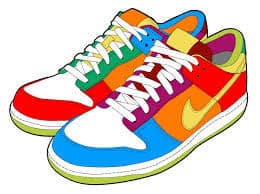


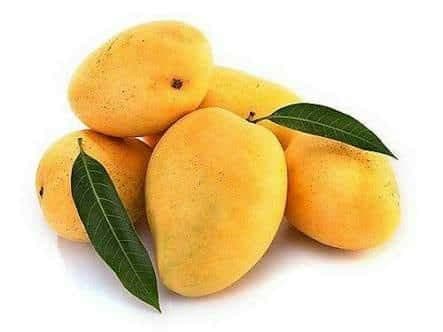


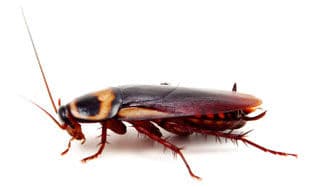






 MYTH The British helped the Jews displace the native Arab population of Palestine. FACT Herbert Samuel, a British Jew who served as the first High Commissioner of Palestine, placed restrictions on Jewish immigration “in the ‘interests of the present population’ and the ‘absorptive capacity’ of the country.”1 The influx of Jewish settlers was said to force the Arab fellahin (native peasants) from their land. This was when less than a million people lived in an area that now supports more than nine million. The British limited the absorptive capacity of Palestine when, in 1921, Colonial Secretary Winston Churchill severed nearly four-fifths of Palestine—some thirty-five thousand square miles—to create a new Arab entity, Transjordan. As a consolation prize for the Hejaz and Arabia (which are both now Saudi Arabia) going to the Saud family, Churchill rewarded Sharif Hussein’s son Abdullah for his contribution to the war against Turkey by installing him as Transjordan’s emir. The British went further and placed restrictions on Jewish land purchases in what remained of Palestine. By 1949, the British had allotted 87,500 acres of the 187,500 acres of cultivable land to Arabs and only 4,250 acres to Jews. This contradicted Article 6 of the Mandate which stated that “the Administration of Palestine…shall encourage, in cooperation with the Jewish Agency…close settlement by Jews on the land, including State lands and waste lands not acquired for public purposes.”2 Ultimately, the British admitted that the argument about the country’s absorptive capacity was specious. The Peel Commission said, “The heavy immigration in the years 1933–36 would seem to show that the Jews have been able to enlarge the absorptive capacity of the country for Jews.”3 MYTH The British allowed Jews to flood Palestine while Arab immigration was tightly controlled. FACT The British response to Jewish immigration set a precedent of appeasing the Arabs, which was followed for the duration of the Mandate. The British restricted Jewish immigration while allowing Arabs to enter the country freely. Apparently, London did not feel that a flood of Arab immigrants would affect the country’s “absorptive capacity.” During World War I, the Jewish population in Palestine declined because of the war, famine, disease, and expulsion by the Turks. In 1915, approximately 83,000 Jews lived in Palestine among 590,000 Muslim and Christian Arabs. According to the 1922 census, the Jewish population was 83,000, while the Arabs numbered 643,000.4 Thus, the Arab population grew exponentially while that of the Jews stagnated. In the mid-1920s, Jewish immigration to Palestine increased primarily because of anti-Jewish economic legislation in Poland and Washington’s imposition of restrictive quotas.5 The record number of immigrants in 1935 (see table) was a response to the growing persecution of Jews in Nazi Germany. The British administration considered this number too large, however, so the Jewish Agency was informed that less than one-third of the quota it asked for would be approved in 1936.6 The British gave in further to Arab demands by announcing in the 1939 White Paper that an independent Arab state would be created within ten years and that Jewish immigration was to be limited to 75,000 for the next five years, after which it was to cease altogether. It also forbade land sales to Jews in 95% of the territory of Palestine. The Arabs, nevertheless, rejected the proposal. Jewish Immigration to Palestine7 1919 1,806 1931 4,075 1920 8,223 1932 12,533 1921 8,294 1933 37,337 1922 8,685 1934 45,267 1923 8,175 1935 66,472 1924 13,892 1936 29,595 1925 34,386 1937 10,629 1926 13,855 1938 14,675 1927 3,034 1939 31,195 1928 2,178 1940 10,643 1929 5,249 1941 4,592 1930 4,944 By contrast, throughout the Mandatory period, Arab immigration was unrestricted. In 1930, the Hope Simpson Commission, sent from London to investigate the 1929 Arab riots, said the British practice of ignoring the uncontrolled illegal Arab immigration from Egypt, Transjordan, and Syria had the effect of displacing the prospective Jewish immigrants.8 The British governor of the Sinai from 1922 to 1936 observed, “This illegal immigration was not only going on from the Sinai, but also from Transjordan and Syria, and it is very difficult to make a case out for the misery of the Arabs if at the same time their compatriots from adjoining states could not be kept from going in to share that misery.”9 The Peel Commission reported in 1937 that the “shortfall of land is…due less to the amount of land acquired by Jews than to the increase in the Arab population.”10 MYTH The British changed their policy to allow Holocaust survivors to settle in Palestine. FACT The gates of Palestine remained closed for the duration of the war, stranding hundreds of thousands of Jews in Europe, many of whom became victims of Hitler’s “Final Solution.” After the war, the British refused to allow the survivors of the Nazi nightmare to find sanctuary in Palestine. On June 6, 1946, President Truman urged the British government to relieve the suffering of the Jews confined to displaced persons camps in Europe by immediately accepting 100,000 Jewish immigrants. Britain’s foreign minister Ernest Bevin replied sarcastically that the United States wanted displaced Jews to immigrate to Palestine “because they did not want too many of them in New York.”11 Some Jews reached Palestine, many smuggled in on dilapidated ships organized by the Haganah. Between August 1945 and the establishment of the State of Israel in May 1948, sixty-five “illegal” immigrant ships, carrying 69,878 people, arrived from European shores. In August 1946, however, the British began to intern those they caught in camps on Cyprus. Approximately 50,000 people were detained in the camps, and 28,000 remained imprisoned when Israel declared independence.12 MYTH As the Jewish population grew, the plight of the Palestinian Arabs worsened. FACT In July 1921, Hasan Shukri, the mayor of Haifa and president of the Muslim National Associations, sent a telegram to the British government in reaction to a delegation of Palestinians that went to London to try to stop the implementation of the Balfour Declaration. Shukri wrote: We are certain that without Jewish immigration and financial assistance there will be no future development of our country as may be judged from the fact that the towns inhabited in part by Jews such as Jerusalem, Jaffa, Haifa, and Tiberias are making steady progress while Nablus, Acre, and Nazareth where no Jews reside are steadily declining.13 The Jewish population increased by 470,000 between World War I and World War II, while the non-Jewish population rose by 588,000.14 The permanent Arab population increased by 120% between 1922 and 1947.15 This rapid growth of the Arab population was a result of several factors. One was immigration from neighboring states—constituting 37% of the total immigration to pre-state Israel—by Arabs who wanted to take advantage of the higher standard of living the Jews had made possible.16 The Arab population also grew because of the improved living conditions created by the Jews as they drained malarial swamps and brought improved sanitation and health care to the region. Thus, for example, the Muslim infant mortality rate fell from 201 per thousand in 1925 to 94 per thousand in 1945, and life expectancy rose from 37 years in 1926 to 49 in 1943.17 The Arab population increased the most in cities where large Jewish populations had created new economic opportunities. From 1922–1947, the non-Jewish population increased by 290% in Haifa, 131% in Jerusalem, and 158% in Jaffa. The growth in Arab towns was more modest: 42% in Nablus, 78% in Jenin, and 37% in Bethlehem.18 MYTH Jews stole Arab land. FACT Despite the growth in their population, the Arabs continued to assert they were being displaced. From the beginning of World War I, however, part of Palestine’s land was owned by absentee landlords who lived in Cairo, Damascus, and Beirut. About 80% of the Palestinian Arabs were debt-ridden peasants, semi-nomads, and Bedouins.19 Jews went out of their way to avoid purchasing land in areas where Arabs might be displaced. They sought land that was largely uncultivated, swampy, cheap, and—most important—without tenants. In 1920, Labor Zionist leader David Ben-Gurion expressed his concern about the Arab fellahin, whom he viewed as “the most important asset of the native population.” He insisted that “under no circumstances must we touch land belonging to fellahs or worked by them.” Instead, he advocated helping liberate them from their oppressors. “Only if a fellah leaves his place of settlement,” Ben-Gurion added, “should we offer to buy his land, at an appropriate price.”20 Jews only began to purchase cultivated land after buying all the uncultivated territory. Many Arabs were willing to sell because of the migration to coastal towns and because they needed money to invest in the citrus industry.21 When John Hope Simpson arrived in Palestine in May 1930, he observed, “They [the Jews] paid high prices for the land and, in addition, they paid to certain of the occupants of those lands a considerable amount of money which they were not legally bound to pay.”22 In 1931, Lewis French conducted a survey of landlessness for the British government and offered new plots to any Arabs who had been “dispossessed.” British officials received more than 3,000 applications, of which 80% were ruled invalid by the government’s legal adviser because the applicants were not landless Arabs. This left only about 600 landless Arabs, 100 of whom accepted the government land offer.23 In April 1936, a new outbreak of Arab attacks on Jews was instigated by local Palestinian leaders who were later joined by Arab volunteers led by a Syrian guerrilla named Fawzi al-Qawuqji, the commander of the Arab Liberation Army. By November, when the British finally sent a new commission headed by Lord Peel to investigate, 89 Jews had been killed and more than 300 wounded.24 The Peel Commission’s report found that Arab complaints about Jewish land acquisition were baseless. It pointed out that “much of the land now carrying orange groves was sand dunes or swamp and uncultivated when it was purchased…There was at the time of the earlier sales little evidence that the owners possessed either the resources or training needed to develop the land.”25 Moreover, the Commission found the shortage was “due less to the amount of land acquired by Jews than to the increase in the Arab population.” The report concluded that the presence of Jews in Palestine, along with the work of the British administration, had resulted in higher wages, an improved standard of living, and ample employment opportunities.26 It is made quite clear to all, both by the map drawn up by the Simpson Commission and by another compiled by the Peel Commission, that the Arabs are as prodigal in selling their land as they are in useless wailing and weeping (emphasis in the original). —Transjordan’s king Abdullah27 Even at the height of the Arab revolt in 1938 (which began in April 1936 with the murder of two Jews by Arabs and the subsequent murder of two Arab workers by members of the Jewish underground28), the British high commissioner to Palestine believed the Arab landowners were complaining about sales to Jews to drive up prices for lands they wished to sell. Many Arab landowners had been so terrorized by Arab rebels they decided to leave Palestine and sell their property to the Jews.29 The Jews paid exorbitant prices to wealthy landowners for small tracts of arid land. “In 1944, Jews paid between $1,000 and $1,100 per acre in Palestine, mostly for arid or semiarid land; in the same year, rich black soil in Iowa was selling for about $110 per acre.”30 By 1947, Jewish holdings in Palestine amounted to about 463,000 acres. Approximately 45,000 were acquired from the mandatory government, 30,000 were bought from various churches, and 387,500 were purchased from Arabs. Analyses of land purchases from 1880 to 1948 show that 73% of Jewish plots were purchased from large landowners, not poor fellahin.31 Many leaders of the Arab nationalist movement, including members of the Muslim Supreme Council, and the mayors of Gaza, Jerusalem, and s sold land to the Jews. As’ad el-Shuqeiri, a Muslim religious scholar and father of Palestine Liberation Organization chairman Ahmed Shuqeiri, took Jewish money for his land. Even King Abdullah leased land to the Jews.32 MYTH The British helped the Palestinians to live peacefully with the Jews. FACT In 1921, Haj Amin el-Husseini first began to organize fedayeen (“one who sacrifices himself”) to terrorize Jews. El-Husseini hoped to duplicate the success of Kemal Atatürk in Turkey by driving the Jews out of Palestine just as Kemal had driven the invading Greeks from his country.33 Arab radicals gained influence because the British administration was unwilling to take effective action against them until they began a revolt against British rule. Colonel Richard Meinertzhagen, former head of British military intelligence in Cairo, and later chief political officer for Palestine and Syria, wrote in his diary that British officials “incline towards the exclusion of Zionism in Palestine.” The British encouraged the Palestinians to attack the Jews. According to Meinertzhagen, Col. Bertie Harry Waters-Taylor (financial adviser to the military administration in Palestine 1919–23) met with el-Husseini in 1920, a few days before Easter, and told him that “he had a great opportunity at Easter to show the world…that Zionism was unpopular not only with the Palestine administration but in Whitehall.” He added that “if disturbances of sufficient violence occurred in Jerusalem at Easter, both General [Louis] Bols [chief administrator in Palestine, 1919–20] and General [Edmund] Allenby [commander of the Egyptian force, 1917–19, then high commissioner of Egypt] would advocate the abandonment of the Jewish Home. Waters-Taylor explained that freedom could only be attained through violence.”34 El-Husseini took the colonel’s advice and instigated a riot. The British withdrew their troops and the Jewish police from Jerusalem, allowing the Arab mob to attack Jews and loot their shops. Because of el-Husseini’s overt role in instigating the pogrom, the British decided to arrest him. He escaped, however, and was sentenced to ten years in absentia. A year later, some British Arabists convinced High Commissioner Herbert Samuel to pardon el-Husseini and to appoint him Mufti (a cleric in charge of Jerusalem’s Islamic holy places). By contrast, Vladimir Jabotinsky and several followers, who had formed a Jewish defense organization during the unrest, were sentenced to 15 years. They were released a few months later.35 Samuel met with el-Husseini on April 11, 1921, and was assured “that the influences of his family and himself would be devoted to tranquility.” Three weeks later, riots in Jaffa and elsewhere left forty-three Jews dead.36 El-Husseini consolidated his power and took control of all Muslim religious funds in Palestine. He used his authority to gain control over the mosques, the schools, and the courts. No Arab could reach an influential position without being loyal to the Mufti. His power was so absolute that “no Muslim in Palestine could be born or die without being beholden to Haj Amin.”37 The Mufti’s henchmen also ensured he would have no opposition by systematically killing Palestinians who discussed cooperation with the Jews from rival clans. As the spokesman for Palestinian Arabs, el-Husseini did not ask that Britain grant them independence. On the contrary, in a letter to Churchill in 1921, he demanded that Palestine be reunited with Syria and Transjordan.38 The Arabs found rioting an effective political tool because of the lax British response toward violence against Jews. In handling each riot, the British prevented Jews from protecting themselves but made little effort to prevent the Arabs from attacking them. After each outbreak, a British commission of inquiry would try to establish the cause of the violence. The conclusion was always the same: The Arabs feared being displaced by the Jews. To stop the rioting, the commissions would recommend that restrictions be placed on Jewish immigration. Thus, the Arabs learned they could always stop the influx of Jews by staging riots. This cycle began after a series of riots in May 1921. After failing to protect the Jewish community from Arab mobs, the British appointed the Haycraft Commission to investigate the cause of the violence. Although the panel concluded the Arabs had been the aggressors, it rationalized the cause of the attack: “The fundamental cause of the riots was a feeling among the Arabs of discontent with, and hostility to, the Jews, due to political and economic causes, and connected with Jewish immigration, and with their conception of Zionist policy.”39 One consequence of the violence was the institution of a temporary ban on Jewish immigration. The Arab fear of being “displaced” or “dominated” was an excuse for their attacks on Jewish settlers. Note, too, that these riots were not inspired by nationalistic fervor—nationalists would have rebelled against their British overlords—they were motivated by economics, the radical Islamic views of the Mufti, and misunderstanding. In 1929, Arab provocateurs convinced the masses that the Jews had designs on the Temple Mount (a tactic still used today to incite violence). A Jewish religious observance at the Western Wall, which forms a part of the Temple Mount, served as a pretext for rioting by Arabs against Jews, which spilled out of Jerusalem into other villages and towns, including Safed and Hebron. Again, the British administration made no effort to prevent the violence, and, after it began, the British did nothing to protect the Jewish population. After six days of mayhem, the British finally brought troops in to quell the disturbance. By this time, most of Hebron’s Jews had fled or been killed. In all, 133 Jews were killed and 399 wounded in the pogroms.40 After the riots, the British ordered an investigation, resulting in the Passfield White Paper. It said the “immigration, land purchase and settlement policies of the Zionist Organization were already or were likely to become, prejudicial to Arab interests. It understood the mandatory government’s obligation to the non-Jewish community to mean that Palestine’s resources must be primarily reserved for the growing Arab economy.”41 This meant it was necessary to restrict Jewish immigration and land purchases. MYTH The Mufti was not a Nazi collaborator. FACT In 1941, Haj Amin al-Husseini, the Mufti of Jerusalem, fled to Germany and met with Adolf Hitler, Heinrich Himmler, Joachim Von Ribbentrop, and other Nazi leaders. He wanted to persuade them to extend the Nazis’ anti-Jewish program to the Arab world. The Mufti sent Hitler fifteen drafts of declarations he wanted Germany and Italy to make concerning the Middle East. One called on the two countries to declare the illegality of the Jewish home in Palestine. He also asked the Axis powers to “accord to Palestine and to other Arab countries the right to solve the problem of the Jewish elements in Palestine and other Arab countries in accordance with the interest of the Arabs, and by the same method that the question is now being settled in the Axis countries.”42 In November 1941, the Mufti met with Hitler, who told him the Jews were his foremost enemy. The Nazi dictator rebuffed the Mufti’s requests for a declaration in support of the Arabs, however, telling him the time was not right. The Mufti offered Hitler his “thanks for the sympathy which he had always shown for the Arab and especially Palestinian cause, and to which he had given clear expression in his public speeches.” He added, “The Arabs were Germany’s natural friends because they had the same enemies as had Germany, namely…the Jews.” Hitler told the Mufti he opposed the creation of a Jewish state and that Germany’s objective was destroying the Jewish element in the Arab sphere.43 In 1945, Yugoslavia sought to indict the Mufti as a war criminal for his role in recruiting twenty thousand Muslim volunteers for the SS, who participated in the killing of Jews in Croatia and Hungary. He escaped French detention in 1946, however, and continued his fight against the Jews from Cairo and later Beirut where he died in 1974. MYTH The bombing of the King David Hotel was part of a deliberate terror campaign against civilians. FACT British troops seized the Jewish Agency compound on June 29, 1946, and confiscated large quantities of documents. At about the same time, more than 2,500 Jews from all over Palestine were arrested. A week later, news of a massacre of 40 Jews in a pogrom in Poland reminded the Jews of Palestine how Britain’s restrictive immigration policy had condemned thousands to death. In response to the British provocations, and a desire to demonstrate that the Jews’ spirit could not be broken, the United Resistance Movement planned to bomb the King David Hotel, which housed the British military command and the Criminal Investigation Division in addition to hotel guests. The Haganah pulled out of the plot and left it up to the Irgun. Irgun leader Menachem Begin stressed his desire to avoid civilian casualties and the plan was to warn the British so they would evacuate the building before it was blown up. Three telephone calls were placed on July 22, 1946, one to the hotel, another to the French Consulate, and a third to the Palestine Post warning that explosives in the King David Hotel would soon be detonated. The call to the hotel was received and ignored. Begin quotes one British official who supposedly refused to evacuate the building, saying, “We don’t take orders from the Jews.”44 As a result, when the bombs exploded, the casualty toll was high: 91 killed and 45 injured. Among the casualties were 15 Jews. Few people in the main part of the hotel were injured.45 For decades, the British denied they had been warned. In 1979, however, a member of the British Parliament provided the testimony of a British officer who heard other officers in the King David Hotel bar joking about a Zionist threat to the headquarters. The officer who overheard the conversation immediately left the hotel and survived.46 In contrast to Arab attacks against Jews, which Arab leaders hailed as heroic actions, the Jewish National Council denounced the bombing of the King David.47 1 Aharon Cohen, Israel and the Arab World, (NY: Funk and Wagnalls, 1970), p. 172News Opinion Sport Culture Lifestyle Show more Books Music TV & radio Art & design Film Games Classical Stage ‘Hollywood doesn’t do very much of that business, they have the nice sign, and everything’s good, but they don’t do very much,’ said Trump. View image in fullscreen ‘Hollywood doesn’t do very much of that business, they have the nice sign, and everything’s good, but they don’t do very much,’ said Trump. Photograph: Lucy Nicholson/Reuters Film ‘I’m not trying to hurt the industry’: Trump softens tone on movie tariffs California governor Gavin Newsom announces a $7.5bn tax incentive scheme as Trump’s announcement of 100% tariffs on films ‘produced in foreign lands’ is mocked by Jimmy Kimmel and Fallon Andrew Pulver Tue 6 May 2025 11.24 BST Share Donald Trump appears to be softening his tone after widespread dismay in Hollywood and further afield at his bombshell announcement of 100% tariffs on films “produced in foreign lands”, saying he was “not looking to hurt the industry”. In remarks reported by CNBC, Trump said he was planning to discuss the plan with film industry leaders. “I’m not looking to hurt the industry, I want to help the industry.” He added: “So we’re going to meet with the industry. I want to make sure they’re happy with it because we’re all about jobs.” Trump also took aim again at California state governor Gavin Newsom, saying the film industry “has been decimated by other countries taking them out, and also by incompetence, like in Los Angeles, the governor [Gavin Newsom] is a grossly incompetent man, he’s just allowed it to be taken away from”. Trump added: “Hollywood doesn’t do very much of that business, they have the nice sign, and everything’s good, but they don’t do very much.” Trump’s talk of film tariffs makes no sense, but it’s already doing damage – to Hollywood Peter Bradshaw Peter Bradshaw Read more Newsom responded with a statement saying: “Governor Newsom continues to champion California’s iconic film and television industry – recognising it as a cornerstone of the state’s economy, one that sustains hundreds of thousands of good-paying jobs across every sector around the state.” “His plan to more than double the state’s film and television tax credit reflects a commitment to keeping production here at home, supporting workers and maintaining California’s global leadership in entertainment. If the President announces a proposal with more details, we will review it.” Newsom had earlier responded to Trump’s announcement by proposing a $7.5bn federal tax incentive scheme, saying in a statement to Variety: “Building on our successful state program, we’re eager to partner with the Trump administration to further strengthen domestic production.” Tax incentive schemes in the US currently operate on a state-by-state basis, and Newsom had announced a plan in April to boost California’s to $750m. California senator Adam Schiff also condemned Trump’s tariff proposal while backing calls for a federal tax credit scheme, saying in a statement: “Blanket tariffs on all films would have unintended and potentially damaging impacts, [but] we have an opportunity to work together to pass a major federal film tax credit to re-shore American jobs in the industry.” Late night TV hosts Jimmy Kimmel and Jimmy Fallon also joined the chorus of dismay and bafflement at Trump’s plan. Commenting that Trump was “now aiming his wrecking ball at Hollywood”, Kimmel questioned whether foreign-made movies were a “national security threat” as Trump claimed. “I don’t care where they’re made. I really don’t. I guess it’s what the late, great Hannibal Lecter would’ve wanted. Sonic, the illegal immigrant hedgehog, is a national security threat and he must be stopped!” Kimmel also mocked actor Jon Voight’s role in Trump’s thinking, saying: “This is where he reportedly got the tariff movies idea – from Angelina Jolie’s 86-year-old father she won’t talk to. What a great idea. Next year, The White Lotus is gonna be set at a Hampton Inn.” Fallon also took aim at Trump’s implication that foreign locations were somehow taboo, saying: “Gonna be fun seeing the next Lord of the Rings filmed in Bayonne, New Jersey,” adding: “If you don’t like that, you can also watch Emily in Des Moines [instead of Emily in Paris]. It’s just as charming.” Explore more on these topics Film Film industry Donald Trump Trump tariffs Gavin Newsom Jimmy Kimmel Jimmy Fallon news Share Reuse this content Most viewed Live German parliament votes again on Merz’s bid to be chancellor after humiliating first round – Europe live Trump and Carney to meet at White House in closely watched encounter Mushroom lunch’s sole surviving guest details deadly meal and its aftermath as trial of Erin Patterson continues ‘It’s the misogyny slop ecosystem!’ How Candace Owens and the American right declared war on Blake Lively Wisconsin woman missing for more than 60 years found ‘alive and well’Hi, I'm John Green, this is Crash Course U.S. History, and today, we're going to talk about slavery, which is not funny. 0:06 Yeah, so we put a lei on the eagle to try and cheer you up, but let's face it, this is going to be depressing. 0:10 With slavery, every time you think, like, "Aw, it couldn't have been that bad," it turns out to have been much worse. 0:14 Mr. Green, Mr. Green! But what about – 0:15 Yeah, Me from the Past, I'm going to stop you right there, because you're going to embarrass yourself. Slavery was hugely important to America. 0:20 I mean, it led to a civil war and it also lasted what, at least in U.S. history, counts as a long-ass time, from 1619 to 1865. 0:29 And yes, I know there's a 1200-year-old church in your neighborhood in Denmark, but we're not talking about Denmark! 0:35 But slavery is most important because we still struggle with its legacy. 0:38 So, yes, today's episode will probably not be funny, but it will be important. 0:42 [Theme Music] North & South economic ties 0:51 So the slave-based economy in the South is sometimes characterized as having been separate from the Market Revolution, but that's not really the case. 0:57 Without southern cotton, the North wouldn't have been able to industrialize, at least not as quickly, because cotton textiles were one of the first industrially products. 1:04 And the most important commodity in world trade by the nineteenth century, and 3/4 of the world's cotton came from the American South. 1:11 And speaking of cotton, why has no one mentioned to me that my collar has been half popped this entire episode, like I'm trying to recreate the Flying Nun's hat. 1:18 And although there were increasingly fewer slaves in the North as northern states outlawed slavery, cotton shipments overseas made northern merchants rich. 1:26 Northern bankers financed the purchase of land for plantations. 1:29 Northern insurance companies insured slaves who were, after all, considered property, and very valuable property. 1:35 And in addition to turning cotton into cloth for sale overseas, northern manufacturers sold cloth back to the South, where it was used to clothe the very slaves who had cultivated it. 1:45 But certainly the most prominent effects of the slave-based economy were seen in the South. Slave-based agriculture in the South 1:49 The profitability of slaved-based agriculture, especially King Cotton, meant that the South would remain largely agricultural and rural. 1:56 Slave states were home to a few cities, like St. Louis and Baltimore, but with the exception of New Orleans, 2:00 almost all southern urbanization took place in the upper South, further away from the large cotton plantations. 2:06 And slave-based agriculture was so profitable that it siphoned money away from other economic endeavors. 2:11 Like, there was very little industry in the South. 2:13 It produced only 10% of the nation's manufactured goods. 2:16 And, as most of the capital was being plowed into the purchase of slaves, there was very little room for technological innovation, like, for instance, railroads. 2:23 This lack of industry and railroads would eventually make the South suck at the Civil War, thankfully. 2:27 In short, slavery dominated the South, shaping it both economically and culturally, and slavery wasn't a minor aspect of American society. Popular attitudes concerning slavery 2:35 By 1860, there were four million slaves in the U.S., and in the South, they made up one third of the total population. 2:42 Although in the popular imagination, most plantations were these sprawling affairs with hundreds of slaves, 2:47 in reality, the majority of slaveholders owned five or fewer slaves. 2:51 And, of course, most white people in the South owned no slaves at all, though, if they could afford to, they would sometimes rent slaves to help with their work. 2:57 These were the so-called yeoman farmers who lived self-sufficiently, raised their own food, and purchased very little in the Market Economy. 3:04 They worked the poorest land and, as a result, were mostly pretty poor themselves. 3:08 But even they largely supported slavery, partly, perhaps, for aspirational reasons, and partly because the racism inherent to the system gave even the poorest whites legal and social status. 3:18 And southern intellectuals worked hard to encourage these ideas of white solidarity and to make the case for slavery. 3:23 Many of the founders, a bunch of whom you'll remember, held slaves, saw slavery as a necessary evil. 3:29 Jefferson once wrote, quote, "As it is, we have the wolf by the ear, and we can neither hold him, nor safely let him go. 3:37 Justice is on one scale, and self-preservation in the other." 3:41 The belief that justice and self-preservation couldn't sit on the same side of the scale was really opposed to the American idea, 3:47 and, in the end, it would make the Civil War inevitable. 3:50 But as slavery became more entrenched in these ideas of liberty and political equality were embraced by more people, 3:55 some southerners began to make the case that slavery wasn't just a necessary evil. 3:59 They argued, for instance, that slaves benefited from slavery. 4:03 Because, you know, because their masters fed them and clothed them and took care of them in their old age. 4:07 You still hear this argument today, astonishingly. 4:09 In fact, you'll probably see asshats in the comments saying that in the comments. 4:12 I will remind you, it's not cursing if you are referring to an actual ass. 4:15 This paternalism allowed masters to see themselves as benevolent and to contrast their family-oriented slavery with the cold, mercenary Capitalism of the free-labor North. 4:26 So yeah, in the face of rising criticism of slavery, some southerners began to argue that the institution was actually good for the social order. 4:33 One of the best-known proponents of this view was John C. Calhoun, who, in 1837, said this in a speech on the Senate floor: 4:40 "I hold that, in the present state of civilization, 4:43 where two races of different origin and distinguished by color and other physical differences as well as intellectual, are brought together, 4:51 the relation now existing in the slave-holding states between the two is, instead of an evil, a good. A positive good." 4:59 Now, of course, John C. Calhoun was a fringe politician, and nobody took his views particularly seriously. 5:04 Stan: Well, he was Secretary of State from 1844 to 1845. 5:07 John: Well, I mean, who really cares about the Secretary of State, Stan? 5:10 Danica: Eh, he was also Secretary of War from 1817 to 1825. 5:13 John: All right, but we don't even have a Secretary of War anymore, so... 5:16 Meredith: And he was Vice President from 1825 to 1832. 5:19 John: Oh my god, were we insane?! 5:21 We were, of course, but we justified the insanity with Biblical passages and with the examples of the Greeks and Romans, 5:28 and with outright racism, arguing that black people were inherently inferior to whites. 5:33 And that not to keep them in slavery would upset the natural order of things. 5:37 A worldview popularized millennia ago by my nemesis, Aristotle. God, I hate Aristotle. 5:42 You know what defenders of Aristotle always say? 5:44 "He was the first person to identify dolphins." 5:47 Well, ok, dolphin identifier. 5:50 Yes, that is what he should be remembered for, but he's a terrible philosopher! Lives & experiences of enslaved people 5:53 Here's the truth about slavery: 5:55 It was coerced labor that relied upon intimidation and brutality and dehumanization. 6:00 And this wasn't just a cultural system, it was a legal one. 6:03 I mean, Louisiana law proclaimed that a slave "owes his master... a respect without bounds, and an absolute obedience." 6:09 The signal feature of slaves' lives was work. 6:12 I mean, conditions and tasks varied, but all slaves labored, usually from sunup to sundown, and almost always without any pay. 6:20 Most slaves worked in agriculture on plantations, and conditions were different, depending on which crops are grown. 6:25 Like, slaves on the rice plantations of South Carolina had terrible working conditions, 6:29 but they labored under the task system, which meant that once they had completed their allotted daily work, they would have time to do other things. 6:36 But lest you imagine this is like how we have work and leisure time, bear in mind that they were owned and treated as property. 6:42 On cotton plantations, most slaves worked in gangs, usually under the control of an overseer, or another slave who was called a "driver." 6:49 This was back-breaking work done in the southern sun and humidity, and so it's not surprising that whippings – or the threat of them – were often necessary to get slaves to work. 6:58 It's easy enough to talk about the brutality of slave discipline, but it can be difficult to internalize it. 7:03 Like, you look at these pictures, but because you've seen them over and over again, they don't have the power they once might have. 7:09 The pictures can tell a story about cruelty, but they don't necessarily communicate how arbitrary it all was. 7:14 As, for example, in this story, told by a woman who was a slave as a young girl: 7:18 "[The] overseer... went to my father one morning and said, "Bob, I'm gonna whip you this morning." 7:22 Daddy said, "I ain't done nothing," and he said, "I know it, I'm going to whip you to keep you from doing nothing," 7:28 and he hit him with that cowhide – you know it would cut the blood out of you with every lick if they hit you hard." 7:33 That brutality – the whippings, the brandings, the rape – was real, and it was intentional, because, in order for slavery to function, slaves had to be dehumanized. 7:43 This enabled slaveholders to rationalize what they were doing, and it was hoped to reduce slaves to the animal property that is implied by the term "chattel slavery." 7:51 So the idea was that slaveholders wouldn't think of their slaves as human, and slaves wouldn't think of themselves as human. 7:57 But it didn't work. Let's go to the Thought Bubble. 7:59 Slaves' resistance to their dehumanization took many forms, but the primary way was by forming families. Family, love, & religion of enslaved people 8:05 Family was a refuge for slaves and a source of dignity that masters recognized and sought to stifle. 8:10 A paternalistic slave owner named Bennet H. Barrow wrote in his rules for the Highland Plantation: 8:15 "No rule that I have stated is of more importance than that relating to Negroes marrying outside of the plantation... It creates a feeling of independence." 8:23 Most slaves did marry, usually for life, and, when possible, slaves grew up in two-parent households. 8:28 Single-parent households were common, though, as a result of one parent being sold. 8:32 In the upper South, where the economy was shifting from tobacco to different, less labor-intensive cash crops, the sale of slaves was common. 8:40 Perhaps one-third of slave marriages in states like Virginia were broken up by sale. 8:45 Religion was also an important part of life in slavery. 8:47 While masters wanted their slaves to learn the parts of the Bible that talked about being happy in bondage, 8:52 slave worship tended to focus on the stories of Exodus, where Moses brought the slaves out of bondage, 8:57 or Biblical heroes, who overcame great odds, like Daniel and David. 9:01 And, although most slaves were forbidden to learn to read and write, many did anyway. And some became preachers. 9:07 Slave preachers were often very charismatic leaders, and they roused the suspicion of slave owners, and not without reason. 9:13 Two of the most important slave uprisings in the South were led by preachers. 9:16 Thanks, Thought Bubble. 9:17 Oh, it's time for the Mystery Document? Mystery Document 9:19 We're doing two set pieces in a row? All right. [buzzing noise] [music] 9:24 The rules here are simple. 9:26 I wanted to re-shoot that, but Stan said no. 9:29 I guess the author of the Mystery Document. 9:30 If I am wrong, I get shocked with the shock pen. 9:33 "Since I have been in the Queen's dominions I have been well contented, yes well contented for sure, man is as God intended he should be. 9:40 That is, all are born free and equal. 9:43 This is a wholesome law, not like the southern laws which puts man made in the image of God on level with brutes. 9:49 O, what will become of the people, and where will they stand in the day of judgment. 9:53 Would that the 5th verse of the 3rd chapter of Malachi were written as with a bar of iron, 9:59 and the point of a diamond upon every oppressor's heart that they might repent of this evil, and let the oppressed go free..." 10:06 All right, it's definitely a preacher, because only preachers have read Malachi. 10:10 Probably African American, probably not someone from the South. 10:13 I'm going to guess that it is Richard Allen, the founder of the African Methodist Episcopal Church? 10:18 [buzzing noise] DAAAH, DANG IT! 10:19 It's Joseph Taper, and Stan just pointed out to me that I should have known it was Joseph Taper because it starts out, 10:24 "Since I have been in the Queen's dominions..." 10:27 He was in Canada. He escaped slavery to Canada. The Queen's dominions! 10:31 All right, Canadians, I blame you for this, although, thank you for abolishing slavery decades before we did. 10:36 [electric sounds] AHHH! How people resisted & escaped slavery 10:37 So, the Mystery Document shows one of the primary ways that slaves resisted their oppression: by running away. 10:42 Although some slaves like Joseph Taper escaped for good by running away to northern free states, 10:47 or even to Canada, where they wouldn't have to worry about fugitive slave laws, even more slaves ran away temporarily, hiding out in the woods or the swamps, and eventually returning. 10:55 No one knows exactly how many slaves escaped to freedom, but the best estimate is that a thousand or so a year made the journey northward. 11:01 Most fugitive slaves were young men, but the most famous runaway has been hanging out behind me all day long: Harriet Tubman. 11:07 Harriet Tubman escaped to Philadelphia at the age of 29, and over the course of her life, she made about 20 trips back to Maryland to help friends and relatives make the journey north on the Underground Railroad. 11:17 But a more dramatic form of resistance to slavery was actual, armed rebellion, which was attempted. 11:22 Now, individuals sometimes took matters into their own hands and beat or even killed their white overseers or masters. 11:27 Like Bob, the guy who received the arbitrary beating, responded to it by killing his overseer with a hoe. 11:33 But that said, large-scale slave uprisings were relatively rare. 11:36 The four most famous ones all took place in a 35-year period at the beginning of the 19th century. Slave rebellions 11:41 Gabriel's Rebellion in 1800 – which we've talked about before – was discovered before he was able to carry out his plot. 11:45 Then, in 1811, a group of slaves upriver from New Orleans seized cane, knives, and guns, and marched on the city before militia stopped them. 11:52 And in 1822, Denmark Vesey, a former slave who had purchased his freedom, may have organized a plot to destroy Charleston, South Carolina. 11:59 I say "may have" because the evidence against him is disputed and comes from a trial that was not fair. 12:05 But regardless, the end result of that trial was that he was executed, as were 34 slaves. Nat Turner's Rebellion 12:09 But the most successful slave rebellion, at least in the sense that they actually killed some people, was Nat Turner's in August 1831. 12:15 Turner was a preacher, and with a group of about 80 slaves, he marched from farm to farm in South Hampton County, Virginia, 12:21 killing the inhabitants, most of whom were women and children, because the men were attending a religious revival meeting in North Carolina. 12:27 Turner and 17 other rebels were captured and executed, but not before they struck terror into the hearts of whites all across the American South. 12:34 Virginia's response was to make slavery worse, passing even harsher laws that forbade slaves from preaching, and prohibited teaching them to read. 12:42 Other slave states followed Virginia's lead and, by the 1830s, slavery had grown, if anything, more harsh. 12:47 So, this shows that large-scaled armed resistance was – Django Unchained aside – not just suicidal, but also a threat to loved ones and, really, to all slaves. How enslaved people resisted their oppression & why it matters 12:55 But, it is hugely important to emphasize that slaves did resist their oppression. 12:59 Sometimes this meant taking up arms, but usually it meant more subtle forms of resistance, 13:03 like intentional work slowdowns or sabotaging equipment, or pretending not to understand instructions. 13:08 And, most importantly, in the face of systematic legal and cultural degradation, they re-affirmed their humanity through family and through faith. 13:16 Why is this so important? 13:17 Because too often in America, we still talk about slaves as if they failed to rise up, 13:21 when, in fact, rising up would not have made life better for them or for their families. 13:26 The truth is, sometimes carving out an identity as a human being in a social order that is constantly seeking to dehumanize you, is the most powerful form of resistance. 13:34 Refusing to become the chattel that their masters believed them to be is what made slavery untenable and the Civil War inevitable, so make no mistake, slaves fought back. 13:45 And in the end, they won. I'll see you next week. Credits 13:48 Crash Course is produced and directed by Stan Muller. 13:50 The script supervisor is Meredith Danko. 13:52 Our associate producer is Danica Johnson. 13:54 The show is written by my high school history teacher Raoul Meyer and myself. 13:57 And our graphics team is Thought Cafe. 13:58 Every week, there's a new caption to the Libertage, but today's episode was so sad that we couldn't fit a Libertage in... 14:04 UNTIL NOW! [Libertage Rock Music] 14:08 Suggest Libertage caption in comments, where you can also ask questions about today's video that will be answered by our team of historians. 14:13 Thanks for watching Crash Course, and as we say in my home town, don't forget to be abolitionist.A BAD CASE OF THE STRIPES By David Shannon Parts(18): Camilla Narrator 1 Narrator 2 Narrator 3 Narrator 4 Mr. Harms Mother Father Dr. Bumble Old Woman Environmental Therapist Dr. Grop Dr. Gourd Dr. Sponge Mr. Mellon Dr. Cricket Dr. Young <><><><><><><><><><><><><><><><><><><><><><><><><><><><><><><><><><><><><><><><><><><><><><><><><> Narrator 1: A BAD CASE OF THE STRIPES By David Shannon Narrator 2: Camilla Cream loved lima beans. But she never ate them. Narrator 3: All of her friends hated lima beans, and she wanted to fit in. Camilla always worried about what other people thought of her. Narrator 4: Today she was fretting even more than usual. It was the very first day of school, and she couldn't decide what to wear. There were so many people to impress! Narrator 1: She tried on forty-two outfits, but none seemed quite right. She put on a pretty red dress and looked in the mirror. Then she screamed. Narrator 2: Her mother ran into the room, and she screamed, too. Mother: "Oh my heavens! You're completely covered with stripes!" Narrator 3: she cried. This was certainly true. Camilla was striped from head to toe. She looked like a rainbow. Narrator 4: Mrs. Cream felt Camilla's forehead. Mother: "Do you feel all right?" Narrator 1: she asked. Camilla: "I feel fine, but just look at me!" Narrator 2: Camilla answered. Mother: "You get back in bed this instant. You're not going to school today." Narrator 3: her mother ordered. Camilla was relieved. She didn't want to miss the first day of school, but she was afraid of what the other kids would say. And she had no idea what to wear with those crazy stripes. Narrator 4: That afternoon, Dr. Bumble came to examine Camilla. Dr. Bumble: "Most extraordinary! I've never seen anything like it! Are you having any coughing, sneezing, runny nose, aches, pains, chills, hot flashes, dizziness, drowsiness, shortness of breath, or uncontrollable twitching?" Narrator 1: he asked. Camilla: "No, I feel fine." Narrator 2: Camilla told him. Dr. Bumble: "Well then, I don't see any reason why she shouldn't go to school tomorrow. Here's some ointment that should help clear up those stripes in a few days. If it doesn't, you know where to reach me." Narrator 3: Dr. Bumble said, turning to Mrs. Cream. And off he went. Narrator 4: The next day was a disaster. Everyone at school laughed at Camilla. They called her "Camilla Crayon" and "Night of the Living Lollipop." Narrator 1: She tried her best to act as if everything were normal, but when the class said the Pledge of Allegiance, her stripes turned red, white, and blue, and she broke out in stars! Narrator 2: The other kids thought this was great. One yelled out, Narrator 3: "Let's see some purple polka dots!" Narrator 4: Sure enough, Camilla turned all purple polka-dotty. Someone else shouted, Narrator 1: "Checkerboard!" Narrator 4: and a pattern of squares covered her skin. Soon everyone was calling out different shapes and colors, and poor Camilla was changing faster than you can change channels on a T.V. Narrator 2: That night, Mr. Harms, the school principal, called. Mr. Harms: "I'm sorry, Mrs. Cream, I'm going to have to ask you to keep Camilla home from school. She's just too much of a distraction, and I've been getting phone calls from the other parents. They're afraid those stripes may be contagious." Narrator 3: he said. Camilla was so embarrassed. She couldn't believe that two days ago everyone liked her. Now, nobody wanted to be in the same room with her. Narrator 1: Her father tried to make her feel better. Father: "Is there anything I can get you, sweetheart?" Narrator 2: he asked. Camilla: "No, thank you," Narrator 3: sighed Camilla. What she really wanted was a nice plate of lima beans, but she had been laughed at enough for one day. Dr. Bumble: "Hmm, well, yes, I see. I think I'd better bring in the Specialists. We'll be right over.” Narrator 4: said Dr. Bumble to Mr. Cream on the phone. About an hour later, Dr. Bumble arrived with four people in long white coats. He introduced them to the Creams. Dr. Bumble: "This is Dr. Grop, Dr. Sponge, Dr. Cricket, and Dr. Young." Narrator 1: Then the Specialists went to work on Camilla. They squeezed and jabbed, tapped and tested. It was very uncomfortable. Dr. Grop: "Well, it's not the mumps." Dr. Sponge: "Or the measles." Dr. Cricket:"Definitely not chicken pox." Dr. Young: "Or sunburn." Narrator 2: replied the Specialists. Specialists:"Try these. Take one of each before bed." Narrator 4: said the specialists. They each handed her a bottle filled with different colored pills. Then they filed out the front door followed by Dr. Bumble. Narrator 1: That night, Camilla took her medicine. It was awful. Narrator 2: When she woke up the next morning, she did feel different, but when she got dressed, her clothes didn't fit right. She looked in the mirror, and there, staring back at her, was a giant, multi-colored pill with a face on it. Narrator 3: Dr. Bumble rushed over as soon as Mrs. Cream called. But this time, instead of the Specialists, he brought the Experts. Narrator 4: Dr. Gourd and Mr. Mellon were the finest scientific minds in the land. Once again, Camilla was poked and prodded, looked at and listened to. Narrator 1: The Experts wrote down lots of numbers. Then they huddled together and whispered. Dr. Gourd finally spoke. Dr. Gourd: "It might be a virus," Narrator 2: he announced with authority. Suddenly, fuzzy little virus balls appeared all over Camilla. Mr. Mellon: "Or possibly some form of bacteria," Narrator 3: said Mr. Mellon. Out popped squiggly little bacteria tails. Dr. Gourd: "Or it could be a fungus," Narrator 4: added Dr. Gourd. Instantly, Camilla was covered with different colored fungus blotches. The experts looked at Camilla, then each other. Experts: "We need to go over these numbers again back at the lab. We’ll call you when we know something," Narrator 1: said the Experts. But the Experts didn't have a clue, much less a cure. Narrator 2: By now, the T.V. news had found out about Camilla. Reporters from every channel were outside her house, telling the story of "The Bizarre Case of the Incredible Changing Kid." Narrator 3: Soon a huge crowd was camped out on the front lawn. Narrator 4: The Creams were swamped with all kinds of remedies from psychologists, allergists, herbalists, nutritionists, psychics, an old medicine man, a guru, and even a veterinarian. Narrator 1: Each so-called cure only added to poor Camilla's strange appearance until it was hard to even recognize her. She sprouted roots and berries and crystals and feathers and a long furry tail. But nothing worked. Narrator 2: One day, a woman who called herself an Environmental Therapist claimed she could cure Camilla. She said, Environmental Therapist: "Close your eyes, breathe deeply, and become one with your room." Camilla: "I wish you hadn't said that," Narrator 3: Camilla groaned. Slowly, she started to melt into the walls of her room. Her bed became her mouth, her nose was a dresser, and two paintings were her eyes. The therapist screamed and ran from the house. Mother: "What are we going to do? It just keeps getting worse and worse!" Narrator 4: cried Mrs. Cream. She began to sob. Narrator 1: At that moment, Mr. Cream heard a quiet little knock at the front door. He opened it, and there stood an old woman who was just as plump and sweet as a strawberry. Old Woman: "Excuse me, but I think I can help." Narrator 2: she said brightly. Narrator 3: She went into Camilla's room and looked around. Old Woman: "My goodness, what we have here is a bad case of the stripes. One of the worst I've ever seen!" Narrator 4: she said with a shake of her head. She pulled a container of small green beans from her bag. She said, Old Woman: "Here. These might do the trick." Mother: "Are those magic beans?" Narrator 1: asked Mrs. Cream. The old woman replied, Old Woman: "Oh my, no, there's no such thing. These are just plain old lima beans. I'll bet you'd like some, wouldn't you?" Narrator 2: she asked Camilla. Camilla wanted a big, heaping plateful of lima beans more than just about anything, but she was still afraid to admit it. She said, Camilla: "Yuck! No one likes lima beans, especially me!" Old Woman: "Oh, dear, I guess I was wrong about you." Narrator 3: said the old woman sadly. She put the beans back in her bag and started toward the door. Narrator 4: Camilla watched the old woman walk away. Those beans would taste so good. And being laughed at for eating them was nothing, compared to what she'd been going through. She finally couldn't stand it. Camilla: "Wait! The truth is...I really love lima beans." Narrator 1: she cried. The old woman smiled, popping a handful of beans into Camilla's mouth, and said, Old Woman: "I thought so." Camilla: "Mmmmmmm," Narrator 2: said Camilla. Suddenly the branches, feathers, and squiggly tails began to disappear.Then the whole room swirled around. When it stopped, there stood Camilla, and everything was back to normal. Camilla: "I'm cured!" Narrator 3: she shouted. The old woman said, Old Woman: "Yes, I knew the real you was in there somewhere." Narrator 4: She patted Camilla on the head and went outside and vanished into the crowd. Narrator 1: Afterward, Camilla wasn't quite the same. Narrator 2: Some of the kids at school said she was weird, but she didn't care a bit. Narrator 3: She ate all the lima beans she wanted, and she never had even a touch of stripes again.Commas Directions: Correct the sentences by adding commas where needed. 1. After the sound of the bell we realized it was a false alarm. 2. Mr. Yoshino the head of the department resigned yesterday. 3. The gentleman with the black umbrella who is an ambassador to the United States said hello to us as we were entering the hotel. 4. Even though we won the game the players unfortunately did not play their best. 5. Heather walked quickly up to the door and knocked hoping that someone would answer. Author’s Purpose 6. An author writes a story about a boy who saves his town from a flood by using his quick thinking. The author includes exciting descriptions of the boy's bravery. What is the author’s most likely purpose for writing this story? A. To inform readers about the dangers of floods B. To entertain readers with a heroic tale C. To explain how to prevent floods D. To persuade readers to prepare for emergencies 7. Which of the following is an example of an author writing to persuade? A. A science textbook chapter explaining the water cycle B. A commercial encouraging people to adopt shelter pets C. A short story about a girl who finds a magical necklace D. A recipe for making chocolate chip cookies 8. Read the following sentence: "Studies show that students who read for 20 minutes a day score higher on tests. Reading is one of the best habits you can develop for success in school and life." What is the author’s purpose in this passage? A. To entertain readers with a fun story B. To persuade readers to read more often C. To inform readers about how books are written D. To explain how to find books to read 9. An author writes a how-to guide titled 10 Easy Steps to Plant a Garden. What is the author’s primary purpose? A. To persuade readers to grow their own vegetables B. To inform readers how to plant a garden C. To entertain readers with funny garden tips 10. Read the excerpt: "Long ago, in a village surrounded by mountains, the people discovered a secret about their water well. Every full moon, the well water turned to gold for just one night. But no one knew why. This mystery brought travelers from far and wide, hoping to uncover the truth." What is the author’s purpose in this excerpt? A. To persuade readers to visit the village B. To inform readers about a historical event C. To entertain readers with a mysterious tale D. To explain the science behind the water Main Idea When I stepped out into the bright sunlight from the darkness of the movie house, I had only two things on my mind: Paul Newman and a ride home. I was wishing I looked like Paul Newman--- he looks tough and I don't--- but I guess my own looks aren't so bad. I have light-brown, almost-red hair and greenish-gray eyes. I wish they were more gray because I hate most guys that have green eyes, but I have to be content with what I have. My hair is longer than a lot of boys wear theirs, squared off in back and long at the front and sides, but I am a greaser and most of my neighborhood rarely bothers to get a haircut. Besides, I look better with long hair. 11. What is the main idea? The narrator likes movies. The narrator wishes he was Paul Newman. The narrator is content with his appearance. The narrator looks better with long hair. 12. The narrator believes. . . looks are important. he should get a haircut. green eyes are bad. that he has red hair. Once there were four girls who shared a pair of pants. The girls were all different sizes and shapes, and yet the pants fit each of them. You may think this is a suburban myth. But I know it's true, because I am one of them, one of the sisters of the Traveling Pants. We discovered their magic last summer, purely by accident. The four of us were splitting up for the first time in our lives. Carmen had gotten them from a secondhand place without even bothering to try them on. She was going to throw them away, but by chance, Tibby spotted them. First Tibby tried them; then me, Lena; then Bridget; then Carmen. By the time Carmen pulled them on, we knew something extraordinary was happening. If the same pants fit and I mean really fit the four of us, they aren't ordinary. They don't belong completely to the world of things you can see and touch. My sister, Effie, claims I don't believe in magic, and maybe I didn't then. But after the first summer of the Traveling Pants, I do. 13. What is the main idea? Four friends were connected through a special pair of pants. A pair of pants called the Traveling Pants. Carmen finding a pair of pants from a second-hand shop. The girls believing in magic. 14. The narrator included that the pants fit all of them to emphasize how the girls become friends. the girls are different sizes. why the pants are special. where the pants came from. If you are interested in stories with happy endings, you would be better off reading some other book. In this book, not only is there no happy ending, there is no happy beginning and very few happy things in the middle. This is because not very many happy things happened in the lives of the three Baudelaire youngsters. Violet, Klaus, and Sunny Baudelaire were intelligent children, and they were charming, and resourceful, and had pleasant facial features, but they were extremely unlucky, and most everything that happened to them was rife with misfortune, misery, and despair. I'm sorry to tell you this, but that is how the story goes. 15. What is the main idea? description about the story to come. A warning about the story and its sad content. A declaration about the Baudelaire family. A beginning for the end of the story. 16. The narrator believes the reader does not like sad stories. likes stories with happy endings. can’t enjoy the story. will find the story unhappy. 17. Read the following sentence: Of course you can exaggerate your story, but what you say must be based on truth. Which word means the same as exaggerate? repeat reveal overstate increase 18. What is the meaning of the word inaugurated, used in the following sentence: Less than two months after Abraham Lincoln was inaugurated President in 1861, he encountered one of the most difficult tasks ever experienced by a United States leader: civil war. elected by a vote brought into office identified by name viewed as an authority 19. What does the phrase “practice your presentation so much that you could do it in your sleep” suggest in the following sentence: The best advice is to practice your presentation so much that you could do it in your sleep. get plenty of sleep the night before giving a presentation give their presentations in front of a small audience first take advice from their teachers on how to write a presentation memorize their presentations before they give them 20. Read the following sentence: The Phoenix Mars Lander is a NASA spacecraft that landed on the Red Planet in May 2009 to study the history of water and potential for life on the planet. What is another word for potential? existence situation possibility qualification Yaama I'm Jack Evans and you're watching BTN. Here's what's coming up. We uncover the story behind this famous photo, learn about First Nations seasons and find out the history of Book Week. What is Statehood? Reporter: Tatenda Chibika INTRO: But first, the Prime Minister Anthony Albanese has announced that Australia will join other countries in recognising Palestine as an independent state. So, what does that mean? Tatenda found out. Anthony Albanese, Prime Minister: Australia will recognise the state of Palestine. Australia will recognise the right of the Palestinian people to a state of their own. We will work with the international community to make this right a reality. Tatenda Chibika, Reporter: That's the moment our Prime Minister said Australia would recognise Palestine as an independent state at the upcoming United Nations General assembly next month. It's something other countries, including France and Canada, have said they'll be doing too. So, what does that mean exactly? To be considered an independent state under international law a place needs to have its own land or territories with defined borders, it needs to have people who permanently live there, have a working government and it has to be able to talk and make deals with other countries. Once a place meets all those rules, it can ask to be recognised by other independent states and countries. But a big step in becoming an independent state is being fully recognised by the United Nations. To do that you first need to get approval from at least nine members of the UN's Security Council. That's a group of countries responsible for maintaining international peace and security. But even then, that tick of approval can still be blocked by one of the Security Council's five permanent members Russia, China, the UK, the US and France. If the Security Council approves, the decision then goes to the UN's General Assembly where at least two thirds of the UN's 193 members have to agree to make it official. Yeah, it's a pretty complex process which is why we've only seen a handful of countries recognised by the UN in recent years like South Sudan and Montenegro. Others like Kosovo are only 'partially' recognised which means they have some recognition but not enough to become a full member state at the UN. Right now, Palestine is recognised by more than 140 countries — that's more than two thirds of the UN General Assembly. So, why hasn't it become a UN member state yet? Well, it came pretty close last year when 12 members of the Security Council voted in favour of it. VANESSA FRAZIER, AMBASSADOR OF MALTA, APRIL 2024 UNSC PRESIDENT: I shall now put the draft resolution to the vote. But the US, a close ally to Israel, used its special powers to block Palestine from becoming a member state. VANESSA FRAZIER: Those against? At the time, the U.S said Palestine and Israel needed to come to an agreement on their own first. Throughout the years, there have been attempts to figure out a way for both Palestine and Israel to exist peacefully alongside each other but that hasn't happened yet. And now Israel has said that recognising Palestine as an independent state would be rewarding Hamas the group in charge of Gaza which was responsible for the terror attacks on October 7th, 2023. But the Palestinian Authority which governs parts of the West Bank says Hamas won't have a role in any future state of Palestine which will exist peacefully alongside Israel. Australia, like the US, had previously said that it wanted Israel and Palestine to figure out things by themselves first but because of how the war has been going the Australian government is worried that if it continues to wait, there might not be a Palestinian state to recognise. ANTHONY ALBANESE, PRIME MINISTER: There has been too many lives lost, both Israeli's and Palestinians and the world is saying we need a solution to this conflict, we need to end the cycle of violence and the way to do that is to have a two-state solution. News Quiz Russia's President Vladimir Putin stepped foot on American Soil for the first time in a decade to meet with US President Donald Trump. What state did they meet in? Alabama, Alaska or Arizona?It's Alaska. The two leaders met to discuss a way to end the war in Ukraine but weren't able to make any final agreements. DONALD TRUMP, US PRESIDENT: There were many, many points that we agreed on. Most of them, I would say, a couple of big ones, that we haven't quite got there, but we've made some headway. There's no deal until there's a deal. A lot of people criticised the two world leaders for not including Ukraine's president Volodymyr Zelenskyy in the meeting. But that didn't seem to worry Mr Trump who said the meeting was a success and Mr Putin even invited the US President to meet up again in Russia. DONALD TRUMP: We'll see you again very soon. Thank you very much, Vladimir. VLADIMIR PUTIN, RUSSIAN PRESIDENT: Next time in Moscow. DONALD TRUMP: Oh, that's an interesting one. No, no, no. I'll get a little heat on that one. Last week thousands of people marked the 80th anniversary of VJ Day. What does VJ Day commemorate? The victory of Allied forces in Europe, the surrender of Japan and the end of World War II or the dropping of the first atomic bomb? VJ Day or Victory over Japan day commemorates the surrender of Japan and the end of World War II on the 15th of August 1945. Around the world, and here in Australia, people marked the anniversary with ceremonies remembering those who fought in the war. REPORTER: Who will you be remembering today? VETERAN: Oh, a lot of fellows that I knew that never made it home. Scientists in the UK have created toothpaste that includes which of these ingredients? Hair, eye lashes or fingernails? Yeah, they're all a bit random and gross but the answer is hair. According to scientists from King's College in London, hair could be the key to good oral health because it contains a protein called Keratin which they say when mixed with saliva forms a crystal-like protective coating similar to enamel. And Swifties rejoice because Taylor Swift has announced her 12th Studio album. It's called life of a show what? Is it show pony, show girl or show bag? It's Life of a Showgirl and it'll be released October 3rd. Vincent Lingiari Reporter: Joseph Baronio INTRO: Now to this very famous photograph. It was taken 50 years ago and depicts a really significant moment in Australian history. Joe found out about the story behind it. On the 16th of August 1975, this famous photo was taken. It shows the former Prime Minister Gough Whitlam pouring sand into the hand of Aboriginal leader Vincent Lingiari. A simple gesture that symbolised handing the land at Wave Hill in the Northern Territory back to the Gurindji people. But the journey to get there was far from simple. It started back in the 1960s. At the time, Wave Hill was the biggest cattle station in the world, controlled by British landowner Lord Vestey. The Gurindji people, who had lived on the land for generations, worked for Vestey, but they weren't paid fairly, and conditions were tough. NEWS REPORTER: The station's 100 aboriginal stockmen, with their 100 dependents, are camped in the dry bed of the Victoria River with little shade from 90-degree heat, dust and flies. Eventually, Gurindji leader Vincent Lingiari said it was time to act. VINCENT LINGIARI: I said, "What was it before Lord Vestey born and I was born?" It was blackfella country. So, on August 23rd, 1966, Mr Lingiari and his fellow Aboriginal workers went on strike. It became known as the Wave Hill Walk Off. They moved their camp away from the Wave Hill station to a sacred site called Daguragu on Wattie Creek. They wanted to set up their own cattle station, and said they wouldn't move until their land was returned to them. For years, petitions and negotiations went on between the Gurindji people, the NT Administration, and the Australian Government in Canberra. CLAPPERS: 31. 32. 33. DAVID QUINN, ABSCOL: Well, it's basic justice that their land is recognised. PROTESTORS: Equal rights! As the news spread across the country, thousands of Aussies joined the campaign, including the leader of the Labor Party, Gough Whitlam, who made this promise during his 1972 election campaign. GOUGH WHITLAM: We will legislate to give Aborigines land rights. Not just because their case is beyond argument, but because all of us as Australians are diminished, while the Aborigines are denied their rightful place in this nation. Later that year, Gough Whitlam became Prime Minister. (Song From Little Things Big Things Grow, Song by Kev Carmody and Paul Kelly, 1993) From little things big things grow,from little things big things grow… But it wasn't until 1975, 9 years after the Wave Hill Walk Off started, that he followed through with his promise. Eight years went by, eight long years of waiting'Til one day a tall stranger appeared in the landAnd he came with lawyers and he came with great ceremony GOUGH WHITLAM: I solemnly hand to you these deeds as proof in Australian law that these lands belong to the Gurindji people. And through Vincent's fingers poured a handful of sandFrom little things big things grow 50 years on, and The Wave Hill Walk Off is seen as a pivotal moment in Australia's history. It led to significant legal and social changes for First Nations people, which is something many agree is worth celebrating. First Nations Seasons Reporter: Saskia Mortarotti INTRO: Recently, Melbourne's Lord Mayor suggested ditching the four-season calendar that most of us are familiar with and adopting a six-season Wurundjeri calendar instead saying it gives a better description of what the weather's actually like there. Sas found out more about the different seasonal calendars used by First Nations people. SASKIA MORTAROTTI, REPORTER: Right now, in most of the country, it's pretty cold. COLD GIRL: Think of somewhere warm. What? It's 32 degrees in Darwin in the middle of winter? But ah, yeah. There are some places where it's, well, quite warm. Which makes you wonder whether the weather actually matches the seasons. You see, Australia is pretty big, and we have lots of different weather patterns. Which is something First Nations people have tracked for thousands of years with their own seasonal calendars. KARL WINDA TELFER, CULTURAL CREATIVE KANYANYAPILLA: Why have we got four seasons when you know that don't make any sense here. It doesn't relate to the country here. This is Karl Telfer. He's an artist and storyteller who produced the Kuri Kurru exhibition at the Museum of Discovery in Adelaide that explores the 6 different seasons of the Kaurna Meyunna. SASKIA MORTAROTTI: So, how do you know when you're in one of those six seasons? KARL WINDA TELFER: Well, there are stars that rise. So, you know, there are certain stars, like in Parnatti, for example. There's a star called Parna, and we know what that star is. So, that talks to us about, okay, the time now is going to be cold on the ground. First Nations calendars like the Kaurna one don't just tell us what's happening with the weather; they're also used to track when certain plants and animals are around. KARL WINDA TELFER: It teaches you about what plants you can, you know, what you can eat what you can't and all that what is ready certain times a year and fruit everything, bird shows you the right time to eat the fruit, perfect time, if you try and go get them the next week they're gone. Karl says we can also use these calendars to see how the environment has changed over time. KARL WINDA TELFER: Kudlilla is the season we're in now and Kudlilla that talks about like the rain but we're not having enough rain these days, well, these times. And this is due to climate and the climate changing. There are many different First Nations seasonal calendars around the country. Like Ngan'gi calendar from the Northern Territory which has 13 seasons that follow the life cycle of the native spear grass. Or the Wurundjeri Calendar in Victoria which has 6 seasons. And recently, Melbourne's Lord Mayor, Nicholas Reece, said Melbourne, or Naarm, would be better off adopting the Wurundjeri calendar because it's more in tune to what's happening with the weather. Something many, including Karl, think we should be doing right across the country. KARL WINDA TELFER: I'm talking about the English four seasons. So, this is totally different systems that we're talking about and weather patterns and currents and all sorts of different things, because it's the sea country too. So, my question is, well, why do we have that? If that doesn't work, you know? Quiz How many seasons are there in the Tiwi Island Calendar? 1, 2 or 3? It's 3, although they also have 13 minor seasons. Book Week Reporter: Wren Gillett INTRO: This week, kids across Australia have been dressing up as their favourite characters to celebrate Book Week. Wren finds out why Book Week began 80 years ago and why it's still important today for getting young Aussies into reading. STUDENT: I read an hour every night, maybe even two hours some nights. STUDENT: My favourite book series are the Harry Potter series and the Keeper of the Lost City series. STUDENT: Probably Bad Guys and Weirdo. STUDENT: I like the Amulet, I've been reading that. STUDENT: I love reading Dork Diaries and Exploding Endings. Whether it's Fantasy, mystery, history — whatever you're into. Book week is a time to celebrate, well, books. STUDENT: Me and my friends are dressing up as Inside Out. STUDENT: I was thinking SpongeBob. STUDENT: I'm dressing up as Winnie the Pooh and it's just a fun way to express what kind of books you like. And guess what, book week has actually been a thing for many, many years. WREN GILLETT, REPORTER: Once upon a time, in a land not so far away, literacy lovers noticed a problem. The year was 1945. The second World War had just ended, and kids were mainly reading books from overseas, in particular the UK. Because, at the time, there weren't many Aussie authors writing books for children. WREN GILLETT: So, a group of passionate teachers, librarians, booksellers, publishers, and book-loving volunteers, decided to create what we now know as The Children's Book Council of Australia. Familiar logo, right? Together, they launched book week, all in an effort to get Aussie kids' reading more. And it seemed to work. The 1960s saw a boom in Australian children's books being published. REPORTER: How many books do you read a week? STUDENT: Well, it really depends on the week. If there's exams, I might read only one or two. But if there's no exams and if I've got plenty of time, I might read up to five or six. WREN GILLETT: But today, it's a slightly different story. Studies show that less than one in five eight to 18-year-olds are reading in their free time, and that only one in three actually enjoy reading for fun. WREN GILLETT: Why do you reckon we're seeing this trend? STUDENT: People are getting sucked into screens and they're like spending hours just scrolling through TikTok and stuff, and they're getting so attached to it that they don't feel the need to pick up books and read them. Yeah, there's a lot of different things competing for our attention these days, but many think books are still worth our time. PETER HELLIER, AUSSIE COMEDIAN AND AUTHOR: Books are the exact opposite of boring. And if you think they're boring, I'm sorry, but you're wrong. This is Peter Hellier, he's a pretty famous Aussie comedian, actor, and the author behind these books. And he's just released another one called Detective Galileo, about a trail horse who dreams of solving crimes. PETER HELLIER: He joins the police force and quickly finds out that the horses don't actually solve the crimes, it's the police officers who solve the crime. So he promptly gets thrown out of the force and begins his own detective agency, which I'm reliably told is the only detective agency in the world run by a horse. Peter actually started writing books when he was a kid. PETER HELLIER: I started writing when I was six, seven, eight years old. In fact, I started my own publishing company called Better Books. And I would write these books, and then I would get a parent or one of my parents or teachers to type them up. And I would read them in front of the class. And, you see, each has the logo, the Better Books logo, there it is — the famous Better Books logo. WREN GILLETT: You weren't mucking around. PETER HELLIER: There all on all of them. There we go. There we go. Many, Including Peter, say there's plenty to get from a good book. They help us learn new words and phrases, get a better understanding of the world around us, and strengthen our imaginations. PETER HELLIER: Books can take you absolutely anywhere. They can take you to countries that you never dreamed about going. Countries that exist, countries that don't exist. Reading just makes the world a much bigger place. It's why for the past 80 years, schools around the country have been taking part in book week. STUDENT: Reading is a place where you can have your own world just to yourself. STUDENT: It's like watching a movie inside your head, but you can choose how it goes. STUDENT: Picking up a book is a good idea, maybe you should start with something that you're interested with and then you can start exploring from there. Quiz What is the title of the book that took out this year's Book of the year Award for younger readers? It's Laughter is the Best Endingby Maryam Master. Some other winners included I'm not really here by Gary Loneborough which took out book of the year for older readers and best picture book went to The Truck Cat, by Deborah Frenkel. Sport Australia's men's national basketball team — the Boomers — have won their third Asia Cup in a row, with an epically narrow victory over China. COMMENTATOR: It is Australia who are celebrating! China started strong, leading 25-17 at quarter time. But Aussie Xavier Cooks led a fierce comeback, shooting 30 points and collecting nine rebounds, earning him the title of MVP. And there seriously couldn't have been a tighter finish. Just as the final buzzer went off, China missed a shot that would have won them the game, leaving Australia with a 90-89 victory. COMMENTATOR: An unbelievable finish. The 2025 AFLW season kicked off last week, and so did a new trick. Yeah, 19-year-old Ash Centra from Collingwood, pulled out this move in the warm-up before their season-opener to Carlton, and since then, a lot of people have been trying to do it, with some success, kind of? FOOTY PLAYER: No, I'm not doing it on camera. But despite the epic warmup, Carlton did end up beating Collingwood by 24 points. Now, the moves from these athletes in China weren't quite so graceful but give 'em a break, okay, they're robots. For the first time ever, humanoid robots from all over the world, competed in their very own games, which featured, soccer, boxing, running, and ahh, lots of falling over. Lots. Luckily though, they did bring their own cheer squad. Young Rapper Reporter: Rylie INTRO: Finally, we're going to meet another winner of this year's Heywire competition — which asks young people in regional areas to share their stories. Rylie's going to tell us how music helped to transform his life. Check it out. Mum and I were homeless. We lived at a caravan park, in motels and tents around Warrnambool. It wasn't pretty. I'm First Nations, and I remember feeling like, my own country is failing me right now. So, we camped right along here. I remember pitching a tent right here and this was actually around the same time I started to get into music which was a good way for me to have something to look forward to. I was raised by the SoundCloud era, listening to a lot of trap music. When I was in school, I'd rap along to songs by Juice World, then I started to make my own. My first track was recorded on my phone. It was bad but a lot of fun to make. Some kids in my school heard it and shamed me. That put me off music for the next couple of years, until a friend of mine bought a microphone and encouraged me to give it another go. There was something about that mic and the energy of the crew around me that gave me confidence. It lit a fire in me. Over time, I was able to focus my flow. My songs are about escapism, living the life, being a success. I rap about stuff that takes me to a better place in my head. I'm manifesting my future. My stage name is Hundo Milli, it's short for hundreds of millions. Money's not really the end goal; it's more about having the freedom to dream big. Mum taught me to never stop believing. Even when times were tough, she kept pushing for us to get housing and eventually we did. We're some of the lucky ones. Today, I'm in a Melbourne studio recording my next single. I remember living in my tent dreaming about this very moment and now I'm here, doing what I love. Ain't nothing going to stop me. Closer Well, that's all we've got for you today, but we'll be back before you know it. In the meantime, you can head to our website, there's plenty to see and do. You can also catch Newsbreak every weeknight and there's BTN High for all you highschoolers out there. Have an awesome week and I'll see you next time. Bye.Earlier in 2019 there was a lot of femicide uh girls being killed by their boyfriends because they did one or two things there are also cultures of if there is violence in terms of a marital relationship that that is fine if there's a marital rape that that is fine so you find such situations being normalized and it being also a taboo to speak about those issues the 2030 agenda for sustainable development is grounded in respect for human rights and the power of people to change the world every individual on the planet has the right to health and well-being in all aspects of their sexuality their body and their reproductive choices ensuring these rights is integral to addressing poverty education violence against women and gender equality sexual and reproductive health rights are agreed in international law they were fought for by courageous women's rights activists and advocates across a broad range of professional fields and frontline experiences by movements of all ages levels and backgrounds they are still being fought for while progress has been made globally many barriers remain especially for those most marginalized excluded or discriminated against human rights are central to delivering the 17 sustainable development goals in the sustainable development agenda indeed each sdg target is simultaneously a metric and a claim for human rights the interplay between these political commitments and human rights obligations is particularly important when it comes to achieving sexual and reproductive health rights for decades human rights-based tactics have been used to drive progress in this episode of right to a better world experts share challenges they have faced and tactics they have used to address them the challenges they describe occur in settings all around the world the strategies used are ones that they have found to be successful in their own settings viewers are encouraged to learn from these experiences and consider how tactics could be adapted to their own context when sexual and reproductive health begins with equality the discussions decisions programs and policies which follow can build towards a future where every individual is not only born free but lives free and equal in dignity and rights without violence or discrimination the time to take action is now violence against women is any act that results in or is likely to result in physical sexual or psychological harm or suffering to women this includes threats of such acts coercion or arbitrary deprivation of liberty in public or private life it happens everywhere in every country in the home in communities at work and at school crises including health and humanitarian crises frequently contribute to higher rates of violence against women violence against women is directed at women because of their status as women the consequences are dire jeopardizing women's health including sexual and reproductive health and mental health hampering their ability to participate fully in society causing tremendous physical and psychological suffering for both women and their children the majority of women survivors of violence do not disclose or seek any type of services efforts to address violence against women must recognize the many different contexts in which it occurs and the many different forms it can take the majority of violence against women is committed by an intimate partner her current or previous boyfriend or husband globally around 30 of women have experienced physical and or sexual violence by an intimate partner in their lifetime this increases the risk of acquiring an sti or in some regions hiv by 1.5 fold when a woman is experiencing violence especially from her partner she's really unable to keep safe from hiv men have power to decide how when and where sex should be done and the woman is at risk of being infected because she cannot say no schools are another setting where violence against girls can take place assault and harassment during their commute bullying sexual harassment and mental or physical abuse on school property are all challenges across various country contexts this has a direct impact on girls access to inclusive quality education a target of sdg4 and an indirect impact on many of their other human rights young girls are taking advantage of at a very young age and they do not understand the choices and the avenues whereby they can exercise their rights when it comes to sexual productive health and rights and so you find a lot of dropouts and a lot of girls also going through a lot of traumatic experiences that would be avoided if they had guidance promoting a safe and secure working environment for all is a cornerstone of sdg 8. this includes a workplace free from sexual harassment and violence but for many women especially women migrant workers and others in precarious employment this is far from reality so we went to naivasha which is a flower farm and we've met the informal workers the casual liberals working for the flower farms when for example the sexual violence cases are reported companies don't take them very seriously a wide range of tactics have been used to prevent and address violence against women and girls and to recognize it as a fundamental violation of human rights prevention of intimate partner violence is possible when interventions are informed by evidence of what works we started out by describing the problem we've now moved to research on what works what are the kinds of interventions that are successful both for preventing the problem from happening in the first place and also from interventions to respond the respect women framework on preventing violence against women developed by the who un women ohchr and other international agencies promotes seven strategies which focus on relationship skills strengthening empowerment of women services for health justice police and social sector poverty reduction environments made safer including schools workplaces and public spaces child and adolescence abuse prevented and transformation of gender attitudes beliefs and norms this action-oriented framework can enable policy makers and health implementers to design plan implement monitor and evaluate interventions and programs to prevent violence against women we have come a long way for sure we still have some ways to go and we need to do more to stop this violence from happening in the first place this involves addressing the social norms that still prevail in many settings that make this form of violence acceptable women are not exposed to gender-based violence by accident all because of an inbuilt vulnerability violence against women is rooted in discriminatory social norms and power dynamics dismantling these underlying causes of violence against women and girls is at the heart of achieving gender equality and empowering all women and girls as set out in the targets and indicators of sdg 5 ensuring healthy lives in sdg3 and reducing inequalities in sdg 10. women and men are valued differently society has heap privileges on the men while the women are looked at as subordinate power is not only the problem but also the solution to preventing violence against women we are making it personal everyone connects with power every day people living with power or grappling with power they find themselves within this whole conversation if you're working to create gnome change there has to be change at all levels strategies to raise awareness in communities about violence against women and girls are critical as there is still a lot of stigma and shame which inhibits many women and girls from talking about it intervention is like a big complicated word sometimes it's just about talking about dialogue i mean the fact that we went into schools and just began a conversation with parents um bringing them together in the school along with the school personnel and then having the conversation start from there and we also sort of train providers within schools to appropriately refer children to health facilities for care what we found was that this dialogue began to spark other conversations in the community and i guess they just felt that oh it's actually okay to talk about this openly rather than pretend that nothing is going on sassa is a community mobilization approach to prevent violence against women and hiv and aids it is activist led it's not workshop heavy based it comes away from the traditional programming of organizations going to do things themselves instead they support activists who do the activities with their friends and neighbors health systems play a critical role in responding to violence wherever it occurs supporting health workers to respond appropriately to violence as well as ensuring their work environment enables them to provide safe effective and quality survivor centred care are important strategies for better addressing violence against women and girls um we came to learn not to ask direct questions not to give our opinion or our judgment on them and let her speak and once with that flow starts once that connection is established that doctor-patient relationship emotionally is established she will actually tell you the whole history legal frameworks to promote enforce and monitor equality and non-discrimination on the basis of sex are an important sdg 5 indicator but putting laws in place does not automatically make them effective there are existing protections for women in the workplace or for individuals in the workplace in relation to harassment but we know from our call for evidence that they are not actually addressing the problem the recommendations that we developed included government implementing a mandatory duty for employers to take preventative steps to address harassment in the workplace so what we would like to see is government implement a much stronger legislative duty it has taken decades of struggle by the women's rights movement to persuade the international community to view violence against women as a human rights concern and a sustainable development priority not a private matter governments have obligations to respect protect and fulfill the right to a life free of violence and to provide for sanctions when they fail when seeking accountability the priority consideration must always be the safety and well-being of survivors respecting their wishes and autonomy and supporting them to make informed choices about the type of justice they want context is vitally important there are many strategies to hold perpetrators accountable including strategic litigation and public campaigns when the teachers impregnate the girls that means the system has failed and okay what they do is they blacklist the teachers and they are always removed from the payroll but we think that is not enough the case that was quite interesting is where one of the judges she did find a ruling against the teacher service commission the commission that is responsible for hiring teachers asking them that they must take responsibility and they were ordered to pay compensation to the girls who had gotten pregnant while in school the justice police issue came about a few years back when a young girl was raped and the punishment for her being ripped was that harappa she was gang-ripped and therapists were told to slash grass feminist organizations and young women organizations came back to the police and the police commissioner to ask and request that the people who are found to be perpetrators should be punished according to our constitution and according to the laws of the land and those are very big campaigns to get better justice so consequently they were jailed but also it was a sign that the system the police system had to be checked in terms of when someone reports a case any case of violence what happens and how is it followed through the maria pedra is another example of litigation that became a political mobilizer so this was a case from the inter-american commission that really galvanized a change in public policy a huge change because it was a case that addressed gender-based violence intimate partner violence it called on responsibility of brazil also for not having prevented this kind of violence the reality of a case that says you have the right to not be bruised you have the right to be free of physical psychological violence it's powerful it can change women's lives investing in autonomous women's movements has been one of the most important drivers of changes in laws and policies to address violence against women over the past 40 years according to data from over 70 countries women organizing to advance women's status define the very concept of violence against women raised awareness of the issue and put it on national and global policy agendas often we thought that it takes generations or centuries to change working intensely with the communities we can actually see change coming violence against women and girls is a violation of fundamental human rights to life and to physical and psychological integrity not to be tortured or treated in an inhuman and degrading way to respect for private and family life and the right not to be discriminated against this understanding is more than theoretical human rights-based tactics can offer a practical route to addressing systemic challenges across all the circumstances where violence against women and girls occurs including but not limited to at the hands of their partners at school and in the workplace by using evidence-informed prevention strategies addressing power relations and social norms community mobilizing and dialogue supporting health systems and professionals putting in place strong legal frameworks accessing justice and ending impunity feminist organizing and mobilizing every individual can help to deliver the 2030 agenda for sustainable development building a world in which women and girls are free from all forms of violence and discrimination [Music] youCreate a quiz that checks the knowledge of the following words and collocations: be in touch, first-hand experience, essential, willpower, determination, superiors, unite, join, charitable, wink, rectangle, to greet, depend on, cunning, eternal, performance, vibrant. Do not ask for the definitions.Give definitions of these words to the students and ask them to guess what the definitions stands for. In your definitions use only the words for the B1 level of English or lower