Loading...


Have/get something done-the causative form 3ab
Quiz by Wiktor
Customize this quiz to suit your class
Instantly translate to 100+ languages
Tag the questions with any skills you have. Your dashboard will track each student's mastery of each skill.
Give this quiz to my class
I need to _____________________ (repair / my phone).
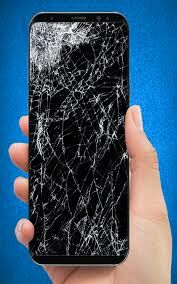
having my phone repaired
have my phone repair
have my phone repaired
She will _____________________ (paint / her living room).

have her living room painted
be having her living room repiar
have her living room paint
I need to _____________________ (repair / my phone).
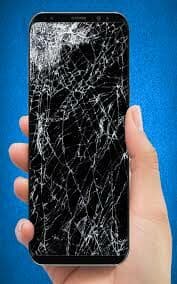
She will _____________________ (paint / her living room).

They are going to _____________________ (deliver / a new sofa).

We usually _____________________ (clean / the house).

He _____________________ (choose / the photos) by a professional editor.

We are _____________________ (organise / the event) by a team of students.

We _____________________ (catch / the problem) by a technician early.

They _____________________ (build / a treehouse) in their garden last year.
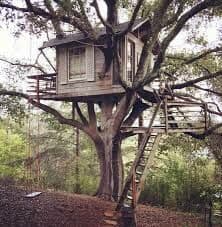
She _____________________ (hold / her place) in line by her friend.
I _____________________ (repair / my watch) next week.
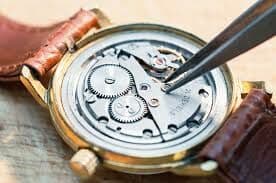
By next month, I_____________________ (renew / my ID card).

She is going to _____________________ (clean / her room) by a cleaning service.

I _____________________ (repair / my phone) when you called me.

She _____________________ (check / her eyes) at the clinic right now.
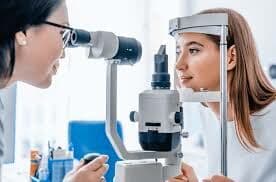
I _____________________ (print / my project) when the machine broke.

She _____________________ (clean / her room) before her friends arrived.

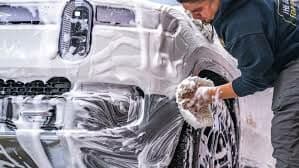
I _____________________ (wash / my car) every Saturday.
They _____________________ (build / new tables) for the school cafeteria.
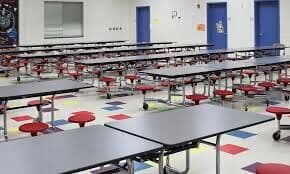
They _____________________ (paint / the fence) next week.

She _____________________ (take / her portrait) last week
 The story of The Resurrection of Jesus is very amazing. Resurrection: meaning Jesus rising from the dead. Jesus is alive again. Jesus proved to the people that He is the “Son of God”. Would you like to know the amazing story? Let’s read on! Jesus is Alive! After Jesus died a man named Joseph from Arimathea put Jesus in His tomb. Before Joseph left, he and some men rolled a large heavy stone in front of the tomb. Mary and Mary Magdalene made spices and oils as a sign of respect to Jesus, and went very early to the tomb on the third day to go see Jesus' body. As they were just about at the tomb the earth suddenly shook and an angel came down from heaven. He easily rolled away the stone at the entrance of the tomb and sat on top of it. The women looked at each other and rubbed their eyes, they couldn't believe what they had seen. The angel was so bright, almost as bright as lightning. His clothes were as white as snow. There had been guards watching the tomb so no one would steal Jesus' body. When they saw the angel they fell over and they couldn't move or speak because they were so afraid. Christian Living Education 2 SEIBO COLLEGE 5 Then the angel said to the women, "Do not be afraid. I know you are looking for Jesus who has died. But He isn't here; He has risen just as He said He would! Come and see for yourself, the tomb is empty." The women were confused. How could this happen? They were sure Jesus had died, and now He was alive? They looked in the tomb and the cloths Jesus was wrapped in were lying on the ground, and the tomb was empty. Then the angel spoke again, "If you want to find Jesus He's on his way to Galilee." So the women hurried away. They had been so sad that Jesus was dead and now they were so excited He was alive! They just knew they had to find Jesus, and they had to tell the disciples the good news. As they were running down the path they turned a corner, and there was Jesus. "Greetings," He said. The ladies fell at His feet and worshiped him. Then Jesus said to them, "Do not be afraid. Go and tell my disciples to come to Galilee, which is where they will see me." The disciples came to Galilee, and had heard by this time that Jesus was alive. They were sitting around talking about it, when Jesus walked into the room and said to them, "Peace be with you." The disciples immediately stopped talking. Even though they had heard Christian Living Education 2 SEIBO COLLEGE 6 He was alive, they were shocked to see Him standing there with them. Jesus said to them, "Why do you look at me like you've just seen a ghost? Why don't you believe what you're seeing? Look at the scars in my hands and feet. It is really me! Touch me and see, I am not a ghost but a real person." The disciples’ mouths were open in amazement because they still didn't know what to think. They were so full of joy, and yet it was so impossible. Jesus understood what they were thinking, so He said, "This is what I told you would happen, that everything must happen that has already been written in the Bible." Then Jesus told them, "You have seen these things that have happened, so stay in the city and soon I am going to give you what God has promised you, the Holy Spirit. Jesus had one more person to see. His name was Thomas, and he was one of the disciples that weren’t there when Jesus met with them. Thomas had also heard that Jesus was alive, but would not believe until he saw Jesus with his own eyes. A week later when Thomas finally saw Jesus, Jesus said to him, "Put your finger here; see my hands. Stop doubting and believe." But Jesus continued, "Because you have seen me, you have believed; but it is more amazing for those who don't see me, and believe anyway." Christian Living Education 2 SEIBO COLLEGE 7 Jesus is actually talking to us when He said this. If you believe in Him, without seeing Him He thinks you're very special! That is exactly what faith is, believing in God even though you can't see Him. When we become Christians Jesus automatically gives us the Holy Spirit to live inside of us. The Holy Spirit makes us know when we have done something wrong. We might feel sick to our stomach, or just get a bad feeling, that is the Holy Spirit reminding us that we are doing something wrong, or that we need to stop and say sorry and ask for forgiveness for what we've done. Do you know what we celebrate during Easter Sunday? We celebrate the rising of Jesus from the dead. We celebrate because Jesus shared His new life with us. Through His rising from the dead, we are saved. We also have new life. What do you think we should do with our new life? How can we thank Jesus for sharing His new life with us? Of course, we should do good deeds. When we say good deeds, it is anything that we do that is good. It doesn’t matter how big or small as long as it is good. It would make Jesus very happy if we stop our bad ways and change for the betterWrite questions about the following story:Into the Woods Henry David Thoreau raised his pen to write, but the chatter of guests in the next room filled his ears. He stared at the page. “Concord, 1841” was all that he had written. How would he write a book with such noise in his family’s house? Thoreau headed outside, shutting the door with emphasis. He would have to find a place of his own. Thoreau walked out of town. Tall white pines soon replaced the painted houses. He listened to the rustling of the leaves. What if I could stay here, he thought. He could live off the land, close to nature, and begin his book. It would take work, but he could do it. FPG /The Image Bank/Getty Images Years passed, but Thoreau still did not have a place in the woods. One day, his friend Ralph Waldo Emerson had an idea. Emerson was a well-known writer who had bought some land near Walden Pond. Because he and Thoreau shared the same interest in nature, Emerson decided to let Thoreau use part of this land. In March of 1845, Thoreau began to build a cabin. By July, it was ready. He could live and write in the woods.Cabin Life Thoreau’s move to the woods indicated that he liked to be alone. But Thoreau did not feel that way. “I have a great deal of company in my house,” he wrote. Red squirrels woke him by running up and down the sheer sides of his cabin. A snowshoe hare lived in the debris under his cabin, thumping against the floorboards. A sparrow once perched on his shoulder. Thoreau recorded these experiences in his journal. How easily writing came to him with the beauty of nature around him! On Walden Pond Thoreau was a naturalist. He noticed the habits of animals. Each encounter showed him something new. One afternoon, Thoreau tried to get a close look at a loon, but the bird quickly dove into the pond. He knew loons could travel long distances under water, so he guessed where it would come up. But every time Thoreau paddled to one spot, the loon came up somewhere else and let out a call—a howling laugh. What a silly loon, Thoreau thought. But after a while, Thoreau felt as though the bird was laughing at him because he still could not catch up to it. Thoreau wrote in his journal: His white breast, the stillness of the air, and the smoothness of the water were all against him. At length he uttered one of those prolonged howls, as if calling on the god of the loons to aid him, and immediately there came a wind from the east and rippled the surface, and filled the whole air with misty rain, and I was impressed.The spectacular scene made Thoreau wonder at the loon. It no longer seemed a silly animal, but one with some mysterious power. As months went by, Thoreau also became aware of each animal’s ability to stay alive. “His power of observation seemed to indicate additional senses,” Emerson once remarked. In winter, as he warmed his cabin by fire, he watched in awe as the moles warmed their nest by their own body heat. He understood forest life as never before. Back to Concord Like the geese that move to new ponds at the season’s end, so too did Thoreau leave Walden. He had done what he had set out to do, and had learned much from the woods around him. He packed his few belongings and his stack of journals and returned to Concord. Now, he would turn his journal entries into a book. Generations to come would know life on Walden Pond!Bonk's New Bike Bonk has dreams about the bike he wants. It is red with cool handlebars and spokes. Bonk sees the bike on TV. He sees it in the newspaper, too. He opens his monster bank. He has only five pennies. "I have to earn enough money for my new bike," says Bonk. "I will start a dog walking business," he says. He goes door to door asking people if he can walk their dogs. "Can we help walk dogs, too?" asks Jupe. "I'll do it by myself," Bonk says. "I'm saving my money for a new bike." Soon, Bonk's phone begins to ring. People knock on his door. They all want Bonk to walk their dogs! "This will be a fun and easy way to earn money," Bonk says. On Saturday, Bonk picks up each dog. There are big dogs, little dogs. fancy dogs, and plain dogs. The dogs are barking, jumping, and running around. Bonk gets all their leashes together and begins to walk. One dog tangles up his leash. Another dog rolls in the mud. Another dog chases a cat! "This is not fun!" Bonk says. "It is not easy either!" Lurk, Uzzle, and Jupe ride their scooters past Bonk. "Do you want some help now. Bonk?" Jupe asks. Bonk gives each of the monsters a dog to walk. When they are finished walking. the dog owners pay the monsters. "I'm sorry I said you couldn't help with the dog walking," says Bonk. "I couldn't have done it without you." Jupe, Lurk, and Uzzle talk. They give their money to Bonk. "This is for your new bike," says Jupe. "But you earned this money, too," says Bonk. "We want something other than money," says Lurk. "Anything you want," Bonk says. "When you get your new bike, we want to take turns riding it!" says Jupe. "It's a deal!" says Bonk.Match the word to its synonym level B1 CEFR. Use the vocabulary exactly adverb precisely except that aside from exist verb to be real existing adjective real, current Example: Flying cars are not practical with existing technology. existence noun reality Example: The existence of black holes has been confirmed by indirect observation. extraordinary adjective unusual feature noun important part of something Example: The Ramon Crater is a unique feature of the Negev Desert. feedback noun reaction figure noun shape Example: I can’t tell if that figure in the shadows is a man or a woman. figure out verb understand Example: I just can’t figure out how the magician did that amazing trick. financial adjective related to money Example: Her family is having financial problems so they can’t travel overseas this year. finance verb pay for Example: If I can’t get a loan from the bank, I won’t be able to finance a new apartment. finance noun money Example: An expert in finance predicts a global recession. finding/findings noun discoveries; results of a study Example: According to the findings of the police investigation, this is the gun which fired the fatal bullet. flexibility noun willingness to change flexible adjective adjusts easily Example: I’d prefer to meet on Monday morning but I can be flexible depending upon your schedule. flood noun a lot of water flood verb to cover with too much water flu noun type of sickness focus on/upon verb pay attention to Example: You should focus on your schoolwork if you want to improve your grades. focus noun attention People with attention deficit disorder lose focus easily. frequency noun how often frequent adjective very often Example: Hanah is a frequent customer and everyone at the store knows her. fresh adjective new Example: We need some fresh ideas if we’re going to solve this problem. frighten verb scare from preposition position, starting point gain verb make an increase, profit, earn Example: I have nothing to gain by choosing sides so I shall remain neutral. gain noun profit, amount earned generate verb create, make Example: Chat GPT can generate text written in any style you choose. guidance noun help, advice hopeful adjective optimistic, having a positive outlook Example: The farmers are hopeful that we will have rain this winter. hopefully adjective with luck ideal adjective best, most preferable Example: Nuclear power may not be an ideal solution to global warming, but it’s certainly worth considering. illness noun sickness, disease illustrate verb draw pictures illustration noun picture, image Example: Children’s storybooks have colorful illustrations. image noun picture, especially on film or television Example: The mother of the pop singer cried when she first saw her daughter’s image on television. in preposition within, inside, into in terms of regarding Example: That company makes a great product but they’re lacking in terms of customer service. in actual fact in truth Example: The mayor says the city is a safe place to live, but in actual fact the violent crime rate is very high. in connection with about Example: Police arrested four men in connection with the robbery. in that case if that is true Example: Billy Bob: “Traffic could be heavy tomorrow.” Peggy Sue: “In that case, we better leave early.” in the meantime while, during Example: The new computers won’t arrive until next week, but we can keep using the old ones in the meantime. initial adjective first Example: Her initial reaction to that song was negative, but over time she’s come to like it. initially adverb at first instruction noun teaching, order Example: Most new electronic devices come with a set of instructions. intelligence noun smartness Example: Since you have a degree from a good university, I assume you have sufficient intelligence to understand this problem. intelligent adjective smart Example: Joe isn’t very intelligent, but he is a kind person with a warm heart. interest noun attraction Example: Yossi has little interest in politics, whereas his wife goes to all the protests and demonstrations. interest verb to attract Example: Sports don’t really interest me, but my brother is a big basketball fan. introduce verb to show something new Example: Today in class I will introduce the basic concepts of literary analysis. invest verb to put money into something in order to earn money Example: Joe invested in cryptocurrency and lost a lot of money. investor noun one who puts money into something in order to earn money Example: Venture capitalists are investors who put money into risky start-up businesses. investment noun putting money into something in order to earn money Example: Buying real estate in Israel is a very safe investment because the value never goes down. investigate verb research, study Example: The police collected evidence to investigate the murder. investigation noun study Example: The police don’t have a suspect for the murder as the investigation isn’t finished yet. investigator noun detective Example: Detective Schmendrick is the lead investigator for the murder case. just about almost Example: I’m just about done here so I’ll be there shortly. keep on doing verb continue Example: You’re crazy if you keep on doing the same thing and expect different results. kind of type of Example: What kind of dog is that, a poodle? knowledge noun awareness Example: John failed the test due to lack of knowledge of the material. lack verb not having, missing Example: John failed the test due to lack of knowledge of the material. landscape noun the view of the land likely adjective, adverb probably Example: When we learn from our mistakes, we’re not likely to forget. limited adjective restricted Example: We should go to the store today because the sale is for a limited time only. limitation noun restriction little adjective small, not a lot Example: She always tells the truth. I have little reason to doubt her. look at verb see Example: People used to read newspapers on the train. Nowadays they just look at their phones. low adverb to a small amount or level Example: I have to charge my phone because the battery is running low. material noun documents, information Example: We have a lot of material to cover before the end of the semester. meaning noun significance mean verb to have significance or purpose means noun form of, by the use of Example: They communicate by means of radio. measure noun step Example: The teacher took measures to prevent cheating during the test mention verb to say, point out Example: The coach said the team played very well today but didn’t mention any player specifically. miss verb (1) fail to catch (2) wishing to see somebody Examples: (1) The football player kicked the ball but missed the goal. (2) Wow, it’s good to see you! I’ve missed you so much! misunderstand verb understand incorrectly Example: I’m afraid I misunderstood the instructions. Could you repeat them please? more or less approximately, somewhat, to a varying degree Example: This is more or less a religious neighborhood, though there are a few secular families. must modal verb have to naturally adverb as expected, normally nature noun (1) open air (2) character Examples: (1) We like to go hiking in nature reserves. (2) Pit bulls are aggressive by nature. Why and How Managers Plan Importance of planning The planing process Benefits of planning Planning and time management Types of PLans used by managers Long term and short term plans Strageic and tactical plans Operational plans Planning Tools and Techiqunes Forecasting Contrigency planning Scenario planning Benchmaking Use of staff planners Implementing Plans to Achive Results Goal setting Goal management Goal alignment Participation and involvement Planning Def: The process of setting objectives and determining how best to accomplish them Planning at Eaton Corporation “Making the hard decision before events force them upon you, an anticipating the future needs of the market before the demand asset itself Objectives and goals Identifity the specific results or desired outcomes that one intends to achieve Plan Def: A statement of action steps to be taken in order to accomplish the objectives (goals) Steps in the planning process: Define your objectives Determine where you stand vis-a-vis objectives Develpo premises reagrdsing future conditions Analyze alternatives and make a plan Implement the plan and evaluate results What are the benefits of planning Improves focus and flexibility Imporves action orteitation Imporves coordination and control Imporves time management Time Managment Personal time management tips Do say “no” to request that distract you form what you should be doing Dont get bogged down inn details that can be addressed later Do screen telephone calls, emails and meeting request Dont let drop in visitors, text messaging use up your time Do prioritize your important and urgent work Dont become calendar bound by letting other control your schedule Do follow priorities; do most important and urgent work first Some 77% of mangers in one survey said that digital age has increased th number of decisions they have to make 43% said there was less time available to make these decisions Types of plans used by Managers What is teh time horizon Long term vs Short term Long term Look three or more years into teh future Short term plans Typically cover one year or less However: the increasing environmental complexity and dynamism of recent years has severely tested the concept of “long-term” planning Plans are subject to frequent revisions Most executives would likely agree that these complexities adn uncertainties challenge how er actually go about planning and how far ahead we can really plan At the very least we can conclude that there is a lot less permanency to long term plans today and that tey are subject to frequent revision Managment reaeracher Eillot Jaques believes tha people vary in their capability to think with different time horizons Types of Plans used by Managers (3 of 5) Strategic plans Set broad, comprehensive and linger term action directions for teh entire organization or major division Vision Clarifies purpose of the organization and what it hopes to be on the future Typical plans Specify how the organizations resources are used to implement strategy Tactical plans in business often take the form of functional plans Functional plans Incidate how different component within the organiztion will help accompnlish the overall strategy Production plans Finacial plans Facilites Plans Logisitc plans Marketing plans Human Resource Plans Operation plans Describe short-term activities to implement strategic plans Policies: Are standing plans that communicate guidelines for decisions Ex: Policies on office romances: The media is quick to report when a top executive or public figures runs into trouble over an office affair. Are there ant policies on office romances? Employer polices on office raltioshiis vary. One survey find teh following: 24% prohibit relationships among employees in the same department 13% prohibit relationships among employees who have the smae supervisor 80% prohibit relationships between supervisors and subordinates 5% have no restrictions on office romances Procedures: Are rules that describe actions to be taken in specific situations Budgets: are single use plans that commit resources to projects or activities Zero based budgets: allocate resources as if each budget were brand new There is no guarantee that any past funding will be renwer. All propsales, old and new, must compete for available funds at teh start of each new budget cycle Forcasting Attempts to predict the future Qualitaive forecasting uses expert opinions Quantitative forecasting uses mathematical models and statiscal aanylsis of historical data dna surveys Contingency planning Identify alternative course of action to take when things go wrong Anticipate changing conditions Contain trigger points to indicate when to activate plan (or a specific course of action) Scenario planning A long term version of contingency planning Identifying alternative future scenarios Plans made for each future scenario Increases organizations flexibility and preparation for future shocks Benchmarking Use of external and internal comparisons to better evaluate current performance Adopting best practices: things people adn organization do that lead to superior performance Staff Planners Experts who assist in all steps of the planning process They help bring focus and expertise to a wide variety of planning tasks Important: Communication between staff planers landline managers is essential for teh success of teh planning process Goal Setting - Always set SMART goal The solution: Goal Aligment Between Team Leader and Team Member Jonintly plan: Set objectives, set standards, choose actions Individually acy: Perform tasks (member), provide support (leader) Jointly control: Review results, discuss implications, renew cycle x4 Collective effort and commitment Participatroy planning Includes in all planning steps that people who will be affected by the plans adn askedd to help implement them Unloacks motivational potential of goal setting Management by objective (MBO) promotes participation Participation increases understanding and acceptance of plan and commitment to success Participatory planning - Number of people involved in teh decision making process Amazon is intensely focused on what it does. It believes in creating tight single-threaded teams, also known as “2 pizza team.” Data and Decision Making What are some of the important competencies managers must have today? Delegate Marketing and technology Manager must have Technological competency Ability to understand new technologies and to use them to their best advantage Information competency Ability to locate, gather, organize and display information for decision-making and problem solving Analytical competency Ability to evaluate and analyze information to make actual decisions and solve real problems What is the difference between Data and Information Data Raw facts and observation Information Data made useful and meaningful for decision-making Important concepts Big data Exists in huge quantities and is difficult to process without sophisticated mathematical and analytical techniques Data production today Bernard Marr is an internationally best-selling author. He helps organizations improve their business performance, use data more intelligently Data mining The process of analyzing data to produce useful information for decision-makers Management Analytics The systematic evaluation and analysis of data to make informed decision Information drives management Bad Data Refers to information that can be erroneous, misleading, and without general formatting The challenge: Can er use the data that is available in the “Big Data” Needs to be valid Can not trust everything out there Being ethical Look at the trends Data is structured and unstructured Data BIg Data = Structured + Unstructured Information Drive Management decision making What are the characteristics of useful information Easy to access If its credible Accurate Characteristics of useful information: Timely High quality Complete Relevant Understandable What about bad data It's not credible Miss information If it is not structured/ organized Bias based on opinions Confusing If its updated Bad data Refers to information that can be erroneous miss What are some examples of Management information system Business intelligence -BI Information systems to extract and report data in organized ways that are useful to decision-makers Executive dashboards Visually update and display key performance metrics (or Key Performance Indicators -KPIs) and information on a real-time basis Information needs in organization External Environment Information exchanges with the external environment Gather intelligence information Provide public information Information needs within the organizations (internal Enviroement) Information exchange within the organization Facilitate decision making Facilitate problem-solving Managers as information processors Continually gather, share and receive information Now as much electronic as it is face-to-face Always on, always connected How many people telecommute at least once a week 70% of people globally work remotely at least once a week, Work at home after covid 19 our forecast Our best estimate it that 25-30% of the workforce will be working form home multiple days a week by the end of 2021 As of 2023, 12.7% of full time employees work from home, while 28.2% work a hybrid model Managers as problem solvers Problem-solving The process of identifying a discrepancy between actual and desired performance and taking action to resolve it Ishikawa Fishbone diagram To identify the cause of problems Decision A choice among possible alternative courses of action Performance threat Something is wrong or has the potential to go wrong Performance opportunity The situation offers the chance for a better future if the right steps are taken Problem-solving approaches or style - from textbook Problem avoiders Inactive in information gathering and solving problems Problem seekers Proactive in anticipation of problems and opportunities and taking appropriate action to gain an advantage Problem solvers Reactive in gathering information and solving problem Managers - can approach problems in a systematic or intuitive manner Systematic thinking approaches problem in rational, step-by-step and analytical fashion Intuitive thinking approaches problems in a flexible and spontaneous fashion Multidimensional thinking- applies both intuitive and systematic thinking Managers face structured and unstructured problems Structure problems Are ones that are familiar, straight forward, and clear with respect to information needs Program decisions apply solutions that are readily available from past experiences to solve structured problems Know how to solve them Familiar Know what we are dealing with Unstructured problems Are ones that are full of ambiguities and information deficiencies Nonprogrammed decisions apply a specific solution to meet the demands of a unique problem Commonly faced by higher-level management Crisis decision making A crisis involves an unexpected problem that can lead to disaster if not resolved quickly and appropriately Ruled for crisis management Figure out what is going on Remember that speed matters Remember that slow counts, too Respect the danger of the unfamiliar Value the skeptic Be ready to “fight fire with fire” Managers make decisions with various amounts of information Certain environment Offers complete information on possible action alternatives and their consequences Risk environment Lacks complete information but offers probabilities of the likely outcomes for possible action alternatives Uncertain environment Lacks so much information that it is difficult to assign probabilities to the likely outcomes of alternative Ex: Certain and uncertain environments: The worldwide Governance Indicators for over 200 countries, comparing distinct environments (Canada-Brazil) Step 1-Identify and define the problem Focuses on information gathering information processing and deliberation Decision objectives should be established What are some common mistakes in definding problems? Common mistakes in defining problems Defining the problem too broadly or too narrowly Focusing on symptoms instead of causes Choosing the wrong problem to deal with Step 2- Generate and Evaluate Alternative Courses of Action Potential solutions are formulated and more information is gathered, data are analyzed, the advantages and disadvantages of alternative solutions are identified Common mistakes: Abandoning the search for alternatives too quickly Step 3- Decide on a preferred course of Action Two different approaches Behavioural model leads to satisficing decisions Classical model les to optimising decisions Behavioural Model Rationality is bounded because: There are limits our thinks capacity Available information (incomplete) Time constraints Step 4-Implement the decision Involves taking action to make sure the solution decided upon becomes a reality Managers need to have the willingness and ability to implement action plans Problems: Lack of participation error should be avoided Step 5 - Evaluate Results Involves comparing actual and desired results The positive and negative consequences of the chosen course of action should be examined If actual results fall short desire results, the manager returns to earlier steps in the decision-making process At all steps, check ethical reasoning Ask these spotlight questions Utility Does teh decision satisfy all constituents or stakeholders Rights Does the description respect the rights and duties of everyone? Justice Is the decision consistent with the canons of justice Caring Is the decision consistent with my responsibilities to care? Issues in decision-making How do errors happen? Heuristics: are strategies for simplifying decision-making Availability Bias: Bases a decision on recent information or events Representativeness bias: Bases a decision on similarity to other situations Anchoring and Adjustment Bias: Bases a decision on incremental adjustment from a prior decision point Framing error: Tring to solve a problem in the context perceived, positive or negative Confirmation Error: Focusing on information that confirms a decision already made Escalating commitment: Continuing a course of action even though it is not working Creative Decision making Creativity is the generation of a novel idea or unique approach that solves a problem or crafts an opportunity Big C: Creativity occurs when extraordinary things are done by exceptional people Little C: Creativity occurs when average people come up with unique ways to deal with daily events and situations The three types of situational creativity drivers Chapter review What are objectives and goals? The specific results or desired outcomes What are the 5 characteristics of great (SMART) goals? Forecasting - Attempts Qualitative forecasting uses options Quantitative forecasting uses mathematical models and statistical analysis of historical data and surveys Scenarios-Oracle’s crystal ball combines qualitative and quantitative methodsOwls, such as the young snowy owls on the previous page, have for centuries been symbols of both wisdom and mystery. To many cultures their piercing eyes have conveyed a look of intelligence. Their silent flight through darkened landscapes in search of prey has projected an air of power or wonder. For this chapter and this book, owls are an engaging example of a living organism from the world of biology—the study of life. BIOLOGY AND YOU Living in a small town, in the country, or at the edge of the suburbs, one may be lucky enough to hear an owl's hooting. This experience can lead to questions about where the bird lives, what it hunts, and how it finds its prey on dark, moonless nights. Biology, or the study of life, offers an organized and scientific framework for posing and answering such questions about the natural world. Biologists study questions about how living things work, how they interact with the environment, and how they change over time. Biologists study many different kinds of living things ranging from tiny organisms, such as bacteria, to very large organisms, such as elephants. Each day, biologists investigate subjects that affect you and the way you live. For example, biologists determine which foods are healthy. As shown in Figure 1-1, everyone is affected by this impor- tant topic. Biologists also study how much a person should exer- cise and how one can avoid getting sick. Biologists also study what CHARACTERISTICS OF LIFE The world is filled with familiar objects, such as tables, rocks, plants, pets, and automobiles. Which of these objects are living or were once living? What are the criteria for assigning something to the living world or the nonliving world? Biologists have established that living things share seven characteristics of life. These characteristics are organization and the presence of one or more cells, response to a stimulus (plural, stimuli), homeostasis, metabolism, growth and development, reproduction, and change through time. Organization and Cells Organization is the high degree of order within an organism’s internal and external parts and in its interactions with the living world. For example, compare an owl to a rock. The rock has a spe- cific shape, but that shape is usually irregular. Furthermore, differ- ent rocks, even rocks of the same type, are likely to have different shapes and sizes. In contrast, the owl is an amazingly organized individual, as shown in Figure 1-2. Owls of the same species have the same body parts arranged in nearly the same way and interact with the environment in the same way. Copyright © by Holt, Rinehart and Winston. All rights reserved. ORGANISM (Barn Owl) ORGAN (Owl’s Ear) TISSUE (Nervous Tissue Within the Ear) CELL (Nerve Cell) your air, land, and fAll living organisms, whether made up of one cell or many cells, have some degree of organization. A cell is the smallest unit that can perform all life’s processes. Some organisms, such as bacteria, are made up of one cell and are called unicellular (YOON-uh-SEL-yoo-luhr) organisms. Other organisms, such as humans or trees, are made up of multiple cells and are called multicellular (MUHL-ti-SEL-yoo-luhr) organisms. Complex multicellular organisms have the level of orga- nization shown in Figure 1-2. In the highest level, the organism is made up of organ systems, or groups of specialized parts that carry out a certain function in the organism. For example, an owl’s ner- vous system is made up of a brain, sense organs, nerve cells, and other parts that sense and respond to the owl’s surroundings. Organ systems are made up of organs. Organs are structures that carry out specialized jobs within an organ system. An owl’s ear is an organ that allows the owl to hear. All organs are made up of tissues. Tissues are groups of cells that have similar abilities and that allow the organ to function. For example, nervous tissue in the ear allows the ear to detect sound. Tissues are made up of cells. A cell must be covered by a membrane, contain all genetic information necessary for replication, and be able to carry out all cell functions. Within each cell are organelles. Organelles are tiny structures that carry out functions necessary for the cell to stay alive. Organelles contain biological molecules, the chemical compounds that provide physical structure and that bring about movement, energy use, and other cellular functions. All biological molecules are made up of atoms. Atoms are the simplest particle of an ele- ment that retains all the properties of a certain element. Response to Stimuli Another characteristic of life is that an organism can respond to a stimulus—a physical or chemical change in the internal or external environment. For example, an owl dilates its pupils to keep the level of light entering the eye constant. Organisms must be able to respond and react to changes in their environment to stay alive. ORGANELLE (Mitochondrion) BIOLOGICAL MOLECULE (Phospholipid) ATOM (Oxygen) cell from the Latin, cella meaning “small room,” or “hut” Word Roots and Origins www.scilinks.org Topic: Characteristics of Life Keyword: HM60257 mb06se_bios01.qxd 5/18/07 10:37 AM Page 7 8 CHAPTER 1 Homeostasis All living things, from single cells to entire organisms, have mecha- nisms that allow them to maintain stable internal conditions. Without these mechanisms, organisms can die. For example, a cell’s water content is closely controlled by the taking in or releas- ing of water. A cell that takes in too much water will rupture and die. A cell that doesn’t get enough water will also shrivel and die. Homeostasis (HOH-mee-OH-STAY-sis) is the maintenance of a stable level of internal conditions even though environmental conditions are constantly changing. Organisms have regulatory systems that maintain internal conditions, such as temperature, water content, and uptake of nutrients by the cell. In fact, multi- cellular organisms usually have more than one way of maintain- ing important aspects of their internal environment. For example, an owl’s temperature is maintained at about 40°C (104°F). To keep a constant temperature, an owl’s cells burn fuel to produce body heat. In addition, an owl’s feathers can fluff up in cold weather. In this way, they trap an insulating layer of air next to the bird’s body to maintain its body temperature. Metabolism Living organisms use energy to power all the life processes, such as repair, movement, and growth. This energy use depends on metabolism (muh-TAB-uh-LIZ-uhm). Metabolism is the sum of all the chemical reactions that take in and transform energy and materials from the environment. For example, plants, algae, and some bacteria use the sun’s energy to generate sugar molecules during a process called photosynthesis. Some organisms depend on obtaining food energy from other organisms. For instance, an owl’s metabolism allows the owl to extract and modify the chemi- cals trapped in its nightly prey and use them as energy to fuel activities and growth. Growth and Development All living things grow and increase in size. Some nonliving things, such as crystals or icicles, grow by accumulating more of the same material of which they are made. In contrast, the growth of living things results from the division and enlargement of cells. Cell division is the formation of two new cells from an existing cell, as shown in Figure 1-3. In unicellular organisms, the primary change that occurs following cell division is cell enlargement. In multi- cellular life, however, organisms mature through cell division, cell enlargement, and development. Development is the process by which an organism becomes a mature adult. Development involves cell division and cell differen- tiation, or specialization. As a result of development, an adult organism is composed of many cells specialized for different func- tions, such as carrying oxygen in the blood or hearing. In fact, the human body is composed of trillions of specialized cells, all of which originated from a single cell, the fertilized egg. This unicellular organism, Escherichia coli, inhabits the human intestines. E. coli reproduces by means of cell division, during which the original cell splits into two identical offspring cells. FIGURE 1-3 Observing Homeostasis Materials 500 mL beakers (3), wax pen, tap water, thermometer, ice, hot water, goldfish, small dip net, watch or clock with a second hand Procedure 1. Use a wax pen to label three 500 mL beakers as follows: 27°C (80°F), 20°C (68°F), 10°C (50°F). Put 250 mL of tap water in each beaker. Use hot water or ice to adjust the tem- perature of the water in each beaker to match the temperature on the label. 2. Put the goldfish in the beaker of 27°C water. Record the number of times the gills move in 1 minute. 3. Move the goldfish to the beaker of 20°C water. Repeat observations. Move the goldfish to the beaker of 10°C. Repeat observations. Analysis What happens to the rate at which gills move when the temp- erature changes? Why? How do gills help fish maintain homeostasis? Quick Lab mb06se_bios01.qxd 5/18/07 10:37 AM Page 8 THE SCIENCE OF LIFE 9 Reproduction All organisms produce new organisms like themselves in a process called reproduction. Reproduction, unlike other characteristics, is not essential to the survival of an individual organism. However, because no organism lives forever, reproduction is essential for the continuation of a species. Glass frogs, as shown in Figure 1-4, lay many eggs in their lifetime. However, only a few of the frogs’ off- spring reach adulthood and successfully reproduce. During reproduction, organisms transmit hereditary informa- tion to their offspring. Hereditary information is encoded in a large molecule called deoxyribonucleic acid, or DNA. A short segment of DNA that contains the instructions for a single trait of an organism is called a gene. DNA is like a large library. It contains all the books—genes—that the cell will ever need for making all the struc- tures and chemicals necessary for life. Hereditary information is transferred to offspring during two kinds of reproduction. In sexual reproduction, hereditary information recombines from two organisms of the same species. The resulting offspring are similar but not identical to their parents. For example, a male frog’s sperm can fertilize a female’s egg and form a single fer- tilized egg cell. The fertilized egg then develops into a new frog. In asexual reproduction, hereditary information from different organisms is not combined; thus the original organism and the new organism are genetically the same. A bacterium, for example, reproduces asexually when it splits into two identical cells. Change Through Time Although individual organisms experience many changes during their lifetime, their basic genetic characteristics do not change. However, populations of living organisms evolve or change through time. The ability of populations of organisms to change over time is important for survival in a changing world. This factor is also impor- tant in explaining the diversity of life-forms we see on Earth today. 1. How does biology affect a person’s daily life? 2. How does biology affect society? 3. Name the characteristics shared by living things. 4. Summarize the hierarchy of organization found in complex multicellular organisms. 5. What are the different functions of homeostasis and metabolism in living organisms? 6. How does the growth among living and nonliv- ing things differ? 7. Why is reproduction an important characteristic of life? CRITICAL THINKING 8. Applying Information Crystals of salt grow and are highly organized. Why don’t biologists con- sider them to be alive? 9. Analyzing Models When a scientist designs a space probe to detect life on a distant planet, what kinds of things should it measure? 10. Making Comparisons Both cells and organisms share the characteristics of life. How are cells and organismsood supply will be like in the near future.EVOLUTION OF LIFE Individual organisms change during their lifetime, but their basic genetic characteristics do not change. However, populations of liv- ing organisms do change through time, or evolve. Evolution, or descent with modification, is the process in which the inherited characteristics within populations change over generations, such that genetically distinct populations and new species can develop. Evolution as a theme in biology helps us understand how the various branches of the “tree of life” came into existence and have changed over time. It also explains how organisms alive today are related to those that lived in the past. Finally, it helps us understand the mechanisms that underlie the way organisms look and behave. Natural Selection The ability of populations of organisms to change over time is important for survival in a changing world. According to the theory of evolution by natural selection, organisms that have certain favorable traits are better able to survive and reproduce success- fully than organisms that lack these traits. One product of natural selection is the adaptation of organisms to their environment. Adaptations are traits that improve an indi- vidual’s ability to survive and reproduce. For example, rabbits with white fur and short ears in a snowy place, such as the one in Figure 1-7a, may avoid predators and frostbitten ears more often than those with dark fur and long ears. Thus, the next generation of rabbits will have a greater percentage of animals carrying the genes for white fur and short ears. In contrast, the brown, long- eared rabbit, as shown in Figure 1-7b, would survive and reproduce more successfully in a hot desert environment. The survival and reproductive success of organisms with favor- able traits cause a change in populations of organisms over gener- ations. This descent with modification is an important factor in explaining the diversity of organisms we see on Earth today. 1. Name three unifying themes found in biology. 2. How is the unity and diversity in the living world represented? 3. Identify the three domains and the kingdoms found in each domain. 4. How are organisms interdependent? 5. Describe why evolution is important in explain- ing the diversity of life. 6. Distinguish between evolution and natural selection. CRITICAL THINKING 7. Applying Information Assign the various top- pings you put on pizza to the appropriate domains and kingdoms of life. 8. Analyzing Graphics According to the “tree” in Figure 1-5, which of these pairs are more closely related: Archaea:Bacteria or Archaea:Eukarya? 9. Making Hypotheses Fossil evidence shows that bats descended from shrewlike organisms that could not fly. Write a hypothesis for how natural selection might have led to flying bats. SECTION 2 REVIEW (a) This short-eared arctic hare, Lepus arcticus, is hidden from predators and protected from frostbite in a snowy environment. (b) The mottled brown coats of desert rabbits blend in with the dirt and dry grasses, and their long ears help them radiate excess heat and thus avoid overheating. FIGURE 1-7 (a) (b) Copyright © by Holt, Rinehart and Winston. All rights reserved. THE SCIENCE OF LIFE 13 TH E STUDY OF BIOLOGY Curiosity leads us to ask questions about life. Science provides a way of answering such questions about the natural world. Science is a systematic method that involves forming and testing hypotheses. More importantly, science relies on evidence, not beliefs, for drawing conclusions. SCIENCE AS A PROCESS Science is characterized by an organized approach, called the scientific method, to learn how the natural world works. The methods of science are based on two important principles. The first principle is that events in the natural world have natural causes. For example, the ancient Greeks believed that lightning and thunder occurred because a supernatural god Zeus hurled thunderbolts from the heavens. By contrast, a scientist considers lightning and thunder to result from electric charges in the atmos- phere. When trying to solve a puzzle from nature, all scientists, such as the one in Figure 1-8, accept that there is a natural cause to solve that puzzle. A second principle of science is uniformity. Uniformity is the idea that the fundamental laws of nature operate the same way at all places and at all times. For example, scientists assume that the law of gravity works the same way on Mars as it does on Earth. Steps of the Scientific Method Although there is no single method for doing science, scientific studies involve a series of common steps. 1. The process of science begins with an observation. An observation is the act of perceiving a natural occurrence that causes someone to pose a question. 2. One tries to answer the question by forming hypotheses (singular, hypothesis). A hypothesis is a proposed explanation for the way a particular aspect of the natural world functions. 3. A prediction is a statement that forecasts what would happen in a test situation if the hypothesis were true. A prediction is recorded for each hypothesis. 4. An experiment is used to test a hypothesis and its predictions. 5. Once the experiment has been concluded, the data are analyzed and used to draw conclusions. 6. After the data have been analyzed, the data and conclusions are communicated to scientific peers and to the public. This way oth- ers can verify, reject, or modify the researcher’s conclusions. SECTION 3 OBJECTIVES ● Outline the main steps in the scientific method. ● Summarize how observations are used to form hypotheses. ● List the elements of a controlled experiment. ● Describe how scientists use data to draw conclusions. ● Compare a scientific hypothesis and a scientific theory. ● State how communication in science helps prevent dishonesty and bias. VOCABULARY scientific method observation hypothesis prediction experiment control group experimental group independent variable dependent variable theory peer review All researchers, such as the one releasing an owl above, use the scientific method to answer the questions they have about nature. FIGURE 1-8 Copyright © by Holt, Rinehart and Winston. All rights reserved. 14 CHAPTER 1 OBSERVING AND ASKING QUESTIONS The scientific method generally begins with an unexplained observa- tion about nature. For example, people have noticed for thousands of years that owls can catch prey in near total darkness. As shown in steps and of Figure 1-9, an observation may then raise ques- tions. The owl observation raises the question: How does an owl detect prey in the dark? FORMING A HYPOTHESIS After stating a question, a biologist lists possible answers to a sci- entific question—hypotheses. Good hypotheses answer a question and are testable in the natural world. For example, as shown in step Figure 1-9, there are several possible hypotheses for the question of how owls hunt at night: (a) owls hunt by keen vision in the dark; (b) owls hunt by superb hearing; or (c) owls hunt by detecting the prey’s body heat. Predicting To test a hypothesis, scientists make a prediction that logically fol- lows from the hypothesis. A prediction is what is expected to hap- pen if each hypothesis were true. For example, if hypothesis (a) is true, (owls hunt by keen night vision) then one can predict that the owl will pounce only on the mouse in either a light or a dark room. If hypothesis (b) is true (owls hunt by hearing), then one can pre- dict that in a lighted room, the owl will pounce closer to the mouse’s head. But, in a dark room, the owl should pounce closer to a rustling leaf attached to the mouse. Finally, if hypothesis (c) is true (owls hunt by sensing body heat), then an owl would strike only the prey no matter the room conditions, because owls hunt by detecting the prey’s body heat. 3 1 2 Copyright © by Holt, Rinehart and Winston. All rights reserved. A scientific study includes observations, questions, hypotheses, predictions, experiments, data analysis, and conclu- sions. A biologist can use the scientific method to set up an experiment to learn how an owl captures prey at night. FIGURE 1-9 1 OBSERVATION Owls capture prey on dark nights. 2 QUESTION How do owls detect prey on dark nights? 3 HYPOTHESES a) Owls hunt in the dark by vision. b) Owls hunt in the dark by hearing. c) Owls hunt in the dark by sensing body heat. THE SCIENCE OF LIFE 15 Notice that these predictions make it difficult to distinguish be- tween the vision and body heat hypotheses. The reason is that both hypotheses predict that the owl could grab the mouse in a dark room. Also, these three hypotheses do not eliminate all other factors that could influence how the owl finds its prey. However, testing predictions can allow one to begin rejecting hypotheses and thus to get closer to determining the answer(s) to a question. DESIGNING AN EXPERIMENT Biologists often test hypotheses by setting up an experiment. Step in Figure 1-9 outlines an experiment to test the hypotheses about how an owl hunts at night. First, experimenters set up a room with an owl perch high on one side and a small trap door on the other side for releasing mice. Then, they tied a leaf to each mouse’s tail with a string and released each mouse into the room. Next, each mouse ran silently across the room, but the leaf trailed behind, making a rustling noise. During half of the trials, the lights were on. During the other half, the room was dark. Technicians videotaped all the action in the chamber with an infrared light, which owls cannot see. The researchers then viewed the videos and measured the position of the owl’s strike relative to each mouse’s head. Performing the Experiment Many scientists use a controlled experiment to test their hypotheses. A controlled experiment compares an experimental group and a control group and only has one variable. The control group pro- vides a normal standard against which the biologist can compare results of the experimental group. The experimental group is iden- tical to the control group except for one factor, the independent variable. The experimenter manipulates the independent variable, sometimes called the manipulated variable. 4 4 EXPERIMENT 5 DATA COLLECTION AND ANALYSIS Measure and compare the distance from the owl’s strike to the mouse and to the leaf in light and dark. 6 CONCLUSION Data supported the hearing hypothesis: Owls hunt in the dark by hearing. prey Test predictions of the three hypotheses. Control: In the light Experimental: In the dark 1 2 3 4 5 6 7 8 9 10 11 Predicting Results Materials 2 Petri dishes with agar, cellophane tape, wax pen Procedure 1. Open one of the Petri dishes, and streak your finger across the surface of the agar. 2. Replace the lid, and seal it with the tape. Label this Petri dish with your name and a number 1. 3. Seal the second Petri dish with- out removing the lid. Label this Petri dish with your name and the number 2. 4. Write a prediction about what will happen in each dish. Store your dishes as your teacher directs. Record your observations. Follow your teacher’s directions for disposal of your dishes. Analysis Was your prediction accurate? What evidence can you cite to support your prediction? If you did not obtain the results you predicted, would you change your testing method or your prediction? Explain. Evaluate the importance of obtaining a result that does not support your prediction. Quick Lab mb06se_bios03.qxd 5/18/07 10:40 AM Page 15 16 CHAPTER 1 The independent variable in the owl experiment is the presence or absence of light. In the owl experiment, the control group hunts in the light, and the experimental group hunts in the dark. In addi- tion to varying the independent variable, a scientist observes or measures another factor called the dependent variable, or respond- ing variable, because it is affected by the independent variable. In the owl experiment, the dependent variable is distance from the owl’s strike to the mouse’s head. Testing the Experiment Some controlled experiments are conducted “blind.” In other words, the biologist who scores the results is unaware of whether a given subject is part of the experimental or control group. This factor helps eliminate experimenter bias. Experiments should also be repeated, because living systems are variable. Moreover, scien- tists must collect enough data to find meaningful results. COLLECTING AND ANALYZING DATA Most experiments measure a variable—the dependent variable. This measurement provides quantitative data, data measured in numbers. For example, in the experiment above, scientists mea- sured the distance of an owl’s strike from the prey’s head in cen- timeters, as shown in step of Figure 1-9. An event’s duration in milliseconds is also an example of quantitative data. Biologists usually score the results of an experiment by using one of their senses. They might see or hear the results of an experiment. Scientists also extend their senses with a micro- scope for tiny objects or a microphone for soft sounds. In the owl experiment, biologists extended their vision with infrared cameras. Analyzing and Comparing Data After collecting data from a field study or an experiment and then organizing it, biologists then analyze the data. In analyzing data, the goal is to determine whether the data are reliable, and whether they support or fail to support the predictions of the hypothesis. To do so, scientists may use statistics to help determine relation- ships between the variables involved. They can then compare their data with other data that were obtained in other similar studies. It is also important at this time to determine possible sources of error in the experiment just per- formed. Scientists usually display their data in tables or graphs when analyzing it. For the owl study, biologists could have made a bar graph such as the one in Figure 1-10, which shows the average distance from the owl’s strike relative to the mouse’s head or the leaf in the light and in the dark. 5 5 0 10 15 20 25 In the light In the dark Average distance from strike (cm) Distance Between Owl Strike and a Mouse or From a Leaf Attached to Mouse 30 Mouse Leaf Mouse Leaf The data below are hypothetical results that might occur from the described owl experiment.The independent variable is the darkness of the room, and the dependent variable is how far the owl struck from the mouse’s head.The data show that the owl strikes more accurately at the mouse in the light but strikes more accurately at the leaf in the dark. FIGURE 1-10 Copyright © by Holt, Rinehart and Winston. All rights reserved. THE SCIENCE OF LIFE 17 DRAWING CONCLUSIONS Biologists analyze their tables, graphs, and charts to draw conclu- sions about whether or not a hypothesis is supported, as shown in step of Figure 1-9. The hypothetical owl data show that in the light, owls struck with greater accuracy at the mouse than at the leaf, but in the dark, owls struck with greater accuracy at the leaf than the mouse. Thus, the findings support the hearing hypothe- sis, but not the vision hypothesis. An experiment can only disprove, not prove, a hypothesis. For example, one cannot conclude from the results that the hearing hypothesis is proven to be true. Perhaps the owl uses an unknown smell to strike at the mouse. One can only reject the vision hypothe- sis because it did not predict the results of the experiment correctly. Acceptance of a hypothesis is always tentative in science. The scientific community revises its understanding of phenomena, based on new data. Having ruled out one hypothesis, a biologist will devise more tests to try to rule out any remaining hypotheses. Making Inferences Scientists often draw inferences from data gathered during a field study or experiment. An inference (IN-fuhr-uhns) is a conclusion made on the basis of facts and previous knowledge rather than on direct observations. Unlike a hypothesis, an inference is not directly testable. In the owl study, it is inferred that the owl detects prey from a distance rather than by direct touch. Applying Results and Building Models As shown in Figure 1-11, scientists often apply their findings to solve practical problems. They also build models to represent or describe things. For example in 1953, James Watson and Francis Crick used cardboard balls and wire bars to build physical models of atoms in an attempt to understand the structure of DNA. Mathematical models are sets of equations that describe how dif- ferent measurable items interact in a system. The experimenter can adjust variables to better model the real-world data. CONSTRUCTING A THEORY When a set of related hypotheses is confirmed to be true many times, and it can explain a great amount of data, scientists often reclassify it as a theory. Some examples include the quantum the- ory, the cell theory, or the theory of evolution. People commonly use the word “theory” in a different way than scientists use the word. People may say “It’s just a theory” suggesting that an idea is untested, but scientists view a theory as a highly tested, generally accepted principle that explains a vast number of observations and experimental data. 6 Copyright © by Holt, Rinehart and Winston. All rights reserved. Biologists often apply their knowledge of the natural world to practical problems. Studies on the owl’s keen ability to locate sounds in space despite background noise are helping biotechnologists and bioengineers develop better solutions for people with impaired hearing, such as the people shown in this picture. FIGURE 1-11 18 CHAPTER 1 COMMUNICATING IDEAS An essential aspect of scientific research is scientists working together. Scientists often work together in research teams or sim- ply share research results with other scientists. This is done by publishing findings in scientific journals or presenting them at sci- entific meetings, as shown in Figure 1-12. Sharing information allows others working independently to verify findings or to con- tinue work on established results. For example, Roger Payne pub- lished the results of his owl experiments in a journal in 1971. Then, other biologists could repeat it for verification or use it to study the mechanisms introduced by the paper. With the growing impor- tance of science in solving societal issues, it is becoming increas- ingly vital for scientists to be able to communicate with the public at large. Publishing a Paper Scientists submit research papers to scientific journals for publica- tion. A typical research paper has four sections. First, the Introduction poses the problem and hypotheses to be investigated. Next, the Materials and Methods describe how researchers proceeded with the experiment. Third, the Results state the findings the experiment presented, and finally, the Discussion gives the significance of the experiment and future directions the scientists will take. Job Description Forensic biolo- gists are scientists who study biological materials to investigate potential crimes and other legal issues against humans and animals. Forensic scientists have knowledge in areas of biology, such as DNA and blood pattern analysis, and work in private sector and public laboratories. Focus On a Forensic Biologist As a law enforcement forensic specialist for the Texas Parks and Wildlife Department, Beverly Villarreal assists the game warden in investigations of fish and wildlife violations, such as illegal hunting and fishing. Villarreal analyzes blood and tissue samples to identify species of animals such as fish, birds, and reptiles. Her work helps game wardens as they enforce state laws regarding hunting and fishing. Most people think of forensic scientists as the glamorous crime investigators on TV, but according to Villarreal real forensic scientists “spend a great deal of time at a lab bench running analysis after analysis.” Many of the methods used in animal forensics, such as DNA sequenc- ing, are also used in human forensics. Education and Skills • High school—three years of science courses and four years of math courses. • College—bachelor of science in biol- ogy, including course work in zoology and genetics, plus experience in per- forming DNA analyses. • Skills—patience, attention to detail, and ability to use fine tools. Careers in BIOLOGY Forensic Biologist For more about careers, visit go.hrw.com and type in the keyword HM6 Careers. www.scilinks.org Topic: Scientific Investigations Keyword: HM61358 mb06se_bios03.qxd 5/18/07 10:40 AM Page 18 THE SCIENCE OF LIFE 19 1. What two principles make the scientific method a unique process? 2. Define the roles of observations and hypotheses in science. 3. Summarize the parts of a controlled experiment. 4. Summarize how we make conclusions about the results of an experiment. 5. Why is the phrase, “it’s just a theory” misleading? 6. Give another example of a conflict of interest. CRITICAL THINKING 7. Making Hypotheses On a nocturnal owl’s skull, one ear points up, and the other ear points down. Suggest a hypothesis for this observation. 8. Designing Experiments Design an experiment to establish if owls hunt by keen sight or hunt by heat seeking. 9. Calculating Information What was the average distance between the owl’s strike and the mouse if the recorded differences in this experiment were 25, 22, 19, 19, and 15? SECTION 3 REVIEW After scientists submit their papers to a scientific journal, the editors of that journal will send the paper out for peer review. In a peer review, scientists who are experts in the field anonymously read and critique that research paper. They determine if a paper pro- vides enough information so that the experiment can be duplicated and if the author used good experimental controls and reached an accurate conclusion. They also check if the paper is written clearly enough for broad understanding. Careful analysis of each other’s research by fellow scientists is essential to making scientific progress and preventing scientific dishonesty. HONESTY AND BIAS The scientific community depends on both honesty and good sci- ence. While designing new studies, experimenters must be very careful to prevent previous ideas and biases from tainting both the experimental process and the conclusions. Scientists have to keep in mind that they are always trying to disprove their favorite ideas. Scientists repeat experiments to verify previous findings. This allows for science to have a method for self-correction and it also keeps researchers honest and credible to their peers in the field. Conflict of Interest For most scientists, maintaining a good reputation for collecting and presenting valid data is more important than temporary prestige or income. So, scientists try to avoid any potential conflicts of interest. For example, a scientist who owns a biotechnology company and manufactures a drug would not be the best researcher to critically test that drug’s safety and effectiveness. To avoid this potential con- flict of interest, the scientist allows an unaffected party, such as a research group, to test the drug’s effectiveness. The threat of a potential scandal based on misleading data or conclusions is a pow- erful force in science that helps keep scientists honest and fair. Scientists present their experiments in various forms. The scientists above are presenting their work in the form of a poster at a scientific meeting. FIGURE 1-12 Copyright © by Holt, Rinehart and Winston. All rights reserved. The Internet can provide a wealth of scientific information for a report, but the information may not always be credible or accurate. You can use the methods above to check the accuracy and credibility of your sources. SCIENCE TECHNOLOGY SOCIETY SCIENCE ON THE INTERNET: A New Information Age I n the past, students research- ing a science topic would typ- ically begin their research by visiting a library to use printed reference materials, such as encyclopedias. Today, most stu- dents research topics by using a computer and searching for information on the Internet. The Internet can provide students with a wealth of infor- mation. But which Web sites have accurate information, and which Web sites do not? Checking Web Addresses Students should use the Web address, or URL, to establish the Web site’s credibility. Usually, the domain name can suggest who has published the Web site. Web sites can be pub- lished by governmental agen- cies (ends in “dot gov” or .gov), by educational institutions (ends in “dot edu” or .edu), by organizations (ends in “dot org” or .org), or by commercial businesses (ends in “dot com” or .com). Government Web sites are usually reliable. Examples of credible governmental Web sites are the National Institutes of Health (NIH) and the Food and Drug Administration (FDA). University and medical school sites are also reliable sources of information. Many organiza- tions that research and teach the public about specific diseases and conditions can also provide reliable information. Examples of such organizations are the American Cancer Society and the American Heart Association. Evaluating Web Sites The credibility of the author of the Web site should also be checked. Make sure the author is not trying to sell anything and is established in his or her field. For example, a health Web site’s author should be a med- ical professional. It is also important to check the date that the information was posted on the Web to ensure that the information is current. Also, the Web site should provide ref- erences from valid sources, such as scientific journals or govern- ment publications. Finally, the student should always double-check informa- tion between several reliable Web sites. If two or three reliable sites provide the same informa- tion, the student can feel confi- dent in using that information. Web Sites for Students The Internet Connect boxes in this textbook have all been reviewed by professionals at the National Science Teachers Association (NSTA). Students can trust that these sites are reliable sources for science- or health-related topics. REVIEW 1. Which types of Web addresses are the most reliable? 2. List four important features to evaluate when using a Web site for research. 3. Supporting Reasoned Opinions Why do you think a Web site that is advertising a product may not offer accurate information? REVIEW 20 www.scilinks.org Topic: Using the Internet Keyword: HM61589 mb06se_biosts.qxd 5/18/07 10:42 AM Page 20 TOOLS AND TECHNIQUES With proper equipment and good methods, biologists can see, manipulate, and understand the natural world in new ways. Microscopes are one of many useful tools used to unlock nature’s biological secrets. MICROSCOPES AS TOOLS Tools are objects used to improve the performance of a task. Microscopes are tools that extend human vision by making enlarged images of objects. Biologists use microscopes to study organisms, cells, cell parts, and molecules. Microscopes reveal details that otherwise might be difficult or impossible to see. Light Microscopes To see small organisms and cells, biologists typically use a light microscope, such as the one shown in Figure 1-13. A compound light microscope is a microscope that shines light through a spec- imen and has two lenses to magnify an image. To use this micro- scope, one first mounts the specimen to be viewed on a glass slide. The specimen must be thin enough for light to pass through it. For tiny pond organisms, such as the single-celled paramecium, light passing through the organism is not a problem. For thick objects, such as plant stems, biologists must cut thin slices for viewing. There are four major parts of a compound light microscope. For further description of the parts of a micro- scope, see the Appendix. 1. Eyepiece The eyepiece (ocular (AHK-yoo-luhr) lens) magnifies the image, usually 10 times. 2. Objective Lens Light passes through the specimen and then through the objective lens, which is located directly above the specimen. The objective lens enlarges the image of the specimen. Scientists sometimes use stains to make the image easier to see. 3. Stage The stage is a platform that supports a slide holding the specimen. The slide is placed over the opening in the stage of the microscope. 4. Light Source The light source is a light bulb that provides light for viewing the image. It can be either light reflected with a mirror or an incandescent light from a small lamp. SECTION 4 OBJECTIVES ● List the function of each of the major parts of a compound light microscope. ● Compare two kinds of electron microscopes. ● Describe the importance of having the SI system of measurement. ● State some examples of good laboratory practice. VOCABULARY compound light microscope eyepiece (ocular lens) objective lens stage light source magnification nosepiece resolution scanning electron microscope transmission electron microscope metric system base unit Compound light microscopes open the human eye to an interesting world including tiny pond organisms, healthy and diseased cells, and the functioning of cell parts. FIGURE 1-13 Objective lens Eyepiece (ocular lens) Stage Light THE SCIENCE OF LIFE 21 Copyright © by Holt, Rinehart and Winston. All rights reserved. 22 CHAPTER 1 Magnification and Resolution Microscopes vary in powers of magnification and resolution. Magnification is the increase of an object’s apparent size. Revolving the nosepiece, the structure that holds the set of objective lens, rotates these lenses into place above the specimen. In a typical com- pound light microscope, the most powerful objective lens produces an image up to 100 times (100) the specimen’s actual size. The degree of enlargement is called the power of magnification of the lens. The standard ocular lens magnifies a specimen 10 times (10). To compute the power of magnification of a microscope, the power of magnification of the strongest objective lens (in this case, 100) is multiplied by the power of magnification of the ocular lens (10). The result is a total power of magnification of 1000. Resolution (REZ-uh-LOO-shuhn) is the power to show details clearly in an image. The physical properties of light limit the ability of light microscopes to resolve images, as shown in Figure 1-14a. At pow- ers of magnification beyond about 2,000, the image of the speci- men becomes fuzzy. For this reason, scientists use other microscopes to view very small cellsIn this video we take a look at the 0:02 fetch to code 0:03 execute cycle including its effect on 0:06 the various registers we've previously 0:12 [Music] 0:14 discussed a computer is defined Definition 0:17 as an electronic device that takes an 0:20 input 0:22 processes data 0:25 and delivers output 0:29 in this simple example you can see we're 0:31 taking the input 5 0:35 we're multiplying it by 2 that's our 0:37 process 0:39 and we're outputting 10. 0:44 but this could be way more complex for 0:46 example of a game console 0:48 the input could be the buttons you press 0:50 on a controller 0:53 the processes would then be carried out 0:55 by the console itself 0:59 and the output would be some form of 1:01 update to a monitor 1:02 and sound out for a speaker possibly 1:04 vibration feedback through the 1:06 controller 1:10 to process data a computer follows a set 1:13 of instructions 1:14 known as a computer program 1:18 if we take the lid off a typical desktop 1:20 computer we can identify 1:22 two critical components the memory 1:26 that stores the program and the central 1:29 processing unit or processor 1:31 which is under this large fan and 1:33 carries out the instructions 1:37 a computer carries out its function by 1:40 fetching 1:41 instructions decoding them and then 1:43 executing them 1:44 in a continuous repetitive cycle 1:46 billions of times a second 1:48 let's look at each of these stages in a 1:50 little more detail Fetch 1:53 so let's start with the fetch stage the 1:55 very first thing that happens 1:57 is the program counter is checked as it 2:00 holds the address 2:01 of the next instruction to be executed 2:07 the address stored is then copied into 2:09 the memory address register 2:14 the address is then sent along the 2:16 address bus to main memory 2:18 where it waits to receive a signal from 2:21 the control 2:22 bus so it knows what to do 2:27 as we want to read the data that's 2:29 stored in memory address 2:30 0 0 0 0 the control unit sends 2:34 a read signal along the control bus to 2:36 main memory 2:41 now main memory knows the data needs to 2:44 be read 2:45 the content stored in memory address 000 2:49 can be sent along the data bus to the 2:51 memory data register 2:56 now as we're currently in the process of 2:58 fetching an instruction 3:00 the data received by the memory data 3:03 register gets copied 3:04 into the current instruction register 3:11 the instruction effectively has now been 3:14 fetched from memory 3:16 just before we proceed to the decode 3:18 phase we now 3:19 increment the program counter so that 3:22 the address it contains 3:24 points to the address of the next 3:26 instruction which will need to be 3:30 executed 3:32 the instruction now being held in the 3:33 current instruction register 3:35 is ready to be decoded 3:39 now as we mentioned in the previous 3:41 video the instruction is made up of two 3:43 parts 3:44 we have the op code that's what it is we 3:47 need to do 3:50 and we have the operand what are we 3:53 going to do it to 3:55 now the operand could contain the actual 3:57 data 3:58 or indeed it could contain an address of 4:01 where the data is to be found 4:06 by decoding this instruction we can see 4:08 the operation we need 4:10 is a load operation so we need to load 4:14 the contents of memory location0101 4:18 into the cpus accumulator 4:25 in the exam a simple model will be used 4:27 to describe the 4:29 structure of any given instruction 4:32 you're not going to be expected to 4:34 define how an opcode is made up 4:36 but simply to interpret opcodes in the 4:39 given context of an exam 4:40 question in the example here 4:44 you can see there's a total of 16 4:46 different opcodes available 4:48 and this is because we're using four 4:50 bits for our representation 4:56 so now we've fetched the instruction and 4:59 we've decoded it so we know what we need 5:00 to do 5:01 we're finally ready to execute it 5:05 so we now send address 0101 5:08 to the memory dress register 5:13 now we're in the memory address register 5:15 we can finally send the address 5:18 down the address bus to main memory 5:24 this time we want to read the data 5:26 that's stored in memory 5:28 and so the control unit again sends a 5:30 read signal along the control bus 5:36 so main memories now receive an address 5:38 and a read signal 5:40 so the content stored at memory location 5:43 0101 5:44 can now be sent along the data bus back 5:46 to the cpu 5:47 and into the memory data register 5:54 finally the contents of the memory data 5:56 register are copied to the accumulator 5:59 and this is one of a number of general 6:00 purpose registers found in the cpu 6:04 this first instruction is now complete Branching 6:11 so what does this program actually do 6:14 you should be able to work it through 6:16 carefully and figure it out 6:19 we're now pointing instructions zero 6:21 zero zero one in the program counter 6:23 and we're ready to fetch the second 6:25 instruction 6:27 at the end of this video we're gonna 6:29 provide you with the answer 6:34 so let's talk a second about programs 6:37 that branch 6:40 on the left here we have a very simple 6:42 piece of pseudo code 6:44 line zero says first execute this line 6:46 of code 6:47 line 1 now execute this line and then 6:50 line 2 says 6:52 if the age is greater than 18 then 6:56 we're going to execute lines 3 and 4 6:58 otherwise 6:59 we're going to execute lines six and 7:02 seven 7:03 so this program doesn't necessarily 7:05 follow strictly in sequence from line 7:07 zero through to seven there's a chance 7:10 here the program may branch and jump 7:14 around 7:16 so we're going to pretend that this 7:17 program has been loaded into memory 7:20 each line of code on the left here has 7:23 ended up 7:24 as a location in memory now this is not 7:27 strictly how this would happen in this 7:28 one-to-one way 7:29 but for the purpose of example it's 7:31 absolutely fine 7:35 so the program counter starts by 7:37 pointing to memory address zero 7:39 and we fetch the first instruction 7:41 decode it and execute it 7:44 it then updates and tells us the next 7:47 instruction 7:48 is zero zero zero one because remember 7:50 the program counter is being incremented 7:52 so we fetch it decode it and we execute 7:55 line one of our program 7:59 we then fetch line two which in binary 8:01 is one 8:02 zero 8:06 now at this point depending on what 8:10 happens during the execution 8:11 of line two the program may be required 8:15 to fetch line three from memory or 8:18 line five from memory 8:25 so let's look at how this actually works 8:27 because we've said the program counter 8:28 simply gets incremented 8:31 well in the current instruction register 8:33 we have an instruction with the op code 8:36 0 1 1 0. 8:41 now when we look this up in the decode 8:43 unit we discover that this 8:45 code means branch always 8:51 this replaces the value held in the 8:54 program counter 8:56 with the contents of the operand that's 8:58 the second part of the instruction 9:01 from the current instruction register so 9:03 this case 9:04 one zero zero one 9:09 now when the next fetch cycle begins the 9:12 program counter is obviously checked 9:14 and as its contents have been previously 9:16 updated to a new memory location 9:19 and not simply incremented the program 9:22 effectively is able to jump 9:24 around memory 9:28 so having watched this video you should 9:30 be able to answer the following key 9:32 question 9:33 how does a cpu work 9:39 okay so let's um answer the question we 9:41 posed 9:42 earlier what did that program actually 9:48 do 9:50 so this is the first fetch to code 9:53 execute cycle 9:55 and this is the one that we ran through 9:57 in detail earlier 9:58 it effectively loaded the contents of 10:01 the memory 10:02 stored at location location0101 10:05 into the accumulator in other words 10:08 the dna number 3 is moved 10:11 from memory into the cpu 10:18 we then proceed onto the second fetch 10:20 decode execute cycle 10:23 now this one adds the contents of memory 10:27 located at 0 1 1 0 10:30 to the current contents of the 10:32 accumulator 10:34 so in other words the dna number one 10:38 because that's what's stored at address 10:40 zero one one zero 10:43 is added to the number three that was in 10:45 the accumulator 10:46 the results are stored back over the 10:48 accumulator 10:49 so effectively we've done three plus one 10:53 equals four 10:58 the third fetch to code execute cycle 11:00 stores the contents which are in the 11:02 accumulator 11:03 into memory location zero one one one 11:07 and that's because the op code the first 11:09 part of this current instruction 11:10 zero zero one one is the command to 11:13 store when we look it up in the decoder 11:15 unit 11:16 so in other words the result of the 11:17 previous calculation three plus one 11:19 equals four 11:20 is now written back into main memory 11:28 the fourth fetch decode execute cycle 11:30 outputs the contents of the accumulator 11:33 remember they were copied into main 11:34 memory but they're still held in the 11:35 accumulator 11:37 so in this simple abstraction the number 11:40 four is now 11:41 output to the user so they can see the 11:43 result of the calculation 11:49 the fifth and final fetch code execute 11:51 cycle 11:52 brings a halt to the current program 11:58 so this very simple program which has 12:01 five 12:02 fetch decode execute cycles has 12:04 performed the calculation 12:06 three plus one is then stored the result 12:09 in main memory 12:10 and displayed the result four to the 12:12 user 12:13 and in a high-level language this may 12:15 look something very similar to the 12:17 following two lines of code 12:20 sum variable equals num1 plus num2 12:24 print sum to the user 12:27 so you can start to get an appreciation 12:29 here of how the high level code you 12:32 write actually ends up being fetched 12:34 decoded 12:35 and executed inside a processor 12:38 of course your processor is doing 12:40 billions and billions of these 12:42 operations a second 12:43 which when you think about it is really 12:45 very impressive 12:52 [Music] 13:03 you. make 10 questions for a standerd of a levelMake a vocabulary quiz with below.Crisis: a very difficult situation or emergency; “Investors are worried that continuing problems in the stock market might lead to another financial crisis.” Short-staffed: not having enough employees or workers; “We laid off dozens of employees to save money, but now we’re short-staffed and can’t fill orders quickly.” To drive someone nuts: to make someone upset or annoyed; “The autocorrect feature on my mobile phone really drives me nuts.” To arise: to happen or start to develop, especially for problems or situations; “Problems arose for the developers when local residents voted against construction of the new shopping mall.” To moan: to complain about something, especially in a way that bothers other people; “Every Monday morning my colleagues moan about having to come to the office so early.” Optimism: the feeling or belief that good things will happen; “Analysts are expressing optimism that the real estate market will bounce back quickly.” Pessimism: the tendancy or belief that the worst will happen. “Now is not the time for pessimism, we need to believe we can do this or we will fail.” Hurdle: a problem that must be overcome or dealt with in order to reach a goal or do something; “Lack of capital is a major hurdle for many young entrepreneurs with good business ideas.” © 2013 All rights reserved: www.businessenglishpod.com 2 To give up: to stop trying to do or achieve something; “After being rejected by over a dozen universities, Roger gave up on his plans to study for an MBA.” To keep your eye on the prize: to stay motivated and focused on your final goal or reward; “Okay folks, I know things have been really busy, but let’s keep our eye on the prize and we’ll get this done before Christmas.” Down the road: in the future; “Sales our good in our retail outlets, but 10 years down the road we’re going to have to be more competitive in the online market.” To overcome: to deal with a problem successfully; “You are going to have to overcome your lack of confidence if you want to be a good salesman.” Decisiveness: having the ability to make decisions and act firmly. “Decisiveness is a quality we look for in new managers.” Bumpy: we can use “bumpy” to describe a road or process that has many problems; “We had a pretty bumpy start-up phase, but we finally managed to turn a profit in our fifth year of operations.” To display: to show a feeling, emotion, or characteristic; “David displayed tremendous preparation and diplomacy during the negotiations.” On the fence: someone who is “on the fence” is having difficulty making a decision or taking a position; “While the executives support expansion wholeheartedly, the shareholders are still on the fence about it.” All-in: in poker, if you are “all-in” you put all your money on one bet, but we can use this expression more generally to say you are completely committed to something, especially a plan; “This sounds like a good idea, but before I go all-in I need to know more about the project partners.” To have what it takes: to have the ability or intelligence to do something; “I thought I’d enjoy law, but after a few years as a junior lawyer I realized I don’t really have what it takes.