Loading...


Hazards of Earthquake
Quiz by Lotus
Tag the questions with any skills you have. Your dashboard will track each student's mastery of each skill.

Manila:
Super Typhoon Man-yi battered the Philippines on Saturday, with the national weather forecaster warning of a "potentially catastrophic and life-threatening" impact as huge waves pounded the archipelago's coastline.More than 650,000 people fled their homes ahead of Man-yi, which is the sixth major storm to hit the disaster-weary country in the past month.Man-yi brought maximum wind speeds of 195 kilometres (121 miles) per hour as it made landfall on the sparsely populated island province of Catanduanes as a super typhoon, the weather service said, adding gusts were reaching 325 kilometres an hour."Potentially catastrophic and life-threatening situation looms for northeastern Bicol region as Super Typhoon 'Pepito' further intensifies," the forecaster said hours before it made landfall, using the local name for the storm and referring to the southern part of the main island of Luzon.Waves up to 14 metres (46 feet) high pummelled the shore of Catanduanes, while Manila and other vulnerable coastal regions were at risk from storm surges reaching up to more than three metres over the next 48 hours, the forecaster said.
1. Typhoon Man-yi, like all tropical cyclones, formed over warm ocean waters before making landfall in the Philippines. What is the main factor that contributes to the formation of a super typhoon like Man-yi?
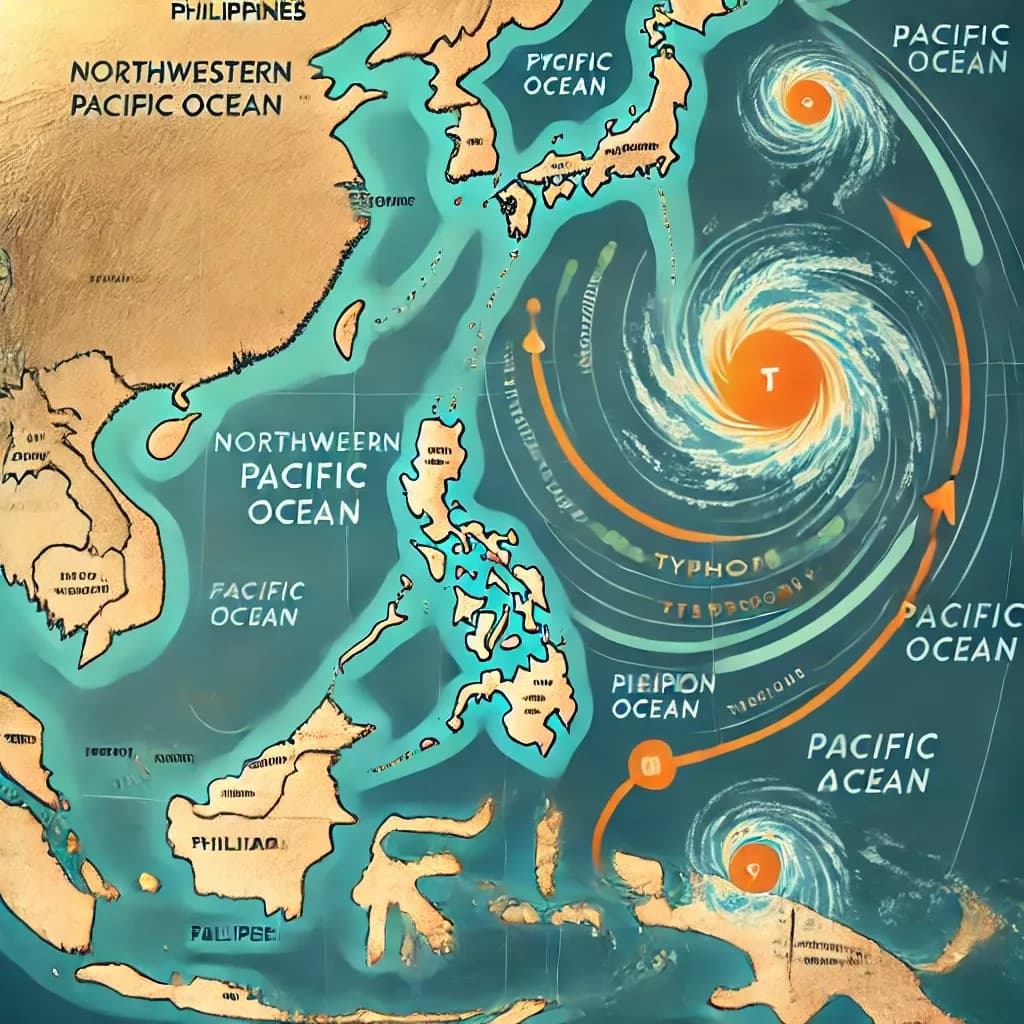
Typhoons in the Northern Hemisphere, including those that hit the Philippines, always rotate counterclockwise. What natural force is responsible for this rotation?
A study analyzed pollutants in the Philippine seas and ranked them based on their impact on human health. Heavy metals (e.g., mercury, lead) and radioactive materials were found to be the most harmful, while pharmaceuticals had a lower impact.
Based on this ranking, which of the following best explains why heavy metals and radioactive materials pose the greatest health risk?

Consider the following three pollutants found in the seas: radioactive materials, heavy metals, and industrial chemicals. Which option correctly orders these from the most harmful to the least harmful effect on human health?
Mercury from mining activities in Compostela Rivers contaminates the water and is absorbed by tiny aquatic organisms. As it moves up the food chain, mercury accumulates in larger fish consumed by humans. Which process explains why mercury concentration increases at higher trophic levels?
