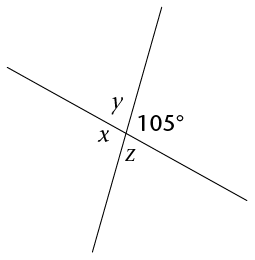
Apply the properties of angles at a point, angles at a point on a straight line, vertically opposite angles.
Move freely between different numerical, algebraic, graphical and diagrammatic representations [for example, equivalent fractions, fractions and decimals, and equations and graphs].
Use the concepts and vocabulary of prime numbers, factors (or divisors), multiples, common factors, common multiples, highest common factor, lowest common multiple, prime factorisation, including using product notation and the unique factorisation property.
Identify properties of, and describe the results of, translations, rotations and reflections applied to given figures.
Understand and use the concepts and vocabulary of expressions, equations, inequalities, terms and factors.
Recognise arithmetic sequences and find the nth term.
Use the four operations, including formal written methods, applied to integers, decimals, proper and improper fractions, and mixed numbers, all both positive and negative.
Use integer powers and associated real roots (square, cube and higher), recognise powers of 2, 3, 4, 5 and distinguish between exact representations of roots and their decimal approximations.
Develop their use of formal mathematical knowledge to interpret and solve problems, including in financial mathematics.
Select and use appropriate calculation strategies to solve increasingly complex problems.
Consolidate their numerical and mathematical capability from key stage 2 and extend their understanding of the number system and place value to include decimals, fractions, powers and roots.
Derive and apply formulae to calculate and solve problems involving: perimeter and area of triangles, parallelograms, trapezia, volume of cuboids (including cubes) and other prisms (including cylinders).
Substitute numerical values into formulae and expressions, including scientific formulae.
Use language and properties precisely to analyse numbers, algebraic expressions, 2-D and 3-D shapes, probability and statistics.
Substitute values in expressions, rearrange and simplify expressions, and solve equations.
Understand and use standard mathematical formulae; rearrange formulae to change the subject.
Recognise geometric sequences and appreciate other sequences that arise.
Construct and interpret appropriate tables, charts, and diagrams, including frequency tables, bar charts, pie charts, and pictograms for categorical data, and vertical line (or bar) charts for ungrouped and grouped numerical data.
Define percentage as ‘number of parts per hundred’, interpret percentages and percentage changes as a fraction or a decimal, interpret these multiplicatively, express one quantity as a percentage of another, compare two quantities using percentages, and work with percentages greater than 100%.
Use standard units of mass, length, time, money and other measures, including with decimal quantities.
Solve problems involving percentage change, including: percentage increase, decrease and original value problems and simple interest in financial mathematics.
Divide a given quantity into two parts in a given part:part or part:whole ratio; express the division of a quantity into two parts as a ratio.
Use ratio notation, including reduction to simplest form.
Simplify and manipulate algebraic expressions to maintain equivalence by:
Coefficients written as fractions rather than as decimals.
Track each student's skills and progress in your Mastery dashboards