Loading...


Honors Physical Science Midterm Part 2
Quiz by Janice Bixler
Customize this quiz to suit your class
Instantly translate to 100+ languages
Tag the questions with any skills you have. Your dashboard will track each student's mastery of each skill.
Give this quiz to my class
The half-life of cadmium-109 is 464 days. A scientist measures out a 256.0-gram sample. Approximately how many grams of cadmium-109 would remain after 1,392 days?
64.0 g
2,048.0 g
32.0 g
1,024.0 g
The elements neon and argon are not reactive. Which hypothesis BEST explains this?
They are not readily available on Earth.
They tend to give up all of their valence electrons easily.
They are not stable atoms.
They have the maximum possible number of electrons in their outermost shell.
The half-life of cadmium-109 is 464 days. A scientist measures out a 256.0-gram sample. Approximately how many grams of cadmium-109 would remain after 1,392 days?
The elements neon and argon are not reactive. Which hypothesis BEST explains this?
A group of students proposed four different models to show the fusion of hydrogen to form helium. The key is given. Which model shows the process of nuclear fusion?
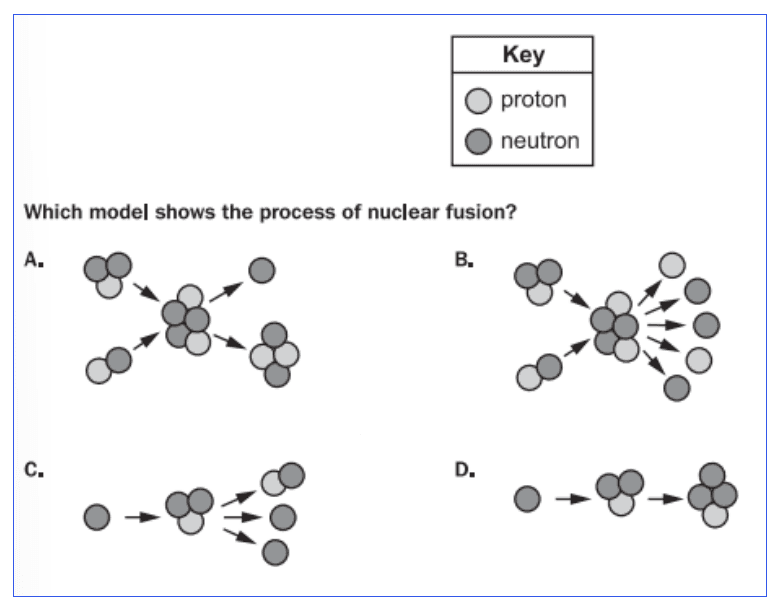
A student is modeling the fission of uranium nuclei. The student started the model as shown in the diagram. Which particle should the student add to the right-hand side of the model to complete the fission reaction?

A student is modeling the fission of uranium nuclei. The student started the model as shown in the diagram. Which particle should the student add to the right-hand side of the model to complete the fission reaction?
Match the correct type of equation to its example.
Using the chart, what is the state of matter of the unknown element W?

Using the chart, what type of element is formed for unknown element Y?
Using the chart, what type of ion is formed for unknown element X?
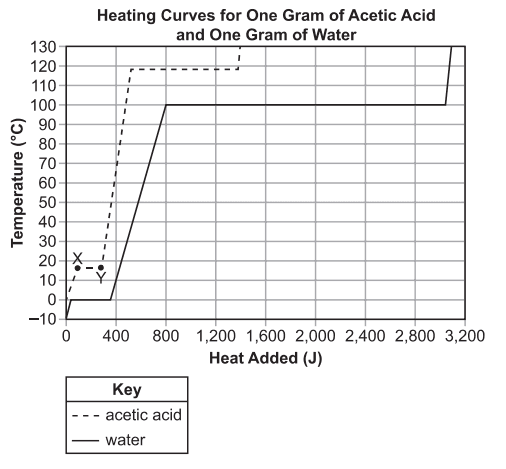
A student collected thermal data for acetic acid (CH3COOH) and water (H2O) and graphed the heating curves for the two substances.
What is happening to the acetic acid between points X and Y on the graph?
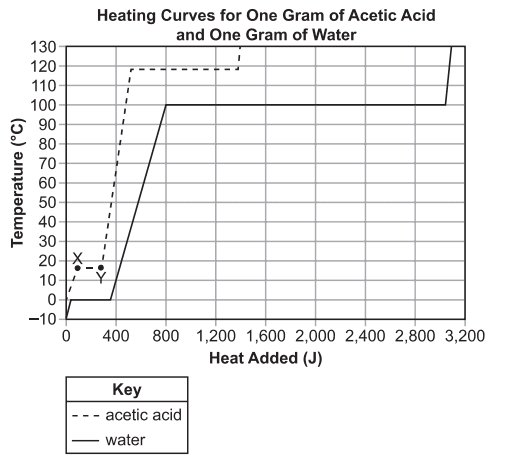
Which comparison can be made about a phase change common to acetic acid and water based on the graph?
Sort to the proper type of bond.
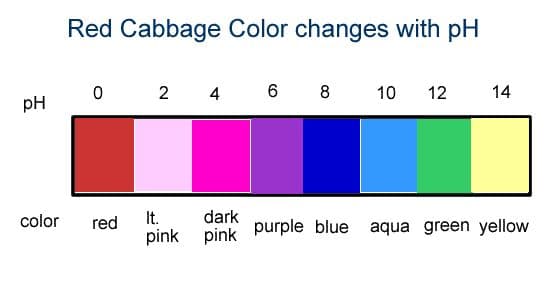
The student collected the data shown below using red cabbage as the indicator.
Substances:
A turned purplish pink
B turned aqua
C turned purplish blue
Use the information given to correctly identify each substance as acidic, neutral, or basic.
The table describes how red litmus paper and blue litmus paper indicators react to different substances. If sample of orange juice was placed on red litmus paper, what would be the results?

The table describes how red litmus paper and blue litmus paper indicators react to different substances. If sample of bleach was placed on blue litmus paper, what would be the results?
Which of the following set of coefficients would balance the given equation?
____Ag2O --> ____Ag + ___O2
Honors Physical Science Midterm Part 1Honors Physical Science Exam ReviewTN Honors Physical Science 8th GradeChemical and Physical Changes Quiz QC2 - Honors Contact with the Americas In 1001, Viking sailors led by Leif Erikson reached the eastern tip of North America. Archaeologists have found evidence of the Viking settlement of Vinland in present-day Newfoundland, Canada. The Vikings did not stay in Vinland long and no one is sure why they left. However, Viking stories describe fierce battles with Skraelings, the Viking name for the Inuit. Evidence suggests that Asians continued to cross the Bering Sea into North America after the last ice age ended. Some scholars believe that ancient seafarers from Polynesia may have traveled to the Americas using their knowledge of the stars and winds. Modern Polynesians have sailed canoes thousands of miles in this way. Still others think that fishing boats from China and Japan blew off course and landed on the western coast of North or South America. Perhaps such voyages occurred. If so, they were long forgotten. Before 1492, the peoples of Asia and Europe had no knowledge of the Americas and their remarkable civilizations. The Voyages of Columbus Portuguese sailors had pioneered new routes around Africa toward Asia in the late 1400s. Spain, too, wanted a share of the riches. King Ferdinand and Queen Isabella hoped to keep their rival, Portugal, from controlling trade with India, China, and Japan. They agreed to finance a voyage of exploration by Christopher Columbus. Columbus, an Italian sea captain, planned to reach the East Indies by sailing west across the Atlantic. Finding a sea route straight to Asia would give the Spanish direct access to the silks, spices, and precious metals of Asia. The spice trade was a major cause for European exploration and a reason the Spanish rulers supported Columbus’s voyage. They also wanted wealth from any source. “Get gold,” King Ferdinand said to Columbus. “Humanely if possible, but at all hazards—get gold.” Crossing the Atlantic In August 1492, Columbus set out with three ships and about 90 sailors. As captain, he commanded the largest vessel, the Santa María. The other ships were the Niña and the Pinta. After a brief stop at the Canary Islands, the little fleet continued west into unknown seas. Fair winds sped them along, but a month passed without the sight of land. Some sailors began to grumble. They had never been away from land for so long and feared being lost at sea. Still, Columbus sailed on. On October 7, sailors saw flocks of birds flying southwest. Columbus changed course to follow the birds. A few days later, crew members spotted tree branches and flowers floating in the water. At 2 a.m. on October 12, the lookout on the Pinta spotted white cliffs shining in the moonlight. “Tierra! Tierra!” he shouted. “Land! Land!” At dawn, Columbus rowed ashore and planted the banner of Spain. He was convinced that he had reached the East Indies in Asia. He called the people he found there “Indians.” In fact, he had reached islands off the coasts of North America and South America in the Caribbean Sea. These islands later became known as the West Indies. For three months, Columbus explored the West Indies. To his delight, he found signs of gold on the islands. Eager to report his success, he returned to Spain. Columbus Claims Lands for Spain In Spain, Columbus presented Queen Isabella and King Ferdinand with gifts of pink pearls and brilliantly colored parrots. Columbus brought with him many things that Europeans had never seen before: tobacco, pineapples, and hammocks used for sleeping. Columbus also described the “Indians” he had met, the Taino (ty noh). The Taino, he promised, could easily be converted to Christianity and could also be used as slaves. The Spanish monarchs were impressed. They gave Columbus the title Admiral of the Ocean Sea. They also agreed to finance future voyages. The promise of great wealth, and the chance to spread Christianity, gave them a reason to explore further. Columbus made three more voyages across the Atlantic. In 1493, he founded the first Spanish colony in the Americas, Santo Domingo, on an island he called Hispaniola (present-day Haiti and the Dominican Republic). A colony is an area settled and ruled by the government of a distant land. Columbus also explored present-day Cuba and Jamaica. He sailed along the coasts of Central America and northern South America. He claimed all of these lands for Queen Isabella of Spain. Columbus proved to be a better explorer than governor. During his third expedition, settlers on Hispaniola complained of his harsh rule. Queen Isabella appointed an investigator, who sent Columbus back to Spain in chains. In the end, the queen pardoned Columbus, but he never regained the honors he had won earlier. He died in 1506, still convinced that he had reached Asia. The Impact of Columbus’s Voyages Columbus has long been honored as the bold sea captain who “discovered America.” Today, we recognize that American Indians had discovered and settled these lands long before 1492. We also recognize that Columbus and the Europeans who followed him treated the ancient inhabitants of the Americas brutally. Still, Columbus’s voyages did change history. They marked the beginning of lasting contact among the peoples of Europe, Africa, and the Americas. For a great many American Indians, contact had tragic results. Columbus and those who followed were convinced that European culture was superior to that of the Indians. The Spanish claimed Taino lands and forced the Taino to work in gold mines, on ranches, or in Spanish households. Many Taino died from harsh conditions or European diseases. The Taino population was wiped out. Still, the voyages of Columbus signaled a turning point for the Americas. A turning point is a moment in history that marks a decisive change. Curious Europeans saw the new lands as a place where they could settle, trade, and grow rich. Spanish Exploration Continues After the voyages of Columbus, the Spanish explored and settled other Caribbean islands that Columbus had found. They sought gold, land for crops, people to enslave, and converts to Christianity for the Spanish crown. By 1511, they had conquered Puerto Rico, Jamaica, and Cuba. They also explored the eastern coasts of North America and South America in search of a western route to Asia. In 1513, Vasco Núñez de Balboa (bal boh uh) crossed the Isthmus of Panama. American Indians had told him that a large body of water lay to the west. With a party of Spanish soldiers and Indians, Balboa reached the Pacific Ocean and claimed the ocean for Spain. The Spanish had no idea how wide the Pacific was until a sea captain named Ferdinand Magellan (muh jel un) sailed across it. The expedition—made up of five ships and about 250 crew members—left Spain in 1519. Fifteen months later, it cut through the stormy southern tip of South America by way of what is now known as the Strait of Magellan and entered the Pacific Ocean. Crossing the vast Pacific, the sailors ran out of food: Primary Source “We remained 3 months and 20 days without taking in provisions or other refreshments and ate only old biscuit reduced to powder, full of grubs and stinking from the dirt which rats had made on it. We drank water that was yellow and stinking.” —Antonio Pigafetta, The Diary of Antonio Pigafetta Magellan himself was killed in a battle with the local people of the Philippine Islands off the coast of Asia. In 1522, only one ship and 18 sailors returned to Spain. They were the first people to circumnavigate, or sail completely around, the world. In doing so, they had found an all-water western route to Asia. Europeans became aware of the true size of the Earth. How Did the Columbian Exchange Affect the Rest of the World? The encounter between the peoples of the Eastern and Western Hemispheres sparked a global exchange of goods and ideas. Because it started with the voyages of Columbus, this transfer is known as the Columbian Exchange. The Columbian Exchange refers to a biological and cultural exchange of animals, plants, human populations, diseases, food, government, technology, the arts, and languages. The exchange went in both directions. Europeans learned much from American Indians. At the same time, Europeans contributed in many ways to the culture of the Americas. This exchange also brought about many modifications, or changes, to the physical environment of the Americas, with both positive and negative results. Changing Environments Europeans introduced domestic animals such as chickens from Europe and Africa. European pigs, cattle, and horses often escaped into the wild and multiplied rapidly. Forests and grasslands were converted to pastures. As horses spread through what would become the United States, Indians learned to ride them and used them to carry heavy loads. Plants from Europe and Africa changed the way American Indians lived. The first bananas came from the Canary Islands. By 1520, one Spaniard reported that banana trees had spread “so greatly that it is marvelous to see the great abundance of them.” Oranges, lemons, and figs were also new to the Americas. In North America, explorers also brought such plants as bluegrass, the daisy, and the dandelion. These plants spread quickly in American soil and modified American grasslands. Tragically, Europeans also brought new diseases, such as smallpox and influenza. American Indians had no resistance to these diseases. Historians estimate that within 75 years, diseases from Europe had killed almost 90 percent of the people in the Caribbean Islands and in Mexico. American Indian Influences on Europe, Africa and Asia American Indians introduced Europeans to valuable food crops such as corn, potatoes, sweet potatoes, beans, tomatoes, manioc, squash, peanuts, pineapples, and blueberries. Today, almost half the world’s food crops come from plants that were first grown in the Americas. Europeans carried the new foods with them as they sailed around the world. Everywhere, people’s diets changed and populations increased. In South Asia, people used American hot peppers and chilies to spice stews. Chinese peasants began growing corn and sweet potatoes. Italians made sauces from tomatoes. People in West Africa grew manioc and corn. European settlers often adopted American Indian skills. In the North, Indians showed Europeans how to use snowshoes and trap beavers and other fur-bearing animals. European explorers learned how to paddle Indian canoes. Some leaders studied American Indian political structures. In the 1700s, Benjamin Franklin admired the Iroquois League and urged American colonists to unite in a similar way. Positive and Negative Consequences Through the Columbian Exchange, Europeans and American Indians modified their environments and gained new resources and skills. At the same time, warfare and disease killed many on both sides. Europeans viewed expansion positively. They gained great wealth, explored trade routes, and spread Christianity. Yet their farming, mining, and diseases took a toll on the physical environment and left many American Indians dead. Despite these negatives, the Columbian Exchange shaped the modern world, including what would become the United States.ILLINOIS PROFESSIONAL TEACHING STANDARDS (2013) Standard 1 - Teaching Diverse Students – The competent teacher understands the diverse characteristics and abilities of each student and how individuals develop and learn within the context of their social, economic, cultural, linguistic, and academic experiences. The teacher uses these experiences to create instructional opportunities that maximize student learning. Knowledge Indicators – The competent teacher: 1A) understands the spectrum of student diversity (e.g., race and ethnicity, socioeconomic status, special education, gifted, English language learners (ELL), sexual orientation, gender, gender identity) and the assets that each student brings to learning across the curriculum; 1B) understands how each student constructs knowledge, acquires skills, and develops effective and efficient critical thinking and problem-solving capabilities; 1C) understands how teaching and student learning are influenced by development (physical, social and emotional, cognitive, linguistic), past experiences, talents, prior knowledge, economic circumstances and diversity within the community; 1D) understands the impact of cognitive, emotional, physical, and sensory disabilities on learning and communication pursuant to the Individuals with Disabilities Education Improvement Act (also referred to as “IDEA”) (20 USC 1400 et seq.), its implementing regulations (34 CFR 300; 2006), Article 14 of the School Code [105 ILCS 5/Art.14] and 23 Ill. Adm. Code 226 (Special Education); 1E) understands the impact of linguistic and cultural diversity on learning and communication; 1F) understands his or her personal perspectives and biases and their effects on one’s teaching; and 1G) understands how to identify individual needs and how to locate and access technology, services, and resources to address those needs. Performance Indicators – The competent teacher: 1H) analyzes and uses student information to design instruction that meets the diverse needs of students and leads to ongoing growth and achievement; 1I) stimulates prior knowledge and links new ideas to already familiar ideas and experiences; 1J) differentiates strategies, materials, pace, levels of complexity, and language to introduce concepts and principles so that they are meaningful to students at varying levels of development and to students with diverse learning needs; 1K) facilitates a learning community in which individual differences are respected; and 1L) uses information about students’ individual experiences, families, cultures, and communities to create meaningful learning opportunities and enrich instruction for all students. Standard 2 - Content Area and Pedagogical Knowledge – The competent teacher has in-depth understanding of content area knowledge that includes central concepts, methods of inquiry, structures of the disciplines, and content area literacy. The teacher creates meaningful learning experiences for each student based upon interactions among content area and pedagogical knowledge, and evidence-based practice. Knowledge Indicators – The competent teacher: 2A) understands theories and philosophies of learning and human development as they relate to the range of students in the classroom; 2B) understands major concepts, assumptions, debates, and principles; processes of inquiry; and theories that are central to the disciplines; 2C) understands the cognitive processes associated with various kinds of learning (e.g., critical and creative thinking, problem-structuring and problem-solving, invention, memorization, and recall) 2 and ensures attention to these learning processes so that students can master content standards; 2D) understands the relationship of knowledge within the disciplines to other content areas and to life applications; 2E) understands how diverse student characteristics and abilities affect processes of inquiry and influence patterns of learning; 2F) knows how to access the tools and knowledge related to latest findings (e.g., research, practice, methodologies) and technologies in the disciplines; 2G) understands the theory behind and the process for providing support to promote learning when concepts and skills are first being introduced; and 2H) understands the relationship among language acquisition (first and second), literacy development, and acquisition of academic content and skills. Performance Indicators – The competent teacher: 2I) evaluates teaching resources and materials for appropriateness as related to curricular content and each student’s needs; 2J) uses differing viewpoints, theories, and methods of inquiry in teaching subject matter concepts; 2K) engages students in the processes of critical thinking and inquiry and addresses standards of evidence of the disciplines; 2L) demonstrates fluency in technology systems, uses technology to support instruction and enhance student learning, and designs learning experiences to develop student skills in the application of technology appropriate to the disciplines; 2M) uses a variety of explanations and multiple representations of concepts that capture key ideas to help each student develop conceptual understanding and address common misunderstandings; 2N) facilitates learning experiences that make connections to other content areas and to life experiences; 2O) designs learning experiences and utilizes assistive technology and digital tools to provide access to general curricular content to individuals with disabilities; 2P) adjusts practice to meet the needs of each student in the content areas; and 2Q) applies and adapts an array of content area literacy strategies to make all subject matter accessible to each student. Standard 3 - Planning for Differentiated Instruction – The competent teacher plans and designs instruction based on content area knowledge, diverse student characteristics, student performance data, curriculum goals, and the community context. The teacher plans for ongoing student growth and achievement. Knowledge Indicators – The competent teacher: 3A) understands the Illinois Learning Standards (23 Ill. Adm. Code 1.Appendix D), curriculum development process, content, learning theory, assessment, and student development and knows how to incorporate this knowledge in planning differentiated instruction; 3B) understands how to develop short- and long-range plans, including transition plans, consistent with curriculum goals, student diversity, and learning theory; 3C) understands cultural, linguistic, cognitive, physical, and social and emotional differences, and considers the needs of each student when planning instruction; 3D) understands when and how to adjust plans based on outcome data, as well as student needs, goals, and responses; 3E) understands the appropriate role of technology, including assistive technology, to address student needs, as well as how to incorporate contemporary tools and resources to maximize student learning; 3 3F) understands how to co-plan with other classroom teachers, parents or guardians, paraprofessionals, school specialists, and community representatives to design learning experiences; and 3G) understands how research and data guide instructional planning, delivery, and adaptation. Performance Indicators – The competent teacher: 3H) establishes high expectations for each student’s learning and behavior; 3I) creates short-term and long-term plans to achieve the expectations for student learning; 3J) uses data to plan for differentiated instruction to allow for variations in individual learning needs; 3K) incorporates experiences into instructional practices that relate to a student’s current life experiences and to future life experiences; 3L) creates approaches to learning that are interdisciplinary and that integrate multiple content areas; 3M) develops plans based on student responses and provides for different pathways based on student needs; 3N) accesses and uses a wide range of information and instructional technologies to enhance a student’s ongoing growth and achievement; 3O) when planning instruction, addresses goals and objectives contained in plans developed under Section 504 of the Rehabilitation Act of 1973 (29 USC 794), individualized education programs (IEP) (see 23 Ill. Adm. Code 226 (Special Education)) or individual family service plans (IFSP) (see 23 Ill. Adm. Code 226 and 34 CFR 300.24; 2006); 3P) works with others to adapt and modify instruction to meet individual student needs; and 3Q) develops or selects relevant instructional content, materials, resources, and strategies (e.g., project-based learning) for differentiating instruction. Standard 4 - Learning Environment – The competent teacher structures a safe and healthy learning environment that facilitates cultural and linguistic responsiveness, emotional well-being, self-efficacy, positive social interaction, mutual respect, active engagement, academic risk-taking, self-motivation, and personal goal-setting. Knowledge Indicators – The competent teacher: 4A) understands principles of and strategies for effective classroom and behavior management; 4B) understands how individuals influence groups and how groups function in society; 4C) understands how to help students work cooperatively and productively in groups; 4D) understands factors (e.g., self-efficacy, positive social interaction) that influence motivation and engagement; 4E) knows how to assess the instructional environment to determine how best to meet a student’s individual needs; 4F) understands laws, rules, and ethical considerations regarding behavior intervention planning and behavior management (e.g., bullying, crisis intervention, physical restraint); 4G) knows strategies to implement behavior management and behavior intervention planning to ensure a safe and productive learning environment; and 4H) understands the use of student data (formative and summative) to design and implement behavior management strategies. Performance Indicators – The competent teacher: 4I) creates a safe and healthy environment that maximizes student learning; 4J) creates clear expectations and procedures for communication and behavior and a physical setting conducive to achieving classroom goals; 4K) uses strategies to create a smoothly functioning learning community in which students assume responsibility for themselves and one another, participate in decision-making, work collaboratively and independently, use appropriate technology, and engage in purposeful learning activities; 4 4L) analyzes the classroom environment and makes decisions to enhance cultural and linguistic responsiveness, mutual respect, positive social relationships, student motivation, and classroom engagement; 4M) organizes, allocates, and manages time, materials, technology, and physical space to provide active and equitable engagement of students in productive learning activities; 4N) engages students in and monitors individual and group-learning activities that help them develop the motivation to learn; 4O) uses a variety of effective behavioral management techniques appropriate to the needs of all students that include positive behavior interventions and supports; 4P) modifies the learning environment (including the schedule and physical arrangement) to facilitate appropriate behaviors and learning for students with diverse learning characteristics; and 4Q) analyzes student behavior data to develop and support positive behavior. Standard 5 - Instructional Delivery – The competent teacher differentiates instruction by using a variety of strategies that support critical and creative thinking, problem-solving, and continuous growth and learning. This teacher understands that the classroom is a dynamic environment requiring ongoing modification of instruction to enhance learning for each student. Knowledge Indicators – The competent teacher: 5A) understands the cognitive processes associated with various kinds of learning; 5B) understands principles and techniques, along with advantages and limitations, associated with a wide range of evidence-based instructional practices; 5C) knows how to implement effective differentiated instruction through the use of a wide variety of materials, technologies, and resources; 5D) understands disciplinary and interdisciplinary instructional approaches and how they relate to life and career experiences; 5E) knows techniques for modifying instructional methods, materials, and the environment to facilitate learning for students with diverse learning characteristics; 5F) knows strategies to maximize student attentiveness and engagement; 5G) knows how to evaluate and use student performance data to adjust instruction while teaching; and 5H) understands when and how to adapt or modify instruction based on outcome data, as well as student needs, goals, and responses. Performance Indicators – The competent teacher: 5I) uses multiple teaching strategies, including adjusted pacing and flexible grouping, to engage students in active learning opportunities that promote the development of critical and creative thinking, problem-solving, and performance capabilities; 5J) monitors and adjusts strategies in response to feedback from the student; 5K) varies his or her role in the instructional process as instructor, facilitator, coach, or audience in relation to the content and purposes of instruction and the needs of students; 5L) develops a variety of clear, accurate presentations and representations of concepts, using alternative explanations to assist students’ understanding and presenting diverse perspectives to encourage critical and creative thinking; 5M) uses strategies and techniques for facilitating meaningful inclusion of individuals with a range of abilities and experiences; 5N) uses technology to accomplish differentiated instructional objectives that enhance learning for each student; 5O) models and facilitates effective use of current and emerging digital tools to locate, analyze, evaluate, and use information resources to support research and learning; 5P) uses student data to adapt the curriculum and implement instructional strategies and materials according to the characteristics of each student; 5 5Q) uses effective co-planning and co-teaching techniques to deliver instruction to all students; 5R) maximizes instructional time (e.g., minimizes transitional time); and 5S) implements appropriate evidence-based instructional strategies. Standard 6 - Reading, Writing, and Oral Communication – The competent teacher has foundational knowledge of reading, writing, and oral communication within the content area and recognizes and addresses student reading, writing, and oral communication needs to facilitate the acquisition of content knowledge. Knowledge Indicators – The competent teacher: 6A) understands appropriate and varied instructional approaches used before, during, and after reading, including those that develop word knowledge, vocabulary, comprehension, fluency, and strategy use in the content areas; 6B) understands that the reading process involves the construction of meaning through the interactions of the reader's background knowledge and experiences, the information in the text, and the purpose of the reading situation; 6C) understands communication theory, language development, and the role of language in learning; 6D) understands writing processes and their importance to content learning; 6E) knows and models standard conventions of written and oral communications; 6F) recognizes the relationships among reading, writing, and oral communication and understands how to integrate these components to increase content learning; 6G) understands how to design, select, modify, and evaluate a wide range of materials for the content areas and the reading needs of the student; 6H) understands how to use a variety of formal and informal assessments to recognize and address the reading, writing, and oral communication needs of each student; and 6I) knows appropriate and varied instructional approaches, including those that develop word knowledge, vocabulary, comprehension, fluency, and strategy use in the content areas. Performance Indicators – The competent teacher: 6J) selects, modifies, and uses a wide range of printed, visual, or auditory materials, and online resources appropriate to the content areas and the reading needs and levels of each student (including ELLs, and struggling and advanced readers); 6K) uses assessment data, student work samples, and observations from continuous monitoring of student progress to plan and evaluate effective content area reading, writing, and oral communication instruction; 6L) facilitates the use of appropriate word identification and vocabulary strategies to develop each student’s understanding of content; 6M) teaches fluency strategies to facilitate comprehension of content; 6N) uses modeling, explanation, practice, and feedback to teach students to monitor and apply comprehension strategies independently, appropriate to the content learning; 6O) teaches students to analyze, evaluate, synthesize, and summarize information in single texts and across multiple texts, including electronic resources; 6P) teaches students to develop written text appropriate to the content areas that utilizes organization (e.g., compare/contrast, problem/solution), focus, elaboration, word choice, and standard conventions (e.g., punctuation, grammar); 6Q) integrates reading, writing, and oral communication to engage students in content learning; 6R) works with other teachers and support personnel to design, adjust, and modify instruction to meet students’ reading, writing, and oral communication needs; and 6S) stimulates discussion in the content areas for varied instructional and conversational purposes. Standard 7 - Assessment – The competent teacher understands and uses appropriate formative and summative assessments for determining student needs, monitoring student progress, measuring student 6 growth, and evaluating student outcomes. The teacher makes decisions driven by data about curricular and instructional effectiveness and adjusts practices to meet the needs of each student. Knowledge Indicators – The competent teacher: 7A) understands the purposes, characteristics, and limitations of different types of assessments, including standardized assessments, universal screening, curriculum-based assessment, and progress monitoring tools; 7B) understands that assessment is a means of evaluating how students learn and what they know and are able to do in order to meet the Illinois Learning Standards; 7C) understands measurement theory and assessment-related issues, such as validity, reliability, bias, and appropriate and accurate scoring; 7D) understands current terminology and procedures necessary for the appropriate analysis and interpretation of assessment data; 7E) understands how to select, construct, and use assessment strategies and instruments for diagnosis and evaluation of learning and instruction; 7F) knows research-based assessment strategies appropriate for each student; 7G) understands how to make data-driven decisions using assessment results to adjust practices to meet the needs of each student; 7H) knows legal provisions, rules, and guidelines regarding assessment and assessment accommodations for all student populations; and 7I) knows assessment and progress monitoring techniques to assess the effectiveness of instruction for each student. Performance Indicators – The competent teacher: 7J) uses assessment results to determine student performance levels, identify learning targets, select appropriate research-based instructional strategies, and implement instruction to enhance learning outcomes; 7K) appropriately uses a variety of formal and informal assessments to evaluate the understanding, progress, and performance of an individual student and the class as a whole; 7L) involves students in self-assessment activities to help them become aware of their strengths and needs and encourages them to establish goals for learning; 7M) maintains useful and accurate records of student work and performance; 7N) accurately interprets and clearly communicates aggregate student performance data to students, parents or guardians, colleagues, and the community in a manner that complies with the requirements of the Illinois School Student Records Act [105 ILCS 10], 23 Ill. Adm. Code 375 (Student Records), the Family Educational Rights and Privacy Act (FERPA) (20 USC 1232g) and its implementing regulations (34 CFR 99; December 9, 2008); 7O) effectively uses appropriate technologies to conduct assessments, monitor performance, and assess student progress; 7P) collaborates with families and other professionals involved in the assessment of each student; 7Q) uses various types of assessment procedures appropriately, including making accommodations for individual students in specific contexts; and 7R) uses assessment strategies and devices that are nondiscriminatory, and take into consideration the impact of disabilities, methods of communication, cultural background, and primary language on measuring knowledge and performance of students. Standard 8 - Collaborative Relationships – The competent teacher builds and maintains collaborative relationships to foster cognitive, linguistic, physical, and social and emotional development. This teacher works as a team member with professional colleagues, students, parents or guardians, and community members. Knowledge Indicators – The competent teacher: 8A) understands schools as organizations within the larger community context; 7 8B) understands the collaborative process and the skills necessary to initiate and carry out that process; 8C) collaborates with others in the use of data to design and implement effective school interventions that benefit all students; 8D) understands the benefits, barriers, and techniques involved in parent and family collaborations; 8E) understands school- and work-based learning environments and the need for collaboration with all organizations (e.g., businesses, community agencies, nonprofit organizations) to enhance student learning; 8F) understands the importance of participating on collaborative and problem-solving teams to create effective academic and behavioral interventions for all students; 8G) understands the various models of co-teaching and the procedures for implementing them across the curriculum; 8H) understands concerns of families of students with disabilities and knows appropriate strategies to collaborate with students and their families in addressing these concerns; and 8I) understands the roles and the importance of including students with disabilities, as appropriate, and all team members in planning individualized education programs (i.e, IEP, IFSP, Section 504 plan) for students with disabilities. Performance Indicators – The competent teacher: 8J) works with all school personnel (e.g., support staff, teachers, paraprofessionals) to develop learning climates for the school that encourage unity, support a sense of shared purpose, show trust in one another, and value individuals; 8K) participates in collaborative decision-making and problem-solving with colleagues and other professionals to achieve success for all students; 8L) initiates collaboration with others to create opportunities that enhance student learning; 8M) uses digital tools and resources to promote collaborative interactions; 8N) uses effective co-planning and co-teaching techniques to deliver instruction to each student; 8O) collaborates with school personnel in the implementation of appropriate assessment and instruction for designated students; 8P) develops professional relationships with parents and guardians that result in fair and equitable treatment of each student to support growth and learning; 8Q) establishes respectful and productive relationships with parents or guardians and seeks to develop cooperative partnerships to promote student learning and well-being; 8R) uses conflict resolution skills to enhance the effectiveness of collaboration and teamwork; 8S) participates in the design and implementation of individualized instruction for students with special needs (i.e., IEPs, IFSP, transition plans, Section 504 plans), ELLs, and students who are gifted; and 8T) identifies and utilizes community resources to enhance student learning and to provide opportunities for students to explore career opportunities. Standard 9 - Professionalism, Leadership, and Advocacy – The competent teacher is an ethical and reflective practitioner who exhibits professionalism; provides leadership in the learning community; and advocates for students, parents or guardians, and the profession. Knowledge Indicators – The competent teacher: 9A) evaluates best practices and research-based materials against benchmarks within the disciplines; 9B) knows laws and rules (e.g., mandatory reporting, sexual misconduct, corporal punishment) as a foundation for the fair and just treatment of all students and their families in the classroom and school; 9C) understands emergency response procedures as required under the School Safety Drill Act [105 ILCS 128/1], including school safety and crisis intervention protocol, initial response 8 actions (e.g., whether to stay in or evacuate a building), and first response to medical emergencies (e.g., first aid and life-saving techniques); 9D) identifies paths for continuous professional growth and improvement, including the design of a professional growth plan; 9E) is cognizant of his or her emerging and developed leadership skills and the applicability of those skills within a variety of learning communities; 9F) understands the roles of an advocate, the process of advocacy, and its place in combating or promoting certain school district practices affecting students; 9G) understands local and global societal issues and responsibilities in an evolving digital culture; and 9H) understands the importance of modeling appropriate dispositions in the classroom. Performance Indicators – The competent teacher: 9I) models professional behavior that reflects honesty, integrity, personal responsibility, confidentiality, altruism and respect; 9J) maintains accurate records, manages data effectively, and protects the confidentiality of information pertaining to each student and family; 9K) reflects on professional practice and resulting outcomes; engages in self-assessment; and adjusts practices to improve student performance, school goals, and professional growth; 9L) communicates with families, responds to concerns, and contributes to enhanced family participation in student education; 9M) communicates relevant information and ideas effectively to students, parents or guardians, and peers, using a variety of technology and digital-age media and formats; 9N) collaborates with other teachers, students, parents or guardians, specialists, administrators, and community partners to enhance students’ learning and school improvement; 9O) participates in professional development, professional organizations, and learning communities, and engages in peer coaching and mentoring activities to enhance personal growth and development; 9P) uses leadership skills that contribute to individual and collegial growth and development, school improvement, and the advancement of knowledge in the teaching profession; 9Q) proactively serves all students and their families with equity and honor and advocates on their behalf, ensuring the learning and well-being of each child in the classroom; 9R) is aware of and complies with the mandatory reporter provisions of Section 4 of the Abused and Neglected Child Reporting Act [325 ILCS 5/4]; 9S) models digital etiquette and responsible social actions in the use of digital technology; and 9T) models and teaches safe, legal, and ethical use of digital information and technology, including respect for copyright, intellectual property, and the appropriate documentation of sources.Honors Global Lit Vocabulary Quiz 1Honors Memorial Day Packet