Loading...

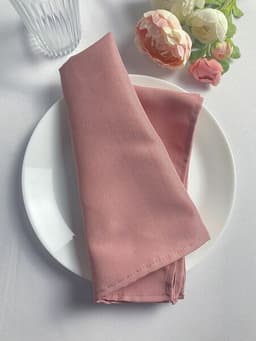
Hot to sew a table Mitered table napkin
Quiz by Soreño, Angelica A.
Customize this quiz to suit your class
Instantly translate to 100+ languages
Tag the questions with any skills you have. Your dashboard will track each student's mastery of each skill.
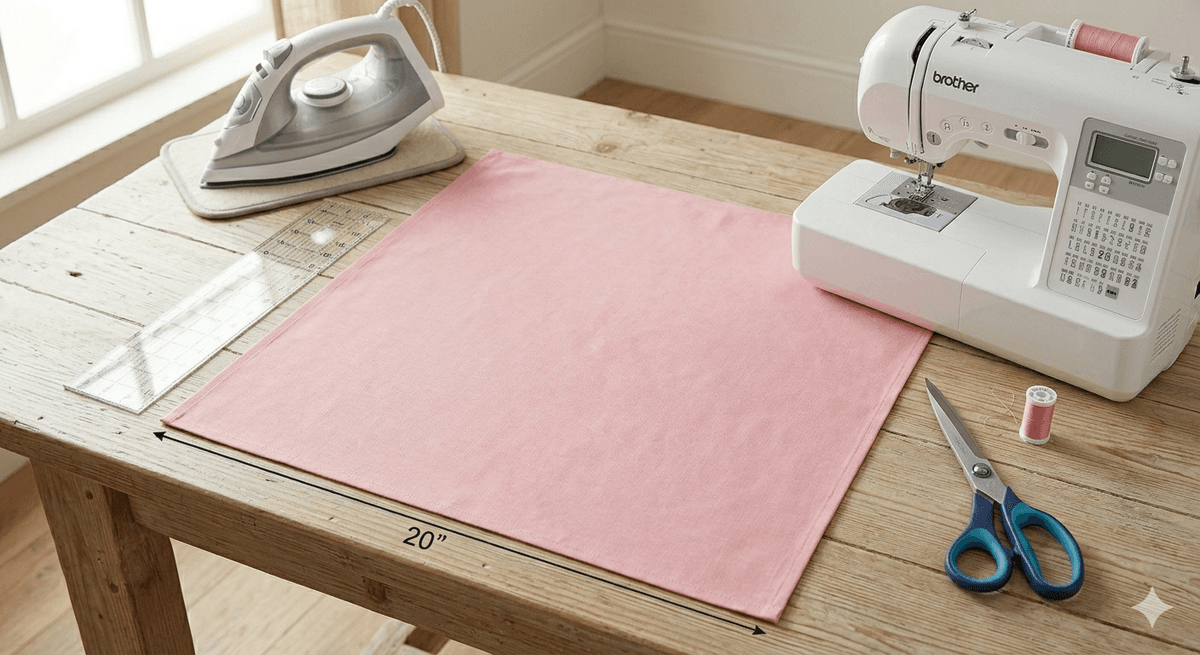
Goal:Create an 18” x 18” dinner napkin using a double-fold hem and mitered corners.
Goal:Create an 18” x 18” dinner napkin using a double-fold hem and mitered corners.
Materials:
20” x 20” cotton fabric,Iron ,Sewing machine ;Fabric scissor,Ruler
Give this quiz to my class
 Create a multiple choice test for this story: Two men were walking along one summer day. Soon it became too hot to go any further and, seeing a large plane tree nearby, they threw themselves on the ground to rest in its shade. Gazing up into the branches one man said to the other: “What a useless tree this is. It does not have fruit or nuts that we can eat and we cannot even use its wood for anything.” “Don’t be so ungrateful,” rustled the tree in reply. “I am being extremely useful to you at this very moment, shielding you from the hot sun. And you call me a good-for-nothing!” Sanitation must always be observed to promote hygiene and to prevent diseases. Sanitation and safety measures at home must never be taken for granted. All responsible members of the family should see to it that everything at home is in proper order to avoid accident. Children are usually careless and playful, they must be well taken cared off and not left alone for themselves, otherwise something wrong might happen. My dear learners keep focus, learn more! How can accidents be avoided at home? a. Multiple octopus connection can cause power overload. This can cause fire, hence it is better to install an extra outlets than to have your house burned. b. Unplug electrical appliances after use to avoid overheat appliances causing fire. c. Electrical cord should be placed away from children’s reach. d. Sharp objects should be placed in secure places where children will not reach , thus causing accidents. e. Separate shelves must be provided for poisonous substances and another one for food supplies and medicines. Following are guidelines to be observed to avoid accidents at home. Home Economics and Livelihood Education 7 Seibo College 128 f. Never touch electrical switches with wet hands. Be sure to dry your hands before plugging or unplugging appliances. In addition to that, there are accidents usually occurs in the kitchen. Since the kitchen is considered the busiest part of the house it is best to follow safety measures to avoid accidents. . 1. When preparing and cooking food never leave the fruit and vegetable peelings on the floor. Someone might step on it and fall. 2. When someone accidentally spilled liquid on the floor, wipe it immediately. 3. Use a tray when carrying or serving hot liquids to protect yourself from spills. 4. When lighting the gas stove, be sure to light the match first before turning the gas on. Always turn-off the gas stove after use. 5. Throw sand or a damp rag in case your stove catches fire. 6. Use dry pot holders to hold hot utensils. 7. Hold the kettle and its cover with dry pot holders when draining. 8. To avoid touching handles of hot utensils while cooking, turn them inward. Listed below are the health and safety practices while working in the kitchen Home Economics and Livelihood Education 7 Seibo College 129 9. Avoid carrying hot pots filled with hot liquids across the kitchen to avoid getting burned. 10. Be sure to wash your hands before and after cooking. 11. Use appropriate cooking wear like apron and hairnet. 12. Provide for a covered garbage can for trash and rubbish. 13. Use a dish cloth for wiping dry the different kitchen wares. 14. Remove accessories like bracelets, wrist watch, and ring while working in the kitchen. 15. Clean the kitchen before and after cooking. Why is it important to follow health and safety practices at home? Knowing safety tips at home prevents common injuries like burns, cuts, poisoning, choking and falls. Observing health practices at home prevents illness, spread of diseases or even death. Safety measures at home prevent accidents from happening thus save time, money and energy. Following safety measures at home ensures a healthy and peaceful life. Did you understand the lesson? If you did, observe and practice them at home for your own good and your love ones.3. Volcanoes are often found at meeting points of “tectonic plates”. These plates are pieces of the Earth’s surface that fit together just like a jigsaw puzzle. 4. Volcanoes can also occur over “mantle plumes”. Ever heard of mantle plumes? They’re super-hot areas of rock inside the Earth! Did you know that we have a FREE downloadable Volcanoes of Ecuador primary resource? Great for teachers, homeschoolers and parents alike! 5. Approximately 350 million people live within “danger range” of an active volcano. That means that around one in 20 people live in an area at risk of volcanic activity. Volcano facts 6. Volcanoes are classified as active, dormant or extinct. This refers to the amount of volcanic activity. “Active” means there’s regular activity, “dormant” means there’s been recent activity but the volcano is currently quiet, and “extinct” means it’s been so long since the last eruption that it’s unlikely to ever erupt again. 7. Volcanoes can be a variety of shapes. These geographical wonders come in various shapes and sizes, but there are two main types – composite volcanoes, which are cone-shaped with steep slopes, and shield volcanoes, which are wide with gentle slopes. 8. Magma and lava are two different things! Magma is the name given to hot liquid rock inside a volcano. Once it leaves the volcano, it’s known as lava. Psst! Make sure you download our awesome volcano facts infographic – show your friends, family, or stick it on your wall!Continental Drift Theory. From the discussion of the rock cycle, it has been pointed out that through Earth's external and internal processes. Earth's surface is constantly changing. However, this idea of a changing environment did not conform with the belief of earlier scientists. Rather, they thought that the geographic positions of ocean basins and continents have been static since the beginning of time. It was around the 1500s when Leonardo da Vinci, upon his discovery of fossil seashells found at the high mountains of Italy, first thought of the idea that the areas where mountains are located may have been oceans in the past. Through time, other fossils of marine organisms found far above the current sea level further supported the idea that mountains were uplifted and weathering wore them down. At around the 1800s, most scientists have accepted the idea that Earth's crust is undergoing large vertical movements or uplifting. There was also evidence of possible horizontal movements, but the scientists then were not convinced about it. Alfred Wegener showed evidence of horizontal or lateral movement of the continents in his continental drift theory. According to him, the continents have drifted around the world and have once formed a giant landmass or supercontinent called Pangaea. To support his theory, Alfred Wegener presented a set of geographical, biological, and climatic evidence.Wegener's geographical evidence included the jigsaw puzzle fit of the current continents. He pointed out that the coastlines of South America and Africa seem to fit together. He also pointed the presence of mountain ranges having similar rock types and age but separated by vast oceans, like that of the folded rocks of the Caledonian mountains. The same folded rocks run through West Africa, North America, Newfoundland, Ireland, Wales, Scotland, Greenland, and Norway, all of which are now separated by the Atlantic Ocean. A geographical evidence on the similar rock types in West Africa, North America, Greenland, and Europe is found. The biological evidence came in the discovery of similar plant and animal fossils in different continents separated by oceans. The animal fossils of Mesosaurus and Lystrosaurus indicate that they were not capable of crossing the oceans to reach the other continents. If they were, the fossils should have been more widely distributed Africa, Australia, India, and South America were too large to be carried by wind. This indicates that the areas where the fossils were found were closely linked. It has also been found out that the plant only grew in areas with subpolar climate, which would indicate that the landmasses were located near the South Pole.Lastly, for his climatic evidence, Wegener discovered that a glacial period occurred during the late Paleozoic era in Southern Africa, South America, Australia, and India. The initial explanation for this event was global cooling, but it was rejected because large tropical swamps with so much vegetation were found at the same time in the Northern Hemisphere. This further supported the idea that the supercontinent was indeed near the South Pole, and the continents in Northern Hemisphere were once near the equator. The glacial period also left glacial striations, or the scratches glaciers make as they move across on the underlying bedrock, on the aforementioned continents. For such an event to happen, the continents would have to be connected. SCIENCE PIONEER. Alfred Wegener (1880-1930). Alfred Wegener was a German polar researcher, geophysicist, and meteorologist. He was known for his work on the continental drift theory. In his effort to defend his work, he went to the Greenland ice sheet where he died.Even with all the compelling evidence, the continental drift theory hardly convinced the scientific community at that time because Wegener was unable to identify a credible mechanism that drives the continental drift. He was unable to clearly explain how the continents moved and how the larger continents broke through the ocean floor. Eventually, critics of the continental drift began to accept the theory when new evidence supporting the theory was discovered. The new evidence led to a more encompassing theory the theory of plate tectonics. This theory provided a more convincing explanation as to how the continents moved. The evidence that paved the way for the theory of plate tectonics was the idea of wandering poles. Scientists began studying volcanic rocks to determine the location of the magnetic poles. When volcanic rocks crystallize, the minerals with magnetic properties align themselves parallel to Earth's magnetic field at the time the minerals were formed. This finding allowed scientists to determine the polarity of Earth's magnetic field and the magnetic inclination that showed the location of the poles. Upon studying the paleomagnetism of the rocks, geophysicists found out that rocks from various locations point to different magnetic north poles, suggesting that the poles have wandered. Since movement of magnetic poles is very unlikely, scientists have accepted the idea that the continents are indeed moving. And if the continents are moving, scientists thought that maybe the ocean basins are moving too. They also discovered that some rocks showed magnetic reversals, which led them to believe that the magnetic north pole now was not always the magnetic north pole. Seafloor Spreading. After World War II, exploration on the ocean floor became the focus of many geologic studies. It was only then that the ocean ridge system was discovered. A geologist in Princeton University named Harry Hess, along with other scientists, studied this ocean ridge system and hypothesized that the oceanic crust was moving away from the ridge. His hypothesis, known as seafloor spreading, showed that the ocean floor is split along the ridge where the magma rises to form the new ocean floor.Because of this, rocks located near the ridge are younger than those that are located magnetic polarity of Earth is also preserved in those rocks. Withe ridge scientists were able to see the magnetic reversals in the ocean floor, and they were able to make use of information to determine that the ocean floor is moving at a rate of about 10 cm per year. Plate Tectonics. Confirmation of the seafloor spreading hypothesis proved that continents are not moving above the ocean floor. Rather, it is the fragments of the lithosphere. The lithosphere is the rigid layer that is composed of the uppermost mantle and the crust that carry the continents and the ocean basins along. These fragments of the lithosphere are called plates. Underneath the lithosphere is a weaker region in the mantle known as asthenosphere that behaves like a fluid. Thus, the lithosphere floats above the asthenosphere, making it detached and free to move. This became the basis of the theory of plate tectonics. Now that it has been made clear that it is the plates which are moving, the question as to how they move remained. Sir Arthur Holmes proposed the driving force for this plate movement in 1919. He suggested that the movement in the mantle carries the plates along. It was previously discussed that Earth's interior is very hot due to the heat produced by radioactive decay. Convection takes place in the mantle, keeping the asthenosphere hot and weak. The convection currents produced in the asthenosphere are the ones carrying the lithospheric plates and making them move. However, convection currents are not enough. Mechanisms such as ridge push and slab pull aid the convection currents to slowly move the lithospheric plates. Ridge push occurs at mid ocean ridges which are higher in elevation than the surrounding trenches and abyssal plains. The new ocean floor from the ridge is hot and relatively thin. As it moves away from the ridge, it cools down and gets denser, heavier, and thicker. Below this cooling ocean floor is the asthenosphere, which is less dense. This area becomes a massive shear zone and the new ocean floor will effectively slide down the slope of the asthenosphere. When the plate collides with another plate with lesser density, the denser plate sinks and a subduction zone is formed. When the subducting plate sinks, it pulls on the rest of the plate behind it. These mechanisms explain the movement of the plates.Earth has seven major lithospheric plates that account for 94% of Earth's surface. These are the North American Plate, South American Plate, Pacific Plate, African Plate, Eurasian Plate, Indo-Australian Plate, and Antarctic Plate. These plates are constantly moving relative to the other plates. Thus, the interaction of plates occurs mostly along the boundaries. These movements are plotted using information from earthquakes and volcanic activities. There are three main types of plate boundaries: convergent, divergent, and transform boundaries Convergent boundaries are boundaries where two plates move towards each other A convergent boundary is also known as destructive margin since this is where the collision between two plates occhins. There are three types of convergence-oceanic oceanic, oceanic-continental, and continental-continental. Trenches are features of the ocean floor that are present in both oceanic-oceanic boundary and oceanic-continental boundary. Subduction occurs at the trenches, therefore, these are characterized as the deepest parts of Earth. A divergent boundary is the opposite of convergent boundary: two plates move away from each other. Divergent boundaries create new crust; thus, they are also known as constructive margins. The ocean ridge system is a divergent boundary where new ocean floor is produced as magma rises, pushing the older rocks aside.Transform boundary is also known as conservative plate margin since two plates just move past one another, neither creating nor destroying land. Earthquake epicenters are usually detected at transform boundaries because the rocks tend to break and not fold or sink, like in convergent boundaries. Evolution of the Ocean Basins. Both the movement of the plates and seafloor are responsible for the evolution of ocean basins. Along the divergent boundary where ocean ridge systems are found, magma is released and new ocean floor is created. Along convergent boundaries, the ocean floor is being destroyed. The evolution of the ocean basins started during the time when Pangaea was still present and was surrounded by the vast ocean or superocean known as Panthalassa, also called Paleo-Pacific or "old Pacific." Upon the initial break up of Pangaea into Laurasia and Gondwanaland, the Tethys Sea began to form. Then, the Eurasian and North about, forming the North Atlantic. The South Atlantic only started to form when the African Plate and South American Plate separated. The continued movement of the plates created the Himalayas at one side and separated the Pacific Ocean and Atlantic Ocean at the other side, which consequently formed the current ocean basins. Both the movement of the plates and seafloor are responsible for the evolution of ocean basins. Along the divergent boundary where ocean ridge systems are found, magma is released and new ocean floor is created. Along convergent boundaries, the ocean floor is being destroyed. The evolution of the ocean basins started during the time when Pangaea was still present and was surrounded by the vast ocean or superocean known as Panthalassa, also called Paleo-Pacific or "old Pacific." Upon the initial break up of Pangaea into Laurasia and Gondwanaland, the Tethys Sea began to form. Then, the Eurasian and North about, forming the North Atlantic. The South Atlantic only started to form when the African Plate and South American Plate separated. The continued movement of the plates created the Himalayas at one side and separated the Pacific Ocean and Atlantic Ocean at the other side, which consequently formed the current ocean basins.Continents do not immediately end at the point where the ocean meets the land. They may extend slightly into the oceans. The portion of the continent that is submerged is called continental margin. There are two types of continental margin: passive margin and active margin. A passive continental margin consists of a continental shelf, continental slope, and continental rise. It is not associated with plate boundaries; thus, there are very little tectonic activities. An active continental margin only has a continental shelf and a continental slope. It is associated with plate boundaries; thus, a main feature of this boundary is a trench. The different features of a continental margin are the following: 1. The continental shelf is the gently-sloping submerged portion of the continent. 2. The continental slope is the steep slope after the continental shelf. It is still part of the continent. 3. The continental rise is the gently-sloping area after the continental slope and before the ocean floor. 4. The trenches are the deepest parts of the ocean. These are narrow depressions caused by the subduction of the ocean floor along the convergent boundaries. 5. The mid-oceanic ridge is the mountain range system in the ocean. It is responsible for the production of new ocean floor. This is the region where new magma constantly emerges from. SCIENCE CAREER. A scientific illustrator uses art to inform and communicate complex details and concepts of science. He/She makes use of scientifically informed observations and research along with his/her technical art and aesthetic skills to make accurate representations. In Natural History, the scientific illustrators recreate how the extinct species look like by working with scientists and fossil records. Moreover, with the advances in technology, illustrators are now into 3D modelling, animation, and video making. Earth's History. All the processes that have been discussed require long periods of time to create a noticeable change on Earth's surface. You can just imagine how long it would take to create an oceanas vast as the Pacific Ocean if the ocean floor moves only at about 10 cm/year. It is then important to know the history of Earth to learn the complexities of its past and be able to use it to understand the present. Just like learning the history of a country that requires one to read a lot of books, learning the history of Earth involves studying a lot of rocks. Rocks, especially sedimentary rocks, contain a lot of information about Earth's past. It holds the key to most of the geologic processes that happened on Earth and the key to uncovering how life on Earth evolved. But these discoveries are worthless if there is no time perspective. Thus, one of the most important contributions of geologists to mankind is the geologic time scale, which holds a history that is exceedingly long.How to make hot chocolate instructional text - Grade 6 A Visit to the Desert Tim was looking forward to this vacation. Then his parents told him the family would be visiting Grandma in Nevada. Tim was unhappy. He wanted to be with his friends this summer. "Grandma is eager to see you," Mom said. "She can't wait to take you on a desert hike." The next morning Grandma met them at the airport. Then they drove to the desert. As they hiked, Grandma explained that animals enjoy the open desert space. It gives them the freedom to move from place to place. Tim learned that the animals find ways to adapt to the hot desert weather. He wondered if he could get used to the desert climate. "Wow," Tim said, "Look at that! The turtle carries its home on its back!" Grandma smiled at Tim's excitement. "Actually," she said. "That is a desert tortoise. It looks for the shade made by the shadows of rocks. That's how it cools off. He burrows underground to get away from the heat." The tortoise disappeared into its burrow. Tim leaned over the hole. He could not hear a sound. "I'll bet it likes the silence of its burrow," Tim whispered. "I think it likes its sense of safety too," Grandma added. "That's the same feeling I get at home," Tim sighed. Just then a large rabbit hopped by. Grandma explained that the jack rabbit's large ears help it stay cool. "These animals are so unlike the animals at home!" Tim said. He had forgotten about the desert heat. "Some animals stay cool by sleeping during the day. Then they hunt at night," said Grandma. A Great Horned Owl hooted above them. Grandma said, "It will soon be time for the owl to hunt." "Which means it's time for us to head back," Dad added. "Aw, this vacation is going by too fast," Tim said. They asked Tim about the heat. "What heat?" Tim asked. "I feel as fresh and cool as a new flower. I've adapted!" Everyone laughed.Called igneous rock. Magma is extremely hot-between 700° and 1,300° Celsius (1,292° and 2,372° Fahrenheit). This heat makes magma a very fluid and dynamic substance, able to create new landforms and different environments. engage physical and chemical transformations in a variety of How Magma Forms EX a alamy alam Samy my Earth is divided into three general layers. The core is the superheated center, the mantle is the thick, middle layer, and the crust is the top layer on which we live. Magma originates in the lower part of the Earth's crust and in the upper portion of the mantle. Most of the mantle and crust are solid, so the presence of magma is crucial to understanding the geology and morphology of the mantle. Differences in temperature, pressure, formations in the mantle and crust cause magma to form in different ways. and structural Decompression Melting Decompression melting involves the upward movement of Earth's mostly-solid mantle. This hot material rises to an area of lower pressure through the process of convection. Areas of lower pressure always have a lower melting point than areas of high pressure. This reduction in overlying 10balmy temperature wonderful nice temperature, приятная мягкая температура provide a tropical escape give somebody a way out to a hot place, обеспечивать кого-то побегом в тропики get away from it all go somewhere different to have a rest or holiday, сбежать ото всех natural scenenry wildlife, flora and fauna, естественная природа take-your-breath-away being extremely beautiful or exciting, захватывающий дух luscious jungle sweet, luxurious, ароматный, благоухающий, роскошный embrace one's wild side behave in one's strangest way, проявить свою дикую сторону hedonistic hideaway an escape for people who love life, укромное местечко для людей, любящих жизнь ring in celebrate, отмечать be blessed with be lucky to have something, быть благословенным чем-то venture go somewhere despite difficulties, risk doing smth, отважиться star gazing looking at the stars, смотрение на звезды be short of to have very little, не хватать let all of one's tensions melt away get rid of problems, have no more problems, избавиться от напряжения offer invaluable insight have strong ideas after trying smth, предложить неоценимое озарение be after smth be trying to get smth or buy it or find it, искать что-то abundance a very large quantity of something, разнообразие, множество available to try be at hand to test, в наличии попробовать be popular among/amongst ba famous, быть известным средм be more your scene be your choice, быть вашим выбором, по душе aptly appropriately; correctly, верно, соответствующим образом well-deserved rest relaxation one should and must have, заслуженный отдых