Loading...

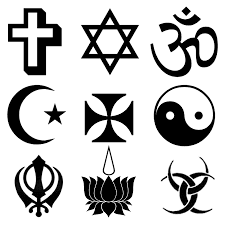
How World Religions Began?
Quiz by Rowena Pural
Customize this quiz to suit your class
Instantly translate to 100+ languages
Track each student's skills and progress in your Mastery dashboards
Give this quiz to my class
Judaism belongs to Abrahamic religions.
Map-making is one of the important cultural contributions of religion.
Judaism belongs to Abrahamic religions.
Map-making is one of the important cultural contributions of religion.
Religion existed since the beginning of civilization.
Geography deals with the heavenly bodies
Religion has a greater part in developing geographical contexts.
Canaan was the holy place for the Muslims.
Religious teachings originating from Europe are called as- Eastern Mindset.
Karma best exemplifies a circular mindset.
Religion and culture are separate contexts that have nothing to do with our daily affairs in life.
Religion affects man's culture.
"Ang itlog ay galing sa manok at ang manok ay galing sa itlog." This is the idea of an eastern outlook that features about_____
Alpha and Omega, life and death; bloom and wither are features describing_____

Ganges River, Mt. Sinai, and Marian Orchard are examples of _____

Social order and control; character development, and the belief in religion as a method for change describe the/ a____________________ of religion.
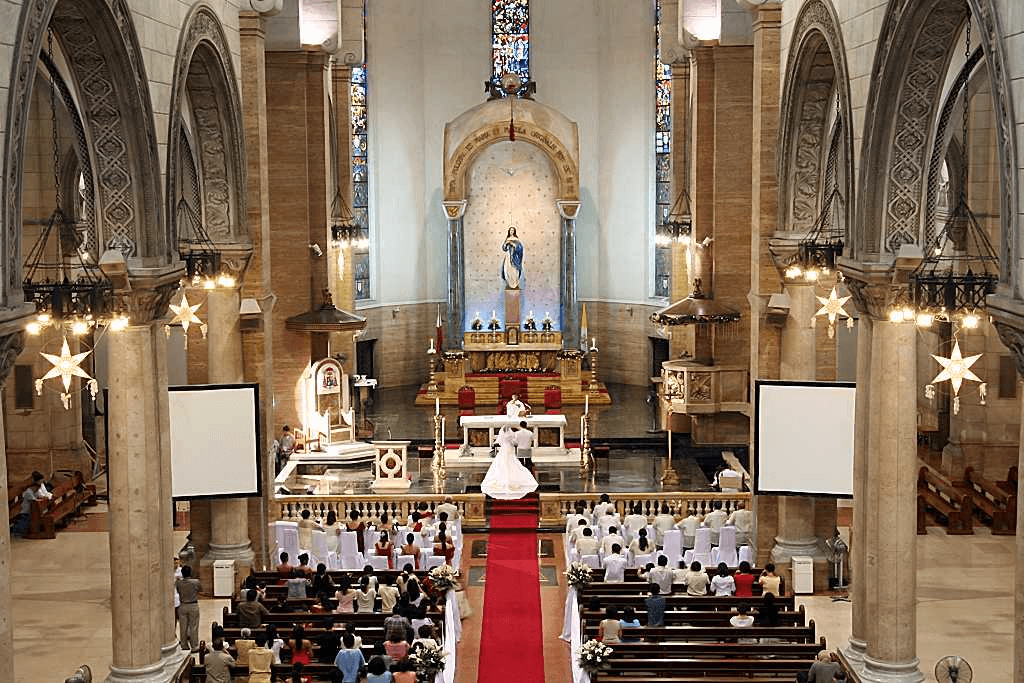
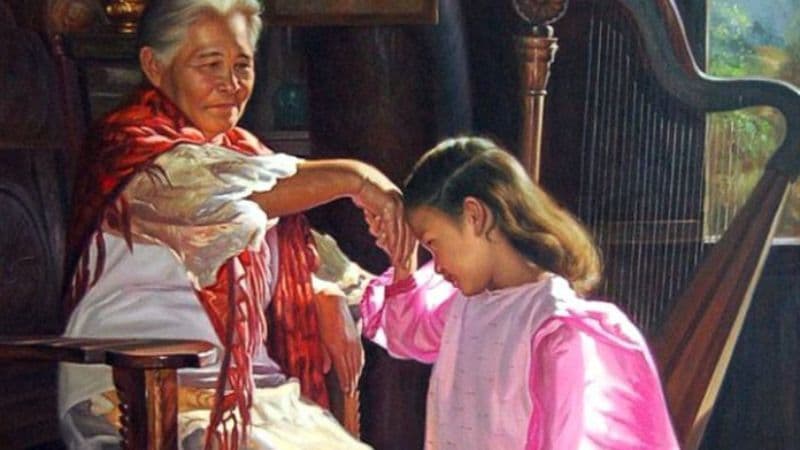
What does the picture want to depict in terms of religious influence?
 IWRBS 4th Quarter Long QuizINTRODUCTION TO WORLD RELIGION AND BELIEFS SYSTEM MIDTERM EXAMISLAMIC RELIGIONAlright, Isti — here’s a longer and more detailed English version of the Isaac Newton text, still written at a level that’s accessible for Grade 4 students, but rich enough in information to meet PISA literacy expectations and EF A2-level vocabulary. I’ve kept sentences short, clear, and with explanations for new concepts so it’s easier for young learners to follow, while still including both famous facts and lesser-known stories. ⸻ Isaac Newton: The Man Who Changed the Way We See the World A Boy from a Small Village Isaac Newton was born on January 4, 1643, in Woolsthorpe, a small village in England. His life was not easy. His father died before he was born. When he was just a few months old, his mother remarried and left him to live with his grandmother. Isaac missed his parents, but he kept himself busy by making things and exploring the world around him. As a child, Isaac liked to build models and machines. He made a small windmill that could turn with the wind. He built a water clock that told the time by dripping water into a container. He even made a sundial — a clock that tells the time by using the shadow of the sun. 💡 Did you know? The sundial marks that Isaac carved as a boy can still be seen today on the wall of his old house. ⸻ School and Curiosity When Newton first went to school, he was not the top student. At first, he did not pay much attention in class. But one day, another boy teased him for not being smart. Newton decided to study hard to prove him wrong. Soon, he became the best in his class. Isaac loved asking questions. He wanted to know how and why things happened. He enjoyed watching the stars at night and thinking about how the world worked. ⸻ The Falling Apple and Gravity One of the most famous stories about Newton is the falling apple. One afternoon, Isaac sat in his mother’s garden and saw an apple drop from a tree. This made him think: “Why does the apple fall straight down? Why doesn’t it fly up into the sky?” From this question, Newton began to think about gravity — an invisible force that pulls objects toward each other. Gravity is what keeps our feet on the ground. It’s also what keeps the Moon moving around the Earth and the planets moving around the Sun. 💡 Fun fact: The apple did not hit Newton’s head. That’s just a story people made up later to make the tale more exciting. ⸻ Newton’s Three Laws of Motion Newton studied movement and wrote three important rules: 1. Objects stay still or keep moving unless something makes them change. • Example: A ball will not roll unless you push it. 2. The bigger the push, the bigger the movement. • Example: If you kick a ball harder, it will go faster and farther. 3. Every action has an equal and opposite reaction. • Example: When you jump off a boat, the boat moves backward as you move forward. These three laws are still used today to understand how cars, rockets, and even roller coasters work. ⸻ Discoveries in Light and Color Newton also studied light. He found that white light is not just one color — it is made of many colors. He used a glass prism to split sunlight into a rainbow. This helped scientists understand how colors work. ⸻ Inventions and New Ideas Newton made a special telescope that used mirrors instead of lenses. This type of telescope made images of planets and stars much clearer. It is still called the Newtonian telescope today. He also worked in mathematics and helped create a new type of math called calculus, which is used to study changes and movement. ⸻ Strange Experiments Newton was so curious that he sometimes tested ideas on himself. Once, he put a thin needle, called a bodkin, beside his eye to see how it would change his vision. It was very dangerous, but luckily he did not go blind. 💡 Did you know? Newton also studied alchemy — an old kind of science where people tried to turn metal into gold. He never succeeded, but it showed how wide his interests were. ⸻ Later Life and Work At the age of 27, Newton became a professor at Cambridge University. He later worked for the Royal Mint, making sure coins were made safely and stopping people from making fake money. He was very strict, and some criminals were sent to prison because of his work. Newton never married. He spent most of his life reading, writing, and doing experiments. ⸻ The End of His Life Isaac Newton died in 1727 at the age of 84. He was buried in Westminster Abbey, a famous place in London where great people of Britain are honored. His work changed the world forever. Even today, scientists, engineers, and students still use Newton’s laws and ideas. 💬 Newton once said: “If I have seen further, it is by standing on the shoulders of giants.” This means we can make new discoveries by learning from the work of others who came before us. give 10 questions to each passage with PISA literacy standard for kid 10 years, 1. Nikola Tesla: The Man Who Dreamed of Lightning Born: July 10, 1856 Died: January 7, 1943 When Nikola Tesla was a boy in Croatia, he saw a flash of lightning and asked his mother, “Can we catch the light?” That question never left him. As he grew older, Tesla became a brilliant inventor, especially fascinated by electricity. He believed in a future where energy could be sent wirelessly through the air—like music through the radio! Tesla invented the alternating current (AC) system, which became the foundation of modern electricity. At the time, Thomas Edison promoted direct current (DC), and the two men had a fierce competition. Many laughed at Tesla's bold ideas, but he never gave up. He dreamed of wireless communication, flying machines, and even free energy for everyone. Though he died alone and poor, today the world honors his vision. Think About It: Why do you think people didn’t believe Tesla at first? What can we learn from Tesla’s courage to dream big? 2. Charles Darwin: The Man Who Studied the World’s Weirdest Creatures Born: February 12, 1809 Died: April 19, 1882 When young Charles Darwin got on a ship called HMS Beagle, he didn’t know he would change science forever. He sailed around the world for five years, collecting plants, animals, and fossils. On the Galápagos Islands, he noticed something curious: finches had different beaks depending on their island. Why? Darwin’s observations led him to write the theory of evolution by natural selection. It explained how animals adapt and survive. But his ideas shocked many people because they seemed to challenge religious beliefs. Despite the controversy, Darwin continued his work. His book On the Origin of Species changed how we see life on Earth. Think About It: Should scientists share their ideas even if they go against what others believe? How did traveling help Darwin make new discoveries? 3. Marie Curie: The Woman Who Glowed in the Dark Born: November 7, 1867 Died: July 4, 1934 Marie Curie was born in Poland at a time when girls were not allowed to study science. But that didn’t stop her. She moved to France, worked day and night, and discovered radioactivity, a powerful energy hidden inside atoms. She and her husband, Pierre Curie, found two new elements: polonium and radium. She became the first woman to win a Nobel Prize, and the only person to win in two different sciences: physics and chemistry. Even when Pierre died in an accident, Marie continued their work. Her discoveries helped doctors treat cancer—but working with radioactive materials also harmed her health. She died from radiation exposure, but her legacy lives on. Think About It: What challenges did Marie Curie face as a woman in science? Why is it important to balance discovery with safety? 4. Galileo Galilei: The Star Watcher Who Defied the Church Born: February 15, 1564 Died: January 8, 1642 Galileo loved looking at the stars. He built one of the first powerful telescopes and made stunning discoveries: mountains on the Moon, moons around Jupiter, and that the Earth orbits the Sun—not the other way around. This idea, called heliocentrism, went against the teachings of the Church. He was put on trial and forced to say he was wrong. But he wasn’t. He spent his last years under house arrest, quietly writing. Today, Galileo is called the father of modern science for daring to question what others blindly believed. Think About It: Why do you think Galileo was punished for telling the truth? Should science always follow evidence, even if it goes against powerful beliefs? 5. Isaac Newton: The Man Who Asked “Why?” When an Apple Fell Born: January 4, 1643 Died: March 31, 1727 One day, an apple fell from a tree, and Isaac Newton began to wonder: Why did it fall down, not sideways or up? This simple question led to his theory of gravity. Newton also invented calculus, described the laws of motion, and changed physics forever. But Newton wasn’t just a genius—he was curious, quiet, and often worked alone. He believed everything in nature followed rules, and it was our job to discover them. Thanks to him, we understand how planets move, how rockets launch, and why you fall when you trip. Think About It: How did Newton’s curiosity lead to great discoveries? Do you think working alone helped or hurt Newton? 6. Ada Lovelace: The First Computer Programmer Before Computers Existed Born: December 10, 1815 Died: November 27, 1852 Ada Lovelace was the daughter of the famous poet Lord Byron, but she didn’t love poetry—she loved numbers! At a time when girls were expected to sew, Ada studied mathematics. She met Charles Babbage, who designed an early computer called the Analytical Engine. Ada imagined the machine could do more than just math—it could create music, art, and even write! She wrote what is now considered the first computer program, long before real computers were built. Think About It: How did Ada imagine something that didn’t exist yet? Why do we call her a pioneer in technology? 7. Albert Einstein: The Man Who Brought Time and Space Together Born: March 14, 1879 Died: April 18, 1955 Albert Einstein wasn’t always a good student. In fact, his teachers thought he was slow. But Einstein thought deeply. He asked big questions like, “What if you could ride a beam of light?” His theories of relativity changed how we see space, time, and gravity. He also warned the world about the dangers of nuclear weapons, even though his ideas helped create them. Einstein believed science should help people, not harm them. With his messy hair, kind smile, and brilliant mind, he remains a symbol of genius. Think About It: Can someone be bad in school but still be brilliant? Should scientists be responsible for how their inventions are used? 8. Pythagoras: The Musician Who Loved Math Born: Around 570 BC Died: Around 495 BC Long ago in ancient Greece, Pythagoras believed the universe followed numbers. He discovered the Pythagorean Theorem, a rule about triangles that helps us build houses, design computers, and navigate space. He also believed that music had math inside it—that certain notes made perfect harmony because of mathematical ratios. Pythagoras started a secret school and taught his students to search for truth through numbers, shapes, and sound. Think About It: Why do you think Pythagoras saw math in everything? How does music relate to math? 9. Rosalind Franklin: The Woman Behind the DNA Discovery Born: July 25, 1920 Died: April 16, 1958 Rosalind Franklin loved looking closely at things. She used a special machine called X-ray crystallography to photograph molecules. One of her greatest photos, called Photo 51, showed the shape of DNA, the molecule that carries life’s instructions. But her work was taken without credit. Two men, Watson and Crick, used her photo to build their famous model of DNA and won the Nobel Prize. Rosalind died young and never knew how important her work became. Think About It: Why is it important to give credit in science? What can we learn from Rosalind’s quiet strength? 10. Carl Linnaeus: The Man Who Gave Names to Everything Born: May 23, 1707 Died: January 10, 1778 Have you ever wondered why a tiger is called Panthera tigris? That’s thanks to Carl Linnaeus, a Swedish scientist who created a way to name and organize every living thing. His system is still used today in biology. Linnaeus loved nature and spent his life collecting plants, animals, and even rocks. He believed that by organizing life, we could better understand it. Thanks to him, we now have a global “dictionary of nature.” Think About It: Why is it important to name and organize living things? How does order help us understand the world?To the Lakota, and other indigenous people on North America's Great Plains, the bison was an essential part of their culture ( expressed in the quote on the previous page). The bison provided meat for nutrition, a hide for clothing and shelter, bones for tools, and fat for soap. The bison was also central to their religious beliefs. So, when European settlers hunted the bison nearly to extinction, Lakota culture suffered. Culture is central to a society and the identity of its people, as well as its continued existence. Therefore, geographers study culture as a way to understand similarities and differences among societies across the world, and in some cases, to help preserve these societies. Analyzing Culture All of a group's learned behaviors, actions, beliefs, and objects are a part of culture. It is a visible force seen in a group's actions, possessions, and influence on the landscape. For example, in a large city you can see people working in offices, factories, and stores, and living in high-rise apartments or suburban homes. You might observe them attending movies, concerts, or sporting events. Culture is also an invisible force guiding people through shared belief systems, customs, and traditions. Culture is learned, in that it develops through experiences, and not merely transmitted through genetics. For example, many people in the United States have developed a strong sense of competitiveness in school and business, and believe that hard work is a key to success. These types of elements, visible and invisible, are cultural traits. A series of interrelated traits make up a cultural complex, such as the process of steps and acceptable behaviors related to greeting a person in different cultures. A single cultural artifact, such as an automobile, may represent many different values, beliefs, behaviors and traditions and be representative of a cultural complex. Since culture is learned there are many ways that one generation passes its culture to the next. Children and adults learn traits three ways: • imitation, as when learning a language by repeating sounds or behaviors from a person or television • informal instruction, as when a parent reminds a child to say "please" • formal instruction, as when students learn history in school 132 HUMAN GEOGRAPHY: AP" EDITION CULTURAL COMPLEX OF THE AUTOMOBILE The automobile provides much more than just transportation, as it reflects many values that are central to American culture. Origins of Culture The area in which a unique culture or a specific trait develops is a culture hearth. Classical Greece was a culture hearth for democracy more than 2,000 years ago. New York City was a culture hearth for rap music in the 1970s. Geographers study how cultures develop in hearths and diffuse-or spread-to other places. Geographers also study taboos, behaviors heavily discouraged by a culture. For example, many cultures have taboos against eating certain foods, such as pork or insects. What is considered taboo changes over time. In the United States, marriages between Protestants and Catholics were once taboo, but they are not widely opposed now. Traditional, Folk, and Indigenous Cultures With the beginning of the Industrial Revolution in the late 18th century, modern transportation and communication connected people as never before and led to extensive cultural mixing, especially as cities have grown. The world prior to this time was very different; however, remnants of the past are still evident in our modern cultures. Traditional, folk, and indigenous cultures share some important characteristics and are often grouped together, but they do have some subtle differences. Traditional Culture Recently, the meanings of traditional, folk, and indigenous culture have begun to merge, causing geographers to debate when each should be used. Increasingly, the term traditional culture is used to encompass all three cultural designations. All three types share the function of passing down long-held beliefs, values, and practices and are generally resistant to rapid changes in their culture. Folk Culture The beliefs and practices of small, homogenous groups of people, often living in rural areas that are relatively isolated and slow to change, are known as folk cultures. Like all cultures, they demonstrate the diverse ways that people have adapted to a physical environment. For example, people around the world learned to make shelters out of available resources, whether 3.1: INTRODUCTION TO CULTURE 133 it was snow or mud bricks or wood. However, people used similar resources such as wood differently. In Scandinavia, people used trees to build cabins. In the American Midwest, people processed trees into boards, built a frame, and attached the boards to it. Many traits of folk culture continue today. Corn was first grown in Mexico around 10,000 years ago, and it is still grown there today. While many elements of folk culture exist side by side with modern culture, there are people whose societies have changed little, if at all, from long ago. These people practice traditional cultures, those which have not been affected by modern technology or influences. They often live in remote regions, such as some small tribes in the Amazon rainforest, and have scant knowledge of the outside world. As the lines continue blurring between cultural designations, the Amish of Pennsylvania are often referenced as both folk and traditional culture. Indigenous Culture When members of an ethnic group reside in their ancestral lands, and typically possess unique cultural traits, such as speaking their own exclusive language, they are considered an indigenous culture. Some indigenous peoples have been displaced from their native lands, but still practice their indigenous culture. Native Americans in the United States, such as the Navajo, have kept indigenous cultural practices. First Nations of Canada, such as the Inuit, have also retained their indigenous culture. Globalization and Popular Culture As a result of the Industrial Revolution, improvements in transportation and communication have shortened the time required for movement, trade, or other forms of interaction between two places. This development, known as space-time compression (see Topics 1.4 and 3.6), has accelerated culture change around the world. In 1817, a freight shipment from Cincinnati needed 52 days to reach New York City. By 1850, because of canals and railroads, it took half that long. And by 1852, it took only 7 days. Today, an airplane flight takes only a few hours, and digital information takes seconds or less. Similar change has occurred on the global scale. People travel freely across the world in a matter of hours, and communication has advanced to a point where people share information instantaneously across the globe. The increased global interaction has had a profound impact on cultures, from spreading English across the world to instant sharing of news, events and music. Globalization specifically refers to the increased integration of the world economy since the 1970s. The process of intensified interaction among peoples, governments, and companies of different countries around the globe has had profound impacts on culture. The culture of the United States is intertwined with globalization. Through the influence of its corporations, Hollywood movies, and government, the United States exerts widespread influence in other countries. But other countries also shape American culture. For example, in 2019, the National Basketball Association included players from 38 countries or territories. When cultural traits- such as clothing, music, movies, and types of 134 HUMAN GEOGRAPHY: AP. EDITION businesses-spread quickly over a large area and are adopted by various groups, they become part of popular culture. Elements of popular culture often begin in urban areas and diffuse quickly through globalization processes such as the media and Internet. These elements can quickly be adopted worldwide, making them part of global culture. People around the world follow European soccer, Indian Bollywood movies, and Japanese animation known as anime. With people in many nations wearing similar clothes, listening to similar music, and eating similar food, popular cultural traits often promote uniformity in beliefs, values, and the cultural landscape across many places The cultural landscape, also known as the built environment (see Topic 3.2), is the modification of the environment by a group and is a visible reflection of that group's cultural beliefs and values. Traditional Culture to Popular Culture Popular culture emphasizes trying what is new rather than preserving what is traditional. Many people, especially older generations or those who follow a folk culture, openly resist the adoption of popular cultural traits. They do this by preserving traditional languages, religions, values, and foods. While older generations often resist the adoption of popular culture, they seldom are successful in keeping their traditional cultures from changing, especially among the young people of their society. One clash between popular and traditional culture is occurring in Brazil. As the population expands to the interior of the rain forest, many indigenous cultures, like the Yanamamo tribe, have more contact with outside groups. Remaining isolated by the forest is becoming increasingly difficult as many young people from the indigenous cultures become exposed to popular culture and begin to integrate into the larger Brazilian society. As the young people leave their communities, they are more likely to accept popular culture at the expense of their indigenous cultural heritage, which threatens the very existence of their folk culture. Traditional culture typically exhibits horizontal diversity, meaning each traditional culture has its own customs and language that makes it distinct from other culture groups. Yet, people people within each group are usually homogeneous, or very similar to each other. By contrast, popular culture typically exhibits vertical diversity, meaning that modern urban societies are usually heterogeneous, or exhibiting differences, within the society and usually contain numerous multiethnic neighborhoods. However, on a global scale popular cultures are relatively similar with the same type of malls, shops, fast food, and clothing. Urban global culture centers are not identical, yet, global cities often do not have as much horizontal diversity across space as folk cultures. 3.1: INTRODUCTION TO CULTURE 135 COMPARING TRADITIONAL AND POPULAR CULTURE Trait Traditional Culture Popular or Global Culture Society • Rural and isolated location • Urban and connected location • Homogeneous and • Diverse and multiethnic indigenous population population • Most people speak an • Many people speak a global indigenous or ethnic local language such as English or language Arabic • Horizontal diversity • Vertical diversity Social • Emphasis on community and • Emphasis on individualism and Structure conformity making choices • Families live close to each • Dispersed families other • Weakly defined gender roles • Well-defined gender roles Diffusion • Relatively slow and limited • Relatively rapid and extensive • Primarily through relocation • Often hierarchical • Oral traditions and stories • Social media and mass media Buildings and • Materials produced locally, • Materials produced in distant Housing such as stone or grass factories, such as steel or glass • Built by community or owner • Built by a business • Similar style for community • Variety of architectural styles • Different between cultures • Similar between cities • Traditional architecture • Postmodern / contemporary architecture Food • Locally produced • Often imported • Choices limited by tradition • Wide range of choice • Prepared by the family or • Purchased in restaurants community Spatial Focus • Local and regional • National and global Artifacts, Mentifacts, and Sociofacts Whether a cultural attribute is considered traditional, folk, indigenous, or popular in nature, it is valuable to differentiate between elements of culture that can be seen and those that can not. There are artifacts that comprise the material culture, which consists of tangible things, or those that can be experienced by the senses. Art, clothing, food, music, sports, and housing types are all tangible elements of culture. Another element of the study of artifacts is understanding the techniques to use or build a specific artifact. Artifacts can be unique to a particular culture, or can be shared. For example, people of all cultures need to communicate through language, yet there are many groups that possess languages unique to their culture. The ability to read, write and understand the English language is an artifact of importance for much of popular global culture. 136 HUMAN GEOGRAPHY: AP" EDITION Mentifacts comprise a group's nonmaterial culture and consist ofintangible concepts, or those not having a physical presence. Beliefs, values, practices, and aesthetics (pleasing in appearance) determine what a cultural group views as acceptable and desirable. Mentifacts can also be unique or shared. People of many cultures possess an belief in one or many deities, and often the deities are unique to that culture. The belief in a god is a mentifact-the religious building or symbols are artifacts. Cultural groups also possess sociofacts, which are the ways people organize their society and relate to one another. Taken altogether, people tend to see the whole of their culture as greater than the sum of its individual parts. Sociofacts are embodied through families, governments, sports teams, religious organizations, education systems, and other social constructs. As with artifacts and mentifacts, sociofacts may also be unique or similar to other societies. Families are the foundations of most societies, yet what constitutes the structure of a family may vary widely between cultural groups. For example, Western cultures tend to view the nuclear family, consisting of the parents and their children as the basic family unit. By contrast, in many Western African cultures the norm is the extended family, consisting of several generations and other family members such as cousins living under one roof.MYTH The British helped the Jews displace the native Arab population of Palestine. FACT Herbert Samuel, a British Jew who served as the first High Commissioner of Palestine, placed restrictions on Jewish immigration “in the ‘interests of the present population’ and the ‘absorptive capacity’ of the country.”1 The influx of Jewish settlers was said to force the Arab fellahin (native peasants) from their land. This was when less than a million people lived in an area that now supports more than nine million. The British limited the absorptive capacity of Palestine when, in 1921, Colonial Secretary Winston Churchill severed nearly four-fifths of Palestine—some thirty-five thousand square miles—to create a new Arab entity, Transjordan. As a consolation prize for the Hejaz and Arabia (which are both now Saudi Arabia) going to the Saud family, Churchill rewarded Sharif Hussein’s son Abdullah for his contribution to the war against Turkey by installing him as Transjordan’s emir. The British went further and placed restrictions on Jewish land purchases in what remained of Palestine. By 1949, the British had allotted 87,500 acres of the 187,500 acres of cultivable land to Arabs and only 4,250 acres to Jews. This contradicted Article 6 of the Mandate which stated that “the Administration of Palestine…shall encourage, in cooperation with the Jewish Agency…close settlement by Jews on the land, including State lands and waste lands not acquired for public purposes.”2 Ultimately, the British admitted that the argument about the country’s absorptive capacity was specious. The Peel Commission said, “The heavy immigration in the years 1933–36 would seem to show that the Jews have been able to enlarge the absorptive capacity of the country for Jews.”3 MYTH The British allowed Jews to flood Palestine while Arab immigration was tightly controlled. FACT The British response to Jewish immigration set a precedent of appeasing the Arabs, which was followed for the duration of the Mandate. The British restricted Jewish immigration while allowing Arabs to enter the country freely. Apparently, London did not feel that a flood of Arab immigrants would affect the country’s “absorptive capacity.” During World War I, the Jewish population in Palestine declined because of the war, famine, disease, and expulsion by the Turks. In 1915, approximately 83,000 Jews lived in Palestine among 590,000 Muslim and Christian Arabs. According to the 1922 census, the Jewish population was 83,000, while the Arabs numbered 643,000.4 Thus, the Arab population grew exponentially while that of the Jews stagnated. In the mid-1920s, Jewish immigration to Palestine increased primarily because of anti-Jewish economic legislation in Poland and Washington’s imposition of restrictive quotas.5 The record number of immigrants in 1935 (see table) was a response to the growing persecution of Jews in Nazi Germany. The British administration considered this number too large, however, so the Jewish Agency was informed that less than one-third of the quota it asked for would be approved in 1936.6 The British gave in further to Arab demands by announcing in the 1939 White Paper that an independent Arab state would be created within ten years and that Jewish immigration was to be limited to 75,000 for the next five years, after which it was to cease altogether. It also forbade land sales to Jews in 95% of the territory of Palestine. The Arabs, nevertheless, rejected the proposal. Jewish Immigration to Palestine7 1919 1,806 1931 4,075 1920 8,223 1932 12,533 1921 8,294 1933 37,337 1922 8,685 1934 45,267 1923 8,175 1935 66,472 1924 13,892 1936 29,595 1925 34,386 1937 10,629 1926 13,855 1938 14,675 1927 3,034 1939 31,195 1928 2,178 1940 10,643 1929 5,249 1941 4,592 1930 4,944 By contrast, throughout the Mandatory period, Arab immigration was unrestricted. In 1930, the Hope Simpson Commission, sent from London to investigate the 1929 Arab riots, said the British practice of ignoring the uncontrolled illegal Arab immigration from Egypt, Transjordan, and Syria had the effect of displacing the prospective Jewish immigrants.8 The British governor of the Sinai from 1922 to 1936 observed, “This illegal immigration was not only going on from the Sinai, but also from Transjordan and Syria, and it is very difficult to make a case out for the misery of the Arabs if at the same time their compatriots from adjoining states could not be kept from going in to share that misery.”9 The Peel Commission reported in 1937 that the “shortfall of land is…due less to the amount of land acquired by Jews than to the increase in the Arab population.”10 MYTH The British changed their policy to allow Holocaust survivors to settle in Palestine. FACT The gates of Palestine remained closed for the duration of the war, stranding hundreds of thousands of Jews in Europe, many of whom became victims of Hitler’s “Final Solution.” After the war, the British refused to allow the survivors of the Nazi nightmare to find sanctuary in Palestine. On June 6, 1946, President Truman urged the British government to relieve the suffering of the Jews confined to displaced persons camps in Europe by immediately accepting 100,000 Jewish immigrants. Britain’s foreign minister Ernest Bevin replied sarcastically that the United States wanted displaced Jews to immigrate to Palestine “because they did not want too many of them in New York.”11 Some Jews reached Palestine, many smuggled in on dilapidated ships organized by the Haganah. Between August 1945 and the establishment of the State of Israel in May 1948, sixty-five “illegal” immigrant ships, carrying 69,878 people, arrived from European shores. In August 1946, however, the British began to intern those they caught in camps on Cyprus. Approximately 50,000 people were detained in the camps, and 28,000 remained imprisoned when Israel declared independence.12 MYTH As the Jewish population grew, the plight of the Palestinian Arabs worsened. FACT In July 1921, Hasan Shukri, the mayor of Haifa and president of the Muslim National Associations, sent a telegram to the British government in reaction to a delegation of Palestinians that went to London to try to stop the implementation of the Balfour Declaration. Shukri wrote: We are certain that without Jewish immigration and financial assistance there will be no future development of our country as may be judged from the fact that the towns inhabited in part by Jews such as Jerusalem, Jaffa, Haifa, and Tiberias are making steady progress while Nablus, Acre, and Nazareth where no Jews reside are steadily declining.13 The Jewish population increased by 470,000 between World War I and World War II, while the non-Jewish population rose by 588,000.14 The permanent Arab population increased by 120% between 1922 and 1947.15 This rapid growth of the Arab population was a result of several factors. One was immigration from neighboring states—constituting 37% of the total immigration to pre-state Israel—by Arabs who wanted to take advantage of the higher standard of living the Jews had made possible.16 The Arab population also grew because of the improved living conditions created by the Jews as they drained malarial swamps and brought improved sanitation and health care to the region. Thus, for example, the Muslim infant mortality rate fell from 201 per thousand in 1925 to 94 per thousand in 1945, and life expectancy rose from 37 years in 1926 to 49 in 1943.17 The Arab population increased the most in cities where large Jewish populations had created new economic opportunities. From 1922–1947, the non-Jewish population increased by 290% in Haifa, 131% in Jerusalem, and 158% in Jaffa. The growth in Arab towns was more modest: 42% in Nablus, 78% in Jenin, and 37% in Bethlehem.18 MYTH Jews stole Arab land. FACT Despite the growth in their population, the Arabs continued to assert they were being displaced. From the beginning of World War I, however, part of Palestine’s land was owned by absentee landlords who lived in Cairo, Damascus, and Beirut. About 80% of the Palestinian Arabs were debt-ridden peasants, semi-nomads, and Bedouins.19 Jews went out of their way to avoid purchasing land in areas where Arabs might be displaced. They sought land that was largely uncultivated, swampy, cheap, and—most important—without tenants. In 1920, Labor Zionist leader David Ben-Gurion expressed his concern about the Arab fellahin, whom he viewed as “the most important asset of the native population.” He insisted that “under no circumstances must we touch land belonging to fellahs or worked by them.” Instead, he advocated helping liberate them from their oppressors. “Only if a fellah leaves his place of settlement,” Ben-Gurion added, “should we offer to buy his land, at an appropriate price.”20 Jews only began to purchase cultivated land after buying all the uncultivated territory. Many Arabs were willing to sell because of the migration to coastal towns and because they needed money to invest in the citrus industry.21 When John Hope Simpson arrived in Palestine in May 1930, he observed, “They [the Jews] paid high prices for the land and, in addition, they paid to certain of the occupants of those lands a considerable amount of money which they were not legally bound to pay.”22 In 1931, Lewis French conducted a survey of landlessness for the British government and offered new plots to any Arabs who had been “dispossessed.” British officials received more than 3,000 applications, of which 80% were ruled invalid by the government’s legal adviser because the applicants were not landless Arabs. This left only about 600 landless Arabs, 100 of whom accepted the government land offer.23 In April 1936, a new outbreak of Arab attacks on Jews was instigated by local Palestinian leaders who were later joined by Arab volunteers led by a Syrian guerrilla named Fawzi al-Qawuqji, the commander of the Arab Liberation Army. By November, when the British finally sent a new commission headed by Lord Peel to investigate, 89 Jews had been killed and more than 300 wounded.24 The Peel Commission’s report found that Arab complaints about Jewish land acquisition were baseless. It pointed out that “much of the land now carrying orange groves was sand dunes or swamp and uncultivated when it was purchased…There was at the time of the earlier sales little evidence that the owners possessed either the resources or training needed to develop the land.”25 Moreover, the Commission found the shortage was “due less to the amount of land acquired by Jews than to the increase in the Arab population.” The report concluded that the presence of Jews in Palestine, along with the work of the British administration, had resulted in higher wages, an improved standard of living, and ample employment opportunities.26 It is made quite clear to all, both by the map drawn up by the Simpson Commission and by another compiled by the Peel Commission, that the Arabs are as prodigal in selling their land as they are in useless wailing and weeping (emphasis in the original). —Transjordan’s king Abdullah27 Even at the height of the Arab revolt in 1938 (which began in April 1936 with the murder of two Jews by Arabs and the subsequent murder of two Arab workers by members of the Jewish underground28), the British high commissioner to Palestine believed the Arab landowners were complaining about sales to Jews to drive up prices for lands they wished to sell. Many Arab landowners had been so terrorized by Arab rebels they decided to leave Palestine and sell their property to the Jews.29 The Jews paid exorbitant prices to wealthy landowners for small tracts of arid land. “In 1944, Jews paid between $1,000 and $1,100 per acre in Palestine, mostly for arid or semiarid land; in the same year, rich black soil in Iowa was selling for about $110 per acre.”30 By 1947, Jewish holdings in Palestine amounted to about 463,000 acres. Approximately 45,000 were acquired from the mandatory government, 30,000 were bought from various churches, and 387,500 were purchased from Arabs. Analyses of land purchases from 1880 to 1948 show that 73% of Jewish plots were purchased from large landowners, not poor fellahin.31 Many leaders of the Arab nationalist movement, including members of the Muslim Supreme Council, and the mayors of Gaza, Jerusalem, and s sold land to the Jews. As’ad el-Shuqeiri, a Muslim religious scholar and father of Palestine Liberation Organization chairman Ahmed Shuqeiri, took Jewish money for his land. Even King Abdullah leased land to the Jews.32 MYTH The British helped the Palestinians to live peacefully with the Jews. FACT In 1921, Haj Amin el-Husseini first began to organize fedayeen (“one who sacrifices himself”) to terrorize Jews. El-Husseini hoped to duplicate the success of Kemal Atatürk in Turkey by driving the Jews out of Palestine just as Kemal had driven the invading Greeks from his country.33 Arab radicals gained influence because the British administration was unwilling to take effective action against them until they began a revolt against British rule. Colonel Richard Meinertzhagen, former head of British military intelligence in Cairo, and later chief political officer for Palestine and Syria, wrote in his diary that British officials “incline towards the exclusion of Zionism in Palestine.” The British encouraged the Palestinians to attack the Jews. According to Meinertzhagen, Col. Bertie Harry Waters-Taylor (financial adviser to the military administration in Palestine 1919–23) met with el-Husseini in 1920, a few days before Easter, and told him that “he had a great opportunity at Easter to show the world…that Zionism was unpopular not only with the Palestine administration but in Whitehall.” He added that “if disturbances of sufficient violence occurred in Jerusalem at Easter, both General [Louis] Bols [chief administrator in Palestine, 1919–20] and General [Edmund] Allenby [commander of the Egyptian force, 1917–19, then high commissioner of Egypt] would advocate the abandonment of the Jewish Home. Waters-Taylor explained that freedom could only be attained through violence.”34 El-Husseini took the colonel’s advice and instigated a riot. The British withdrew their troops and the Jewish police from Jerusalem, allowing the Arab mob to attack Jews and loot their shops. Because of el-Husseini’s overt role in instigating the pogrom, the British decided to arrest him. He escaped, however, and was sentenced to ten years in absentia. A year later, some British Arabists convinced High Commissioner Herbert Samuel to pardon el-Husseini and to appoint him Mufti (a cleric in charge of Jerusalem’s Islamic holy places). By contrast, Vladimir Jabotinsky and several followers, who had formed a Jewish defense organization during the unrest, were sentenced to 15 years. They were released a few months later.35 Samuel met with el-Husseini on April 11, 1921, and was assured “that the influences of his family and himself would be devoted to tranquility.” Three weeks later, riots in Jaffa and elsewhere left forty-three Jews dead.36 El-Husseini consolidated his power and took control of all Muslim religious funds in Palestine. He used his authority to gain control over the mosques, the schools, and the courts. No Arab could reach an influential position without being loyal to the Mufti. His power was so absolute that “no Muslim in Palestine could be born or die without being beholden to Haj Amin.”37 The Mufti’s henchmen also ensured he would have no opposition by systematically killing Palestinians who discussed cooperation with the Jews from rival clans. As the spokesman for Palestinian Arabs, el-Husseini did not ask that Britain grant them independence. On the contrary, in a letter to Churchill in 1921, he demanded that Palestine be reunited with Syria and Transjordan.38 The Arabs found rioting an effective political tool because of the lax British response toward violence against Jews. In handling each riot, the British prevented Jews from protecting themselves but made little effort to prevent the Arabs from attacking them. After each outbreak, a British commission of inquiry would try to establish the cause of the violence. The conclusion was always the same: The Arabs feared being displaced by the Jews. To stop the rioting, the commissions would recommend that restrictions be placed on Jewish immigration. Thus, the Arabs learned they could always stop the influx of Jews by staging riots. This cycle began after a series of riots in May 1921. After failing to protect the Jewish community from Arab mobs, the British appointed the Haycraft Commission to investigate the cause of the violence. Although the panel concluded the Arabs had been the aggressors, it rationalized the cause of the attack: “The fundamental cause of the riots was a feeling among the Arabs of discontent with, and hostility to, the Jews, due to political and economic causes, and connected with Jewish immigration, and with their conception of Zionist policy.”39 One consequence of the violence was the institution of a temporary ban on Jewish immigration. The Arab fear of being “displaced” or “dominated” was an excuse for their attacks on Jewish settlers. Note, too, that these riots were not inspired by nationalistic fervor—nationalists would have rebelled against their British overlords—they were motivated by economics, the radical Islamic views of the Mufti, and misunderstanding. In 1929, Arab provocateurs convinced the masses that the Jews had designs on the Temple Mount (a tactic still used today to incite violence). A Jewish religious observance at the Western Wall, which forms a part of the Temple Mount, served as a pretext for rioting by Arabs against Jews, which spilled out of Jerusalem into other villages and towns, including Safed and Hebron. Again, the British administration made no effort to prevent the violence, and, after it began, the British did nothing to protect the Jewish population. After six days of mayhem, the British finally brought troops in to quell the disturbance. By this time, most of Hebron’s Jews had fled or been killed. In all, 133 Jews were killed and 399 wounded in the pogroms.40 After the riots, the British ordered an investigation, resulting in the Passfield White Paper. It said the “immigration, land purchase and settlement policies of the Zionist Organization were already or were likely to become, prejudicial to Arab interests. It understood the mandatory government’s obligation to the non-Jewish community to mean that Palestine’s resources must be primarily reserved for the growing Arab economy.”41 This meant it was necessary to restrict Jewish immigration and land purchases. MYTH The Mufti was not a Nazi collaborator. FACT In 1941, Haj Amin al-Husseini, the Mufti of Jerusalem, fled to Germany and met with Adolf Hitler, Heinrich Himmler, Joachim Von Ribbentrop, and other Nazi leaders. He wanted to persuade them to extend the Nazis’ anti-Jewish program to the Arab world. The Mufti sent Hitler fifteen drafts of declarations he wanted Germany and Italy to make concerning the Middle East. One called on the two countries to declare the illegality of the Jewish home in Palestine. He also asked the Axis powers to “accord to Palestine and to other Arab countries the right to solve the problem of the Jewish elements in Palestine and other Arab countries in accordance with the interest of the Arabs, and by the same method that the question is now being settled in the Axis countries.”42 In November 1941, the Mufti met with Hitler, who told him the Jews were his foremost enemy. The Nazi dictator rebuffed the Mufti’s requests for a declaration in support of the Arabs, however, telling him the time was not right. The Mufti offered Hitler his “thanks for the sympathy which he had always shown for the Arab and especially Palestinian cause, and to which he had given clear expression in his public speeches.” He added, “The Arabs were Germany’s natural friends because they had the same enemies as had Germany, namely…the Jews.” Hitler told the Mufti he opposed the creation of a Jewish state and that Germany’s objective was destroying the Jewish element in the Arab sphere.43 In 1945, Yugoslavia sought to indict the Mufti as a war criminal for his role in recruiting twenty thousand Muslim volunteers for the SS, who participated in the killing of Jews in Croatia and Hungary. He escaped French detention in 1946, however, and continued his fight against the Jews from Cairo and later Beirut where he died in 1974. MYTH The bombing of the King David Hotel was part of a deliberate terror campaign against civilians. FACT British troops seized the Jewish Agency compound on June 29, 1946, and confiscated large quantities of documents. At about the same time, more than 2,500 Jews from all over Palestine were arrested. A week later, news of a massacre of 40 Jews in a pogrom in Poland reminded the Jews of Palestine how Britain’s restrictive immigration policy had condemned thousands to death. In response to the British provocations, and a desire to demonstrate that the Jews’ spirit could not be broken, the United Resistance Movement planned to bomb the King David Hotel, which housed the British military command and the Criminal Investigation Division in addition to hotel guests. The Haganah pulled out of the plot and left it up to the Irgun. Irgun leader Menachem Begin stressed his desire to avoid civilian casualties and the plan was to warn the British so they would evacuate the building before it was blown up. Three telephone calls were placed on July 22, 1946, one to the hotel, another to the French Consulate, and a third to the Palestine Post warning that explosives in the King David Hotel would soon be detonated. The call to the hotel was received and ignored. Begin quotes one British official who supposedly refused to evacuate the building, saying, “We don’t take orders from the Jews.”44 As a result, when the bombs exploded, the casualty toll was high: 91 killed and 45 injured. Among the casualties were 15 Jews. Few people in the main part of the hotel were injured.45 For decades, the British denied they had been warned. In 1979, however, a member of the British Parliament provided the testimony of a British officer who heard other officers in the King David Hotel bar joking about a Zionist threat to the headquarters. The officer who overheard the conversation immediately left the hotel and survived.46 In contrast to Arab attacks against Jews, which Arab leaders hailed as heroic actions, the Jewish National Council denounced the bombing of the King David.47 1 Aharon Cohen, Israel and the Arab World, (NY: Funk and Wagnalls, 1970), p. 172Hi, I'm John Green, this is Crash Course U.S. History, and today, we're going to talk about slavery, which is not funny. 0:06 Yeah, so we put a lei on the eagle to try and cheer you up, but let's face it, this is going to be depressing. 0:10 With slavery, every time you think, like, "Aw, it couldn't have been that bad," it turns out to have been much worse. 0:14 Mr. Green, Mr. Green! But what about – 0:15 Yeah, Me from the Past, I'm going to stop you right there, because you're going to embarrass yourself. Slavery was hugely important to America. 0:20 I mean, it led to a civil war and it also lasted what, at least in U.S. history, counts as a long-ass time, from 1619 to 1865. 0:29 And yes, I know there's a 1200-year-old church in your neighborhood in Denmark, but we're not talking about Denmark! 0:35 But slavery is most important because we still struggle with its legacy. 0:38 So, yes, today's episode will probably not be funny, but it will be important. 0:42 [Theme Music] North & South economic ties 0:51 So the slave-based economy in the South is sometimes characterized as having been separate from the Market Revolution, but that's not really the case. 0:57 Without southern cotton, the North wouldn't have been able to industrialize, at least not as quickly, because cotton textiles were one of the first industrially products. 1:04 And the most important commodity in world trade by the nineteenth century, and 3/4 of the world's cotton came from the American South. 1:11 And speaking of cotton, why has no one mentioned to me that my collar has been half popped this entire episode, like I'm trying to recreate the Flying Nun's hat. 1:18 And although there were increasingly fewer slaves in the North as northern states outlawed slavery, cotton shipments overseas made northern merchants rich. 1:26 Northern bankers financed the purchase of land for plantations. 1:29 Northern insurance companies insured slaves who were, after all, considered property, and very valuable property. 1:35 And in addition to turning cotton into cloth for sale overseas, northern manufacturers sold cloth back to the South, where it was used to clothe the very slaves who had cultivated it. 1:45 But certainly the most prominent effects of the slave-based economy were seen in the South. Slave-based agriculture in the South 1:49 The profitability of slaved-based agriculture, especially King Cotton, meant that the South would remain largely agricultural and rural. 1:56 Slave states were home to a few cities, like St. Louis and Baltimore, but with the exception of New Orleans, 2:00 almost all southern urbanization took place in the upper South, further away from the large cotton plantations. 2:06 And slave-based agriculture was so profitable that it siphoned money away from other economic endeavors. 2:11 Like, there was very little industry in the South. 2:13 It produced only 10% of the nation's manufactured goods. 2:16 And, as most of the capital was being plowed into the purchase of slaves, there was very little room for technological innovation, like, for instance, railroads. 2:23 This lack of industry and railroads would eventually make the South suck at the Civil War, thankfully. 2:27 In short, slavery dominated the South, shaping it both economically and culturally, and slavery wasn't a minor aspect of American society. Popular attitudes concerning slavery 2:35 By 1860, there were four million slaves in the U.S., and in the South, they made up one third of the total population. 2:42 Although in the popular imagination, most plantations were these sprawling affairs with hundreds of slaves, 2:47 in reality, the majority of slaveholders owned five or fewer slaves. 2:51 And, of course, most white people in the South owned no slaves at all, though, if they could afford to, they would sometimes rent slaves to help with their work. 2:57 These were the so-called yeoman farmers who lived self-sufficiently, raised their own food, and purchased very little in the Market Economy. 3:04 They worked the poorest land and, as a result, were mostly pretty poor themselves. 3:08 But even they largely supported slavery, partly, perhaps, for aspirational reasons, and partly because the racism inherent to the system gave even the poorest whites legal and social status. 3:18 And southern intellectuals worked hard to encourage these ideas of white solidarity and to make the case for slavery. 3:23 Many of the founders, a bunch of whom you'll remember, held slaves, saw slavery as a necessary evil. 3:29 Jefferson once wrote, quote, "As it is, we have the wolf by the ear, and we can neither hold him, nor safely let him go. 3:37 Justice is on one scale, and self-preservation in the other." 3:41 The belief that justice and self-preservation couldn't sit on the same side of the scale was really opposed to the American idea, 3:47 and, in the end, it would make the Civil War inevitable. 3:50 But as slavery became more entrenched in these ideas of liberty and political equality were embraced by more people, 3:55 some southerners began to make the case that slavery wasn't just a necessary evil. 3:59 They argued, for instance, that slaves benefited from slavery. 4:03 Because, you know, because their masters fed them and clothed them and took care of them in their old age. 4:07 You still hear this argument today, astonishingly. 4:09 In fact, you'll probably see asshats in the comments saying that in the comments. 4:12 I will remind you, it's not cursing if you are referring to an actual ass. 4:15 This paternalism allowed masters to see themselves as benevolent and to contrast their family-oriented slavery with the cold, mercenary Capitalism of the free-labor North. 4:26 So yeah, in the face of rising criticism of slavery, some southerners began to argue that the institution was actually good for the social order. 4:33 One of the best-known proponents of this view was John C. Calhoun, who, in 1837, said this in a speech on the Senate floor: 4:40 "I hold that, in the present state of civilization, 4:43 where two races of different origin and distinguished by color and other physical differences as well as intellectual, are brought together, 4:51 the relation now existing in the slave-holding states between the two is, instead of an evil, a good. A positive good." 4:59 Now, of course, John C. Calhoun was a fringe politician, and nobody took his views particularly seriously. 5:04 Stan: Well, he was Secretary of State from 1844 to 1845. 5:07 John: Well, I mean, who really cares about the Secretary of State, Stan? 5:10 Danica: Eh, he was also Secretary of War from 1817 to 1825. 5:13 John: All right, but we don't even have a Secretary of War anymore, so... 5:16 Meredith: And he was Vice President from 1825 to 1832. 5:19 John: Oh my god, were we insane?! 5:21 We were, of course, but we justified the insanity with Biblical passages and with the examples of the Greeks and Romans, 5:28 and with outright racism, arguing that black people were inherently inferior to whites. 5:33 And that not to keep them in slavery would upset the natural order of things. 5:37 A worldview popularized millennia ago by my nemesis, Aristotle. God, I hate Aristotle. 5:42 You know what defenders of Aristotle always say? 5:44 "He was the first person to identify dolphins." 5:47 Well, ok, dolphin identifier. 5:50 Yes, that is what he should be remembered for, but he's a terrible philosopher! Lives & experiences of enslaved people 5:53 Here's the truth about slavery: 5:55 It was coerced labor that relied upon intimidation and brutality and dehumanization. 6:00 And this wasn't just a cultural system, it was a legal one. 6:03 I mean, Louisiana law proclaimed that a slave "owes his master... a respect without bounds, and an absolute obedience." 6:09 The signal feature of slaves' lives was work. 6:12 I mean, conditions and tasks varied, but all slaves labored, usually from sunup to sundown, and almost always without any pay. 6:20 Most slaves worked in agriculture on plantations, and conditions were different, depending on which crops are grown. 6:25 Like, slaves on the rice plantations of South Carolina had terrible working conditions, 6:29 but they labored under the task system, which meant that once they had completed their allotted daily work, they would have time to do other things. 6:36 But lest you imagine this is like how we have work and leisure time, bear in mind that they were owned and treated as property. 6:42 On cotton plantations, most slaves worked in gangs, usually under the control of an overseer, or another slave who was called a "driver." 6:49 This was back-breaking work done in the southern sun and humidity, and so it's not surprising that whippings – or the threat of them – were often necessary to get slaves to work. 6:58 It's easy enough to talk about the brutality of slave discipline, but it can be difficult to internalize it. 7:03 Like, you look at these pictures, but because you've seen them over and over again, they don't have the power they once might have. 7:09 The pictures can tell a story about cruelty, but they don't necessarily communicate how arbitrary it all was. 7:14 As, for example, in this story, told by a woman who was a slave as a young girl: 7:18 "[The] overseer... went to my father one morning and said, "Bob, I'm gonna whip you this morning." 7:22 Daddy said, "I ain't done nothing," and he said, "I know it, I'm going to whip you to keep you from doing nothing," 7:28 and he hit him with that cowhide – you know it would cut the blood out of you with every lick if they hit you hard." 7:33 That brutality – the whippings, the brandings, the rape – was real, and it was intentional, because, in order for slavery to function, slaves had to be dehumanized. 7:43 This enabled slaveholders to rationalize what they were doing, and it was hoped to reduce slaves to the animal property that is implied by the term "chattel slavery." 7:51 So the idea was that slaveholders wouldn't think of their slaves as human, and slaves wouldn't think of themselves as human. 7:57 But it didn't work. Let's go to the Thought Bubble. 7:59 Slaves' resistance to their dehumanization took many forms, but the primary way was by forming families. Family, love, & religion of enslaved people 8:05 Family was a refuge for slaves and a source of dignity that masters recognized and sought to stifle. 8:10 A paternalistic slave owner named Bennet H. Barrow wrote in his rules for the Highland Plantation: 8:15 "No rule that I have stated is of more importance than that relating to Negroes marrying outside of the plantation... It creates a feeling of independence." 8:23 Most slaves did marry, usually for life, and, when possible, slaves grew up in two-parent households. 8:28 Single-parent households were common, though, as a result of one parent being sold. 8:32 In the upper South, where the economy was shifting from tobacco to different, less labor-intensive cash crops, the sale of slaves was common. 8:40 Perhaps one-third of slave marriages in states like Virginia were broken up by sale. 8:45 Religion was also an important part of life in slavery. 8:47 While masters wanted their slaves to learn the parts of the Bible that talked about being happy in bondage, 8:52 slave worship tended to focus on the stories of Exodus, where Moses brought the slaves out of bondage, 8:57 or Biblical heroes, who overcame great odds, like Daniel and David. 9:01 And, although most slaves were forbidden to learn to read and write, many did anyway. And some became preachers. 9:07 Slave preachers were often very charismatic leaders, and they roused the suspicion of slave owners, and not without reason. 9:13 Two of the most important slave uprisings in the South were led by preachers. 9:16 Thanks, Thought Bubble. 9:17 Oh, it's time for the Mystery Document? Mystery Document 9:19 We're doing two set pieces in a row? All right. [buzzing noise] [music] 9:24 The rules here are simple. 9:26 I wanted to re-shoot that, but Stan said no. 9:29 I guess the author of the Mystery Document. 9:30 If I am wrong, I get shocked with the shock pen. 9:33 "Since I have been in the Queen's dominions I have been well contented, yes well contented for sure, man is as God intended he should be. 9:40 That is, all are born free and equal. 9:43 This is a wholesome law, not like the southern laws which puts man made in the image of God on level with brutes. 9:49 O, what will become of the people, and where will they stand in the day of judgment. 9:53 Would that the 5th verse of the 3rd chapter of Malachi were written as with a bar of iron, 9:59 and the point of a diamond upon every oppressor's heart that they might repent of this evil, and let the oppressed go free..." 10:06 All right, it's definitely a preacher, because only preachers have read Malachi. 10:10 Probably African American, probably not someone from the South. 10:13 I'm going to guess that it is Richard Allen, the founder of the African Methodist Episcopal Church? 10:18 [buzzing noise] DAAAH, DANG IT! 10:19 It's Joseph Taper, and Stan just pointed out to me that I should have known it was Joseph Taper because it starts out, 10:24 "Since I have been in the Queen's dominions..." 10:27 He was in Canada. He escaped slavery to Canada. The Queen's dominions! 10:31 All right, Canadians, I blame you for this, although, thank you for abolishing slavery decades before we did. 10:36 [electric sounds] AHHH! How people resisted & escaped slavery 10:37 So, the Mystery Document shows one of the primary ways that slaves resisted their oppression: by running away. 10:42 Although some slaves like Joseph Taper escaped for good by running away to northern free states, 10:47 or even to Canada, where they wouldn't have to worry about fugitive slave laws, even more slaves ran away temporarily, hiding out in the woods or the swamps, and eventually returning. 10:55 No one knows exactly how many slaves escaped to freedom, but the best estimate is that a thousand or so a year made the journey northward. 11:01 Most fugitive slaves were young men, but the most famous runaway has been hanging out behind me all day long: Harriet Tubman. 11:07 Harriet Tubman escaped to Philadelphia at the age of 29, and over the course of her life, she made about 20 trips back to Maryland to help friends and relatives make the journey north on the Underground Railroad. 11:17 But a more dramatic form of resistance to slavery was actual, armed rebellion, which was attempted. 11:22 Now, individuals sometimes took matters into their own hands and beat or even killed their white overseers or masters. 11:27 Like Bob, the guy who received the arbitrary beating, responded to it by killing his overseer with a hoe. 11:33 But that said, large-scale slave uprisings were relatively rare. 11:36 The four most famous ones all took place in a 35-year period at the beginning of the 19th century. Slave rebellions 11:41 Gabriel's Rebellion in 1800 – which we've talked about before – was discovered before he was able to carry out his plot. 11:45 Then, in 1811, a group of slaves upriver from New Orleans seized cane, knives, and guns, and marched on the city before militia stopped them. 11:52 And in 1822, Denmark Vesey, a former slave who had purchased his freedom, may have organized a plot to destroy Charleston, South Carolina. 11:59 I say "may have" because the evidence against him is disputed and comes from a trial that was not fair. 12:05 But regardless, the end result of that trial was that he was executed, as were 34 slaves. Nat Turner's Rebellion 12:09 But the most successful slave rebellion, at least in the sense that they actually killed some people, was Nat Turner's in August 1831. 12:15 Turner was a preacher, and with a group of about 80 slaves, he marched from farm to farm in South Hampton County, Virginia, 12:21 killing the inhabitants, most of whom were women and children, because the men were attending a religious revival meeting in North Carolina. 12:27 Turner and 17 other rebels were captured and executed, but not before they struck terror into the hearts of whites all across the American South. 12:34 Virginia's response was to make slavery worse, passing even harsher laws that forbade slaves from preaching, and prohibited teaching them to read. 12:42 Other slave states followed Virginia's lead and, by the 1830s, slavery had grown, if anything, more harsh. 12:47 So, this shows that large-scaled armed resistance was – Django Unchained aside – not just suicidal, but also a threat to loved ones and, really, to all slaves. How enslaved people resisted their oppression & why it matters 12:55 But, it is hugely important to emphasize that slaves did resist their oppression. 12:59 Sometimes this meant taking up arms, but usually it meant more subtle forms of resistance, 13:03 like intentional work slowdowns or sabotaging equipment, or pretending not to understand instructions. 13:08 And, most importantly, in the face of systematic legal and cultural degradation, they re-affirmed their humanity through family and through faith. 13:16 Why is this so important? 13:17 Because too often in America, we still talk about slaves as if they failed to rise up, 13:21 when, in fact, rising up would not have made life better for them or for their families. 13:26 The truth is, sometimes carving out an identity as a human being in a social order that is constantly seeking to dehumanize you, is the most powerful form of resistance. 13:34 Refusing to become the chattel that their masters believed them to be is what made slavery untenable and the Civil War inevitable, so make no mistake, slaves fought back. 13:45 And in the end, they won. I'll see you next week. Credits 13:48 Crash Course is produced and directed by Stan Muller. 13:50 The script supervisor is Meredith Danko. 13:52 Our associate producer is Danica Johnson. 13:54 The show is written by my high school history teacher Raoul Meyer and myself. 13:57 And our graphics team is Thought Cafe. 13:58 Every week, there's a new caption to the Libertage, but today's episode was so sad that we couldn't fit a Libertage in... 14:04 UNTIL NOW! [Libertage Rock Music] 14:08 Suggest Libertage caption in comments, where you can also ask questions about today's video that will be answered by our team of historians. 14:13 Thanks for watching Crash Course, and as we say in my home town, don't forget to be abolitionist.1.1945-1949: The immediate years after the Second World War ● At the end of 1945, Mao Zedong had come to see the USA as the greatest threat to his aspirations. a. He understood that East Asians were looking to the USA as the true liberator from Japanese imperialism. b. The USA’s support for the Kuomintang(KMT) and the restoration of U.S. authority in formerly Japanese Manchuria clashed with the CCP’s plans to use the region for its own needs in the impending civil war between the CCP and the GMD. ■ To compound matters, while the KMT was recognised internationally as the official government in China, Mao and the CCP saw the party as a puppet of U.S. imperialism. ● While Mao saw the USA as the greater threat to the CCP’s plans, Soviet actions also frustrated him. a. The USSR provided minimal and incoherent support for the Chinese Communists in Yan’an and Manchuria. b. Stalin also attempted to extract territorial and economic concessions from the Guomindang government in the Friendship and Alliance Treaty China signed in August 1945 under American and Soviet pressure in exchange for Soviet entry into the Second World War against Japan. ● The emerging superpower conflict over Europe and over American intervention in the impending civil war in China led to Mao’s ideological perception of the 8838/01 H1 History Paper 1 Theme II: The Cold War and East Asia (1945-1991) \ Page | 8 USA as an aggressive imperialist power that was hostile towards other countries, especially the USSR and China. ● In 1946, Mao promoted the theory of the intermediate zone, which envisioned a global united front against American imperialism. a. Mao saw the emerging superpower conflict as an American-Soviet contest for the intermediate zones, the capitalist, colonial and semi- colonial countries of West Europe, Africa, and Asia. b. Mao believed that the USSR was the defender of world peace. c. The intermediate zone, which included China, would not be part of the socialist camp. d. Despite the tremendous potential that U.S. aid held for China’s reconstruction, Mao’s ideological worldview and the impending civil war against the Guomindang prevented him from seeking normalised relations with the USA. In 1949, Mao decided to lean towards the side of the USSR despite two decades of unreliable support from them. e. Mao saw the anti-bourgeois campaigns in East Europe as evidence that China should isolate capitalist-bourgeois forces within it.2 f. Stalin had expelled Yugoslavia from the socialist camp as its leader, Tito was seen to have directly challenged Stalin’s authority. ■ Mao thus saw it as imperative to stress close unity to the USSR lest he was seen as a second Josip Broz Tito. At the same time, Mao sought a loose partnership with the USSR because Mao believed that China should preserve a high measure of self- reliance and zili gengsheng (自力更生) (regeneration through one’s own efforts). ● When the People’s Republic of China was formed on 1 October, 1949, relations between China’s and the USSR’s communists had improved substantially. a. However, the Chinese Communist Party (CCP) was also aware that the USSR never treated Chinese interests as a priority. What the CCP failed to fully understand was that Stalin ruled East Europe much like it was his empire and how this would have implications for China. b. In Mao’s first visit to the USSR in December 1949, Stalin was non- committal regarding the interests raised by the Chinese, and treated Mao as an underling as he feared that closer relations with the PRC would cause the USSR to lose privileges gained from the KMT. _________________________ 2 What Mao did not realise at that point was that the anti-bourgeois campaigns in East European countries were part of Stalin’s intentional design to consolidate the power of communists in them. 8838/01 H1 History Paper 1 Theme II: The Cold War and East Asia (1945-1991) \ Page | 9 A note on Sino-American relations 2. Early 1950: The USA’s hands-off policy towards Taiwan begins to change ● By early 1950, the Truman administration had written off Taiwan and believed it was only a matter of time before the island fell to the PLA. ● Two events in early 1950 changed the USA’s position on East Asia. ○ The formation of the USSR-PRC alliance in February 1950 ○ The North Korean invasion of South Korea in June 1950 3. 1950: The Sino-Soviet Friendship, Alliance and Mutual Assistance Treaty ● Signed on 14 February, 1950. 3.1Implications for Sino-Soviet relations ● Stalin saw it as a means to get concessions that he had failed to get from the Kuomintang (KMT) government in 1945. ● For Mao and the newly founded People’s Republic of China (PRC), the alliance would provide security against U.S. imperialism and allow the PRC to get economic aid for reconstruction from the USSR. ● The Chinese realised soon after the 1950 treaty had been signed that the Soviet Union was intent on exploiting the agreement in its own favour. 8838/01 H1 History Paper 1 Theme II: The Cold War and East Asia (1945-1991) \ Page | 10 ● The Sino-Soviet alliance was officially directed against Japanese militarism and its allies, especially the USA. ● The Sino-Soviet alliance comprised three elements: party, military and economic relations. ○ Party: The Chinese Communist Party (CCP) was included in the customs of communist party internationalism, such as regular exchange of party delegations to congresses of the fraternal parties in Stalin’s socialist camp. ■ This move was meant to bring the PRC’s ideological beliefs about communism into greater alignment with the USSR’s. ○ Military: The alliance was supposed to provide the newly formed and weak PRC with a strategic deterrent and military aid against the USA on three fronts: Guomindang-held Taiwan, divided Korea, and Vietnam where France attempted to reestablish its colonial control. ■ Convinced that the USA would aggressively seek ways to undermine the CCP-led PRC through Taiwan, Korea and Vietnam, Mao sought an active defence. ● While in Moscow, Mao unsuccessfully asked Stalin to provide military assistance for the liberation of Taiwan. ● At the beginning of 1950, the PRC delivered large-scale military aid to Hanoi. The PRC was the first country to grant the communist-led Democratic Republic of Vietnam diplomatic recognition on 18 January 1950; Mao persuaded Stalin to do so on 30 January 1950. ● The PRC committed itself to North Korea, where Mao saw the commitment to North Korea both as a defence against U.S. imperialism and as support for a fellow communist country. ○ Economic: During Mao’s first stay in Moscow, Stalin had personally promised the delivery of fifty projects for primary industrialisation. ■ The agreement also led to a series of supplementary ones, such as a US$ 300 million loan that the PRC would repay with a mixture of strategic materials, rubber, agricultural products, goods for daily use and hard currency. ■ Significantly, Stalin used Soviet military and economic aid to extract concessions similar to those he failed to get from the Guomindang government in 1945. ■ The USSR and PRC would disagree on the pace and extent of the PRC’s planned development. ● In the last five weeks of Stalin’s life in early 1953, he attempted to pressure the PRC to reduce the planned 8838/01 H1 History Paper 1 Theme II: The Cold War and East Asia (1945-1991) \ Page | 11 development speed to a mere annual growth of 13-14 percent, and to plan individual projects in detail beforehand. These moves would potentially result in the PRC’s economy growing at a slower rate than initially projected. ● However, after Stalin’s death on 5 March 1953, the PRC’s Zhou Enlai decided to use his visit of condolence to the USSR to press forward negotiations. ○ When talks resumed in 1 April 1953, Beijing pressed for 150 Soviet industrial projects, but Moscow reduced them to 91 on the basis of insufficient data provided by the Chinese. ■ The economic disarray after China’s civil war and the economic pressures that came with the Korean War influenced recovery and reconstruction in the early years of the PRC. ● Despite the PRC being unable to tap into Soviet economic assistance immediately, mutual trade between China and the USSR nevertheless increased 6.5 times from 1950 to 1956. ● Together with the 50 projects promised by Stalin in 1950, the final version of the First FYP for the PRC included 141 Soviet and 68 East European projects in a total of 649 planned. Three thousand Soviet advisers sent to China in subsequent years were directly linked to the First FYP. ● By 1955, over 60 percent of China’s goods exchange was with the USSR. ● Soviet economic assistance to China added up to the largest foreign development venture in the socialist camp ever. ○ The total number of planned projects amounted to between 300 and 360 projects. ○ However, the number of total finished projects ranged between 134 and 150. ● Transfers of knowledge and expertise were important to China’s economic development. ○ A study on Soviet experts counts 1,445 political advisers and 9,313 technical specialists sent to China until their sudden withdrawal in mid-1960. ■ For political reasons, the gradual withdrawal of advisers began after late 1956.