Loading...

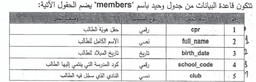
insert in php
Quiz by Hameeda
Customize this quiz to suit your class
Instantly translate to 100+ languages
Tag the questions with any skills you have. Your dashboard will track each student's mastery of each skill.
في الصورة رتبي بداية جملة الارسال
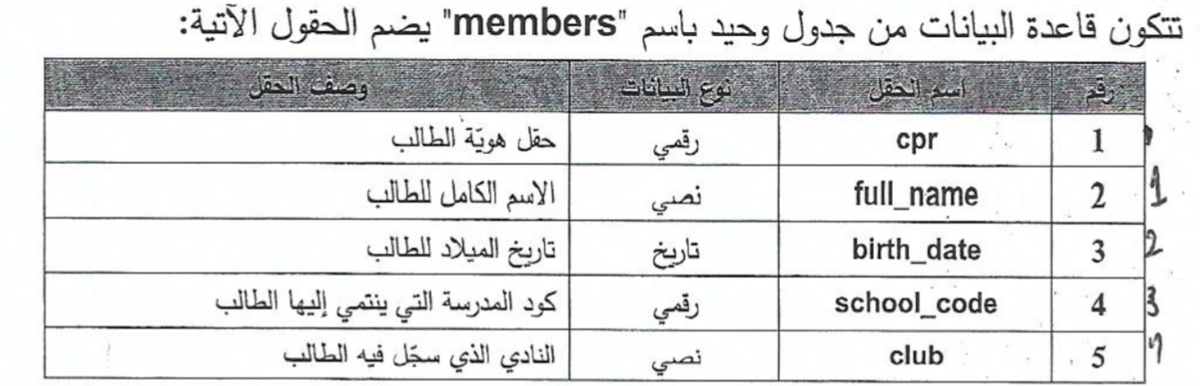
jumble://insert,into,members,values
رتبي طريقة ادخال الحقل الاول
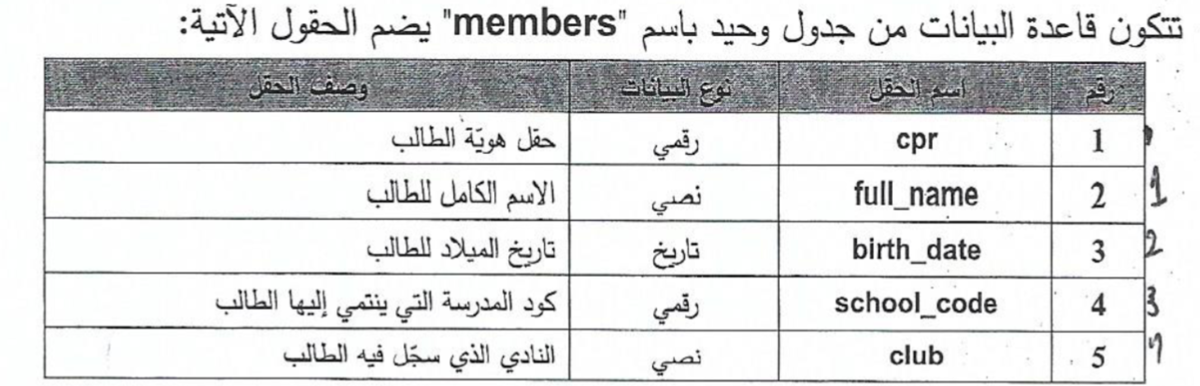
jumble://',$_REQUEST,[,cpr,],'
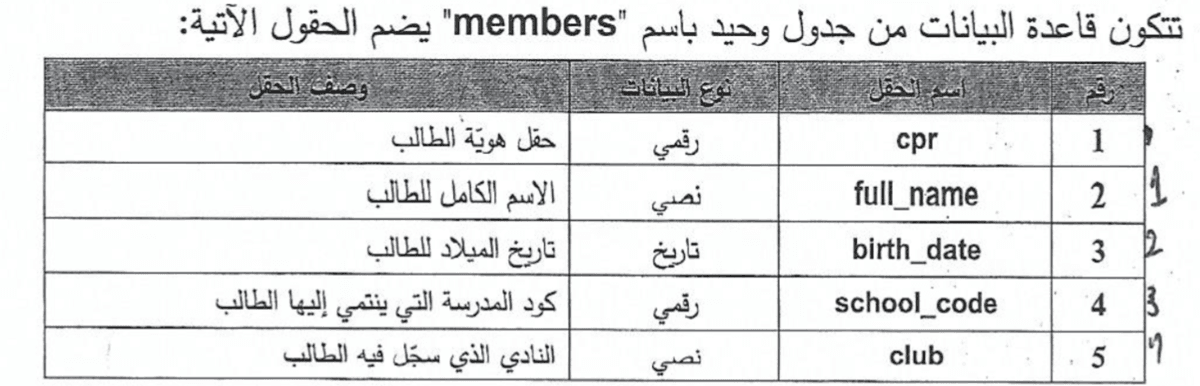
في الصورة رتبي بداية جملة الارسال

رتبي طريقة ادخال الحقل الاول
Give this quiz to my class
 Insert table in google slidesCreate a crossword in which to insert keywords related to the properties of waterEnergy is very useful to us. We have proved it in our previous lessons. But do you know that, energy can also be harmful? Yes, energy can harm or cause different health problems if we expose ourselves too much to it. Too much exposure to the bright light of the sun and other artificial lights can cause… a. damage to our eyes that may lead to blindness b. skin allergies that may lead to skin cancer c. sunburn We can prevent the above health problems by… a. avoiding looking directly to the source of bright light such as the sun. b. wearing hat or using umbrella when going out of the house during the hottest part of the day which is from 10 am to 2 pm. c. putting on sunblock to protect your skin Too much heat can cause… a. dehydration or loss of body fluids because of perspiration b. burns These can be prevented by… a. drinking plenty of water b. using pot holders when handling hot objects SCIENCE 2 – MODULE 6 SEIBO COLLEGE 29 Too much exposure to loud sounds can cause… a. hearing difficulty that may lead to deafness b. nervousness We can avoid these health problems if… a. we talk softly especially when the person we are talking to is near us b. we avoid places which have loud sounds. Electrical energy can give us a comfortable life, but it can cause great danger to us. So to avoid accidents that may harm us in handling electrical devices we need to practice safety precautions. Below is a list of the things that we should do. Study it carefully. Safety Precautions in Handling Electrical Devices 1. Never play with live wires and electrical plug. 2. Never touch any electrical device with wet hands. 3. Do not overload electrical sockets. 4. Do not play or insert things especially metals into electrical outlets. 5. Never play with the switch of any electrical deviceI. Introduction: A. Welcome and Purpose of Training Welcome to the ABA Clinic Fire and Evacuation Safety Training. The purpose of this training is to ensure the safety and well-being of everyone in the clinic by preparing staff for effective response to fire emergencies and evacuation situations. B. Importance of Evacuation and Fire Safety Understanding the gravity of evacuation and fire safety is paramount. Compliance with safety standards not only meets regulatory requirements but also safeguards the lives of our clients, staff, and visitors. II. Overview of Fire Safety Standards: A. Explanation of Relevant Fire Safety Codes and Standards Our clinic strictly adheres to [Insert Relevant Fire Safety Codes and Standards], including guidelines from the National Fire Protection Association (NFPA) and local fire authorities. Familiarity with these standards is essential for maintaining a safe environment. B. Importance of Compliance Compliance with fire safety standards is a commitment to the well-being of our community. It sets the foundation for a secure and prepared clinic, ensuring a proactive approach to fire safety. III. Fire Prevention Measures: A. Identifying Fire Hazards in the Clinic Regular inspections, conducted quarterly, will identify potential fire hazards, including faulty wiring, overheating equipment, or improperly stored flammable materials. Staff is encouraged to report any potential hazards immediately. B. Proper Storage of Flammable Materials Flammable materials are stored in designated areas equipped with fire-resistant cabinets and safety measures. These areas are clearly marked, and staff is trained on proper storage procedures. C. Electrical Safety Tips Staff is trained to recognize and report any electrical issues promptly. Furthermore, electrical equipment undergoes regular maintenance checks to prevent electrical fires. D. Smoking Policy Smoking is strictly prohibited within the clinic premises. Designated smoking areas, equipped with fire-resistant receptacles, are provided outside the building, ensuring compliance with safety regulations. IV. Emergency Communication: A. Overview of Communication Systems Our clinic utilizes a robust communication system, including intercoms and a mass notification system, to relay emergency information promptly to all staff members. B. Designation of Emergency Contacts Emergency contact information for all staff members is regularly updated. Designated individuals are responsible for initiating emergency communication and ensuring all staff are informed. C. Internal Communication Protocols Clear internal communication protocols are established, outlining the chain of command and communication channels during emergency situations. Staff members are familiarized with these protocols during onboarding. V. Evacuation Procedures: A. Evacuation Routes Evacuation routes are clearly marked throughout the clinic, indicating the shortest and safest paths to exit points. These routes are reviewed annually and updated as needed. B. Emergency Exits and Assembly Points Staff is familiarized with the location of emergency exits and assembly points during regular drills. These drills, conducted quarterly, ensure that all staff are well-practiced in evacuation procedures. C. Evacuation Drills Evacuation drills are conducted quarterly, simulating various emergency scenarios. These drills include scenarios involving individuals with special needs, ensuring staff are equipped to assist everyone during evacuations. D. Assistance for Individuals with Special Needs Staff members receive specialized training on providing assistance to individuals with special needs during evacuations. This includes utilizing evacuation chairs, providing verbal guidance, and ensuring a calm and supportive approach. VI. Fire Extinguisher Training: A. Types of Fire Extinguishers Staff is trained on the different types of fire extinguishers available in the clinic, including ABC and CO2 extinguishers. Training includes recognizing the appropriate use for each type. B. Proper Use and Handling Hands-on demonstrations are provided to staff, allowing them to practice the proper use and handling of fire extinguishers. Emphasis is placed on safety precautions, including maintaining a safe distance and using the PASS method (Pull, Aim, Squeeze, Sweep). C. Location of Fire Extinguishers in the Clinic A map indicating the locations of all fire extinguishers is prominently displayed throughout the clinic. Staff is familiarized with these locations during training sessions. VII. Emergency Response Team: A. Designation of Emergency Response Team Members An Emergency Response Team is designated, comprising individuals from different departments. Team members receive specialized training and are identified by distinctive vests during emergencies. B. Roles and Responsibilities Clear roles and responsibilities for Emergency Response Team members are outlined in the Emergency Response Plan. This includes responsibilities such as assisting with evacuations, providing first aid, and coordinating with emergency services. C. Training for First Aid and CPR Emergency Response Team members receive regular training in first aid and CPR. Training sessions are conducted semi-annually to ensure team members are proficient in life- saving techniques. VIII. Mock Scenarios: A. Conducting Simulated Fire Drills Simulated fire drills are conducted quarterly, involving all staff members. These drills include various fire scenarios, such as small fires, smoke-filled areas, and evacuations of different areas within the clinic. B. Addressing Various Emergency Scenarios Staff members engage in discussions and practical exercises addressing various emergency scenarios, fostering a proactive mindset. Scenarios include power outages, medical emergencies, and coordination with external emergency services. C. Feedback and Improvement Strategies Feedback from drills is collected and analyzed to identify areas for improvement. Regular meetings are held to discuss feedback and implement necessary changes to enhance emergency response strategies. IX. Documentation and Record-Keeping: A. Importance of Documentation Accurate and detailed documentation of all safety-related activities is maintained, including inspection reports, drill records, and incident reports. This documentation is crucial for compliance and continuous improvement. B. Incident Reporting Procedures Staff is trained on the proper procedures for reporting incidents. Incident reports include details such as the nature of the incident, individuals involved, and actions taken. A designated individual reviews and addresses incident reports promptly. C. Regular Audits and Reviews Regular audits and reviews of safety procedures are conducted annually by an external safety consultant. This ensures that the clinic's safety protocols align with the latest standards and identifies areas for continuous improvemeLopez Family Quiz Questions Family History Who are the original ancestors of the Lopez clan? Agapito and Cemona Lopez Antonio and Carmen Lopez Alejandro and Cecilia Lopez Alfonso and Clara Lopez How many children did Agapito and Cemona Lopez have? 6 8 10 12 Which family branch is represented by the color Yellow? Jeremias Lopez Rufina Lopez-Solivio Samuel Lopez Marina Lopez-Tenizo Which family member hosted the 28th Lopez Family Reunion? Marina Lopez-Tenizo Jeremias A. Lopez Family David Lopez Rebecca Lopez-Diaz What Bible verse was featured in the 2019 reunion theme "My Family, My Home"? Luke 12:34 John 3:16 Psalm 133:1 Proverbs 22:6 Family Traditions What traditional Filipino dish is always served at Lopez family gatherings? [Insert correct dish] [Option 2] [Option 3] [Option 4] What activity traditionally closes Lopez family reunions? Group photo Prayer circle Talent show Raffle drawing Which color represents the 3rd Generation in the family's color coding system? Yellow Blue Green Pink Gold/Brown What was the theme of the 29th Lopez Grand Family Reunion? "Worthy Legacy" "My Family, My Home" "Reconnecting Roots" "Faith and Family" What traditional game is always played at Lopez reunions? [Insert correct game] [Option 2] [Option 3] [Option 4] Family Geography In which city was the 28th Lopez Family Reunion held? Tacurong City Davao City Cotabato City Pigcawayan Where was the 29th Lopez Grand Family Reunion held? Belle's Farm & Resort, Midpapan Bonboc Garden [Option 3] [Option 4] In which Philippine region did Agapito and Cemona Lopez originally settle? [Insert correct region] [Option 2] [Option 3] [Option 4] Which family branch has members living in the most countries? [Insert correct branch] [Option 2] [Option 3] [Option 4] Family Members Who is the oldest living Lopez family member? [Insert name] [Option 2] [Option 3] [Option 4] Which family member served as the speaker at the 29th reunion? Ptr. Christie Joy L. Manzinares Rev. Ronie Balboa Laud Ptr. Alma Lopez Rev. David Lopez Who gave the welcome song at the 2020 reunion? Dorce S. Divinagracia Tenizo Family Grande Siblings Dumaan Family How many Lopez family members are named after Biblical figures? [Insert correct number] [Option 2] [Option 3] [Option 4] Recent Family Events Which new family tradition was introduced at the last reunion? [Insert correct tradition] [Option 2] [Option 3] [Option 4] How many family members attended the last reunion (in person and virtually)? [Insert correct number] [Option 2] [Option 3] [Option 4] Bible Knowledge (Filipino Family Edition) Which Bible verse is the theme for the 2025 reunion? Colossians 2:5 Psalm 133:1 Proverbs 22:6 Philippians 2:1-2 In the Bible, who said "As for me and my house, we will serve the Lord"? Joshua Moses Abraham David Which biblical character is known for his wisdom and is often quoted in Filipino family gatherings? Solomon Paul Peter John Which psalm begins with "Blessed is everyone who fears the Lord, who walks in his ways"? Psalm 128 Psalm 23 Psalm 91 Psalm 119 What does Proverbs say is "the beginning of wisdom"? Fear of the Lord Knowledge Understanding PrudenceExploring cohesive devices in a model non-chronological report about an insectSome Arctic Dinos Lived in Herds
By Sid Perkins
Just as interesting, however, is how this was discovered. Scientists didn’t look at a single fossil bone.
Instead, they analyzed a large number of preserved footprints on a mountainside located toward the
southern end of central Alaska.
Anthony Fiorillo works at the Perot Museum of Nature and Science in Dallas, Texas. As a vertebrate
paleontologist, he studies the fossils of creatures with backbones. In 2007, he was part of a research
team exploring Denali National Park. “We rounded the corner and there they were,” he recalls.
Thousands of footprints had been preserved in stone. “It was amazing.”
Dinosaurs died out more than 65 million years ago (not
counting birds, their modern-day relatives). So, it’s a bit
surprising that scientists know so much about these
ancient creatures. Now, a new study reveals that a certain
type of duckbilled dinosaur lived in the Arctic year-round.
These animals also traveled in herds that included many
age groups, they find. The creatures even appear to have
gone through a “teenage growth spurt.”
Those tracks pepper a steep patch of exposed rock about twice as
long as a football field and up to 60 meters (roughly 200 feet) wide.
They sit at least 160 kilometers (100 miles) north of the Gulf of Alaska.
Between 69 million and 72 million years ago, that now-rocky material
was muddy sediment on a floodplain near a seacoast, Fiorillo explains.
The hadrosaurs walked across the squishy mud. Later, the footprints
they left turned to stone.
Previous studies suggested adult duckbills took care of their young,
says Fiorillo. The new evidence that these dinosaurs truly traveled in
herds with multiple age groups confirms that parents cared for their
young well beyond the time they left the nest, his team concludes. The
researchers published their findings June 30 in Geology.
© Science News for Students
Thousands of tracks cover this
rocky mountainside in Alaska’s
Denali National Park. They
provide a wealth of information
about the size, age and lifestyle
of certain dinosaurs.
COURTESY OF PEROT MUSEUM OF
NATURE AND SCIENCE
EVIDENCE FOR HERDS O F DINOSAURS
Small meat-eating dinosaurs called theropods had left behind a few of the tracks that Fiorillo’s team
found in Denali. Birds had left some others. But the vast majority came from creatures called
hadrosaurs. These large plant-eating duckbilled dinosaurs had been quite common during the
Cretaceous Period. That helps explain one of their nicknames: “cattle of the Cretaceous.”
For the new study, the researchers focused only on the hadrosaur tracks. More than half of the
footprints were preserved so well that they had clear impressions of the skin on the dinosaurs’ feet.
Most tracks had a similar level of preservation. That suggests all were probably left within a short
period. Other fossils in the nearby rocks, including insect burrows, suggest these hadrosaurs had left
their footprints during the summer. These are trace fossils — evidence of ancient life other than a
preserved carcass or bone.
At the time these dinosaurs lived, Fiorillio says, the average temperature in the warmest months was
between 10° and 12° Celsius (50° and 54° Fahrenheit). That’s about what conditions are like today
along the border between Canada and the lower 48 U.S. states, he notes.
The team measured a large sample of the duckbills’ footprints. They fell into four distinct size ranges.
The largest tracks, presumably made by adults, measured about 64 centimeters (25 inches) across. The
smallest tracks, 8 centimeters (3 inches) wide, were likely left by young duckbills. They would have
been no more than a year old. Tracks of two other size groups were probably made by juveniles and
near-adults.
These data suggest the community of hadrosaurs included four different age groups.
© Science News for Students
A hadrosaur footprint made
roughly 70 million years ago. For
scale, the long blue bar at right is
10 centimeters long; each small
blue or white bar measures 1
centimeter.
COURTESY OF PEROT MUSEUM OF NATURE
AND SCIENCE
© Science News for Students
THESE DINOSAURS DIDN’T MIGRATE
About 84 percent of the tracks sampled for the new study had been left by older hadrosaurs — adults or
near-adults. Roughly 13 percent came from the youngest members of the herd. And a mere 3 percent
came from herd members considered to be juveniles, says Fiorillo. The rarity of tracks by these tweens
suggests that the young of this species had a rapid growth spurt. If true, they would have spent relatively
little time at this vulnerable size — and therefore left very few tracks.
“What’s really neat is how many small tracks there are,” notes Anthony Martin. An ichnologist — or
expert in trace fossils — he works at Emory University in Atlanta, Ga.
Other scientists had analyzed fossil bones from duckbills. These studies had hinted that the equivalent of
adolescent hadrosaurs would have experienced growth spurts. But the new findings are “the best
evidence that I’ve seen,” says Eric Snively. He’s a vertebrate paleontologist at the University of Wisconsin-
La Crosse. “This is a great study,” he adds, “and further evidence that juvenile hadrosaurs grew up in an
eye-blink.”
Also previously, researchers had proposed that Arctic dinosaurs migrated farther south for the winter.
That’s because even if the region was much warmer than it is today, nights in the high Arctic would have
been 24 hours long. So, with no sunshine for several months, Alaska would have had long periods of very
bleak, chilly weather.
But finding juveniles in the herd
strongly suggests that these
dinosaurs remained in the Arctic all
year. That’s because adolescents and
preadolescents wouldn’t have had
the strength or stamina to make
those long treks, Fiorillo maintains.
Field work is often harsh. Paleontologists studying the dinosaur
footprints here on an Alaskan mountainside sometimes worked
in cold and fog.
COURTESY OF PEROT MUSEUM OF NATURE AND SCIENCE
© Science News for Students
The presence of very young dinosaurs might have been expected, he notes: If this were a nesting region,
the babies would have hatched sometime just before summer. And remember, that’s when these tracks
were left. But that wouldn’t explain the juveniles, he says.
The team’s findings “suggest that these dinosaurs were overwintering in Alaska somehow,” says Snively.
At the time, the average temperature in the region remained above freezing even during the winter, he
notes. But, he adds, “this study raises interesting issues about how the dinosaurs could live in the region
when it was pretty dark for several months at a time.”Make mcq quiz with 4 option in which one is correct -'10 Basis of Material Science • .....;;;";;;"~~;;,,;;,,,,;.;.,,;;,,,;,,;.;,.,------------ 6. Temporary materials: Some materials are meant to be placed in the oral cavity for a short period of time for different reasons. • Temporary crowns: While a permanent crown is prepared in the dental laboratory, the patient must wait for few days before it can be fabricated and cemented into place. Does patient experience any problems during this time period? If the tooth is vital (the pulp is alive), the patient is likely to experience pain and sensitivity while eating and drinking, also it looks unesthetic. What can be done to solve this problem? A temporary crown is placed before the patient leaves the clinic. It is constructed and luted in the same appointment in which the crown preparation is done. Temporary crowns are not very strong or esthetic but they serve adequately till the permanent crown is ready to be cemented. • Temporary restorations: Sometimes it is difficult to decide immediately the best line of treatment for a particular tooth. The exact condition of the pulp may not be obvious to the dentist from the patient's symptoms. A dentist removes all or part of the decay and then places a temporary restoration to have time to observe the behaviour of the pulp or to give the pilip time to heal before deciding the further treatment required. Classification based on Location of Fabrication 4,9 Materials can be classified based on the location of fabrication into: • Direct restorative materials. • Indirect restorative materials Direct restorative materials: They include those materials which are used to restore cavity preparations directly in the oral cavity (Box 1.5). Box 1.5: Examples of direct restorative materials Amalgam, composites, glass ionomer and other materials, which set by chemical reactions in the mouth. Indirect restorative materials: It includes those restorations which must be fabricated outside the mouth, indirectly on a cast/ model/ die, because their processing condition would harm oral tissues. Materials used in the construction of such prosthesis are called indirect restorative materials (Box 1.6). Box 1.6: Examples of indirect restorative materials Gold inlays, crowns of metal, ceramic and polymers, which are processed at elevated temperatures. Some indirect composite restorations can be processed under specific wavelength of light, e.g. Ceramage. Classification based on Longevity of Use 1. Permanent restorations: These restorations are not planned to be replaced for a particular time period. Though they are referred to as permanent, actually they are not, e.g. fillings, crowns, bridges and dentures do not last forever (Fig. 1.5). 2. Temporary restorations: These restorations are planned to be replaced in a short period of time, such as few days to weeks. For ~ Permanent C/) c c -.2 0 c- :;::; Cll co Interim ~ Q; 0 .8ll::1iJ C/) o~ Cll a:: c:=:J Temporary Time period Fig. 1.5: Diagram depicting the time period of use of a restoration. (Arrow in permanent restoration depicts that such restorations are not planned to be replaced for a long period of time.) Introducton to Dental Materials Dental materials Box 1.7: Characteristics of metals 1. High thermal and electrical conductivity 2. Ductility (pure metals are very soft and they can be bent without breaking) 3. Opacity (they do not transmit light) 4. Luster (they have a surface that strongly reflects light and appears bright and shiny) 5. They tend to dissolve to some extent in water or other aqueous solutions, producing cations. 6. All metals are white (actually gray) except for gold, which is yellow, and copper, which is reddish. 7. All metals are solid at room temperature except mercury, which is liquid at room temperature and is used with silver alloys as amalgam. 8. All metals have high melting temperatures because of high strength of the metallic bond that holds the atoms together. 3. Polymers 4. Composites Composites are mixtures of two or more of the first three classes in which the different components remain distinct from one another in the final structure. A common example is composite resin. Fig. 1.7a: Three-dimensional structure of iron (metal) Metals Metals are the oldest of the three classes of materials that have been used as dental materials. Metals are characterized by metallic bonds (Box 1.7) which will be discussed in the next chapter. Metals solidify with their atoms in a regular or crystalline arrangement (see Chapter 2), often in the form of a cube (Fig. 1.7a). example, temporary fillings done in a tooth during root canal treatment, which have to be replaced within 2-4 days during subsequent visits. They are used to protect the tooth and provide function till the final restoration is done. 3. Interim restoration: At times, dental treatment requires "long-term" definite temporary restorations or "interim" restorations. For examle, a 7-year-old child, met with trauma and fractured one of his central incisors. A large composite build- up may serve his immediate requirement until the root formation is completed and a permanent crown is placed. 5 Classification based on the Chemical Nature of the Material These are the atoms that make up a material and the way they are bonded together determine the properties of that materiaLS Weak bonds make for weak materials and vice versa (Table 1.4). Materials can be classified into different categories based on their primary atomic bonds (Fig. 1.6): 1. Metals 2. Ceramics Fig. 1.6: Classification of dental materials based on chemical nature 12 Basis of Material Science Box 1.9: Benefits of ceramics in dentistry 1. Many ceramic oxides are used as pigmenting agents. These oxides produce good range of colors. Due to this characteristic, we are able to match almost any tooth color with good esthetic results. 2. They are inert, i.e. not chemically reactive. This quality provides ceramics with good bio- compatibility. 3. Ceramic materials are translucent, like natural teeth. This translucency gives the ceramic crown a more natural appearance than any other dental material. Fig. 1.7b: Internal arrangement of tetrahedral structure of ceramic (silica) four large oxygen atoms surround smaller silicon atom Ceramics A ceramic is a compound formed by the union of a metallic and a non-metallic element (Box 1.8). Most of these materials are oxides, formed by the union of oxygen with metals such as silicon, aluminum, calcium and magnesium (Fig.1.7b). Ceramics may be simple or complex. Examples of simple ceramics are alumina and silica. Examples of complex ceramics are feldspar (potassium aluminum silicate) and kaolin (hydrated aluminum silicate). Ceramics may be crystalline or non- crystalline (i.e. amorphous). Porcelain is a specific type of ceramic used extensively in dentistry (Box 1.9). Box 1.8: Characteristics of ceramics 1. High melting points. 2. Brittleness, which means they cannot be bent or deformed (no sliding) to any extent without actually cracking and breaking. 3. They are poor conductor of heat and electricity. 4. They are chemically inert. 5. They have excellent esthetic result in terms of matching natural teeth. Fig. 1.8: Stucture of synthetic polymer Polymers They are the latest addition (early to mid- 1900s) to dental materials. Most of the polymers are nowadays synthesized by humans. Polymers are giant, long-chain organic molecules (Fig. 1.8). Polymers are characterized by covalent bonds within each molecule, giving them tremendous strength in a single direction. Try to break a nylon rope by pulling it! They are poor conductors of heat and electri- city. Most polymers have a structure containing thousands of carbon atoms linked together like beads on a string. Others, such as silicone polymers are formed with silicon-oxygen bonds. Introducton to Dental Materials Table 1.4: Characteristics of different materials 13 Characteristics Bond Properties Crystal structure Metals Metallic bonding High strength and hardness, high electrical and thermal conductivity BCC, FCC, or HCP unit cells Ceramics Ionic or covalent bonding, or both High hardness and stiffness, electrically insulating, refractory, and chemically inert Crystalline or amorphous Polymers Covalent bonding Low sensitivity, high electrical resistivity, and low thermal conductivity, strength and stiffness vary widely Amorphous and crystalline Composites Composites are combinations of any of the basic ceramic, metallic and polymeric materials (Box 1.10). Each material that makes up composites is called a phase. Their properties tend to be somewhere between those of their basic constituents and are used to enhance their performance, longevity and handling chracterstics. Box 1.10: Types of composites in dentistry 1. Ceramic - metallic composite: Tungsten carbide bur. 2. Metal - polymer composite: Die materials in dental laboratory. 3. Ceramic - polymer composite: Enamel, dentin, bone and restorative composites. A composite is a kind of "combination" of materials, which compliment each other. The properties lacking in one material are compensated by those of the other material. For example, restorative composite has two phases, namely resin and fillers. Teeth and bones are examples of natural composites. Enamel is a composite of hydroxyapatite (which is a ceramic material) and protein (which is a polymer). EVALUATION OF DENTAL MATERIALS Most manufacturers of dental materials maintain a quality assurance programme (As per international standard like ADA specifications) and materials are thoroughly tested before being released into the market for dental practitioner (Fig. 1.9). Laboratory Evaluations Most ADA/ ANSI specifications involve laboratory tests. The tests performed as per these specifications are useful but they all are performed in vitro, (carried out in the laboratory away from the clinical conditions) which have a lot of limitations in clinical practice.lO Clinical Notes 1. For example, most of the direct restorative materials are tested for their compressive strength but ultimately the material is subjected to a combination of compressive, tensile and shear stresses, which may decide the final success or failure of the material under masticatory load. 2. Similarly upper dentures mostly fracture along the midline because of bending. Hence a bending or transverse strength ~B-a-s-is-o-f-M-a-t-e-ria-I-S~c-ie-n-c-e-------------- ---------. test is far more meaningful for denture base materials than a compression test. Clinical Trials The majority of new materials are subjected to extensive clinical trials normally in co-operation with a dental college or hospital departments prior to their release. CONCLUSION As the number of available materials is going up, it is important that the dentist remains more aware about new products so that their judgement about the selection of material remains successful. Materials which have not been thoroughly evaluated should be avoided, specially with clinical dentistry falling under Consumer Protection Act (CPA). I Research and development I iI Manufacturer/analysis Ideal requirements for clinical use: Thermal, optical, mechanical, chemical, biological Available materials and their properties are evaluated Launch of new I product Choice and selection of material by the dentist Critical assessment based on clinical performance I I H feedback to I
Insert table in google slidesCreate a crossword in which to insert keywords related to the properties of waterEnergy is very useful to us. We have proved it in our previous lessons. But do you know that, energy can also be harmful? Yes, energy can harm or cause different health problems if we expose ourselves too much to it. Too much exposure to the bright light of the sun and other artificial lights can cause… a. damage to our eyes that may lead to blindness b. skin allergies that may lead to skin cancer c. sunburn We can prevent the above health problems by… a. avoiding looking directly to the source of bright light such as the sun. b. wearing hat or using umbrella when going out of the house during the hottest part of the day which is from 10 am to 2 pm. c. putting on sunblock to protect your skin Too much heat can cause… a. dehydration or loss of body fluids because of perspiration b. burns These can be prevented by… a. drinking plenty of water b. using pot holders when handling hot objects SCIENCE 2 – MODULE 6 SEIBO COLLEGE 29 Too much exposure to loud sounds can cause… a. hearing difficulty that may lead to deafness b. nervousness We can avoid these health problems if… a. we talk softly especially when the person we are talking to is near us b. we avoid places which have loud sounds. Electrical energy can give us a comfortable life, but it can cause great danger to us. So to avoid accidents that may harm us in handling electrical devices we need to practice safety precautions. Below is a list of the things that we should do. Study it carefully. Safety Precautions in Handling Electrical Devices 1. Never play with live wires and electrical plug. 2. Never touch any electrical device with wet hands. 3. Do not overload electrical sockets. 4. Do not play or insert things especially metals into electrical outlets. 5. Never play with the switch of any electrical deviceI. Introduction: A. Welcome and Purpose of Training Welcome to the ABA Clinic Fire and Evacuation Safety Training. The purpose of this training is to ensure the safety and well-being of everyone in the clinic by preparing staff for effective response to fire emergencies and evacuation situations. B. Importance of Evacuation and Fire Safety Understanding the gravity of evacuation and fire safety is paramount. Compliance with safety standards not only meets regulatory requirements but also safeguards the lives of our clients, staff, and visitors. II. Overview of Fire Safety Standards: A. Explanation of Relevant Fire Safety Codes and Standards Our clinic strictly adheres to [Insert Relevant Fire Safety Codes and Standards], including guidelines from the National Fire Protection Association (NFPA) and local fire authorities. Familiarity with these standards is essential for maintaining a safe environment. B. Importance of Compliance Compliance with fire safety standards is a commitment to the well-being of our community. It sets the foundation for a secure and prepared clinic, ensuring a proactive approach to fire safety. III. Fire Prevention Measures: A. Identifying Fire Hazards in the Clinic Regular inspections, conducted quarterly, will identify potential fire hazards, including faulty wiring, overheating equipment, or improperly stored flammable materials. Staff is encouraged to report any potential hazards immediately. B. Proper Storage of Flammable Materials Flammable materials are stored in designated areas equipped with fire-resistant cabinets and safety measures. These areas are clearly marked, and staff is trained on proper storage procedures. C. Electrical Safety Tips Staff is trained to recognize and report any electrical issues promptly. Furthermore, electrical equipment undergoes regular maintenance checks to prevent electrical fires. D. Smoking Policy Smoking is strictly prohibited within the clinic premises. Designated smoking areas, equipped with fire-resistant receptacles, are provided outside the building, ensuring compliance with safety regulations. IV. Emergency Communication: A. Overview of Communication Systems Our clinic utilizes a robust communication system, including intercoms and a mass notification system, to relay emergency information promptly to all staff members. B. Designation of Emergency Contacts Emergency contact information for all staff members is regularly updated. Designated individuals are responsible for initiating emergency communication and ensuring all staff are informed. C. Internal Communication Protocols Clear internal communication protocols are established, outlining the chain of command and communication channels during emergency situations. Staff members are familiarized with these protocols during onboarding. V. Evacuation Procedures: A. Evacuation Routes Evacuation routes are clearly marked throughout the clinic, indicating the shortest and safest paths to exit points. These routes are reviewed annually and updated as needed. B. Emergency Exits and Assembly Points Staff is familiarized with the location of emergency exits and assembly points during regular drills. These drills, conducted quarterly, ensure that all staff are well-practiced in evacuation procedures. C. Evacuation Drills Evacuation drills are conducted quarterly, simulating various emergency scenarios. These drills include scenarios involving individuals with special needs, ensuring staff are equipped to assist everyone during evacuations. D. Assistance for Individuals with Special Needs Staff members receive specialized training on providing assistance to individuals with special needs during evacuations. This includes utilizing evacuation chairs, providing verbal guidance, and ensuring a calm and supportive approach. VI. Fire Extinguisher Training: A. Types of Fire Extinguishers Staff is trained on the different types of fire extinguishers available in the clinic, including ABC and CO2 extinguishers. Training includes recognizing the appropriate use for each type. B. Proper Use and Handling Hands-on demonstrations are provided to staff, allowing them to practice the proper use and handling of fire extinguishers. Emphasis is placed on safety precautions, including maintaining a safe distance and using the PASS method (Pull, Aim, Squeeze, Sweep). C. Location of Fire Extinguishers in the Clinic A map indicating the locations of all fire extinguishers is prominently displayed throughout the clinic. Staff is familiarized with these locations during training sessions. VII. Emergency Response Team: A. Designation of Emergency Response Team Members An Emergency Response Team is designated, comprising individuals from different departments. Team members receive specialized training and are identified by distinctive vests during emergencies. B. Roles and Responsibilities Clear roles and responsibilities for Emergency Response Team members are outlined in the Emergency Response Plan. This includes responsibilities such as assisting with evacuations, providing first aid, and coordinating with emergency services. C. Training for First Aid and CPR Emergency Response Team members receive regular training in first aid and CPR. Training sessions are conducted semi-annually to ensure team members are proficient in life- saving techniques. VIII. Mock Scenarios: A. Conducting Simulated Fire Drills Simulated fire drills are conducted quarterly, involving all staff members. These drills include various fire scenarios, such as small fires, smoke-filled areas, and evacuations of different areas within the clinic. B. Addressing Various Emergency Scenarios Staff members engage in discussions and practical exercises addressing various emergency scenarios, fostering a proactive mindset. Scenarios include power outages, medical emergencies, and coordination with external emergency services. C. Feedback and Improvement Strategies Feedback from drills is collected and analyzed to identify areas for improvement. Regular meetings are held to discuss feedback and implement necessary changes to enhance emergency response strategies. IX. Documentation and Record-Keeping: A. Importance of Documentation Accurate and detailed documentation of all safety-related activities is maintained, including inspection reports, drill records, and incident reports. This documentation is crucial for compliance and continuous improvement. B. Incident Reporting Procedures Staff is trained on the proper procedures for reporting incidents. Incident reports include details such as the nature of the incident, individuals involved, and actions taken. A designated individual reviews and addresses incident reports promptly. C. Regular Audits and Reviews Regular audits and reviews of safety procedures are conducted annually by an external safety consultant. This ensures that the clinic's safety protocols align with the latest standards and identifies areas for continuous improvemeLopez Family Quiz Questions Family History Who are the original ancestors of the Lopez clan? Agapito and Cemona Lopez Antonio and Carmen Lopez Alejandro and Cecilia Lopez Alfonso and Clara Lopez How many children did Agapito and Cemona Lopez have? 6 8 10 12 Which family branch is represented by the color Yellow? Jeremias Lopez Rufina Lopez-Solivio Samuel Lopez Marina Lopez-Tenizo Which family member hosted the 28th Lopez Family Reunion? Marina Lopez-Tenizo Jeremias A. Lopez Family David Lopez Rebecca Lopez-Diaz What Bible verse was featured in the 2019 reunion theme "My Family, My Home"? Luke 12:34 John 3:16 Psalm 133:1 Proverbs 22:6 Family Traditions What traditional Filipino dish is always served at Lopez family gatherings? [Insert correct dish] [Option 2] [Option 3] [Option 4] What activity traditionally closes Lopez family reunions? Group photo Prayer circle Talent show Raffle drawing Which color represents the 3rd Generation in the family's color coding system? Yellow Blue Green Pink Gold/Brown What was the theme of the 29th Lopez Grand Family Reunion? "Worthy Legacy" "My Family, My Home" "Reconnecting Roots" "Faith and Family" What traditional game is always played at Lopez reunions? [Insert correct game] [Option 2] [Option 3] [Option 4] Family Geography In which city was the 28th Lopez Family Reunion held? Tacurong City Davao City Cotabato City Pigcawayan Where was the 29th Lopez Grand Family Reunion held? Belle's Farm & Resort, Midpapan Bonboc Garden [Option 3] [Option 4] In which Philippine region did Agapito and Cemona Lopez originally settle? [Insert correct region] [Option 2] [Option 3] [Option 4] Which family branch has members living in the most countries? [Insert correct branch] [Option 2] [Option 3] [Option 4] Family Members Who is the oldest living Lopez family member? [Insert name] [Option 2] [Option 3] [Option 4] Which family member served as the speaker at the 29th reunion? Ptr. Christie Joy L. Manzinares Rev. Ronie Balboa Laud Ptr. Alma Lopez Rev. David Lopez Who gave the welcome song at the 2020 reunion? Dorce S. Divinagracia Tenizo Family Grande Siblings Dumaan Family How many Lopez family members are named after Biblical figures? [Insert correct number] [Option 2] [Option 3] [Option 4] Recent Family Events Which new family tradition was introduced at the last reunion? [Insert correct tradition] [Option 2] [Option 3] [Option 4] How many family members attended the last reunion (in person and virtually)? [Insert correct number] [Option 2] [Option 3] [Option 4] Bible Knowledge (Filipino Family Edition) Which Bible verse is the theme for the 2025 reunion? Colossians 2:5 Psalm 133:1 Proverbs 22:6 Philippians 2:1-2 In the Bible, who said "As for me and my house, we will serve the Lord"? Joshua Moses Abraham David Which biblical character is known for his wisdom and is often quoted in Filipino family gatherings? Solomon Paul Peter John Which psalm begins with "Blessed is everyone who fears the Lord, who walks in his ways"? Psalm 128 Psalm 23 Psalm 91 Psalm 119 What does Proverbs say is "the beginning of wisdom"? Fear of the Lord Knowledge Understanding PrudenceExploring cohesive devices in a model non-chronological report about an insectSome Arctic Dinos Lived in Herds
By Sid Perkins
Just as interesting, however, is how this was discovered. Scientists didn’t look at a single fossil bone.
Instead, they analyzed a large number of preserved footprints on a mountainside located toward the
southern end of central Alaska.
Anthony Fiorillo works at the Perot Museum of Nature and Science in Dallas, Texas. As a vertebrate
paleontologist, he studies the fossils of creatures with backbones. In 2007, he was part of a research
team exploring Denali National Park. “We rounded the corner and there they were,” he recalls.
Thousands of footprints had been preserved in stone. “It was amazing.”
Dinosaurs died out more than 65 million years ago (not
counting birds, their modern-day relatives). So, it’s a bit
surprising that scientists know so much about these
ancient creatures. Now, a new study reveals that a certain
type of duckbilled dinosaur lived in the Arctic year-round.
These animals also traveled in herds that included many
age groups, they find. The creatures even appear to have
gone through a “teenage growth spurt.”
Those tracks pepper a steep patch of exposed rock about twice as
long as a football field and up to 60 meters (roughly 200 feet) wide.
They sit at least 160 kilometers (100 miles) north of the Gulf of Alaska.
Between 69 million and 72 million years ago, that now-rocky material
was muddy sediment on a floodplain near a seacoast, Fiorillo explains.
The hadrosaurs walked across the squishy mud. Later, the footprints
they left turned to stone.
Previous studies suggested adult duckbills took care of their young,
says Fiorillo. The new evidence that these dinosaurs truly traveled in
herds with multiple age groups confirms that parents cared for their
young well beyond the time they left the nest, his team concludes. The
researchers published their findings June 30 in Geology.
© Science News for Students
Thousands of tracks cover this
rocky mountainside in Alaska’s
Denali National Park. They
provide a wealth of information
about the size, age and lifestyle
of certain dinosaurs.
COURTESY OF PEROT MUSEUM OF
NATURE AND SCIENCE
EVIDENCE FOR HERDS O F DINOSAURS
Small meat-eating dinosaurs called theropods had left behind a few of the tracks that Fiorillo’s team
found in Denali. Birds had left some others. But the vast majority came from creatures called
hadrosaurs. These large plant-eating duckbilled dinosaurs had been quite common during the
Cretaceous Period. That helps explain one of their nicknames: “cattle of the Cretaceous.”
For the new study, the researchers focused only on the hadrosaur tracks. More than half of the
footprints were preserved so well that they had clear impressions of the skin on the dinosaurs’ feet.
Most tracks had a similar level of preservation. That suggests all were probably left within a short
period. Other fossils in the nearby rocks, including insect burrows, suggest these hadrosaurs had left
their footprints during the summer. These are trace fossils — evidence of ancient life other than a
preserved carcass or bone.
At the time these dinosaurs lived, Fiorillio says, the average temperature in the warmest months was
between 10° and 12° Celsius (50° and 54° Fahrenheit). That’s about what conditions are like today
along the border between Canada and the lower 48 U.S. states, he notes.
The team measured a large sample of the duckbills’ footprints. They fell into four distinct size ranges.
The largest tracks, presumably made by adults, measured about 64 centimeters (25 inches) across. The
smallest tracks, 8 centimeters (3 inches) wide, were likely left by young duckbills. They would have
been no more than a year old. Tracks of two other size groups were probably made by juveniles and
near-adults.
These data suggest the community of hadrosaurs included four different age groups.
© Science News for Students
A hadrosaur footprint made
roughly 70 million years ago. For
scale, the long blue bar at right is
10 centimeters long; each small
blue or white bar measures 1
centimeter.
COURTESY OF PEROT MUSEUM OF NATURE
AND SCIENCE
© Science News for Students
THESE DINOSAURS DIDN’T MIGRATE
About 84 percent of the tracks sampled for the new study had been left by older hadrosaurs — adults or
near-adults. Roughly 13 percent came from the youngest members of the herd. And a mere 3 percent
came from herd members considered to be juveniles, says Fiorillo. The rarity of tracks by these tweens
suggests that the young of this species had a rapid growth spurt. If true, they would have spent relatively
little time at this vulnerable size — and therefore left very few tracks.
“What’s really neat is how many small tracks there are,” notes Anthony Martin. An ichnologist — or
expert in trace fossils — he works at Emory University in Atlanta, Ga.
Other scientists had analyzed fossil bones from duckbills. These studies had hinted that the equivalent of
adolescent hadrosaurs would have experienced growth spurts. But the new findings are “the best
evidence that I’ve seen,” says Eric Snively. He’s a vertebrate paleontologist at the University of Wisconsin-
La Crosse. “This is a great study,” he adds, “and further evidence that juvenile hadrosaurs grew up in an
eye-blink.”
Also previously, researchers had proposed that Arctic dinosaurs migrated farther south for the winter.
That’s because even if the region was much warmer than it is today, nights in the high Arctic would have
been 24 hours long. So, with no sunshine for several months, Alaska would have had long periods of very
bleak, chilly weather.
But finding juveniles in the herd
strongly suggests that these
dinosaurs remained in the Arctic all
year. That’s because adolescents and
preadolescents wouldn’t have had
the strength or stamina to make
those long treks, Fiorillo maintains.
Field work is often harsh. Paleontologists studying the dinosaur
footprints here on an Alaskan mountainside sometimes worked
in cold and fog.
COURTESY OF PEROT MUSEUM OF NATURE AND SCIENCE
© Science News for Students
The presence of very young dinosaurs might have been expected, he notes: If this were a nesting region,
the babies would have hatched sometime just before summer. And remember, that’s when these tracks
were left. But that wouldn’t explain the juveniles, he says.
The team’s findings “suggest that these dinosaurs were overwintering in Alaska somehow,” says Snively.
At the time, the average temperature in the region remained above freezing even during the winter, he
notes. But, he adds, “this study raises interesting issues about how the dinosaurs could live in the region
when it was pretty dark for several months at a time.”Make mcq quiz with 4 option in which one is correct -'10 Basis of Material Science • .....;;;";;;"~~;;,,;;,,,,;.;.,,;;,,,;,,;.;,.,------------ 6. Temporary materials: Some materials are meant to be placed in the oral cavity for a short period of time for different reasons. • Temporary crowns: While a permanent crown is prepared in the dental laboratory, the patient must wait for few days before it can be fabricated and cemented into place. Does patient experience any problems during this time period? If the tooth is vital (the pulp is alive), the patient is likely to experience pain and sensitivity while eating and drinking, also it looks unesthetic. What can be done to solve this problem? A temporary crown is placed before the patient leaves the clinic. It is constructed and luted in the same appointment in which the crown preparation is done. Temporary crowns are not very strong or esthetic but they serve adequately till the permanent crown is ready to be cemented. • Temporary restorations: Sometimes it is difficult to decide immediately the best line of treatment for a particular tooth. The exact condition of the pulp may not be obvious to the dentist from the patient's symptoms. A dentist removes all or part of the decay and then places a temporary restoration to have time to observe the behaviour of the pulp or to give the pilip time to heal before deciding the further treatment required. Classification based on Location of Fabrication 4,9 Materials can be classified based on the location of fabrication into: • Direct restorative materials. • Indirect restorative materials Direct restorative materials: They include those materials which are used to restore cavity preparations directly in the oral cavity (Box 1.5). Box 1.5: Examples of direct restorative materials Amalgam, composites, glass ionomer and other materials, which set by chemical reactions in the mouth. Indirect restorative materials: It includes those restorations which must be fabricated outside the mouth, indirectly on a cast/ model/ die, because their processing condition would harm oral tissues. Materials used in the construction of such prosthesis are called indirect restorative materials (Box 1.6). Box 1.6: Examples of indirect restorative materials Gold inlays, crowns of metal, ceramic and polymers, which are processed at elevated temperatures. Some indirect composite restorations can be processed under specific wavelength of light, e.g. Ceramage. Classification based on Longevity of Use 1. Permanent restorations: These restorations are not planned to be replaced for a particular time period. Though they are referred to as permanent, actually they are not, e.g. fillings, crowns, bridges and dentures do not last forever (Fig. 1.5). 2. Temporary restorations: These restorations are planned to be replaced in a short period of time, such as few days to weeks. For ~ Permanent C/) c c -.2 0 c- :;::; Cll co Interim ~ Q; 0 .8ll::1iJ C/) o~ Cll a:: c:=:J Temporary Time period Fig. 1.5: Diagram depicting the time period of use of a restoration. (Arrow in permanent restoration depicts that such restorations are not planned to be replaced for a long period of time.) Introducton to Dental Materials Dental materials Box 1.7: Characteristics of metals 1. High thermal and electrical conductivity 2. Ductility (pure metals are very soft and they can be bent without breaking) 3. Opacity (they do not transmit light) 4. Luster (they have a surface that strongly reflects light and appears bright and shiny) 5. They tend to dissolve to some extent in water or other aqueous solutions, producing cations. 6. All metals are white (actually gray) except for gold, which is yellow, and copper, which is reddish. 7. All metals are solid at room temperature except mercury, which is liquid at room temperature and is used with silver alloys as amalgam. 8. All metals have high melting temperatures because of high strength of the metallic bond that holds the atoms together. 3. Polymers 4. Composites Composites are mixtures of two or more of the first three classes in which the different components remain distinct from one another in the final structure. A common example is composite resin. Fig. 1.7a: Three-dimensional structure of iron (metal) Metals Metals are the oldest of the three classes of materials that have been used as dental materials. Metals are characterized by metallic bonds (Box 1.7) which will be discussed in the next chapter. Metals solidify with their atoms in a regular or crystalline arrangement (see Chapter 2), often in the form of a cube (Fig. 1.7a). example, temporary fillings done in a tooth during root canal treatment, which have to be replaced within 2-4 days during subsequent visits. They are used to protect the tooth and provide function till the final restoration is done. 3. Interim restoration: At times, dental treatment requires "long-term" definite temporary restorations or "interim" restorations. For examle, a 7-year-old child, met with trauma and fractured one of his central incisors. A large composite build- up may serve his immediate requirement until the root formation is completed and a permanent crown is placed. 5 Classification based on the Chemical Nature of the Material These are the atoms that make up a material and the way they are bonded together determine the properties of that materiaLS Weak bonds make for weak materials and vice versa (Table 1.4). Materials can be classified into different categories based on their primary atomic bonds (Fig. 1.6): 1. Metals 2. Ceramics Fig. 1.6: Classification of dental materials based on chemical nature 12 Basis of Material Science Box 1.9: Benefits of ceramics in dentistry 1. Many ceramic oxides are used as pigmenting agents. These oxides produce good range of colors. Due to this characteristic, we are able to match almost any tooth color with good esthetic results. 2. They are inert, i.e. not chemically reactive. This quality provides ceramics with good bio- compatibility. 3. Ceramic materials are translucent, like natural teeth. This translucency gives the ceramic crown a more natural appearance than any other dental material. Fig. 1.7b: Internal arrangement of tetrahedral structure of ceramic (silica) four large oxygen atoms surround smaller silicon atom Ceramics A ceramic is a compound formed by the union of a metallic and a non-metallic element (Box 1.8). Most of these materials are oxides, formed by the union of oxygen with metals such as silicon, aluminum, calcium and magnesium (Fig.1.7b). Ceramics may be simple or complex. Examples of simple ceramics are alumina and silica. Examples of complex ceramics are feldspar (potassium aluminum silicate) and kaolin (hydrated aluminum silicate). Ceramics may be crystalline or non- crystalline (i.e. amorphous). Porcelain is a specific type of ceramic used extensively in dentistry (Box 1.9). Box 1.8: Characteristics of ceramics 1. High melting points. 2. Brittleness, which means they cannot be bent or deformed (no sliding) to any extent without actually cracking and breaking. 3. They are poor conductor of heat and electricity. 4. They are chemically inert. 5. They have excellent esthetic result in terms of matching natural teeth. Fig. 1.8: Stucture of synthetic polymer Polymers They are the latest addition (early to mid- 1900s) to dental materials. Most of the polymers are nowadays synthesized by humans. Polymers are giant, long-chain organic molecules (Fig. 1.8). Polymers are characterized by covalent bonds within each molecule, giving them tremendous strength in a single direction. Try to break a nylon rope by pulling it! They are poor conductors of heat and electri- city. Most polymers have a structure containing thousands of carbon atoms linked together like beads on a string. Others, such as silicone polymers are formed with silicon-oxygen bonds. Introducton to Dental Materials Table 1.4: Characteristics of different materials 13 Characteristics Bond Properties Crystal structure Metals Metallic bonding High strength and hardness, high electrical and thermal conductivity BCC, FCC, or HCP unit cells Ceramics Ionic or covalent bonding, or both High hardness and stiffness, electrically insulating, refractory, and chemically inert Crystalline or amorphous Polymers Covalent bonding Low sensitivity, high electrical resistivity, and low thermal conductivity, strength and stiffness vary widely Amorphous and crystalline Composites Composites are combinations of any of the basic ceramic, metallic and polymeric materials (Box 1.10). Each material that makes up composites is called a phase. Their properties tend to be somewhere between those of their basic constituents and are used to enhance their performance, longevity and handling chracterstics. Box 1.10: Types of composites in dentistry 1. Ceramic - metallic composite: Tungsten carbide bur. 2. Metal - polymer composite: Die materials in dental laboratory. 3. Ceramic - polymer composite: Enamel, dentin, bone and restorative composites. A composite is a kind of "combination" of materials, which compliment each other. The properties lacking in one material are compensated by those of the other material. For example, restorative composite has two phases, namely resin and fillers. Teeth and bones are examples of natural composites. Enamel is a composite of hydroxyapatite (which is a ceramic material) and protein (which is a polymer). EVALUATION OF DENTAL MATERIALS Most manufacturers of dental materials maintain a quality assurance programme (As per international standard like ADA specifications) and materials are thoroughly tested before being released into the market for dental practitioner (Fig. 1.9). Laboratory Evaluations Most ADA/ ANSI specifications involve laboratory tests. The tests performed as per these specifications are useful but they all are performed in vitro, (carried out in the laboratory away from the clinical conditions) which have a lot of limitations in clinical practice.lO Clinical Notes 1. For example, most of the direct restorative materials are tested for their compressive strength but ultimately the material is subjected to a combination of compressive, tensile and shear stresses, which may decide the final success or failure of the material under masticatory load. 2. Similarly upper dentures mostly fracture along the midline because of bending. Hence a bending or transverse strength ~B-a-s-is-o-f-M-a-t-e-ria-I-S~c-ie-n-c-e-------------- ---------. test is far more meaningful for denture base materials than a compression test. Clinical Trials The majority of new materials are subjected to extensive clinical trials normally in co-operation with a dental college or hospital departments prior to their release. CONCLUSION As the number of available materials is going up, it is important that the dentist remains more aware about new products so that their judgement about the selection of material remains successful. Materials which have not been thoroughly evaluated should be avoided, specially with clinical dentistry falling under Consumer Protection Act (CPA). I Research and development I iI Manufacturer/analysis Ideal requirements for clinical use: Thermal, optical, mechanical, chemical, biological Available materials and their properties are evaluated Launch of new I product Choice and selection of material by the dentist Critical assessment based on clinical performance I I H feedback to I