Loading...

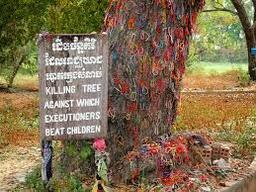
Killing Fields of Cambodia
Quiz by Jaida Houston
Customize this quiz to suit your class
Instantly translate to 100+ languages
Tag the questions with any skills you have. Your dashboard will track each student's mastery of each skill.
Give this quiz to my class
After the Killing Fields, the economy experienced stability and prosperity.
Why was Pol Pol significant during The Killing Feilds of Cambodia?
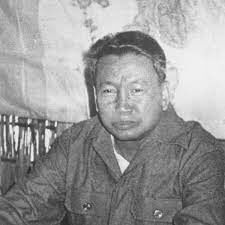
Victim of Killings
Political Leader
Head of Military
Teacher of the Children in Cambodia
After the Killing Fields, the economy experienced stability and prosperity.
Why was Pol Pol significant during The Killing Feilds of Cambodia?
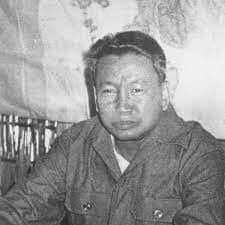
What was the original purpose prior to The Killing Feilds of Cambodia?
Executioners took in the children to protect them.
When did this event begin and end?
Who were the two significant leaders?
Who was Nuon Chea?

Please provide the chronological order of events that occurred in The Killing Fields of Cambodia.
How many people died?
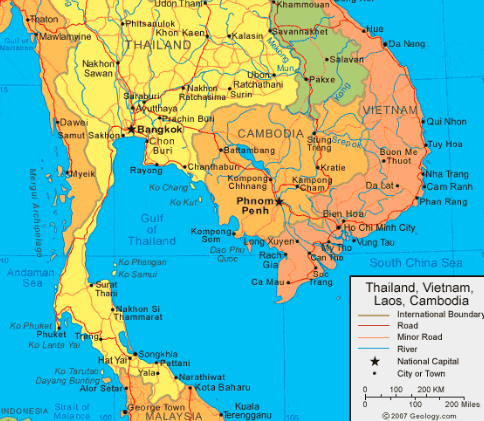
What did the first map show?
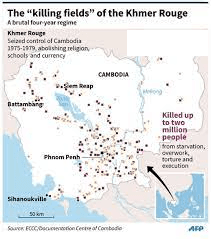
What does the second map show?
 Pol pot and the killing fields of cambodiaThe Guardian - Fake news is killing people's mindsBritish soldiers opened fire on a mob of angry people in Boston killing 5 people at the Boston Massacre.Create a vocabulary test checking understanding for b2 students with the following words: loose ends a task is due overdue attain procrastination cluttered desk figure out enterprise entrepreneur entrepreneurship distraction disruption outcome digression digress (v) headset circle back facilities bonus benefits rivalry competition commute daycare level-headed comply with sth wear and tear laughing stock track record to play the blame game breach accomplish take advantage of boast about emotionally draining tempting seductive death penalty capital punishment resonate noise-cancelling headphones get rid of sth put sth off postpone thrive on adrenaline rush commitment break down superficial surveillance addicted to sth sedentary lifestyle tense stay alert notifications come down to enhance artificial intelligence confidential regardless of tireless efforts chin wag flossing compulsive over-exercising rapture comprehensive school weep circle back wrap up cutting-edge bargaining rivalry differentiation hazard crucial retain raise the bar head to head make a killing ahead of the curve to drop the ball ballpark figureCreate a vocabulary quiz checking understanding with the following words: loose ends a task is due overdue attain procrastination cluttered desk figure out enterprise entrepreneur entrepreneurship distraction disruption outcome digression digress (v) headset circle back facilities bonus benefits rivalry competition commute daycare level-headed comply with sth wear and tear laughing stock track record to play the blame game breach accomplish take advantage of boast about emotionally draining tempting seductive death penalty capital punishment resonate noise-cancelling headphones get rid of sth put sth off postpone thrive on adrenaline rush commitment break down superficial surveillance addicted to sth sedentary lifestyle tense stay alert notifications come down to enhance artificial intelligence confidential regardless of tireless efforts chin wag flossing compulsive over-exercising rapture comprehensive school weep circle back wrap up cutting-edge bargaining rivalry differentiation hazard crucial retain raise the bar head to head make a killing ahead of the curve to drop the ball ballpark figureYouGov found 44 per cent were proud of Britain's history of colonialism, with 21 per cent regretting it happened and 23 per cent holding neither view. The same poll also found 43 per cent believed the British Empire was a good thing, 19 per cent said it was bad and 25 per cent said it was "neither". At its height in 1922, the British empire governed a fifth of the world's population and a quarter of the world's total land area. Although the proponents of Empire say it brought various economic developments to parts of the world it controlled, critics point to massacres, famines and the use of concentration camps by the British Empire. 1. Boer concentration camps During the Second Boer War (1899-1902), the British rounded up around a sixth of the Boer population - mainly women and children - and detained them in camps, which were overcrowded and prone to outbreaks of disease, with scant food rations. Of the 107,000 people interned in the camps, 27,927 Boers died, along with an unknown number of black Africans. 2. Amritsar massacre When peaceful protesters defied a government order and demonstrated against British colonial rule in Amritsar, India, on 13 April 1919, they were blocked inside the walled Jallianwala Gardens and fired upon by Gurkha soldiers. The soldiers, under the orders of Brigadier Reginald Dyer, kept firing until they ran out of ammunition, killing between 379 and 1,000 protesters and injuring another 1,100 within 10 minutes. Brigadier Dyer was later lauded a hero by the British public, who raised £26,000 for him as a thank you. 3. Partitioning of India In 1947, Cyril Radcliffe was tasked with drawing the border between India and the newly created state of Pakistan over the course of a single lunch. After Cyril Radcliffe split the subcontinent along religious lines, uprooting over 10 million people, Hindus in Pakistan and Muslims in India were forced to escape their homes as Some estimates suggest up to one million people lost their lives in sectarian killings. 4. Mau Mau Uprising Thousands of elderly Kenyans, who claim British colonial forces mistreated, raped and tortured them during the Mau Mau Uprising (1951-1960), have launched a £200m damages claim against the UK Government. Members of the Kikuyu tribe were detained in camps, since described as "Britain's gulags" or concentration camps, where they allege they were systematically tortured and suffered serious sexual assault. Estimates of the deaths vary widely: historian David Anderson estimates there were 20,000, whereas Caroline Elkins believes up to 100,000 could have died. 5. Famines in India Between 12 and 29 million Indians died of starvation while it was under the control of the British Empire, as millions of tons of wheat were exported to Britain as famine raged in India. In 1943, up to four million Bengalis starved to death when Winston Churchill diverted food to British soldiers and countries such as Greece while a deadly famine swept through Bengal. Talking about the Bengal famine in 1943, Churchill said: “I hate Indians. They are a beastly people with a beastly religion. The famine was their own fault for breeding like rabbits.”The endoplasmic reticulum (EN-doh-PLAZ-mik ri-TIK-yuh-luhm), abbre- viated ER, is a system of membranous tubes and sacs, called cisternae (sis-TUHR-nee). The ER functions primarily as an intracellu- lar highway, a path along which molecules move from one part of the cell to another. The amount of ER inside a cell fluctuates, depending on the cell’s activity. There are two types of ER: rough and smooth. The two types of ER are thought to be continuous. Rough Endoplasmic Reticulum The rough endoplasmic reticulum is a system of interconnected, flattened sacs covered with ribosomes, as shown in Figure 4-15. The rough ER produces phospholipids and proteins. Certain types of proteins are made on the rough ER’s ribosomes. These proteins are later exported from the cell or inserted into one of the cell’s own membranes. For example, ribosomes on the rough ER make digestive enzymes, which accumulate inside the endoplasmic retic- ulum. Little sacs or vesicles then pinch off from the ends of the rough ER and store the digestive enzymes until they are released from the cell. Rough ER is most abundant in cells that produce large amounts of protein for export, such as cells in digestive glands and antibody-producing cells. Smooth Endoplasmic Reticulum The smooth ER lacks ribosomes and thus has a smooth appear- ance. Most cells contain very little smooth ER. Smooth ER builds lipids such as cholesterol. In the ovaries and testes, smooth ER produces the steroid hormones estrogen and testosterone. In skeletal and heart muscle cells, smooth ER releases calcium, which stimulates contraction. Smooth ER is also abundant in liver and kidney cells, where it helps detoxify drugs and poisons. Long-term abuse of alcohol and other drugs causes these cells to produce more smooth ER. Increased amounts of smooth ER in liver cells is one of the factors that can lead to drug tolerance. As Figure 4-15 shows, rough ER and smooth ER form an interconnected network. Copyright © by Holt, Rinehart and Winston. All rights reserved. reticulum from the Latin rete, meaning “net”; reticulum means “little net” Word Roots and Origins The endoplasmic reticulum (ER) serves as a site of synthesis for proteins, lipids, and other materials. The dark lines in the photo represent the membranes of the ER, and the narrow lighter areas between the dark lines show the channels and spaces (cisternae) inside the ER. FIGURE 4-15 Smooth ER Ribosomes Rough ER Cisternae 82 CHAPTER 4 GOLGI APPARATUS The Golgi apparatus, shown in Figure 4-16, is another system of flattened, membranous sacs. The sacs nearest the nucleus receive vesicles from the ER containing newly made proteins or lipids. Vesicles travel from one part of the Golgi apparatus to the next and transport substances as they go. The stacked membranes modify the vesicle contents as they move along. The proteins get “address labels” that direct them to various other parts of the cell. During this modification, the Golgi apparatus can add carbohydrate labels to proteins or alter new lipids in various ways. VESICLES Cells contain several types of vesicles, which perform various roles. Vesicles are small, spherically shaped sacs that are surrounded by a single membrane and that are classified by their contents. Vesicles often migrate to and merge with the plasma membrane. As they do, they release their contents to the outside of the cell. Lysosomes Lysosomes (LIE-suh-SOHMZ) are vesicles that bud from the Golgi appa- ratus and that contain digestive enzymes. These enzymes can break down large molecules, such as proteins, nucleic acids, car- bohydrates, and phospholipids. In the liver, lysosomes break down glycogen in order to release glucose into the bloodstream. Certain white blood cells use lysosomes to break down bacteria. Within a cell, lysosomes digest worn-out organelles in a process called autophagy (aw-TAHF-uh-jee). Lysosomes are also responsible for breaking down cells when it is time for the cells to die. The digestion of damaged or extra cells by the enzymes of their own lysosomes is called autolysis (aw-TAHL-uh-sis). Lysosomes play a very important role in maintaining an organism’s health by destroying cells that are no longer functioning properly. Copyright © by Holt, Rinehart and Winston. All rights reserved. The Golgi apparatus modifies many cellular products and prepares them for export. FIGURE 4-16 CELL STRUCTURE AND FUNCTION 83 Peroxisomes Peroxisomes are similar to lysosomes but contain different enzymes and are not produced by the Golgi apparatus. Peroxisomes are abundant in liver and kidney cells, where they neutralize free radicals (oxygen ions that can damage cells) and detoxify alcohol and other drugs. Peroxisomes are named for the hydrogen peroxide, H2O2, they produce when breaking down alco- hol and killing bacteria. Peroxisomes also break down fatty acids, which the mitochondria can then use as an energy source. Other Vesicles Specialized peroxisomes, called glyoxysomes, can be found in the seeds of some plants. They break down stored fats to provide energy for the developing plant embryo. Some cells engulf material by surrounding it with plasma membrane. The resulting pocket buds off to become a vesicle inside the cell. This vesicle is called an endosome. Lysosomes fuse with endosomes and digest the engulfed material. Food vacuoles are vesicles that store nutrients for a cell. Contractile vacuoles are vesicles that can contract and dispose of excess water inside a cell. Protein Synthesis One of the major functions of a cell is the production of protein. The path some proteins take from synthesis to export can be seen in Figure 4-17. In step , proteins are assembled by ribosomes on the rough ER. Then, in step , vesicles transport proteins to the Golgi apparatus. In step , the Golgi modifies proteins and pack- ages them in new vesicles. In step , vesicles release proteins that have destinations outside the cell. In step , vesicles containing enzymes remain inside the cell as lysosomes, peroxisomes, endo- somes, or other types of vesicles. 5 4 3 2 1 Copyright © by Holt, Rinehart and Winston. All rights reserved. Proteins are assembled by ribosomes on the rough ER. Vesicles carry proteins from the rough ER to the Golgi apparatus. Proteins are modified in the Golgi apparatus and enter new vesicles. Some vesicles release their proteins outside the cell. Other vesicles remain in the cell and become lysosomes and other vesicles. NucleusMYTH The British helped the Jews displace the native Arab population of Palestine. FACT Herbert Samuel, a British Jew who served as the first High Commissioner of Palestine, placed restrictions on Jewish immigration “in the ‘interests of the present population’ and the ‘absorptive capacity’ of the country.”1 The influx of Jewish settlers was said to force the Arab fellahin (native peasants) from their land. This was when less than a million people lived in an area that now supports more than nine million. The British limited the absorptive capacity of Palestine when, in 1921, Colonial Secretary Winston Churchill severed nearly four-fifths of Palestine—some thirty-five thousand square miles—to create a new Arab entity, Transjordan. As a consolation prize for the Hejaz and Arabia (which are both now Saudi Arabia) going to the Saud family, Churchill rewarded Sharif Hussein’s son Abdullah for his contribution to the war against Turkey by installing him as Transjordan’s emir. The British went further and placed restrictions on Jewish land purchases in what remained of Palestine. By 1949, the British had allotted 87,500 acres of the 187,500 acres of cultivable land to Arabs and only 4,250 acres to Jews. This contradicted Article 6 of the Mandate which stated that “the Administration of Palestine…shall encourage, in cooperation with the Jewish Agency…close settlement by Jews on the land, including State lands and waste lands not acquired for public purposes.”2 Ultimately, the British admitted that the argument about the country’s absorptive capacity was specious. The Peel Commission said, “The heavy immigration in the years 1933–36 would seem to show that the Jews have been able to enlarge the absorptive capacity of the country for Jews.”3 MYTH The British allowed Jews to flood Palestine while Arab immigration was tightly controlled. FACT The British response to Jewish immigration set a precedent of appeasing the Arabs, which was followed for the duration of the Mandate. The British restricted Jewish immigration while allowing Arabs to enter the country freely. Apparently, London did not feel that a flood of Arab immigrants would affect the country’s “absorptive capacity.” During World War I, the Jewish population in Palestine declined because of the war, famine, disease, and expulsion by the Turks. In 1915, approximately 83,000 Jews lived in Palestine among 590,000 Muslim and Christian Arabs. According to the 1922 census, the Jewish population was 83,000, while the Arabs numbered 643,000.4 Thus, the Arab population grew exponentially while that of the Jews stagnated. In the mid-1920s, Jewish immigration to Palestine increased primarily because of anti-Jewish economic legislation in Poland and Washington’s imposition of restrictive quotas.5 The record number of immigrants in 1935 (see table) was a response to the growing persecution of Jews in Nazi Germany. The British administration considered this number too large, however, so the Jewish Agency was informed that less than one-third of the quota it asked for would be approved in 1936.6 The British gave in further to Arab demands by announcing in the 1939 White Paper that an independent Arab state would be created within ten years and that Jewish immigration was to be limited to 75,000 for the next five years, after which it was to cease altogether. It also forbade land sales to Jews in 95% of the territory of Palestine. The Arabs, nevertheless, rejected the proposal. Jewish Immigration to Palestine7 1919 1,806 1931 4,075 1920 8,223 1932 12,533 1921 8,294 1933 37,337 1922 8,685 1934 45,267 1923 8,175 1935 66,472 1924 13,892 1936 29,595 1925 34,386 1937 10,629 1926 13,855 1938 14,675 1927 3,034 1939 31,195 1928 2,178 1940 10,643 1929 5,249 1941 4,592 1930 4,944 By contrast, throughout the Mandatory period, Arab immigration was unrestricted. In 1930, the Hope Simpson Commission, sent from London to investigate the 1929 Arab riots, said the British practice of ignoring the uncontrolled illegal Arab immigration from Egypt, Transjordan, and Syria had the effect of displacing the prospective Jewish immigrants.8 The British governor of the Sinai from 1922 to 1936 observed, “This illegal immigration was not only going on from the Sinai, but also from Transjordan and Syria, and it is very difficult to make a case out for the misery of the Arabs if at the same time their compatriots from adjoining states could not be kept from going in to share that misery.”9 The Peel Commission reported in 1937 that the “shortfall of land is…due less to the amount of land acquired by Jews than to the increase in the Arab population.”10 MYTH The British changed their policy to allow Holocaust survivors to settle in Palestine. FACT The gates of Palestine remained closed for the duration of the war, stranding hundreds of thousands of Jews in Europe, many of whom became victims of Hitler’s “Final Solution.” After the war, the British refused to allow the survivors of the Nazi nightmare to find sanctuary in Palestine. On June 6, 1946, President Truman urged the British government to relieve the suffering of the Jews confined to displaced persons camps in Europe by immediately accepting 100,000 Jewish immigrants. Britain’s foreign minister Ernest Bevin replied sarcastically that the United States wanted displaced Jews to immigrate to Palestine “because they did not want too many of them in New York.”11 Some Jews reached Palestine, many smuggled in on dilapidated ships organized by the Haganah. Between August 1945 and the establishment of the State of Israel in May 1948, sixty-five “illegal” immigrant ships, carrying 69,878 people, arrived from European shores. In August 1946, however, the British began to intern those they caught in camps on Cyprus. Approximately 50,000 people were detained in the camps, and 28,000 remained imprisoned when Israel declared independence.12 MYTH As the Jewish population grew, the plight of the Palestinian Arabs worsened. FACT In July 1921, Hasan Shukri, the mayor of Haifa and president of the Muslim National Associations, sent a telegram to the British government in reaction to a delegation of Palestinians that went to London to try to stop the implementation of the Balfour Declaration. Shukri wrote: We are certain that without Jewish immigration and financial assistance there will be no future development of our country as may be judged from the fact that the towns inhabited in part by Jews such as Jerusalem, Jaffa, Haifa, and Tiberias are making steady progress while Nablus, Acre, and Nazareth where no Jews reside are steadily declining.13 The Jewish population increased by 470,000 between World War I and World War II, while the non-Jewish population rose by 588,000.14 The permanent Arab population increased by 120% between 1922 and 1947.15 This rapid growth of the Arab population was a result of several factors. One was immigration from neighboring states—constituting 37% of the total immigration to pre-state Israel—by Arabs who wanted to take advantage of the higher standard of living the Jews had made possible.16 The Arab population also grew because of the improved living conditions created by the Jews as they drained malarial swamps and brought improved sanitation and health care to the region. Thus, for example, the Muslim infant mortality rate fell from 201 per thousand in 1925 to 94 per thousand in 1945, and life expectancy rose from 37 years in 1926 to 49 in 1943.17 The Arab population increased the most in cities where large Jewish populations had created new economic opportunities. From 1922–1947, the non-Jewish population increased by 290% in Haifa, 131% in Jerusalem, and 158% in Jaffa. The growth in Arab towns was more modest: 42% in Nablus, 78% in Jenin, and 37% in Bethlehem.18 MYTH Jews stole Arab land. FACT Despite the growth in their population, the Arabs continued to assert they were being displaced. From the beginning of World War I, however, part of Palestine’s land was owned by absentee landlords who lived in Cairo, Damascus, and Beirut. About 80% of the Palestinian Arabs were debt-ridden peasants, semi-nomads, and Bedouins.19 Jews went out of their way to avoid purchasing land in areas where Arabs might be displaced. They sought land that was largely uncultivated, swampy, cheap, and—most important—without tenants. In 1920, Labor Zionist leader David Ben-Gurion expressed his concern about the Arab fellahin, whom he viewed as “the most important asset of the native population.” He insisted that “under no circumstances must we touch land belonging to fellahs or worked by them.” Instead, he advocated helping liberate them from their oppressors. “Only if a fellah leaves his place of settlement,” Ben-Gurion added, “should we offer to buy his land, at an appropriate price.”20 Jews only began to purchase cultivated land after buying all the uncultivated territory. Many Arabs were willing to sell because of the migration to coastal towns and because they needed money to invest in the citrus industry.21 When John Hope Simpson arrived in Palestine in May 1930, he observed, “They [the Jews] paid high prices for the land and, in addition, they paid to certain of the occupants of those lands a considerable amount of money which they were not legally bound to pay.”22 In 1931, Lewis French conducted a survey of landlessness for the British government and offered new plots to any Arabs who had been “dispossessed.” British officials received more than 3,000 applications, of which 80% were ruled invalid by the government’s legal adviser because the applicants were not landless Arabs. This left only about 600 landless Arabs, 100 of whom accepted the government land offer.23 In April 1936, a new outbreak of Arab attacks on Jews was instigated by local Palestinian leaders who were later joined by Arab volunteers led by a Syrian guerrilla named Fawzi al-Qawuqji, the commander of the Arab Liberation Army. By November, when the British finally sent a new commission headed by Lord Peel to investigate, 89 Jews had been killed and more than 300 wounded.24 The Peel Commission’s report found that Arab complaints about Jewish land acquisition were baseless. It pointed out that “much of the land now carrying orange groves was sand dunes or swamp and uncultivated when it was purchased…There was at the time of the earlier sales little evidence that the owners possessed either the resources or training needed to develop the land.”25 Moreover, the Commission found the shortage was “due less to the amount of land acquired by Jews than to the increase in the Arab population.” The report concluded that the presence of Jews in Palestine, along with the work of the British administration, had resulted in higher wages, an improved standard of living, and ample employment opportunities.26 It is made quite clear to all, both by the map drawn up by the Simpson Commission and by another compiled by the Peel Commission, that the Arabs are as prodigal in selling their land as they are in useless wailing and weeping (emphasis in the original). —Transjordan’s king Abdullah27 Even at the height of the Arab revolt in 1938 (which began in April 1936 with the murder of two Jews by Arabs and the subsequent murder of two Arab workers by members of the Jewish underground28), the British high commissioner to Palestine believed the Arab landowners were complaining about sales to Jews to drive up prices for lands they wished to sell. Many Arab landowners had been so terrorized by Arab rebels they decided to leave Palestine and sell their property to the Jews.29 The Jews paid exorbitant prices to wealthy landowners for small tracts of arid land. “In 1944, Jews paid between $1,000 and $1,100 per acre in Palestine, mostly for arid or semiarid land; in the same year, rich black soil in Iowa was selling for about $110 per acre.”30 By 1947, Jewish holdings in Palestine amounted to about 463,000 acres. Approximately 45,000 were acquired from the mandatory government, 30,000 were bought from various churches, and 387,500 were purchased from Arabs. Analyses of land purchases from 1880 to 1948 show that 73% of Jewish plots were purchased from large landowners, not poor fellahin.31 Many leaders of the Arab nationalist movement, including members of the Muslim Supreme Council, and the mayors of Gaza, Jerusalem, and s sold land to the Jews. As’ad el-Shuqeiri, a Muslim religious scholar and father of Palestine Liberation Organization chairman Ahmed Shuqeiri, took Jewish money for his land. Even King Abdullah leased land to the Jews.32 MYTH The British helped the Palestinians to live peacefully with the Jews. FACT In 1921, Haj Amin el-Husseini first began to organize fedayeen (“one who sacrifices himself”) to terrorize Jews. El-Husseini hoped to duplicate the success of Kemal Atatürk in Turkey by driving the Jews out of Palestine just as Kemal had driven the invading Greeks from his country.33 Arab radicals gained influence because the British administration was unwilling to take effective action against them until they began a revolt against British rule. Colonel Richard Meinertzhagen, former head of British military intelligence in Cairo, and later chief political officer for Palestine and Syria, wrote in his diary that British officials “incline towards the exclusion of Zionism in Palestine.” The British encouraged the Palestinians to attack the Jews. According to Meinertzhagen, Col. Bertie Harry Waters-Taylor (financial adviser to the military administration in Palestine 1919–23) met with el-Husseini in 1920, a few days before Easter, and told him that “he had a great opportunity at Easter to show the world…that Zionism was unpopular not only with the Palestine administration but in Whitehall.” He added that “if disturbances of sufficient violence occurred in Jerusalem at Easter, both General [Louis] Bols [chief administrator in Palestine, 1919–20] and General [Edmund] Allenby [commander of the Egyptian force, 1917–19, then high commissioner of Egypt] would advocate the abandonment of the Jewish Home. Waters-Taylor explained that freedom could only be attained through violence.”34 El-Husseini took the colonel’s advice and instigated a riot. The British withdrew their troops and the Jewish police from Jerusalem, allowing the Arab mob to attack Jews and loot their shops. Because of el-Husseini’s overt role in instigating the pogrom, the British decided to arrest him. He escaped, however, and was sentenced to ten years in absentia. A year later, some British Arabists convinced High Commissioner Herbert Samuel to pardon el-Husseini and to appoint him Mufti (a cleric in charge of Jerusalem’s Islamic holy places). By contrast, Vladimir Jabotinsky and several followers, who had formed a Jewish defense organization during the unrest, were sentenced to 15 years. They were released a few months later.35 Samuel met with el-Husseini on April 11, 1921, and was assured “that the influences of his family and himself would be devoted to tranquility.” Three weeks later, riots in Jaffa and elsewhere left forty-three Jews dead.36 El-Husseini consolidated his power and took control of all Muslim religious funds in Palestine. He used his authority to gain control over the mosques, the schools, and the courts. No Arab could reach an influential position without being loyal to the Mufti. His power was so absolute that “no Muslim in Palestine could be born or die without being beholden to Haj Amin.”37 The Mufti’s henchmen also ensured he would have no opposition by systematically killing Palestinians who discussed cooperation with the Jews from rival clans. As the spokesman for Palestinian Arabs, el-Husseini did not ask that Britain grant them independence. On the contrary, in a letter to Churchill in 1921, he demanded that Palestine be reunited with Syria and Transjordan.38 The Arabs found rioting an effective political tool because of the lax British response toward violence against Jews. In handling each riot, the British prevented Jews from protecting themselves but made little effort to prevent the Arabs from attacking them. After each outbreak, a British commission of inquiry would try to establish the cause of the violence. The conclusion was always the same: The Arabs feared being displaced by the Jews. To stop the rioting, the commissions would recommend that restrictions be placed on Jewish immigration. Thus, the Arabs learned they could always stop the influx of Jews by staging riots. This cycle began after a series of riots in May 1921. After failing to protect the Jewish community from Arab mobs, the British appointed the Haycraft Commission to investigate the cause of the violence. Although the panel concluded the Arabs had been the aggressors, it rationalized the cause of the attack: “The fundamental cause of the riots was a feeling among the Arabs of discontent with, and hostility to, the Jews, due to political and economic causes, and connected with Jewish immigration, and with their conception of Zionist policy.”39 One consequence of the violence was the institution of a temporary ban on Jewish immigration. The Arab fear of being “displaced” or “dominated” was an excuse for their attacks on Jewish settlers. Note, too, that these riots were not inspired by nationalistic fervor—nationalists would have rebelled against their British overlords—they were motivated by economics, the radical Islamic views of the Mufti, and misunderstanding. In 1929, Arab provocateurs convinced the masses that the Jews had designs on the Temple Mount (a tactic still used today to incite violence). A Jewish religious observance at the Western Wall, which forms a part of the Temple Mount, served as a pretext for rioting by Arabs against Jews, which spilled out of Jerusalem into other villages and towns, including Safed and Hebron. Again, the British administration made no effort to prevent the violence, and, after it began, the British did nothing to protect the Jewish population. After six days of mayhem, the British finally brought troops in to quell the disturbance. By this time, most of Hebron’s Jews had fled or been killed. In all, 133 Jews were killed and 399 wounded in the pogroms.40 After the riots, the British ordered an investigation, resulting in the Passfield White Paper. It said the “immigration, land purchase and settlement policies of the Zionist Organization were already or were likely to become, prejudicial to Arab interests. It understood the mandatory government’s obligation to the non-Jewish community to mean that Palestine’s resources must be primarily reserved for the growing Arab economy.”41 This meant it was necessary to restrict Jewish immigration and land purchases. MYTH The Mufti was not a Nazi collaborator. FACT In 1941, Haj Amin al-Husseini, the Mufti of Jerusalem, fled to Germany and met with Adolf Hitler, Heinrich Himmler, Joachim Von Ribbentrop, and other Nazi leaders. He wanted to persuade them to extend the Nazis’ anti-Jewish program to the Arab world. The Mufti sent Hitler fifteen drafts of declarations he wanted Germany and Italy to make concerning the Middle East. One called on the two countries to declare the illegality of the Jewish home in Palestine. He also asked the Axis powers to “accord to Palestine and to other Arab countries the right to solve the problem of the Jewish elements in Palestine and other Arab countries in accordance with the interest of the Arabs, and by the same method that the question is now being settled in the Axis countries.”42 In November 1941, the Mufti met with Hitler, who told him the Jews were his foremost enemy. The Nazi dictator rebuffed the Mufti’s requests for a declaration in support of the Arabs, however, telling him the time was not right. The Mufti offered Hitler his “thanks for the sympathy which he had always shown for the Arab and especially Palestinian cause, and to which he had given clear expression in his public speeches.” He added, “The Arabs were Germany’s natural friends because they had the same enemies as had Germany, namely…the Jews.” Hitler told the Mufti he opposed the creation of a Jewish state and that Germany’s objective was destroying the Jewish element in the Arab sphere.43 In 1945, Yugoslavia sought to indict the Mufti as a war criminal for his role in recruiting twenty thousand Muslim volunteers for the SS, who participated in the killing of Jews in Croatia and Hungary. He escaped French detention in 1946, however, and continued his fight against the Jews from Cairo and later Beirut where he died in 1974. MYTH The bombing of the King David Hotel was part of a deliberate terror campaign against civilians. FACT British troops seized the Jewish Agency compound on June 29, 1946, and confiscated large quantities of documents. At about the same time, more than 2,500 Jews from all over Palestine were arrested. A week later, news of a massacre of 40 Jews in a pogrom in Poland reminded the Jews of Palestine how Britain’s restrictive immigration policy had condemned thousands to death. In response to the British provocations, and a desire to demonstrate that the Jews’ spirit could not be broken, the United Resistance Movement planned to bomb the King David Hotel, which housed the British military command and the Criminal Investigation Division in addition to hotel guests. The Haganah pulled out of the plot and left it up to the Irgun. Irgun leader Menachem Begin stressed his desire to avoid civilian casualties and the plan was to warn the British so they would evacuate the building before it was blown up. Three telephone calls were placed on July 22, 1946, one to the hotel, another to the French Consulate, and a third to the Palestine Post warning that explosives in the King David Hotel would soon be detonated. The call to the hotel was received and ignored. Begin quotes one British official who supposedly refused to evacuate the building, saying, “We don’t take orders from the Jews.”44 As a result, when the bombs exploded, the casualty toll was high: 91 killed and 45 injured. Among the casualties were 15 Jews. Few people in the main part of the hotel were injured.45 For decades, the British denied they had been warned. In 1979, however, a member of the British Parliament provided the testimony of a British officer who heard other officers in the King David Hotel bar joking about a Zionist threat to the headquarters. The officer who overheard the conversation immediately left the hotel and survived.46 In contrast to Arab attacks against Jews, which Arab leaders hailed as heroic actions, the Jewish National Council denounced the bombing of the King David.47 1 Aharon Cohen, Israel and the Arab World, (NY: Funk and Wagnalls, 1970), p. 172