Kinetics y12
Quiz by Horia
Feel free to use or edit a copy
includes Teacher and Student dashboards
Measure skillsfrom any curriculum
Tag the questions with any skills you have. Your dashboard will track each student's mastery of each skill.
- edit the questions
- save a copy for later
- start a class game
- automatically assign follow-up activities based on students’ scores
- assign as homework
- share a link with colleagues
- print as a bubble sheet
- Q1
What factors affect the rate of a reaction?
temperature, concentration, pressure (in gases), surface area and catalysts
temperature, concentration, pressure, surface area and concentration
30s - Q2
What is a catalyst?
A species which increases the rate of reaction by providing an alternative pathway with a lower activation energy but is not used up
A species which increases the rate of reaction by lowering the activation energy but is not used up
30s - Q3
define activation energy
the minimum energy needed for a reaction to occur
the maximum energy needed for a reaction to occur
30s - Q4
define collision theory
for particles to react they need E<Ea and they must collide in the correct orientation
for particles to react they need E>Ea and they must collide in the correct orientation
30s - Q5
how does increasing the pressures of gases increase the rate of reaction?
particles are closer together so there are more frequent successful collisions
increases frequency of collisions and also increases the number of molecules that have energy greater than Ea. More frequent successful collisions
30s - Q6
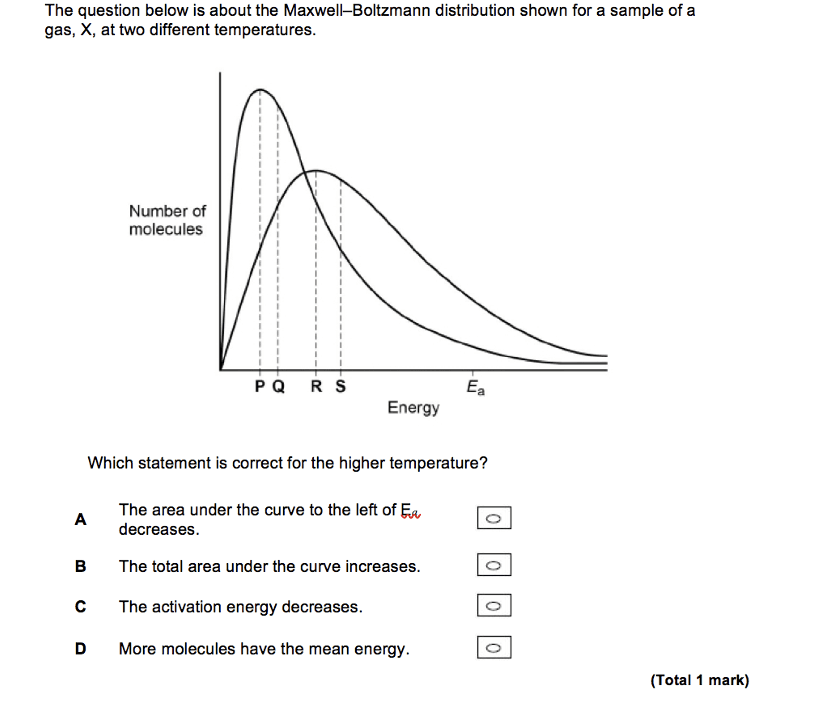
why does temperature affect reaction rate?
increases frequency of collisions and also increases the number of molecules that have energy greater than Ea. More frequent successful collisions
particles are closer together so there are more frequent successful collisions
30s - Q7
Why do all reactions have an activation energy?
All reactions require bonds within reactants to break. This is an endothermic process.
All reactions require bonds within products to break. This is an endothermic process.
30s - Q8
how does increasing the surface area increase the rate of reaction?
increases frequency of collisions and also increases the number of molecules that have energy greater than Ea. More frequent successful collisions
particles are closer together so there are more frequent successful collisions
30s - Q9
how does increasing concentration of reactants increase the rate of reaction?
particles are closer together so there are more frequent successful collisions
increases frequency of collisions and also increases the number of molecules that have energy greater than Ea. More frequent successful collisions
30s - Q10
Increasing the size of a solid...
decreases surface area (compared to volume)
increases surface area (compared to volume)
30s - Q11
How to work out activation energy from a reaction profile?
the difference in energy between the top of curve and products
the difference in energy between the top of curve and reactants
30s - Q12
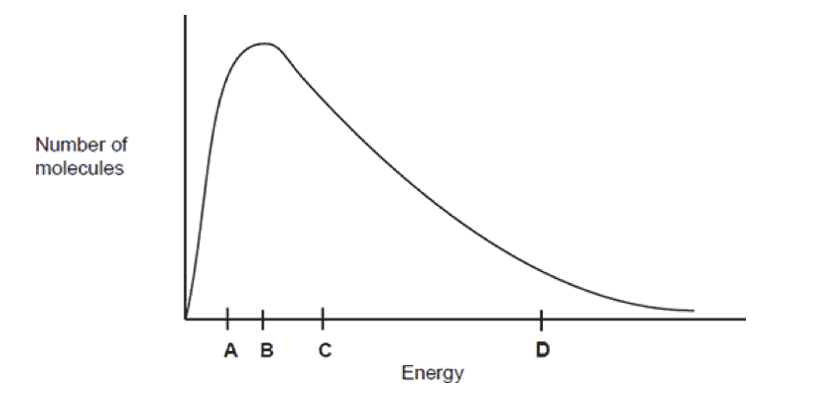
what does Maxwell Boltzmann distribution curve show?
the distribution of energies of gas particles are the same and make a pattern called the MB distribution
the distribution of energies of gas particles vary and make a pattern called the MB distribution
30s - Q13
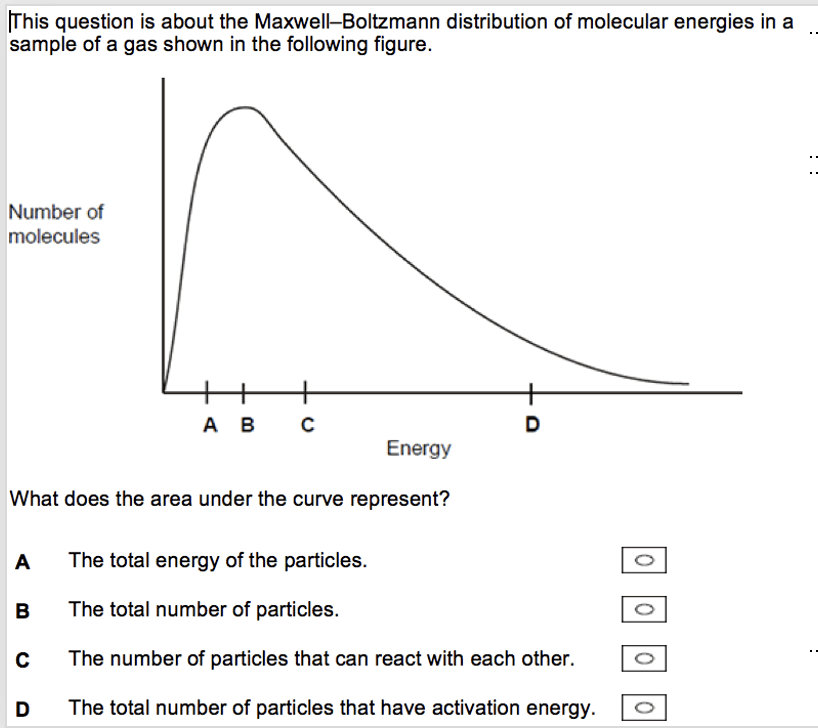
what does the area under the curve show?
total number of particles
no molecules have no energy
the highest point of the curve
30s - Q14
where is the most probable energy on the curve?
no molecules have no energy
total number of particles
the highest point of the curve
to the right of the highest point of the curve
30s - Q15
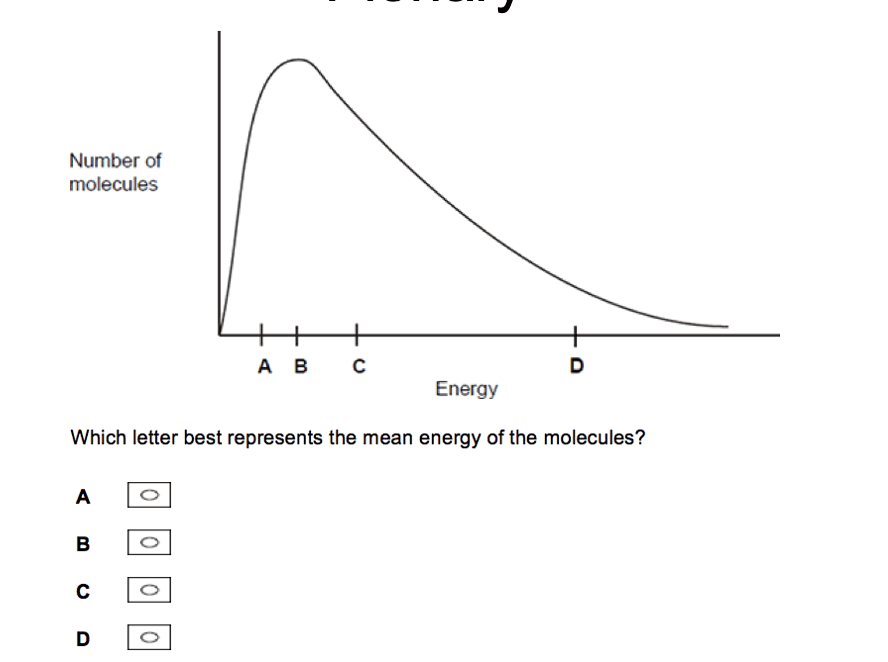
where is the mean energy on the curve?
no molecules have no energy
slightly to the right of the highest point of the curve
the highest point of the curve
total number of particles
30s