Loading...


KUB formative WEEK 3
Quiz by Thaomani Ruaysoongnern
Tag the questions with any skills you have. Your dashboard will track each student's mastery of each skill.
A clinical study is performed with pediatric subjects who had a diagnosis of minimal change disease. These patients were observed to have prominent periorbital edema at diagnosis. Laboratory test findings from serum and urine tests were analyzed. Which of the following urinalysis test findings is most likely to have been consistently present in these subjects?.
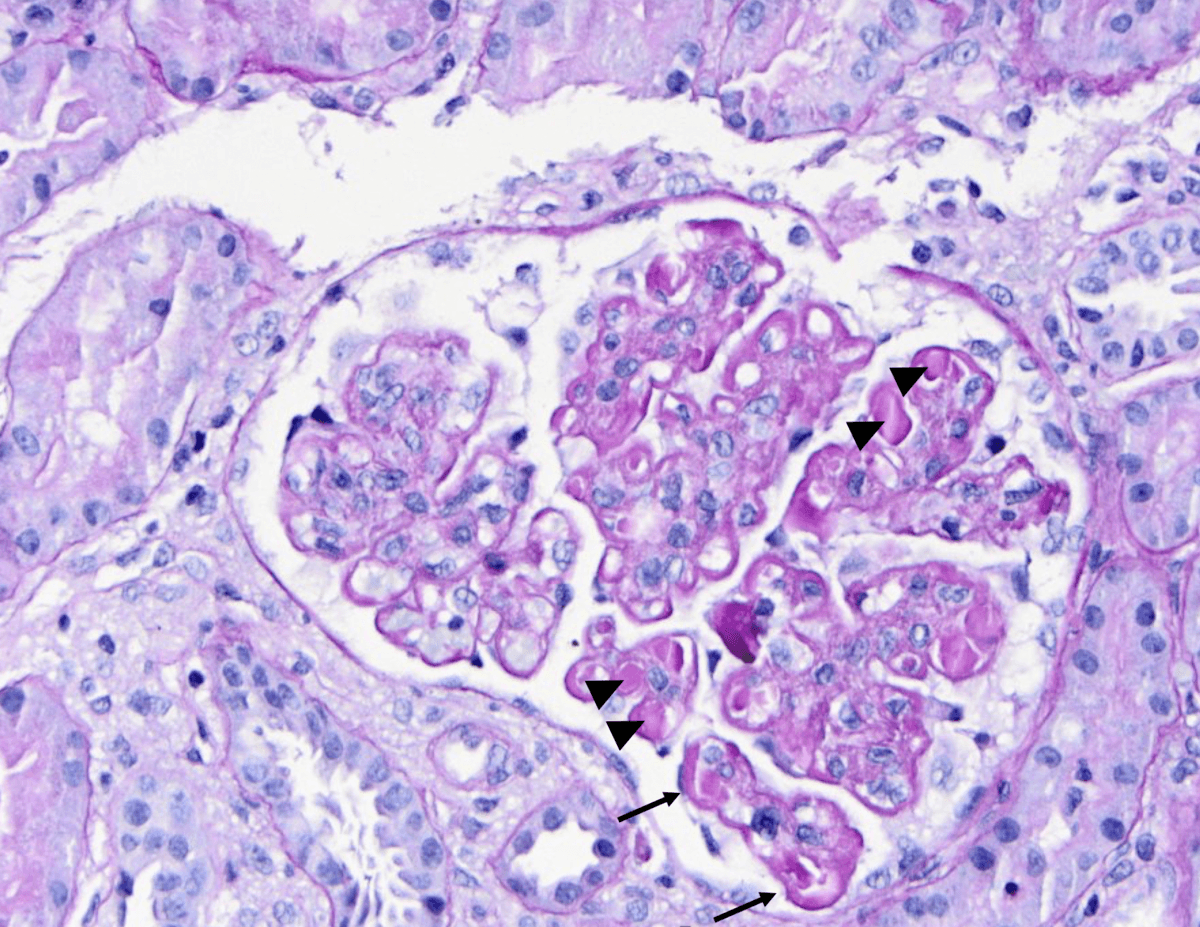
A 12-year-old boy is a member of a family with a history of renal disease. He is found to have auditory nerve deafness, corneal dystrophy, and ocular lens dislocation. A urinalysis shows microscopic hematuria. A renal biopsy is performed. Microscopically, the glomeruli show glomerular capillaries with irregular basement membrane thickening and attenuation with splitting of the lamina densa. The mesangial matrix is increased and epithelial cells may appear foamy. Which of the following is the most likely diagnosis?
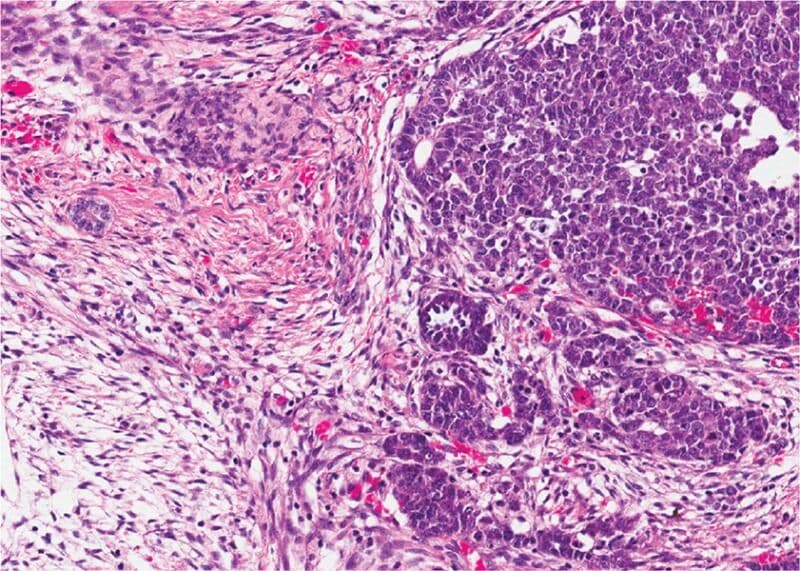
A 3-year-old child has become more irritable over the past two months and does not want to eat much at meals. On physical examination the pediatrician notes an enlarged abdomen and can palpate a mass on the right. An abdominal CT scan reveals a 10 cm solid mass involving the right kidney. The resected mass has a microscopic appearance with sheets of small blue cells along with primitive tubular structures. The child receives chemotherapy and radiation therapy, and there is no recurrence. Which of the following neoplasms is this child most likely to have had?
A 5-year-old boy is noted to have increased puffiness around his eyes for the past week, and he has been less active than normal. On physical examination he has periorbital edema. Vital signs include T 37°C, P 90/minute, RR 30/minute, and BP 140/90 mm Hg. A urinalysis reveals sp. gr. 1.010, pH 6.5, no glucose, 4+ protein, no blood, no casts, and no ketones.
Microscopic urinalysis reveals oval fat bodies, but no WBC's or RBC's. He improves following a course of corticosteroid therapy. Which of the following renal lesions is most likely to have been present in this boy?
A 20-year-old previously healthy man has been feeling tired for the past 5 days. He then passes dark-colored urine. On physical examination his blood pressure is 160/90 mm Hg. Laboratory studies show his serum creatinine is 4.4 mg/dL and BUN 40 mg/dL. A urinalysis reveals pH 6, specific gravity 1.011, 3+ blood, 1+ protein, no glucose, and no ketones. On urine microscopic examination there are numerous RBC casts. Which of the following pathologic findings on renal biopsy is most likely to be present in this man?
What is the diagnosis of this case?

What is the diagnosis of this case?
Which hereditary disorder is mainly associated with RCC?
Which of the following neoplasm is benign originating from perivascular epithelioid cells and usually associated with other congenital anomalies?
From the histology of nephrectomy specimen, what is the diagnosis?
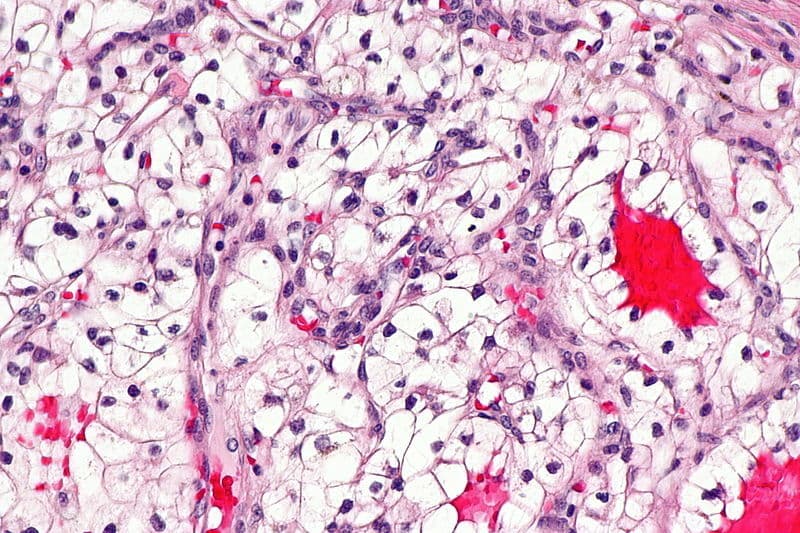
From the histology of nephrectomy specimen, what is the diagnosis?