Loading...


Lateral and Total SA - Practice Quiz
Quiz by Chandler Anderson
Customize this quiz to suit your class
Instantly translate to 100+ languages
Tag the questions with any skills you have. Your dashboard will track each student's mastery of each skill.
Give this quiz to my class
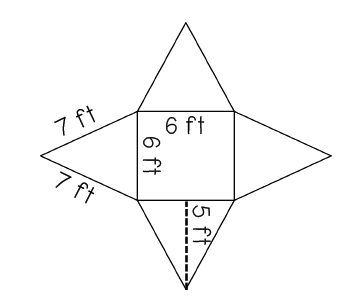


 Lateral area and total area of cubeA. Arundhati Roy B. Jhumpa Lahiri C. Salman Rushdie D. Anita Desai ________________________________________ 2. The Lowland was published in: A. 2001 B. 2013 C. 2010 D. 2005 ________________________________________ 3. Which earlier work earned Lahiri the Pulitzer Prize? A. The Namesake B. Unaccustomed Earth C. Interpreter of Maladies D. The Lowland ________________________________________ 4. The novel is primarily about: A. Technology and modernity B. Immigration, family, and political violence C. Business rivalry D. Mythology and folklore ________________________________________ 5. The two central brothers in the novel are: A. Rahul and Anil B. Subhash and Udayan C. Gogol and Ashoke D. Amit and Nikhil ________________________________________ 6. Where did the brothers grow up? A. Mumbai B. Dhaka C. Calcutta D. Delhi ________________________________________ 7. Udayan becomes involved in: A. Peace activism B. Cinema C. Naxalite movement D. Business ________________________________________ 8. Subhash moves to: A. London B. Rhode Island C. Toronto D. Chicago ________________________________________ 9. Udayan is killed in: A. Jail B. A riot C. The lowland near his house D. A car accident ________________________________________ 10. Why does Subhash marry Gauri? A. Love B. To protect her and her unborn child C. Financial benefit D. Family pressure ________________________________________ 11. Gauri eventually: A. Becomes a politician B. Starts a business C. Leaves her family D. Returns to India ________________________________________ 12. Subhash raises Bela: A. With Gauri B. Alone C. With help from his parents D. In India ________________________________________ 13. Bela grows up believing: A. Udayan is her father B. Subhash is her father C. She has no father D. Her father died in war ________________________________________ 14. The setting of political unrest is linked to: A. Partition B. Naxalbari uprising C. Independence movement D. Civil War ________________________________________ 15. The narrative style uses: A. Magical realism B. Non-linear structure C. Poetry D. Second-person narration ________________________________________ 16. Gauri’s character represents: A. Traditional motherhood B. Obedient wife C. Intellectual autonomy and emotional detachment D. Political activism ________________________________________ 17. Bela’s character signifies: A. Rebellion against education B. Second-generation identity struggle C. Complete assimilation D. Materialistic living ________________________________________ 18. Memory in the novel functions as: A. A simple recollection B. A haunting presence affecting identity C. A forgotten history D. A symbolic decoration ________________________________________ 19. The lowland itself symbolizes: A. Wealth B. Stability C. Transitional, unstable space D. Escape ________________________________________ 20. Lahiri’s prose style can be described as: A. Flowery and ornate B. Minimalistic and restrained C. Dramatic and verbose D. Highly poetic ________________________________________ 21. Water imagery reflects: A. Joy and happiness B. Power and victory C. Memory and emotional fluidity D. Evil ________________________________________ 22. Which theory applies strongly to this novel? A. Structuralism B. Postcolonial hybridity C. Absurdism D. Modernism ________________________________________ 23. Postcolonial hybridity is linked to: A. Complete assimilation B. Identity in-between cultures C. Traditional values D. Language fluency alone ________________________________________ 24. Which character best reflects second-generation identity conflict? A. Gauri B. Bela C. Subhash D. Udayan ________________________________________ 25. What does Subhash struggle with most? A. Career failure B. Language C. Guilt and secrecy D. Wealth ________________________________________ 26. Udayan’s ideology centers on: A. Business growth B. Armed communist revolution C. Religious reform D. Education ________________________________________ 27. The novel shows how political violence leads to: A. Personal healing B. Economic prosperity C. Emotional trauma across generations D. Cultural unity ________________________________________ 28. Betrayal appears as: A. Only political B. Only emotional C. Both political and familial D. A background idea ________________________________________ 29. The genre of the text best fits: A. Fantasy B. Realistic political family saga C. Science fiction D. Thriller ________________________________________ 30. The narrative constantly shifts between: A. Dream and reality B. India and America C. Past and future India D. Fiction and nonfiction ________________________________________ 31. Homi Bhabha’s "third space" represents: A. Physical land B. A zone of cultural in-betweenness C. A literal building D. A heavenlike vision ________________________________________ 32. Gauri symbolizes: A. Traditional widowhood B. Female agency vs social expectation C. Blind loyalty D. Economic dependence ________________________________________ 33. Bela unknowingly inherits: A. Udayan’s ideology B. Gauri’s academic passion only C. Subhash’s calmness D. Grandparents’ wealth ________________________________________ 34. Lahiri uses silence to: A. Avoid details B. Deepen psychological complexity C. Reduce story relevance D. Simplify events ________________________________________ 35. A major structural device is: A. Letters B. Non-linear flashbacks C. Mythic storytelling D. Metafiction ________________________________________ 36. Which text offers a migrant theme comparison? A. The God of Small Things B. The White Tiger C. The Namesake D. Train to Pakistan ________________________________________ 38. The Naxalite movement first emerged in: A. Mumbai B. Naxalbari village C. Delhi D. Kerala ________________________________________ 39. Which theme repeats strongly? A. Celebration of success B. Silence and secrets C. Fantasy D. Heroism ________________________________________ 40. What does Bela do as an adult? A. Becomes a doctor B. Engages in environmental activism C. Joins corporate life D. Moves into politics ________________________________________ 41. The immigrant experience in the novel is portrayed as: A. Full belonging B. Alienation and partial belonging C. Achievement D. Liberation ________________________________________ 42. Which idea does Lahiri question through Gauri? A. Heroism B. Maternal expectation C. Religious devotion D. Wealth ________________________________________ 43. Subhash represents: A. Pure rebellion B. Survival and adaptation C. Anti-immigrant sentiment D. Total withdrawal ________________________________________ 44. Lahiri’s writing expects readers to: A. Passively accept the plot B. Read emotional subtext in silences C. Ignore symbols D. Only enjoy the story ________________________________________ 45. The lowland as a metaphor mainly signifies: A. Joy B. Unstable cultural ground C. Triumph D. Isolation from family ________________________________________ 46. Why is The Lowland considered significant? A. Its fantasy themes B. Its deep engagement with politics & identity C. Its humor D. Its romantic style ________________________________________ 47. Which comparative author also writes about diaspora identity? A. Chetan Bhagat B. Amitav Ghosh C. Premchand D. Ruskin Bond ________________________________________ 48. Udayan’s death drives the plot because: A. Family hides it B. It forces new relationships & trauma C. People forget him D. It has no consequence ________________________________________ 49. The narrative ends emphasizing: A. Closure and peace B. Lasting consequences of secrets C. National identity D. Religious conflict ________________________________________ 50. Scholars study this work because it explores: A. Only Indian history B. Trauma, diaspora, gender & politics C. Folk storytelling D. ComedyInternal Surface of the Anterior
Abdominal Wall
• Right and Left medial umbilical folds - lateral to the
median umbilical fold, they are folds of peritoneum
containing R/L medial umbilical ligaments.
• *R/L medial umbilical ligaments - remnant of the
fetal umbilical arteries which carried
DEOXGENATED BLOOD.
• R/L lateral umbilical folds - lateral to the medial
umbilical folds, they are peritoneal coverings of the
inferior epigastric arteries & veins.
• *Inferior epigastric arteries- patent arteries that
arise from the external iliac arteries. They (the
ligament ) form the lateral border of the inguinal
triangle (Hesselbach’s triangle).What is the relationship between faults and earthquakes? What happens to a fault when an earthquake occurs? Earthquakes occur on faults - strike-slip earthquakes occur on strike-slip faults, normal earthquakes occur on normal faults, and thrust earthquakes occur on reverse or thrust faults. When an earthquake occurs on one of these faults, the rock on one side of the fault slips with respect to the other. The fault surface can be vertical, horizontal, or at some angle to the surface of the earth. The slip direction can also be at any angle. What is a fault and what are the different types? A fault is a fracture or zone of fractures between two blocks of rock. Faults allow the blocks to move relative to each other. This movement may occur rapidly, in the form of an earthquake - or may occur slowly, in the form of creep. Faults may range in length from a few millimeters to thousands of kilometers. Most faults produce repeated displacements over geologic time. During an earthquake, the rock on one side of the fault suddenly slips with respect to the other. The fault surface can be horizontal or vertical or some arbitrary angle in between. Earth scientists use the angle of the fault with respect to the surface (known as the dip) and the direction of slip along the fault to classify faults. Faults which move along the direction of the dip plane are dip-slip faults and described as either normal or reverse (thrust), depending on their motion. Faults which move horizontally are known as strike-slip faults and are classified as either right-lateral or left-lateral. Faults which show both dip-slip and strike-slip motion are known as oblique-slip faults. The following definitions are adapted from The Earth by Press and Siever. normal fault - a dip-slip fault in which the block above the fault has moved downward relative to the block below. This type of faulting occurs in response to extension and is often observed in the Western United States Basin and Range Province and along oceanic ridge systems. Normal Fault Animation reverse (thrust) fault - a dip-slip fault in which the upper block, above the fault plane, moves up and over the lower block. This type of faulting is common in areas of compression, such as regions where one plate is being subducted under another as in Japan. When the dip angle is shallow, a reverse fault is often described as a thrust fault. Thrust Fault Animation Blind Thrust Fault Animation strike-slip fault - a fault on which the two blocks slide past one another. The San Andreas Fault is an example of a right lateral fault. Strike-slip Fault Animation A left-lateral strike-slip fault is one on which the displacement of the far block is to the left when viewed from either side. A right-lateral strike-slip fault is one on which the displacement of the far block is to the right when viewed from either side.Continental Drift Theory. From the discussion of the rock cycle, it has been pointed out that through Earth's external and internal processes. Earth's surface is constantly changing. However, this idea of a changing environment did not conform with the belief of earlier scientists. Rather, they thought that the geographic positions of ocean basins and continents have been static since the beginning of time. It was around the 1500s when Leonardo da Vinci, upon his discovery of fossil seashells found at the high mountains of Italy, first thought of the idea that the areas where mountains are located may have been oceans in the past. Through time, other fossils of marine organisms found far above the current sea level further supported the idea that mountains were uplifted and weathering wore them down. At around the 1800s, most scientists have accepted the idea that Earth's crust is undergoing large vertical movements or uplifting. There was also evidence of possible horizontal movements, but the scientists then were not convinced about it. Alfred Wegener showed evidence of horizontal or lateral movement of the continents in his continental drift theory. According to him, the continents have drifted around the world and have once formed a giant landmass or supercontinent called Pangaea. To support his theory, Alfred Wegener presented a set of geographical, biological, and climatic evidence.Wegener's geographical evidence included the jigsaw puzzle fit of the current continents. He pointed out that the coastlines of South America and Africa seem to fit together. He also pointed the presence of mountain ranges having similar rock types and age but separated by vast oceans, like that of the folded rocks of the Caledonian mountains. The same folded rocks run through West Africa, North America, Newfoundland, Ireland, Wales, Scotland, Greenland, and Norway, all of which are now separated by the Atlantic Ocean. A geographical evidence on the similar rock types in West Africa, North America, Greenland, and Europe is found. The biological evidence came in the discovery of similar plant and animal fossils in different continents separated by oceans. The animal fossils of Mesosaurus and Lystrosaurus indicate that they were not capable of crossing the oceans to reach the other continents. If they were, the fossils should have been more widely distributed Africa, Australia, India, and South America were too large to be carried by wind. This indicates that the areas where the fossils were found were closely linked. It has also been found out that the plant only grew in areas with subpolar climate, which would indicate that the landmasses were located near the South Pole.Lastly, for his climatic evidence, Wegener discovered that a glacial period occurred during the late Paleozoic era in Southern Africa, South America, Australia, and India. The initial explanation for this event was global cooling, but it was rejected because large tropical swamps with so much vegetation were found at the same time in the Northern Hemisphere. This further supported the idea that the supercontinent was indeed near the South Pole, and the continents in Northern Hemisphere were once near the equator. The glacial period also left glacial striations, or the scratches glaciers make as they move across on the underlying bedrock, on the aforementioned continents. For such an event to happen, the continents would have to be connected. SCIENCE PIONEER. Alfred Wegener (1880-1930). Alfred Wegener was a German polar researcher, geophysicist, and meteorologist. He was known for his work on the continental drift theory. In his effort to defend his work, he went to the Greenland ice sheet where he died.Even with all the compelling evidence, the continental drift theory hardly convinced the scientific community at that time because Wegener was unable to identify a credible mechanism that drives the continental drift. He was unable to clearly explain how the continents moved and how the larger continents broke through the ocean floor. Eventually, critics of the continental drift began to accept the theory when new evidence supporting the theory was discovered. The new evidence led to a more encompassing theory the theory of plate tectonics. This theory provided a more convincing explanation as to how the continents moved. The evidence that paved the way for the theory of plate tectonics was the idea of wandering poles. Scientists began studying volcanic rocks to determine the location of the magnetic poles. When volcanic rocks crystallize, the minerals with magnetic properties align themselves parallel to Earth's magnetic field at the time the minerals were formed. This finding allowed scientists to determine the polarity of Earth's magnetic field and the magnetic inclination that showed the location of the poles. Upon studying the paleomagnetism of the rocks, geophysicists found out that rocks from various locations point to different magnetic north poles, suggesting that the poles have wandered. Since movement of magnetic poles is very unlikely, scientists have accepted the idea that the continents are indeed moving. And if the continents are moving, scientists thought that maybe the ocean basins are moving too. They also discovered that some rocks showed magnetic reversals, which led them to believe that the magnetic north pole now was not always the magnetic north pole. Seafloor Spreading. After World War II, exploration on the ocean floor became the focus of many geologic studies. It was only then that the ocean ridge system was discovered. A geologist in Princeton University named Harry Hess, along with other scientists, studied this ocean ridge system and hypothesized that the oceanic crust was moving away from the ridge. His hypothesis, known as seafloor spreading, showed that the ocean floor is split along the ridge where the magma rises to form the new ocean floor.Because of this, rocks located near the ridge are younger than those that are located magnetic polarity of Earth is also preserved in those rocks. Withe ridge scientists were able to see the magnetic reversals in the ocean floor, and they were able to make use of information to determine that the ocean floor is moving at a rate of about 10 cm per year. Plate Tectonics. Confirmation of the seafloor spreading hypothesis proved that continents are not moving above the ocean floor. Rather, it is the fragments of the lithosphere. The lithosphere is the rigid layer that is composed of the uppermost mantle and the crust that carry the continents and the ocean basins along. These fragments of the lithosphere are called plates. Underneath the lithosphere is a weaker region in the mantle known as asthenosphere that behaves like a fluid. Thus, the lithosphere floats above the asthenosphere, making it detached and free to move. This became the basis of the theory of plate tectonics. Now that it has been made clear that it is the plates which are moving, the question as to how they move remained. Sir Arthur Holmes proposed the driving force for this plate movement in 1919. He suggested that the movement in the mantle carries the plates along. It was previously discussed that Earth's interior is very hot due to the heat produced by radioactive decay. Convection takes place in the mantle, keeping the asthenosphere hot and weak. The convection currents produced in the asthenosphere are the ones carrying the lithospheric plates and making them move. However, convection currents are not enough. Mechanisms such as ridge push and slab pull aid the convection currents to slowly move the lithospheric plates. Ridge push occurs at mid ocean ridges which are higher in elevation than the surrounding trenches and abyssal plains. The new ocean floor from the ridge is hot and relatively thin. As it moves away from the ridge, it cools down and gets denser, heavier, and thicker. Below this cooling ocean floor is the asthenosphere, which is less dense. This area becomes a massive shear zone and the new ocean floor will effectively slide down the slope of the asthenosphere. When the plate collides with another plate with lesser density, the denser plate sinks and a subduction zone is formed. When the subducting plate sinks, it pulls on the rest of the plate behind it. These mechanisms explain the movement of the plates.Earth has seven major lithospheric plates that account for 94% of Earth's surface. These are the North American Plate, South American Plate, Pacific Plate, African Plate, Eurasian Plate, Indo-Australian Plate, and Antarctic Plate. These plates are constantly moving relative to the other plates. Thus, the interaction of plates occurs mostly along the boundaries. These movements are plotted using information from earthquakes and volcanic activities. There are three main types of plate boundaries: convergent, divergent, and transform boundaries Convergent boundaries are boundaries where two plates move towards each other A convergent boundary is also known as destructive margin since this is where the collision between two plates occhins. There are three types of convergence-oceanic oceanic, oceanic-continental, and continental-continental. Trenches are features of the ocean floor that are present in both oceanic-oceanic boundary and oceanic-continental boundary. Subduction occurs at the trenches, therefore, these are characterized as the deepest parts of Earth. A divergent boundary is the opposite of convergent boundary: two plates move away from each other. Divergent boundaries create new crust; thus, they are also known as constructive margins. The ocean ridge system is a divergent boundary where new ocean floor is produced as magma rises, pushing the older rocks aside.Transform boundary is also known as conservative plate margin since two plates just move past one another, neither creating nor destroying land. Earthquake epicenters are usually detected at transform boundaries because the rocks tend to break and not fold or sink, like in convergent boundaries. Evolution of the Ocean Basins. Both the movement of the plates and seafloor are responsible for the evolution of ocean basins. Along the divergent boundary where ocean ridge systems are found, magma is released and new ocean floor is created. Along convergent boundaries, the ocean floor is being destroyed. The evolution of the ocean basins started during the time when Pangaea was still present and was surrounded by the vast ocean or superocean known as Panthalassa, also called Paleo-Pacific or "old Pacific." Upon the initial break up of Pangaea into Laurasia and Gondwanaland, the Tethys Sea began to form. Then, the Eurasian and North about, forming the North Atlantic. The South Atlantic only started to form when the African Plate and South American Plate separated. The continued movement of the plates created the Himalayas at one side and separated the Pacific Ocean and Atlantic Ocean at the other side, which consequently formed the current ocean basins. Both the movement of the plates and seafloor are responsible for the evolution of ocean basins. Along the divergent boundary where ocean ridge systems are found, magma is released and new ocean floor is created. Along convergent boundaries, the ocean floor is being destroyed. The evolution of the ocean basins started during the time when Pangaea was still present and was surrounded by the vast ocean or superocean known as Panthalassa, also called Paleo-Pacific or "old Pacific." Upon the initial break up of Pangaea into Laurasia and Gondwanaland, the Tethys Sea began to form. Then, the Eurasian and North about, forming the North Atlantic. The South Atlantic only started to form when the African Plate and South American Plate separated. The continued movement of the plates created the Himalayas at one side and separated the Pacific Ocean and Atlantic Ocean at the other side, which consequently formed the current ocean basins.Continents do not immediately end at the point where the ocean meets the land. They may extend slightly into the oceans. The portion of the continent that is submerged is called continental margin. There are two types of continental margin: passive margin and active margin. A passive continental margin consists of a continental shelf, continental slope, and continental rise. It is not associated with plate boundaries; thus, there are very little tectonic activities. An active continental margin only has a continental shelf and a continental slope. It is associated with plate boundaries; thus, a main feature of this boundary is a trench. The different features of a continental margin are the following: 1. The continental shelf is the gently-sloping submerged portion of the continent. 2. The continental slope is the steep slope after the continental shelf. It is still part of the continent. 3. The continental rise is the gently-sloping area after the continental slope and before the ocean floor. 4. The trenches are the deepest parts of the ocean. These are narrow depressions caused by the subduction of the ocean floor along the convergent boundaries. 5. The mid-oceanic ridge is the mountain range system in the ocean. It is responsible for the production of new ocean floor. This is the region where new magma constantly emerges from. SCIENCE CAREER. A scientific illustrator uses art to inform and communicate complex details and concepts of science. He/She makes use of scientifically informed observations and research along with his/her technical art and aesthetic skills to make accurate representations. In Natural History, the scientific illustrators recreate how the extinct species look like by working with scientists and fossil records. Moreover, with the advances in technology, illustrators are now into 3D modelling, animation, and video making. Earth's History. All the processes that have been discussed require long periods of time to create a noticeable change on Earth's surface. You can just imagine how long it would take to create an oceanas vast as the Pacific Ocean if the ocean floor moves only at about 10 cm/year. It is then important to know the history of Earth to learn the complexities of its past and be able to use it to understand the present. Just like learning the history of a country that requires one to read a lot of books, learning the history of Earth involves studying a lot of rocks. Rocks, especially sedimentary rocks, contain a lot of information about Earth's past. It holds the key to most of the geologic processes that happened on Earth and the key to uncovering how life on Earth evolved. But these discoveries are worthless if there is no time perspective. Thus, one of the most important contributions of geologists to mankind is the geologic time scale, which holds a history that is exceedingly long.Oral Manifestations of Viral Infections Viral infections can lead to a variety of oral manifestations, which may vary depending on the type of virus involved. Below are the key viral infections and their associated oral symptoms. --- 1. Herpes Simplex Virus (HSV) Infections Type: HSV-1 and HSV-2 Common Oral Manifestations: Primary Herpetic Gingivostomatitis: In children, presents as painful swelling and redness of the gums, with vesicular lesions on the lips, tongue, and hard palate. Recurrent Herpes Simplex: Cold sores (herpes labialis) often appear on the lips or around the mouth, and are painful and fluid-filled. Herpetic Whitlow: Infection of the fingers, often seen in healthcare workers. Clinical Features: Vesicular lesions that break to form ulcers Painful and burning sensations in affected areas Swollen lymph nodes Fever (during primary infection) Diagnosis: Direct immunofluorescence, PCR, or viral culture. --- 2. Varicella-Zoster Virus (VZV) Infections Type: Varicella (chickenpox) and Herpes Zoster (shingles) Common Oral Manifestations: Varicella: Enanthem (oral lesions) such as vesicular lesions on the hard palate, tongue, and lips, in conjunction with the characteristic skin rash. Herpes Zoster (Shingles): Unilateral painful oral lesions, often involving the hard and soft palate, and can extend to the tongue or buccal mucosa along the distribution of the trigeminal nerve. Clinical Features: Vesicular lesions that ulcerate Pain and discomfort in affected areas Fever, malaise, and headache (for chickenpox) Diagnosis: PCR, direct fluorescence antibody test, and clinical signs. --- 3. Human Papillomavirus (HPV) Infections Type: Multiple strains, including HPV types 16 and 18 Common Oral Manifestations: Oral Warts: Benign, non-painful growths typically found on the lips, palate, tongue, and floor of the mouth. Condyloma Acuminatum: Wart-like lesions in the mouth, often associated with genital HPV. Oropharyngeal Cancer: Certain high-risk HPV strains (e.g., HPV-16) are linked to cancers of the oropharynx, including tonsils and base of tongue. Clinical Features: Raised, fleshy, or cauliflower-like growths Rarely associated with pain or discomfort Diagnosis: Biopsy and PCR testing for HPV. --- 4. Coxsackievirus Infections Type: Hand, Foot, and Mouth Disease (HFMD) Common Oral Manifestations: Oral Ulcers: Painful, shallow ulcers typically seen on the soft palate, tonsils, tongue, and buccal mucosa. Vesicular Lesions: Small vesicles that ulcerate to form painful sores. Clinical Features: Red spots or vesicles that turn into ulcers Fever, sore throat, and malaise Rash and lesions on hands and feet Diagnosis: Clinical presentation and PCR. --- 5. Measles (Rubeola) Type: Paramyxovirus Common Oral Manifestations: Koplik Spots: Small, white or bluish-white spots seen on the buccal mucosa opposite the molars before the rash appears. Generalized Oral Ulceration: Following the appearance of Koplik spots, mucosal lesions may develop. Clinical Features: High fever, cough, and rash (starts on the face and spreads) Conjunctivitis Koplik spots as early indicators Diagnosis: Clinical signs and serology for measles antibodies. --- 6. HIV/AIDS Type: Human Immunodeficiency Virus Common Oral Manifestations: Oral Candidiasis: Fungal overgrowth in the mouth due to immunosuppression. Kaposi's Sarcoma: A form of cancer that appears as purple or brown lesions in the mouth, especially in the palate or gingiva. Oral Hairy Leukoplakia: White, hairy lesions on the lateral borders of the tongue, often associated with Epstein-Barr virus. Herpes Simplex and Zoster: Recurrent infections in the oral cavity. Clinical Features: Candidiasis: White plaques that can be scraped off Kaposi’s Sarcoma: Purple, macular lesions Hairy Leukoplakia: White, corrugated patches on the tongue Recurrent infections and oral ulcers Diagnosis: HIV testing, biopsy for Kaposi's sarcoma, and culture for candidiasis. --- 7. Influenza Virus Type: Influenza A and B Common Oral Manifestations: Pharyngitis: Sore throat and erythema of the oropharyngeal mucosa. Dry Mouth: Often secondary to fever and dehydration. Mucosal Erosions: Rare, but may occur in severe cases. Clinical Features: Fever, cough, sore throat, muscle aches, and headache Red or swollen tonsils and oral mucosa Diagnosis: Rapid influenza tests and PCR. --- 8. Epstein-Barr Virus (EBV) Type: Epstein-Barr virus Common Oral Manifestations: Oral Hairy Leukoplakia: White, asymptomatic, corrugated patches on the lateral borders of the tongue. Pharyngitis: Sore throat with swelling of tonsils. Oral Ulcers: Occasionally seen in association with infectious mononucleosis. Clinical Features: Fever, sore throat, and swollen lymph nodes (mononucleosis) Fatigue and malaise Diagnosis: EBV serology and PCR. --- 9. Rabies Virus Type: Rabies virus Common Oral Manifestations: Hydrophobia: Difficulty swallowing and fear of water. Increased Salivation: Resulting from dysfunction in the throat and jaw muscles. Clinical Features: Progressive neurological symptoms Paroxysms of pain or spasms in the throat and mouth Diagnosis: Clinical signs, rabies testing (saliva, CSF, or tissue biopsy). --- 10. Human Immunodeficiency Virus (HIV) Common Oral Manifestations: Oral Candidiasis: White, creamy lesions in the mouth, especially in immunocompromised individuals. Kaposi’s Sarcoma: Purple or red lesions on the palate and gingiva. Herpes Simplex: Recurrent oral lesions. Oral Hairy Leukoplakia: A condition linked with Epstein-Barr virus, presenting as white patches on the lateral borders of the tongue. --- Conclusion Oral manifestations of viral infections are varied and can provide valuable clues for diagnosing systemic viral diseases. Clinicians must consider the specific features and patterns of lesions in combination with other clinical signs for an accurate diagnosis. Some infections may also have long-term oral health implications, requiring management and prevention strategies.What is an earthquake? Would you be surprised to learn that several million earthquakes happen every year? Seriously. Most are so small in magnitude or size that we cannot even feel them. In fact, only 20 earthquakes are efficiently reported each year in the United States Geological Survey. Wow! That is a huge difference! The Earth has four major layers. Inner core, outer core, mantle, and crust. Think of the crust and top of the mantle like the skin of the earth. This skin is made up of different pieces of rock called tectonic plates. There are about 15 major slabs that join together, kind of like a puzzle. The edges around the tectonic plates are called plate boundaries. These massive pieces of rock slide back and forth under the Earth's surface, bumping up against each other and creating a lot of tension. This tension and movement create faults, which are basically huge cracks in the rock. When the faults get stuck, they build up pressure. And when they get unstuck, you guessed it, an earthquake. So basically, an earthquake is caused by the shifting and sliding of tectonic plates on the Earth's upper mantle and crust. There are three ways that tectonic plates shift or slide. They are subduction, lateral sliding, and spreading. Subduction happens when plates crash into each other. This can cause one plate to slide under another and be destroyed. Or the edges of the plate may rise up and form mountains. Lateral sliding means that the plates slide alongside each other, which can create lots of friction. And like you might have guessed, spreading happens when plates move apart from each other. When they do, melted rock between the plates rises and cools, forming new crust. Here's an interesting fact. Nearly 90% of all earthquakes begin in the Pacific Ocean, in an area called the Ring of Fire. It's called the Ring of Fire because along with earthquakes, it's filled with many active volcanoes. More than 450! Earthquakes can be powerful enough to change the surface of the earth and can do a lot of damage. And sometimes earthquakes can even cause other natural disasters, like avalanches, landslides, and tsunamis. Pretty wild, right? The epicenter is the location of an earthquake on the Earth's surface. The closer you are to the epicenter, the more of the earthquake you will feel. Earthquakes lose intensity as they travel away from the epicenter. Scientists measure the intensity of an earthquake using a special device called a seismograph. Seismometers detect and measure the vibrations given off by an earthquake. Magnitude is the number given to record the size of an earthquake. For example, a magnitude 5.5 is considered moderate. Above 8.0 is considered a major earthquake and we see one every year or two. Earthquakes measured at 2.5 or less are usually not felt, but can be recorded. And believe it or not, there are millions that happen each year. You can make a model of a seismograph at home, and we are going to show you how. It's activity time! You can print off directions for this one on our website at learnbright.org. You'll need a cardboard box, string, a plastic cup, a marker, small heavy objects, a long strip of paper, and a friend because this is an activity for at least two people. Now comes the fun part. One friend shakes the box, alternating between hard and soft and slow and fast, while the other friend is pulling the strip of paper through the bottom. Watch the marker as it records the movement. This is exactly what a seismograph does during an earthquake. So, in a way, we have not only created our own seismograph, but our own earthquake as well. Now, we can analyze the data just like scientists. Can you tell how hard the box was shaking based on the line? Can you tell when it was barely shaking at all? You are on your way to becoming a seismologist. A seismologist is a person that studies earthquakes. It's pretty cool to watch the process, but it's even more exciting to do it yourself. You can head on over to our website to get detailed instructions for this activity. Just download the lesson plan and as always have fun! Hope you had fun learning with us! Visit us at learnbright.org for thousands of Hope you had fun learning with us! Visit us at learnbright.org for thousands of free resources and turnkey solutions for teachers and homeschoolers.The plasma membrane (also called the cell membrane) has several functions. For example, it allows only certain molecules to enter or leave the cell. It separates internal metabolic reactions from the external environment. In addition, the plasma membrane allows the cell to excrete wastes and to interact with its environment. Membrane Lipids The plasma membrane, as well as the membranes of cell organelles, is made primarily of phospholipids. Phospholipids have a polar, hydrophilic (“water-loving”) phosphate head and two nonpolar, hydrophobic (“water-fearing”) fatty acid tails. Water molecules sur- round the plasma membrane. The phospholipids line up so that their heads point outward toward the water and their tails point inward, away from water. The result is a double layer called a phospholipid bilayer, as shown in Figure 4-10. The cell membranes of eukaryotes also contain lipids, called sterols, between the tails of the phospho- lipids. The major membrane sterol in animal cells is cholesterol. Sterols in the plasma membrane make the membrane more firm and prevent the membrane from freezing at low temperatures. SECTION 3 OBJECTIVES ● Describe the structure and function of a cell’s plasma membrane. ● Summarize the role of the nucleus. ● List the major organelles found in the cytosol, and describe their roles. ● Identify the characteristics of mitochondria. ● Describe the structure and function of the cytoskeleton. VOCABULARY phospholipid bilayer chromosome nuclear envelope nucleolus ribosome mitochondrion endoplasmic reticulum Golgi apparatus lysosome cytoskeleton microtubule microfilament cilium flagellum centriole Cell membranes are made of a phospholipid bilayer. Each phospholipid molecule has a polar “head” and a two-part nonpolar “tail.” FIGURE 4-10 Copyright © by Holt, Rinehart and Winston. All rights reserved. 78 CHAPTER 4 OUTSIDE OF CELL INSIDE OF CELL 1. Cell-surface marker: Glycoprotein that identifies cell type 3. Enzyme: Assists chemical reactions inside the cell 2. Receptor protein: Recognizes and binds to substances outside the cell 4. Transport protein: Helps substances move across cell membrane Carbohydrate portion Protein portion Phospholipid heads Phospholipid tails Phospholipid Cholesterol bilayer Membrane Proteins Plasma membranes often contain specific proteins embedded within the lipid bilayer. These proteins are called integral proteins. Figure 4-11 shows that some integral proteins, such as cell surface markers, emerge from only one side of the membrane. Others, such as receptor proteins and transport proteins, extend across the plasma membrane and are exposed to both the cell’s interior and exterior environments. Proteins that extend across the plasma membrane are able to detect environmental signals and transmit them to the inside of the cell. Peripheral proteins, such as the enzyme shown in Figure 4-11, lie on only one side of the membrane and are not embedded in it. As Figure 4-11 shows, integral proteins exposed to the cell’s external environment often have carbohydrates attached. These carbohydrates can act as labels on cell surfaces. Some labels help cells recognize each other and stick together. Viruses can use these labels as docks for entering and infecting cells. Integral proteins play important roles in actively transporting molecules into the cell. Some act as channels or pores that allow certain substances to pass. Other integral proteins bind to a mol- ecule on the outside of the cell and then transport it through the membrane. Still others act as sites where chemical messengers such as hormones can attach. Fluid Mosaic Model A cell’s plasma membrane is surprisingly dynamic. Scientists describe the cell membrane as a fluid mosaic. The fluid mosaic model states that the phospholipid bilayer behaves like a fluid more than it behaves like a solid. The membrane’s lipids and pro- teins can move laterally within the bilayer, like a boat on the ocean. As a result of such lateral movement, the pattern, or “mosaic,” of lipids and proteins in the cell membrane constantly changes.
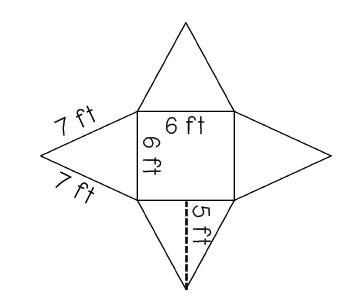
Lateral area and total area of cubeA. Arundhati Roy B. Jhumpa Lahiri C. Salman Rushdie D. Anita Desai ________________________________________ 2. The Lowland was published in: A. 2001 B. 2013 C. 2010 D. 2005 ________________________________________ 3. Which earlier work earned Lahiri the Pulitzer Prize? A. The Namesake B. Unaccustomed Earth C. Interpreter of Maladies D. The Lowland ________________________________________ 4. The novel is primarily about: A. Technology and modernity B. Immigration, family, and political violence C. Business rivalry D. Mythology and folklore ________________________________________ 5. The two central brothers in the novel are: A. Rahul and Anil B. Subhash and Udayan C. Gogol and Ashoke D. Amit and Nikhil ________________________________________ 6. Where did the brothers grow up? A. Mumbai B. Dhaka C. Calcutta D. Delhi ________________________________________ 7. Udayan becomes involved in: A. Peace activism B. Cinema C. Naxalite movement D. Business ________________________________________ 8. Subhash moves to: A. London B. Rhode Island C. Toronto D. Chicago ________________________________________ 9. Udayan is killed in: A. Jail B. A riot C. The lowland near his house D. A car accident ________________________________________ 10. Why does Subhash marry Gauri? A. Love B. To protect her and her unborn child C. Financial benefit D. Family pressure ________________________________________ 11. Gauri eventually: A. Becomes a politician B. Starts a business C. Leaves her family D. Returns to India ________________________________________ 12. Subhash raises Bela: A. With Gauri B. Alone C. With help from his parents D. In India ________________________________________ 13. Bela grows up believing: A. Udayan is her father B. Subhash is her father C. She has no father D. Her father died in war ________________________________________ 14. The setting of political unrest is linked to: A. Partition B. Naxalbari uprising C. Independence movement D. Civil War ________________________________________ 15. The narrative style uses: A. Magical realism B. Non-linear structure C. Poetry D. Second-person narration ________________________________________ 16. Gauri’s character represents: A. Traditional motherhood B. Obedient wife C. Intellectual autonomy and emotional detachment D. Political activism ________________________________________ 17. Bela’s character signifies: A. Rebellion against education B. Second-generation identity struggle C. Complete assimilation D. Materialistic living ________________________________________ 18. Memory in the novel functions as: A. A simple recollection B. A haunting presence affecting identity C. A forgotten history D. A symbolic decoration ________________________________________ 19. The lowland itself symbolizes: A. Wealth B. Stability C. Transitional, unstable space D. Escape ________________________________________ 20. Lahiri’s prose style can be described as: A. Flowery and ornate B. Minimalistic and restrained C. Dramatic and verbose D. Highly poetic ________________________________________ 21. Water imagery reflects: A. Joy and happiness B. Power and victory C. Memory and emotional fluidity D. Evil ________________________________________ 22. Which theory applies strongly to this novel? A. Structuralism B. Postcolonial hybridity C. Absurdism D. Modernism ________________________________________ 23. Postcolonial hybridity is linked to: A. Complete assimilation B. Identity in-between cultures C. Traditional values D. Language fluency alone ________________________________________ 24. Which character best reflects second-generation identity conflict? A. Gauri B. Bela C. Subhash D. Udayan ________________________________________ 25. What does Subhash struggle with most? A. Career failure B. Language C. Guilt and secrecy D. Wealth ________________________________________ 26. Udayan’s ideology centers on: A. Business growth B. Armed communist revolution C. Religious reform D. Education ________________________________________ 27. The novel shows how political violence leads to: A. Personal healing B. Economic prosperity C. Emotional trauma across generations D. Cultural unity ________________________________________ 28. Betrayal appears as: A. Only political B. Only emotional C. Both political and familial D. A background idea ________________________________________ 29. The genre of the text best fits: A. Fantasy B. Realistic political family saga C. Science fiction D. Thriller ________________________________________ 30. The narrative constantly shifts between: A. Dream and reality B. India and America C. Past and future India D. Fiction and nonfiction ________________________________________ 31. Homi Bhabha’s "third space" represents: A. Physical land B. A zone of cultural in-betweenness C. A literal building D. A heavenlike vision ________________________________________ 32. Gauri symbolizes: A. Traditional widowhood B. Female agency vs social expectation C. Blind loyalty D. Economic dependence ________________________________________ 33. Bela unknowingly inherits: A. Udayan’s ideology B. Gauri’s academic passion only C. Subhash’s calmness D. Grandparents’ wealth ________________________________________ 34. Lahiri uses silence to: A. Avoid details B. Deepen psychological complexity C. Reduce story relevance D. Simplify events ________________________________________ 35. A major structural device is: A. Letters B. Non-linear flashbacks C. Mythic storytelling D. Metafiction ________________________________________ 36. Which text offers a migrant theme comparison? A. The God of Small Things B. The White Tiger C. The Namesake D. Train to Pakistan ________________________________________ 38. The Naxalite movement first emerged in: A. Mumbai B. Naxalbari village C. Delhi D. Kerala ________________________________________ 39. Which theme repeats strongly? A. Celebration of success B. Silence and secrets C. Fantasy D. Heroism ________________________________________ 40. What does Bela do as an adult? A. Becomes a doctor B. Engages in environmental activism C. Joins corporate life D. Moves into politics ________________________________________ 41. The immigrant experience in the novel is portrayed as: A. Full belonging B. Alienation and partial belonging C. Achievement D. Liberation ________________________________________ 42. Which idea does Lahiri question through Gauri? A. Heroism B. Maternal expectation C. Religious devotion D. Wealth ________________________________________ 43. Subhash represents: A. Pure rebellion B. Survival and adaptation C. Anti-immigrant sentiment D. Total withdrawal ________________________________________ 44. Lahiri’s writing expects readers to: A. Passively accept the plot B. Read emotional subtext in silences C. Ignore symbols D. Only enjoy the story ________________________________________ 45. The lowland as a metaphor mainly signifies: A. Joy B. Unstable cultural ground C. Triumph D. Isolation from family ________________________________________ 46. Why is The Lowland considered significant? A. Its fantasy themes B. Its deep engagement with politics & identity C. Its humor D. Its romantic style ________________________________________ 47. Which comparative author also writes about diaspora identity? A. Chetan Bhagat B. Amitav Ghosh C. Premchand D. Ruskin Bond ________________________________________ 48. Udayan’s death drives the plot because: A. Family hides it B. It forces new relationships & trauma C. People forget him D. It has no consequence ________________________________________ 49. The narrative ends emphasizing: A. Closure and peace B. Lasting consequences of secrets C. National identity D. Religious conflict ________________________________________ 50. Scholars study this work because it explores: A. Only Indian history B. Trauma, diaspora, gender & politics C. Folk storytelling D. ComedyInternal Surface of the Anterior
Abdominal Wall
• Right and Left medial umbilical folds - lateral to the
median umbilical fold, they are folds of peritoneum
containing R/L medial umbilical ligaments.
• *R/L medial umbilical ligaments - remnant of the
fetal umbilical arteries which carried
DEOXGENATED BLOOD.
• R/L lateral umbilical folds - lateral to the medial
umbilical folds, they are peritoneal coverings of the
inferior epigastric arteries & veins.
• *Inferior epigastric arteries- patent arteries that
arise from the external iliac arteries. They (the
ligament ) form the lateral border of the inguinal
triangle (Hesselbach’s triangle).What is the relationship between faults and earthquakes? What happens to a fault when an earthquake occurs? Earthquakes occur on faults - strike-slip earthquakes occur on strike-slip faults, normal earthquakes occur on normal faults, and thrust earthquakes occur on reverse or thrust faults. When an earthquake occurs on one of these faults, the rock on one side of the fault slips with respect to the other. The fault surface can be vertical, horizontal, or at some angle to the surface of the earth. The slip direction can also be at any angle. What is a fault and what are the different types? A fault is a fracture or zone of fractures between two blocks of rock. Faults allow the blocks to move relative to each other. This movement may occur rapidly, in the form of an earthquake - or may occur slowly, in the form of creep. Faults may range in length from a few millimeters to thousands of kilometers. Most faults produce repeated displacements over geologic time. During an earthquake, the rock on one side of the fault suddenly slips with respect to the other. The fault surface can be horizontal or vertical or some arbitrary angle in between. Earth scientists use the angle of the fault with respect to the surface (known as the dip) and the direction of slip along the fault to classify faults. Faults which move along the direction of the dip plane are dip-slip faults and described as either normal or reverse (thrust), depending on their motion. Faults which move horizontally are known as strike-slip faults and are classified as either right-lateral or left-lateral. Faults which show both dip-slip and strike-slip motion are known as oblique-slip faults. The following definitions are adapted from The Earth by Press and Siever. normal fault - a dip-slip fault in which the block above the fault has moved downward relative to the block below. This type of faulting occurs in response to extension and is often observed in the Western United States Basin and Range Province and along oceanic ridge systems. Normal Fault Animation reverse (thrust) fault - a dip-slip fault in which the upper block, above the fault plane, moves up and over the lower block. This type of faulting is common in areas of compression, such as regions where one plate is being subducted under another as in Japan. When the dip angle is shallow, a reverse fault is often described as a thrust fault. Thrust Fault Animation Blind Thrust Fault Animation strike-slip fault - a fault on which the two blocks slide past one another. The San Andreas Fault is an example of a right lateral fault. Strike-slip Fault Animation A left-lateral strike-slip fault is one on which the displacement of the far block is to the left when viewed from either side. A right-lateral strike-slip fault is one on which the displacement of the far block is to the right when viewed from either side.Continental Drift Theory. From the discussion of the rock cycle, it has been pointed out that through Earth's external and internal processes. Earth's surface is constantly changing. However, this idea of a changing environment did not conform with the belief of earlier scientists. Rather, they thought that the geographic positions of ocean basins and continents have been static since the beginning of time. It was around the 1500s when Leonardo da Vinci, upon his discovery of fossil seashells found at the high mountains of Italy, first thought of the idea that the areas where mountains are located may have been oceans in the past. Through time, other fossils of marine organisms found far above the current sea level further supported the idea that mountains were uplifted and weathering wore them down. At around the 1800s, most scientists have accepted the idea that Earth's crust is undergoing large vertical movements or uplifting. There was also evidence of possible horizontal movements, but the scientists then were not convinced about it. Alfred Wegener showed evidence of horizontal or lateral movement of the continents in his continental drift theory. According to him, the continents have drifted around the world and have once formed a giant landmass or supercontinent called Pangaea. To support his theory, Alfred Wegener presented a set of geographical, biological, and climatic evidence.Wegener's geographical evidence included the jigsaw puzzle fit of the current continents. He pointed out that the coastlines of South America and Africa seem to fit together. He also pointed the presence of mountain ranges having similar rock types and age but separated by vast oceans, like that of the folded rocks of the Caledonian mountains. The same folded rocks run through West Africa, North America, Newfoundland, Ireland, Wales, Scotland, Greenland, and Norway, all of which are now separated by the Atlantic Ocean. A geographical evidence on the similar rock types in West Africa, North America, Greenland, and Europe is found. The biological evidence came in the discovery of similar plant and animal fossils in different continents separated by oceans. The animal fossils of Mesosaurus and Lystrosaurus indicate that they were not capable of crossing the oceans to reach the other continents. If they were, the fossils should have been more widely distributed Africa, Australia, India, and South America were too large to be carried by wind. This indicates that the areas where the fossils were found were closely linked. It has also been found out that the plant only grew in areas with subpolar climate, which would indicate that the landmasses were located near the South Pole.Lastly, for his climatic evidence, Wegener discovered that a glacial period occurred during the late Paleozoic era in Southern Africa, South America, Australia, and India. The initial explanation for this event was global cooling, but it was rejected because large tropical swamps with so much vegetation were found at the same time in the Northern Hemisphere. This further supported the idea that the supercontinent was indeed near the South Pole, and the continents in Northern Hemisphere were once near the equator. The glacial period also left glacial striations, or the scratches glaciers make as they move across on the underlying bedrock, on the aforementioned continents. For such an event to happen, the continents would have to be connected. SCIENCE PIONEER. Alfred Wegener (1880-1930). Alfred Wegener was a German polar researcher, geophysicist, and meteorologist. He was known for his work on the continental drift theory. In his effort to defend his work, he went to the Greenland ice sheet where he died.Even with all the compelling evidence, the continental drift theory hardly convinced the scientific community at that time because Wegener was unable to identify a credible mechanism that drives the continental drift. He was unable to clearly explain how the continents moved and how the larger continents broke through the ocean floor. Eventually, critics of the continental drift began to accept the theory when new evidence supporting the theory was discovered. The new evidence led to a more encompassing theory the theory of plate tectonics. This theory provided a more convincing explanation as to how the continents moved. The evidence that paved the way for the theory of plate tectonics was the idea of wandering poles. Scientists began studying volcanic rocks to determine the location of the magnetic poles. When volcanic rocks crystallize, the minerals with magnetic properties align themselves parallel to Earth's magnetic field at the time the minerals were formed. This finding allowed scientists to determine the polarity of Earth's magnetic field and the magnetic inclination that showed the location of the poles. Upon studying the paleomagnetism of the rocks, geophysicists found out that rocks from various locations point to different magnetic north poles, suggesting that the poles have wandered. Since movement of magnetic poles is very unlikely, scientists have accepted the idea that the continents are indeed moving. And if the continents are moving, scientists thought that maybe the ocean basins are moving too. They also discovered that some rocks showed magnetic reversals, which led them to believe that the magnetic north pole now was not always the magnetic north pole. Seafloor Spreading. After World War II, exploration on the ocean floor became the focus of many geologic studies. It was only then that the ocean ridge system was discovered. A geologist in Princeton University named Harry Hess, along with other scientists, studied this ocean ridge system and hypothesized that the oceanic crust was moving away from the ridge. His hypothesis, known as seafloor spreading, showed that the ocean floor is split along the ridge where the magma rises to form the new ocean floor.Because of this, rocks located near the ridge are younger than those that are located magnetic polarity of Earth is also preserved in those rocks. Withe ridge scientists were able to see the magnetic reversals in the ocean floor, and they were able to make use of information to determine that the ocean floor is moving at a rate of about 10 cm per year. Plate Tectonics. Confirmation of the seafloor spreading hypothesis proved that continents are not moving above the ocean floor. Rather, it is the fragments of the lithosphere. The lithosphere is the rigid layer that is composed of the uppermost mantle and the crust that carry the continents and the ocean basins along. These fragments of the lithosphere are called plates. Underneath the lithosphere is a weaker region in the mantle known as asthenosphere that behaves like a fluid. Thus, the lithosphere floats above the asthenosphere, making it detached and free to move. This became the basis of the theory of plate tectonics. Now that it has been made clear that it is the plates which are moving, the question as to how they move remained. Sir Arthur Holmes proposed the driving force for this plate movement in 1919. He suggested that the movement in the mantle carries the plates along. It was previously discussed that Earth's interior is very hot due to the heat produced by radioactive decay. Convection takes place in the mantle, keeping the asthenosphere hot and weak. The convection currents produced in the asthenosphere are the ones carrying the lithospheric plates and making them move. However, convection currents are not enough. Mechanisms such as ridge push and slab pull aid the convection currents to slowly move the lithospheric plates. Ridge push occurs at mid ocean ridges which are higher in elevation than the surrounding trenches and abyssal plains. The new ocean floor from the ridge is hot and relatively thin. As it moves away from the ridge, it cools down and gets denser, heavier, and thicker. Below this cooling ocean floor is the asthenosphere, which is less dense. This area becomes a massive shear zone and the new ocean floor will effectively slide down the slope of the asthenosphere. When the plate collides with another plate with lesser density, the denser plate sinks and a subduction zone is formed. When the subducting plate sinks, it pulls on the rest of the plate behind it. These mechanisms explain the movement of the plates.Earth has seven major lithospheric plates that account for 94% of Earth's surface. These are the North American Plate, South American Plate, Pacific Plate, African Plate, Eurasian Plate, Indo-Australian Plate, and Antarctic Plate. These plates are constantly moving relative to the other plates. Thus, the interaction of plates occurs mostly along the boundaries. These movements are plotted using information from earthquakes and volcanic activities. There are three main types of plate boundaries: convergent, divergent, and transform boundaries Convergent boundaries are boundaries where two plates move towards each other A convergent boundary is also known as destructive margin since this is where the collision between two plates occhins. There are three types of convergence-oceanic oceanic, oceanic-continental, and continental-continental. Trenches are features of the ocean floor that are present in both oceanic-oceanic boundary and oceanic-continental boundary. Subduction occurs at the trenches, therefore, these are characterized as the deepest parts of Earth. A divergent boundary is the opposite of convergent boundary: two plates move away from each other. Divergent boundaries create new crust; thus, they are also known as constructive margins. The ocean ridge system is a divergent boundary where new ocean floor is produced as magma rises, pushing the older rocks aside.Transform boundary is also known as conservative plate margin since two plates just move past one another, neither creating nor destroying land. Earthquake epicenters are usually detected at transform boundaries because the rocks tend to break and not fold or sink, like in convergent boundaries. Evolution of the Ocean Basins. Both the movement of the plates and seafloor are responsible for the evolution of ocean basins. Along the divergent boundary where ocean ridge systems are found, magma is released and new ocean floor is created. Along convergent boundaries, the ocean floor is being destroyed. The evolution of the ocean basins started during the time when Pangaea was still present and was surrounded by the vast ocean or superocean known as Panthalassa, also called Paleo-Pacific or "old Pacific." Upon the initial break up of Pangaea into Laurasia and Gondwanaland, the Tethys Sea began to form. Then, the Eurasian and North about, forming the North Atlantic. The South Atlantic only started to form when the African Plate and South American Plate separated. The continued movement of the plates created the Himalayas at one side and separated the Pacific Ocean and Atlantic Ocean at the other side, which consequently formed the current ocean basins. Both the movement of the plates and seafloor are responsible for the evolution of ocean basins. Along the divergent boundary where ocean ridge systems are found, magma is released and new ocean floor is created. Along convergent boundaries, the ocean floor is being destroyed. The evolution of the ocean basins started during the time when Pangaea was still present and was surrounded by the vast ocean or superocean known as Panthalassa, also called Paleo-Pacific or "old Pacific." Upon the initial break up of Pangaea into Laurasia and Gondwanaland, the Tethys Sea began to form. Then, the Eurasian and North about, forming the North Atlantic. The South Atlantic only started to form when the African Plate and South American Plate separated. The continued movement of the plates created the Himalayas at one side and separated the Pacific Ocean and Atlantic Ocean at the other side, which consequently formed the current ocean basins.Continents do not immediately end at the point where the ocean meets the land. They may extend slightly into the oceans. The portion of the continent that is submerged is called continental margin. There are two types of continental margin: passive margin and active margin. A passive continental margin consists of a continental shelf, continental slope, and continental rise. It is not associated with plate boundaries; thus, there are very little tectonic activities. An active continental margin only has a continental shelf and a continental slope. It is associated with plate boundaries; thus, a main feature of this boundary is a trench. The different features of a continental margin are the following: 1. The continental shelf is the gently-sloping submerged portion of the continent. 2. The continental slope is the steep slope after the continental shelf. It is still part of the continent. 3. The continental rise is the gently-sloping area after the continental slope and before the ocean floor. 4. The trenches are the deepest parts of the ocean. These are narrow depressions caused by the subduction of the ocean floor along the convergent boundaries. 5. The mid-oceanic ridge is the mountain range system in the ocean. It is responsible for the production of new ocean floor. This is the region where new magma constantly emerges from. SCIENCE CAREER. A scientific illustrator uses art to inform and communicate complex details and concepts of science. He/She makes use of scientifically informed observations and research along with his/her technical art and aesthetic skills to make accurate representations. In Natural History, the scientific illustrators recreate how the extinct species look like by working with scientists and fossil records. Moreover, with the advances in technology, illustrators are now into 3D modelling, animation, and video making. Earth's History. All the processes that have been discussed require long periods of time to create a noticeable change on Earth's surface. You can just imagine how long it would take to create an oceanas vast as the Pacific Ocean if the ocean floor moves only at about 10 cm/year. It is then important to know the history of Earth to learn the complexities of its past and be able to use it to understand the present. Just like learning the history of a country that requires one to read a lot of books, learning the history of Earth involves studying a lot of rocks. Rocks, especially sedimentary rocks, contain a lot of information about Earth's past. It holds the key to most of the geologic processes that happened on Earth and the key to uncovering how life on Earth evolved. But these discoveries are worthless if there is no time perspective. Thus, one of the most important contributions of geologists to mankind is the geologic time scale, which holds a history that is exceedingly long.Oral Manifestations of Viral Infections Viral infections can lead to a variety of oral manifestations, which may vary depending on the type of virus involved. Below are the key viral infections and their associated oral symptoms. --- 1. Herpes Simplex Virus (HSV) Infections Type: HSV-1 and HSV-2 Common Oral Manifestations: Primary Herpetic Gingivostomatitis: In children, presents as painful swelling and redness of the gums, with vesicular lesions on the lips, tongue, and hard palate. Recurrent Herpes Simplex: Cold sores (herpes labialis) often appear on the lips or around the mouth, and are painful and fluid-filled. Herpetic Whitlow: Infection of the fingers, often seen in healthcare workers. Clinical Features: Vesicular lesions that break to form ulcers Painful and burning sensations in affected areas Swollen lymph nodes Fever (during primary infection) Diagnosis: Direct immunofluorescence, PCR, or viral culture. --- 2. Varicella-Zoster Virus (VZV) Infections Type: Varicella (chickenpox) and Herpes Zoster (shingles) Common Oral Manifestations: Varicella: Enanthem (oral lesions) such as vesicular lesions on the hard palate, tongue, and lips, in conjunction with the characteristic skin rash. Herpes Zoster (Shingles): Unilateral painful oral lesions, often involving the hard and soft palate, and can extend to the tongue or buccal mucosa along the distribution of the trigeminal nerve. Clinical Features: Vesicular lesions that ulcerate Pain and discomfort in affected areas Fever, malaise, and headache (for chickenpox) Diagnosis: PCR, direct fluorescence antibody test, and clinical signs. --- 3. Human Papillomavirus (HPV) Infections Type: Multiple strains, including HPV types 16 and 18 Common Oral Manifestations: Oral Warts: Benign, non-painful growths typically found on the lips, palate, tongue, and floor of the mouth. Condyloma Acuminatum: Wart-like lesions in the mouth, often associated with genital HPV. Oropharyngeal Cancer: Certain high-risk HPV strains (e.g., HPV-16) are linked to cancers of the oropharynx, including tonsils and base of tongue. Clinical Features: Raised, fleshy, or cauliflower-like growths Rarely associated with pain or discomfort Diagnosis: Biopsy and PCR testing for HPV. --- 4. Coxsackievirus Infections Type: Hand, Foot, and Mouth Disease (HFMD) Common Oral Manifestations: Oral Ulcers: Painful, shallow ulcers typically seen on the soft palate, tonsils, tongue, and buccal mucosa. Vesicular Lesions: Small vesicles that ulcerate to form painful sores. Clinical Features: Red spots or vesicles that turn into ulcers Fever, sore throat, and malaise Rash and lesions on hands and feet Diagnosis: Clinical presentation and PCR. --- 5. Measles (Rubeola) Type: Paramyxovirus Common Oral Manifestations: Koplik Spots: Small, white or bluish-white spots seen on the buccal mucosa opposite the molars before the rash appears. Generalized Oral Ulceration: Following the appearance of Koplik spots, mucosal lesions may develop. Clinical Features: High fever, cough, and rash (starts on the face and spreads) Conjunctivitis Koplik spots as early indicators Diagnosis: Clinical signs and serology for measles antibodies. --- 6. HIV/AIDS Type: Human Immunodeficiency Virus Common Oral Manifestations: Oral Candidiasis: Fungal overgrowth in the mouth due to immunosuppression. Kaposi's Sarcoma: A form of cancer that appears as purple or brown lesions in the mouth, especially in the palate or gingiva. Oral Hairy Leukoplakia: White, hairy lesions on the lateral borders of the tongue, often associated with Epstein-Barr virus. Herpes Simplex and Zoster: Recurrent infections in the oral cavity. Clinical Features: Candidiasis: White plaques that can be scraped off Kaposi’s Sarcoma: Purple, macular lesions Hairy Leukoplakia: White, corrugated patches on the tongue Recurrent infections and oral ulcers Diagnosis: HIV testing, biopsy for Kaposi's sarcoma, and culture for candidiasis. --- 7. Influenza Virus Type: Influenza A and B Common Oral Manifestations: Pharyngitis: Sore throat and erythema of the oropharyngeal mucosa. Dry Mouth: Often secondary to fever and dehydration. Mucosal Erosions: Rare, but may occur in severe cases. Clinical Features: Fever, cough, sore throat, muscle aches, and headache Red or swollen tonsils and oral mucosa Diagnosis: Rapid influenza tests and PCR. --- 8. Epstein-Barr Virus (EBV) Type: Epstein-Barr virus Common Oral Manifestations: Oral Hairy Leukoplakia: White, asymptomatic, corrugated patches on the lateral borders of the tongue. Pharyngitis: Sore throat with swelling of tonsils. Oral Ulcers: Occasionally seen in association with infectious mononucleosis. Clinical Features: Fever, sore throat, and swollen lymph nodes (mononucleosis) Fatigue and malaise Diagnosis: EBV serology and PCR. --- 9. Rabies Virus Type: Rabies virus Common Oral Manifestations: Hydrophobia: Difficulty swallowing and fear of water. Increased Salivation: Resulting from dysfunction in the throat and jaw muscles. Clinical Features: Progressive neurological symptoms Paroxysms of pain or spasms in the throat and mouth Diagnosis: Clinical signs, rabies testing (saliva, CSF, or tissue biopsy). --- 10. Human Immunodeficiency Virus (HIV) Common Oral Manifestations: Oral Candidiasis: White, creamy lesions in the mouth, especially in immunocompromised individuals. Kaposi’s Sarcoma: Purple or red lesions on the palate and gingiva. Herpes Simplex: Recurrent oral lesions. Oral Hairy Leukoplakia: A condition linked with Epstein-Barr virus, presenting as white patches on the lateral borders of the tongue. --- Conclusion Oral manifestations of viral infections are varied and can provide valuable clues for diagnosing systemic viral diseases. Clinicians must consider the specific features and patterns of lesions in combination with other clinical signs for an accurate diagnosis. Some infections may also have long-term oral health implications, requiring management and prevention strategies.What is an earthquake? Would you be surprised to learn that several million earthquakes happen every year? Seriously. Most are so small in magnitude or size that we cannot even feel them. In fact, only 20 earthquakes are efficiently reported each year in the United States Geological Survey. Wow! That is a huge difference! The Earth has four major layers. Inner core, outer core, mantle, and crust. Think of the crust and top of the mantle like the skin of the earth. This skin is made up of different pieces of rock called tectonic plates. There are about 15 major slabs that join together, kind of like a puzzle. The edges around the tectonic plates are called plate boundaries. These massive pieces of rock slide back and forth under the Earth's surface, bumping up against each other and creating a lot of tension. This tension and movement create faults, which are basically huge cracks in the rock. When the faults get stuck, they build up pressure. And when they get unstuck, you guessed it, an earthquake. So basically, an earthquake is caused by the shifting and sliding of tectonic plates on the Earth's upper mantle and crust. There are three ways that tectonic plates shift or slide. They are subduction, lateral sliding, and spreading. Subduction happens when plates crash into each other. This can cause one plate to slide under another and be destroyed. Or the edges of the plate may rise up and form mountains. Lateral sliding means that the plates slide alongside each other, which can create lots of friction. And like you might have guessed, spreading happens when plates move apart from each other. When they do, melted rock between the plates rises and cools, forming new crust. Here's an interesting fact. Nearly 90% of all earthquakes begin in the Pacific Ocean, in an area called the Ring of Fire. It's called the Ring of Fire because along with earthquakes, it's filled with many active volcanoes. More than 450! Earthquakes can be powerful enough to change the surface of the earth and can do a lot of damage. And sometimes earthquakes can even cause other natural disasters, like avalanches, landslides, and tsunamis. Pretty wild, right? The epicenter is the location of an earthquake on the Earth's surface. The closer you are to the epicenter, the more of the earthquake you will feel. Earthquakes lose intensity as they travel away from the epicenter. Scientists measure the intensity of an earthquake using a special device called a seismograph. Seismometers detect and measure the vibrations given off by an earthquake. Magnitude is the number given to record the size of an earthquake. For example, a magnitude 5.5 is considered moderate. Above 8.0 is considered a major earthquake and we see one every year or two. Earthquakes measured at 2.5 or less are usually not felt, but can be recorded. And believe it or not, there are millions that happen each year. You can make a model of a seismograph at home, and we are going to show you how. It's activity time! You can print off directions for this one on our website at learnbright.org. You'll need a cardboard box, string, a plastic cup, a marker, small heavy objects, a long strip of paper, and a friend because this is an activity for at least two people. Now comes the fun part. One friend shakes the box, alternating between hard and soft and slow and fast, while the other friend is pulling the strip of paper through the bottom. Watch the marker as it records the movement. This is exactly what a seismograph does during an earthquake. So, in a way, we have not only created our own seismograph, but our own earthquake as well. Now, we can analyze the data just like scientists. Can you tell how hard the box was shaking based on the line? Can you tell when it was barely shaking at all? You are on your way to becoming a seismologist. A seismologist is a person that studies earthquakes. It's pretty cool to watch the process, but it's even more exciting to do it yourself. You can head on over to our website to get detailed instructions for this activity. Just download the lesson plan and as always have fun! Hope you had fun learning with us! Visit us at learnbright.org for thousands of Hope you had fun learning with us! Visit us at learnbright.org for thousands of free resources and turnkey solutions for teachers and homeschoolers.The plasma membrane (also called the cell membrane) has several functions. For example, it allows only certain molecules to enter or leave the cell. It separates internal metabolic reactions from the external environment. In addition, the plasma membrane allows the cell to excrete wastes and to interact with its environment. Membrane Lipids The plasma membrane, as well as the membranes of cell organelles, is made primarily of phospholipids. Phospholipids have a polar, hydrophilic (“water-loving”) phosphate head and two nonpolar, hydrophobic (“water-fearing”) fatty acid tails. Water molecules sur- round the plasma membrane. The phospholipids line up so that their heads point outward toward the water and their tails point inward, away from water. The result is a double layer called a phospholipid bilayer, as shown in Figure 4-10. The cell membranes of eukaryotes also contain lipids, called sterols, between the tails of the phospho- lipids. The major membrane sterol in animal cells is cholesterol. Sterols in the plasma membrane make the membrane more firm and prevent the membrane from freezing at low temperatures. SECTION 3 OBJECTIVES ● Describe the structure and function of a cell’s plasma membrane. ● Summarize the role of the nucleus. ● List the major organelles found in the cytosol, and describe their roles. ● Identify the characteristics of mitochondria. ● Describe the structure and function of the cytoskeleton. VOCABULARY phospholipid bilayer chromosome nuclear envelope nucleolus ribosome mitochondrion endoplasmic reticulum Golgi apparatus lysosome cytoskeleton microtubule microfilament cilium flagellum centriole Cell membranes are made of a phospholipid bilayer. Each phospholipid molecule has a polar “head” and a two-part nonpolar “tail.” FIGURE 4-10 Copyright © by Holt, Rinehart and Winston. All rights reserved. 78 CHAPTER 4 OUTSIDE OF CELL INSIDE OF CELL 1. Cell-surface marker: Glycoprotein that identifies cell type 3. Enzyme: Assists chemical reactions inside the cell 2. Receptor protein: Recognizes and binds to substances outside the cell 4. Transport protein: Helps substances move across cell membrane Carbohydrate portion Protein portion Phospholipid heads Phospholipid tails Phospholipid Cholesterol bilayer Membrane Proteins Plasma membranes often contain specific proteins embedded within the lipid bilayer. These proteins are called integral proteins. Figure 4-11 shows that some integral proteins, such as cell surface markers, emerge from only one side of the membrane. Others, such as receptor proteins and transport proteins, extend across the plasma membrane and are exposed to both the cell’s interior and exterior environments. Proteins that extend across the plasma membrane are able to detect environmental signals and transmit them to the inside of the cell. Peripheral proteins, such as the enzyme shown in Figure 4-11, lie on only one side of the membrane and are not embedded in it. As Figure 4-11 shows, integral proteins exposed to the cell’s external environment often have carbohydrates attached. These carbohydrates can act as labels on cell surfaces. Some labels help cells recognize each other and stick together. Viruses can use these labels as docks for entering and infecting cells. Integral proteins play important roles in actively transporting molecules into the cell. Some act as channels or pores that allow certain substances to pass. Other integral proteins bind to a mol- ecule on the outside of the cell and then transport it through the membrane. Still others act as sites where chemical messengers such as hormones can attach. Fluid Mosaic Model A cell’s plasma membrane is surprisingly dynamic. Scientists describe the cell membrane as a fluid mosaic. The fluid mosaic model states that the phospholipid bilayer behaves like a fluid more than it behaves like a solid. The membrane’s lipids and pro- teins can move laterally within the bilayer, like a boat on the ocean. As a result of such lateral movement, the pattern, or “mosaic,” of lipids and proteins in the cell membrane constantly changes.