Loading...


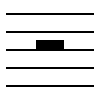
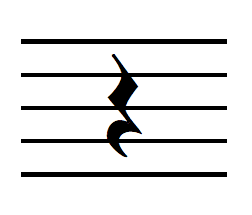
Learn your notes and rests!!!!
Quiz by Darci Bilberry
Customize this quiz to suit your class
Instantly translate to 100+ languages
Tag the questions with any skills you have. Your dashboard will track each student's mastery of each skill.
Give this quiz to my class














 To understand melody in music, think about some music you’re familiar with. If you were asked to hum it, what would that sound like? The part of the music that you’d hum is the melody. It’s the main thread of sound that your brain tracks and holds onto when you’re listening to music. In vocal music, the melody is sung by the lead singer. Other vocalists can provide harmony and instruments can add accompaniment, but the melody is the star of the show.What are the characteristics of melody in music? How do you describe a melody in music? A melody needs to have two things. The first is a sequence of notes, or pitches, which range from high to low. The second is rhythm, which is the timing and duration of each note. These two simple elements can create an incredible variety of combinations. Even though a melody only consists of one note at a time, it can convey so much energy and emotion. Melodies can be fast and sparkly, like “The Flight of the Bumblebee.” They can be slow and majestic, like “Finlandia.” They might be sweeping and graceful, like a Strauss waltz. Or they can be fun and exciting, like your favorite pop tunes that you love to sing along with. Melodies often tell you a lot about where a piece of music comes from. It’s easy to recognize and identify melodies from different folk traditions such as the Japanese folk song “Sakura” or the Irish tune “Star of the County Down.” Learn how to play your favorite melodies on piano, and more! Sign up now. What is melody in music? Here are some examples. Here is the famous melody for the song “Lean on Me” written out on a staff. Notice the way that the notes move up, down, and then repeat. What is melody in music? Example of Lean On Me notes on treble staff. A melody all by itself is great, but music can be even more fun when there’s an accompaniment. Here are a few bars of “Lean on Me” with the accompaniment written out. As you listen to this song, notice how the accompaniment has a very similar rhythm and movement to the melody. Then there’s that one note in the bass line that comes along every measure with its own rhythm, which adds some extra energy and movement to the song. What makes a good melody? When you create a melody, there are four types of movement you can use: Repeat (same note) Step (up or down) Skip (up or down) Leap (up or down) Stepping and repeating are the most common types of melodic motion, and this makes a melody easier to sing. Most “hummable” tunes use steps and repeats almost exclusively. This kind of melody is called conjunct. Beethoven’s “Ode to Joy,” one of the most famous melodies of all time.Skips and leaps are generally more sparing in melodies, but when thoughtfully placed they can have a powerful emotional impact. Tunes with a lot of leaps are called disjunct. Listen to Sarah Brightman sing All I Ask of You from The Phantom of the Opera starting at 0:39. This is a very disjunct melody, and challenging to sing. Great melodies also incorporate patterns that blend unity, repetition, and contrast. Our ears love patterns, but they also love novelty and growth. A good melody incorporates all of these elements. For example, listen to John William’s “Princess Leia Theme.” Can you hear the repeated pattern in the melody that gradually moves higher as the theme progresses? Now listen to the way it changes and develops into something that fits with what came before but sounds new at the same time. This is some great melodic writing! Can melody exist without rhythm? There is no way for a melody to exist without rhythm. Even if your melody only has one note, that note has a duration, and that’s the rhythm. If your melody has two notes, how long those notes last and how much time passes between hearing them is also a rhythm. A melody in music can often be recognized even when it’s performed with different rhythms. This frequently happens in live performances of pop, rock, and jazz, in which singers typically improvise slight rhythmic differences with each performance. No two renditions are exactly the same, and this constant reinterpretation keeps the music fresh. How to make a melody for a song on piano Creating your own melodies on the piano is easy and fun! There are so many ways you can discover a melody all your own. Here are a few ideas. Get some inspiration from the world around you. What can you hear right now? A clock ticking? A bird song? A car passing by your house? See if you can find some notes on the piano that imitate the sounds you hear. Think of a feeling you’d like to put into a melody. What are some ways you could make a string of notes sound happy, sad, angry, or maybe just thoughtful. Choose a line from a poem you like, or write your own. Read it out loud and put some feeling into it. Did your voice rise and fall in pitch as you were reading? Now go to the piano, start on any note you like, and try to imitate what happened when you read. Go up when your voice naturally went up, go down when your voice naturally went down. How did that sound? Now you have the perfect melody to go with those words. Too many keys on the piano? The truth is, most melodies use only a limited number of different notes. Try creating a melody using only the black keys. These form what’s called a pentatonic scale. It’s used in a lot of folk music traditions around the world and can be a great place to start if you want to create your own melodies. Remember, when you create your melody, keep it simple. Use repeated notes and steps, but add a few skips to keep things interesting. One tip about leaps: when you do put in a big leap, try doubling back and filling in the empty space you leaped over. This keeps the melody self-contained and easier to sing. Also, see if you can use the same patterns of notes and rhythms to give the melody unity, but also change those patterns to give it variety. There is no right or wrong way to create your own music. Keep trying combinations of notes and rhythms until you find something that you like. How many bars and notes are in a melody? Many types of music tend to have a prescribed number of bars, or measures. This will vary widely between different genres, and creates an overall sense of musical structure. If you’re writing a pop song, a verse will usually have between eight and sixteen bars. The prechorus that follows often has just four bars, and this “foreshortening” creates a sense of acceleration, driving the listener toward the chorus. The number of notes can also vary widely. A melody in music needs at least two notes, and a long and complex one can have hundreds or even thousands of notes. What is a countermelody in music? How many melodies should a song have? A counter melody is a melodic line that interacts with the primary melody as an independent but supportive voice. A great example of this is the song “We Don’t Talk about Bruno.” Each character sings their own melody during the piece, but these melodies all combine at the end as countermelodies. This produces a musical texture known as counterpoint. The same thing happens in “One Day More” from Les Miserables. The different melodies are first sung separately, but end up being combined in a splendid, complex texture that leads the music to its thrilling conclusion. The difference between a countermelody and regular harmony is that harmony usually supports the rhythms of the melody. A countermelody will move more independently, with different rhythms from those of the melody, and will often sound “melodic” when sung or played all by itself. A melodic song should have one main melody. This is the part that the lead voice sings. It’s usually in the spotlight, and will be the most memorable part of the music. Anything else is either harmony, countermelody, or accompaniment. Does all music have to have a melody? A piece of music doesn’t have to have a melody. There are many different kinds of music without melody. For example, a lot of music played on percussion instruments won’t have a melody. Listen to this example of Tahitian drumming. This is some great music, exciting and fun to listen to, but you’d have a hard time humming it. It’s music, but it doesn’t have a melody. Rap music is another style of music where there doesn’t have to be a melody. In rap, words are chanted rather than sung. The performer will raise and lower the pitch of their voice for emphasis, but it’s the rhythm of the words that creates most of the music. Music can even lack any melody, at least in some sections. Listen to the opening chords of “Duel of the Fates.” This choral passage is all about harmony, with little rhythmic variance or sense of melody. But it makes an effective contrast with the next section, which is bustling with rapid instrumental melodies. In some pieces, there are multiple melodic lines but there is no one main melody. When music is made up of equally important countermelodies, it creates a contrapuntal texture. Baroque composer J.S. Bach was one of the greatest masters of this style, such as in his Little Fugue in G minor. It starts with a single melodic line, the subject, but then a countermelody is added, and then more and more until several melodic lines are playing together. It’s fun to listen to, but once all the countermelodies are playing together it becomes hard to decide which part to hum along with! You’ll also hear a lot of counterpoint in jazz music, in which the different instruments are all playing together and improvising their own melodies that combine to create a rich, thick musical texture. Experience the wonder of melody in music! Whether you’re humming your favorite tune, or creating a new song all your own, melody is a memorable, shareable part of music. Enrich your music experience by being aware of, listening for, and enjoying the melodies all around you.Electrostatics The section of CBSE Class 12 Physics electrostatic potential and capacitance notes mainly deals with the in-depth analysis of electromagnetic phenomena when they are not performing any movements. Additionally, it is divided into ten further sub-topics to study the companion processes of reaching the state. These are - 1. Electric charge In this section of Physics ch 2 Class 12 notes, you get to learn about the basic features of electric charge and its expression in Physics. Along with its basics, the sections help to understand the full potential of charge. Different aspects of Charge included in Class 12 Physics Chapter 2 notes are - Definition Type: Positive and Negative Charge Unit and dimensional formula Point Charge Properties of Charge Comparison of Charge and Mass Methods of Charging Electroscope 2. Coulomb's Law Force is created when charges of opposite signs attract each other, and they repulse if the signs are the same. Coulomb's law tries to define this phenomenon through a mathematical formula, explicitly mentioned in Physics Class 12 notes Chapter 2. Moreover, there is key information about the variation of the constant k and its effect on a medium. Coulomb's law's vector form and the principle of superimposition are also explained in ch 2 Physics Class 12 notes. (Image will be uploaded soon) 3. Electric Field As stated in Class 12 Physics Chapter 2 notes, every positively or negatively charged particle has their respective electric fields. It feels a force at the time of interaction which might be attraction or repulsion. As it arises from electric charge, it is crucial to know about its different parts like - Electric field intensity Relation between electric force and electric field Super imposition of electric field Point charge Continuous charge distributions Properties of Electric Field Lines Motion of Charged Particles in an Electric field Learning more about the electric field from electric potential and capacitance notes Class 12 helps a student to get a grasp of upcoming chapters. 4. Electric Potential Energy When energy helps a charge to move from an electric field, it is known as the Electric Potential Energy. This section of electrostatic chapter Class 12 notes requires a student to study the Electron volt (eV), and the potential energy that an n number of charges can hold. 5. Electric Potential This section of Class 12 Physics Chapter 2 notes focuses on in-depth learning of Electric Potential or Voltage. Basically, it defines the potential movement of energy. 6. Relation between Electric Field and Potential Apart from knowing more about the relationship between the two values, Physics Class 12 Chapter 2 notes also discuss equipotential surfaces. 7. Electric Dipole Essentially, 'Dipoles' are two opposite points of charge represented with q and –q, with their distance between each other being 2a. Electric Dipoles are crucial in your study of Physics Class 12 Chapter 2 notes to learn more about electric fields and their potential. Additionally, Class 12 Physics Chapter 2 notes focus on the influence of electric dipoles on a uniform electric field mainly through Force and Torque, Work, and Potential Energy. In the last part of Electrostatics, further focus is on using the formulas to their fullest potential. It includes subsections of Electric Field, Electric Potential Energy, Electric Potential, and Electric Dipole. In the notes for electrostatic potential and capacitance, you will find proper solutions accompanied by clear and crisp diagrams for better understanding. 8. Gauss's Law Apart from just discussing the Gauss's Law, in Physics Class 12 ch 2 notes there is a thorough explanation of its properties and applications. The Gauss' Law states that net electric flux passing through a hypothetical closed surface is equal to the net electric charge present within the same closed surface. Being a broad part of the whole chapter, you may need to spend a little more time on it. Moving forward, it starts discussing the properties of conductors in relation to Gauss's Law. The Class 12 Physics notes Chapter 2 perfectly defines the journey to Gauss' Law from Coulomb's Law. Here is the Gauss's Law present in the Class 12 Physics ch 2 notes, (image will be uploaded soon) 9. Capacitors There is a dedicated section about Capacitors in the Class 12 Physics Chapter 2 notes elucidating its functions and importance as storage of potential electric energy. After explaining the structure of a capacitor, it points out the different types, parallel plate, spherical and cylindrical. The section of Chapter 2 notes of Physics Class 12 is further divided into subheads like: Properties of an ideal battery Grouping of capacitors Simple circuits (Series and Parallel) Dielectric Van de Graaff generator Combination of drops Charge distribution method Wheatstone Bridge-based circuit Extended Wheatstone Bridge Infinite network of capacitors Redistribution of charge between two capacitors Vedantu prepares the Class 12 Physics Chapter 2 notes with help from subject matter experts. In the PDF, you get a comprehensive idea of the topic along with potential answers to the most asked questions. Furthermore, the detailed explanation on each section and subsections are written in a simple language allows a student to ace their exams with wholesome knowledge. These Physics Chapter 2 Class 12 notes are going to be one of the best supplementary study materials besides a student’s textbooks. Visit the Vedantu website or download the app to get your hands on all important notes! Important Questions A charge of 4 × 10⁻⁸C is uniformly distributed on the surface of a spherical conductor, having a radius of 15 cm. Determine the electric field just outside this sphere at a point that is 15 cm from the centre of this sphere. Determine the capacitance given that the distance between the two plates has been reduced by half and the parallel plate capacitor holds a capacitance of 20 pF (where 1pF = 10-12 F) having air between the two plates. What will be the total capacitance of a combination where three capacitors, each having a capacitance of 20 pF, are connected in series. A square having a side of 10 cm has a 500 µC charge at its centre. Determine the work done to move a charge of 10 µC between two points that are diagonally opposite each other on the square. At an equatorial point, what will be the electrostatic potential because of an electric dipole? Calculate the work done to move a test charge, q, through a length of 1 cm along the equatorial axis of an electric dipole? Polarisation A capacitor has its plates enclosed in a medium that can be filled by insulating substances. A net dipole moment is then induced by an electric field in the dielectric. This event causes the field in an opposite direction. Equipotential Surface An equipotential surface is a type of surface where the potential always has a constant value. If considered as a point charge, the concentric spheres that are centred at a particular area of this charge are basically equipotential surfaces. Advantages of Vedantu's Revision Notes: A Comprehensive Resource for Effective Learning There are several reasons why one may refer to Vedantu's revision notes for studying a subject like Electrostatic Potential and Capacitance. Here are some key points: Comprehensive Coverage: Vedantu's revision notes provide a comprehensive coverage of the entire topic, ensuring that all important concepts and subtopics are included. Concise and Organized: The notes are designed to be concise, focusing on the key points and core ideas. They are organized in a structured manner, making it easy for students to navigate and revise the content. Simplified Explanation: The revision notes offer simplified explanations of complex concepts, making them more accessible and easier to understand. This helps students grasp the material more effectively. Key Formulas and Equations: The notes highlight the key formulas and equations relevant to the topic, ensuring that students have a clear understanding of the mathematical aspects of Electrostatic Potential and Capacitance. Examples and Illustrations: Vedantu's revision notes often include examples and illustrations that help clarify concepts and provide practical applications, enabling students to better relate theory to real-world scenarios. Quick Recap: The revision notes serve as a quick recap of the important points, allowing students to review the material efficiently before exams or assessments. Exam-Oriented Approach: Vedantu's revision notes are designed with an exam-oriented approach, focusing on the topics and concepts that are frequently asked in examinations. This helps students prepare effectively and increase their chances of scoring well. Accessible Anytime: Vedantu's revision notes are easily accessible online, allowing students to study at their convenience and revise the material anytime, anywhere.Short Story: Making Good Choices Last month, I made an important decision. I asked my parents if I could get some **pocket money**. I wanted to learn how to make **independent choices** and use the money **to buy for myself**. They agreed to give me some on a **weekly basis**. I was very happy! One day, at school, we had a **final** exam. I was very **worried**. I tried to **concentrate**, but I **can hardly** sit still when I'm nervous. My best friend, Jake, is always **fun loving**, and he didn’t **stay for long** in the classroom after the test started. He wanted to **pass notes**, but I said no. I didn’t want to **get caught**. The teacher said, “**Turn over** your papers now.” I looked at the test and felt **scared**. “What if I **lose** all my marks?” I thought. “I will look **stupid**.” I tried to **look straight into my eyes** in the small mirror on my pencil case and said, “You can do this.” Then, I started to **find** some answers and felt a little better. After school, we walked on the **sidewalk** and saw a big **crowd** of students talking about the test. Jake laughed and said, “Let’s buy some ice cream with your **pocket money**!” But I said no. “I want to save it **to buy for myself** something special.” When I got home, I helped my mom **wash up** the dishes. She smiled and said, “You made good choices today.” That night, I dreamed I was a **slave** in a boring office, working all day. But when I woke up, I laughed. I wasn’t a **slave**. I was just a kid learning to make smart choices. I **decided** to study more and use my **pocket money** wisely. I wanted to be **independent**, make good choices, and maybe be the **first** in my family to buy something big with saved money.Long Call Option Trading Strategy: Learn the Basics LONG CALL SUMMARY Purchasing a call option is a bullish strategy that gives the buyer the right, but not the obligation, to buy 100 shares of the underlying asset at a specified strike price on or before the expiration date. This strategy is typically employed when an investor believes that the price of the underlying asset will increase in the future. The value of a call option is influenced by several factors, including the underlying asset's price, the strike price, the time to expiration, and implied volatility. As the price of the underlying asset increases and approaches or breaches the long call's strike price, the option's value will appreciate. This is because the option holder has the right to buy the underlying asset at a lower price than the current market price, resulting in a potential profit. Out-of-the-money (OTM) calls have a strike price that is higher than the current market price of the underlying asset. These options are typically cheaper than in-the-money (ITM) calls, which have a strike price lower than the current market price. ITM calls have intrinsic value, which is the difference between the strike price and the current market price, and extrinsic value, which is the additional premium paid for the option's time value. Extrinsic value decays over time as the option approaches expiration, and this can cause the option to lose value, especially if the underlying asset does not move towards the strike price. LONG CALL OPTION Purchasing a call option grants you the privilege, but not the responsibility, to buy 100 shares of the underlying asset at the specified strike price on or before the expiration date. This option grants you the flexibility to capitalize on potential price increases of the underlying asset. The value of a call option is positively correlated with the price of the underlying asset. As the price of the stock or ETF rises and approaches your strike price, the value of your call option increases. This is because the difference between the market price and the strike price widens, giving you a greater potential profit. This characteristic makes call options suitable for bullish strategies where investors anticipate price increases. Conversely, the value of a call option diminishes when the price of the underlying asset drops or remains constant. Time decay, which refers to the gradual loss of an option's value as its expiration date approaches, also contributes to the depreciation of call options. Over time, the intrinsic value of the option, which represents the difference between the strike price and the underlying asset's market price, decreases as the option nears expiration. Additionally, if the price of the underlying asset remains below the strike price, the option may expire worthless, resulting in a total loss of the premium paid. Understanding these dynamics is crucial when trading call options. It allows you to make informed decisions about when to enter and exit positions, taking into account factors such as the underlying asset's price movements, time decay, and market sentiment. Buying call options can provide an alternative strategy to gain long exposure to a stock's price movement without the need for purchasing shares directly. This approach, known as a long call position, offers the potential advantage of lower capital outlay compared to buying shares outright. However, it's crucial to understand the concept of time decay, which significantly impacts the value of long call options. Time decay refers to the gradual decrease in the value of an option as time passes. This phenomenon occurs due to two primary factors: theta and vega. Theta measures the rate at which an option's value decays over time, while vega measures the sensitivity of an option's price to changes in implied volatility. As the expiration date of the call option approaches, both theta and vega work together to erode the option's value. Consequently, to offset the impact of time decay, the underlying stock price must rise at a greater velocity towards the call option's strike price. This is because the intrinsic value of a call option, which represents the difference between the strike price and the underlying stock's current market price, increases as the stock price moves higher. Another important consideration when evaluating call options is the distinction between out-of-the-money (OTM) and in-the-money (ITM) calls. OTM calls have a strike price higher than the current market price of the underlying stock, while ITM calls have a strike price lower than the current market price. OTM calls are typically less expensive than ITM calls because their value is composed entirely of extrinsic value. Extrinsic value refers to the portion of an option's price that is not attributable to its intrinsic value. ITM calls, on the other hand, have both intrinsic and extrinsic value, resulting in a higher cost per contract. As time relentlessly marches forward, the value of call options undergoes a transformation. The extrinsic value, which represents the premium paid for the potential of future price movements, steadily diminishes as expiration approaches. This decay is universal, affecting all call options regardless of their initial strike price or distance from the underlying asset's current price. However, amidst this gradual erosion of extrinsic value, ITM (in-the-money) call options stand as an exception. These options retain their intrinsic value at expiration, which is the difference between the strike price and the underlying asset's price. This characteristic sets ITM call options apart from their OTM (out-of-the-money) counterparts, whose extrinsic value decays entirely to zero near or at expiration. The distinction between ITM and OTM call options underscores the significance of carefully considering both the time frame and strike price when making investment decisions. Traders seeking to maximize their potential gains through call options must be mindful of the impending decay of extrinsic value as expiration draws near. For long ITM call options, the ideal scenario is for the underlying asset to exhibit a significant upward movement. Such a price increase would enhance the intrinsic value of the option, making it worth more at expiration than the initial purchase price. This scenario holds true for OTM call options as well, as they require the underlying asset to move ITM at expiration to possess any value. Prior to expiration, both OTM and ITM call options have the potential to gain a combination of extrinsic and intrinsic value if the stock exhibits a rapid upward trajectory. This dynamic underscores the importance of monitoring market conditions and adjusting investment strategies accordingly. Understanding the Interplay of Time, Strike Price, and Option Value in Call Option Trading: In the realm of call option trading, comprehending the intricate interplay between time, strike price, and option value is paramount to success. These three factors collectively shape the dynamics of call option contracts, allowing traders to make informed decisions and capitalize on market opportunities. Time (Days to Expiration): Time, measured in days until expiration, is a crucial element in call option trading. As expiration approaches, the value of a call option is directly influenced by the time premium. The closer an option gets to expiration, the less time value it holds. This time decay accelerates in the final days leading up to expiration. Therefore, traders must carefully consider the time factor when selecting their expiration dates. Strike Price: The strike price represents the predetermined price at which the underlying asset can be bought (in the case of a call option) or sold (in the case of a put option). When choosing a strike price, traders must assess the current market price of the underlying asset and make an educated guess about its future direction. ITM (In-the-Money) call options are those with a strike price below the current market price, while OTM (Out-of-the-Money) call options have a strike price above the current market price. Option Value: Option value refers to the premium paid by the buyer of an option contract to the seller. This premium comprises two components: intrinsic value and time value. Intrinsic value is the difference between the strike price and the underlying asset's current market price. Time value, as mentioned earlier, is the premium paid for the remaining time until expiration. Auto-Exercise and Expiration Scenarios: Auto-Exercise: Long call options that expire ITM by $0.01 or more will be automatically exercised. This means that the buyer of the call option has the right to purchase the underlying asset at the strike price. If the investor holds only a long call, this will result in 100 long shares per contract purchased at the call option's strike price. On the other hand, investors holding the corresponding short shares will cover or buy shares at the call option's strike price. Expiration Worthless: Any long call options that expire OTM will expire worthless. In this scenario, the investor loses the entire premium paid for the contract, resulting in a maximum loss. Understanding these concepts is instrumental in developing effective call option trading strategies. By carefully considering the interplay between time, strike price, and option value, traders can position themselves to make profitable trades and minimize potential losses. PROFIT & LOSS DIAGRAM OF A LONG OTM CALL A long OTM call option can be profitable if the current market value of the option exceeds the price paid to purchase it. This can occur in two main scenarios: Stock Price Surpasses Strike Price: If the underlying asset's price rises above the strike price of the call option by more than the premium paid for the option, the call option becomes profitable. This is because the intrinsic value of the call option (the difference between the strike price and the underlying asset's price) becomes positive, and the call option can be exercised to purchase the underlying asset at a price below the market price. OTM Call Moves Closer to Underlying Asset Price: Even if the underlying asset's price does not reach the strike price, a long OTM call can still be profitable if the option's price increases. This can happen when there is a quick rally in the underlying asset's price, causing the call option's price to increase as well, even if the strike price is not reached. This is because the time value of the call option increases as the expiration date approaches, and the call option becomes more likely to be in the money. However, it's important to note that long OTM call options can also result in losses if the underlying asset's price does not surpass the breakeven point. The breakeven point is the price at which the call option's intrinsic value becomes equal to the purchase price of the option. If the underlying asset's price remains below the breakeven point until expiration, the call option will expire worthless, and the investor will lose the entire amount paid for the option. The maximum profit potential of a long OTM call option indeed has no theoretical limit, as a stock's price can theoretically rise indefinitely. This means that if the underlying stock price increases significantly, the call option holder can potentially reap substantial profits by exercising the option and buying the stock at the predetermined strike price. On the downside, the maximum loss on a long call option is limited to the premium paid for the option. This premium represents the total amount invested in the option contract and acts as a protective barrier against further losses. If the stock price declines or stays below the strike price at expiration, the option will expire worthless, and the investor will lose the entire premium paid. The flattened red loss zone in the diagram illustrates this limited loss potential. This zone represents the range of stock prices below the strike price at expiration where the option holder will lose money. The loss amount decreases as the stock price approaches the strike price and becomes zero when the stock price equals the strike price. Beyond the strike price, the option holder starts to make a profit. It's important to note that while the maximum profit potential is theoretically unlimited, it is highly unlikely for a stock price to rise dramatically within the short timeframe of an OTM option's expiration period. Therefore, while the potential rewards can be significant, the probability of achieving them is relatively low. PROFIT & LOSS DIAGRAM OF A LONG ITM CALL ITM (In-the-Money) options have a unique characteristic where the price of their intrinsic value directly correlates with the underlying asset's price. This means that for every one point movement in the underlying asset's price, the ITM option's intrinsic value moves by the same amount. While purchasing an ITM option provides immediate intrinsic value, it does not guarantee profitability upon execution. Similar to buying an OTM (Out-of-the-Money) call option, the purchase price of an ITM call must increase for it to be profitable. This requires the stock price to move further above the call strike price. This relationship is visually represented in the diagram, where the red and green zones converge on the x-axis. The maximum potential loss on a long call option is limited to the debit paid for the option, which is represented by the flattened red area in the diagram. This means that the most an investor can lose on a long call is the premium paid for the option, regardless of how far the underlying asset's price moves below the strike price. Understanding the price dynamics and potential risks associated with ITM options is crucial for traders and investors. While ITM options offer immediate intrinsic value, careful analysis and consideration of market conditions are necessary to determine their potential profitability. EXAMPLE OF A LONG OTM CALL OPTION XYZ currently trading @ $45 Buy to Open +1 XYZ 50-strike call @ $4 debit Cost: $4 debit ($400 total, ($4 x 100 shares)) Time Decay Affect Works against the option’s value Max Profit Theoretically unlimited Max Loss Debit paid per contract ($400) Breakeven Price (at expiration) Strike price + debit paid ($54) Account Type Required Cash, Margin, and IRA EXAMPLE OF A LONG ITM CALL OPTION XYZ currently trading @ $45 Buy to Open +1 XYZ 40-strike call @ $7 debit ($5 intrinsic value + $2 extrinsic value) Cost: $7 debit ($700 total) Time Decay Affect Works against the option’s value Max Profit Theoretically unlimited Max Loss Debit paid per contract ($700) Breakeven Price (at expiration) Strike price + debit paid ($47) Account Type Required Cash, Margin, and IRALearn your Developmental Theoristslearn your maths hereCritical Safety Steps to Take Before Volcanic Eruption Occurs • Learn whether the volcano near you is active of Inactive, and then learn about your community warning systems and evacuation plans. • Prepare an emergency disaster plan for you and your family. • Prepare the necessary things needed, such as nonperishable food, flashlights, and batteries so that you can leave immediately once evacuation is issued. • Prepare goggles and masks or anything that can be used to cover your nose and mouth. • Evacuate to a place until the warning signs of a volcanic eruption has subsided. Critical Safety Steps to Take During Volcanic Eruption • Do not panic; stay calm Move to higher places since low-lying areas are the most likely paths where the lava would flow. • Seek a place for cover for there are big pyroclastic materials that might be falling. • Use masks to avoid breathing in the ashes and goggles to protect your eyes. Also wear long sleeves and pants to protect your body. • Close all doors and windows to avoid the ashes from entering the house. • Always stay indoors or inside the evacuation centers. • Machineries should be turned off and placed inside. • Tune in to radio broadcasts to be updated on the latest information. Critical Safety Steps to Take After Volcanic Eruption • Once the order is given, go back to your house, but leave your children with someone you trust and ask them to take care of them for a while. • Check your house for damage. • Clean everything around and make sure you use masks and protective clothing while doing so to prevent irritation from contact with ash. • Tune in to radio broadcasts to be updated on disaster prevention instructions.Look around Where do you belong Don't be afraid You're not the only one Don't let the day go by Don't let it end Don't let a day go by, in doubt The Answer Lies Within Life is short So learn from your mistakes And stand behind The choices that you make Face each day With both eyes open wide And try to give Don't keep it all inside Don't let the day go by Don't let it end Don't let a day go by, in doubt The Answer Lies Within You've got the future on your side You gonna be fine now I know whatever you decide You're gonna shine Don't let the day go by Don't let it end Don't let a day go by, in doubt You're ready to begin Don't let a day go by, in doubt The Answer Lies Within