Loading...


Letter after, between and after
Quiz by Colleen Vergara
Customize this quiz to suit your class
Instantly translate to 100+ languages
Tag the questions with any skills you have. Your dashboard will track each student's mastery of each skill.
Give this quiz to my class
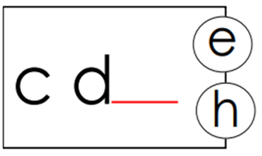
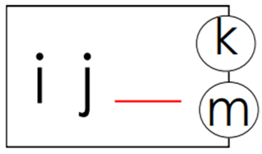
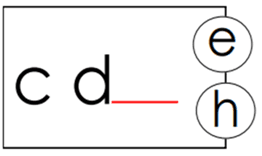

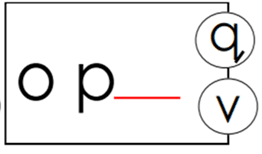

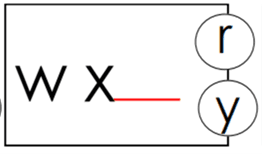

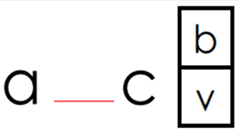


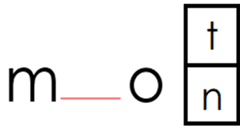
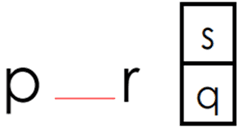

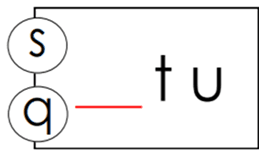






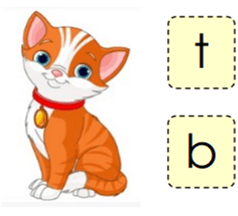
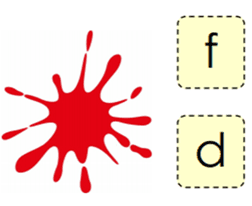


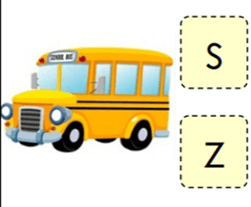
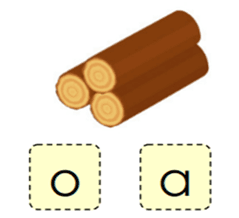

 Encircle the letter of the correct answer that comes before, between and after.1. Battle of Lexington At the Battle of Lexington in 1775, British soldiers and colonial militia faced each other on the village green. A shot was fired, but no one knows for sure who fired first. Even so, this moment is often called the beginning of the American Revolution. Why is the Battle of Lexington still considered the start of the American Revolution, even though it is unclear who fired the first shot? A. It marked the first time colonists and British soldiers fought in open battle B. It proved that colonists planned the war long before the fighting began C. It showed that British soldiers were fully responsible for starting the war D. It confirmed that colonists had already declared independence from Britain 2. Battle of Concord After the fighting at Lexington, British troops marched to Concord to destroy colonial supplies. Instead, colonial militia gathered and fought back, forcing the British to retreat toward Boston. Why is the Battle of Concord considered an important turning point in the early American Revolution? A. It showed that colonial militias could organize and successfully push back British troops B. It proved that the British army had already lost control of all the colonies C. It confirmed that the colonies had officially declared independence from Britain D. It demonstrated that foreign countries were already helping the colonial forces 3. Second Continental Congress Much of the early violent conflict between colonists and British soldiers took place in Boston. After fighting broke out at Lexington and Concord near Boston, colonial leaders met at the Second Continental Congress in 1775 to decide what to do next. Which answer best describes the main actions taken by the Second Continental Congress? A. They created an army, chose a leader, and tried to avoid war with Britain B. They declared independence, wrote the Constitution, and ended the war C. They raised taxes, formed a monarchy, and supported British rule D. They ended slavery, gave women rights, and expanded voting laws 4. Olive Branch Petition In 1775, colonial leaders sent a letter called the Olive Branch Petition to King George III of Britain. Based on this situation, what was the main purpose of the Olive Branch Petition sent to the king? A. To ask the king to restore peace between both sides B. To declare independence from Britain and begin a new nation C. To request help from foreign countries in the war effort D. To organize protests against British taxes across the colonies 5. Battle of Bunker Hill On June 17, 1775, during the Battle of Bunker Hill in Boston, colonial forces fought against the British on a hill overlooking the city. The fighting was intense and led to heavy losses on both sides. Which statement best explains why the Battle of Bunker Hill was an important battle in the war? A. The colonists won the battle, showing they were stronger than British forces B. The colonists won the battle, showing the British that the war would be short and easy for the colonists C. The British won the battle, showing the war would be difficult and costly for both sides D. The British won the battle, showing British forces could defeat the colonists easily 6. Pamphlets During the American Revolution, pamphlets were short printed writings that were inexpensive to produce and often written in everyday language so many colonists could read them. How did these features of pamphlets most affect their role in the American Revolution? A. They helped spread ideas widely, allowing more colonists to form and share opinions B. They limited ideas to educated leaders, keeping most colonists uninvolved C. They replaced newspapers entirely, becoming the only source of information D. They prevented disagreement, causing most colonists to think the same way 7. Thomas Paine’s Common Sense In 1776, Thomas Paine published Common Sense, a widely read piece of writing about the relationship between the colonies and Britain. How did this pamphlet most influence colonial thinking during the American Revolution? A. It encouraged colonists to support independence from Britain B. It convinced colonists to remain loyal to the British government C. It explained how colonial armies should organize attacks D. It described laws colonists were expected to follow 8. Declaration of Independence In July 1776, the Declaration of Independence listed complaints against King George III and explained the colonists’ ideas about government and rights. How do these parts of the Declaration of Independence work together to support the colonists’ decision? A. They connect ideas about rights to real examples, justifying separation from Britain B. They describe past events in detail, showing how the war had already ended C. They list future plans for government, explaining how leaders would be chosen D. They organize military actions, showing how the colonies planned to win 9. Washington Crosses the Delaware and Battle of Trenton In December 1776, George Washington led his army across the Delaware River and launched a surprise attack on Hessian mercenaries in Trenton. Which statement best explains why Washington’s crossing of the Delaware and the attack on Trenton was an important turning point in the war? A. It defeated British forces completely, ending the war in a short time B. It boosted morale, helping discouraged soldiers choose to keep fighting C. It brought foreign allies into the war, adding support for the colonies D. It led to independence, allowing the colonies to form a new nation 10. Battle of Saratoga In 1777, American forces defeated the British at the Battle of Saratoga, a major event during the American Revolution. Which statement best explains why the Battle of Saratoga was an important turning point in the war? A. It brought French support, helping Americans gain a strong advantage in the war B. It ended the war quickly, forcing Britain to surrender all control in the colonies C. It improved army training, helping soldiers become more skilled in future battles D. It changed leadership roles, causing new generals to take control of the army 11. Battle of Yorktown In 1781, American forces surrounded British troops at Yorktown, leading to a major moment in the American Revolution. Which statement best explains why the Battle of Yorktown was an important event in the war? A. French forces helped the Americans win, leading to the end of major fighting in the war B. Italian forces helped the British win, leading to a final victory over the American army C. German forces switched sides and helped the Americans win, leading to a final defeat for British troops D. French forces helped the British win, leading to a complete end of the war in the colonies 12. Treaty of Paris After the Battle of Yorktown, British public opinion turned against the war, and peace negotiations began. In 1783, American leaders signed the Treaty of Paris, which included agreements between the United States and Britain. Which statement best explains how the Treaty of Paris reflected the outcome of the American Revolution? A. Both sides made agreements, recognizing independence B. Americans gained independence, taking land without agreements C. British leaders kept control, ending the war with power D. Both sides refused compromise, continuing the warAlexander Hamilton, a key figure in the founding of the United States, served as the first Secretary of the Treasury under President George Washington. Aaron Burr, on the other hand, was the sitting Vice President under Thomas Jefferson at the time of the duel. The animosity between Hamilton and Burr was well-documented, stemming from political disagreements and personal slights over the years. The Duel Date and Location: The duel took place on July 11, 1804, in Weehawken, New Jersey, a common site for duels due to its less strict enforcement of anti-dueling laws compared to New York. Cause: The immediate cause of the duel was a series of letters and meetings between intermediaries after Hamilton allegedly insulted Burr at a dinner, which was later reported in a newspaper. Burr demanded an apology; Hamilton refused, leading to the challenge. The Event: On the morning of the duel, both men, along with their seconds and a doctor, rowed across the Hudson River to the dueling ground. The exact events are a matter of historical debate, but it is generally believed that Hamilton fired his shot into the air, adhering to a principle of honor without intent to kill. Burr, however, aimed directly at Hamilton, hitting him in the abdomen. Outcome: Hamilton was severely wounded and transported back to New York City, where he died the following day, surrounded by family and friends5. Aftermath Public Reaction: The news of Hamilton's death caused widespread grief and indignation. Angelica Schuyler Church, Hamilton's sister-in-law, expressed the communal sorrow in a letter, highlighting the shock and consternation that gripped the town5. Impact on Burr: Although Burr was never tried for the duel, his political career suffered greatly. He became a pariah in many circles and faced various legal and financial troubles in the years that followed. Historical Significance: The duel is often cited as a turning point in American political culture, highlighting the dangers of political rivalry and the need for civility in discourse. Conclusion The duel between Alexander Hamilton and Aaron Burr remains a poignant reminder of the intense personal and political conflicts that shaped the early years of the United States. It underscores the tragic potential of unchecked animosity and the importance of reconciliation and dialogue in a democratic society.1. What is the meaning of the word "Izhaar"? A) To hide the sound B) To make it clear C) To change the sound D) To merge two letters 2. Which part of the body is used to pronounce Izhaar Halqi letters? A) The lips B) The tongue only C) The throat D) The nose 3. How many letters are there for Izhaar Halqi? A) 4 letters B) 6 letters C) 15 letters D) 2 letters 4. When do we apply the rule of Izhaar Halqi? A) When any letter comes after Meem Sakinah B) When an Izhaar letter comes after Noon Sakinah or Tanween C) When we see a Shaddah D) Only at the end of a Surah 5. Which of the following is NOT an Izhaar Halqi letter? A) Hamzah (أ) B) Haa (هـ) C) Baa (ب) D) 'Ayn (ع) 6. Which pair of letters comes from the deepest part of the throat (closest to the chest)? A) ع and ح B) غ and خ C) ء and هـ D) ق and ك 7. When you do Izhaar, do you make a long Ghunnah (nasal sound)? A) Yes, a very long one B) No, we pronounce the Noon clearly without extra Ghunnah C) Only if we want to D) Yes, for 2 counts 8. Which letter comes from the top part of the throat (closest to the mouth)? A) Khaad (خ) B) Haa (ح) C) Hamzah (أ) D) Meem (م) 9. What are the middle throat letters? A) ء and هـ B) ع and ح C) غ and خ D) ت and د 10. In the phrase "مَنْ عَمِلَ" (Man 'Amila), which rule is applied? A) Idghaam B) Ikhfaa C) Izhaar Halqi D) Iqlaab 11. Why do we do Izhaar in "مَنْ عَمِلَ"? A) Because the letter 'Ayn (ع) comes after Noon Sakinah B) Because it is easy to say C) Because Meem has a Fathah D) Because the Noon has a Shaddah 12. What does "Noon Sakinah" mean? A) A Noon with a Fathah B) A Noon with a Kasrah C) A Noon with no vowel (has a Sukoon) D) A double Noon 13. What is Tanween? A) A double vowel sign (Fathatain, Kasratain, Dammatain) at the end of a word D) A small Meem on top of a letter C) A stretching sign D) A stop sign 14. Can Izhaar Halqi happen within a single word? A) No, never B) Yes, it can happen in one word or between two words C) Only in short words D) Only in Surah Al-Fatihah 15. Look at the word "وَانْحَرْ" (Wanhar). What is the Izhaar letter here? A) Waw (و) B) Noon (ن) C) Haa (ح) D) Raa (ر) 16. In the Quran, what sign is usually placed on the Noon Sakinah to show it is Izhaar? A) A small circle or head of a Khaa (Sukoon sign) B) A Shaddah C) Nothing at all D) A little Meem 17. What happens to the Tanween vowels when there is Izhaar? A) They are written far apart from each other B) They are aligned perfectly parallel above/below each other C) One vowel is deleted D) They change color 18. Which of the following words contains an Izhaar Halqi rule? A) أَنْعَمْتَ B) مَنْ يَقُولُ C) مِنْ بَعْدِ D) كُنْتُمْ 19. Choose the group that contains ONLY Izhaar Halqi letters: A) ي ، ر ، م ، ل B) ء ، هـ ، ع ، ح ، غ ، خ C) ك ، ق ، ج ، د D) ب ، ت ، ث 20. In the phrase "عَذَابٌ أَلِيمٌ" ( 'Adhaabun Aleem), why is there Izhaar? A) Because Tanween is followed by Hamzah (أ) B) Because it ends with Meem C) Because the word is long D) Because of the letter Laam 21. What is the correct way to read "مِنْ حَكِيمٍ"? A) Mi---hakeem (hide the Noon) B) Min Hakeem (read Noon clearly and quickly) C) Mih-hakeem (mix them together) D) Mim-hakeem (change Noon to Meem) 22. "Ghain" (غ) and "Khaa" (خ) come from which part of the throat? A) Deep throat B) Middle throat C) Top throat D) The lips 23. If a Noon Sakinah is followed by the letter "هـ" (Haa), how do we pronounce it? A) Clear Noon B) Hidden Noon C) Double Noon D) Silent Noon 24. Which of these is a middle throat letter? A) ء B) خ C) ح D) هـ 25. Complete the sentence: Izhaar Halqi means to pronounce the Noon Sakinah or Tanween cleanly from its articulation point without any ________. A) Breathing B) Vowel (Harakah) C) Extra Ghunnah (nasalization) D) StoppingMYTH The British helped the Jews displace the native Arab population of Palestine. FACT Herbert Samuel, a British Jew who served as the first High Commissioner of Palestine, placed restrictions on Jewish immigration “in the ‘interests of the present population’ and the ‘absorptive capacity’ of the country.”1 The influx of Jewish settlers was said to force the Arab fellahin (native peasants) from their land. This was when less than a million people lived in an area that now supports more than nine million. The British limited the absorptive capacity of Palestine when, in 1921, Colonial Secretary Winston Churchill severed nearly four-fifths of Palestine—some thirty-five thousand square miles—to create a new Arab entity, Transjordan. As a consolation prize for the Hejaz and Arabia (which are both now Saudi Arabia) going to the Saud family, Churchill rewarded Sharif Hussein’s son Abdullah for his contribution to the war against Turkey by installing him as Transjordan’s emir. The British went further and placed restrictions on Jewish land purchases in what remained of Palestine. By 1949, the British had allotted 87,500 acres of the 187,500 acres of cultivable land to Arabs and only 4,250 acres to Jews. This contradicted Article 6 of the Mandate which stated that “the Administration of Palestine…shall encourage, in cooperation with the Jewish Agency…close settlement by Jews on the land, including State lands and waste lands not acquired for public purposes.”2 Ultimately, the British admitted that the argument about the country’s absorptive capacity was specious. The Peel Commission said, “The heavy immigration in the years 1933–36 would seem to show that the Jews have been able to enlarge the absorptive capacity of the country for Jews.”3 MYTH The British allowed Jews to flood Palestine while Arab immigration was tightly controlled. FACT The British response to Jewish immigration set a precedent of appeasing the Arabs, which was followed for the duration of the Mandate. The British restricted Jewish immigration while allowing Arabs to enter the country freely. Apparently, London did not feel that a flood of Arab immigrants would affect the country’s “absorptive capacity.” During World War I, the Jewish population in Palestine declined because of the war, famine, disease, and expulsion by the Turks. In 1915, approximately 83,000 Jews lived in Palestine among 590,000 Muslim and Christian Arabs. According to the 1922 census, the Jewish population was 83,000, while the Arabs numbered 643,000.4 Thus, the Arab population grew exponentially while that of the Jews stagnated. In the mid-1920s, Jewish immigration to Palestine increased primarily because of anti-Jewish economic legislation in Poland and Washington’s imposition of restrictive quotas.5 The record number of immigrants in 1935 (see table) was a response to the growing persecution of Jews in Nazi Germany. The British administration considered this number too large, however, so the Jewish Agency was informed that less than one-third of the quota it asked for would be approved in 1936.6 The British gave in further to Arab demands by announcing in the 1939 White Paper that an independent Arab state would be created within ten years and that Jewish immigration was to be limited to 75,000 for the next five years, after which it was to cease altogether. It also forbade land sales to Jews in 95% of the territory of Palestine. The Arabs, nevertheless, rejected the proposal. Jewish Immigration to Palestine7 1919 1,806 1931 4,075 1920 8,223 1932 12,533 1921 8,294 1933 37,337 1922 8,685 1934 45,267 1923 8,175 1935 66,472 1924 13,892 1936 29,595 1925 34,386 1937 10,629 1926 13,855 1938 14,675 1927 3,034 1939 31,195 1928 2,178 1940 10,643 1929 5,249 1941 4,592 1930 4,944 By contrast, throughout the Mandatory period, Arab immigration was unrestricted. In 1930, the Hope Simpson Commission, sent from London to investigate the 1929 Arab riots, said the British practice of ignoring the uncontrolled illegal Arab immigration from Egypt, Transjordan, and Syria had the effect of displacing the prospective Jewish immigrants.8 The British governor of the Sinai from 1922 to 1936 observed, “This illegal immigration was not only going on from the Sinai, but also from Transjordan and Syria, and it is very difficult to make a case out for the misery of the Arabs if at the same time their compatriots from adjoining states could not be kept from going in to share that misery.”9 The Peel Commission reported in 1937 that the “shortfall of land is…due less to the amount of land acquired by Jews than to the increase in the Arab population.”10 MYTH The British changed their policy to allow Holocaust survivors to settle in Palestine. FACT The gates of Palestine remained closed for the duration of the war, stranding hundreds of thousands of Jews in Europe, many of whom became victims of Hitler’s “Final Solution.” After the war, the British refused to allow the survivors of the Nazi nightmare to find sanctuary in Palestine. On June 6, 1946, President Truman urged the British government to relieve the suffering of the Jews confined to displaced persons camps in Europe by immediately accepting 100,000 Jewish immigrants. Britain’s foreign minister Ernest Bevin replied sarcastically that the United States wanted displaced Jews to immigrate to Palestine “because they did not want too many of them in New York.”11 Some Jews reached Palestine, many smuggled in on dilapidated ships organized by the Haganah. Between August 1945 and the establishment of the State of Israel in May 1948, sixty-five “illegal” immigrant ships, carrying 69,878 people, arrived from European shores. In August 1946, however, the British began to intern those they caught in camps on Cyprus. Approximately 50,000 people were detained in the camps, and 28,000 remained imprisoned when Israel declared independence.12 MYTH As the Jewish population grew, the plight of the Palestinian Arabs worsened. FACT In July 1921, Hasan Shukri, the mayor of Haifa and president of the Muslim National Associations, sent a telegram to the British government in reaction to a delegation of Palestinians that went to London to try to stop the implementation of the Balfour Declaration. Shukri wrote: We are certain that without Jewish immigration and financial assistance there will be no future development of our country as may be judged from the fact that the towns inhabited in part by Jews such as Jerusalem, Jaffa, Haifa, and Tiberias are making steady progress while Nablus, Acre, and Nazareth where no Jews reside are steadily declining.13 The Jewish population increased by 470,000 between World War I and World War II, while the non-Jewish population rose by 588,000.14 The permanent Arab population increased by 120% between 1922 and 1947.15 This rapid growth of the Arab population was a result of several factors. One was immigration from neighboring states—constituting 37% of the total immigration to pre-state Israel—by Arabs who wanted to take advantage of the higher standard of living the Jews had made possible.16 The Arab population also grew because of the improved living conditions created by the Jews as they drained malarial swamps and brought improved sanitation and health care to the region. Thus, for example, the Muslim infant mortality rate fell from 201 per thousand in 1925 to 94 per thousand in 1945, and life expectancy rose from 37 years in 1926 to 49 in 1943.17 The Arab population increased the most in cities where large Jewish populations had created new economic opportunities. From 1922–1947, the non-Jewish population increased by 290% in Haifa, 131% in Jerusalem, and 158% in Jaffa. The growth in Arab towns was more modest: 42% in Nablus, 78% in Jenin, and 37% in Bethlehem.18 MYTH Jews stole Arab land. FACT Despite the growth in their population, the Arabs continued to assert they were being displaced. From the beginning of World War I, however, part of Palestine’s land was owned by absentee landlords who lived in Cairo, Damascus, and Beirut. About 80% of the Palestinian Arabs were debt-ridden peasants, semi-nomads, and Bedouins.19 Jews went out of their way to avoid purchasing land in areas where Arabs might be displaced. They sought land that was largely uncultivated, swampy, cheap, and—most important—without tenants. In 1920, Labor Zionist leader David Ben-Gurion expressed his concern about the Arab fellahin, whom he viewed as “the most important asset of the native population.” He insisted that “under no circumstances must we touch land belonging to fellahs or worked by them.” Instead, he advocated helping liberate them from their oppressors. “Only if a fellah leaves his place of settlement,” Ben-Gurion added, “should we offer to buy his land, at an appropriate price.”20 Jews only began to purchase cultivated land after buying all the uncultivated territory. Many Arabs were willing to sell because of the migration to coastal towns and because they needed money to invest in the citrus industry.21 When John Hope Simpson arrived in Palestine in May 1930, he observed, “They [the Jews] paid high prices for the land and, in addition, they paid to certain of the occupants of those lands a considerable amount of money which they were not legally bound to pay.”22 In 1931, Lewis French conducted a survey of landlessness for the British government and offered new plots to any Arabs who had been “dispossessed.” British officials received more than 3,000 applications, of which 80% were ruled invalid by the government’s legal adviser because the applicants were not landless Arabs. This left only about 600 landless Arabs, 100 of whom accepted the government land offer.23 In April 1936, a new outbreak of Arab attacks on Jews was instigated by local Palestinian leaders who were later joined by Arab volunteers led by a Syrian guerrilla named Fawzi al-Qawuqji, the commander of the Arab Liberation Army. By November, when the British finally sent a new commission headed by Lord Peel to investigate, 89 Jews had been killed and more than 300 wounded.24 The Peel Commission’s report found that Arab complaints about Jewish land acquisition were baseless. It pointed out that “much of the land now carrying orange groves was sand dunes or swamp and uncultivated when it was purchased…There was at the time of the earlier sales little evidence that the owners possessed either the resources or training needed to develop the land.”25 Moreover, the Commission found the shortage was “due less to the amount of land acquired by Jews than to the increase in the Arab population.” The report concluded that the presence of Jews in Palestine, along with the work of the British administration, had resulted in higher wages, an improved standard of living, and ample employment opportunities.26 It is made quite clear to all, both by the map drawn up by the Simpson Commission and by another compiled by the Peel Commission, that the Arabs are as prodigal in selling their land as they are in useless wailing and weeping (emphasis in the original). —Transjordan’s king Abdullah27 Even at the height of the Arab revolt in 1938 (which began in April 1936 with the murder of two Jews by Arabs and the subsequent murder of two Arab workers by members of the Jewish underground28), the British high commissioner to Palestine believed the Arab landowners were complaining about sales to Jews to drive up prices for lands they wished to sell. Many Arab landowners had been so terrorized by Arab rebels they decided to leave Palestine and sell their property to the Jews.29 The Jews paid exorbitant prices to wealthy landowners for small tracts of arid land. “In 1944, Jews paid between $1,000 and $1,100 per acre in Palestine, mostly for arid or semiarid land; in the same year, rich black soil in Iowa was selling for about $110 per acre.”30 By 1947, Jewish holdings in Palestine amounted to about 463,000 acres. Approximately 45,000 were acquired from the mandatory government, 30,000 were bought from various churches, and 387,500 were purchased from Arabs. Analyses of land purchases from 1880 to 1948 show that 73% of Jewish plots were purchased from large landowners, not poor fellahin.31 Many leaders of the Arab nationalist movement, including members of the Muslim Supreme Council, and the mayors of Gaza, Jerusalem, and s sold land to the Jews. As’ad el-Shuqeiri, a Muslim religious scholar and father of Palestine Liberation Organization chairman Ahmed Shuqeiri, took Jewish money for his land. Even King Abdullah leased land to the Jews.32 MYTH The British helped the Palestinians to live peacefully with the Jews. FACT In 1921, Haj Amin el-Husseini first began to organize fedayeen (“one who sacrifices himself”) to terrorize Jews. El-Husseini hoped to duplicate the success of Kemal Atatürk in Turkey by driving the Jews out of Palestine just as Kemal had driven the invading Greeks from his country.33 Arab radicals gained influence because the British administration was unwilling to take effective action against them until they began a revolt against British rule. Colonel Richard Meinertzhagen, former head of British military intelligence in Cairo, and later chief political officer for Palestine and Syria, wrote in his diary that British officials “incline towards the exclusion of Zionism in Palestine.” The British encouraged the Palestinians to attack the Jews. According to Meinertzhagen, Col. Bertie Harry Waters-Taylor (financial adviser to the military administration in Palestine 1919–23) met with el-Husseini in 1920, a few days before Easter, and told him that “he had a great opportunity at Easter to show the world…that Zionism was unpopular not only with the Palestine administration but in Whitehall.” He added that “if disturbances of sufficient violence occurred in Jerusalem at Easter, both General [Louis] Bols [chief administrator in Palestine, 1919–20] and General [Edmund] Allenby [commander of the Egyptian force, 1917–19, then high commissioner of Egypt] would advocate the abandonment of the Jewish Home. Waters-Taylor explained that freedom could only be attained through violence.”34 El-Husseini took the colonel’s advice and instigated a riot. The British withdrew their troops and the Jewish police from Jerusalem, allowing the Arab mob to attack Jews and loot their shops. Because of el-Husseini’s overt role in instigating the pogrom, the British decided to arrest him. He escaped, however, and was sentenced to ten years in absentia. A year later, some British Arabists convinced High Commissioner Herbert Samuel to pardon el-Husseini and to appoint him Mufti (a cleric in charge of Jerusalem’s Islamic holy places). By contrast, Vladimir Jabotinsky and several followers, who had formed a Jewish defense organization during the unrest, were sentenced to 15 years. They were released a few months later.35 Samuel met with el-Husseini on April 11, 1921, and was assured “that the influences of his family and himself would be devoted to tranquility.” Three weeks later, riots in Jaffa and elsewhere left forty-three Jews dead.36 El-Husseini consolidated his power and took control of all Muslim religious funds in Palestine. He used his authority to gain control over the mosques, the schools, and the courts. No Arab could reach an influential position without being loyal to the Mufti. His power was so absolute that “no Muslim in Palestine could be born or die without being beholden to Haj Amin.”37 The Mufti’s henchmen also ensured he would have no opposition by systematically killing Palestinians who discussed cooperation with the Jews from rival clans. As the spokesman for Palestinian Arabs, el-Husseini did not ask that Britain grant them independence. On the contrary, in a letter to Churchill in 1921, he demanded that Palestine be reunited with Syria and Transjordan.38 The Arabs found rioting an effective political tool because of the lax British response toward violence against Jews. In handling each riot, the British prevented Jews from protecting themselves but made little effort to prevent the Arabs from attacking them. After each outbreak, a British commission of inquiry would try to establish the cause of the violence. The conclusion was always the same: The Arabs feared being displaced by the Jews. To stop the rioting, the commissions would recommend that restrictions be placed on Jewish immigration. Thus, the Arabs learned they could always stop the influx of Jews by staging riots. This cycle began after a series of riots in May 1921. After failing to protect the Jewish community from Arab mobs, the British appointed the Haycraft Commission to investigate the cause of the violence. Although the panel concluded the Arabs had been the aggressors, it rationalized the cause of the attack: “The fundamental cause of the riots was a feeling among the Arabs of discontent with, and hostility to, the Jews, due to political and economic causes, and connected with Jewish immigration, and with their conception of Zionist policy.”39 One consequence of the violence was the institution of a temporary ban on Jewish immigration. The Arab fear of being “displaced” or “dominated” was an excuse for their attacks on Jewish settlers. Note, too, that these riots were not inspired by nationalistic fervor—nationalists would have rebelled against their British overlords—they were motivated by economics, the radical Islamic views of the Mufti, and misunderstanding. In 1929, Arab provocateurs convinced the masses that the Jews had designs on the Temple Mount (a tactic still used today to incite violence). A Jewish religious observance at the Western Wall, which forms a part of the Temple Mount, served as a pretext for rioting by Arabs against Jews, which spilled out of Jerusalem into other villages and towns, including Safed and Hebron. Again, the British administration made no effort to prevent the violence, and, after it began, the British did nothing to protect the Jewish population. After six days of mayhem, the British finally brought troops in to quell the disturbance. By this time, most of Hebron’s Jews had fled or been killed. In all, 133 Jews were killed and 399 wounded in the pogroms.40 After the riots, the British ordered an investigation, resulting in the Passfield White Paper. It said the “immigration, land purchase and settlement policies of the Zionist Organization were already or were likely to become, prejudicial to Arab interests. It understood the mandatory government’s obligation to the non-Jewish community to mean that Palestine’s resources must be primarily reserved for the growing Arab economy.”41 This meant it was necessary to restrict Jewish immigration and land purchases. MYTH The Mufti was not a Nazi collaborator. FACT In 1941, Haj Amin al-Husseini, the Mufti of Jerusalem, fled to Germany and met with Adolf Hitler, Heinrich Himmler, Joachim Von Ribbentrop, and other Nazi leaders. He wanted to persuade them to extend the Nazis’ anti-Jewish program to the Arab world. The Mufti sent Hitler fifteen drafts of declarations he wanted Germany and Italy to make concerning the Middle East. One called on the two countries to declare the illegality of the Jewish home in Palestine. He also asked the Axis powers to “accord to Palestine and to other Arab countries the right to solve the problem of the Jewish elements in Palestine and other Arab countries in accordance with the interest of the Arabs, and by the same method that the question is now being settled in the Axis countries.”42 In November 1941, the Mufti met with Hitler, who told him the Jews were his foremost enemy. The Nazi dictator rebuffed the Mufti’s requests for a declaration in support of the Arabs, however, telling him the time was not right. The Mufti offered Hitler his “thanks for the sympathy which he had always shown for the Arab and especially Palestinian cause, and to which he had given clear expression in his public speeches.” He added, “The Arabs were Germany’s natural friends because they had the same enemies as had Germany, namely…the Jews.” Hitler told the Mufti he opposed the creation of a Jewish state and that Germany’s objective was destroying the Jewish element in the Arab sphere.43 In 1945, Yugoslavia sought to indict the Mufti as a war criminal for his role in recruiting twenty thousand Muslim volunteers for the SS, who participated in the killing of Jews in Croatia and Hungary. He escaped French detention in 1946, however, and continued his fight against the Jews from Cairo and later Beirut where he died in 1974. MYTH The bombing of the King David Hotel was part of a deliberate terror campaign against civilians. FACT British troops seized the Jewish Agency compound on June 29, 1946, and confiscated large quantities of documents. At about the same time, more than 2,500 Jews from all over Palestine were arrested. A week later, news of a massacre of 40 Jews in a pogrom in Poland reminded the Jews of Palestine how Britain’s restrictive immigration policy had condemned thousands to death. In response to the British provocations, and a desire to demonstrate that the Jews’ spirit could not be broken, the United Resistance Movement planned to bomb the King David Hotel, which housed the British military command and the Criminal Investigation Division in addition to hotel guests. The Haganah pulled out of the plot and left it up to the Irgun. Irgun leader Menachem Begin stressed his desire to avoid civilian casualties and the plan was to warn the British so they would evacuate the building before it was blown up. Three telephone calls were placed on July 22, 1946, one to the hotel, another to the French Consulate, and a third to the Palestine Post warning that explosives in the King David Hotel would soon be detonated. The call to the hotel was received and ignored. Begin quotes one British official who supposedly refused to evacuate the building, saying, “We don’t take orders from the Jews.”44 As a result, when the bombs exploded, the casualty toll was high: 91 killed and 45 injured. Among the casualties were 15 Jews. Few people in the main part of the hotel were injured.45 For decades, the British denied they had been warned. In 1979, however, a member of the British Parliament provided the testimony of a British officer who heard other officers in the King David Hotel bar joking about a Zionist threat to the headquarters. The officer who overheard the conversation immediately left the hotel and survived.46 In contrast to Arab attacks against Jews, which Arab leaders hailed as heroic actions, the Jewish National Council denounced the bombing of the King David.47 1 Aharon Cohen, Israel and the Arab World, (NY: Funk and Wagnalls, 1970), p. 172Generate all of these 25 questions Part A: Each correct answer is worth 5. 1. The regular pentagon shown has a side length of 2 cm. The perimeter of the pentagon is (A) 2 cm (B) 4 cm (C) 6 cm (D) 8 cm (E) 10 cm 2 cm 2. The faces of a cube are labelled with 1, 2, 3, 4, 5, and 6 dots. Three of the faces are shown. What is the total number of dots on the other three faces? (A) 6 (B) 8 (C) 10 (D) 12 (E) 15 3. The equation that best represents \a number increased by _ve equals 15" is (A) n 5 = 15 (B) n _ 5 = 15 (C) n + 5 = 15 (D) n + 15 = 5 (E) n _ 5 = 15 4. The line graph shows the number of bobbleheads sold at a store each year. The sale of bobbleheads increased the most between (A) 2016 and 2017 (B) 2017 and 2018 (C) 2018 and 2019 (D) 2019 and 2020 (E) 2020 and 2021 Number of 2016 2017 2018 2019 2020 Year Sale of Bobbleheads 2021 Bobbleheads 20 40 60 80 5. Starting at 72, Aryana counts down by 11s: 72; 61; 50; : : : . What is the last number greater than 0 that Aryana will count? (A) 4 (B) 5 (C) 6 (D) 7 (E) 8 6. In the diagram, \ABC = 90_. The value of x is (A) 68 (B) 23 (C) 56 (D) 28 (E) 26 Day of the Week 44° x° A B C x° 7. Which of the following values is closest to zero? (A) 1 (B) 5 4 (C) 12 (D) 4 5 (E) 0:9 Grade 8 8. A jar contains 267 quarters. One quarter is worth $0.25. How many quarters must be added to the jar so that the total value of the quarters is $100.00? (A) 33 (B) 53 (C) 103 (D) 133 (E) 153 9. A package of 8 greeting cards comes with 10 envelopes. Kirra has 7 cards but no envelopes. What is the smallest number of packages that Kirra needs to buy to have more envelopes than cards? (A) 3 (B) 4 (C) 5 (D) 6 (E) 7 10. For the points in the diagram, which statement is true? (A) e > c (B) b < d (C) f > b (D) a < e (E) a > c y x (e, f ) (a, b) (c, d ) Part B: Each correct answer is worth 6. 11. The 26 letters of the English alphabet are listed in an in_nite, repeating loop: ABCDEFGHIJKLMNOPQRSTUVWXY ZABC : : : What is the 258th letter in this sequence? (A) V (B) W (C) X (D) Y (E) Z 12. A public holiday is always celebrated on the third Wednesday of a certain month. In that month, the holiday cannot occur on which of the following days? (A) 16th (B) 22nd (C) 18th (D) 19th (E) 21st 13. A circular spinner is divided into three sections. An arrow is attached to the centre of the spinner. The arrow is spun once. The probability that the arrow stops on the largest section is 50%. The probability it stops on the next largest section is 1 in 3. The probability it stops on the smallest section is (A) 1 4 (B) 2 5 (C) 1 6 (D) 2 7 (E) 3 10 14. A positive number is divisible by both 3 and 4. The tens digit is greater than the ones digit. How many positive two-digit numbers have this property? (A) 4 (B) 5 (C) 6 (D) 7 (E) 8 15. A rectangular pool measures 20 m by 8 m. There is a 1 m wide walkway around the outside of the pool, as shown by the shaded region. The area of the walkway is (A) 56 m2 (B) 60 m2 (C) 29 m2 (D) 52 m2 (E) 50 m2 20 m 8 m 1 m Grade 8 16. The results of asking 50 students if they participate in music or sports are shown in the Venn diagram. What percentage of the 50 students do not participate in music and do not participate in sports? (A) 0% (B) 80% (C) 20% (D) 70% (E) 40% Music Sports 15 5 20 17. There are 2 3 as many golf balls in Bin F as in Bin G. If there are a total of 150 golf balls, how many fewer golf balls are in Bin F than in Bin G? (A) 15 (B) 30 (C) 50 (D) 60 (E) 90 18. In the sequence shown, Figure 1 is formed using 7 squares. Each _gure after Figure 1 has 5 more squares than the previous _gure. What _gure has 2022 squares? (A) Figure 400 (B) Figure 402 (C) Figure 404 (D) Figure 406 (E) Figure 408 Figure 1 Figure 2 Figure 3 19. Mateo's 300 km trip from Edmonton to Calgary passed through Red Deer. Mateo started in Edmonton at 7 a.m. and drove until stopping for a 40 minute break in Red Deer. Mateo arrived in Calgary at 11 a.m. Not including the break, what was his average speed for the trip? (A) 83 km/h (B) 94 km/h (C) 90 km/h (D) 95 km/h (E) 64 km/h 20. Equilateral triangle ABC has sides of length 4. The midpoint of BC is D, and the midpoint of AD is E. The value of EC2 is (A) 7 (B) 6 (C) 6:25 (D) 8 (E) 10 Part C: Each correct answer is worth 8. 21. The positive factors of 6 are 1, 2, 3, and 6. There are two perfect squares less than 100 that have exactly _ve positive factors. What is the sum of these two perfect squares? (A) 177 (B) 80 (C) 145 (D) 52 (E) 97 22. In the list p; q; r; s; t; u; v, each letter represents a positive integer. The sum of the values of each group of three consecutive letters in the list is 35. If q + u = 15, then p + q + r + s + t + u + v is (A) 85 (B) 70 (C) 80 (D) 90 (E) 75 Grade 8 23. The net shown is folded to form a cube. An ant walks from face to face on the cube, visiting each face exactly once. For example, ABCFED and ABCEFD are two possible orders of faces the ant visits. If the ant starts at A, how many possible orders are there? (A) 24 (B) 48 (C) 32 (D) 30 (E) 40 A D B C E F 24. The number 385 is an example of a three-digit number for which one of the digits is the sum of the other two digits. How many numbers between 100 and 999 have this property? (A) 144 (B) 126 (C) 108 (D) 234 (E) 64 25. Student A, Student B, and Student C have been hired to help scientists develop a new avour of juice. There are 4200 samples to test. Each sample either contains blueberry or does not. Each student is asked to taste each sample and report whether or not they think it contains blueberry. Student A reports correctly on exactly 90% of the samples containing blueberry and reports correctly on exactly 88% of the samples that do not contain blueberry. The results for all three students are shown below. Student A Student B Student C Percentage correct on samples 90% 98% (2m)% containing blueberry Percentage correct on samples 88% 86% (4m)% not containing blueberry Student B reports 315 more samples as containing blueberry than Student A. For some positive integers m, the total number of samples that the three students report as containing blueberry is equal to a multiple of 5 between 8000 and 9000. The sum of all such values of m is (A) 45 (B) 36 (C) 24 (D) 27 (E) 29refreshment (n): (small amounts of food and drink ( Refreshments will be available during the interval.) stimulant (n): a substance which temporarily arouses physiological or organic activity ( Caffeine is a natural stimulant .) reinforcement (n): the act of making sth stronger / (plural) soldiers sent to join an army to make it stronger ( Constructors have been hired to add reinforcement to the foundations of the old bridge.) initiative (n): the ability to make decisions without waiting to be told what to do (Being a successful entrepreneur requires one to have great initiative.) inhibition (n): a shy or nervous feeling that stops you from expressing your real feelings (She drinks alcohol at parties to get over her inhibitions.) initiation (n): a ceremony, ritual, test, or period of instruction with which a new member is admitted to an organization or office (The initiation period for new employees lasts approximately six weeks.) initial (n): the first letter of a name, esp. when used to represent a name (Do you know what Ms Rowling's initials, J and K, stand for?) concise (adj): short and clear, expressing what needs to be said without unnecessary words (She gave a concise overview of the points she was about to make in her speech. ) direct (adj): happening or done without involving other people, actions, etc. in between ( You will only be hired if you have direct experience in this field.) devious (adj): not straightforward, sincere and honest about your intentions or motives; shifty (They came up with a devious plan to overthrow the chairman of the company.) circuitous (adj): not straight or direct (The professor gave a circuitous explanation confusing his students.) diluted (adj): (of a liquid) made weaker or less pure by being mixed with sth else( Orange squash should be diluted with water before it is served.) delicate (adj): easily hurt or destroyed.( This silk shirt is too delicate to put in the washing machine.) desolate (adj): extremely sad and feeling lonely. (After the death of his wife he led a desolate life.) diffused (adj): widely spread or scattered; not concentrated/ wordy ( He spoke in such a diffused manner that it was impossible to take notes on his lecture.) might (n): the power, force, or influence held by a person or group (The captive struggled with all of his might and managed to free himself of the chains.) plot (n): a secret plan made by several people to do sth that is wrong, harmful or not legal, esp. to do damage to a person or a government / a storyline ( The plot of the forthcoming Harry Potter book has yet to be revealed.) glaze (n): a thin clear liquid put on objects before they are finished, to give them a shiny surface ( She mixed sugar and lemon to make the glaze of the cake.) plight (n): an unpleasant condition, esp. serious, sad or difficult one ( Last night's documentary dealt with the plight of political asylum seekers.) comprise (v): to consist of be composed of( The final exam is comprised of three parts.)She went by the name of Belisa Crepusculario, not because she had been baptized with that name or given it by her mother, but because she herself had searched until she found the poetry of "beauty" and "twilight" and cloaked herself in it. She made her living selling words. She journeyed through the country from the high cold mountains to the burning coasts, stopping at fairs and in markets where she set up four poles covered by a canvas awning under which she took refuge from the sun and rain to minister to her customers. She did not have to peddle her merchandise because from having wandered far and near, everyone knew who she was. Some people waited for her from one year to the next, and when she appeared in the village with her bundle beneath her arm, they would form a line in front of her stall. Her prices were fair. For five centavos she delivered verses from memory, for seven she improved the quality of dreams, for nine she wrote love letters, for twelve she invented insults for irreconcilable enemies. She also sold stories, not fantasies but long, true stories she recited at one telling, never skipping a word. This is how she carried news from one town to another. People paid her to add a line or two: our son was born, so-and-so died, our children got married, the crops burned in the field. Wherever she went a small crowd gathered around to listen as she began to speak, and that was how they learned about each others' doings, about distant relatives, about what was going on in the civil war. To anyone who paid her fifty centavos in trade, she gave the gift of a secret word to drive away melancholy. It was not the same word for everyone, naturally, because that would have been collective dece it. Each person received his or her own word, with the assurance that no one else would use it that way in this universe or the Beyond. Belisa Crepusculario had been born into a family so poor they did not even have names to give their children. She came into the world and grew up in an inhospitable land where some years the rains became avalanches of water that bore everything away before them and others when not a drop fell from the sky and the sun swelled to fill the horizon and the world became a desert. Until she was twelve, Belisa had no occupation or virtue other than having withstood hunger and the exhaustion of centuries. During one interminable drought, it fell to her to bury four younger brothers and sisters, when she realized that her turn was next, she decided to set out across the 2 plains in the direction of the sea, in hopes that she might trick death along the way. The land was eroded, split with deep cracks, strewn with rocks, fossils of trees and thorny bushes, and skeletons of animals bleached by the sun. From time to time she ran into families who, like her, were heading south, following the mirage of water. Some had begun the march carrying their belongings on their back or in small carts, but they could barely move their own bones, and after a while they had to abandon their possessions. They dragged themselves along painfully, their skin turned to lizard hide and their eyes burned by the reverberating glare. Belisa greeted them with a wave as she passed, but she did not stop, because she had no strength to waste in acts of compassion. Many people fell by the wayside, but she was so stubborn that she survived to cross through that hell and at long last reach the first trickles of water, fine, almost invisible threads that fed spindly vegetation and farther down widened into small streams and marshes. Belisa Crepusculario saved her life and in the process accidentally discovered writing. In a village near the coast, the wind blew a page of newspaper at her feet. She picked up the brittle yellow paper and stood a long while looking at it, unable to determine its purpose, until curiosity overcame her shyness. She walked over to a man who was washing his horse in the muddy pool where she had quenched her thirst. "What is this?" she asked. "The sports page of the newspaper," the man replied, concealing his surprise at her ignorance. The answer astounded the girl, but she did not want to seem rude, so she merely inquired about the significance of the fly tracks scattered across the page. "Those are words, child. Here it says that Fulgencio Barba knocked out El Negro Tiznao in the third round." That was the day Belisa Crepusculario found out that words make their way in the world without a master, and that anyone with a little cleverness can appropriate them and do business with them. She made a quick assessment of her situation and concluded that aside from becoming a prostitute or working as a servant in the kitchens of the rich there were few occupations she was qualified for. It seemed to her that selling words would be an honorable alternative. From that moment on, she worked at that profession, and was never tempted by any other. At the beginning, she offered her merchandise unaware that words could be written outside of newspapers. When she learned otherwise, she calculated the infinite possibilities of her trade and with her savings paid a priest twenty pesos to teach her to read and write, with her three 3 remaining coins she bought a dictionary. She poured over it from A to Z and then threw it into the sea, because it was not her intention to defraud her customers with packaged words. One August morning several years later, Belisa Crepusculario was sitting in her tent in the middle of a plaza, surrounded by the uproar of market day, selling legal arguments to an old man who had been trying for sixteen years to get his pension. Suddenly she heard yelling and thudding hoofbeats. She looked up from her writing and saw, first, a cloud of dust, and then a band of horsemen come galloping into the plaza. They were the Colonel's men, sent under orders of El Mulato, a giant known throughout the land for the speed of his knife and his loyalty to his chief. Both the Colonel and El Mulato had spent their lives fighting in the civil war, and their names were ineradicably linked to devastation and calamity. The rebels swept into town like a stampeding herd, wrapped in noise, bathed in sweat, and leaving a hurricane of fear in their trail. Chickens took wing, dogs ran for their lives, women and children scurried out of sight, until the only living soul left in the market was Belisa Crepusculario. She had never seen El Mulato and was surprised to see him walking toward her. "I'm looking for you," he shouted, pointing his coiled whip at her, even before the words were out, two men rushed her -- knocking over her canopy and shattering her inkwell -- bound her hand and foot, and threw her like a sea bag across the rump of El Mulato's mount. Then they thundered off toward the hills. Hours later, just as Belisa Crepusculario was near death, her heart ground to sand by the pounding of the horse, they stopped, and four strong hands set her down. She tried to stand on her feet and hold her head high, but her strength failed her and she slumped to the ground, sinking into a confused dream. She awakened several hours later to the murmur of night in the camp, but before she had time to sort out the sounds, she opened her eyes and found herself staring into the impatient glare of El Mulato, kneeling beside her. "Well, woman, at last you've come to," he said. To speed her to her senses, he tipped his canteen and offered her a sip of liquor laced with gunpowder. She demanded to know the reason for such rough treatment, and El Mulato explained that the Colonel needed her services. He allowed her to splash water on her face, and then led her to the far end of the camp where the most feared man in all the land was lazing in a hammock strung between two trees. She could not see his face, because he lay in the deceptive shadow of the leaves and the indelible shadow of all his years as a bandit, but she imagined from the way his 4 gigantic aide addressed him with such humility that he must have a very menacing expression. She was surprised by the Colonel's voice, as soft and well-modulated as a professor's. "Are you the woman who sells words?" he asked. "At your service," she stammered, peering into the dark and trying to see him better. The Colonel stood up, and turned straight toward her. She saw dark skin and the eyes of a ferocious puma, and she knew immediately that she was standing before the loneliest man in the world. "I want to be President," he announced. The Colonel was weary of riding across that godforsaken land, waging useless wars and suffering defeats that no subterfuge could transform into victories. For years he had been sleeping in the open air, bitten by mosquitoes, eating iguanas and snake soup, but those minor inconveniences were not why he wanted to change his destiny. What truly troubled him was the terror he saw in people's eyes. He longed to ride into a town beneath a triumphal arch with bright flags and flowers everywhere, he wanted to be cheered, and be given newly laid eggs and freshly baked bread. Men fled at the sight of him, children trembled, and women miscarried from fright, he had had enough, and so he had decided to become President. El Mulato had suggested that they ride to the capital, gallop up to the Palace, and take over the government, the way they had taken so many other things without anyone's permission. The Colonel, however, did not want to be just another tyrant, there had been enough of those before him and, besides, if he did that, he would never win people's hearts. It was his aspiration to win the popular vote in the December elections. "To do that, I have to talk like a candidate. Can you sell me the words for a speech?" the Colonel asked Belisa Crepusculario. She had accepted many assignments, but none like this. She did not dare refuse, fearing that El Mulato would shoot her between the eyes, or worse still, that the Colonel would burst into tears. There was more to it than that, however, she felt the urge to help him because she felt a throbbing warmth beneath her skin, a powerful desire to touch that man, to fondle him, to clasp him in her arms. All night and a good part of the following day, Belisa Crepusculario searched her repertory for words adequate for a presidential speech, closely watched by El Mulato, who could not take his eyes from her firm wanderer's legs and virginal breasts. She discarded harsh, cold words, words 5 that were too flowery, words worn from abuse, words that offered improbable promises, untruthful and confusing words, until all she had left were words sure to touch the minds of men and women's intuition. Calling upon the knowledge she had purchased from the priest for twenty pesos, she wrote the speech on a sheet of paper and then signaled El Mulato to untie the rope that bound her ankles to a tree. He led her once more to the Colonel, and again she felt the throbbing anxiety that had seized her when she first saw him. She handed him the paper and waited while he looked at it, holding it gingerly between thumbs and fingertips. "What the shit does this say," he asked finally. "Don't you know how to read?" "War's what I know," he replied. She read the speech aloud. She read it three times, so her client could engrave it on his memory. When she finished, she saw the emotion in the faces of the soldiers who had gathered round to listen, and saw that the Colonel's eyes glittered with enthusiasm, convinced that with those words the presidential chair would be his. "If after they've heard it three times, the boys are still standing there with their mouths hanging open, it must mean the thing's damn good, Colonel" was El Mulato's approval. "All right, woman. How much do I owe you?" the leader asked. "One peso, Colonel." "That's not much," he said, opening the pouch he wore at his belt, heavy with proceeds from the last foray. "The peso entitles you to a bonus. I'm going to give you two secret words," said Belisa Crepusculario. "What for?" She explained that for every fifty centavos a client paid, she gave him the gift of a word for his exclusive use. The Colonel shrugged. He had no interest at all in her offer, but he did not want to be impolite to someone who had served him so well. She walked slowly to the leather stool where he was sitting, and bent down to give him her gift. The man smelled the scent of a mountain cat issuing from the woman, a fiery heat radiating from her hips, he heard the terrible whisper of her hair, and a breath of sweetmint murmured into his ear the two secret words that were his alone. "They are yours, Colonel," she said as she stepped back. "You may use them as much as you 6 please." El Mulato accompanied Belisa to the roadside, his eyes as entreating as a stray dog's, but when he reached out to touch her, he was stopped by an avalanche of words he had never heard before; believing them to be an irrevocable curse, the flame of his desire was extinguished. During the months of September, October, and November the Colonel delivered his speech so many times that had it not been crafted from glowing and durable words it would have turned to ash as he spoke. He travelled up and down and across the country, riding into cities with a triumphal air, stopping in even the most forgotten villages where only the dump heap betrayed a human presence, to convince his fellow citizens to vote for him. While he spoke from a platform erected in the middle of the plaza, El Mulato and his men handed out sweets and painted his name on all the walls in gold frost. No one paid the least attention to those advertising ploys; they were dazzled by the clarity of the Colonel's proposals and the poetic lucidity of his arguments, infected by his powerful wish to right the wrongs of history, happy for the first time in their lives. When the Candidate had finished his speech, his soldiers would fire their pistols into the air and set off firecrackers, and when finally they rode off, they left behind a wake of hope that lingered for days on the air, like the splendid memory of a comet's tail. Soon the Colonel was the favorite. No one had ever witnessed such a phenomenon: a man who surfaced from the civil war, covered with scars and speaking like a professor, a man whose fame spread to every corner of the land and captured the nation's heart. The press focused their attention on him. Newspapermen came from far away to interview him and repeat his phrases, and the number of his followers and enemies continued to grow. "We're doing great, Colonel," said El Mulato, after twelve successful weeks of campaigning. But the Candidate did not hear. He was repeating his secret words, as he did more and more obsessively. He said them when he was mellow with nostalgia; he murmured them in his sleep; he carried them with him on horseback; he thought them before delivering his famous speech; and he caught himself savoring them in his leisure time. And every time he thought of those two words, he thought of Belisa Crepusculario, and his senses were inflamed with the memory of her feral scent, her fiery heat, the whisper of her hair, and her sweetmint breath in his ear, until he began to go around like a sleepwalker, and his men realized that he might die before he ever sat in the presidential chair. "What's got hold of you, Colonel," El Mulato asked so often that finally one day his chief broke 7 down and told him the source of his befuddlement: those two words that were buried like two daggers in his gut. "Tell me what they are and maybe they'll lose their magic," his faithful aide suggested. "I can't tell them, they're for me alone," the Colonel replied. Saddened by watching his chief decline like a man with a death sentence on his head, El Mulato slung his rifle over his shoulder and set out to find Belisa Crepusculario. He followed her trail through all that vast country, until he found her in a village in the far south, sitting under her tent reciting her rosary of news. He planted himself, spraddle-legged, before her, weapon in hand. "You! You're coming with me," he ordered. She had been waiting. She picked up her inkwell, folded the canvas of her small stall, arranged her shawl around her shoulders, and without a word took her place behind El Mulato's saddle. They did not exchange so much as a word in all the trip; El Mulato's desire for her had turned into rage, and only his fear of her tongue prevented his cutting her to shreds with his whip. Nor was he inclined to tell her that the Colonel was in a fog, and that a spell whispered into his ear had done what years of battle had not been able to do. Three days later they arrived at the encampment, and immediately, in view of all the troops, El Mulato led his prisoner before the Candidate. "I brought this witch here so you can give her back her words, Colonel," El Mulato said, pointing the barrel of his rifle at the woman's head. "And then she can give you back your manhood." The Colonel and Belisa Crepusculario stared at each other, measuring one another from a distance. The men knew then that their leader would never undo the witchcraft of those accursed words, because the whole world could see the voracious-puma eyes soften as the woman walked to him and took his hand in hers. Copyright © 1989 by Isabel Allende From The Stories of Eva Luna, Translated by Margaret Sayers Peden