Loading...


LETTERS OF THE MUSIC
Quiz by flori garcia
Customize this quiz to suit your class
Instantly translate to 100+ languages
Tag the questions with any skills you have. Your dashboard will track each student's mastery of each skill.
WHAT IS THIS NOTE?

WHAT IS THE LETTER FOR THIS NOTE?
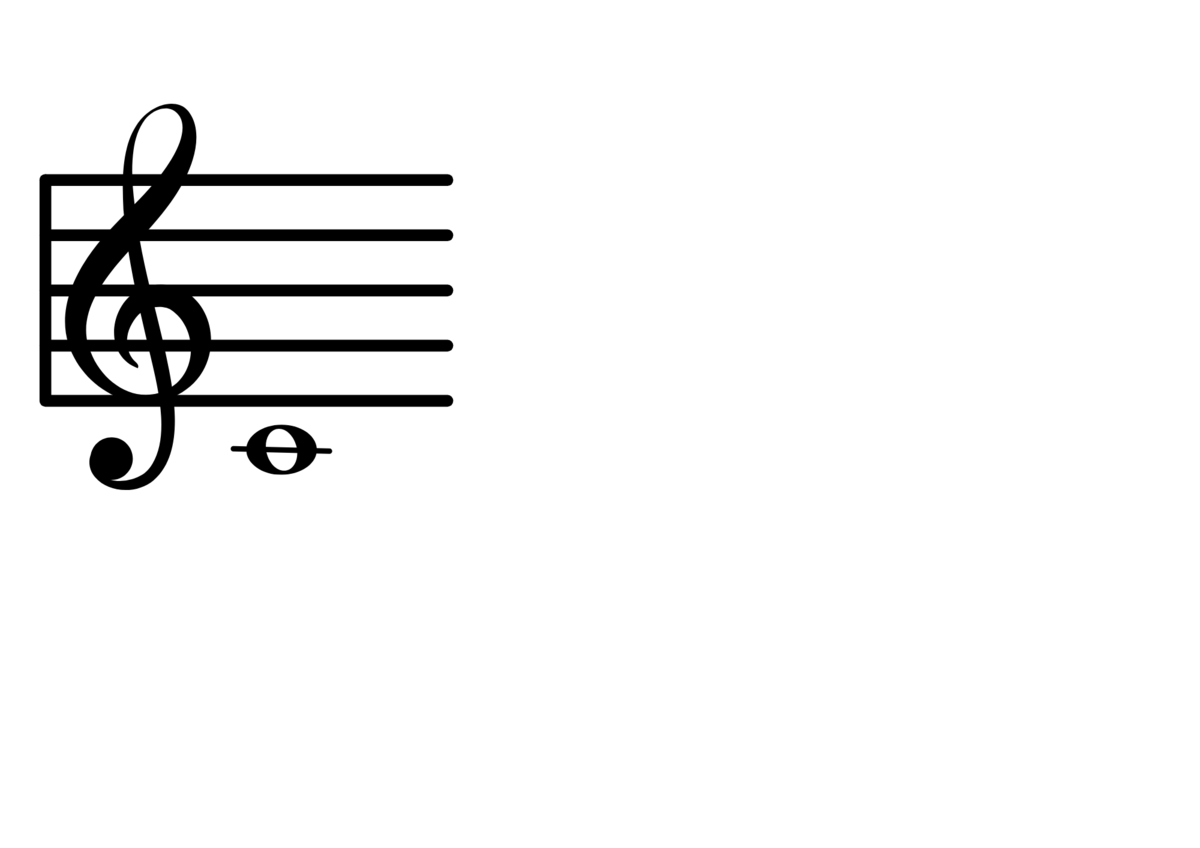
C
F
G
A
WHAT IS THIS NOTE?

WHAT IS THE LETTER FOR THIS NOTE?

WHAT'S THE NAME OF THIS NOTE?
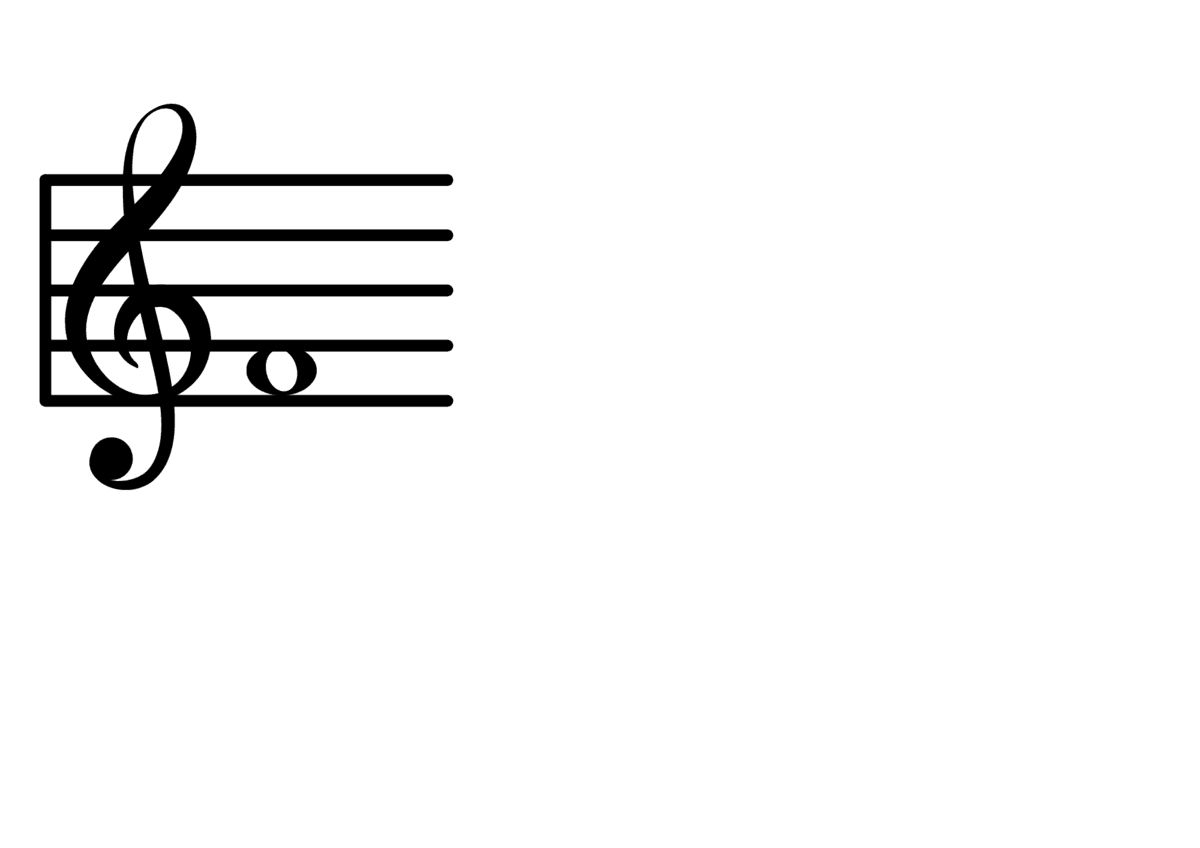
WHAT'S THE COMPLETE NAME?

MATCH THE MUSICAL NOTE WITH IT LETTER
Give this quiz to my class
 LETTERS OF THE MUSICAL NOTESGenerate all of these 25 questions Part A: Each correct answer is worth 5. 1. The regular pentagon shown has a side length of 2 cm. The perimeter of the pentagon is (A) 2 cm (B) 4 cm (C) 6 cm (D) 8 cm (E) 10 cm 2 cm 2. The faces of a cube are labelled with 1, 2, 3, 4, 5, and 6 dots. Three of the faces are shown. What is the total number of dots on the other three faces? (A) 6 (B) 8 (C) 10 (D) 12 (E) 15 3. The equation that best represents \a number increased by _ve equals 15" is (A) n 5 = 15 (B) n _ 5 = 15 (C) n + 5 = 15 (D) n + 15 = 5 (E) n _ 5 = 15 4. The line graph shows the number of bobbleheads sold at a store each year. The sale of bobbleheads increased the most between (A) 2016 and 2017 (B) 2017 and 2018 (C) 2018 and 2019 (D) 2019 and 2020 (E) 2020 and 2021 Number of 2016 2017 2018 2019 2020 Year Sale of Bobbleheads 2021 Bobbleheads 20 40 60 80 5. Starting at 72, Aryana counts down by 11s: 72; 61; 50; : : : . What is the last number greater than 0 that Aryana will count? (A) 4 (B) 5 (C) 6 (D) 7 (E) 8 6. In the diagram, \ABC = 90_. The value of x is (A) 68 (B) 23 (C) 56 (D) 28 (E) 26 Day of the Week 44° x° A B C x° 7. Which of the following values is closest to zero? (A) 1 (B) 5 4 (C) 12 (D) 4 5 (E) 0:9 Grade 8 8. A jar contains 267 quarters. One quarter is worth $0.25. How many quarters must be added to the jar so that the total value of the quarters is $100.00? (A) 33 (B) 53 (C) 103 (D) 133 (E) 153 9. A package of 8 greeting cards comes with 10 envelopes. Kirra has 7 cards but no envelopes. What is the smallest number of packages that Kirra needs to buy to have more envelopes than cards? (A) 3 (B) 4 (C) 5 (D) 6 (E) 7 10. For the points in the diagram, which statement is true? (A) e > c (B) b < d (C) f > b (D) a < e (E) a > c y x (e, f ) (a, b) (c, d ) Part B: Each correct answer is worth 6. 11. The 26 letters of the English alphabet are listed in an in_nite, repeating loop: ABCDEFGHIJKLMNOPQRSTUVWXY ZABC : : : What is the 258th letter in this sequence? (A) V (B) W (C) X (D) Y (E) Z 12. A public holiday is always celebrated on the third Wednesday of a certain month. In that month, the holiday cannot occur on which of the following days? (A) 16th (B) 22nd (C) 18th (D) 19th (E) 21st 13. A circular spinner is divided into three sections. An arrow is attached to the centre of the spinner. The arrow is spun once. The probability that the arrow stops on the largest section is 50%. The probability it stops on the next largest section is 1 in 3. The probability it stops on the smallest section is (A) 1 4 (B) 2 5 (C) 1 6 (D) 2 7 (E) 3 10 14. A positive number is divisible by both 3 and 4. The tens digit is greater than the ones digit. How many positive two-digit numbers have this property? (A) 4 (B) 5 (C) 6 (D) 7 (E) 8 15. A rectangular pool measures 20 m by 8 m. There is a 1 m wide walkway around the outside of the pool, as shown by the shaded region. The area of the walkway is (A) 56 m2 (B) 60 m2 (C) 29 m2 (D) 52 m2 (E) 50 m2 20 m 8 m 1 m Grade 8 16. The results of asking 50 students if they participate in music or sports are shown in the Venn diagram. What percentage of the 50 students do not participate in music and do not participate in sports? (A) 0% (B) 80% (C) 20% (D) 70% (E) 40% Music Sports 15 5 20 17. There are 2 3 as many golf balls in Bin F as in Bin G. If there are a total of 150 golf balls, how many fewer golf balls are in Bin F than in Bin G? (A) 15 (B) 30 (C) 50 (D) 60 (E) 90 18. In the sequence shown, Figure 1 is formed using 7 squares. Each _gure after Figure 1 has 5 more squares than the previous _gure. What _gure has 2022 squares? (A) Figure 400 (B) Figure 402 (C) Figure 404 (D) Figure 406 (E) Figure 408 Figure 1 Figure 2 Figure 3 19. Mateo's 300 km trip from Edmonton to Calgary passed through Red Deer. Mateo started in Edmonton at 7 a.m. and drove until stopping for a 40 minute break in Red Deer. Mateo arrived in Calgary at 11 a.m. Not including the break, what was his average speed for the trip? (A) 83 km/h (B) 94 km/h (C) 90 km/h (D) 95 km/h (E) 64 km/h 20. Equilateral triangle ABC has sides of length 4. The midpoint of BC is D, and the midpoint of AD is E. The value of EC2 is (A) 7 (B) 6 (C) 6:25 (D) 8 (E) 10 Part C: Each correct answer is worth 8. 21. The positive factors of 6 are 1, 2, 3, and 6. There are two perfect squares less than 100 that have exactly _ve positive factors. What is the sum of these two perfect squares? (A) 177 (B) 80 (C) 145 (D) 52 (E) 97 22. In the list p; q; r; s; t; u; v, each letter represents a positive integer. The sum of the values of each group of three consecutive letters in the list is 35. If q + u = 15, then p + q + r + s + t + u + v is (A) 85 (B) 70 (C) 80 (D) 90 (E) 75 Grade 8 23. The net shown is folded to form a cube. An ant walks from face to face on the cube, visiting each face exactly once. For example, ABCFED and ABCEFD are two possible orders of faces the ant visits. If the ant starts at A, how many possible orders are there? (A) 24 (B) 48 (C) 32 (D) 30 (E) 40 A D B C E F 24. The number 385 is an example of a three-digit number for which one of the digits is the sum of the other two digits. How many numbers between 100 and 999 have this property? (A) 144 (B) 126 (C) 108 (D) 234 (E) 64 25. Student A, Student B, and Student C have been hired to help scientists develop a new avour of juice. There are 4200 samples to test. Each sample either contains blueberry or does not. Each student is asked to taste each sample and report whether or not they think it contains blueberry. Student A reports correctly on exactly 90% of the samples containing blueberry and reports correctly on exactly 88% of the samples that do not contain blueberry. The results for all three students are shown below. Student A Student B Student C Percentage correct on samples 90% 98% (2m)% containing blueberry Percentage correct on samples 88% 86% (4m)% not containing blueberry Student B reports 315 more samples as containing blueberry than Student A. For some positive integers m, the total number of samples that the three students report as containing blueberry is equal to a multiple of 5 between 8000 and 9000. The sum of all such values of m is (A) 45 (B) 36 (C) 24 (D) 27 (E) 29Broken windows are covered. Floorboards are patched and doors screwed back on. The road that was ruined by German tanks is shovelled and raked smooth. Boot-shaped bruises turn yellow then fade and disappear. Flowers grow and spread across the ugly German footprints stomped into garden beds. The village looks pretty once more. School stops for the summer and everyone is put to work on the kolkhoz, the village farm. Women and big boys begin harvesting the barley crops in the outer fields. The biggest girls milk the cows, morning and night, and keep the barns clean. Old Nikolay mends ploughs, horse harnesses, pitchforks and scythes in his workshop. Anna Pushinka teaches Yelena and her friends how to get the honey from the beehives that are scattered through the orchards. I am in charge of collecting eggs. My friends Olga and Nina help. Olga and Nina are five, a year younger than me. They are twins and look exactly alike, except Nina’s nose is a little bit crooked from when she fell out of bed and squashed it sideways on the floor. The hens, ducks and geese wander free in the summer, so collecting eggs is like a treasure hunt and takes hours. Catching the hens for their daily hugs takes even longer, but I think it’s important because hugs make everyone happy and happy hens lay bigger eggs. Olga says I’m the best hen-hugger in all of Russia. Nina says I’ll be the best cow-hugger, too, when my arms grow longer. But good hugs have nothing to do with the size of your arms. It’s all to do with the size of your heart. When we are done with the hens, Olga, Nina and I can spend the rest of the day doing whatever we like. We climb the apricot trees, chase squirrels, lie in the meadow marvelling at how hot Ushanka’s black fur becomes in the sunshine, make daisy chains and race little boats of bark in the stream. I teach Olga and Nina the alphabet and we use charcoal to write our letters and our names all over the village – on doors and walls and the freshly cut ends of firewood. In between, I practise my knots. In case the German princemonsters return. I slip into Old Nikolay’s workshop and tie knots in the harnesses hanging on the walls. I wander into gardens where the washing is hung out to dry and tie knots in the laces on pants and smocks. I creep up behind Anna Pushinka and tie knots in her apron strings. I find baling twine in the hay shed and tie my own ankles together. I do such a good job of these last knots that I can’t get them undone. I have to jump all the way to Olga and Nina’s house and ask them to cut me free with their mama’s knife. At the end of each day, Ushanka and I run out into the distant barley fields to meet Mama. This is my favourite part of the day, because Mama always shouts, ‘Little Rabbit!’ and smothers my head with kisses. And as we walk home, we sing. Everyone – women, big boys and me. I love to sing. Almost as much as I love to be kissed by Mama. Sometimes one of the boys, Mikhail, has his balalaika with him. He takes the instrument out from beneath the sheaves of barley piled high on the wagon and plays music. We sing about forests and orchards and people who find their true love. As we walk home, arm in arm, my heart fills with happiness and my belly swells with pride that I am allowed to sing along with the big boys. And I can almost forget about the German prince-monsters and their lies about Russia and their big ugly boots. Almost. But today, when Mikhail reaches for his balalaika, I see other things hiding beneath the barley sheaves. Three of the mamas rush forward and cover them up, but it’s too late. I know they are there. I’ve already seen them. Rifles. Lots of rifles. Mikhail hugs his balalaika to his chest and blushes. ‘So play!’ cries Mama, her voice oddly loud and high. ‘Let’s play Sasha’s favourite song, “The Little Birch Tree”.’ So Mikhail plays and everyone sings about the lovely birch tree with its curly leaves and the branches that will be turned into silver flutes. They sing too quickly, too loudly, and as they sing and walk, they cast nervous sideways glances at me. ‘It’s alright,’ I say, when the song comes to an end. ‘I didn’t see the rifles.’ Mama nods and smiles, and I know it was the right thing to say. But I did see the rifles. And I think about Yelena wanting to get lots of guns and dynamite for the Partisans so they can shoot the Germans and blow them into thousands of tiny pieces, and Mama looking as though she agreed, and I know this is what the mamas and the big boys are doing. As well as harvesting, they are helping the Partisans. Three days later, I wake before dawn and I am all alone. Yelena is always here beside me when I wake. But not this morning. I climb down from our bed above the stove. Mama is filling a cloth sack with bread. She ties it closed with a piece of string and hands it to Yelena. ‘Stay out of sight,’ says Mama. ‘And don’t return until after dark.’ ‘Where’s she going?’ I ask. ‘Nowhere,’ snaps Mama. ‘Then why does she need all that bread?’ I ask. ‘There’s nothing left for us.’ Mama baked four loaves last night and she has stuffed them all into the sack. Yelena opens her mouth, but before she can speak, Mama shoves her out the door and sends her on the way to nowhere. Mama turns and stares at me, her blue, blue cornflower eyes wide with worry. ‘I know,’ I say, flopping down on the bench. ‘I didn’t see any bread.’ Mama sits beside me and takes my hand. ‘And . . .?’ she prods, obviously waiting for more. I puzzle for a while, then say, ‘And I don’t have a sister called Yelena.’ Mama laughs, softly and with a little bit of sadness around the edges. ‘Sweet Little Rabbit! You do have a sister called Yelena.’ ‘I do?’ I ask, now confused. ‘I haven’t seen the rifles or the bread, but I have seen Yelena?’ ‘Yes.’ Mama smiles and the magic makes me smile, too. And I am glad that Yelena is real because I love her very much. ‘Yelena is real,’ Mama explains, ‘but she does not carry sacks of bread into the forest for the Partisans.’ ‘Of course not!’ I shout, slapping my forehead. ‘Because there is no bread!’ Mama laughs loudly now, with not a hint of sadness. She hugs me, pressing me against her warm, loving heart, covering my head with kisses. ‘Clever Little Rabbit,’ she murmurs, and then, in barely a whisper, ‘Your papa would be so proud.’ When I wake the next morning, Yelena is sleeping beside me, her mouth open, her braided hair unravelling. Mama is serving kasha to a strange woman seated at our table. I crawl down from above the stove and slide along the bench beside her. I stare at her pants, her tunic, the rope she is using as a belt and her big boots. She’s dressed like a man! And there’s a rifle leaning against the wall near the door. ‘Hello,’ I say. ‘I’m Sasha.’ The woman doesn’t reply. She just shovels down her kasha. I line my four wooden bears along the table in front of her bowl and say, ‘These are my bears: Big Bear, Medium Bear, Little Bear and Even Littler Bear.’ ‘Hello, Sasha. Hello, bears.’ She smiles but she doesn’t tell me her name. ‘Why are you dressed like a man?’ I ask, tugging at the sleeve of her tunic. ‘Because men’s clothes make it easier to run and climb and crawl and shoot,’ she says. ‘You’re a Partisan!’ I gasp. ‘But she’s not real,’ says Mama, placing a bowl of kasha before me. ‘Is the kasha real?’ I ask. Mama laughs. ‘Yes, Little Rabbit.’ I’m glad the food is real, because I’m hungry. But I’m disappointed that the woman is not real. I was going to ask if I could use her rope-belt to tie her ankles together. For practice. But if she’s not real, then the rope and her ankles aren’t either. The woman finishes her kasha, hangs her rifle over her shoulder, kisses Mama on the cheek then slips out the door. I run to the window to watch her leave, but by the time I get there, she’s gone. Vanished. ‘Because she’s not real,’ I whisper. A week later, Mama and I are working in the garden. We sing as we weed between the flowers and pluck caterpillars from the vegetables. Anna Pushinka is picking strawberries in her garden and wanders over. ‘Taste these,’ she says, holding out the basket. Mama reaches in and takes out a fat strawberry and a tiny piece of folded paper. The strawberry goes into her mouth, the paper into her pocket. ‘What’s on the paper?’ I ask. ‘Paper?’ Anna Pushinka replies with a wave of her hand. ‘Goodness, Sasha! Who has money for paper? These are lean times. We must choose between paper for writing and noodles for our soup. And I always choose noodles.’ She chuckles and I know the paper is yet another thing that is not real. That night, Mama slips the paper to Yelena, but she drops it on the floor. I pick it up for her, and I see that there are tiny words and numbers written all over it. I wish I could read better. I’m desperate to know what it says. Or rather, what it doesn’t say, because it’s not real. Later, when Mama has tucked us into our bed above the stove and Ushanka has wrapped herself around the top of my head, I ask Yelena, ‘What’s on the paper?’ ‘What paper?’ says Yelena. ‘The paper that isn’t real,’ I reply. Yelena stares at me, nibbling her lip, then whispers, ‘A message for the Partisans. Stuff about where the Germans have their headquarters and when their trains are travelling and where they store their ammunition.’ ‘Why?’ ‘So the Partisans can blow them up.’ Yelena grabs my arm. ‘But don’t tell anyone. It’s a secret.’ ‘What’s a secret?’ I ask. ‘The message.’ ‘What message?’ I say, my eyes wide. Yelena laughs. ‘Good boy, Sasha.’ My belly swells with pride. I know how to play this game. ‘How are your knots coming along?’ asks Yelena. ‘Good! Yesterday, I crept into the dairy and tied knots in the apron strings of all the girls who were milking and only one of them noticed. Today, I tied Olga’s ankles together with Mama’s embroidery thread and just now, while you were taking a bath, I tied the sleeves of your blouse together in an enormous knot.’ Yelena rolls her eyes, then says, ‘I’ll see if I can find you some rope for practising.’ ‘Practising what?’ I ask. ‘Your knots,’ she says. ‘What knots?’ Yelena, my big sister who is twelve and always serious tChoose the letters of the best answer. Create an excercise on the rules of noon sakinah, the examples should be written as written in the Quran. just write thhe word in a big font and ask the question what rule should be appllied. some questions also would ask what are the letters of (name of the rule)1. What is the meaning of the word "Izhaar"? A) To hide the sound B) To make it clear C) To change the sound D) To merge two letters 2. Which part of the body is used to pronounce Izhaar Halqi letters? A) The lips B) The tongue only C) The throat D) The nose 3. How many letters are there for Izhaar Halqi? A) 4 letters B) 6 letters C) 15 letters D) 2 letters 4. When do we apply the rule of Izhaar Halqi? A) When any letter comes after Meem Sakinah B) When an Izhaar letter comes after Noon Sakinah or Tanween C) When we see a Shaddah D) Only at the end of a Surah 5. Which of the following is NOT an Izhaar Halqi letter? A) Hamzah (أ) B) Haa (هـ) C) Baa (ب) D) 'Ayn (ع) 6. Which pair of letters comes from the deepest part of the throat (closest to the chest)? A) ع and ح B) غ and خ C) ء and هـ D) ق and ك 7. When you do Izhaar, do you make a long Ghunnah (nasal sound)? A) Yes, a very long one B) No, we pronounce the Noon clearly without extra Ghunnah C) Only if we want to D) Yes, for 2 counts 8. Which letter comes from the top part of the throat (closest to the mouth)? A) Khaad (خ) B) Haa (ح) C) Hamzah (أ) D) Meem (م) 9. What are the middle throat letters? A) ء and هـ B) ع and ح C) غ and خ D) ت and د 10. In the phrase "مَنْ عَمِلَ" (Man 'Amila), which rule is applied? A) Idghaam B) Ikhfaa C) Izhaar Halqi D) Iqlaab 11. Why do we do Izhaar in "مَنْ عَمِلَ"? A) Because the letter 'Ayn (ع) comes after Noon Sakinah B) Because it is easy to say C) Because Meem has a Fathah D) Because the Noon has a Shaddah 12. What does "Noon Sakinah" mean? A) A Noon with a Fathah B) A Noon with a Kasrah C) A Noon with no vowel (has a Sukoon) D) A double Noon 13. What is Tanween? A) A double vowel sign (Fathatain, Kasratain, Dammatain) at the end of a word D) A small Meem on top of a letter C) A stretching sign D) A stop sign 14. Can Izhaar Halqi happen within a single word? A) No, never B) Yes, it can happen in one word or between two words C) Only in short words D) Only in Surah Al-Fatihah 15. Look at the word "وَانْحَرْ" (Wanhar). What is the Izhaar letter here? A) Waw (و) B) Noon (ن) C) Haa (ح) D) Raa (ر) 16. In the Quran, what sign is usually placed on the Noon Sakinah to show it is Izhaar? A) A small circle or head of a Khaa (Sukoon sign) B) A Shaddah C) Nothing at all D) A little Meem 17. What happens to the Tanween vowels when there is Izhaar? A) They are written far apart from each other B) They are aligned perfectly parallel above/below each other C) One vowel is deleted D) They change color 18. Which of the following words contains an Izhaar Halqi rule? A) أَنْعَمْتَ B) مَنْ يَقُولُ C) مِنْ بَعْدِ D) كُنْتُمْ 19. Choose the group that contains ONLY Izhaar Halqi letters: A) ي ، ر ، م ، ل B) ء ، هـ ، ع ، ح ، غ ، خ C) ك ، ق ، ج ، د D) ب ، ت ، ث 20. In the phrase "عَذَابٌ أَلِيمٌ" ( 'Adhaabun Aleem), why is there Izhaar? A) Because Tanween is followed by Hamzah (أ) B) Because it ends with Meem C) Because the word is long D) Because of the letter Laam 21. What is the correct way to read "مِنْ حَكِيمٍ"? A) Mi---hakeem (hide the Noon) B) Min Hakeem (read Noon clearly and quickly) C) Mih-hakeem (mix them together) D) Mim-hakeem (change Noon to Meem) 22. "Ghain" (غ) and "Khaa" (خ) come from which part of the throat? A) Deep throat B) Middle throat C) Top throat D) The lips 23. If a Noon Sakinah is followed by the letter "هـ" (Haa), how do we pronounce it? A) Clear Noon B) Hidden Noon C) Double Noon D) Silent Noon 24. Which of these is a middle throat letter? A) ء B) خ C) ح D) هـ 25. Complete the sentence: Izhaar Halqi means to pronounce the Noon Sakinah or Tanween cleanly from its articulation point without any ________. A) Breathing B) Vowel (Harakah) C) Extra Ghunnah (nasalization) D) StoppingAlexander Hamilton, a key figure in the founding of the United States, served as the first Secretary of the Treasury under President George Washington. Aaron Burr, on the other hand, was the sitting Vice President under Thomas Jefferson at the time of the duel. The animosity between Hamilton and Burr was well-documented, stemming from political disagreements and personal slights over the years. The Duel Date and Location: The duel took place on July 11, 1804, in Weehawken, New Jersey, a common site for duels due to its less strict enforcement of anti-dueling laws compared to New York. Cause: The immediate cause of the duel was a series of letters and meetings between intermediaries after Hamilton allegedly insulted Burr at a dinner, which was later reported in a newspaper. Burr demanded an apology; Hamilton refused, leading to the challenge. The Event: On the morning of the duel, both men, along with their seconds and a doctor, rowed across the Hudson River to the dueling ground. The exact events are a matter of historical debate, but it is generally believed that Hamilton fired his shot into the air, adhering to a principle of honor without intent to kill. Burr, however, aimed directly at Hamilton, hitting him in the abdomen. Outcome: Hamilton was severely wounded and transported back to New York City, where he died the following day, surrounded by family and friends5. Aftermath Public Reaction: The news of Hamilton's death caused widespread grief and indignation. Angelica Schuyler Church, Hamilton's sister-in-law, expressed the communal sorrow in a letter, highlighting the shock and consternation that gripped the town5. Impact on Burr: Although Burr was never tried for the duel, his political career suffered greatly. He became a pariah in many circles and faced various legal and financial troubles in the years that followed. Historical Significance: The duel is often cited as a turning point in American political culture, highlighting the dangers of political rivalry and the need for civility in discourse. Conclusion The duel between Alexander Hamilton and Aaron Burr remains a poignant reminder of the intense personal and political conflicts that shaped the early years of the United States. It underscores the tragic potential of unchecked animosity and the importance of reconciliation and dialogue in a democratic society.Makharij al-Huruf (مخارج الحروف) refers to the specific places or points in the mouth and throat from which the Arabic letters originate. Knowing the correct makhraj is essential for proper Qur’an recitation. 📌 There are 5 main articulation areas in the human vocal system: Al-Jawf (the empty space in the mouth and throat) Al-Halq (the throat) Al-Lisan (the tongue) Ash-Shafatain (the two lips) Al-Khayshum (the nasal cavity) and trainer What is the meaning of "Makharij al-Huruf"? A. Rules of stopping B. Points of articulation C. Types of letters D. Tajwid marks ✅ Answer: B Which letters originate from the lips (Ash-Shafatain)? A. Alif, Waw, Ya B. Fa, Ba, Meem, Waw C. Ta, Da, Tha D. Kha, Ha, Ghayn ✅ Answer: B Where do the letters ‘ع’ and ‘ح’ originate from? A. Lips B. Nasal cavity C. Throat D. Tongue ✅ Answer: C The nasal cavity (Al-Khayshum) is the source of which sound? A. Ghunna B. Qalqalah C. Ikhfa D. Idgham ✅ Answer: A Which letter is produced from the middle of the tongue? A. Lam B. Kaf C. Jeem D. Ba ✅ Answer: C The sound of letter 'ق' comes from: A. The lips B. The nose C. The back of the tongue touching the soft palate D. The teeth ✅ Answer: C How many main articulation areas are there in Makharij al-Huruf? A. 3 B. 4 C. 5 D. 6 ✅ Answer: C Which of the following is a letter from Al-Jawf? A. Ba B. Waw (madd) C. Fa D. Tha ✅ Answer: B What does 'Ghunna' mean in tajwid? A. Prolongation B. Nasal sound C. Pause D. Echoing sound ✅ Answer: B Which letters are articulated with both lips closed? A. Fa and Waw B. Ba and Meem C. Ta and Da D. Ha and Kha ✅ Answer: B