Tag the questions with any skills you have. Your dashboard will track each student's mastery of each skill.
Give this quiz to my class
Q 1/6
Score 0
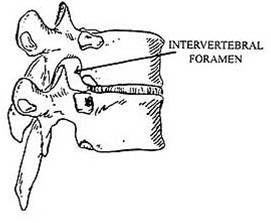
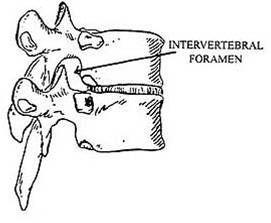
A PTA is applying mechanical traction to a patient who is having pain as a result of a nerve root being compressed as it exits the intervertebral foramen. The assistant knows from this information alone that positioning the spine in which of the following positions would be most beneficial for this patient?
60
The involved spinal area positioned in extension
The involved spinal area positioned in flexion
The spinal area should be positioned in the same manner as that of a patient who needs maximum separation of the disk space
The involved spinal area positioned in neutral
Q 2/6
Score 0
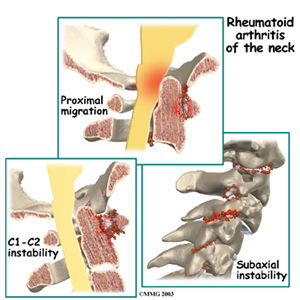
A supervising physical therapist instructs a PTA to begin continuous lumbar traction on a 62-year-old woman who weighs 147 pounds. This particular patient has a diagnosis of L2 disc herniation. Through conversation with the patient, the assistant learns that she has a history of rheumatoid arthritis. What is the best course of action by the assistant?
60
Follow the treatment plan set by the physical therapist
Apply intermittent traction instead of continuous traction
Use continuous traction with the weight setting at 110 pounds
Consult with the supervising physical therapist because rheumatoid arthritis is a contraindication
6 questions
Q.
A PTA is applying mechanical traction to a patient who is having pain as a result of a nerve root being compressed as it exits the intervertebral foramen. The assistant knows from this information alone that positioning the spine in which of the following positions would be most beneficial for this patient?
1
60 sec
Q.
A supervising physical therapist instructs a PTA to begin continuous lumbar traction on a 62-year-old woman who weighs 147 pounds. This particular patient has a diagnosis of L2 disc herniation. Through conversation with the patient, the assistant learns that she has a history of rheumatoid arthritis. What is the best course of action by the assistant?
2
60 sec
Q.
A supervising physical therapist has suggested mechanical lumbar traction to treat a patient with a diagnosis of lumbar disc disease. The PTA will place the patient on traction. Which of the following is an incorrect procedure for initial setup of lumbar traction if the patient is in the supine position?
3
60 sec
Q.
Which of the following is the most important safety aspect of mechanical cervical traction?
4
60 sec
Q.
A PTA elects to use mechanical lumbar traction for a patient rehabilitating from a back injury. The therapeutic goals of the session include decreasing the patient’s muscle spasm. The MOST appropriate force based on the stated objective would be :
5
60 sec
Q.
A PTA sets up a patient for mechanical traction to the lumbar spine. The treatment objective is to provide soft tissue stretch to surrounding muscles. Assuming the PTA uses a force equivalent to 25% of the patient’s body weight and the patient has tolerated treatment without difficulty on several other occasions, the MOST appropriate duration of treatment is :