Loading...


Looks Like
Quiz by Shannon Du
Customize this quiz to suit your class
Instantly translate to 100+ languages
Tag the questions with any skills you have. Your dashboard will track each student's mastery of each skill.
Give this quiz to my class
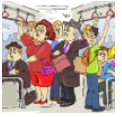
The bus looks __________.
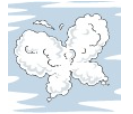
The cloud looks like a _________.
The bus looks __________.

The cloud looks like a _________.

The acorn looks too _____.

That looks _______.

The woman looks _____.

That looks _____.

She looks _____.

The pumpkin looks _______.

That looks ______.

That looks _____.

The dessert looks ______.

That looks ________.

That looks _______.

The dress looks _____.

She looks ______.

The bush looks like an ______________.

That looks ______.

That motorcycle looks ______.
 Tagalog Word English Meaning English Sentence tulad like / similar to This fruit looks like (tulad) an apple. baitang grade / step I am in Grade (baitang) 4 this year. libangan hobby / pastime Reading is my favorite hobby (libangan). kapag when / if I smile when (kapag) I see my dog. nagigising waking up She is waking up (nagigising) early. nagsusuot wearing He is wearing (nagsusuot) a jacket. damit clothes My clothes (damit) are clean. iyon that (far) That (iyon) is my old toy. para for / stop (for jeepney) This gift is for (para) you. almusal breakfast I had rice and eggs for breakfast (almusal). bago before / new I wash my hands before (bago) eating. magsipilyo to brush teeth Don’t forget to brush (magsipilyo) your teeth. ayusin to fix Let’s fix (ayusin) your messy hair. buhok hair Her hair (buhok) is long and curly. ihatid to bring / drop off I will bring (ihatid) you to school. naglalakad walking We are walking (naglalakad) to the park. papuntang going to He is going to (papuntang) the store. kaibigan friend My friend (kaibigan) is kind. pag-uwi going home I rest after going home (pag-uwi). hawakan to hold Please hold (hawakan) my hand. bahay house / home This is our house (bahay). Make a quiz using this gagalog vocabulariesBums in the Attic I want a house on a hill like the ones with the gardens where Papa works. We go on Sundays, Papa's day off. I used to go. I don't anymore. You don't like to go out with us, Papa says. Getting too old? Getting too stuck-up, says Nenny. I don't tell them I am ashamed -all of us staring out the window like the hungry. I am tired of looking at what we can't have. When we win the lottery . . . Mama begins, and then I stop listening. People who live on hills sleep so close to the stars they forget those of us who live too much on earth. They don't look down at all except to be content to live on hills. They 86 Sandra Cisneros have nothing to do with last week's garbage or fear of rats. Night comes. Nothing wakes them but the wind. One day I'll own my own house, but I won't forget who I am or where I came from. Passing bums will ask, Can I come in? I'll offer them the attic, ask them to stay, because I know how it is to be without a house. Some days after dinner, guests and I will sit in front of a fire. Floorboards will squeak upstairs. The attic grum- ble. Rats? they'll ask. Bums, I'll say, and I'll be happy. Minerva is only a little bit older than me but already she has two kids and a husband who left. Her mother raised her kids alone and it looks like her daughters will go that way too. Minerva cries because her luck is unlucky. Every night and every day. And prays. But when the kids are asleep after she's fed them their pancake dinner, she writes poems on little pieces of paper that she folds over and over and holds in her hands a long time, little pieces of paper that smell like a dime. She lets me read her poems. I let her read mine. She is always sad like a house on fire-always something wrong. 84 Sandra Cisneros She has many troubles, but the big one is her husband who left and keeps leaving. One day she is through and lets him know enough is enough. Out the door he goes. Clothes, records, shoes. Out the window and the door locked. But that night he comes back and sends a big rock through the window. Then he is sorry and she opens the door again. Same story. Next week she comes over black and blue and asks what can she do? Minerva. I don't know which way she'll go. There is nothing I can do. Type A operational definition can be constructed in terms of the operations performed to cause the phenomenon to occur. Examples: o Fear is a state produced by exposing an individual to an object highest in his or her hierarchy of objects to be avoided. o Conflict is a state produced by placing two or more individuals in a situation where each has the same goal but only one can obtain it. 2. Type B operational definition can be constructed in terms of how the particular object or thing operates. Examples: o Monitor is a television receiver used in a studio to select or verify the picture being broadcast from a particular camera. o Keyboard is a set of keys on a piano or similar musical instrument. 3. Type C operational definition can be constructed in terms of what an object or phenomenon looks likeWhose Eggs Are These? Many animals lay eggs. Eggs can be strange and beautiful. These eggs are in a nest of twigs and soft grass. They are a beautiful sky blue. Do you know whose eggs these are? These are robin eggs. These tiny eggs are on the bottom of a leaf. They can be round like pearls, or they can be spiny. Whose eggs are these? They are butterfly eggs. There are many eggs in this tiny case. It looks like light brown cotton candy, but it is made of silk. Whose eggs are these? They are spider eggs. You can find them near spider webs. These large eggs aren’t in a nest or case. They sit on cold rocks. But feathers help keep them warm. Whose eggs are these? These are penguin eggs. Penguins keep eggs warm with their feet and feathers. This strange egg floats in the ocean. It is inside a small, tough case. Whose egg could this be? This is a shark egg. These eggs float on a pond. There are tiny fish-shaped things inside each egg. Whose eggs are these? They are not fish eggs. They are frog eggs. The fish-shaped things are tadpoles.ANIMAL SKELETONS The bones in your body make up your skeleton. You have 206 bones. Bones give your body shape and support. They keep the soft parts inside you safe. Bones come in many shapes and sizes. Your arms and legs are long bones. Your pelvis and shoulder blades are flat bones. The bones in your wrists, hands, ankles, and feet are small. This is what your skeleton looks like. Look at the many kinds of bones in your body. Other animals have skeletons, too. Each animal's skeleton is different. Some are short, some are tall, some are light, and some are strong. Look at this skeleton. How is it different from your skeleton? Do you know what it is? CLUE: This animal flies. It's an eagle. Its bones are hollow and light. Wing feathers attach to the wing bones. Look at this skeleton. How is it different from your skeleton? Do you know what it is? CLUE: This animal hops. It's a frog. It has long back legs for hopping. 10 Its back legs are longer than its body. Look at this skeleton. How is it different from your skeleton? Do you know what it is? CLUE: This animal swims. It's a blue whale. It has no leg bones. Its arms are flippers. Whales are supported by the water. If a whale lived on land, its skeleton would have to be much stronger. Look at this skeleton. How is it different from your skeleton? Do you know what it is? CLUE: This animal runs well. It's a horse. It has long legs for running. A horse has a large rib cage to keep its large lungs safe. It needs large lungs to take in lots of air when it runs. Look at this skeleton. How is it different from your skeleton? Do you know what it is? CLUE: This animal slithers. It's a snake. It has no arms or legs. Its skeleton is one long backbone with ribs. Look at these skulls, or head bones. These are the skulls of the animals in this book. Look at how their shapes and parts are different. Each animal's skeleton is perfect for the way it lives. It has the right kind of skeleton for the support it needs. It has the right kind of skeleton for the way it moves. And so do you.Things to do in Tokyo by Haruki A. My favorite tea house The tea house is in a beautiful garden. We don’t wear shoes in the tea house. We leave our shoes outside. We sit on the floor. It’s a custom in Japan. We can see how they make the tea. Their green tea is the best. B. A cool ice cream store I love this ice cream store. The ice cream looks like animals. They have rabbits, chickens, dogs and bears. I always order the rabbit ice cream. You can pick anything you want. C. A baseball game Baseball is a popular sport in Japan. The games are fun. People sing songs when their team hits the ball. They wear shirts and hats from their favorite team. I have a hat from a team called the Lions. My sister has hats from every baseball team in Japan. D. A ninja village The ninja village is great. You wear ninja clothes and climb walls like a ninja. There’s also a ninja house. It’s fun to walk in the house and find special rooms. I think ninjas are exciting. They are strong. They aren’t afraid of anything. We need to ride a train to the ninja village. It isn’t in Tokyo. But the train is fun too.The Philippine Flag Our country is officially identified through our flag. The Philippine flag has three colors: white, blue, and red. White signifies purity; blue means hope and peace; and red denotes bravery. The three stars symbolize the three big groups of islands of our country-the Luzon, Visayas, and Mindanao. The eight rays of the sun signify the eight provinces that first revolted against the Spaniards. These are Bulacan, Pampanga, Tarlac, Nueva Ecija, Laguna, Batangas, Manila, and Cavite. We respect our flag to show that we respect our country. We should not treat it like an ordinary cloth because it symbolizes our country. An old flag should be burned and not be used as a rag. Title: National Hero Body text: Dr. Jose Rizal was from a middle-class family from Calamba, Laguna. He is regarded as a genius who fought the Spaniards through his writings, especially the novels "Noli Me Tangere" and "El Filibusterismo." The two novels exposed the anomalies and wrongdoings of the Spanish government against the Filipino people. He wrote the poem "Mi Ultimo Adios" the eve before his execution in Bagumbayan (now known as Rizal Park). National Fruit A mango is sour when it is green, but very sweet when it is ripe. This heart-shaped fruit symbolizes the kindness of the Filipinos. It has a big tree that bears fruits abundantly during summer. National Animal A carabao is a model of hard work and industry. It is the best companion of farmers in the field. It is black and looks like a tamaraw. A carabao is a very strong animal in terms of work. It symbolizes the Filipinos as hardworking and patient. National Bird The Philippine eagle, also known as haribon, stands over 5 feet (1.6 m) tall. It has a large, sharp, and aggressive beak and has powerful talons. Philippine eagles are excellent hunters, and live in tropical rainforests. These eagles lay just one or two eggs each year. National Tree The narra is a hardy tree that grows big and is found mainly in the Bicol Region, Mindanao, and Cagayan Valley forests. Most of the desks and tables in schools are made of narra. It signifies the strong personality of Filipinos in facing trials in life. National Flower The sampaguita has white, star-shaped petals with a sweet fragrance. It is made into garlands, which are given to visitors and special persons on occasions. It signifies purity and among Filipino women. National Fish Bangus or milkfish is our national fish. It grows in ponds or freshwater and tastes delicious. Its white, shiny scales signify our beautiful country. National Dance Cariñosa is a dance of love using a handkerchief and a fan. It symbolizes the true love expressed by Filipinos. National House A nipa hut is a small but beautiful house made from bamboo and sawali or cogon leaves. Filipinos used this kind of house during the olden times. At present, there are still people using this as a dwelling place, but most of the time, they use it as a rest place or cottage. National Costume Barong Tagalog is the national costume for Filipino men. It is made from pineapple fiber or other native materials. Filipinos wear this on special occasions such as formal events or weddings. Baro at Saya is the national dress for Filipino women. Most of them are made from jusi or pineapple fiber and other native materials. This dress shows the gracefulness of Filipino women. National Leaf Our national leaf is a palm tree. It is wide and narrow like an open fan. Farmers use this to protect their crops from the harsh sunlight and rain. It grows like a tree with thorns in its body. National Language Our national language is Filipino, which is based in Tagalog. Through the efforts of former President Manuel L. Quezon (known as the "Father of the National Language"), Filipino was widely disseminated and is now used in all parts of the country. With this, Filipinos in different cultures and native tongues can still communicate with each other. National Food Lechon (litson) is an important dish served at many occasions, especially on fiestas. Lechon is a suckling pig, slowly roasted over live coals to make it crispy and tasty. National Footwear Bakya is the national footwear of the Philippines. It was most popular from the 1950s to the 1970s before the introduction of rubber slippers. There are several colors and designs of bakya that suit the taste of most Filipinos. Valuing Our National Symbols Symbols represent a country and its people. We have to respect and value these symbols because they tell something about our country and of who we are as Filipinos. Here are some ways of valuing our national symbols: When singing the national anthem, stand straight and place your right hand on your left chest. Remove your cap or close your umbrella. Ask the people walking to stop while the flag is being raised. Tell other children to stop chatting while singing the national anthem. Most importantly, sing the national anthem wholeheartedly. Retirement of a Flag: A worn-out flag should be disposed of respectfully. It should be burned in a dignified ceremony, not thrown away or used for other purposes. Help in saving and conserving our forests. They serve as habitat of our national bird and other animals. You may also help organizations that promote reforestation, clean and green programs, and tree planting activities. Do not pick flowers when visiting parks. Instead, help in keeping these places clean and beautiful. Avoid throwing thrash in their surroundings. Patronize products that are made here in our country and made by Filipinos. Tell your family and friends to buy products of the Philippines especially those of which are our national symbol. Aside from patronizing our own products, let us use and love our national language. It is good to learn foreign languages, but do not forget to use our own language correctly and proudly.New Planet, New School I had a lot of friends back in my old school, on my old planet. When the school year ended, though, my family moved across the galaxy to Planet Zox. Planet Zox has species from so many different planets, just walking down the street can be an adventure. So can going to the grocery store. Actually, I sort of liked my new planet until it was time to start school. "I won't fit in," I complained to my parents that first morning. "Nobody there will be like me." "They don't have to be like you in order to like you," Mom said. It took me a minute to sort out that sentence. Once I got to school, I kept my eye out for other humans. I spotted a few in the halls, but the only one in my class is Swiss Pumpernickel. When I walked in that first day, some of the students started to tease him. "Way to go, Pumpernickel. Looks like you finally got yourself a girlfriend," they said. Swiss Pumpernickel turned red, then glared at me-as if it were my fault for being human! After that, nobody talked to me all morning. I looked for some humans to sit with at lunch, but they were all sitting with other species_. I only found one table with any empty chairs. There, alone, sat one of my classmates, Hululialana. She was so wrapped up in her tentacles, I couldn't find her face. I approached with caution and spoke with great care. "Hello, Hululialana," I said. Slowly, several arms lifted. Then one arm unwound itself, floated toward me through the air, and pulled out the closest chair. I took a seat. "Thank you," I said. We looked at each other, then away. She began to wrap herself up again. "How's your first day going?" I quickly asked. Hululialana shrugged-I think. "I wish I were still at my old school," she said. "Me, too," I said. She looked shocked, and I laughed. "I mean, I wish I were still at my old school," I explained. "At least you're not the only human," Hululialana said. "I'm the only Hulu." I thought for a moment. "That makes you special," I said. "That makes me a freak," she said. "Well, let's be freaks together," I suggested. Then, for the first time, Hululialana smiled. From that day forward, school on Planet Zox has been pretty fun.