Loading...


Madison and the War of 1812
Quiz by Laura Ramos
Customize this quiz to suit your class
Instantly translate to 100+ languages
Tag the questions with any skills you have. Your dashboard will track each student's mastery of each skill.
Give this quiz to my class
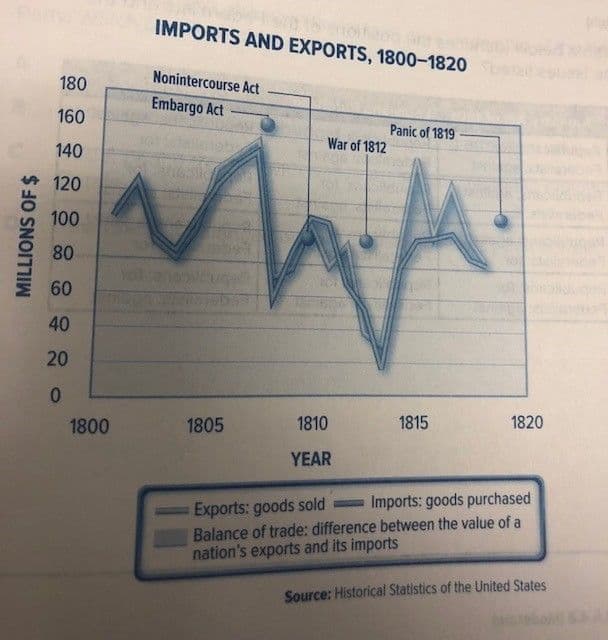
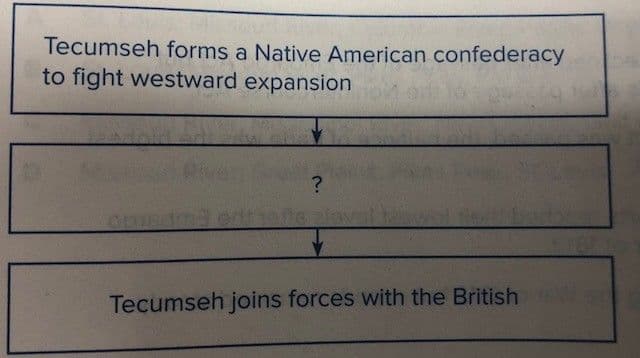 Jefferson, Madison and the War of 1812 TestMadison's Presidency and the War of 1812 - Starter QuizMarbury v Madison and the Power of the Court - Starter QuizMarbury v. Madison and the Supreme CourtChapter 7 Study Guide Answers What does the Bill of Rights do? The Bill of Rights lists our basic rights. Who is the person mainly responsible for the Bill of Rights? James Madison is the person mainly responsible for the Bill of Rights. The Bill of Rights is part of which document? The Bill of Rights is part of the United States Constitution. Whose job is it to protect our rights listed in the bill of rights? It is the job of the federal courts (judicial branch) to protect our rights. What are the five rights listed in the first amendment? Freedom of speech: includes symbolic speech; does not include speech that could endanger the public safety. Religion: Right to believe whatever you want, but you can’t do whatever you want in the name of religion (can’t break the law). Press: The free flow of information and ideas; can’t print lies or information that could be helpful to an enemy in wartime. Assembly: Use public property for meetings and demonstrations (i.e. parades, protests, political rallies). Must be done legally and peaceably. Right to petition: Means you can appeal to the government if you’re unhappy about something or some policy. Give one example of speech NOT protected under the first amendment. An example of speech not protected under the first amendment would be crying “fire” in a crowded movie theater (anything that could potentially endanger the public safety). What does the second amendment give us the right to? The second amendment gives us the right to bear arms. What does the third amendment state we are not legally obligated to do? Under the third amendment, we are not obligated to quarter (or house) soldiers in our homes. What does the fourth amendment protect us from? The fourth amendment protects us from unreasonable search and seizure. What is needed in order to search or seize property? A warrant is needed, which must be issued by a judge, in order to search and seize property. What five rights are we guaranteed under the Fifth Amendment? Right to a grand jury: determines whether or not the government has enough evidence to bring someone to trial. Double jeopardy: Once a person has been found not guilty, he cannot be tried again for the same crime. Self incrimination: A person has the right to remain silent; he does not have to testify against himself. Due process: The government must follow a clear set of rules (a process) as it carries out the law and takes your life, liberty, or property. Just compensation: If the government has to take someone’s land, they will offer a fair price. What is the right stated in the “Miranda Warning”? The main right stated in the “Miranda Warning” is the right to remain silent. What are the four rights stated under the sixth amendment? Right to a speedy and public trial, and an impartial jury. Right to a jury of people that live in the defendant’s area (jury of your peers). To hear and question all witnesses Right to an attorney As stated in the seventh amendment, we have the right to which type of trial depending on how much money a person is being sued for? What can a judge NOT do? Under the seventh amendment, we have the right to a jury trial depending on how much money is at stake in a civil trial. A judge cannot overturn a decision made by a jury. What are the four things that are prohibited under the eighth amendment? The four things that are prohibited (or not allowed) under the eighth amendment are: excessive fines, excessive bail, cruel and unusual punishments, and poor prison conditions. Under the ninth amendment, rights not listed in the Bill of Rights belong to whom? According to the ninth amendment, rights not listed in the Bill of Rights belong to the people. The tenth amendment states that powers not given to the national government are reserved for whom? According to the tenth amendment, powers not specifically given to the national government are reserved for the people and the states. What is meant by the term “double jeopardy”? The term “double Jeopardy” refers to a person being retried for a crime in which he has already been acquitted, or found “not guilty”. What does it mean to be indicted by a grand jury? To be indicted by a grand jury means that a person will be going to trial and will retain all of the rights listed in the fifth, sixth, seventh, and eighth amendments.The Incas and the Spanish ConquestTo the Lakota, and other indigenous people on North America's Great Plains, the bison was an essential part of their culture ( expressed in the quote on the previous page). The bison provided meat for nutrition, a hide for clothing and shelter, bones for tools, and fat for soap. The bison was also central to their religious beliefs. So, when European settlers hunted the bison nearly to extinction, Lakota culture suffered. Culture is central to a society and the identity of its people, as well as its continued existence. Therefore, geographers study culture as a way to understand similarities and differences among societies across the world, and in some cases, to help preserve these societies. Analyzing Culture All of a group's learned behaviors, actions, beliefs, and objects are a part of culture. It is a visible force seen in a group's actions, possessions, and influence on the landscape. For example, in a large city you can see people working in offices, factories, and stores, and living in high-rise apartments or suburban homes. You might observe them attending movies, concerts, or sporting events. Culture is also an invisible force guiding people through shared belief systems, customs, and traditions. Culture is learned, in that it develops through experiences, and not merely transmitted through genetics. For example, many people in the United States have developed a strong sense of competitiveness in school and business, and believe that hard work is a key to success. These types of elements, visible and invisible, are cultural traits. A series of interrelated traits make up a cultural complex, such as the process of steps and acceptable behaviors related to greeting a person in different cultures. A single cultural artifact, such as an automobile, may represent many different values, beliefs, behaviors and traditions and be representative of a cultural complex. Since culture is learned there are many ways that one generation passes its culture to the next. Children and adults learn traits three ways: • imitation, as when learning a language by repeating sounds or behaviors from a person or television • informal instruction, as when a parent reminds a child to say "please" • formal instruction, as when students learn history in school 132 HUMAN GEOGRAPHY: AP" EDITION CULTURAL COMPLEX OF THE AUTOMOBILE The automobile provides much more than just transportation, as it reflects many values that are central to American culture. Origins of Culture The area in which a unique culture or a specific trait develops is a culture hearth. Classical Greece was a culture hearth for democracy more than 2,000 years ago. New York City was a culture hearth for rap music in the 1970s. Geographers study how cultures develop in hearths and diffuse-or spread-to other places. Geographers also study taboos, behaviors heavily discouraged by a culture. For example, many cultures have taboos against eating certain foods, such as pork or insects. What is considered taboo changes over time. In the United States, marriages between Protestants and Catholics were once taboo, but they are not widely opposed now. Traditional, Folk, and Indigenous Cultures With the beginning of the Industrial Revolution in the late 18th century, modern transportation and communication connected people as never before and led to extensive cultural mixing, especially as cities have grown. The world prior to this time was very different; however, remnants of the past are still evident in our modern cultures. Traditional, folk, and indigenous cultures share some important characteristics and are often grouped together, but they do have some subtle differences. Traditional Culture Recently, the meanings of traditional, folk, and indigenous culture have begun to merge, causing geographers to debate when each should be used. Increasingly, the term traditional culture is used to encompass all three cultural designations. All three types share the function of passing down long-held beliefs, values, and practices and are generally resistant to rapid changes in their culture. Folk Culture The beliefs and practices of small, homogenous groups of people, often living in rural areas that are relatively isolated and slow to change, are known as folk cultures. Like all cultures, they demonstrate the diverse ways that people have adapted to a physical environment. For example, people around the world learned to make shelters out of available resources, whether 3.1: INTRODUCTION TO CULTURE 133 it was snow or mud bricks or wood. However, people used similar resources such as wood differently. In Scandinavia, people used trees to build cabins. In the American Midwest, people processed trees into boards, built a frame, and attached the boards to it. Many traits of folk culture continue today. Corn was first grown in Mexico around 10,000 years ago, and it is still grown there today. While many elements of folk culture exist side by side with modern culture, there are people whose societies have changed little, if at all, from long ago. These people practice traditional cultures, those which have not been affected by modern technology or influences. They often live in remote regions, such as some small tribes in the Amazon rainforest, and have scant knowledge of the outside world. As the lines continue blurring between cultural designations, the Amish of Pennsylvania are often referenced as both folk and traditional culture. Indigenous Culture When members of an ethnic group reside in their ancestral lands, and typically possess unique cultural traits, such as speaking their own exclusive language, they are considered an indigenous culture. Some indigenous peoples have been displaced from their native lands, but still practice their indigenous culture. Native Americans in the United States, such as the Navajo, have kept indigenous cultural practices. First Nations of Canada, such as the Inuit, have also retained their indigenous culture. Globalization and Popular Culture As a result of the Industrial Revolution, improvements in transportation and communication have shortened the time required for movement, trade, or other forms of interaction between two places. This development, known as space-time compression (see Topics 1.4 and 3.6), has accelerated culture change around the world. In 1817, a freight shipment from Cincinnati needed 52 days to reach New York City. By 1850, because of canals and railroads, it took half that long. And by 1852, it took only 7 days. Today, an airplane flight takes only a few hours, and digital information takes seconds or less. Similar change has occurred on the global scale. People travel freely across the world in a matter of hours, and communication has advanced to a point where people share information instantaneously across the globe. The increased global interaction has had a profound impact on cultures, from spreading English across the world to instant sharing of news, events and music. Globalization specifically refers to the increased integration of the world economy since the 1970s. The process of intensified interaction among peoples, governments, and companies of different countries around the globe has had profound impacts on culture. The culture of the United States is intertwined with globalization. Through the influence of its corporations, Hollywood movies, and government, the United States exerts widespread influence in other countries. But other countries also shape American culture. For example, in 2019, the National Basketball Association included players from 38 countries or territories. When cultural traits- such as clothing, music, movies, and types of 134 HUMAN GEOGRAPHY: AP. EDITION businesses-spread quickly over a large area and are adopted by various groups, they become part of popular culture. Elements of popular culture often begin in urban areas and diffuse quickly through globalization processes such as the media and Internet. These elements can quickly be adopted worldwide, making them part of global culture. People around the world follow European soccer, Indian Bollywood movies, and Japanese animation known as anime. With people in many nations wearing similar clothes, listening to similar music, and eating similar food, popular cultural traits often promote uniformity in beliefs, values, and the cultural landscape across many places The cultural landscape, also known as the built environment (see Topic 3.2), is the modification of the environment by a group and is a visible reflection of that group's cultural beliefs and values. Traditional Culture to Popular Culture Popular culture emphasizes trying what is new rather than preserving what is traditional. Many people, especially older generations or those who follow a folk culture, openly resist the adoption of popular cultural traits. They do this by preserving traditional languages, religions, values, and foods. While older generations often resist the adoption of popular culture, they seldom are successful in keeping their traditional cultures from changing, especially among the young people of their society. One clash between popular and traditional culture is occurring in Brazil. As the population expands to the interior of the rain forest, many indigenous cultures, like the Yanamamo tribe, have more contact with outside groups. Remaining isolated by the forest is becoming increasingly difficult as many young people from the indigenous cultures become exposed to popular culture and begin to integrate into the larger Brazilian society. As the young people leave their communities, they are more likely to accept popular culture at the expense of their indigenous cultural heritage, which threatens the very existence of their folk culture. Traditional culture typically exhibits horizontal diversity, meaning each traditional culture has its own customs and language that makes it distinct from other culture groups. Yet, people people within each group are usually homogeneous, or very similar to each other. By contrast, popular culture typically exhibits vertical diversity, meaning that modern urban societies are usually heterogeneous, or exhibiting differences, within the society and usually contain numerous multiethnic neighborhoods. However, on a global scale popular cultures are relatively similar with the same type of malls, shops, fast food, and clothing. Urban global culture centers are not identical, yet, global cities often do not have as much horizontal diversity across space as folk cultures. 3.1: INTRODUCTION TO CULTURE 135 COMPARING TRADITIONAL AND POPULAR CULTURE Trait Traditional Culture Popular or Global Culture Society • Rural and isolated location • Urban and connected location • Homogeneous and • Diverse and multiethnic indigenous population population • Most people speak an • Many people speak a global indigenous or ethnic local language such as English or language Arabic • Horizontal diversity • Vertical diversity Social • Emphasis on community and • Emphasis on individualism and Structure conformity making choices • Families live close to each • Dispersed families other • Weakly defined gender roles • Well-defined gender roles Diffusion • Relatively slow and limited • Relatively rapid and extensive • Primarily through relocation • Often hierarchical • Oral traditions and stories • Social media and mass media Buildings and • Materials produced locally, • Materials produced in distant Housing such as stone or grass factories, such as steel or glass • Built by community or owner • Built by a business • Similar style for community • Variety of architectural styles • Different between cultures • Similar between cities • Traditional architecture • Postmodern / contemporary architecture Food • Locally produced • Often imported • Choices limited by tradition • Wide range of choice • Prepared by the family or • Purchased in restaurants community Spatial Focus • Local and regional • National and global Artifacts, Mentifacts, and Sociofacts Whether a cultural attribute is considered traditional, folk, indigenous, or popular in nature, it is valuable to differentiate between elements of culture that can be seen and those that can not. There are artifacts that comprise the material culture, which consists of tangible things, or those that can be experienced by the senses. Art, clothing, food, music, sports, and housing types are all tangible elements of culture. Another element of the study of artifacts is understanding the techniques to use or build a specific artifact. Artifacts can be unique to a particular culture, or can be shared. For example, people of all cultures need to communicate through language, yet there are many groups that possess languages unique to their culture. The ability to read, write and understand the English language is an artifact of importance for much of popular global culture. 136 HUMAN GEOGRAPHY: AP" EDITION Mentifacts comprise a group's nonmaterial culture and consist ofintangible concepts, or those not having a physical presence. Beliefs, values, practices, and aesthetics (pleasing in appearance) determine what a cultural group views as acceptable and desirable. Mentifacts can also be unique or shared. People of many cultures possess an belief in one or many deities, and often the deities are unique to that culture. The belief in a god is a mentifact-the religious building or symbols are artifacts. Cultural groups also possess sociofacts, which are the ways people organize their society and relate to one another. Taken altogether, people tend to see the whole of their culture as greater than the sum of its individual parts. Sociofacts are embodied through families, governments, sports teams, religious organizations, education systems, and other social constructs. As with artifacts and mentifacts, sociofacts may also be unique or similar to other societies. Families are the foundations of most societies, yet what constitutes the structure of a family may vary widely between cultural groups. For example, Western cultures tend to view the nuclear family, consisting of the parents and their children as the basic family unit. By contrast, in many Western African cultures the norm is the extended family, consisting of several generations and other family members such as cousins living under one roof.What is suspense? Suspense is the feeling of excitement, tension, or uncertainty that keeps you on the edge of your seat, wondering what’s going to happen next. It makes you feel nervous, worried or excited because you don’t know what will happen, but you want to keep reading to find out. How is Suspense Created in Stories? Writers use several tricks to build suspense in stories: Pacing: This is how fast or slow the story moves. If a scene moves slowly, with lots of details, it can make you feel nervous, like something bad is about to happen. Setting: Where the story takes place can also add suspense. Dark, creepy places or stormy weather can make you feel uneasy and worried about what might happen. Foreshadowing: This is when the author gives hints that something important or dangerous is going to happen, making you feel anxious as you wait for it. what are examples of how suspense is created in "the tale tell heart" and "the monkey's paw"?